Indisight

Corporate Visionaries

95 articles

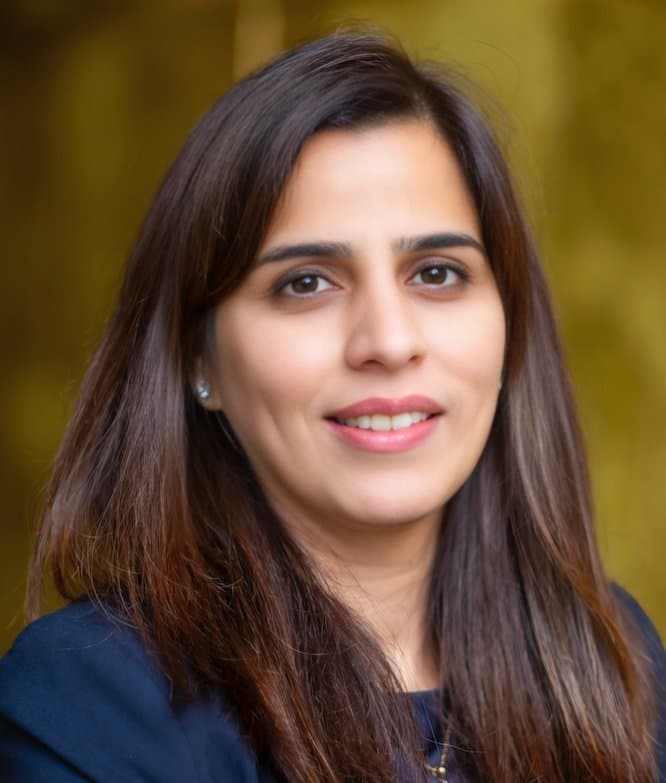
Ruchi Tushir and the Business of Trusted Judgment
Corporate Visionaries

Ruchi Tushir and the Business of Trusted Judgment

Ruchi Tushir explores how AI, healthtech, legal technology, and enterprise intelligence are reshaping decision-making in regulated industries. Drawing from leadership roles across Microsoft, SAP, EY, and Wolters Kluwer, she examines trust, workflow integration, scalable leadership, data interpretation, and why judgment, reliability, and contextual intelligence increasingly determine long-term business value.

IndiSight Editorial·
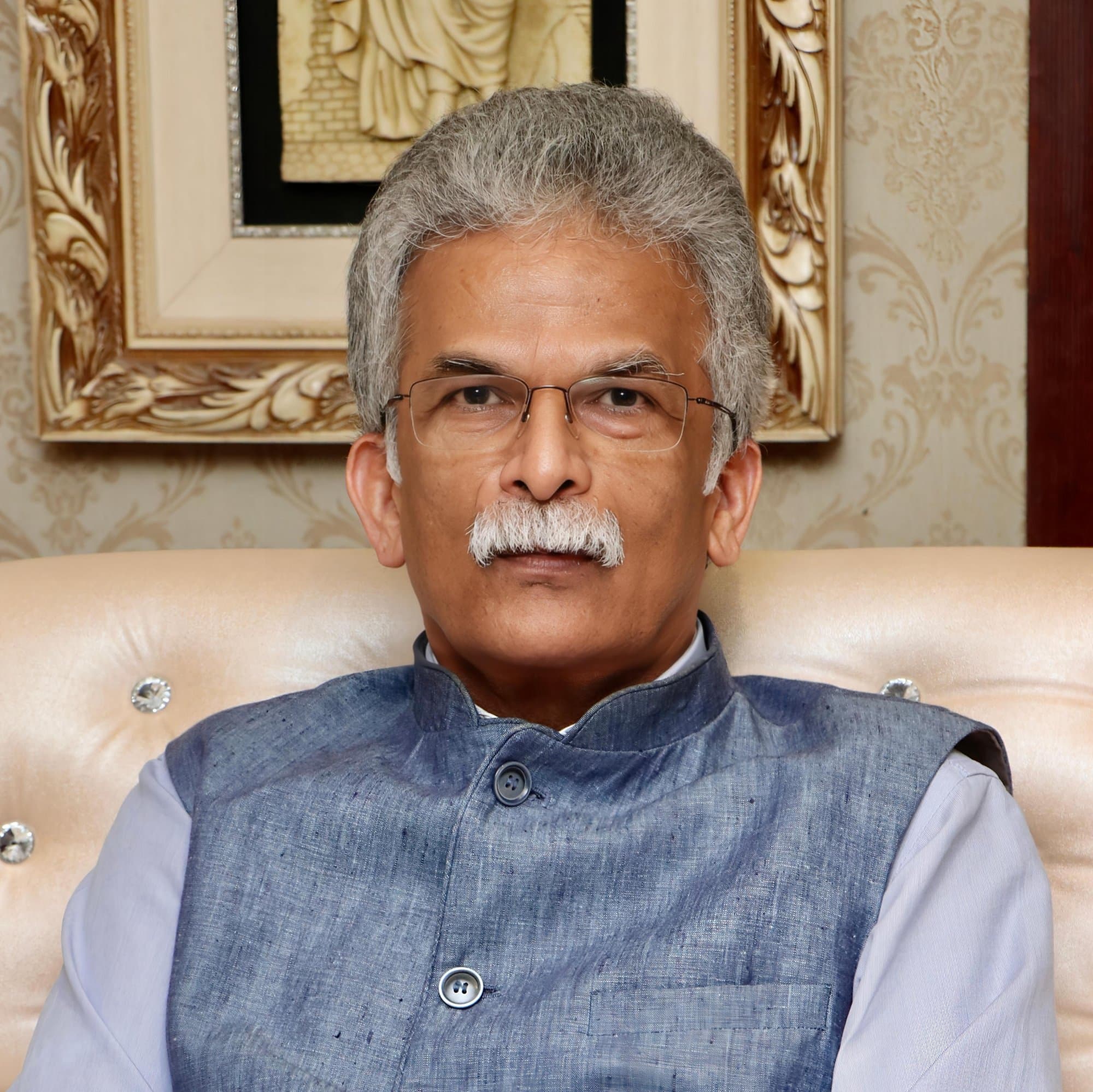
Pradeep Dhobale and the Hard Work of Building Serious Enterprises
Investors & Catalysts

Pradeep Dhobale and the Hard Work of Building Serious Enterprises

Pradeep Dhobale’s leadership journey across ITC, Hyderabad Angels, and sustainability-led investing reveals how governance, capital allocation, institutional trust, and operational discipline shape resilient businesses. The article explores startup ecosystems, founder evaluation, green entrepreneurship, and why long-term competitiveness increasingly depends on systems thinking, responsible leadership, and sustainability embedded into business economics.

IndiSight Editorial·
What Holds When Growth Stops: Ajay Srinivasan on Building Institutions That Last
Corporate Visionaries

What Holds When Growth Stops: Ajay Srinivasan on Building Institutions That Last

Ajay Srinivasan’s career offers a rare study in how financial institutions gain real strength: through disciplined judgment, coherent design, aligned incentives, cultural seriousness, and leaders who stay calm when certainty disappears. His thinking turns finance into something larger than scale or markets. It becomes a test of stewardship, institutional quality, and the ability to build organizations that can hold their shape through pressure, complexity, and change.

IndiSight Editorial·
When Systems Learn to Forget You
Corporate Visionaries

When Systems Learn to Forget You

India’s inclusion gap isn’t a funding problem, it’s a systems problem. Barsha Banerjee reframes the challenge: real progress begins when capability outlives capital. Through Perkins India, she is redesigning education around belief, ownership, and institutional muscle; so schools don’t just comply with inclusion, but internalize it. In her model, success is not reach, but permanence: systems that keep working long after the builder steps away.

IndiSight Editorial·
Designing the New Gravity: Surbhi Patni Dalmia on Shaping the Future of India’s Space Economy
Corporate Visionaries

Designing the New Gravity: Surbhi Patni Dalmia on Shaping the Future of India’s Space Economy

As the global space economy shifts from exploration to infrastructure, Surbhi Patni Dalmia argues that India’s real opportunity lies in designing systems, not just launching assets. At the intersection of policy, capital, and capability, she frames space as a test of institutional coherence, where long-term advantage will belong to those who can align regulation, talent, and trust into a durable architecture. In this new era, power is less about speed and more about reliability.

IndiSight Editorial·
Prasanth Prabhakaran and the Discipline of Building What Holds
Corporate Visionaries

Prasanth Prabhakaran and the Discipline of Building What Holds

Most leaders want to be remembered for what they built. Prasanth Prabhakaran wants to be forgotten by what he built: organizations strong enough to outlast their architects. From Kotak Securities to IIFL and YES Securities, where he served as Managing Director and CEO, his discipline remained severe: invisible leadership over executive theater, singular accountability over committee consensus, process maturity over founder dependency. After three decades, he represents a standard the sector still resists.

IndiSight Editorial·
Governing Intelligence: Snigdha Bhardwaj on Building AI Systems Billions Can Trust
Corporate Visionaries

Governing Intelligence: Snigdha Bhardwaj on Building AI Systems Billions Can Trust

The internet’s center of gravity is shifting; from retrieving information to generating it in real time. In that shift, the defining question is no longer access, but accountability: who governs what billions of people now read, trust, and act on? At Google, Snigdha Bhardwaj is building the systems that answer it, embedding safety, judgment, and restraint into technologies that cannot be fully predicted. As generative AI becomes infrastructure, she argues, the winners of this era will not be those who scale fastest, but those who earn trust at scale.

IndiSight Editorial·
Where Technology Meets Meritocracy : The Leadership Philosophy of Narsimha Rao Mannepalli
Corporate Visionaries

Where Technology Meets Meritocracy : The Leadership Philosophy of Narsimha Rao Mannepalli

Narsimha Rao Mannepalli believes technology magnifies human nature before multiplying output. After three decades at Infosys, he argues that the next frontier depends on moral intelligence, designing systems that are ethical by default. Leadership, he says, must sustain coherence within change, making speed purposeful rather than letting acceleration create fatigue.

IndiSight Editorial·
When Scale Begins to Test the Institution: Divya Kumat on Why Systems Can Be Designed But Integrity Must Be Practiced
Corporate Visionaries

When Scale Begins to Test the Institution: Divya Kumat on Why Systems Can Be Designed But Integrity Must Be Practiced

Divya Kumat sees governance as the test of maturity under scale. Systems can be designed, but integrity must be practiced, visible in how decisions are made, risk is judged, and responsibility is carried under pressure. Contracts anchor continuity, people determine integration, and global coherence comes from shared principles, not uniform rules. As technology expands risk, ethics must be embedded at the design stage.

IndiSight Editorial·
Designing Intelligence: Pramod Agrawal and the New Grammar of Technology Leadership
Corporate Visionaries

Designing Intelligence: Pramod Agrawal and the New Grammar of Technology Leadership

Leadership in technology is often described through disruption and speed. Pramod Agrawal represents a quieter tradition: the discipline of designing systems that can learn, adapt, and endure. Across three decades and multiple industries, he has approached technology not simply as code or infrastructure but as an extension of human judgment. In a world racing toward artificial intelligence, his work raises a deeper question: how should institutions think?

IndiSight Editorial·
When Capability Outruns Comprehension : Kaushik Das on Designing Smarter Organizations
Corporate Visionaries

When Capability Outruns Comprehension : Kaushik Das on Designing Smarter Organizations

Kaushik Das argues that modern technology has advanced faster than human understanding. True leadership, he says, is not about accelerating change but about restoring coherence: aligning intelligence with empathy, judgment, and ethical awareness. Organizations that endure will be those that learn consciously, adapt thoughtfully, and turn capability into wisdom.

IndiSight Editorial·