Category: Corporate Visionaries
Narsimha Rao Mannepalli believes technology magnifies human nature before multiplying output. After three decades at Infosys, he argues that the next frontier depends on moral intelligence, designing systems that are ethical by default. Leadership, he says, must sustain coherence within change, making speed purposeful rather than letting acceleration create fatigue.
Where Technology Meets Meritocracy : The Leadership Philosophy of Narsimha Rao Mannepalli
IndiSight Editorial
Mar 31, 2026

Narsimha Rao Mannepalli
Independent Director · Allied Digital
Hyderabad
Technology and Values at Scale
Technology is no longer a sector operating on the edge of business. It has become the skeletal core through which nations, institutions, and economies define relevance. Digital applications, digital infrastructure and data systems now function as the arteries of the modern economy and AI will further scale the impact of technology in societies around us. Technology, which, once was only a support function to businesses now determines how they evolve. The competition among nations is now defined less by GDP and more by technological credibility, measured by how securely and responsibly technology is managed at scale.
Narsimha Rao Mannepalli believes technology magnifies human potential before it multiplies output. “Technology only scales what already exists,” he says. “If the foundation of leadership, be it in a corporate or a society, is weak, no amount of technology can fix it.” Over three decades in the technology industry, he has seen progress move through three stages: excitement, adoption, and diffusion. He believes that software and technology can improve and/or execute a process but cannot replace purpose. Systems created in confusion multiply confusion, while those created with focus on sustainable value create continuity.
At Infosys, where he worked for more than two decades and served as Executive Vice President, he watched technology move from the periphery of business to its center. “Progress measured purely by speed is an illusion,” he says. “Acceleration without awareness and purpose eventually creates fatigue.”
For Narsimha, the next frontier of technology will depend less on processing power or the next big AI model and more on moral intelligence. He defines moral intelligence as the capacity to design systems that are ethical and equitable by default and not dependent on external enforcement.
Markets That Made Merit Possible
The liberalisation of India’s economy in the early 1990s was one of the rare moments in history when intellect and opportunity aligned. For the first time, talent could compete with inheritance. “Liberalisation didn’t just open markets,” he recalls. “It opened the minds of people.” Wealth-creation no longer remained a small and exclusive club and wealth-creation and success in business was no longer taboo.
The first generation of engineers entering the workforce in that period were not only learning to code But they were learning the rules of capitalism, how values, trust, and reliability could move across borders as naturally as information. Technology in those years became a moral experiment that tested whether integrity could scale. “India’s first export was not code,” he says. “It was credibility.”
At Infosys, he learned that value systems could be built into the design of an organisation rather than added as rhetoric. “Values were not a speech,” he recalls. “It was design logic.” Every Client conversation, governance decision, and people decision reflected the same consistency. The company demonstrated that business performance and ethical conduct can reinforce each other. “You could do well, sleep well, and feel proud of what you built,” he says.
He describes this as the quiet power of coherence. When behavior and belief align, external supervision becomes less important because discipline emerges from within.
Charisma brings followers. Coherence builds institutions.
That experience convinced him that credibility compounds faster than capital. In his view, it remains the only asset no market can short.
Leadership at the Speed of Change
Modern leadership operates in compressed time. Product cycles shorten, customer expectations evolve quickly, and teams navigate constant change. The challenge for leaders is not fast action but meaning. “At senior levels there are no guaranteed wins,” Narsimha says. “You will lose some and win some. If you are diligent and put the required efforts consistently you will hit the needed averages to succeed.”
He sees leadership as the management of variance, the ability to absorb volatility without losing conviction.
Leadership is not about hitting every ball. It is about reading the game.
He believes emotional rhythm is the foundation of performance. “If a leader enters a room with stress, the room inherits it. If a leader enters with calm, the room aligns.”
Attention, he adds, is the rarest form of capital. “What you choose to notice determines the direction of your organisation. When everything is treated as a priority, nothing truly is.” He values discernment more than reaction. “The advantage lies in the precision with which leaders decide what deserves energy and what deserves silence.”
For him, energy without direction is noise.
Leadership attention is capital. The most successful leaders are those who invest it with purpose.
When Technology Tests Philosophy
Every technology revolution begins as an engineering challenge and ends as an ethical one. Digital transformation promises efficiency but fails in many cases because of human reasons, not technical flaws. “The code works,” Narsimha says. “The cause and conviction do not always work.”
He compares transformation to the construction of a building , a process that requires patience, coherence, and endurance.
Momentum fades faster than strategy. You can excite people into action, but only clarity of purpose sustains them.
Transformation succeeds when technology, culture, and governance operate in a single rhythm. When this alignment happens, progress turns into continuity instead of disruption.
“Technology amplifies what already exists,” he says. “If the mindset of leadership is fragmented, digital adoption will only make that visible faster.” For him, the question has shifted. “It is no longer about whether we can transform,” he says. “It is about whether we should, and for what purpose.”
The Shift from Growth to Depth
Artificial intelligence and automation have changed how value is created. Yet Narsimha believes the next breakthrough will depend on interpretation rather than invention. “Our advantage will come from understanding how technology improves society,” he says. He calls this applied intelligence, the practice of translating innovation into practical and ethical outcomes.
He believes India is uniquely positioned for this shift. The United States leads in invention and China in scale. India’s strength lies in contextual intelligence, the ability to make global systems work within social complexity. “Applied intelligence is where capital meets conscience,” he says.
He warns against chasing speed for its own sake. “You can automate confusion,” he says. “Technology by itself does not create order; it multiplies whatever already exists.” Leadership thinking must evolve before technology implementation; otherwise, technology simply accelerates dysfunction.
India in the New Digital Hierarchy
Global technology is reorganising itself into new spheres of influence. The United States dominates in frontier innovation, Europe in regulation, and China in scale. Narsimha sees India’s opportunity as becoming the world’s laboratory for responsible application. “We have the scale of a continent and the empathy of a community,” he says. “When we combine capability with conscience, we can define what responsible growth means.”
He believes scarcity has shaped India’s moral advantage. Constraint has taught proportion and discipline. “Technology can fix many things except confusion,” he says. “We need sharper questions before faster machines.” In many meeting rooms, he starts with a single question: Why do you want to change status quo and/or transform? The silence that follows, he says, often contains the real answer.
Trust is not heritage. It must be earned each day.
India’s leadership opportunity lies in translating consistency into global confidence.
Power, Awareness, and the Craft of Leadership
With time, Narsimha’s understanding of leadership has evolved into what he calls conscious power. “Power does not corrupt,” he says. “It reveals what was already there.” He regards humility as a form of intelligence, the ability to stay teachable when success can easily create rigidity. “Humility is the discipline of seeing clearly when achievement begins to distort vision.”
He defines leadership as composure under ambiguity. “In times of uncertainty, people respond to presence more than position,” he says. “Spreadsheets can confirm instincts, but they cannot replace them.”
Authority, in his experience, is sustained by clarity and credibility. “Leadership is not just about being visible,” he says. “It is about helping the system see clearly.”
Coaching for Conscious Competence
As he transitioned from executive roles to mentoring, Narsimha began to see coaching as an exercise in design rather than instruction. “A coach does not provide answers,” he says. “A coach creates the environment where clarity can emerge.” Most professionals know what to do but lose connection with their reasons for doing it.
Reflection, he believes, is the real instrument of growth. “People rarely fail because of low intelligence,” he says. “They fail because they stop reflecting and let huge gap emerge between reality and their own perception.” Coaching helps leaders slow down enough to see patterns. “Wisdom does not transfer,” he says. “It unfolds.”
Emotional Systems and Organisational Health
For Narsimha, leadership scales emotion as much as it scales strategy. “When I left Infosys, I received hundreds of messages from people and some of them I could barely remember,” he says. “They spoke about moments that had stayed with them. That was when I realised what leadership truly multiplies,culture and emotion.”
He sees happiness as an organisational signal. “If a team is unhappy, the problem is not mood but design,” he says. Pressure can increase effort but reduces creativity over time. “Fear ensures compliance. Safety enables creativity.”
Calmness, in his view, is precision in action. “The leader’s task is to absorb volatility, not amplify it,” he says. “Stability generates trust faster than aggression.” He considers equanimity the highest form of managerial competence because it turns pressure into clarity.
Rethinking Capital and Conscience
As global capitalism faces environmental and social limits, Narsimha believes companies are entering a necessary period of correction. “You cannot keep ignoring stakeholders’ interest and expect long-term growth,” he says. “Eventually the system resets.” His concept of evolved capitalism brings conscience into competition. “Efficiency delivers results for a quarter. Integrity builds outcomes for a generation.”
He believes every algorithm carries a human fingerprint. “If it is trained only on speed, it will reward greed. If it is trained on empathy, it will reward balance.” Boards, in his view, need to think like ecologists rather than engineers. They should evaluate sustainability as continuity and not just compliance. Profit should lead to renewal instead of depletion. “True prosperity repairs the systems on which it depends.”
Trust as the Defining Resource of the Century
Globalisation is shifting from openness to interdependence, creating an environment where reliability is a greater advantage than reach.
Technology amplifies intent. If intent is weak, scale will magnify the weakness.
He believes that the next phase of progress will measure nations by the integrity of their digital systems as much as by their financial power.
India’s strength lies in translating empathy into credibility. “We understand scarcity,” he says. “That teaches stewardship. Efficiency drives progress, but empathy sustains it.” The coming decade will test whether societies can build systems that protect both competitiveness and conscience. “Credibility,” he says, “will become the most valuable form of capital.”
Operating Principles for the Modern Enterprise
Build systems that last beyond individuals.
Treat attention as the highest currency of leadership.
Translate energy into purpose definition and alignment rather than acceleration.
Use humility to improve perception.
Replace pressure with emotional safety to enhance creativity.
Define growth through renewal rather than expansion.
Practice subtraction as a deliberate act of focus.
Encode ethics into process and action rather than intention.
Maintain proportion in visibility and communication.
Recognise happiness as institutional intelligence.
The Continuity Test
Leadership today depends on sustaining core values within constant change. Technology can automate judgment but cannot create wisdom. It can accelerate progress but cannot create maturity. The leader’s task is to preserve stability while enabling progress and to make speed purposeful.
The greatest responsibility of leadership is to leave coherence behind.
Coherence, for him, emerges from clarity, restraint, and awareness. The leaders who last are those who align growth with conscience and ambition with thoughtfulness. Future leadership will be measured less by valuation and more by the ability to keep organisations human as they expand.
As automation grows, value focus and empathy will become the most critical advantage. Those who think with depth, decide with care, and act with proportion will create organisations that remain relevant through volatility.
“Power will always move toward acceleration,” he says. “Leadership must have the courage to resist and ensure purpose and values are aligned in this acceleration.”
He represents a generation that demonstrated how professionalism and principle can work together. His ideas extend that understanding to a new era in which leadership is defined by responsibility, coherence, and continuity.
Our Suggestions to Read
Discover The Leaders Shaping India's Business Landscape.
Founders & Innovators
Building the Next Space Economy: Chiranjeevi Phanindra and Cosmoserve's Case for Orbital Maintenance
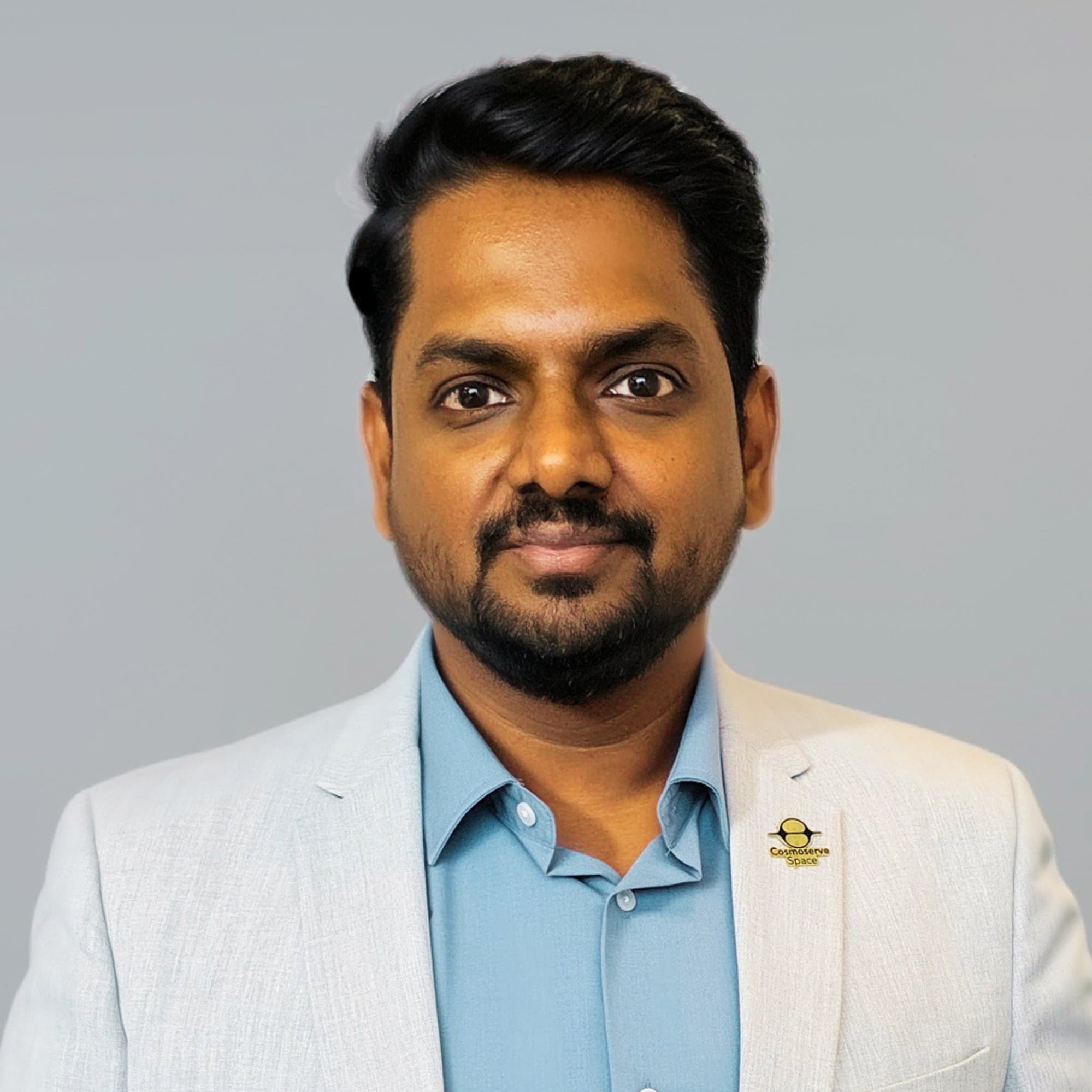
Chiranjeevi Phanindra, Founder & CEO of Cosmoserve Space, spent 14 years at ISRO working on re-entry and human spaceflight. Today, he is focused on a vital challenge: keeping Earth’s orbit usable.
Read Full Story
Corporate Visionaries
Shashank Sahni on What Success Leaves Out
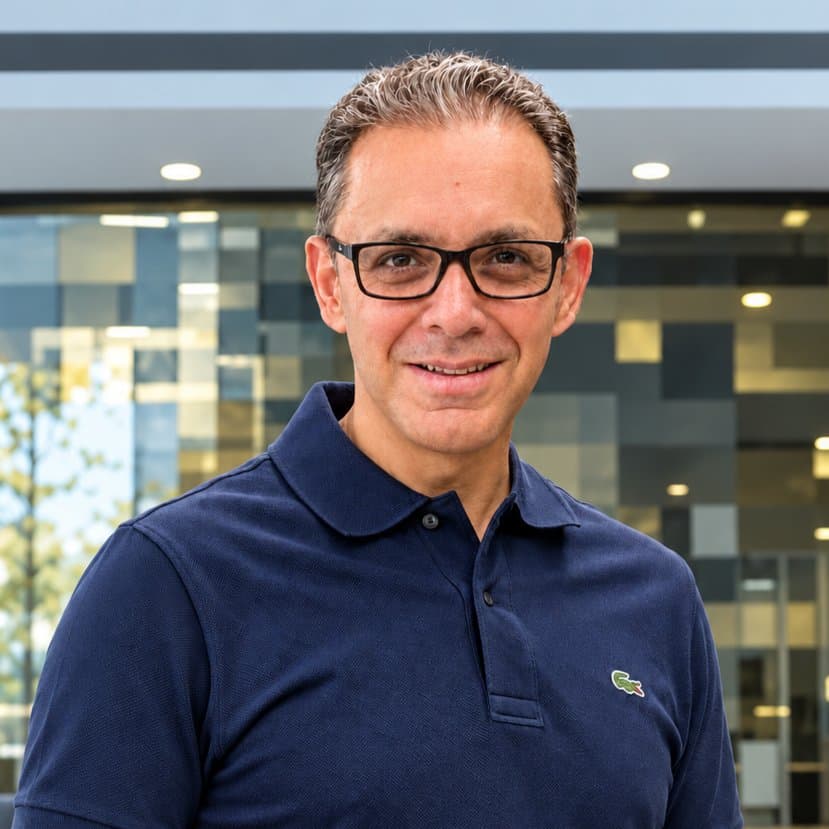
Shashank Sahni, Google’s Managing Director of Global Ads Solutions, reflects on what customers reveal, what ambitious teams need from their leaders & what the mountains and marathons have taught him about going further.
Read Full Story
Corporate Visionaries
Clinical Multiplication: Divesh Singla on the Healthcare AI Case That Headlines Keep Missing
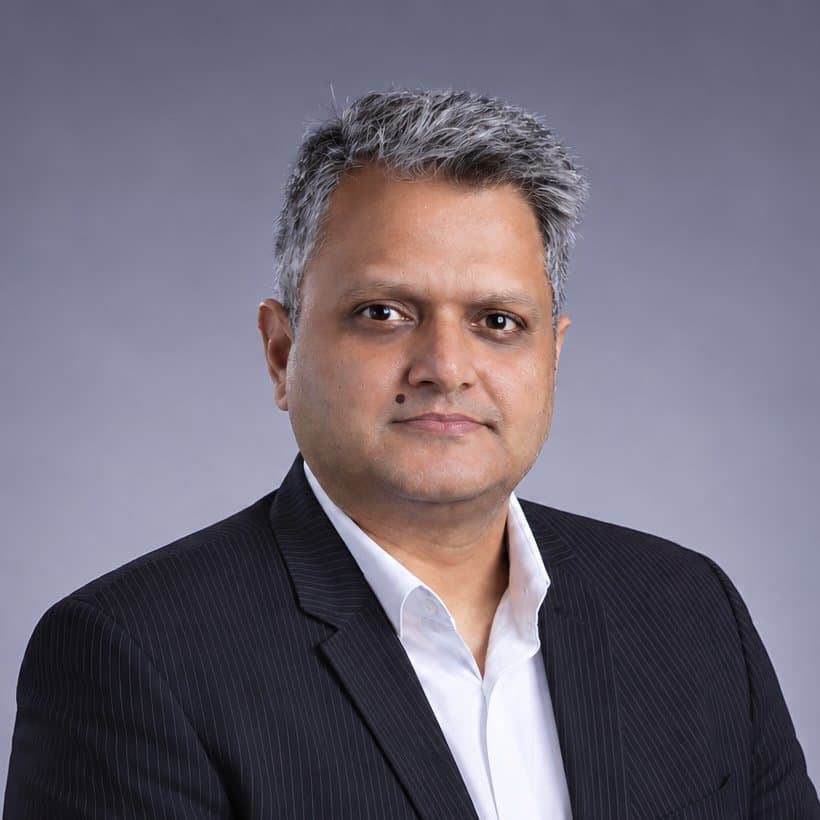
Divesh Singla, Managing Director, India at Veradigm, brings two decades in healthcare technology to the AI question leaders cannot avoid: how to expand clinical capacity without weakening human judgment.
Read Full Story