Category: Corporate Visionaries
Ajay Srinivasan’s career offers a rare study in how financial institutions gain real strength: through disciplined judgment, coherent design, aligned incentives, cultural seriousness, and leaders who stay calm when certainty disappears. His thinking turns finance into something larger than scale or markets. It becomes a test of stewardship, institutional quality, and the ability to build organizations that can hold their shape through pressure, complexity, and change.
What Holds When Growth Stops: Ajay Srinivasan on Building Institutions That Last
IndiSight Editorial
May 5, 2026
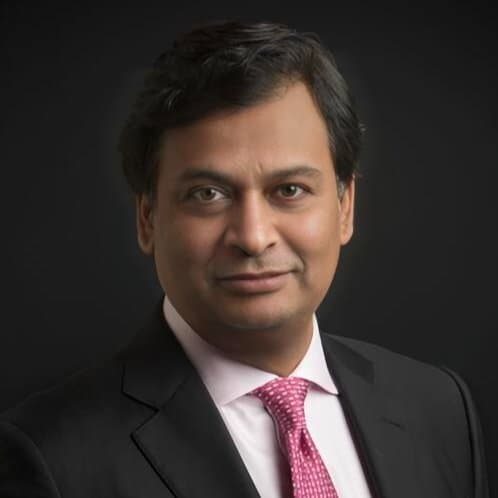
Ajay Srinivasan
Founding CEO · Prudential ICICI AMC (now ICICI Prudential AMC)
Mumbai, India
Finance rarely reveals its true quality in easy periods. When liquidity is plentiful, markets are rising, and customers are willing to take more risk, weak institutions can look stronger than they are. Revenue expands, assets gather, valuations rise, and momentum begins to pass for competence. The harder test arrives later, when confidence weakens, conditions tighten, and the assumptions beneath expansion begin to crack. Only then does it become possible to tell whether growth was supported by judgment, discipline, and internal strength, or simply by favorable conditions.
Financial services are unforgiving for precisely that reason. Weakness can sit inside incentives, underwriting standards, governance, leadership behavior, or product design for years before consequences become visible. A balance sheet can appear healthy while discipline is already thinning underneath it. In finance, success often hides fragility longer than in most sectors, which is why the distance between building scale and building a serious institution is far larger than it appears from the outside.
Ajay Srinivasan has spent much of his professional life working inside that exact tension. A student of economics at St. Stephen’s College, University of Delhi, and later a management graduate of IIM Ahmedabad, he went on to become the Founding CEO and Managing Director of Prudential ICICI AMC, the Founding CEO of Prudential Fund Management Asia, and later the Founding CEO of Aditya Birla Capital. Across nearly three and a half decades, he helped shape financial businesses at moments when markets were opening up, institutions were still finding their form, and growth had to be matched by discipline if it was to mean anything at all. The real interest in his story lies in the questions he kept returning to. How is judgment formed before certainty exists. What makes capital disciplined rather than merely available. What allows an institution to stay coherent after success makes self-congratulation easier.
Learning judgment before authority
Ajay’s first real education in finance did not come from running a business. It came from evaluating several. Fresh out of IIM Ahmedabad, he joined ICICI’s project lending division, where he worked on entrepreneurial proposals across a number of industries at a stage when India was still a more constrained economy and capital was far scarcer than it would later become.
That vantage point gave him an unusually early understanding of something many finance professionals learn much later, if at all. Capital is rarely committed to numbers alone. It is committed to judgment about people, timing, preparation, and the likelihood that someone can continue to think well when the original plan begins to weaken.
Capital is a lot about confidence.
Investors and lenders may speak in the language of diligence, ratios, and projections, but what they are finally assessing is whether the person in front of them has both conviction, courage and adaptability. Ajay saw early that long-term value was rarely created by those who defended their first plan with stubborn loyalty. It was more often created by those who were intellectually honest about uncertainty, willing to revise their assumptions, and sober about what they still did not know.
The same period shaped his relationship with analysis.
“Models are navigation tools rather than decision makers.” he says.
Models impose structure and force discipline, but they do not eliminate uncertainty and they do not replace judgment. Over time, Ajay’s reading of markets evolved not by becoming less analytical, but by seeing more clearly where analysis stops being enough, because markets are shaped by policy, behavior, technology, timing, and narrative, and much of that escapes the comfort of a spreadsheet.
The attraction of building from zero
The next stretch of his career moved him from evaluating businesses to helping create them. At ITC, during the early years of India’s post-liberalization opening, he became part of a small group working on a range of financial services ventures, including investment banking, lending, private equity, stockbroking, insurance, and eventually asset management.
Ajay found the work that would define him there.
“I got the bug from there because I realized what excitement you can get from starting something from virtually nothing and building it out.”
There is a deep difference between improving a business and building one. Improving something inherited is difficult. Building from zero is a more exacting discipline because it demands choices before there is enough evidence, talent before there is strong brand equity, and standards before success begins to reward them.
That instinct found its first major proving ground when Ajay became the founding CEO of what was then Prudential ICICI AMC. India’s mutual fund industry was still young enough for product design, customer education, and business model choices to matter in unusually foundational ways. The assignment was to rebuild a business around a new team, a sharper and bigger ambition, and a differentiated operating mindset. In under two years, it became the largest private sector asset manager in India.
Ajay tells the story without any appetite for mythology.
“The power of a big vision, a clear plan, a strong team and some luck.”
Many accomplished executives speak fluently about strategy and leadership. Fewer acknowledge the role of timing, external conditions, and luck without reducing their own contribution. Ajay does both, which gives his perspective proportion. Good leadership does not eliminate uncertainty. It builds strongly enough that when timing turns in your favor, the institution is prepared to use the opportunity well, and when timing turns against you, the business does not immediately lose shape but still looks for opportunities.
That period also revealed another idea that stayed with him. Successful financial innovation is rarely about technical cleverness alone. It works when it solves a real customer problem. The best business ideas in finance do more than improve pricing or yield. They reduce anxiety.
Asia widened the frame
In 2001, Ajay moved to Hong Kong to build a pan-Asian fund management business for Prudential plc. As the first CEO of that platform, he helped grow the business across ten countries through a combination of greenfield build-outs and acquisitions. By the time he stepped away, assets under management had crossed $70 billion, and the business had become one of Asia’s leading retail fund management platforms.
The more important part of that chapter lies in what it taught him about financial systems across markets. Markets may look similar in presentations and macro charts, but on the ground they are shaped by different savings habits, regulatory cultures, investor behavior, tax systems, customer expectations, and varying levels of institutional trust.
“You have to be ready to deeply immerse yourself in businesses to really understand the market structure, the customer and different cultures.” he says.
Serious businesses are rarely built by copying models from one geography to another blindly and assuming that distribution, trust, and customer behavior will travel intact. Markets mature when regulation is credible, infrastructure is sound, domestic savings deepen, and institutions begin operating across multiple time horizons. Without those conditions, a market can remain busy without becoming truly strong.
Regional exposure also sharpened Ajay’s understanding that finance is never only technical. Markets are also human and institutional. Markets deepen because rules are credible, incentives are aligned, disclosure is trustworthy, and participants believe the system can be relied upon.
Aditya Birla Capital and the harder work of coherence
If Asia widened Ajay’s field of view, Aditya Birla Capital became the fullest test of whether that systems thinking could be translated into institutional form at scale.
When he joined the group’s financial services business in 2007, the opportunity was to help shape an institution. Over the next fifteen years, he led the build-out of a diversified financial platform spanning insurance, lending, asset management, broking, and adjacent businesses that could easily have remained separate verticals with separate objectives.
What had to be built was not size alone, but coherence.
Many groups have adjacency. Few have integration with serious business logic behind it. Putting financial businesses next to one another is straightforward enough. Making them reinforce one another in ways that improve customer depth, talent mobility, capital efficiency, and operating leverage is much harder. Ajay’s approach appears to have been guided by a practical question: why should these businesses exist together, and how does the group become stronger because they do?
For customers, a broader platform could serve multiple financial needs over longer periods of life. For employees, it created richer possibilities across businesses rather than limiting careers within silos. For distributors, it allowed deeper relevance with clients. For shareholders, it created a more efficient use of capital and a stronger sharing of common capabilities such as risk, data, technology, and brand.
By the time Ajay stepped away, the platform had become one of India’s largest diversified non-banking financial services groups. Yet his own reading of that period rests less on the visible metrics than on what sat beneath them.
“What I am as satisfied as the financial metrics, is the culture and quality of the team built and the strong foundation built for future growth.” he notes.
Visible growth mattered. But what mattered equally was whether the business underneath that growth had acquired enough internal quality to remain strong.
Why institutions fail quietly
Ask Ajay what makes a financial institution successful and he does not begin with product strength, market share, or quarterly performance. He begins with prudent risk management, aligned incentives, strong governance, transparency, talent, culture, and long-term capital discipline.
Financial institutions rarely fail because they lack ambition. They fail because growth outruns standards, because incentives drift, because governance weakens, because leadership mistakes favorable conditions for internal quality or capability, or because discipline is treated as less urgent than expansion. The visible business can remain seemingly healthy for a surprisingly long time while internal quality is already declining.
His language around culture is unusually grounded.
Culture is not what is written on walls but what is experienced as behaviour on the ground.
Culture, in his reading, determines whether truth travels upward, whether risk is surfaced early, whether standards tighten with scale or loosen under it, and whether people learn what the organization really values by observing consequences rather than reading slogans.
He is equally direct about what happens during success.
“The temptation is to prioritise speed over discipline.” he says.
Expansion, faster approval cycles, greater sales intensity, broader market presence, all of it can appear rational while risk discipline is quietly eroding underneath. If a business speaks about prudence but rewards only volume, then volume becomes the real operating principle. If it speaks about trust but measures only immediate output, then trust becomes a branding exercise rather than an institutional standard.
Managers, leaders, and the question of horizon
Ajay also draws a sharp distinction between management and leadership.
Capable managers seek to optimise the present. Institutional leaders think about how decisions today impact the organisation years later.
The force of that idea lies in how seriously it treats time. A capable manager can run a business efficiently inside the current frame. A leader of institutions thinks about what the current frame is producing over time. Decisions taken for current performance alone often create future weakness if the time horizon considered is too short.
That perspective explains why Ajay places so much importance on qualities like intellectual curiosity, communication, collaboration, network depth, resilience, courage, and the ability to build future leaders. Products can be copied. Distribution advantages can weaken. Capital can move. A far more difficult advantage to replicate is an institution that continues producing judgment through people, not just output through incentives.
He also returns often to what he calls the marathoner mindset. Courage. Resilience. Self-motivation. The ability to keep going through periods that offer little applause. In long careers and serious institutions, bursts of energy matter less than sustained seriousness. It’s a marathon not a sprint.
Markets are human before they are efficient
Ajay’s reading of markets remains disciplined, but never sterile.
“Markets are ultimately human systems.”
Capital markets may be described through models of efficiency and rational allocation, yet anyone who has lived through real cycles knows how much they are shaped by confidence, fear, narrative, and crowd behavior. Even highly digitized markets still reflect human judgment because humans still design the rules, the strategies, and the boundaries within which machines operate.
His emphasis on second-order thinking becomes especially useful here.
“Risk rarely appears where models or people predict it.”
The first visible event is often not the main danger. The greater danger lies in what follows. Liquidity pressure becomes loss of confidence. Loss of confidence becomes selling. Selling becomes contagion. What looked manageable starts moving through the system much faster than most models had assumed.
Ajay is also direct about broader shifts in global finance. Over the last three decades, he points to the institutionalization of capital, the rise of private capital, the growing role of markets relative to banks, and the widening divide between returns to capital and returns to labor. Finance has created enormous efficiency and scale, but it has also widened the divide between those who participate meaningfully in capital markets and those who rely mainly on wages.
Calm, not performance certainty
The most human part of Ajay’s leadership philosophy appears when he speaks about decision-making under uncertainty.
“I don’t think you have to have clarity as much as you have to have calm.”
The line goes straight at one of the most persistent myths in leadership, which is that the leader must always appear fully certain. In real operating environments, certainty is often unavailable. What leadership can still provide is composure, direction, and quality of thought.
Ajay takes the idea further.
“Clarity comes from asking good questions rather than having the answers yourself.”
Good leadership is continuous disciplined inquiry. It is the ability to keep the institution steady while the problem is still being understood. Calm protects judgment from panic and allows others to keep functioning when a situation is still being worked through. The same logic explains why unlearning matters so much to him. Principles may remain stable. Knowledge cannot. Leaders who built their careers in one operating environment can easily overestimate how portable their old assumptions remain.
Leadership Lessons
Capital allocation is finally as much as a judgment on people, as on plans.
Growth can hide weakness longer in finance than in most sectors.
Institutions can weaken quietly before they fail visibly.
Models help organize thought, but judgment begins where the model stops being enough.
Leaders have to think in long term, not just in current performance.
Culture becomes real only when it shapes conduct under pressure.
Incentives reveal what an organization truly values.
Risk often enters through second-order effects, not through the first visible event.
Innovation earns its place only when it solves a real customer problem.
In difficult periods, calm is more valuable than performed certainty.
Ajay’s career offers a more demanding test for thinking about finance. The more serious question is whether the institution was built with enough discipline to hold when conditions became less forgiving. Three organisations he led are testimony to this.
His relevance extends beyond the businesses he led because he represents a style of leadership that treats growth as an outcome, never as an argument. In a business world increasingly seduced by speed, he points back to something harder and more lasting, the work of building strength that can survive pressure.
Our Suggestions to Read
Discover The Leaders Shaping India's Business Landscape.

Corporate Visionaries
Sarath Gollapalli on the Work That Makes Technology Dependable
Sarath Gollapalli, Vice President at Broadridge, reflects on why AI-era enterprise technology still depends on fundamentals: client understanding, reliability, governance and ownership.
Read Full Story
Corporate Visionaries
The Work Before the Story: Rahul Malhotra on Trust, Behaviour and the Business of Marketing
Rahul Malhotra brings 30+ years at P&G and Shell across global CEO and marketing roles, offering deep insight into business, consumer behaviour, organisational change, commercial judgement and reputation.
Read Full Story
Corporate Visionaries
The Craft of Institutional Capital: Archit Shah on Judgement, Risk and Investing Across Cycles
The Zurich Kotak General Insurance Chief Investment Officer brings a practitioner’s view of investing, where good judgement under uncertainty has to become decisive action through portfolio construction.
Read Full Story