Category: Corporate Visionaries
As the global space economy shifts from exploration to infrastructure, Surbhi Patni Dalmia argues that India’s real opportunity lies in designing systems, not just launching assets. At the intersection of policy, capital, and capability, she frames space as a test of institutional coherence, where long-term advantage will belong to those who can align regulation, talent, and trust into a durable architecture. In this new era, power is less about speed and more about reliability.
Designing the New Gravity: Surbhi Patni Dalmia on Shaping the Future of India’s Space Economy
IndiSight Editorial
Apr 16, 2026

Surbhi Patni Dalmia
Director and India Head · Novaspace
Bengaluru/India
The global space economy has crossed 600 billion dollars and is projected to double before the end of this decade. Satellites now determine how nations communicate, navigate, trade, and defend. What was once a government monopoly has become one of the world’s most contested commercial frontiers, driven by private capital, cross-border collaboration, and exponential data demand.
For India, this is no longer a question of ambition. It is an industrial strategy. The new space policy opened the gates to private participation, and more than three hundred startups have entered orbit in less than four years. Venture funds, manufacturing clusters, and state missions are converging to create what analysts call India’s downstream decade, where applications, not launches, will create most of the value.
The question now is not whether India can participate, but how fast it can scale and what role it will claim in the global value chain.
Surbhi Patni Dalmia sits at that intersection. As Country Head and Director of NovaSpace, a global consulting firm operating across ten nations, she is building the company’s India practice from the ground up. Her mandate blends economics and geopolitics: connect policy, capital, and capability into one coherent system.
“Space is becoming the backbone for communication, security, and trade,” she says. “Power will soon mean control over orbital infrastructure and the digital highways it carries.”
A Chartered Accountant who once specialized in financial modeling at Deloitte, Surbhi now models ecosystems measured not in balance sheets but in orbits. Her career mirrors the evolution of the industry itself, moving from regulation to commercialization and from exploration to enterprise.
India’s space story is shifting from launchpads to boardrooms. Surbhi represents the generation turning national momentum into global market credibility.
Foundations
Surbhi’s early career was defined by precision. Trained as a Chartered Accountant and Company Secretary, she began at ITC and later joined Deloitte. The move from audit to consulting gave her a rare understanding of how capital, compliance, and risk shape innovation.
Her first projects in energy, across thermal, renewables, and hydrogen, taught her that technology succeeds only when economics supports it. “Finance taught me structure and accountability,” she says. “Every idea, however ambitious, must hold up to data and discipline.”
When Deloitte began exploring the commercial possibilities of space, she helped build its first dedicated practice. India had just opened the sector to private participation, and the market narrative was still uncertain. Her task was to turn possibility into a business case, mapping global investments, launch economics, and policy reform to show how India could build a competitive private market.
Her ability to translate technical progress into financial logic gave the initiative early credibility. It also defined her leadership style: methodical, grounded, and built for execution.
In space or in finance, the fundamentals are the same. You must model risk before you model growth.
That mindset would later position her to lead NovaSpace’s India operations, moving from analyzing markets to shaping one.
Defining Tensions
The liberalization of India’s space sector marked a turning point for both industry and policy. For Surbhi, it represented the convergence of technology, economics, and governance, a convergence few professionals were prepared to navigate.
At Deloitte, she led the firm’s first space-consulting vertical. “The sector was seen as technical and government-led,” she recalls. “Our role was to show it could also be commercially viable and investor-ready.”
Her work coincided with major policy shifts that opened launch services, enabled satellite manufacturing, and invited startups into new markets. She began working across regulation, supply chains, and capital markets, reinforcing her belief that industry-building is less about invention and more about alignment.
In 2024 she moved to NovaSpace to establish its India practice, balancing two priorities: building India’s strategic presence in the global space economy and adapting international frameworks to local realities.
India’s context is unique. We cannot replicate U.S. or European models. We need systems that combine public-policy depth with private-sector speed.
Her focus now rests on three levers: predictable regulation, procurement reform, and stronger university-industry linkages. “Our next phase depends on connecting these into one coherent system that supports both startups and established players.”
For Surbhi, this is the defining tension of India’s space decade, how to sustain innovation without losing control, and how to open markets without diluting accountability.
Industry Lens
Every frontier sector reaches a point where enthusiasm must yield to structure. For India’s space economy, that moment has arrived. “Policy reforms were the ignition,” she says. “Now we need frameworks that can turn momentum into markets.”
Her vantage point across consulting, energy, and deep-tech strategy gives her a long view of how sectors mature. She has seen industries accelerate too fast without the scaffolding to sustain confidence.
India’s progress is undeniable: hundreds of startups, private launchpads, and global capital flowing into analytics and manufacturing. Yet policy, academia, and industry often move on parallel tracks.
India doesn’t lack talent or ambition. What we need is institutional rhythm, the ability for different parts of the ecosystem to move together.
She identifies three shifts as essential: research that is enterprise-ready, procurement that is transparent, and financing models designed for long-term capital. “Space isn’t e-commerce,” she says. “It needs patient capital and blended incentives where public and private goals align.”
Her global exposure reinforces these convictions. Europe thrives on collaboration, the United States scaled space through procurement-led confidence. India, she believes, must create its own hybrid model anchored in prudence, entrepreneurship, and trust.
“We don’t need to copy anyone. Our scale, our problems, and our possibilities are unique. What we need is coherence.”
Space, she adds, is no longer a symbol of ambition; it is becoming infrastructure. “The conversation is no longer about rockets. It is about resilience, how nations design systems that adapt and endure.”
At NovaSpace, she built her India practice around that principle. “We sit between aspiration and execution,” she says. “Our work is to make sure vision has an operating plan.”
Leadership Philosophy
For Surbhi, leadership is a discipline of thought before it is an act of direction.
Every leader has a choice. To manage what exists or to build what must exist.
Years in finance taught her that progress depends on precision. In space consulting, where outcomes span decades, she treats structure as leadership intelligence. “You cannot improvise your way through complexity. You have to design for it.”
At NovaSpace, teams cut across policy, technology, and economics. “A policy analyst might challenge an engineer, or a market researcher might question a scientist. The best decisions are cross-verified by people who think differently.”
Her framework rests on three principles: cognitive discipline, emotional steadiness, and institutional patience.
Urgency is about purpose. Impatience is about ego.
That distinction defines her rhythm: fast action, slow judgment. “Space is a slow industry that moves at the speed of expectation. Leaders need to protect focus from the illusion of velocity.”
She believes capability alone does not build resilience; psychological safety does.
If people fear being wrong, they stop being original. Leadership is making it safe to experiment intelligently.
Motherhood, she says, sharpened her sense of focus. “It taught me efficiency. Deep work and deep presence are the same practice in different contexts.”
Future Lens
Surbhi sees the next decade of the space economy as a test of systems intelligence. “Space is not a race. It is the new operating system for economies.”
The sector’s future will hinge on three intersecting frontiers: artificial intelligence, semiconductors, and cybersecurity. “AI determines who interprets data. Semiconductors determine who processes it. Cybersecurity determines who protects it. That chain defines modern sovereignty.”
She believes the debate must move from exploration to governance.
Hardware regulation is twentieth-century thinking. What we need now is governance of judgment.
Her concern is that the world is optimizing for speed while neglecting resilience. “Iteration without feedback is fragility in disguise.”
Hence her advocacy of institutional redundancy, the deliberate design of fallback mechanisms across countries and corporations. “Redundancy is not inefficiency. It is the price of continuity.”
India, she argues, has the credibility to build such continuity into the global order.
Our comparative advantage is philosophical. We understand the cost of failure yet continue to experiment.
India’s long-term role, she says, should be to redefine global interdependence. “We don’t need self-reliance as isolation. We need selective autonomy, the ability to participate without dependence.”
The next geopolitical order will be built on algorithms, fabrication nodes, and standards, the invisible assets that govern visible power.
Human Angle
In high-stakes environments, stability often matters more than speed. “Decisions made under pressure reveal not what you know, but how you think.”
She treats composure as a management competency. “If a decision doesn't age well, I don’t defend it. I study it.”
When a major policy shift threatened a client engagement, she convened a cross-functional team that surfaced a third option satisfying both urgency and compliance. “That pattern became our template.”
She values precision without paralysis. “Perfection is expensive. Timely accuracy is better capital.”
At NovaSpace, meetings begin with facts, not opinions. “Disagreement is healthy when it’s informed. The role of a leader is to make conflict productive, not personal.”
Diversity, in her view, is not moral currency but strategic necessity. “Teams that can read the same situation through different lenses shrink blind spots and strengthen decisions.”
Work-life balance, to her, is resource management. “Energy is a limited asset. If you don’t allocate it, someone else will.”
People stay in difficult jobs when systems are consistent. They leave when decisions feel arbitrary.
Global Vision
Surbhi describes the global space economy as the next great test of institutional intelligence. The contest will not be won by the fastest innovators but by the most reliable systems, those capable of turning technological momentum into long-term credibility.
“The real question is not who builds capability, but who builds continuity.”
The center of gravity, she says, is shifting from engineering to governance. “Satellites can be launched anywhere. But data flows only where reliability is proven.”
That reliability depends on how nations manage four interdependent architectures: regulation, capital, talent, and trust. “Competitiveness depends on how these four synchronize. If one falters, the rest lose coherence.”
“Static regulation kills innovation; absence of it kills markets. The challenge is to institutionalize flexibility.”
“Space is infrastructure, not fashion. You cannot benchmark it against consumer-tech timelines.”
And above all stands trust. “In the digital era, sovereignty will be expressed not through control of assets but through credibility of intent.”
She positions India’s advantage in philosophical equilibrium, the ability to reconcile ambition with restraint. “We innovate within constraints. That maturity gives us quiet strength.”
India should define its model through selective interdependence, open to collaboration while preserving depth. “Autonomy is not isolation. It is participation without dependency.”
“The next frontier is not technical. It is moral and institutional, how we govern ambition before it governs us.”
“In the space century,” she says, “power will belong to those who can engineer predictability in unpredictable systems.”
Leadership Lessons
Complexity rewards structure. Leadership is coherence under pressure. Precision is governance. Accuracy builds trust.
Innovation needs containment. Frameworks protect breakthroughs.
Reliability is the new power. Endurance outlasts speed.
Leadership is interpretation. It is how ambiguity is organized.
Diversity is efficiency. Multiple lenses reduce bias.
Patience is strategy. Rhythm beats immediacy.
Emotional steadiness compounds. Calm preserves logic.
Accountability should be designed, not enforced. Transparency replaces supervision. Governance outlives technology. Rules sustain progress.
Closing Reflection
The defining question of this decade is not who builds faster, but who governs better. As industries turn into ecosystems and technologies converge into systems of systems, advantage is moving from scale to structure, from producing value to designing how value circulates.
Surbhi views this transition through a disciplined lens. The global economy, she argues, is now organized not by markets alone but by infrastructures of coordination, data grids, orbital networks, and digital protocols that behave like institutions. To lead in such an environment demands a new kind of intelligence: architectural rather than administrative.
“Ownership,” she says, “is becoming transient. Architecture endures.”
No single actor can dominate the space economy because every asset is interdependent. The real race is not for territory or technology but for the credibility to set rules that others adopt voluntarily.
India, she believes, is ready for that role. Its complexity has trained it to operate in paradox. Its next advantage will be institutional adaptability, the ability to translate plurality into policy.
Surbhi’s leadership philosophy mirrors that logic. She sees institutions as living systems capable of learning, unlearning, and self-correcting. Sustainability, in her vocabulary, is not morality but design. Inclusion is not rhetoric but efficiency.
“The future,” she says, “will belong to those who can build reliability into volatility.”
That may be the ultimate blueprint for leadership in the post-globalization era, not the pursuit of control, but the mastery of coherence.
Our Suggestions to Read
Discover The Leaders Shaping India's Business Landscape.

Education Leadership
The Human Advantage: Anu Monga on What Schools Must Still Create
Drawing on decades of leadership in international schools and education, Anu Monga reflects on what institutions must continue to create in a world where knowledge is increasingly accessible and shaped by technology.
Read Full Story

Investors & Catalysts
From Millet to Method: Rasika Prashant on Building What Consumers Return To
Rasika Prashant, CEO of NSRCEL at IIM Bangalore and Co-founder of Soulfull (later aquired by Tata Consumer Products) on consumer trust, category creation, Indian brands, and the founder discipline required after belief.
Read Full Story
Founders & Innovators
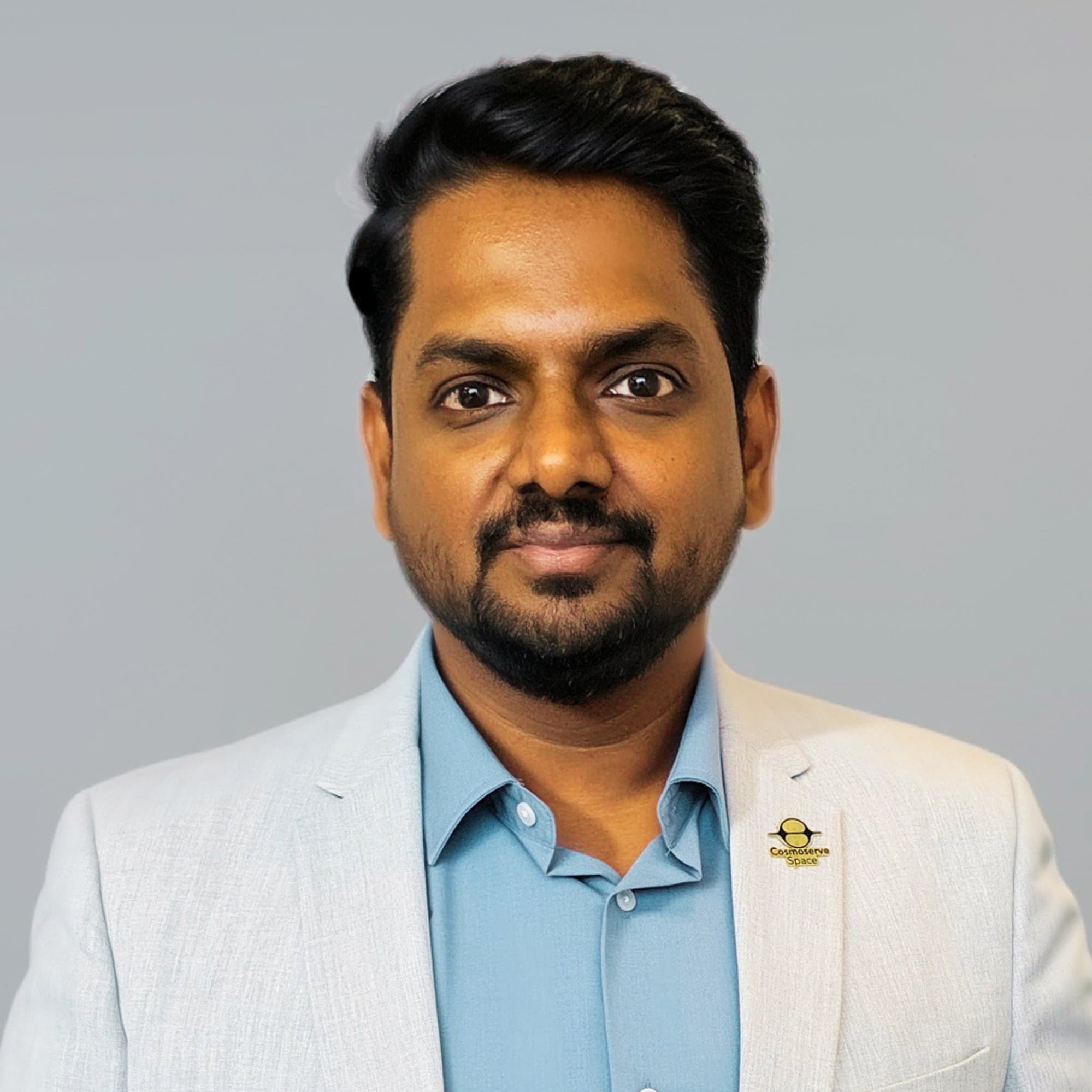
Building the Next Space Economy: Chiranjeevi Phanindra and Cosmoserve's Case for Orbital Maintenance
Chiranjeevi Phanindra, Founder & CEO of Cosmoserve Space, spent 14 years at ISRO working on re-entry and human spaceflight. Today, he is focused on a vital challenge: keeping Earth’s orbit usable.
Read Full Story