Category: Corporate Visionaries
Most leaders want to be remembered for what they built. Prasanth Prabhakaran wants to be forgotten by what he built: organizations strong enough to outlast their architects. From Kotak Securities to IIFL and YES Securities, where he served as Managing Director and CEO, his discipline remained severe: invisible leadership over executive theater, singular accountability over committee consensus, process maturity over founder dependency. After three decades, he represents a standard the sector still resists.
Prasanth Prabhakaran and the Discipline of Building What Holds
IndiSight Editorial
Apr 15, 2026
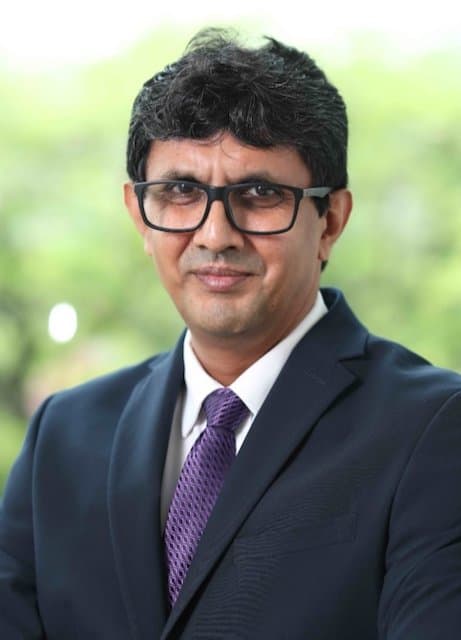
Prasanth Prabhakaran
Director · Cholamandalam Securities Limited
Mumbai/India
The story of India's capital markets is often told through numbers: more demat accounts, wider retail participation, faster execution, and a much broader base of investors entering the formal financial system, all of which counts, but the deeper story sits beneath those metrics in the institutional transformation that had to occur to make those numbers possible.
Every wave of financial democratization changes the burden placed on institutions, and once participation widens, trust stops being relational and shifts to operational, which means organizations have to work at a different order of magnitude where governance can no longer be ornamental and operating procedures can no longer be improvised. A market can become more inclusive in a few years, but an organization takes much longer to mature, and that gap between market velocity and institutional development is where most failures occur.
Prasanth Prabhakaran came of age professionally at precisely the moment when Indian finance was being forced to rethink how participation, technology, and trust could coexist at scale, and his leadership arc, from Kotak Securities to IIFL and then YES Securities where he went on to serve as Managing Director and CEO, unfolded inside that structural shift before extending into his current role at Watch Your Health. What stayed with Prasanth through those roles was the discipline required to sustain access once access became real, and the central question has remained consistent: when participation expands, what must an organization build underneath it to remain credible?
He has spent three decades building regulated businesses, mentoring founders, and studying what separates organizations that merely grow from those that can absorb pressure without losing coherence, and in a period that often rewards executive visibility as much as executive judgment, his philosophy carries a quiet severity. Leaders should carry pressure and convert it into clarity, teams should understand the goal while questioning the route and owning the execution, and capital arrives carrying someone else's belief, which means once the direction is clear, the leader's real work begins in clearing obstacles, tightening operations, and making the organization capable of doing its job without theatrical supervision.
The best part of a leader is when he or she is not noticed and it is the team that actually ends up doing everything.
That sentence explains more about Prasanth than a longer biography could, because he has rarely been interested in becoming the center of the organization but has been interested in making sure it can function when the center is forced to move.
Learning to build from zero
Prasanth's early career did not follow the polished route often associated with financial leadership, beginning with physics at Fergusson College and later management education at IRMA. Long before he was speaking about accountability, regulatory architecture, or organizational longevity, he had already learned that business begins where persuasion, product, and responsibility meet.
Kotak became the first major proving ground during a formative period for India's markets, when digital participation had not yet become routine and the transition from relationship-led intermediation to more self-directed investing was still taking shape. Prasanth thrived because he is drawn to formative stages, where the model is still being shaped, where the team is still being built, where a wrong structural decision can quietly weaken the future.
That instinct carried into IIFL, where his understanding of scale, product fit, balance-sheet discipline, and retail expansion deepened, and it carried again into YES Securities, where full organizational responsibility meant strategy, execution, governance, compliance, and stakeholder trust had to move in the same direction. Through each chapter, a pattern became visible: he kept entering businesses that needed architecture and leaving once the architecture was set and the firm had enough internal muscle to keep moving.
He says it with unusual directness that he likes building businesses from zero, and once they reach a certain scale, his interest starts to move, which is one of the rare admissions senior executives do not usually make out loud.
Founder first, product later
One of the clearest markers of Prasanth's worldview is the order in which he evaluates businesses, where many investors begin with the idea and respond to category size, product novelty, or market timing, but Prasanth does not begin there anymore because he begins with the founder. The first weight in his mind goes to the person and whether they have clarity, whether they have experienced setbacks, whether they know how to handle the down cycle without slipping into denial or panic, and then he studies the co-founder group and the wider team.
Only after that does he move into the structure of revenues, the ability to sustain operations, and the product itself, because products evolve and teams determine whether evolution is possible. This reversal came from experience, where he has watched brilliant products stall because the team could not scale them, watched founders ask for more time while refusing to confront visible operating weaknesses, and also watched quieter teams work through pressure, revise the model, and survive.
The framework he often returns to is AIR: accountability, integrity, and respect for capital, and it sounds deceptively simple until you hear how often those three failures sit behind startup collapse.
"The day the founder doesn't hold himself responsible for the numbers, for the process, for the business he is building, that is when failure begins."
Failure does not always arrive dramatically but sometimes begins in softer form, where a missed number gets explained away, a broken procedure gets hidden, and a delay is sold as strategic patience, which means accountability weakens, integrity starts thinning, and respect for capital follows.
AIR inside an organization
Ask Prasanth about culture and he does not reach for the usual executive vocabulary but talks about AIR instead, where AIR stands for accountability, integrity, and respect for capital, and the metaphor works because it shifts culture out of slogans and into survival. Accountability begins at the top, where the leader has to remain answerable for what happens in the organization, wins can be distributed but losses cannot be outsourced, and he is clear about the order of responsibility: the team should get the credit while the leader should carry the burden.
Integrity sits close to operating code, where once the firm begins to justify shortcuts, obscure facts, or normalize behavior that would not survive scrutiny, long-term weakness is already setting in. Respect for capital is the third element, where Prasanth speaks about capital with a seriousness that feels increasingly rare in a startup culture that can treat fundraising as validation rather than obligation.
"You have a fiduciary responsibility to protect that capital, grow that capital, and return that capital."
Capital is accountability made liquid, and that idea runs through almost every part of his thinking, whether he is discussing founders, boards, product experiments, or regulatory discipline.
From pressure to preparation
Prasanth is unusually honest about how his leadership evolved, where earlier in his career he was more forceful, more target-led, and less patient, and goals had to be met without him spending much time worrying about how each person beneath the target experienced the push toward it. Time transformed that, where the numbers never stopped mattering but what shifted was his understanding of how organizations get those numbers in a way that compounds instead of depletes.
“The first guy shouts. The second guy guides.”
That sentence arrives with the force of someone who has lived both versions, where in the first model the executive drives urgency, but in the second the executive still demands results while understanding that results become stronger when the people producing them are also becoming stronger. This shift transformed how he handled teams, where he stopped passing raw board pressure downward and instead absorbed it, filtered it, and converted it into actionables.
"You take it as a sponge and then give actionables to the team below."
Board anxiety, investor impatience, and quarterly pressure all exist, but the team does not need to inherit it in raw form because they need direction, standards, and enough room to think. That is also how he develops people, where he does not rush to solve every issue for them but lets them own the problem, make the call, and learn under pressure while he intervenes with questions, context, and guardrails.
What cannot be decided by committee
Prasanth has a strong sense of where committees, boards, and advisory groups belong, where boards protect ethics and governance, advisory groups challenge thinking, and management committees monitor execution, but there are decisions that cannot be made by committee because they require singular accountability.
If a business model has stopped working, if a strategy has to shift direction entirely, one accountable founder has to own that decision, and group discussion can inform it but cannot replace it. Committee structures can monitor and challenge but cannot absorb strategic accountability in the same way a CEO can, and once an organization begins to make turning-point decisions through diluted ownership, confusion enters strategy and the center weakens.
The thousand-day discipline
One of the strongest operating ideas Prasanth carries comes from his years at Kotak, where the broad frame was straightforward: the first year is for building, the second is for scaling, and the third is when the business has to prove itself against what it has consumed.
The core logic still guides him, though he has updated it for current startup realities, where businesses can have longer horizons and milestones may be staged differently, but his underlying discipline has not shifted. If the founder gave a map, the numbers along that map have to mean something, and milestones are where ambition becomes accountable.
He studies businesses for months before investing, tracking actual performance against stated commitments, and if progress is within reasonable range he remains supportive, but if the pattern shows drift, excuse-making, or denial, language about conviction does not move him much. He is fully aware that building categories takes time but is also aware that confusion often dresses itself up as patience, which is why he looks for operating rhythm, milestone fidelity, and behavioral seriousness.
The first seventy-two hours
The clearest test of Prasanth's philosophy came during the YES Bank crisis in March 2020, when YES Securities had settlement and banking structures tied to YES Bank, and if the flows stayed where they were, client money risked being trapped.
"Our priority on the first day was to protect our clients. Without our clients, you won't have a business."
What followed was one of those periods that reveal what an organization truly is, where regulators were contacted, exchanges were requested to temporarily hold payouts, another bank moved quickly enough to open the required settlement structure overnight, and client communication went out before the next day's trading began. This revealed something important about how Prasanth thinks under stress: he goes first to protection and next to execution, where the order carries weight because trust is restored when the client's real exposure has been handled.
The response did not emerge from improvisation alone but drew strength from prior discipline, credible relationships, clean coordination, and a team already used to functioning under standards, which means crisis did not manufacture coherence but exposed whether coherence existed already. He still speaks about that period with deep regard for the regulators and teams involved, because he has seen what serious regulatory coordination can prevent in a system where confidence and continuity matter as much as capital itself.
What India still has to learn
Prasanth's critique of India is about procedural maturity and the social cost of failure, where he believes too many organizations remain people-dependent where they should have already shifted to procedure-dependent operations, and too many ecosystems still treat entrepreneurial failure as disqualifying instead of developmental.
"Processes are laid down such that 99% of your regular business happens without intervention."
Mature organizations do not need senior people for ordinary motion, and senior people exist for exceptions, for judgment, for moments that fall outside the standard operating rhythm, which means if firms keep depending on individuals for regular functioning, scale remains fragile no matter how impressive the outer growth may look. He also believes India still needs a stronger safety net for entrepreneurial failure, where businesses that matter are rarely built in one clean attempt but are built in environments that can metabolize failure without permanently stigmatizing it.
That is part of why Bengaluru still holds such symbolic weight in the Indian startup ecosystem, where it feels more forgiving and allows people to come back, and Prasanth would like to see that culture travel farther because the absence of that safety net narrows the range of ambition the country is willing to fund.
Leadership lessons
Wider participation increases the burden on organizations long before it improves them.
Accountability is the first serious test of leadership because everything else weakens once it disappears.
Integrity does its most important work before anyone has a reason to praise it.
Capital should be treated as trust with deadlines attached.
Performance still matters, but the method used to build performance shapes the organization that remains.
Teams need standards, direction, and room to think, but they do not need unfiltered panic.
One accountable center keeps organizations from dissolving into committee confusion.
Milestones are where conviction meets reality.
Crisis reveals whether operating discipline was real or merely decorative.
Technology can widen access, but judgment remains the harder asset to build.
Organizations mature when ordinary decisions stop depending on exceptional people.
An executive's influence becomes visible in the strength of the system after the executive stops carrying it alone.
Prasanth's relevance extends well beyond capital markets because the pressures he has spent a career navigating now define many sectors at once, where participation is widening, trust is thinner, capital is available but more demanding, and technology can scale faster than judgment. He is describing a harder discipline: build carefully, listen early, respect capital, protect trust, develop judgment in other people, put procedure where personality once sat, and let the organization become strong enough to carry its own weight, which is work that may not generate the most applause but tends to leave something more useful behind.
Our Suggestions to Read
Discover The Leaders Shaping India's Business Landscape.

Education Leadership
The Human Advantage: Anu Monga on What Schools Must Still Create
Drawing on decades of leadership in international schools and education, Anu Monga reflects on what institutions must continue to create in a world where knowledge is increasingly accessible and shaped by technology.
Read Full Story
Investors & Catalysts
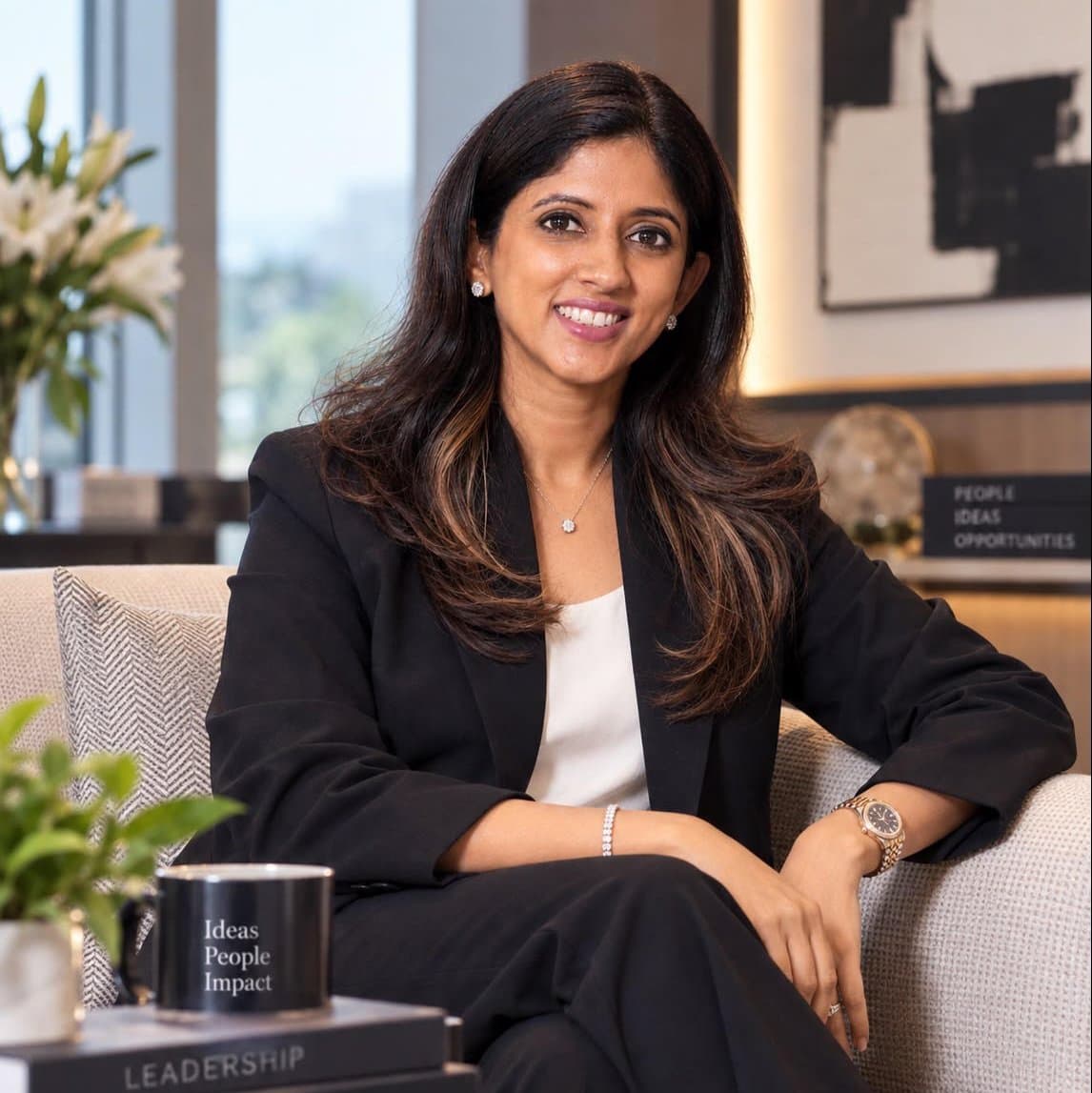
From Millet to Method: Rasika Prashant on Building What Consumers Return To
Rasika Prashant, CEO of NSRCEL at IIM Bangalore and Co-founder of Soulfull (later aquired by Tata Consumer Products) on consumer trust, category creation, Indian brands, and the founder discipline required after belief.
Read Full Story
Founders & Innovators
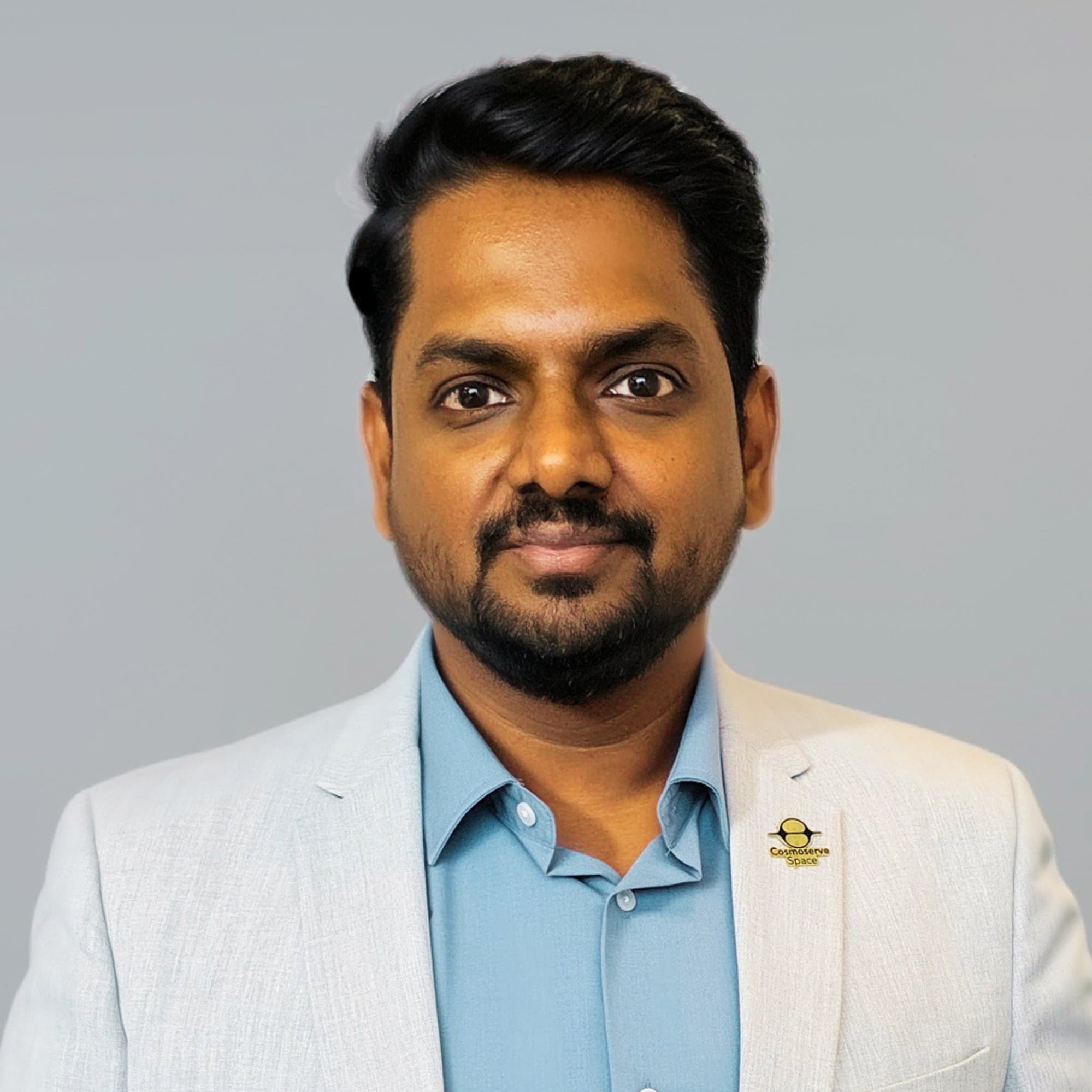
Building the Next Space Economy: Chiranjeevi Phanindra and Cosmoserve's Case for Orbital Maintenance
Chiranjeevi Phanindra, Founder & CEO of Cosmoserve Space, spent 14 years at ISRO working on re-entry and human spaceflight. Today, he is focused on a vital challenge: keeping Earth’s orbit usable.
Read Full Story