Category: Corporate Visionaries
Ruchi Tushir explores how AI, healthtech, legal technology, and enterprise intelligence are reshaping decision-making in regulated industries. Drawing from leadership roles across Microsoft, SAP, EY, and Wolters Kluwer, she examines trust, workflow integration, scalable leadership, data interpretation, and why judgment, reliability, and contextual intelligence increasingly determine long-term business value.
Ruchi Tushir and the Business of Trusted Judgment
IndiSight Editorial
May 10, 2026

Ruchi Tushir
VP and GM (Country Manager) · Wolters Kluwer
Gurgaon/India
A major shift is underway inside the world’s most consequential professions.
Medicine is increasingly shaped by evidence systems that evolve faster than journals and formal curricula. Legal work moves through searchable precedent across courts and jurisdictions with a speed no traditional research method can match. Tax and compliance teams operate in policy environments where interpretation changes quickly and often across multiple regulatory layers at once. The change goes well beyond digitization. Knowledge itself is being reorganized through systems that now sit much closer to the act of decision-making.
The business implications are substantial. Institutions have always been constrained by uneven access to expertise, by time pressure, and by fragmented information spread across people, teams, and legacy systems. Structured intelligence changes part of that equation. High-quality knowledge can now be delivered in context, at the point of need, in forms that improve judgment across organizations. In fields where decisions affect patient care, litigation outcomes, and regulatory exposure, digital systems begin to influence institutional performance directly.
Ruchi Tushir works inside that reality.
As Vice President and General Manager of Wolters Kluwer India, she leads a business serving healthcare, legal, and tax markets where trust carries unusual weight. Doctors, lawyers, and compliance professionals use such systems while making decisions that are later tested by patients, courts, regulators, clients, and internal leadership teams. Product quality, in such an environment, cannot be separated from professional credibility.
In healthcare, one wrong decision can alter the course of a life. One legal wrong reference could affect the outcome of a multi-million dollar litigation. Our products and content have to be so solid that there is no margin of error.
That standard shapes how she thinks about products, growth, hiring, partnerships, and market design. Many software categories can sustain visible iteration in public. Regulated knowledge platforms work under a much tighter discipline. Reliability has to be established early, and confidence has to deepen over time because the system is entering a chain of professional reasoning where consequences are real and accountability is personal.
Those demands have given Ruchi a leadership lens shaped by consequence, judgment, and institutional trust. Her work sits inside one of the hardest operating questions of the current decade: how do you build intelligent systems that strengthen human judgment while preserving responsibility, credibility, and trust?
The Early Discipline of Numbers
Ruchi began her career as a financial analyst, which gave her an early education in the hard language of P&Ls, cost structures, margin pressure, and commercial performance. Numbers taught her rigor. They also clarified what she wanted more of.
Financial analysis gave her a view of the business from above. She wanted to move closer to customers and closer to the points where technology changed outcomes in practice. That shift took her into consulting, where she worked with clients across India, the US, and the UK. The experience exposed her early to the fact that technology enters every market through a different operational and cultural filter.
A solution that appears straightforward in one geography often needs a very different business case somewhere else. A transformation effort that sounds compelling in a boardroom may land differently in a sector shaped by different incentives, different levels of maturity, and different expectations around trust. Product strength still matters, though product strength alone rarely decides the outcome.
SAP deepened that understanding. The company was already well established in ERP, yet it was also trying to build acceptance for categories that the market did not automatically associate with its core identity. Customers often trust what a company has already proven. They are slower to extend that trust into newer categories.
Ruchi moved across business development, consulting, value engineering, and market programs. She learned how much market creation depends on helping customers understand where a product fits, what problem it solves, and why its relevance should matter now rather than later.
EY added another dimension. By that point, she was thinking less about isolated problem-solving and more about how teams, practices, and capabilities could be developed in ways that would scale across larger opportunities. The question of scalability, which later became central to her leadership, had already begun to take shape.
Her move to Microsoft expanded that question considerably. The scale was larger, the internal complexity was higher, and the technologies she was working with were entering markets that had not fully learned how to absorb them.
When Execution Stops Being Enough
For a long time, Ruchi believed execution would carry most of the weight.
She still values discipline, consistency, and high-quality delivery. Experience changed her understanding of where execution reaches its limit.
“I have always strongly believed that if I fix my execution, I am going to get the results. I still believe in that. But it has to be matched with context and judgment.”
That insight sharpened during her Microsoft years, especially while working on technologies such as AI, IoT, and platform solutions at a stage when many customers had not yet formed clear demand around them. Teams could execute extremely well and still underperform because the market was not ready, the chosen sectors were not right, or the sequencing of entry was off.
“When we were taking IoT to the market, was the market ready at that point in time? Were we too early? Were the sectors that we were choosing the right ones to go after?”
Many businesses still overvalue visible execution while underestimating the quality of judgment required in uncertain markets. Activity is easier to measure. Judgment is much harder. Yet in ambiguous environments, judgment determines whether effort compounds or dissipates.
That distinction now shapes how she thinks about leadership. Skill matters. Work ethic matters. Senior capability depends heavily on whether a person can simplify complexity, read a market, and take ownership of an unresolved problem.
Nobody’s going to define clearly to you what you have to do. Leaders who can simplify the complex and own the problem statement will find solutions.
The point is practical. Leadership becomes more valuable as the environment becomes less defined.
Alignment Before Scale
Another lesson from Microsoft became just as important.
“I may have my own KPIs, but I cannot succeed until there are five more people who care about that result.”
In matrixed organizations, formal responsibility explains only part of how value gets created. Product teams, legal teams, compliance groups, market leaders, and global decision-makers all shape whether a target is actually deliverable. A leader therefore has to work not only through authority, but through alignment.
Country leadership at Wolters Kluwer made that lesson even sharper. Running India means carrying P&L responsibility inside markets with long cycles, sector-specific buying behavior, regulatory pressure, and global product structures that do not always map neatly onto local conditions. A country leader in that position has to keep making the market understandable to the global system and the global system useful to the market.
What emerges from her description is a more grounded view of influence. Business progress at scale depends less on individual brilliance than on whether multiple parts of the organization can move with coherence at the same time.
From Busyness to Business Outcome
When Ruchi entered Wolters Kluwer India, she found an organization with visible effort and a common management problem. Busyness had become easier to see than impact.
“Everybody is busy. I am doing this, I am doing this, I am doing 10 things. But what does success really look like?”
The issue was not weak commitment. The issue was interpretation. A team member could define success through completed tasks. A country manager has to define success through revenue quality, profitability, market position, customer confidence, and the standing of the local business inside the global organization.
“How do you articulate that one activity, five activities, ten activities to what needle does it move which actually impacts the overall success?”
Her answer involved repeated communication, repeated linkage between work and consequence, and a more disciplined explanation of how daily activity affects the business as a whole. Work only becomes meaningful at scale when the people doing it understand how it affects what the organization ultimately has to deliver.
The deeper point is managerial. Organizations rarely fail because people are inactive. They fail because effort is poorly connected to outcomes that matter.
Leadership Has to Spread
One of the strongest ideas in Ruchi’s leadership philosophy concerns the difference between a visible spike and a stronger system.
Leadership is a scalable trade. It is not a spike.
Many organizations still reward spikes far more than they build spread. One exceptional performer can create short-term lift. One strong hire can generate confidence. A stronger business needs much wider distribution of judgment, skill, and ownership.
“It is not about your individual success. You actually have to build those pockets of excellence, pockets of that skill in your organization.”
Her reflections on hiring come from the same place. Years in elite, high-performance firms had built a familiarity bias. Certain profiles felt reassuring because they resembled what had worked before.
“You start forming an opinion on familiarity. This is the kind of resource that would work best in every equation. That familiarity starts biasing your decisions.”
What she values more heavily now is the capacity to simplify complexity and own the problem.
If you own up a problem, if you own up a delivery, if you own up a success, you will find solutions.
That view gives her leadership philosophy commercial substance. Scale depends on the spread of capability. Capability depends on judgment. Judgment depends on how people are chosen, trusted, and developed.
Global Products, Indian Realities
Country managers in multinational firms live with a recurring tension. Global systems prefer consistency. Local markets carry different economics, different customer behavior, different cycle times, and different regulatory conditions.
When asked how often global strategy clashes with local market reality, Ruchi answered immediately: “All the time.”
Her way through those tensions is practical. She goes back with data, with customer understanding, and with enough operational detail to make the local case credible inside a global system.
A good example came through a healthcare product discussion around language. A global team might assume that regional-language support in India would obviously create more value. On the ground, the reality is more layered. Medical education and professional usage continue to run heavily through English, and translation can lose meaning where nuance matters most.
“It is never about yes or no. I think this needs to first get addressed in other markets, let’s look at the feedback, and then let’s try it as a pilot in India.”
The local market has to be made legible in terms the global system can work with, and local nuance has to be translated into a form that still preserves product discipline.
Country leadership, in her case, is as much about interpretation as it is about execution. The quality of judgment lies in knowing what should travel, what should be adapted, and what should wait.
Strategic Choice Under Incomplete Information
A recurring theme in Ruchi’s thinking is reversibility.
She is careful about technology choices that solve an immediate market need while creating long-term constraints that are expensive to undo. Her framework is commercial rather than theoretical. What happens if the decision has to be changed later? What is the financial effect? What is the customer effect? What happens to trust if the market experiences correction after adoption?
That way of thinking comes through strongly in how she talks about platform strategy. Near-term market entry can matter. Speed can matter. So can long-term control, adaptability, and product architecture. Strategic discipline lies in understanding the trade-offs early rather than discovering them after the market has moved.
In fast-changing categories, especially those shaped by AI, the winners are often less defined by who moved first than by who retained room to evolve without breaking trust.
Data Is Easy to Gather, Harder to Read
Ruchi is clear about another issue that has become common in many businesses.
“Everybody loves to say that I am a data-driven decision maker.”
The issue, in her experience, is not lack of access to information. The issue is interpretation. Leadership teams now have dashboards, reports, and large volumes of information, though many meetings still lose time to debating what the numbers mean and which conclusions can be trusted.
The power actually lies in how you synthesize and how you make sense out of that data set.
Collection has scaled faster than interpretation. Organizations gain more from stronger sense-making than from simply adding more reporting layers.
The observation matters because modern management can easily confuse measurement with insight. Numbers do not explain themselves. A stronger institution becomes better at reading signals, assigning relevance, and acting with discipline.
Healthtech Is Moving Into the Workflow
Ruchi sees healthtech and medtech in India entering a more demanding phase.
Doctors remain constrained by time. Students consume and process information differently from earlier generations. Patients increasingly arrive after engaging with digital tools and AI systems. Public digital health efforts are expanding. Product value in this environment depends more heavily on whether the system fits naturally into how care, study, and research already happen.
“How can we integrate into the workflow of a physician, a student, or a practitioner?”
Healthcare tools and medical education systems shape future professionals as much as they serve current ones. Decisions made in those categories carry long-term influence over how institutions define expertise and quality.
Her view of the category is grounded in operational reality. Systems earn their place when they reduce friction, support judgment, and become usable in the actual rhythm of practice.
Value Under Pressure
India is often described as a price-sensitive market, but that description is incomplete. The more important reality is that value has to be proven with unusual rigor. Buyers operate under cost pressure, long approval cycles, and a high threshold for practical relevance. Pricing enters the conversation early, though it does not settle the whole decision.
Ruchi understands that dynamic well. In sectors such as healthcare, legal, and tax, the deeper question is rarely about price alone. It is about what kind of risk a buyer is willing to carry. A lower-cost solution may appear attractive in the short term, but reliability, evidence quality, and long-term usability matter far more when the output influences clinical decisions, legal interpretation, or regulatory posture.
Her reading of the market is measured. India continues to reward commercial sharpness, but the stronger institutions are increasingly evaluating technology through a wider lens that includes quality, trust, sustainability, and fit for purpose. That shift creates room for companies that can demonstrate enduring value rather than compete only on immediate economics.
At a broader level, Ruchi sees this as part of India’s own evolution. The long-term opportunity lies in building stronger products, deeper intellectual property, and more durable value, so the market is recognized not only for execution capacity, but for the quality of what it creates.
Leadership Lessons
Strong execution still matters, but it does not rescue weak timing or a poor read of the market.
Busy teams can create the impression of momentum. Real progress begins when people understand what their work is changing in the business.
Scale becomes more durable when judgment and ownership are carried across the organization rather than resting with a few standout performers.
Familiar pedigrees can be misleading. A strong résumé does not always predict who will thrive in a more complex or unfamiliar setting.
Country leadership often depends on making local reality credible enough for global teams to understand, trust, and act on.
Technology choices become stronger when leaders think early about what happens if the decision has to change later.
Large amounts of data do not automatically improve decision-making. The advantage sits with teams that know how to interpret what they are seeing.
Products in healthcare gain staying power when they fit the actual rhythm of care, learning, and professional practice.
Price always enters the conversation in India, but stronger buyers increasingly evaluate quality, durability, and long-term value with greater seriousness.
Markets build stronger reputations over time when they create deeper products, stronger intellectual property, and more defensible value.
The Long View
Ruchi’s thinking keeps returning to capability, trust, judgment, and consequence. Those concerns fit the sectors she serves, where weak recommendations, poor references, or diluted standards travel far beyond the immediate moment in which they appear.
A more demanding phase of enterprise technology is taking shape. Intelligence, reliability, workflow fit, and institutional trust will increasingly shape which firms matter most. Ruchi is building in that direction already. In markets where getting it right carries a very different cost, trusted growth carries a different weight.
Our Suggestions to Read
Discover The Leaders Shaping India's Business Landscape.
Founders & Innovators
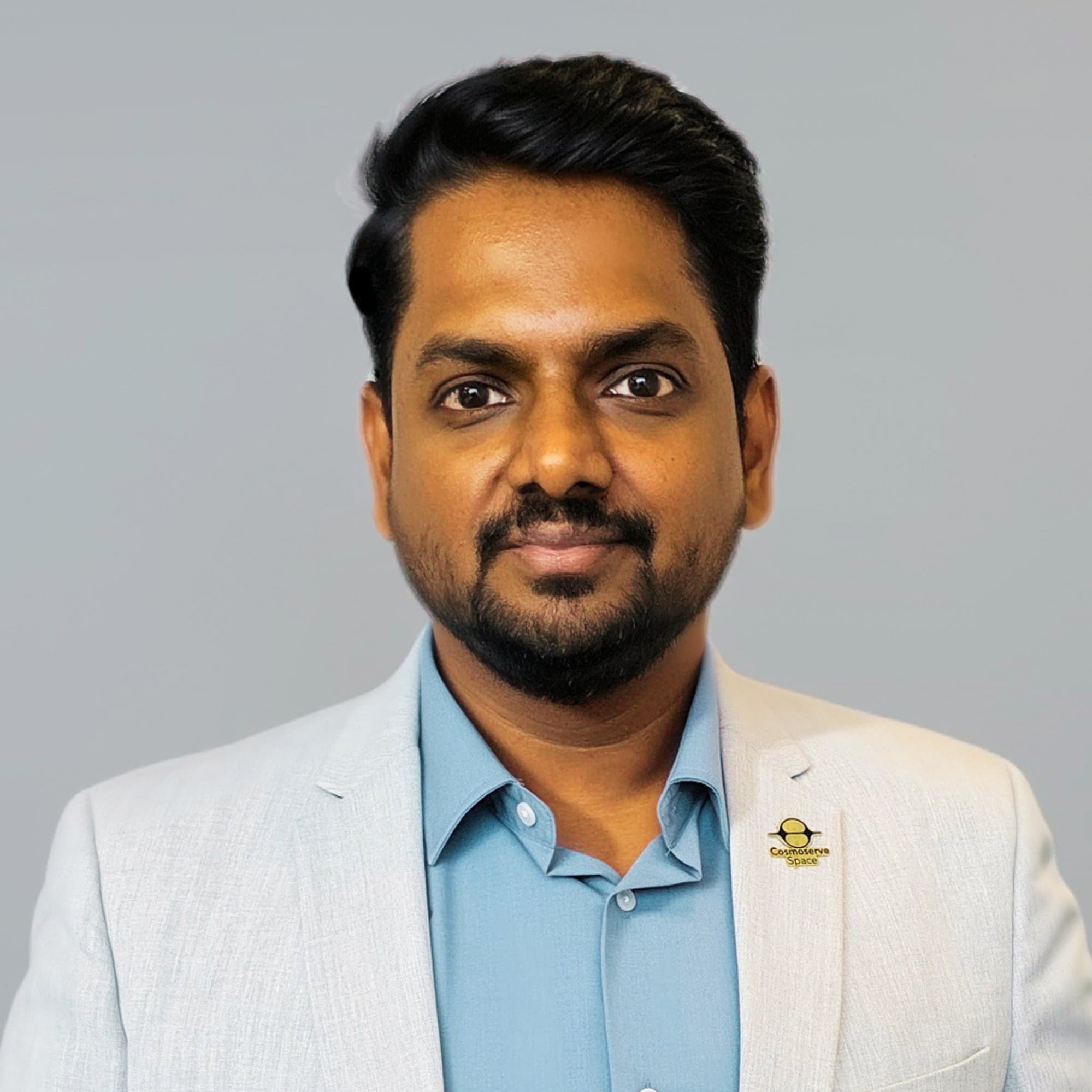
Building the Next Space Economy: Chiranjeevi Phanindra and Cosmoserve's Case for Orbital Maintenance
Chiranjeevi Phanindra, Founder & CEO of Cosmoserve Space, spent 14 years at ISRO working on re-entry and human spaceflight. Today, he is focused on a vital challenge: keeping Earth’s orbit usable.
Read Full Story

Corporate Visionaries
Shashank Sahni on What Success Leaves Out
Shashank Sahni, Google’s Managing Director of Global Ads Solutions, reflects on what customers reveal, what ambitious teams need from their leaders & what the mountains and marathons have taught him about going further.
Read Full Story

Corporate Visionaries
Clinical Multiplication: Divesh Singla on the Healthcare AI Case That Headlines Keep Missing
Divesh Singla, Managing Director, India at Veradigm, brings two decades in healthcare technology to the AI question leaders cannot avoid: how to expand clinical capacity without weakening human judgment.
Read Full Story