Category: Investors & Catalysts
Pradeep Dhobale’s leadership journey across ITC, Hyderabad Angels, and sustainability-led investing reveals how governance, capital allocation, institutional trust, and operational discipline shape resilient businesses. The article explores startup ecosystems, founder evaluation, green entrepreneurship, and why long-term competitiveness increasingly depends on systems thinking, responsible leadership, and sustainability embedded into business economics.
Pradeep Dhobale and the Hard Work of Building Serious Enterprises
IndiSight Editorial
May 10, 2026
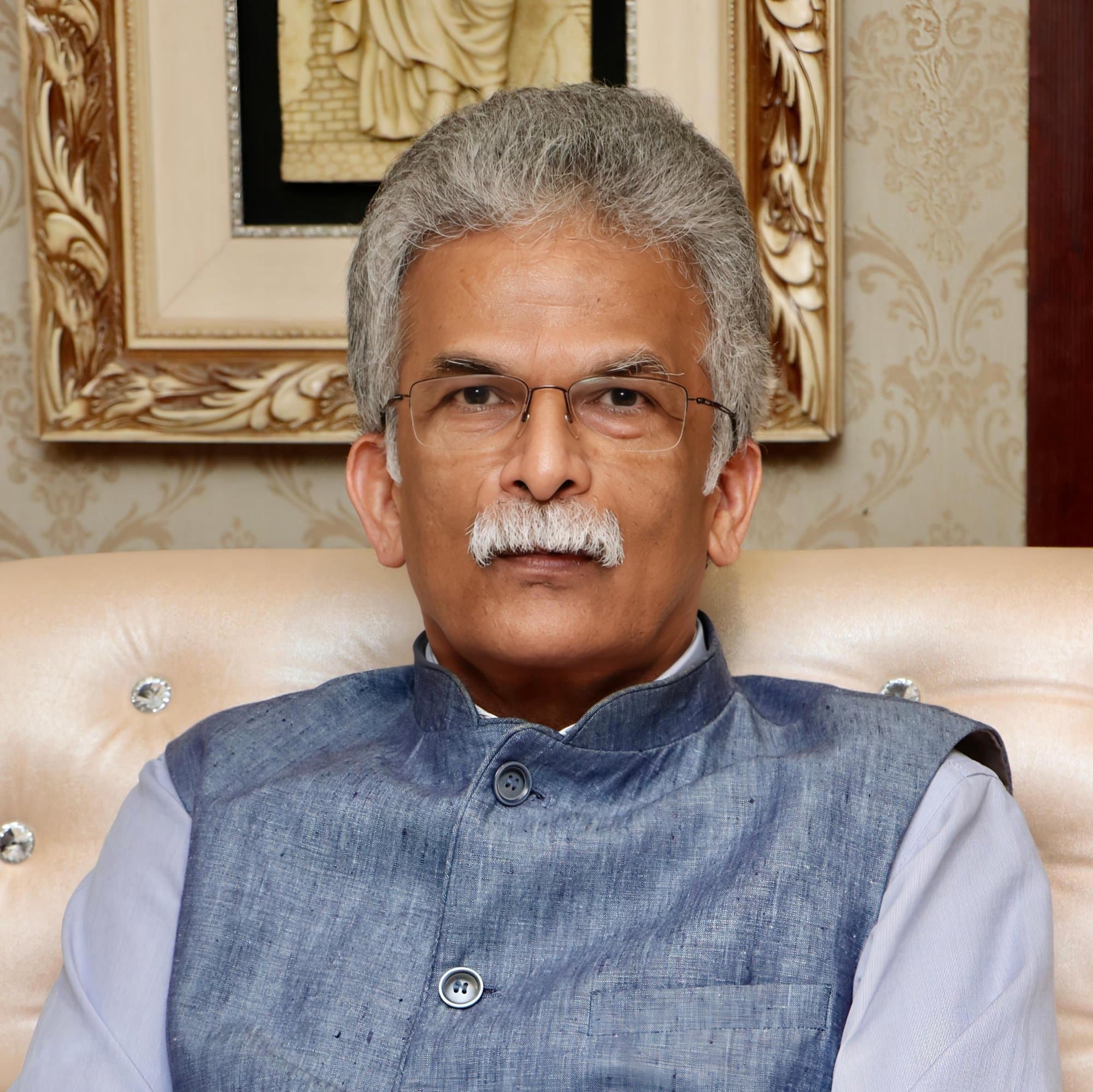
Pradeep Dhobale
Chairman · Hyderabad Angels
Hyderabad/India
The quality of leadership is increasingly being tested through a set of questions that cut across traditional business boundaries. How should companies think about competitiveness when resource security becomes uncertain. How should capital be allocated when long-term resilience matters as much as short-term returns. How should sustainability be embedded into the operating model rather than treated as a separate agenda. And how should founders and institutions be assessed when growth alone no longer explains business quality. These questions are now central to strategic decision-making across industries.
Few leaders have worked across all of these dimensions with real operating depth. That is what makes Pradeep Dhobale’s career especially relevant. Over several decades, he has operated across industrial leadership, finance, capital allocation, sustainability-led business building, and the startup ecosystem. At ITC, he worked in a business where manufacturing discipline, raw material strategy, product development, and investment decisions were closely connected. Later, through Hyderabad Angels, the Hyderabad Angels Fund, and the Green Entrepreneurship Council at CII Green Business Centre, he extended that experience into enterprise-building at an earlier stage, where systems are weaker, capital is less patient, and leadership quality is revealed faster.
Capital is neutral. In the hands of a purpose-driven entrepreneur, it creates enormous value. In the hands of the wrong system, it destroys value.
That statement offers a strong entry into the way Pradeep thinks. He sees capital, governance, sustainability, and enterprise quality as deeply connected. He understands that business strength depends on scale, discipline, and on the degree to which these elements reinforce one another over time.
Learning Range Before Authority
Pradeep’s professional formation came through assignments whose value became clear only over time. He joined ITC after IIT Bombay as a chemical engineer, but his first assignment was with a machinery manufacturer in Kolkata producing equipment for ITC’s paper operations. For a young engineer, the move could easily have looked misaligned with his training. It became one of the most useful parts of his education.
“If the machines they are producing for us, are not good enough, then the product that we produce will also not be good.”
The lesson carried far more than technical value. It taught him that business quality is usually shaped much earlier than customers or investors ever see it. Weak machinery creates weak process control. Weak process control affects output. Weak output becomes a market problem. By the time the market reacts, the source of failure is already old.
Over time, he moved through production, product development, marketing, project execution, and later finance and capital allocation. These shifts expanded his field of judgment. A specialist can improve a function. A serious leader learns where functions lean on one another, where one decision quietly reshapes another, and where performance begins to weaken long before the numbers reflect it.
Conviction That Can Travel
One of the more useful aspects of Pradeep’s thinking is the way he defines conviction. In many organizations, conviction is described as a personal strength. He describes it in a more demanding way. For him, conviction becomes meaningful when it can travel through an institution and change collective behavior.
He often recalls the influence of Philip Crosby’s idea that “quality is free.” Around him, the operating consensus pointed in the opposite direction. Better quality seemed to require better raw material, tighter systems, more scrutiny, and more cost.
Pradeep approached the issue through debate, resistance, and experiment, allowing the case to strengthen through evidence.
“We used to have daily contribution statements. In the first few days it showed negative. At the end of the quarter, it became positive.”
The shift happened because rework fell, waste fell, complaints fell, and collections improved. A cost increase in one part of the chain gave way to healthier economics across the whole system. The larger lesson had little to do with quality alone. A leader’s private conviction remains strategically weak until the organization has absorbed it, tested it, and made room for it in practice.
That pattern repeated later when ITC entered newer categories like dairy and then built a serious food business. Resistance came from the places one would expect. Finance worried about returns. Teams worried about feasibility. Existing players were already strong. What mattered to Pradeep was whether the organization knew how to convert doubt into better-designed commitment.
Sustainability Has to Enter the Economics
The forestry chapter at ITC is best understood as business design under pressure.
When traditional access to forest-based raw material became constrained, the paper industry had to reconsider the future of supply. ITC moved toward farmers. That choice demanded more than procurement. Farmers had to be persuaded to think in longer cycles. Financing patterns had to be redesigned. Research had to support species selection and productivity. Trust had to be built before supply could be secured.
Over time, the program scaled to roughly 100,000 hectares, according to Pradeep’s account, and changed the economics of the system.
“We found it has an environmental impact, it has a social impact with creating employment in the rural area, and it has a bottom-line impact.”
That line captures the standard he applies. Sustainability becomes strategically serious when it changes sourcing, productivity, cost logic, or resilience. When it stays outside the economics of the business, it remains vulnerable to every future cut, every leadership shift, and every period of commercial pressure.
Board-Level Finance and the Scale of Judgment
A major shift in Pradeep’s career came when he moved into a board-level role with finance and capital allocation responsibilities. That change widened his perspective considerably. Running a business well is one challenge. Deciding which opportunities deserve capital, which ambitions deserve patience, and which priorities deserve refusal is another.
He came into this role through industrial experience and capital-intensive project execution. That gave him a practical feel for timing, asset productivity, sequencing, and the cost of getting large decisions wrong. He had seen what investment has to become on the ground before it deserves approval in the boardroom.
That background explains why he has always been wary of growth resting on weak systems. He has seen institutions continue looking successful while discipline was quietly weakening underneath them. Revenue can rise. Valuation can rise. Public standing can improve. Yet the system itself can still be getting weaker.
Capital as Energy
Pradeep’s view of capital is shaped by a simple but powerful analogy. Capital behaves like energy. It carries force, but never a moral direction of its own. In a strong system, it builds capacity, sharpens execution, and rewards discipline. In a weak one, it magnifies disorder and speeds up failure. That is why he keeps returning to the same underlying concern. Before asking how much capital is available, one must ask what kind of system is receiving it.
Capital That Participates and Capital That Builds
One of the clearest distinctions in Pradeep’s current thinking is between capital that participates and capital that builds. It is a useful distinction because it exposes a quiet weakness in much of the startup ecosystem.
Participation capital is now common. Professionals write cheques, join syndicates, attend founder events, and stay close to innovation. Building capital asks a harder question. What value is being added beyond the cheque. Can the investor open a market? Can the investor create trust with a customer, regulator, or later-stage fund. Can the investor improve the founder’s path to scale by reducing time lost to credibility gaps.
At Hyderabad Angels, our tagline is value beyond capital.
For Pradeep, that phrase has to be operational. He and his colleagues actively think about which members can help with market access, which can create institutional introductions, and where a founder needs challenge or access instead of simple encouragement. This is a serious interpretation of early-stage investing.
He remains skeptical of systems that reward front-loaded opportunism and under-reward patient performance. In his view, capital quality depends on governance quality, policy continuity, and institutional trust.
Founders Reveal Themselves Outside the Pitch
Pradeep is unusually candid about the limits of diligence. That candor gives his views more weight than smoother investor language would.
He speaks of a mobility venture that had strong positioning, credible backers, traction, and a compelling story, yet later collapsed because of misuse of funds across related entities. The first weakness sat with the people running the system.
On the other hand, he also mentions a startup he is closely associated with whose founder speaks about “increasing milk yield of a million cattle, rather than tripling bottom line in four years.” These are the founders Pradeep tends to take more seriously. Purpose, in his view, creates a different quality of seriousness. It usually reflects patience, a wider field of responsibility, and a deeper relationship with the problem being solved.
“Pitch decks now are perfect. With ChatGPT and other such tools, everything can look perfect.”
That line captures the new difficulty in founder assessment. Presentation quality has become a weak proxy for seriousness. Narrative polish is easy to produce. Character is not.
Pradeep’s answer has been to go deeper. Spend more time. Watch co-founder dynamics. Notice hiring patterns. Understand how people spend, how they react to friction, and how they handle difficult questions. One of the most valuable signals for him is co-founder fit. A company can look commercially healthy while the founders are already moving toward different endgames.
A few founder signals matter to him repeatedly. Can the founder discuss risk without collapsing into defensiveness? Does hiring reflect merit or convenience? Is governance treated as a burden or as a stabilizing discipline. Does the founder want investors only for money, or also for challenge, access, and accountability. These are not mechanical filters. They help him distinguish seriousness from performance.
Fast Growth Exposes Responsibility
Pradeep’s view of growth is less romantic than much of startup writing. He sees fast growth as a test that reveals whether responsibility entered the company early enough.
Leadership is all about people at the end of the day.
In his hands, that sentence is managerial. He ties it to role clarity, accessibility, lived operating experience, and the willingness to hire people stronger than oneself in key areas.
He gives an example from a food company where the founder invested early in worker conditions and food because he believed a health-focused company should not be built on weak operating conditions. During COVID, the workforce stayed more stable than in many other cases. That was the result of earlier choices that had already built loyalty and trust.
Why Green Entrepreneurship Needs a Different Path
Pradeep’s work with the Green Entrepreneurship Council adds an important dimension to his profile because it shows him doing more than investing or mentoring. He is helping shape the support system around green ventures.
These companies move from idea to scale through a slower path shaped by pilots, validation, and institutional trust. In clean technology, waste systems, and energy efficiency, technical proof matters disproportionately. Enterprise trust matters disproportionately.
“Pilots become very important.”
That observation points to a real weakness in many startup ecosystems. They are set up to support ideation and incubation. Far fewer know how to support the missing middle between incubation and scale. That means business-model refinement, corporate access, technical proof, governance development, and later-stage readiness.
This is where Pradeep’s industrial and board-level experience fits especially well. He understands what large institutions need before they take a startup seriously. He also understands how difficult it is for a young company to reach the right decision-maker without a transfer of credibility.
Ecosystems Are Revealed by What They Reproduce
Pradeep’s thinking on ecosystems is more useful than most city-level startup commentary because he judges ecosystems by what they reproduce, not by how busy they look.
You test ecosystem health. How many startups are crossing that ten-year balance. Are there more co-investments happening. Are startups solving more local problems or they are following what’s in fashion?
That is a demanding standard. It removes events, hype, and category excitement from the center of the conversation. He wants survival. He wants co-investment trust. He wants firms solving grounded problems.
His reading of Bangalore follows this logic. The city’s advantage came from startup activity that later widened into wealth, mentorship, and risk capital for the next generation.
He sees Hyderabad growing more serious, though he remains careful. Universities, corporates, research bodies, and founder enthusiasm all matter. Their real value appears when they begin strengthening one another.
India’s Development Questions Are Institutional Questions
Pradeep’s answer on Viksit Bharat is useful because he strips away rhetoric and returns the discussion to literacy, productive employment, healthcare, poverty reduction, institutional maturity, and research intensity.
He is also clear about sequencing. Better institutions attract more reliable capital. Better capital funds more productive investment. Better investment improves employment and income. Rising income strengthens consumption, expands economic capacity, and creates the surpluses required for deeper innovation. He is asking whether India can create the conditions that make stronger enterprise and innovation possible at scale.
He has cited India’s R and D intensity at roughly 0.6 to 0.7 percent of GDP, against around 2.5 percent for China, 3.5 percent for the United States, and 5.5 percent for Israel, based on the figures he referenced. The broader point lies in the discipline behind those numbers. Countries become serious innovation economies through long-term investment discipline, stronger institutions, and larger surpluses.
Leadership Lessons
A leader’s conviction matters less than the organization’s ability to carry it.
Functional depth matters, and range across adjacent functions improves judgment.
Sustainability becomes strategic when it changes economics and operating discipline.
The usefulness of capital is shaped by governance discipline, institutional trust, and the quality of the system receiving it.
Early-stage investing becomes far more valuable when capital is matched by access, credibility, and active support.
Founder quality becomes visible through conduct, hiring choices, governance habits, and response to scrutiny.
A founder’s attitude toward governance often reveals the quality of the enterprise they are trying to build.
Fast growth reveals whether responsibility entered the company early enough.
Pilots and enterprise validation matter disproportionately in green and deeptech sectors.
Strong ecosystems recycle learning, trust, and capital into the next layer of firms.
Productive employment and stronger institutions matter more than startup volume alone.
Reinvention becomes meaningful when it expands usefulness.
Pradeep’s value as a business thinker comes from the fact that he has worked across multiple layers of consequence without losing the thread that connects them. He has seen how industrial systems operate, how capital gets allocated, how founders are judged, how younger firms gain credibility, and how ecosystems become stronger when trust and capability reinforce one another. That makes his point of view broad, connected, grounded, and unusually useful in a business environment where activity is easy to stage and seriousness is still hard to build.
Our Suggestions to Read
Discover The Leaders Shaping India's Business Landscape.
Founders & Innovators
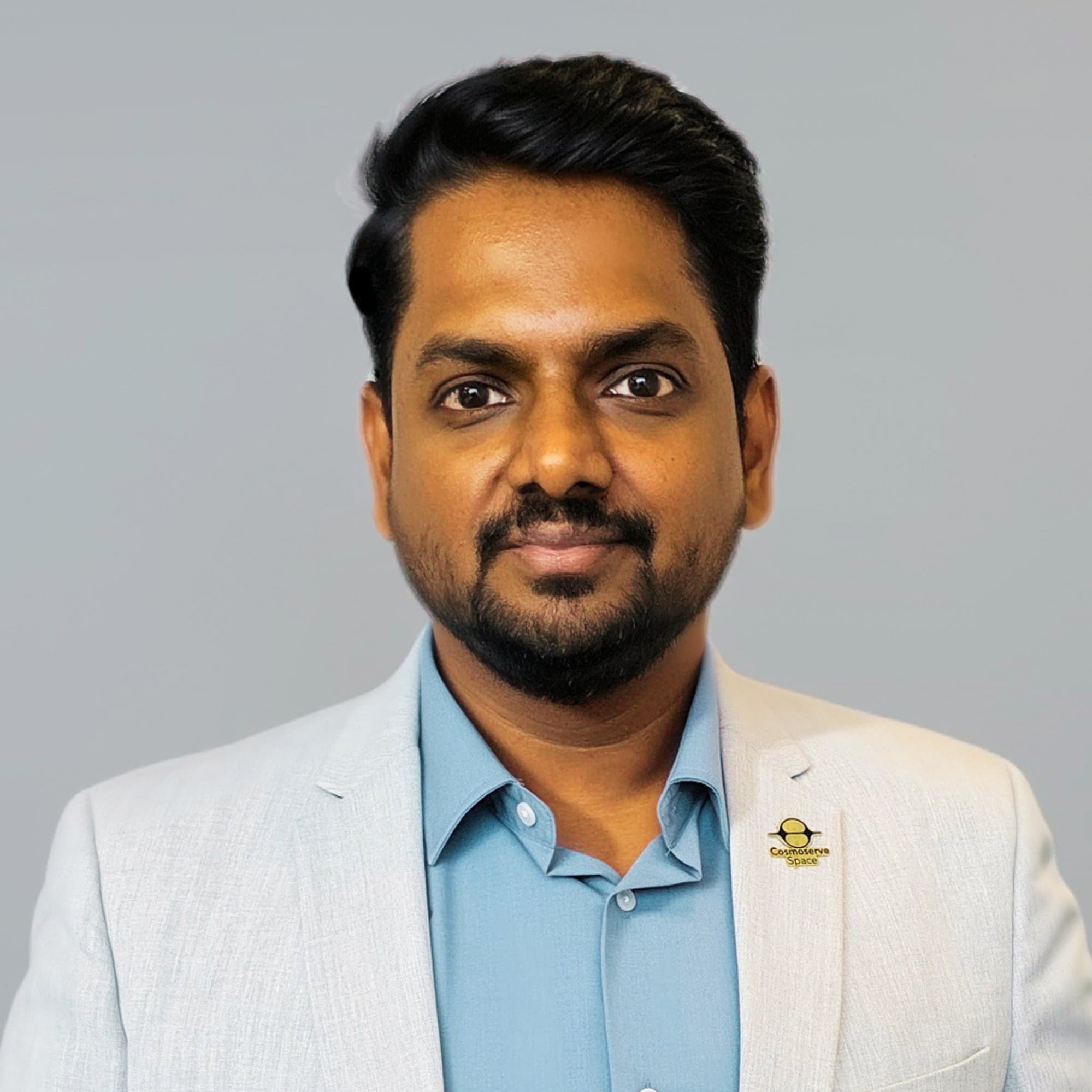
Building the Next Space Economy: Chiranjeevi Phanindra and Cosmoserve's Case for Orbital Maintenance
Chiranjeevi Phanindra, Founder & CEO of Cosmoserve Space, spent 14 years at ISRO working on re-entry and human spaceflight. Today, he is focused on a vital challenge: keeping Earth’s orbit usable.
Read Full Story

Corporate Visionaries
Shashank Sahni on What Success Leaves Out
Shashank Sahni, Google’s Managing Director of Global Ads Solutions, reflects on what customers reveal, what ambitious teams need from their leaders & what the mountains and marathons have taught him about going further.
Read Full Story
Corporate Visionaries
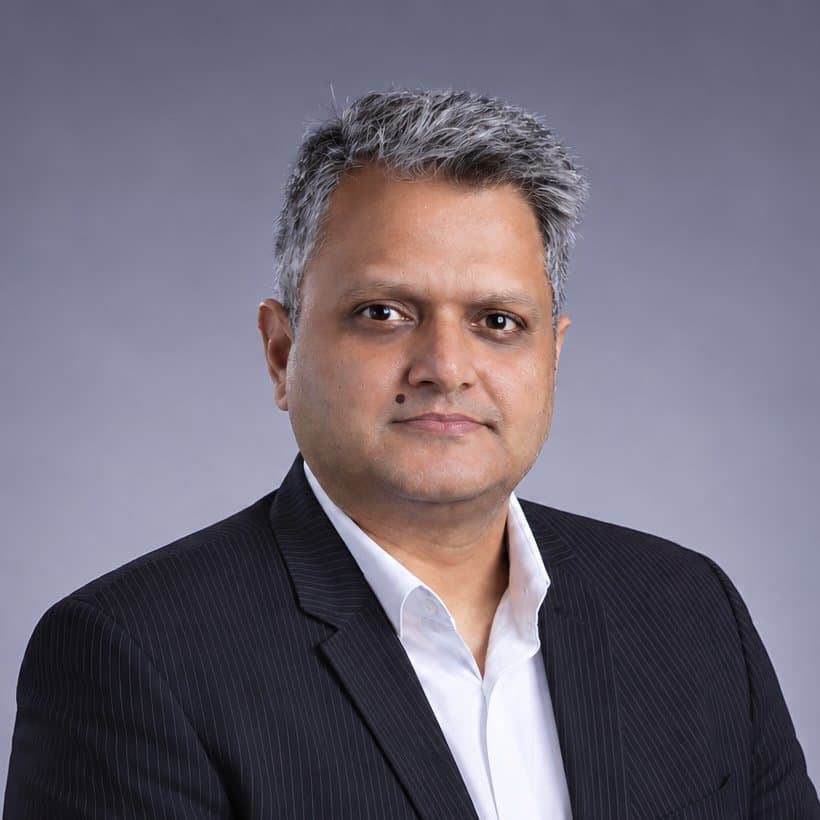
Clinical Multiplication: Divesh Singla on the Healthcare AI Case That Headlines Keep Missing
Divesh Singla, Managing Director, India at Veradigm, brings two decades in healthcare technology to the AI question leaders cannot avoid: how to expand clinical capacity without weakening human judgment.
Read Full Story