Category: Corporate Visionaries
Kaushik Das argues that modern technology has advanced faster than human understanding. True leadership, he says, is not about accelerating change but about restoring coherence: aligning intelligence with empathy, judgment, and ethical awareness. Organizations that endure will be those that learn consciously, adapt thoughtfully, and turn capability into wisdom.
When Capability Outruns Comprehension : Kaushik Das on Designing Smarter Organizations
IndiSight Editorial
Mar 8, 2026
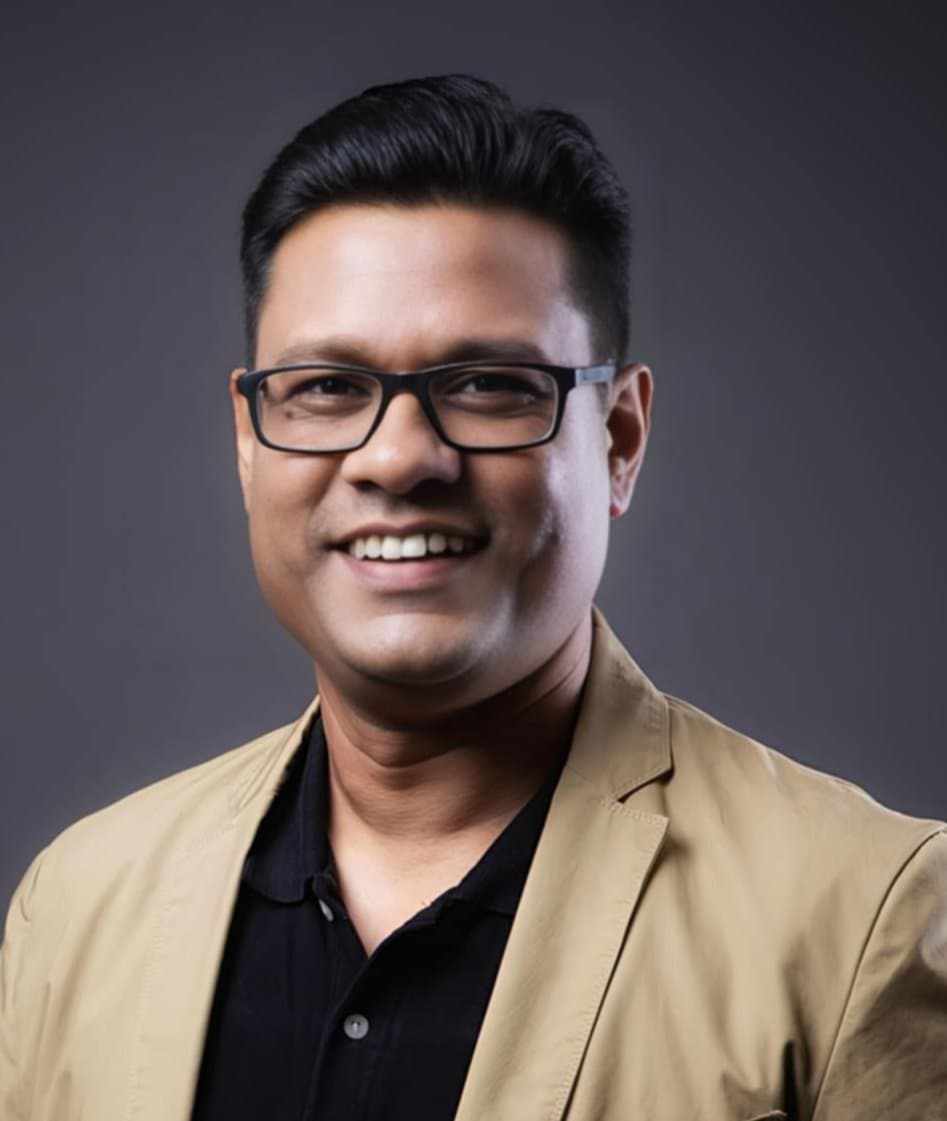
Kaushik Das
Executive Strategic Advisor and Consultant
Bengaluru
Progress often moves faster than understanding. Industries evolve until capacity exceeds comprehension. The industrial age built machines before it built safety codes. The digital age writes algorithms before it defines meaning. Both reveal the same truth: tools multiply faster than wisdom.
Modern enterprises operate inside that gap. Technology is abundant, yet coherence remains elusive. Data races through networks that rarely interpret what they collect. Automation executes with precision, but purpose still requires human sense. Leadership, Kaushik Das believes, is now about restoring intelligence that is organizational, not artificial.
Across two decades, Kaushik has lived at the frontier where analytics meets empathy. His journey has traversed global enterprises and fast-moving digital ventures, each demanding that he design systems capable of learning while they change. His question has stayed constant: can organizations evolve as intelligently as the technologies they adopt?
Until recently, he led the global capability center of a family of American retail brands, building shared operations and technology platforms that connected thousands of people. The role required integration and reflection in equal measure. “Technology is no longer scarce,” he says. “Alignment is.”
That conviction defines his leadership. Transformation, he argues, collapses when it becomes a ritual of dashboards and jargon. “You can automate a process,” he says. “But you can’t automate judgment.”
Kaushik began his career in genetics. The study of living systems taught him that growth favors coherence, not competition. Organisms thrive when feedback moves freely and decay when it stalls.
Everything that lives, depends on its ability to learn faster than its environment changes.
That lesson became the spine of his professional life. In every industry he touched, Kaushik built systems that could sense change, interpret meaning, and adapt without losing identity. Each experience reinforced his belief that transformation is not a product of disruption but of designed learning.
He stepped away from his last corporate role to pursue a deeper question: how can institutions sustain intelligence beyond the tenure of the people who build them? “Leadership,” he says, “is measured by what evolves after you leave, not by what remains while you stay.”
The Rhythm of Leadership
Leadership today exists in imbalance. Markets move faster than organizations can internalize. Technology evolves before ethics can interpret. Talent transforms before systems adjust. For Kaushik, this imbalance is not a crisis but a constant, a condition that must be managed through rhythm, not rigidity.
Acceleration without absorption creates fragility. Change should never outpace an organization’s ability to understand itself.
Many enterprises confuse motion with progress. “The obsession with momentum has made movement an end in itself,” Kaushik says. “Growth matters only when direction is remembered.”
His philosophy of federated coherence emerges from this understanding, a model where an organization thinks as one but feels as many. “The closer you are to the customer, the more unique each identity must remain,” he says. “The further you move from the customer, the more foundations can align.”
He sees coherence not as uniformity but as rhythm, balancing shared purpose with local nuance.
History is not a weight to be carried. It is accumulated learning waiting for translation.
Kaushik approaches transformation as a human process before an operational one. Systems, he insists, resist not because they are inefficient but because they are afraid. “Every process carries emotion,” he says. “When you ignore that, you build friction into the design.”
He calls this operational empathy, the discipline of designing change that feels understood before it is executed. In his view, empathy is not sentiment. It is a mechanism for learning.
Markets That Think
Commerce has evolved beyond its old vocabulary. Retail no longer means shelves and supply chains. It means attention, emotion, and invisible exchanges between data and desire. Every interaction feeds a larger system that learns and adapts.
Kaushik has spent years decoding that system, where infrastructure meets interpretation. He believes the modern marketplace is not a competition for products but a competition for perception. “Technology can give access,” he says. “Access without empathy is noise.”
He sees the evolution of global capability centers as symbolic of a broader shift from transactional execution to cognitive contribution. “We used to ask what work could be moved,” he says. “Now we ask what new ways of thinking can be built.”
This is where he sees India’s emerging advantage. Its professionals navigate complexity daily, through languages, hierarchies, and contradictions. That comfort with multiplicity, he argues, makes India uniquely positioned to lead the age of intelligent enterprise. “We’ve learned to think in variety without losing connection. That is the foundation of resilience.”
The Logic of the Intelligent Enterprise
Kaushik’s framework for leadership rests on a single belief: organizations are living intelligence systems. They sense, interpret, and respond. Leadership is less about control and more about comprehension. “People often confuse hierarchy with understanding,” he says. “Real understanding is shared.”
Over time, he has distilled his approach into four principles that define the intelligent enterprise: Operational Empathy, Federated Coherence, Cognitive Rhythm, and Moral Geometry.
Operational Empathy
Most transformations fail, Kaushik observes, not from strategy errors but from emotional blindness. Systems fracture when people feel unseen. Listening, therefore, is not a gesture; it is infrastructure. “You cannot measure what people will not reveal,” he says. Empathy, to him, is the shortest route to truth.
Federated Coherence
Global organizations fail when they confuse integration with imitation. Efficiency demands convergence; resilience demands individuality. The task is to hold both. “Standardization brings speed,” he says. “Identity brings strength.” He designs systems where diversity is not friction but intelligence.
Cognitive Rhythm
Transformation has a tempo. Every enterprise has a limit to how much novelty it can absorb before performance erodes. “Acceleration without absorption leads to collapse,” he says. “Sustainability means moving at a pace the system can metabolize.” Reflection, in his view, is not a delay but a productivity tool.
Moral Geometry
Technology magnifies whatever intent designs it. Algorithms, he says, must extend human judgment, not replace it. “Speed is useful,” he adds, “only when wisdom keeps pace.” His moral geometry rests on three disciplines: transparency of logic, human agency in final judgment, and learning from consequences, not just metrics.
Together, these principles shape his idea of the intelligent enterprise, a system that listens to emotion, aligns diversity, manages tempo, and governs ethics.
Leadership is not visibility. It is the design of shared awareness.
Responsible Intelligence
For Kaushik, the future challenge is not innovation but intention. Machines are already intelligent. The question is whether institutions can be equally self-aware. “Every organization,” he says, “is intelligent by design. The test is whether it remains conscious of its impact.”
He defines responsible intelligence as the alignment of efficiency with empathy. Technology should extend awareness, not dull it.
If intelligence forgets accountability, it stops being intelligent.
Artificial intelligence, in his view, is a moral mirror, a test of whether humans can govern power without losing restraint. “The future of AI depends on how well we can build humility into power,” he says.
The Inner Governance of Leadership
Kaushik often begins with the self. “Organizations do not transform,” he says. “People transform, and then systems follow.” He treats leadership as inner governance, the regulation of thought, emotion, and attention amid uncertainty.
“A leader’s nervous system becomes the company’s operating system.” he says. When attention fragments, coherence breaks. For him, reflection is not a pause between decisions; it is the substrate of every good decision.
He reframes failure as information delayed.
Every setback is data we refused to interpret earlier.
Resilience, to him, is the speed at which meaning is found after disruption.
Empathy without structure, he warns, turns indulgent. Structure without empathy turns mechanical. His model of emotional governance blends the two, designing organizations that track energy and sentiment as precisely as they track performance.
If success always feels exhausting, you’ve optimized the wrong variable.
Integrity, in his vocabulary, is not compliance but consistency of intent. “When ethics are embedded in everyday choices,” he says, “trust moves faster than policy.” Governance, for Kaushik, is ethics practiced through design.
From Transformation to Translation
In Kaushik’s view, the next frontier of leadership lies in comprehension, not control. “The challenge,” he says, “is not transformation. It is translation, how we turn intelligence into wisdom before complexity outpaces us.”
He sees India’s evolving role as both strategic and symbolic. “Our strength,” he says, “is the ability to think through variety without losing connection.” As global enterprises mature, he believes India will move from executor to interpreter, a country whose greatest export will be contextual intelligence.
The next competitive metric, he predicts, will be Return on Awareness, the ability to sense misalignment early and correct it before it compounds. “Collapse rarely begins with failure,” he says. “It begins with blindness.”
Kaushik imagines organizations behaving like adaptive organisms, reflective, ethical, and self-correcting. “The proof of leadership,” he says, “is whether the organization becomes wiser after every decision.”
He envisions progress measured not by productivity but by consciousness, the capacity to understand consequence before it unfolds. “We are surrounded by intelligence,” he says, “but short of insight.”
Leadership, in his imagination, is a continuum between ambition and awareness. “Progress,” he says, “is not the opposite of stillness. It grows from it.”
And in that quiet reflection lies his final conviction: the future will be built not by the powerful or the profitable, but by the aware.
Distilled Intelligence: Ten Reflections on Leadership
Translate before you transform: Change endures only when people understand its meaning before they act on it.
Awareness is the new authority: The advantage belongs to those who sense shifts before others even notice them.
Failure is delayed information: What we call mistakes are signals we chose not to hear.
Culture is deliberate design: It grows from the behaviors a system rewards, not the slogans it repeats.
Integrity is momentum disguised as trust: When decisions stay anchored in values, progress stops needing persuasion.
Teams heal faster when effort remembers its meaning: Fatigue comes from motion without purpose, not from work itself.
India’s real advantage is its ease with contradiction: Living among layers has taught its people to adapt without erasing difference.
Self-correction is a competitive capability: Leaders who challenge their own thinking prevent strategic drift before it becomes structural decline.
Attention builds culture: What leaders consistently notice becomes the organization’s long-term character.
Institutional strength resists the illusion of completion: Performance compounds when leadership remains willing to rethink, recalibrate, and rebuild.
Our Suggestions to Read
Discover The Leaders Shaping India's Business Landscape.
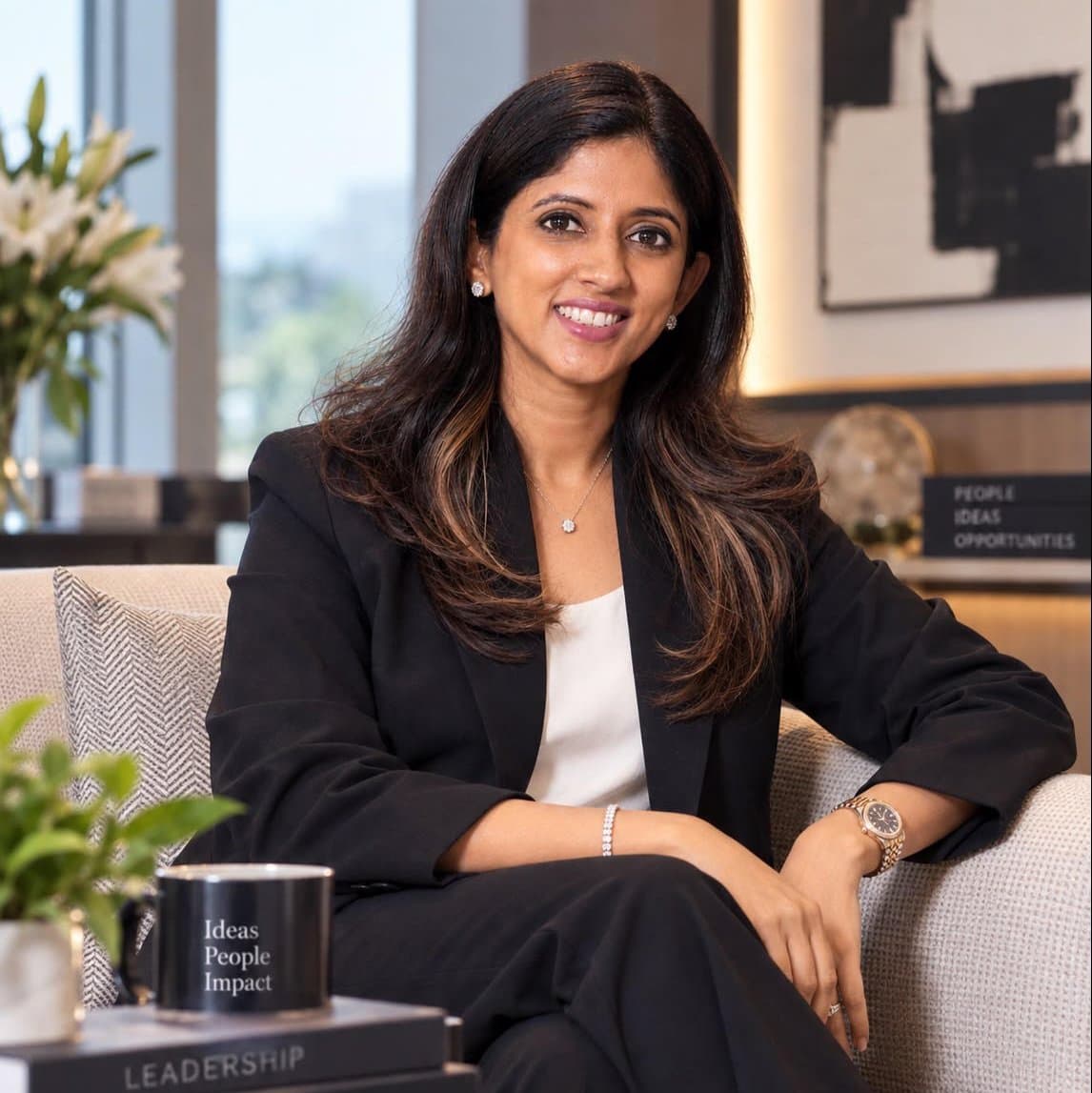
Investors & Catalysts
From Millet to Method: Rasika Prashant on Building What Consumers Return To
Rasika Prashant, CEO of NSRCEL at IIM Bangalore and Co-founder of Soulfull (later aquired by Tata Consumer Products) on consumer trust, category creation, Indian brands, and the founder discipline required after belief.
Read Full Story
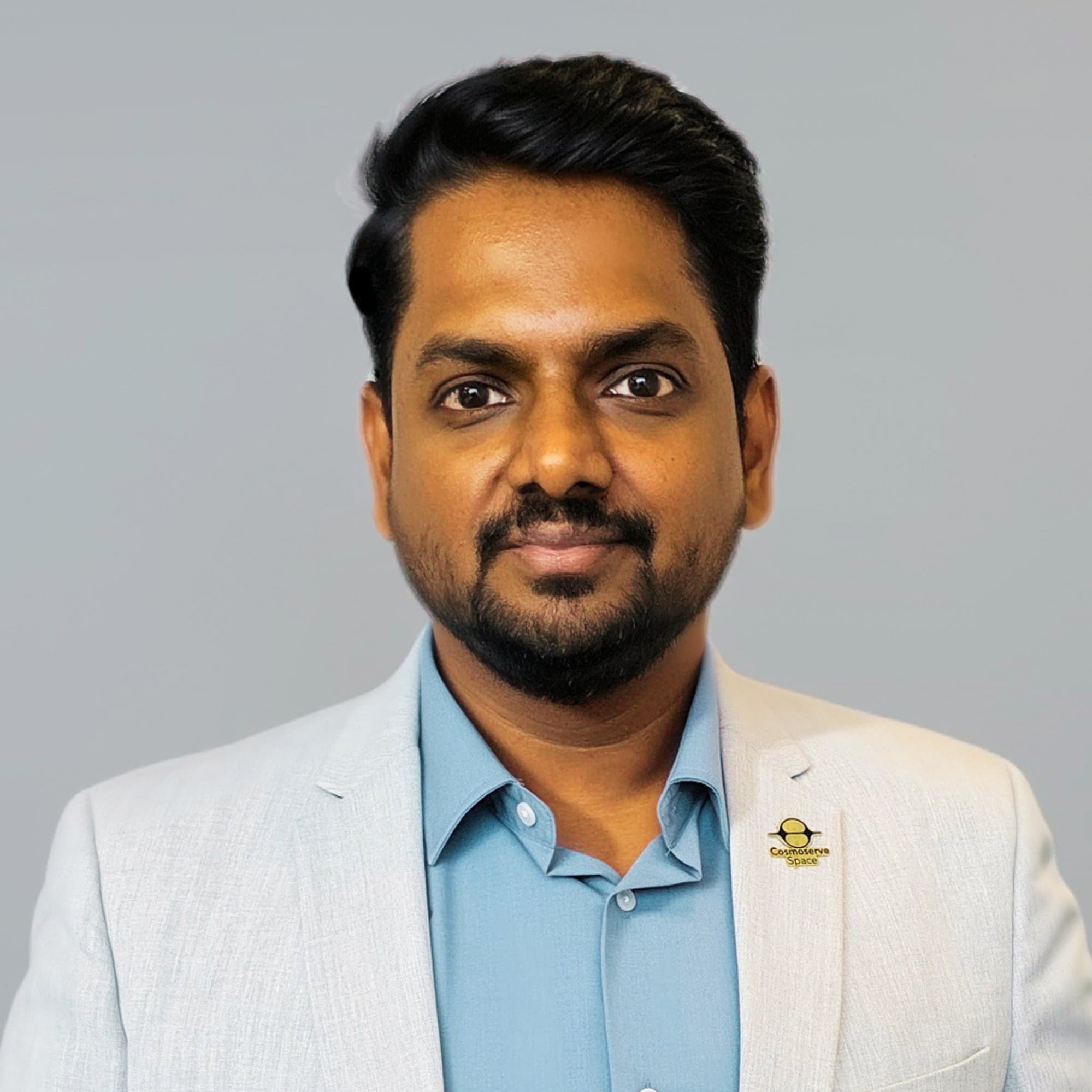
Founders & Innovators
Building the Next Space Economy: Chiranjeevi Phanindra and Cosmoserve's Case for Orbital Maintenance
Chiranjeevi Phanindra, Founder & CEO of Cosmoserve Space, spent 14 years at ISRO working on re-entry and human spaceflight. Today, he is focused on a vital challenge: keeping Earth’s orbit usable.
Read Full Story
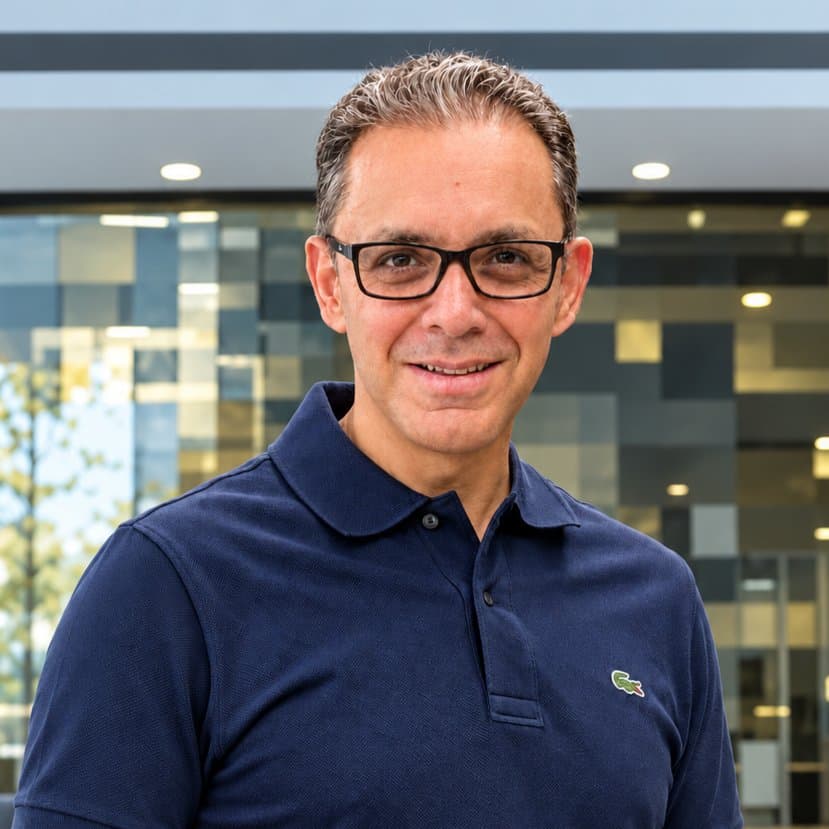
Corporate Visionaries
Shashank Sahni on What Success Leaves Out
Shashank Sahni, Google’s Managing Director of Global Ads Solutions, reflects on what customers reveal, what ambitious teams need from their leaders & what the mountains and marathons have taught him about going further.
Read Full Story