Category: Corporate Visionaries
Leadership in technology is often described through disruption and speed. Pramod Agrawal represents a quieter tradition: the discipline of designing systems that can learn, adapt, and endure. Across three decades and multiple industries, he has approached technology not simply as code or infrastructure but as an extension of human judgment. In a world racing toward artificial intelligence, his work raises a deeper question: how should institutions think?
Designing Intelligence: Pramod Agrawal and the New Grammar of Technology Leadership
IndiSight Editorial
Mar 16, 2026
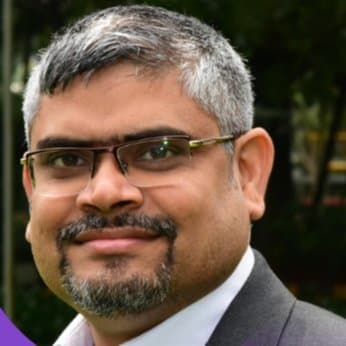
Pramod Agrawal
Managing Director · Seismic
Bengaluru
Resilience has always been the quietest test of leadership in technology. The products that survive, the institutions that keep evolving, and the professionals who stay credible across decades share a single skill: the ability to understand business and technology maturity cycles.
Pramod Agrawal belongs to a generation of technology leaders who think of systems as living entities. Over three decades and four industries, he has refined the discipline of anticipation, reading when a system will reach its limits, when talent will need renewal, and when a strategy has begun to lose relevance to make space for a new one to take birth.
Each phase of his work has carried one idea forward: technology earns its place when it expands human judgment.
In an age when business celebrates disruption, Pramod represents a quieter archetype: the builder who believes progress demands continuity as much as change. The deeper he went into AI (artificial intelligence), the more he came to see leadership itself as a form of intelligence: the capacity to recognize patterns early, connect meaning across silos, and make choices that preserve coherence.
Learning to Read Systems
Curiosity defined Pramod's early years. While many peers pursued predictable career routes, he was drawn to complexity, to understanding why systems behave the way they do and what keeps them from breaking under pressure.
At Hindalco, he was part of one of India's first ISO 9001 transformations. The assignment sounded procedural, yet it exposed him to how organizations resist change. He saw how information weakens as it moves through layers and how leadership often becomes the act of creating alignment across competing priorities. That experience became his first lesson in how scale and clarity coexist.
Cutting edge research in building new aerospace grade composites at The Ohio State University showed him the limits of theory. Systems thinking, while elegant in the classroom, could unravel in the face of system complexity. "You can simulate structure," he says, "but not dynamic behavior of complex systems." When he entered enterprise software, he brought a scientist's skepticism into business design.
His transition from materials science to technology was a shift in perspective. Metallurgy had taught him how materials respond under stress; technology would teach him how people and institutions do. In both, systems exist in dynamic equilibrium. Sustainable performance depends on adaptation.
During those years, India itself was opening to the global economy, and Pramod's curiosity mirrored the country's. He often recalls how the liberalization era shaped his mindset. "We were all learning to think at scale for future with constraints of the present," he says.
Turning Structure into Insight
At Oracle, he led a distributed team working on a global HR and Finance product portfolio with USD 1 billion+ in revenues. Entrusted with the product and platform, he engineered teams to shape new capabilities from India. These capabilities modernized PeopleSoft which are deployed by thousands of enterprise customers. "These initiatives changed how I saw capability," he recalls.
Capability depends on how intelligence connects.
That belief shaped every organization that followed. Progress meant refining how people, data, and decisions interact.
He carried that insight through the years when India's tech sector was finding its identity. Many companies positioned themselves as efficient executors of Western designs. Pramod believed the next phase would belong to those who could design systems. The difference, he often says, lies in intellectual ownership: the ability to define problems.
American firms had the capital, Japanese firms the precision, European firms the frameworks. India was emerging with interpretive intelligence: the capacity to translate problems across geographies, domains and languages. Pramod saw his teams shift from implementation to influencing product strategy.
Where Technology Learns to Think
At Baker Hughes (a GE Company at the time), he ran an AI digital twin initiative where models were built to predict equipment failures days in advance. The program was designed to cut unplanned downtime, repair costs and improve production predictability. The bigger achievement was cultural. Field teams trust algorithmic recommendations once they see transparent links between prediction and cause.
Technology earns trust the same way people do. Through consistency.
At Automation Anywhere, he urged customers to measure decision quality. "True automation," he says, "is about expanding the horizons of what people can accomplish with technology."
As industries digitized operations, few realized they were also accelerating judgment. The question was whether organizations could learn.
That distinction defines the next frontier of enterprise design. Across sectors, from finance in New York to manufacturing in Japan, the best leaders are discovering that competitive advantage no longer comes from superior algorithms but from institutional cognition: how quickly a company can sense, interpret, and act in a coherent way.
Pramod often notes that the most intelligent systems remain teachable. He believes every organization must cultivate this quality deliberately by designing mechanisms that capture learning faster than mistakes multiply.
The Geometry of Trust
Leadership, in Pramod's view, is a design discipline. The most durable leaders engineer coherence rather than command movement. They see organizations as networks of intelligence shaped by incentives, transparency, and trust. "A well-designed organization," he says, "should be capable of thinking even when its leader is not present."
People act decisively when information moves transparently and they are competent to drive action.
If people hesitate to decide, the issue is usually preparation.
He divides decisions into reversible and irreversible ones. Reversible calls should be made quickly and delegated widely. Irreversible ones deserve collective deliberation. This balance keeps speed from sliding into disorder.
That mindset has guided him across roles and continents. At Oracle, it meant distributing decision rights; at Baker Hughes, it meant creating transparency between algorithms and field engineers; at Seismic, it means designing teams that can think independently yet align instinctively.
He sees leadership as architecture: the way decisions, incentives, and values align to create movement. "
The leader's real work, is to make alignment self-sustaining.
For Pramod, culture is the algorithm through which an organization learns. The best cultures process mistakes faster than competitors and treat feedback as fuel. "Resilience," he says, "is the ability to sense instability before it arrives."
The idea has echoes across global business history. Toyota's production philosophy, Pixar's creative reviews, and Amazon's working-backward process all embody the same principle: learning designed into motion. In Pramod's view, those are expressions of intelligence at scale.
Building Conscience into Code
At Seismic, compliance is foundational to the agentic AI driven content systems used by millions of sellers globally. The idea is a fully compliance aware stack that drives ethical behavior and allows measurement of the same. "We cannot attach ethics to systems post facto," he explains. "It has to exist in the design itself."
He calls this moral computation. Ethical reasoning must be engineered into every feedback loop.
The future boardroom will need philosophers who understand code and coders who understand consequence.
Around the world, governments are tightening rules around algorithmic bias and data ethics. The EU's AI Act, U.S. algorithmic accountability movement, and India's Digital India legislation all reflect the same anxiety: who will ensure machines remain human-aligned?
Pramod argues that responsibility cannot entirely be outsourced to policy. It must be internalized in design. He often references a simple rule his teams use. Every time an algorithm makes a recommendation, a human should understand its rationale. "Transparency is the first book of ethics," he says.
When people know what they're responsible for and how they're measured, integrity follows naturally.
The Next Competitive Edge: Judgment
Enterprises are measured by the strategic implications of their decisions. Pramod calls this the move from information capitalism to intelligence capitalism, where advantage lies in how quickly organizations convert data into ethical, contextual insight to drive their future.
The next decade will belong to institutions that can think across boundaries.
He believes India is uniquely positioned for this transition. The country's diversity and adaptive intellect create a natural advantage in designing for complexity. "We have lived with contradictions and with constraints for centuries," he says. "That teaches you to think in systems."
Digital public infrastructure like Aadhaar and ONDC shows that inclusion and scale can coexist. Yet he warns against confusing acquisition with transformation. Technology must be accompanied by institutional redesign in incentives, accountability, and learning.
Across global markets, similar debates are unfolding. In Europe, the conversation revolves around responsible innovation. In the United States, it is about strategic acceleration. In East Asia, it is about precision and long-term stewardship. India's contribution, Pramod suggests, will be contextual intelligence, the ability to integrate plural worldviews without losing coherence.
He envisions a future where leadership will be measured by the capacity to orchestrate intelligence across ecosystems.
The world will reward integrators, those who can connect data, ethics, and human intent into one continuous flow.
What Outlasts the Algorithm
Power today is about orchestration. Great institutions outlive their founders because they embed curiosity into culture. The failure of legacy systems begins when they stop questioning their assumptions.
He believes the next advantage will come from integrating intelligence with empathy. "The future," he says, "is a race to build wiser institutions."
His belief in systems that endure echoes his earliest lessons from the structure of materials: structures fail when they weaken what holds them together. The same is true for institutions. The erosion of integrity destroys leaders from within.
A Simple Test for Intelligent Organizations
For leaders reading this, the test of intelligent leadership is practical. Can your organization learn faster than its environment changes?
The diagnostic reveals itself in three patterns. First, how often do teams revisit their own assumptions? Intelligent organizations build reflection into their operating rhythm. They create forums where challenge flows upward without risk. They measure both outcomes and the thinking behind them. When assumption testing becomes routine, learning stops being an accident and becomes architecture.
Second, how freely does information cross boundaries? In most companies, knowledge pools in silos, creating local intelligence but collective blindness. Product teams know what engineering never hears. Sales teams spot what strategy misses. The intelligent organization engineers these connections deliberately. It rotates people through domains. It builds platforms where insight surfaces regardless of hierarchy. When information moves as easily horizontally as vertically, the organization begins to see itself whole.
Third, does accountability follow consequence or hierarchy? In most organizations, the person with the highest title makes the call, even when someone three levels down understands the problem better. Intelligent organizations reverse this. The field engineer who lives with the equipment makes maintenance calls. The support team hearing customer pain daily drives product priorities. When the people making decisions also live with the results, correction happens fast. There's no committee to convince, no layers to navigate. The feedback is immediate.
Where these three conditions exist, learning compounds. Teams get sharper with each cycle.
Information flows where it's needed. Decisions improve because they're made close to reality. Where they're absent, organizations talk about learning without actually doing it. Each cycle improves assumptions. Each boundary crossed multiplies intelligence. Each decision made near its consequence shortens the loop. The organization becomes wiser with scale. Where they are absent, scale becomes noise.
Principles for Thinking Leaders
Leadership is a design discipline.
Data creates speed; judgment creates value.
Institutions are learning systems.
Power lies in connection, not control.
Debt is ambition left unchecked.
Culture is an organization's early-warning system.
Incentives supercharge intelligent behaviour.
Progress without perspective turns reckless.
Practice inclusivity as an engineering discipline.
Legacy equals curiosity that survives its creator.
Staying Human in the Age of Systems
Leadership, at its core, is an act of awareness. The world is building systems faster than it is building understanding, and that gap defines the challenge of this century. Pramod believes the next breakthrough will not come from new algorithms but from institutions that can think and adapt on their own.
Because technology may facilitate decision making, but only humans can preserve meaning.
Our Suggestions to Read
Discover The Leaders Shaping India's Business Landscape.
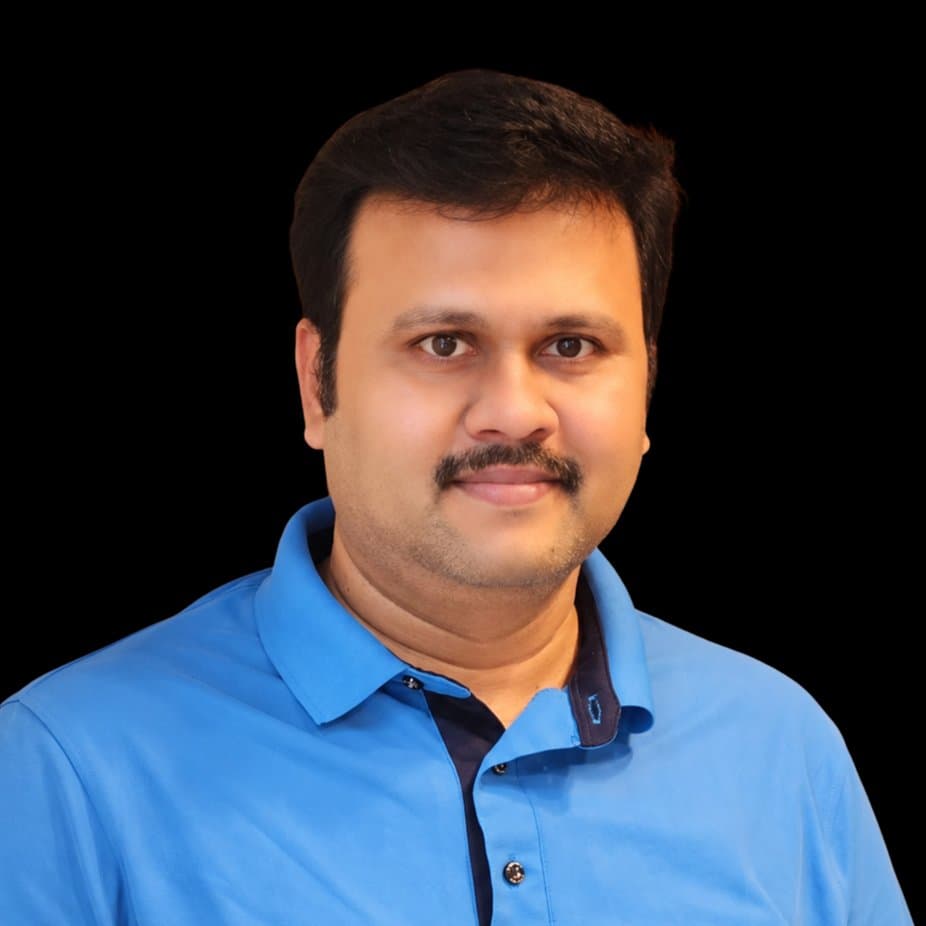
Corporate Visionaries
Sarath Gollapalli on the Work That Makes Technology Dependable
Sarath Gollapalli, Vice President at Broadridge, reflects on why AI-era enterprise technology still depends on fundamentals: client understanding, reliability, governance and ownership.
Read Full Story
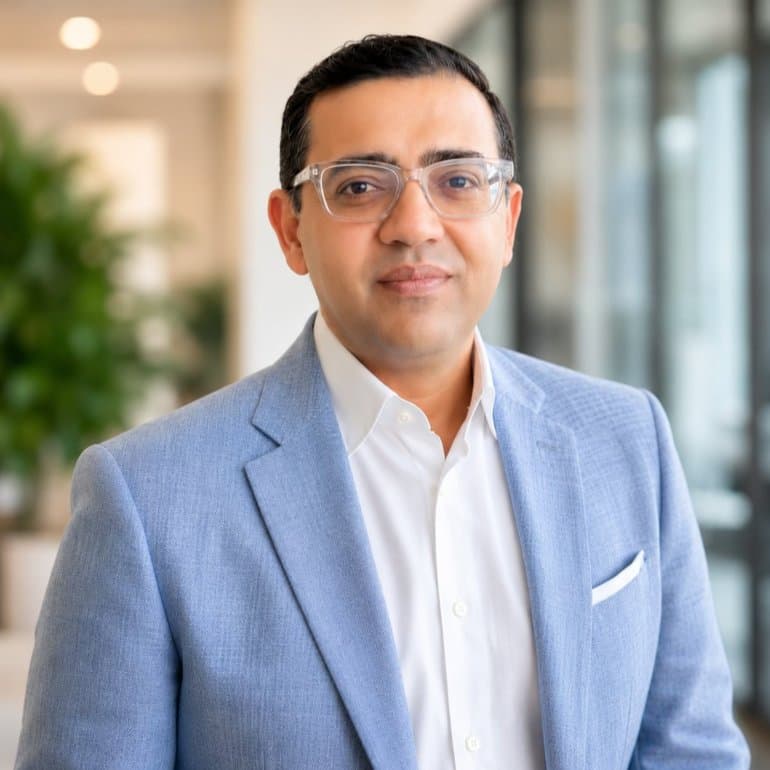
Corporate Visionaries
The Work Before the Story: Rahul Malhotra on Trust, Behaviour and the Business of Marketing
Rahul Malhotra brings 30+ years at P&G and Shell across global CEO and marketing roles, offering deep insight into business, consumer behaviour, organisational change, commercial judgement and reputation.
Read Full Story
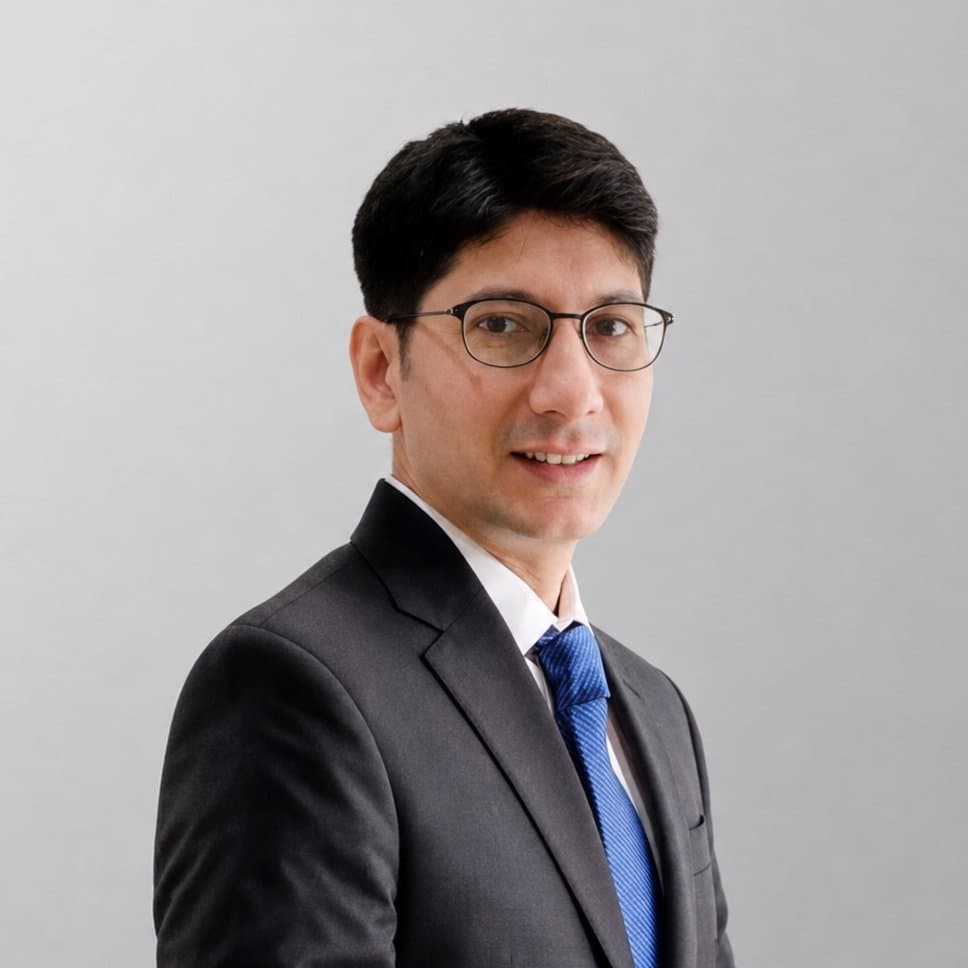
Corporate Visionaries
The Craft of Institutional Capital: Archit Shah on Judgement, Risk and Investing Across Cycles
The Zurich Kotak General Insurance Chief Investment Officer brings a practitioner’s view of investing, where good judgement under uncertainty has to become decisive action through portfolio construction.
Read Full Story