Vineet Chadha, Partner and Head of Venture and Start-up Investments at Tata Capital, shares insights on deep-tech investing, patient capital, risk judgment and the challenge of turning innovation into commercial success.
Reading the Market Before the Market Moves: Vineet Chadha on Deep-Tech Investing, Corporate Adoption and Patient Capital
Nov 16, 2026
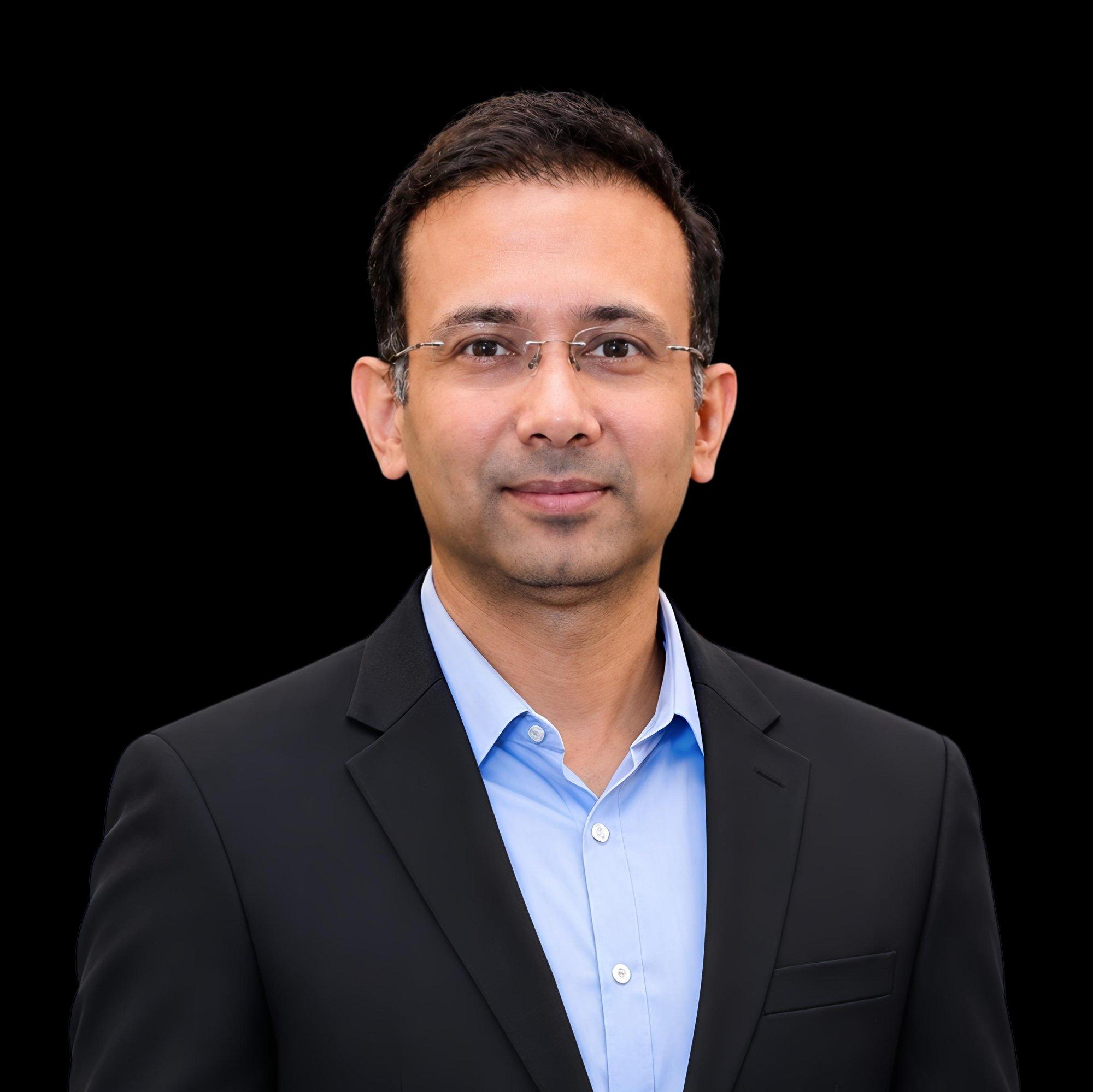
Vineet Chadha
Partner and Head of Venture & Start-up Investments · Tata Capital
Mumbai, India
The views expressed in this article are personal to Vineet Chadha.
India’s deep-tech companies are building for harder problems now: industrial systems, climate technologies, healthcare infrastructure, manufacturing intelligence and data-led finance. The bigger commercial test begins after the product technology has been developed. Someone has to adopt it, pay for it, absorb the first operating risk and scale it with the company long enough for the category to become believable.
Vineet Chadha has spent three decades around that test. His career has moved from mechanical maintenance at Bhilai Steel Plant to power-sector reform, infrastructure private equity and venture investing at Tata Capital, where he serves as Partner and Head of Venture and Start-up Investments. His board work includes Sea6 Energy, PLUSS Advanced Technologies, Mitra Biotech and FinAGG.
“What is key is how you try and marry various stakeholders, get the interests of the stakeholders aligned, and then plug in an innovative approach and execute it.”
Vineet’s investment thinking sits inside that sentence. A technology may be strong, but capital, regulation, pricing, customer readiness and founder capability still have to move close enough together before innovation becomes a business.
The Operating Memory Behind the Investment Lens
Before finance, Vineet spent three years in mechanical maintenance at the Bhilai Steel Plant’s blast furnace. A plant teaches business reality differently from a boardroom. Work gets delayed by distance, tools, safety, heat, coordination and small errors that rarely appear in a model.
He remembers walking nearly two and a half kilometres with workers to maintain a crane, climbing up to the equipment and discovering that the bolts or spanners carried to the site were wrong. A full shift could disappear before the actual repair even began.
“Had I not experienced that, I would have never appreciated what a hardcore manufacturing facility does and the kind of difficulties that people in that segment have to go through.”
Industrial AI and physical AI interest him because they speak to inefficiencies he has seen from inside the system. A founder building for a factory floor has to understand downtime, tool availability, operator behaviour, accountability and the cost of interruption.
Bhilai gave Vineet a practical form of diligence. He listens for whether a founder understands the site of deployment. A product meant for an industrial system has to earn the trust of that system before it can change it.
The Missing Five Percent of Commercialisation
Vineet’s strongest investing argument begins with a pattern he has seen repeatedly: deep-tech companies can deliver the technology and still struggle with the market.
Many founders, in his experience, take the product a long way. The difficulty appears when the product has to fit into the customer’s workflow, budget, procurement process and operating habits. A solution can reach 90 or 95 percent of technical completion and still miss the final finish required by the buyer.
“Most of my companies have over-delivered on the technology side. It is actually the market side which at times these startups are not able to appreciate completely.”
Commercialisation often turns on that last stretch. Pricing, integration, proof of value, deployment risk and internal approval all sit inside the customer’s decision. A buyer has to feel enough value to change an existing system.
“Whatever is being proposed, is it of adequate value or not? Whether there are constraints at the site of the corporate or the end customer which this technology is not catering to, or whether pricing is an issue.”
A founder may be right about the science and early about the buyer. Serious investing requires reading both conditions at the same time.
Choosing the Risk Worth Carrying
Venture investing always involves uncertainty. Vineet’s discipline lies in choosing the uncertainty deliberately. When he began venture investing around 2010, early-stage deals could carry several risks together: technology risk, market risk, people risk, funding risk and geography risk. Experience pushed him toward a more careful structure. A venture can carry one uncertainty if the surrounding elements are stronger.
“We can take one risk depending on the specific profile of a company, but try and minimise the other elements of the risk.”
Risk selection matters because early-stage optimism can stack too many assumptions in one direction. The product has to work. The market has to emerge. The team has to mature. Regulation has to support the category. Future capital has to arrive.
Vineet may enter slightly later, reduce the initial cheque, bring in co-investors, tranche capital or wait for another round to validate progress. Capital supports the company, while the investment process keeps pressure on evidence.
Simplicity With Technical Depth
Sea6 Energy offers a clear window into how Vineet evaluates deep-tech founders. The company undertakes mechanised seaweed farming at scale and uses proprietary technologies to create carbon-negative feedstock and products across agriculture, food and materials. Vineet has served on its board since 2015.
His appreciation for Sea6 comes partly from the founders’ ability to pursue a large opportunity without over-engineering the solution. In Vineet’s reading, simplicity becomes a test of depth.
“When you ask, why did someone not think of this before, it makes you realise that this is actually true value add. It is simple and it is real innovation.”
Vineet tests simplicity through layered questioning. He asks one question, then another, then another. A founder who remains coherent three or four levels down has usually understood the problem better than the pitch.
Technical strength also appears in the ability to define limits. Vineet listens closely when founders can explain where the technology will fail.
“A founder knows what cannot be done and what this technology cannot do. Then you know that this person is absolutely clear.”
Deep technical confidence becomes credible when the founder can hold both possibility and restraint. Strong founders understand the boundary of the system they are building.
The Capital Gap in the Middle
India’s deep-tech capital story has improved in parts, yet Vineet sees a major gap in the middle. Seed cheques are available. Larger later-stage rounds may also arrive once customers, reference accounts and profitability signals are stronger.
The difficult stage sits around Series B, where companies often need ten to twenty million dollars before the market has fully de-risked the business.
“There is actually paucity of deep-tech capital in the country. Very early stage, up to one million dollars, there is good amount of capital. But when it comes to larger cheques, Series B, there is hardly any capital even today.”
Industrial deep tech faces another challenge. Many products need a corporate buyer to test them in a live environment. Generalist investors may struggle to evaluate these companies because most lack B2B enterprise experience.
Corporate adoption becomes the other half of the funding problem. Indian companies are more open to start-up technologies than before, but adoption often depends on individual champions. A repeatable system for sourcing, testing, learning and scaling start-up technology remains limited.
“The founders are developing solutions for hard problems. What is lacking is industries, corporates actually opening themselves up and spending time and energy to try and adopt these solutions”
India has founders working on battery recycling, agricultural biomass, robotics, vision systems and other serious industrial problems. Their ability to scale will depend heavily on whether Indian corporates become early customers with discipline, patience and risk appetite.
Patient Capital With a Financial Spine
Deep-tech investing requires patience, yet Vineet treats patience as a capital-allocation discipline rather than a soft virtue.
“Whatever you think of in deep tech, it takes three times more effort, it takes three times more time, it takes three times more money than what you originally thought.”
For an investor, patience has to show up in portfolio construction. Some companies can be entered early. Others can be entered later. The full cheque need not go in at the first moment. Follow-on investors can validate progress. Liquidity, when available at a reasonable point, can protect the portfolio while keeping upside alive.
Fresh capital carries a separate discipline. The earlier investment has already been made. The next cheque has to be judged against current evidence. No point in throwing good money after bad.
“When you are looking at a follow-on investment, it is an independent decision. Whatever happened, happened. You have already made that original investment.”
Time, reputation and prior capital can quietly bend judgment. Vineet’s follow-on rule brings the investor back to the present condition of the company.
Guard Rails in the Boardroom
Vineet’s board philosophy carries the same restraint. Minority investors can influence, challenge and set boundaries, while founders remain closest to the operating problem.
“It is almost always that the founder and the management will set the direction. We are more like the guard rails.”
The board may discuss issues with the founder and management and support their decision if the management team remains convinced of the opportunity. The investor can limit the budget, define a six-month experiment or create other protections. The founder has operating proximity. The board carries responsibility for keeping risk inside a sensible boundary.
Founder evolution creates a more difficult conversation. A company may begin with product depth. Commercialisation later requires market capability. Scale demands operations, profitability and organisation-building. Vineet therefore prefers founding teams where product and business strengths sit together early.
“If you have two co-founders, one who is more like the product guy and the other who is the market or business guy, you are actually good for a long period of time.”
A founder’s willingness to hire people who can challenge him becomes an important signal. Companies mature when leadership capacity expands around the founder.
Sustainability at the Price Point
Vineet’s sustainability lens is grounded in economics. His energy-transition analysis separates installed renewable capacity from actual electricity generated because capacity can present a more favourable picture than generation. Generation shows the energy contribution more directly.
He also sees capital moving first toward transition themes that are easier to see and explain. In his assessment, electric vehicles have attracted disproportionate attention, while industrial decarbonisation has received less capital relative to the scale of the problem. The investment pattern reflects a familiar market behaviour: capital moves more confidently toward what it can understand, count and underwrite.
“From a transition capital perspective, what is visible is getting more capital. Investments have been somewhat distorted.”
Sea6 gives him a commercial way to think about circularity. Seaweed cultivation avoids the land-versus-food debate, draws on ocean nutrients and sunlight, and can create feedstock for agriculture, bioplastics and fuels. The environmental argument is strong, but Vineet’s test remains economic.
“Sustainability has to be sustainable on the financial side as well. There is no concept frankly of a green premium anymore.”
Customer economics decide the durability of a climate business. Environmental value may open the conversation. Quality, price and reliability decide whether the customer keeps buying.
Credit Through a Wider Lens
FinAGG, where Vineet serves on the board, provides invoice-based financing solutions for MSMEs and caters to working-capital needs of forward anchor distributors and retailers.
Vineet sees alternate data as a way to recognise borrowers that conventional credit systems may misread. A customer with a weak bureau score may still show healthy behaviour through GST filings, income-tax data, utility payments and other digital records. Account Aggregator infrastructure allows lenders to access richer data flows, subject to consent, and process them through internal underwriting models.
“What alternate data helps you to do is open new doors. It opens opportunities to lend to customers which conventional data at times is unable to identify.”
Better data widens the lender’s field of vision. Fraud risk still remains because intent adapts. Vineet acknowledges that even strong digital frameworks cannot remove every attempt to circumvent the system.
MSME credit and deep-tech investing share a common discipline in his work. Better decisions come from understanding the operating reality behind the surface score.
Investors Will Have to Earn Relevance
Vineet’s forward-looking view of venture capital is unusually candid. Investors benefited for years from the scarcity of capital. Founders needed money, and the scarcity of money gave investors status. As capital becomes more available, founders will evaluate investors more sharply.
“We were a very fancied lot. We need to pull up our socks.”
He believes investors will need to become more knowledgeable, sincere, authentic, empathetic and useful to founders. Money will still matter. The cheque will carry less differentiation when founders have choices.
“We need to be more knowledgeable, more sincere, more authentic, deeper in some segments, more empathetic, and add more value than what we have been.”
A founder building in industrial AI needs an investor who understands the operating environment. A sustainability founder needs someone who understands customer economics. A fintech founder needs investors who understand both data and behaviour. Venture capital will become more demanding because founders will prefer intelligent capital.
Leadership Lessons From Vineet Chadha’s Investment Room
1. Customer adoption is part of the product. Product capability becomes business value only when customers can adopt it, pay for it, integrate it and defend the change internally.
2. Strong investors choose their uncertainty carefully. Capital can support ambition, but each investment needs a clear view of which risk is being carried and which risks have been reduced.
3. Operating exposure sharpens judgment. A person who has seen a plant lose time to small execution gaps understands industrial technology with a different seriousness.
4. A serious founder knows the limits of the technology. Technical depth shows up when the founder can explain where the solution works, where it fails and which assumptions deserve caution.
5. Patient capital needs design. Long cycles require staged exposure, reserve planning, co-investors, liquidity options and follow-on decisions based on present evidence.
6. Boards create value through restraint and proximity. Minority investors can challenge, contain risk and shape decisions while respecting the founder’s closeness to the operating problem.
7. Sustainability scales through customer economics. Environmental value may attract attention, but quality, price and reliability determine whether the solution becomes part of normal purchasing behaviour.
8. Data improves inclusion when it improves understanding. Alternate data can reveal creditworthy enterprises that conventional scores overlook, while judgment remains essential where intent is uncertain.
9. Investors will compete on usefulness. As capital becomes less scarce, founders will choose investors who bring domain fluency, access, empathy and intelligent capital.
Vineet’s work points to a serious question for India’s next phase of deep-tech investing. The country has founders working on hard problems, stronger digital infrastructure, growing policy support and a wider pool of capital. The decisive test now sits with the market around the technology.
Corporate buyers will need to experiment more deliberately. Investors will need deeper domain understanding. Capital will need to cross the difficult middle between seed enthusiasm and late-stage certainty. Founders will need to finish the last stretch between technical performance and customer value.
India’s next deep-tech chapter will depend on whether its corporates become serious customers of the innovation its founders are producing. Innovation begins with the product. It builds into a company when the market adopts it.