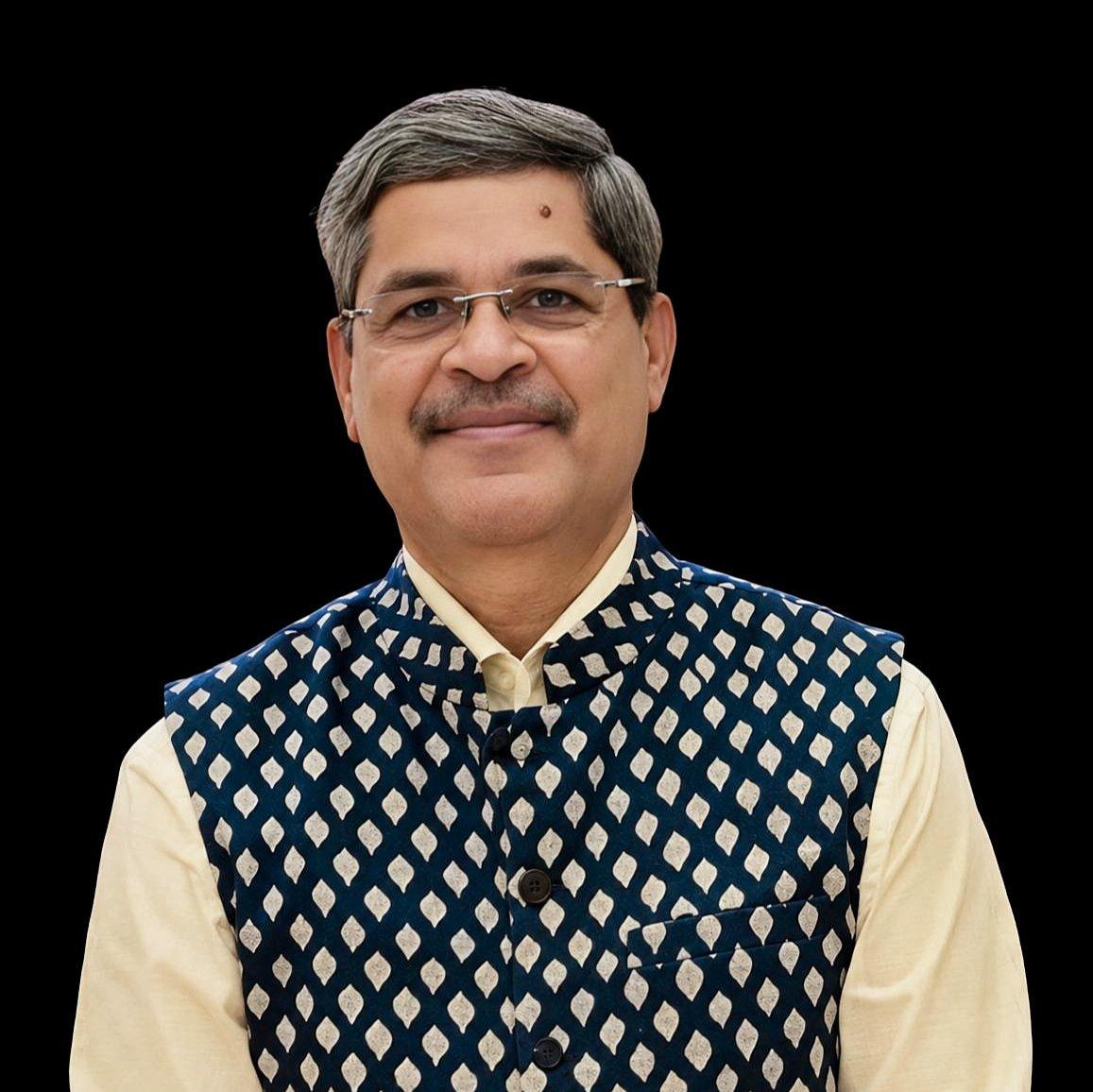
Naresh Sethi, Chairman of VST Industries and former global executive at British American Tobacco, on why great leadership demands difficult judgment, earns trust and empowers people to lead independently.
Naresh Sethi and the Hard Choices Behind People-First Leadership
Nov 18, 2026

Naresh Sethi
Chairman · VST Industries Limited
Bengaluru/India
When the CEO Has the Least to Say
In March 2011, Japan was confronting one of the most devastating natural disasters in its history. The earthquake and tsunami had disrupted supply chains, the nuclear emergency at Fukushima was unfolding, and businesses were struggling to establish how quickly normal operations could resume.
For Naresh Sethi, then President of British American Tobacco Japan, the immediate responsibility extended from ensuring employee safety to keeping the organisation functioning through extraordinary uncertainty.
When his leadership team reconvened, Naresh expected to begin working through the recovery plan. To his surprise, his colleagues had already assessed the supply-chain situation, revised forecasts, developed plans for approximately 150 new field-force recruits whose training had been interrupted, and identified the resources required.
He recalls describing himself as a "master of ceremonies."
The team had taken ownership of the recovery. Naresh's responsibility was to support their decisions, secure resources and address the human concerns that can easily be overlooked during a crisis. He helped arrange bottled water from South Korea for employees' families, acknowledged the extraordinary efforts of colleagues and ensured they had the support needed to execute their plans.
What made the experience particularly meaningful was the work that had preceded it.
During the previous year, Naresh and his leadership team had been restructuring the organisation, changing established behaviours and encouraging managers to make decisions independently. The intention was to build greater ownership and reduce dependence on hierarchical approvals.
He remembers telling colleagues that although the disaster should never have happened, the organisation would have been far less prepared had it struck a year earlier.
BAT Japan went on to deliver a remarkably strong year, with Naresh recalling that profits tripled. The crisis had demonstrated the value of the organisational changes made long before anyone could have anticipated such an emergency.
For a leader whose career has taken him from ITC in India to senior responsibilities across Australia, Indonesia, West Africa, Japan and Western Europe, the experience reinforced a conviction developed over decades: the strength of an organisation rests heavily on the people it develops and the judgment they are trusted to exercise.
Naresh subsequently held global executive responsibilities at British American Tobacco, covering strategy, acquisitions and transformation. His work as Chairman of VST Industries and in business advisory roles has continued to expose him to questions of leadership, consumer behaviour, competitiveness and long-term value creation.
Our conversations with him explored these subjects alongside lessons drawn from unfamiliar cultures and professions. Across the discussion, his thinking repeatedly returned to people: how they develop, what earns their trust, how leaders make difficult decisions and why the ability to keep learning matters throughout a career.
Experience Can Make a Leader Brilliant. It Can Also Make One Complacent.
Naresh's early career at ITC involved extensive exposure to India's distribution networks, retailers and consumer markets. Managers spent considerable time travelling with sales teams, observing purchasing behaviour and understanding the practical realities of commercial execution.
Australia required him to reconsider some of those established instincts.
He recalls expecting a commercial response to be completed within approximately twenty working days. His colleagues explained that local working calendars, retail procedures and listing requirements would extend the timeline considerably.
The experience was an early reminder that sound commercial principles could remain relevant even when the methods of applying them differed substantially.
Market intelligence also operated differently.
In India, conversations with distributors and retailers could reveal important changes in consumer behaviour. Australia's organised retail environment provided detailed sales information that could be examined across locations and purchasing periods.
Naresh recalls discovering that convenience-store purchases between midnight and two in the morning, particularly around nightlife districts, could provide early signals of emerging brand preferences among younger consumers.
The lesson extended beyond retail analytics. Leaders needed to understand where useful information could be found in each environment.
He remains cautious about executives who enter unfamiliar markets and repeatedly explain how things were done in their previous assignments. Naresh considers such behaviour an early warning sign, especially when someone has barely spent a week understanding the new organisation.
Japan offered another learning experience. Colleagues were often more comfortable contributing to important discussions when questions had been shared beforehand. Adapting meeting practices helped create more thoughtful participation while respecting local expectations.
Yet cultural sensitivity also required difficult choices. During his early months in Japan, Naresh changed a substantial part of the senior leadership team, despite advice to proceed cautiously. The decisions initially made him deeply unpopular.
At his farewell, approximately 1,500 colleagues gathered, including people who had strongly opposed his early decisions. Some came forward wearing lipstick and kissed him on the cheeks, leaving him covered in marks of affection. Naresh remembers the occasion as profoundly emotional.
The experience reinforced his belief that leadership across cultures requires curiosity, respect and the judgment to make difficult decisions while gradually earning people's trust.
What Leadership Can Learn Beyond the Boardroom
Naresh's curiosity extends beyond the industries and organisations in which he has worked.
His conversations about Japan included encounters with a geisha and a sushi master, experiences that reflect his interest in observing people whose expertise has developed through traditions and professions far removed from corporate management.
The care associated with a sushi master's craft, including preparation, precision and sustained attention to detail, offers a perspective on how expertise develops through disciplined practice. Traditional Japanese hospitality also invites reflection on attentiveness, observation and the sensitivity required to understand people.
Naresh's broader interest is in the opportunity to learn from different professions, cultures and personal experiences.
His thinking also extends to diversity within organisations. Representation across nationalities, genders and backgrounds matters, while genuine diversity becomes particularly valuable when people bring different ways of thinking, questioning and solving problems.
A leadership team benefits when its members have developed judgment through varied experiences and can challenge one another's assumptions constructively.
For Naresh, the ability to learn from unfamiliar environments is a discipline that leaders should continue developing throughout their careers.
Why Leadership Range Matters More Than Leadership Style
Naresh believes effective leaders need sufficient range to respond to very different circumstances.
A crisis may demand immediate direction, while a long-term strategic choice may benefit from extensive discussion. Experienced colleagues may require greater autonomy, whereas developing managers may need closer guidance.
He also distinguishes between executives capable of delivering excellent results within an established business model and leaders willing to reconsider the model itself.
His involvement in BAT's global strategy provides an example.
As the company considered the future of its industry, strategic discussions increasingly examined the distinction between nicotine consumption and the risks associated with smoking, alongside opportunities for non-combustible products.
Such thinking required the business to reconsider its established product categories, future capabilities and capital allocation.
Having led operations across approximately 40 Western European markets with profits of around £1.5 billion, Naresh understood the demands of protecting an established business. His subsequent work in global strategy brought the equally challenging responsibility of preparing for a different future.
Strategic decisions of this nature involve uncertainty, and Naresh believes leaders are judged through the quality of their reasoning, their transparency and the people they develop around them.
He places particular importance on trust established during what he calls "times of peace."
How leaders listen, handle difficult information and respond to disagreement during ordinary circumstances determines much of the confidence colleagues place in them when the stakes become considerably higher.
People Leadership Requires Empathy and Hard Judgment
People remain at the centre of Naresh's leadership philosophy, although his understanding encompasses some uncomfortable responsibilities.
During two major assignments, he recalls replacing a substantial proportion of his direct-report teams within the opening months. The decisions created resistance, but he believed the businesses required different capabilities.
"You are paid for that judgment," he explains.
Senior leaders must recognise potential, develop talent and assess whether the organisation possesses the capabilities needed for its future direction.
Naresh is equally emphatic about creating an environment in which people can challenge their leaders.
The first occasion when someone disagrees openly in a meeting can establish an important precedent. A defensive response may discourage further discussion, while genuine curiosity can encourage people to examine assumptions and share concerns.
He also believes leaders should recognise the influence of their own behaviour. Naresh recalls occasions when frustration affected his ability to listen and he acknowledged needing time to regain his composure.
His approach to assessing executives offers another revealing insight.
During board presentations, he sometimes pays closer attention to the colleagues accompanying the presenter. Their understanding of the argument, engagement with the discussion and willingness to contribute reveal how much responsibility and ownership exist within the wider team.
For Naresh, the real achievement is developing people who can exercise sound judgment when the senior leader is absent.
What Happens When Decisions Move Closer to the Customer?
Naresh has long been interested in reducing the distance between decision-making authority and the people interacting with customers.
He explains delegation through the analogy of flying a kite. The person holding the string gradually allows greater freedom while retaining sufficient control to guide its movement.
Developing managers requires similar judgment about how much authority to provide and when people have acquired the capability to use it responsibly.
In Australia, Naresh experimented with giving frontline sales representatives greater discretion over promotional spending and responses to competitors.
Clear commercial guidelines helped representatives understand how to act under different market conditions.
During field visits, he would present competitive scenarios and ask what they would do. Their answers helped him assess whether they understood the underlying commercial principles.
Naresh recalls a competitor's estimate of his company's promotional expenditure being inaccurate by approximately 60%, partly because spending decisions were being made selectively across outlets.
The experience demonstrated how decentralised decisions could strengthen commercial responsiveness when supported by training, clear principles and accountability.
Managers consequently had a greater responsibility for developing judgment within their teams, allowing more decisions to be made closer to customers.
Who Really Owns a Brand?
Naresh begins his thinking about brands with two observations.
Brands existed long before marketing became a formal business function. More importantly, consumers define brands through their experiences, expectations and associations with them.
Companies can influence those experiences through product quality, service, innovation and communication. The ultimate meaning of a brand develops in the minds of its customers.
Naresh believes brand managers should carry this understanding across the organisation, influencing decisions involving product development, manufacturing, distribution and customer experience.
He places particular emphasis on a brand's relevance across generations.
A familiar brand may continue delivering strong sales and margins while becoming gradually less meaningful to younger consumers. Current performance can conceal changes that will influence its future.
Naresh recalls Lifebuoy's introduction of a premium liquid-soap product in the late 1990s as an example.
The brand was historically associated with an affordable, mass-market soap. Entering liquid soap at a price he recalls as approximately ₹100 represented a substantial departure from its traditional positioning.
The decision reflected a longer-term understanding of how consumers and bathrooms were changing. New product formats were emerging, and a brand that wanted to remain relevant needed to participate in those evolving consumption habits.
For Naresh, brand stewardship requires a perspective extending well beyond the next campaign or annual business plan.
India's Global Ambition Needs a Different Mindset
Naresh believes Indian companies have developed considerable strengths in manufacturing, distribution, operating efficiency and adapting products to domestic conditions.
He sees a larger opportunity in building businesses capable of competing globally through original products, technologies and consumer propositions.
His criticism of the export mindset is particularly direct.
An export-led company may begin with an established product and ask which international markets might buy it. A globally ambitious company begins by understanding a market opportunity, the consumer need and the capabilities required to compete successfully.
The distinction becomes especially important when entering established categories with strong competitors or attempting to develop entirely new ones.
Both require serious market research, strong local teams, patient capital and the willingness to make investments well before meaningful returns emerge.
Naresh points to BYD's development in electric vehicles as an example of sustained technological and commercial ambition.
Indian companies have demonstrated considerable strength in adapting successful ideas for local markets. He believes the next generation of internationally influential businesses will emerge from greater willingness to develop original ideas and pursue them across markets.
Transformation Must Reach the Frontline
Naresh is candid about corporate transformation programmes that absorb substantial resources while producing limited changes in how organisations operate.
His preferred starting question is straightforward: can a company realistically achieve its ambitions for the next five years by continuing the practices of the previous five?
When the answer raises serious doubts, leaders must translate strategic ambition into changes involving resources, people, performance measures and everyday work.
Naresh is particularly interested in whether organisations have changed what they reward.
A company may announce a new strategic direction, but if employees continue being assessed and rewarded according to old priorities, the underlying behaviour is unlikely to change.
People need to understand what they must do differently, why the changes matter and how their performance will be evaluated.
Communication becomes essential.
Naresh believes leaders must repeat their strategic message to the point of personal boredom, explaining the reasoning with consistent commitment to different groups throughout the organisation.
His most practical test comes from the frontline.
When employees can explain why the company is changing, what they now do differently and how success will be measured, the transformation has begun to influence everyday decisions.
M&A and the Cost of Losing Organisational Memory
Naresh's experience with mergers and acquisitions has reinforced his belief that the success of a transaction depends heavily on strategic preparation and the quality of subsequent integration.
People and accumulated market knowledge are particularly important.
Reflecting on one major integration, he acknowledges a disappointing outcome.
"We did very badly. We lost all local knowledge and ten, twenty years of market experience and consumer insights."
Experienced executives had remained through retention arrangements, but their eventual departures resulted in a loss of understanding developed through years of working with customers, competitors and local markets.
Such knowledge can be difficult to replace because much of it exists through relationships, commercial intuition and practical experience.
Meanwhile, competitors continue pursuing opportunities as the newly combined organisation adjusts its structure and systems.
Naresh believes successful integration requires careful attention to retaining the expertise and relationships that made the acquired business valuable in the first place.
Why Young Leaders Need a Wider Foundation
Naresh has observed a significant change in how Indian professionals approach global leadership.
He recalls a period when Indian executives were often regarded as excellent number twos, respected for their ability to execute effectively while sometimes being overlooked for the highest international responsibilities.
He welcomes the greater ambition and confidence of younger Indian leaders, while encouraging them to develop sufficiently broad experience.
His advice is to build a wide foundation during the early years of a career.
Using the analogy of a pyramid, Naresh explains that the height a structure can eventually reach depends on the breadth of its base.
For emerging leaders, that foundation comes through exposure to different functions, markets, cultures and challenging assignments, including opportunities that may appear less attractive than immediate promotions.
His approach to leadership education places considerable emphasis on self-awareness.
If he were designing a programme, Naresh says he would devote approximately half the time to helping participants understand their motivations, emotional responses, assumptions and influence on others.
He would also introduce simulations involving both business failure and exceptional success.
Poor performance can encourage defensiveness, while sustained success can produce overconfidence. Recognising these reactions can help leaders develop the judgment required for greater responsibility.
Leadership Lessons
Trust develops before a crisis. Everyday decisions, open communication and the treatment of disagreement determine how much confidence people place in their leaders.
Experience becomes valuable through curiosity. Learning across cultures, markets and professions strengthens the ability to assess unfamiliar situations.
People-first leadership requires difficult judgment. Building capable teams involves empathy, talent development and decisions that may initially be unpopular.
Delegation should develop independent decision-makers. Giving people responsibility, resources and sound commercial principles allows authority to move closer to customers.
Consumers ultimately define brands. Long-term brand stewardship requires understanding changing expectations and maintaining relevance across generations.
Transformation must change everyday behaviour. Strategy becomes credible when priorities, performance measures, rewards and frontline decisions begin reflecting the new direction.
Acquisitions must preserve organisational knowledge. Experienced people, relationships and accumulated market understanding are essential to realising long-term value.
Leadership maturity requires a broad foundation. Diverse experiences, self-awareness and the ability to respond to success and failure prepare people for greater responsibility.
The Responsibility Behind People-First Leadership
Across Naresh's experiences in global markets, consumer businesses and corporate leadership, people remain central to how strong institutions are developed.
Leadership influences which individuals are trusted with important responsibilities, how comfortably colleagues challenge established thinking and whether teams have the capability to respond when circumstances change.
His philosophy also recognises that serious leadership can involve considerable personal discomfort.
Replacing senior colleagues, challenging an established business model or delegating decisions previously held at the centre all require confidence in judgment and a willingness to accept responsibility for the outcome.
Naresh is especially critical of executives who become overly concerned with remaining popular. He describes the danger of becoming an underperforming leader who seeks approval almost as though standing for an election.
His point is that developing people and protecting the organisation's future sometimes require decisions that colleagues may initially oppose.
His move into advisory and board roles has also brought a change in priorities. Naresh describes a reversal in which his personal diary now determines his professional commitments, allowing greater freedom to pursue work and experiences that continue to challenge his thinking.
The Japan crisis offers a fitting perspective on his leadership philosophy.
During an extraordinary emergency, Naresh found himself surrounded by colleagues capable of taking ownership, solving problems and making consequential decisions. Their confidence had been developed through the organisational changes undertaken during the preceding year.
The difficult decisions involved in rebuilding that team and the willingness to give its members greater freedom had prepared the business for circumstances nobody would have wished to encounter.
For Naresh Sethi, the lasting responsibility of leadership lies in developing people who can exercise sound judgment, earn trust and carry an organisation forward with confidence, including when the leader is no longer the person providing the answers.