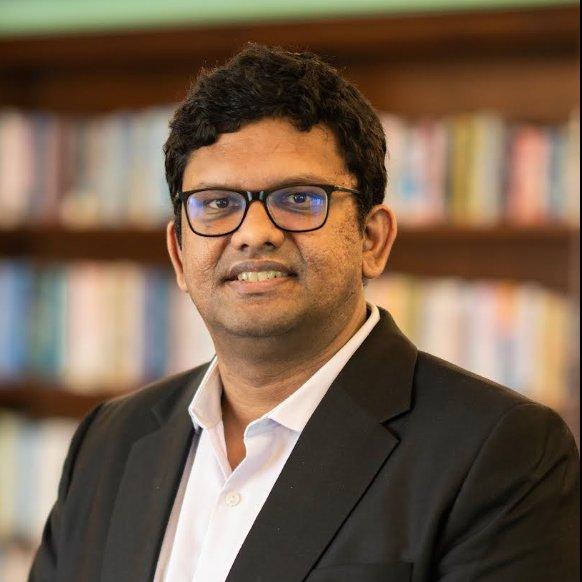
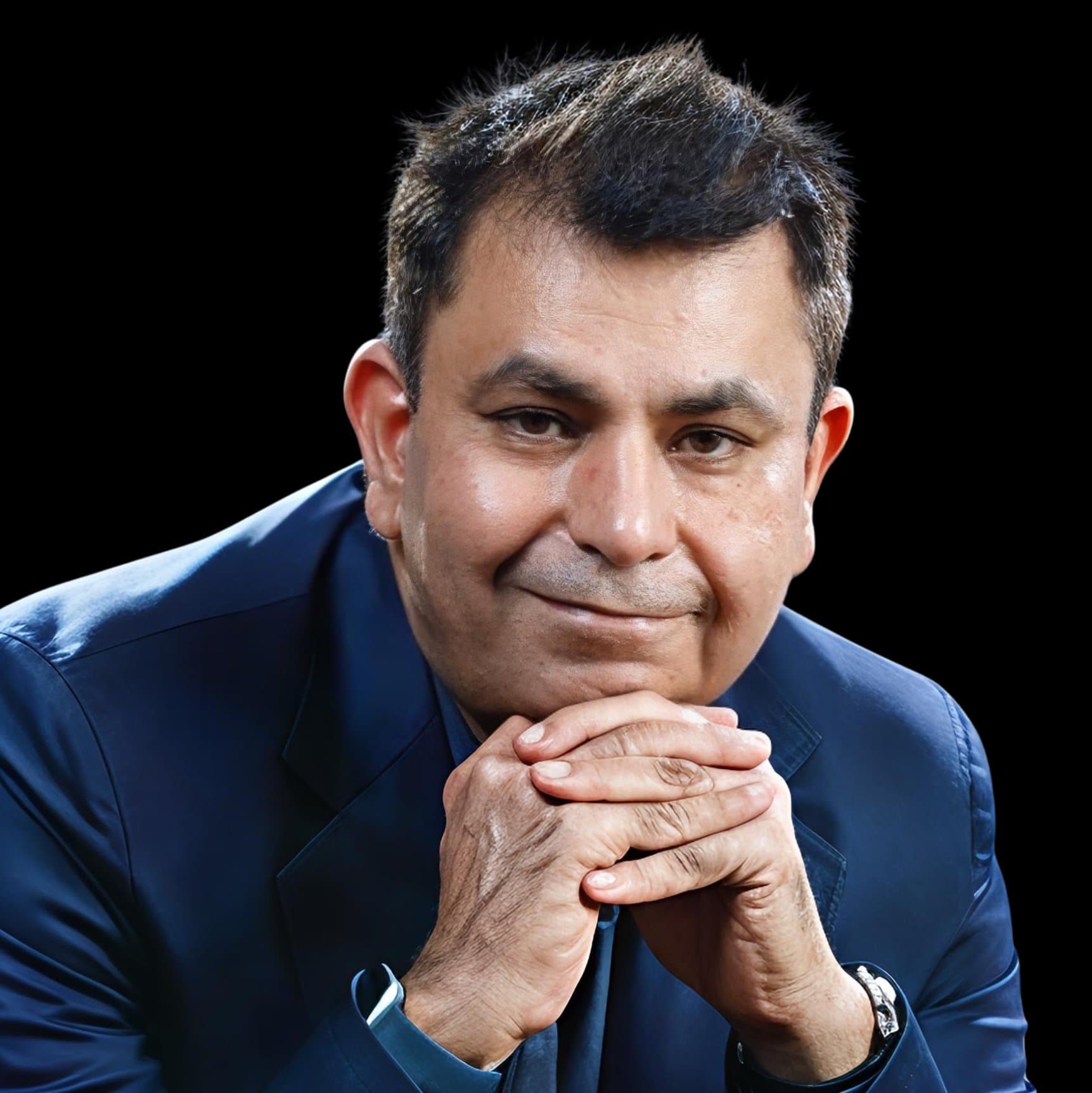
Former NCDEX Managing Director & CEO Dr. Arun G. Raste brings four decades across finance, cooperatives and market infrastructure, offering a rare view of how economic scale becomes institutional power.
From Market Size to Market Authority: Dr. Arun G. Raste on the Institutions India Still Has to Build
Nov 10, 2026
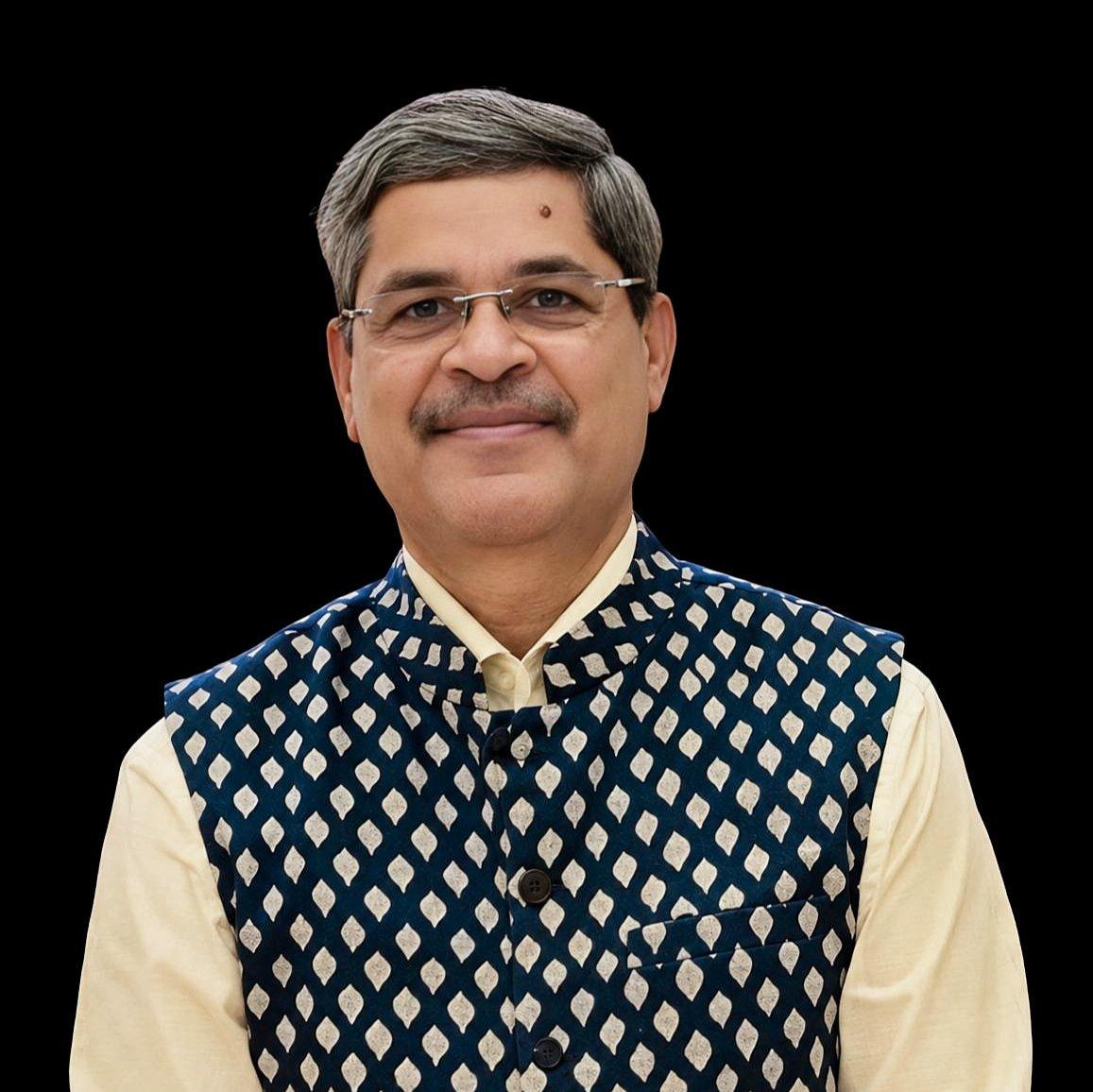
Dr. Arun G Raste
Former Managing Director & CEO · NCDEX
Mumbai, India
When Economic Weight Begins to Carry Authority
India can be one of the world’s biggest producers, consumers and buyers in a market and still have somebody else’s price telling it what that market is worth.
Economic size alone does not create market authority.
Countries gain that authority when their benchmarks begin shaping decisions elsewhere, when businesses manage risk against prices discovered in their markets, when governments read those signals seriously, and when institutions outside their borders begin treating those markets as reference points.
Dr. Arun G. Raste has been watching institutions acquire, use and sometimes lose that kind of influence.
His stint in NABARD exposed him to the connection between capital and productive capacity. Fair trade brought him closer to producers and international markets. Banking and cooperatives showed him how participation expands. His years in NCDEX placed him directly inside the mechanics of price discovery, risk and market infrastructure.
One comparison remains especially striking for him. Dr. Arun points to China’s Dalian Commodity Exchange, which, in his account, operated at a scale much closer to NCDEX in its earlier years and is now roughly 150 times larger. He attributes the divergence to deeper participation, greater continuity and an environment in which market participants, including public institutions, kept building around the exchange over time.
India already carries considerable weight across several commodity markets. Turning that weight into financial authority requires more than producing or consuming at scale. Producers have to read the price. Businesses need reasons to manage risk through the market. Institutions need confidence to commit capital. Policymakers need to trust the signal enough to use it.
A benchmark becomes powerful when real decisions begin moving around it.
When a Farmer Starts Reading the Future
Few memories from Dr. Arun’s time at NCDEX animate him as much as one encounter in Madhya Pradesh.
It was June 2021, only days after he had joined the exchange. Dr. Arun was travelling through the soybean belt around Hoshangabad when he met a farmer in his seventies. The farmer was semi-literate, yet the moment NCDEX was mentioned, he immediately knew what it was.
Dr. Arun was genuinely surprised.
He asked him how.
The farmer’s answer changed the tenor of the conversation.
Every evening, he watched the progression of the monsoon on television. The next morning, he checked the NCDEX futures ticker. He wanted to know what the market was indicating for soybean prices several months ahead. If the October price looked attractive, soybean went into the ground. If the futures price looked weak, he considered another crop.
Dr. Arun recalls the episode with unmistakable excitement. For him, it was proof that a market was doing exactly what it was meant to do.
A farmer, far removed from a financial centre, was using a forward price to make a decision about his land, his money and several months of his livelihood.
“Markets are only messengers. They tell you at least three to four months in advance what will happen.”
What excites Dr. Arun is how quickly that logic scales.
If a farmer can combine weather information with a forward price to decide what to sow, a company can use similar signals to plan inventory, procurement or hedging. A government can see an emerging shortage before it becomes obvious in the physical market.
For a country as large as India, timing can change the economics dramatically. Enter an international commodity market after scarcity becomes obvious and suppliers immediately understand the urgency. Prices can move simply because India has arrived as a buyer. Read the signal earlier and procurement can begin gradually, while choices still exist.
A functioning futures market therefore becomes part of the economy’s information system. Its usefulness begins well before a contract is settled.
Continuity matters for the same reason. Companies invest in teams, technology and hedging practices when they believe the market will remain available through difficult cycles. Repeated interruption changes the willingness to build around the institution.
For Dr. Arun, a sophisticated market earns its place by helping people make better decisions before the consequences are unavoidable.
Trust Can Move Capital
Dr. Arun’s exposure to cooperatives shaped another conviction that runs through his thinking: trust can accumulate around institutions themselves.
“People trust institutions. If you have a long-term relationship with an institution, the trust has to be repaid by the institution.”
Producers may deal with different employees and changing management, yet confidence can survive because the institution has established a history of doing what people expect it to do.
Dr. Arun also points to cooperative economics as evidence that institutional design affects who eventually captures value. In his comparison, models such as Amul return roughly 70 of every 100 rupees to the primary producer, against around 40 percent in some global comparators. Ownership, incentives and institutional structure have a direct bearing on how value is distributed.
Near the end of his NCDEX tenure, Dr. Arun tried to apply the same thinking to financial distribution. The exchange was connected to roughly 13 lakh farmers through around a thousand farmer producer organisations, giving those FPOs a possible role as channels through which rural households could access mutual funds and other formal financial assets.
The economics worked in several directions. Rural savings could find another route into capital markets. FPOs could create an additional income stream. Financial products could reach communities through institutions that had already spent years earning credibility with farmers.
Execution proved more difficult.
In an initial group of 60 FPO representatives who attempted the required certification, only six cleared the examination. Training and digital familiarity were part of the problem, while certification costs created another barrier. Dr. Arun’s team subsequently worked to bring that cost down from roughly ₹40,000 to ₹10,000.
The experience reinforced a lesson Dr. Arun had encountered much earlier in rural finance.
He remembers planning systems where lending targets could simply rise from one year to the next. If ten sewing machines had been financed in a village, another eleven might follow even when nobody had seriously examined whether the local economy could support twenty-one tailoring businesses.
Credit creates value when the borrower can turn capital into productive income. Access becomes meaningful when it begins changing economic position, building surplus, resilience and greater room to make choices.
Innovation Has to Survive Reality
Dr. Arun’s experience with financial innovation has made him careful about one recurring mistake: assuming that a strong idea will automatically become a strong market.
At NCDEX, he worked on Rain Mumbai, a rainfall-linked product developed using historical weather data and technical collaboration. The economic logic extended well beyond agriculture because extreme rainfall affects transport fleets, logistics businesses, storage operators and other businesses whose revenues move with weather conditions.
A severe monsoon day can take thousands of vehicles off the road and wipe out income across an entire fleet. A weather-linked instrument creates the possibility of pricing a risk that businesses would otherwise absorb directly.
Yet a genuine economic problem does not guarantee adoption.
Dr. Arun is candid that several experiments during that period failed to gain meaningful traction. A technically sound product can still struggle because liquidity does not emerge, users are not ready, market makers remain cautious, regulation takes time or the market simply has not developed the habit of using the instrument.
The lesson is valuable precisely because the products did not all work.
Financial engineering becomes relevant only when real participants find enough value in an instrument to change their behaviour. Dr. Arun’s experience suggests a disciplined sequence: understand the exposure, identify who carries it, establish whether the economic pain is meaningful, and then build around that reality.
Benchmark Power Requires Institutional Commitment
Dalian also illustrates why market depth cannot be separated from institutional continuity.
Dr. Arun argues that a benchmark becomes stronger when important domestic institutions are prepared to use it themselves. In China, he points to state-linked procurement organisations participating through Dalian. Indian public agencies, by comparison, have historically had a more limited relationship with domestic commodity derivatives markets. He also connects the divergence to repeated suspensions of agricultural commodity trading in India during periods of food-price pressure.
The consequences extend well beyond an exchange’s immediate business.
Every participant deciding whether to build technology, recruit risk professionals, provide liquidity or hedge through a market is also making a judgment about how durable that market will be.
Dr. Arun connects benchmark strength with procurement discipline as well. India is a large buyer in several global commodity markets, which means delayed action can itself move international prices. A credible domestic forward market can provide an earlier signal, allowing procurement to begin before urgency becomes obvious to every counterparty.
Economic size gives India negotiating weight. Institutional depth determines how intelligently that weight can be exercised.
India Can Export Institutional Capability
Before leaving NCDEX, Dr. Arun had been involved in collaborations and discussions with institutions in Sri Lanka and Bangladesh, alongside conversations in other emerging markets.
The opportunity, in his view, extends beyond taking an Indian exchange into another geography.
India has accumulated decades of experience in fragmented producer markets, rural finance, cooperative structures, financial inclusion and market infrastructure. Many developing economies are trying to solve versions of the same problems.
Exchange design can travel. Distribution systems can travel. Cooperative models and risk-management capability can travel. The operating knowledge required to make those systems work amid uneven participation can travel as well.
An Indian institution becomes internationally consequential when another market wants to learn from its systems, adapt its practices or rely on the information it produces.
India has spent years discussing the export of technology, capital and entrepreneurship. Institutional capability deserves a place in the same conversation.
The Institution Has to Become Stronger Than the Leader
Dr. Arun applies the same thinking to leadership.
“There are some people who make themselves indispensable in their job, and they don’t become institution builders.”
Managers who retain critical relationships, information and decisions can appear exceptionally valuable because everything important seems to pass through them. The weakness becomes visible later, when succession is difficult or the organisation discovers that too much capability was concentrated inside one person.
Dr. Arun believes an institution begins becoming stronger when responsibility can move beyond the leader.
His years at NCDEX sharpened another part of that philosophy. Dr. Arun describes leadership through a chicken-and-duck analogy. When the path is known and systems are working, the leader can stay behind and allow people to find their way. When the route itself is uncertain, the leader has to move forward because somebody has to discover the path first.
The distinction became real once commodity suspensions altered the economics of the exchange and the organisation had to explore new businesses and revenue pools. An experienced team could run a known operating model with considerable independence. Strategic reinvention required the chief executive to move closer to the front because the organisation itself was trying to work out where it should go next.
Dr. Arun carries the same conviction into long-term strategy.
“The moment I lose sight of my vision, I lose the right to be the leader or the CEO.”
Quarterly performance, board scrutiny and investor expectations create legitimate pressure. Leadership requires enough conviction to carry a long-term direction through a difficult period and enough flexibility to recognise when the evidence has genuinely changed.
The Staircase Matters More Than the Person Climbing It
Dr. Arun’s concern about institutions eventually extends beyond companies and markets.
“If people start bypassing systems, it helps some people to go faster. But it is like taking away a staircase. I go up and I take away the staircase. The people coming behind have to construct a staircase again.”
Institutional decline often begins with exceptions that appear efficient. A strong individual can produce an outcome faster by going around the system. The cost becomes visible later, when processes lose authority, institutional memory becomes thinner and the next generation has to rebuild capabilities that already existed.
Dr. Arun sees the same weakness inside corporations. A company can continue producing strong results while depending excessively on a few people, only discovering the fragility when leadership changes or growth demands capabilities those individuals can no longer carry.
India’s demographic opportunity makes the issue even more important. A large talent base needs institutions capable of creating new markets, horizontal mobility, wider responsibility and enough room for ambition to continue finding productive outlets.
Dr. Arun’s staircase metaphor leaves every generation of leadership with a demanding test: did the people who moved upward leave behind a stronger route for everyone who follows?
Leadership Lessons
1. Lead differently when the path disappears : Known terrain rewards delegation because capable people already understand the route. Uncertain terrain requires greater involvement from the top, where defining the problem can become as important as solving it.
2. Build an organisation that needs less of you over time : Indispensability can look like strength while quietly weakening succession. Real scale appears when decisions, relationships and capability can travel through the organisation without requiring the leader’s constant presence.
3. Hold the horizon, but keep the strategy negotiable : Quarterly pressure can sharpen discipline and can also destroy longer-term value. Strong leadership means carrying a long view through temporary discomfort while remaining open enough to recognise when the evidence has changed.
4. Treat trust as accumulated operating capital : Every commitment honoured expands what an institution can credibly ask stakeholders to do next. Trust reduces friction around unfamiliar decisions and creates an advantage that cannot be manufactured quickly.
5. Read the signal before the organisation is forced to react : Markets, operating behaviour and people often reveal stress before formal results do. Leaders who recognise those signals early retain room to act while choices are still available.
6. Spend institutional patience like capital : Supporting people through difficulty can build capability. Repeatedly committing scarce resources to underperformance can eventually become a form of misallocation. Leadership requires knowing the difference.
7. Judge leadership by the staircase it leaves behind : Titles reveal how far an individual travelled. Institutions reveal whether the route became stronger for the people who come next.