Category: Corporate Visionaries
Abhinandan Jain, President of Customer Experience, Global Chief Growth & Delivery Officer at AIONOS, on what global services, customer experience and leadership must learn to own when technology becomes easier to access.
The Service Question No One Can Automate: Abhinandan Jain on Work, Customers and Consequence
IndiSight Editorial
Aug 21, 2026
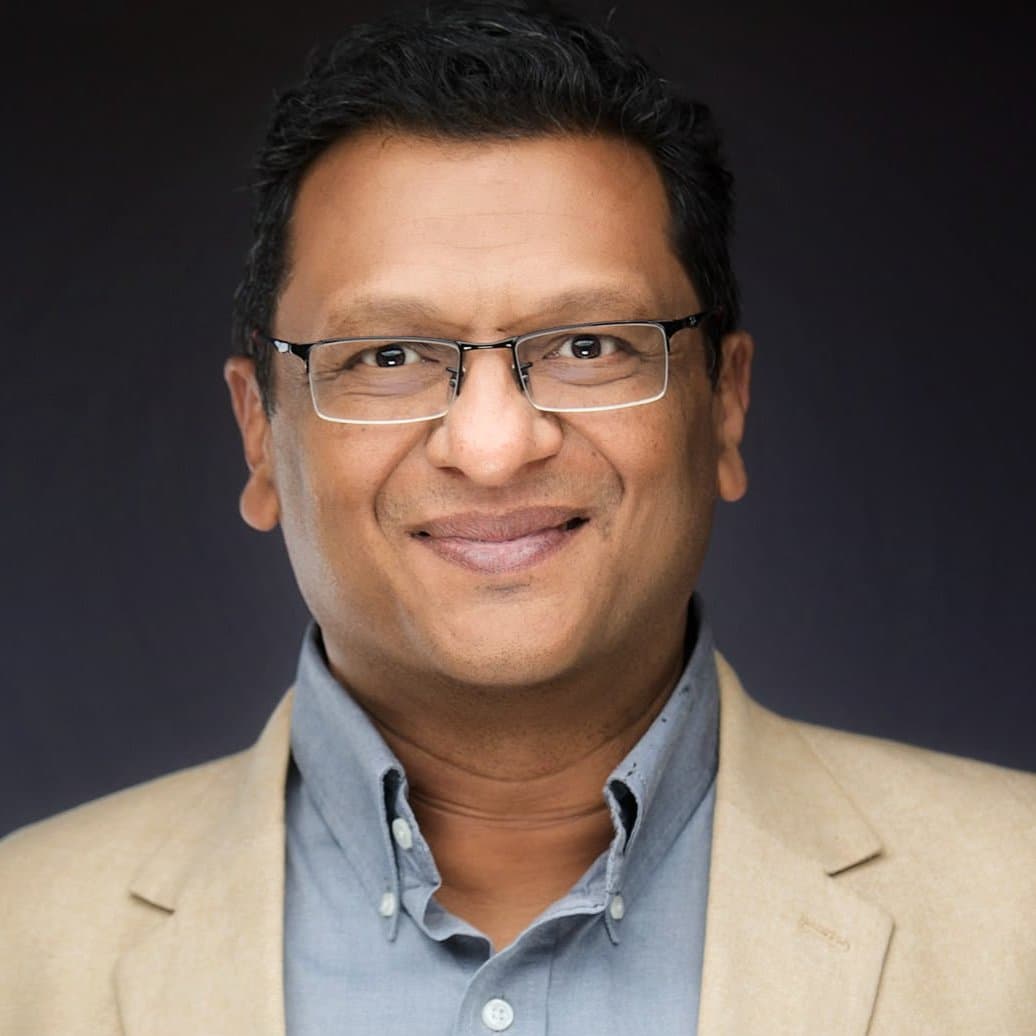
Abhinandan Jain
President and Chief Growth & Delivery Officer · AIONOS
Atlanta, USA
For decades, the global services industry had a powerful advantage: work could be moved to where talent, process discipline and cost came together better. That advantage built scale for global enterprises, created millions of professional careers, and helped establish India as one of the most important centres of the services economy.
The industry kept advancing because the work itself kept becoming more valuable. Business-process outsourcing became more knowledge-led, analytics entered delivery, digital tools improved productivity, and services companies attached themselves to increasingly scarce forms of capability. Abhinandan Jain has worked through several phases of that shift, from engineering and consulting to business-process operations, digital transformation and customer experience. His reading of the current moment is direct:
Even intelligence arbitrage is going away.
That observation carries a larger warning for the industry. Global services has repeatedly responded to disruption by moving up the value chain. Execution became knowledge work. Knowledge work became analytics-led service. Analytics is now being absorbed into increasingly intelligent processes. The difficulty is that the capability many firms are moving towards is becoming easier for clients, competitors and new entrants to access.
A services business can no longer rely on intelligence alone as a defensible position. Clients can acquire tools, competitors can integrate automation, and specialist firms can redesign narrow processes with speed. Advantage begins shifting towards the disciplines around intelligence: domain depth, process judgement and accountability for outcomes.
The operating view of change
Abhinandan’s view comes from a career spent across the operating model rather than from one narrow function. He began in computer engineering, moved into consulting during the Y2K and ERP wave, and later entered business-process operations when the industry was still being built through delivery rigour, client trust, hiring, training and process migration.
Across those transitions, one constant stayed visible to him: “One of the things which is a common thread across anything you do is the human aspect of it.”
That idea gives his argument practical weight. Every transformation enters an enterprise through human systems. Employees must use it, customers must trust it, managers must measure it, leaders must take responsibility for it, and boards must see economic consequence from it. Technology can create the possibility of change, but organisations decide whether that change becomes useful, trusted or cosmetic.
Engineering gave Abhinandan technical grounding, consulting exposed him to customer problems, operations taught him scale and frontline realities, and commercial leadership added the discipline of value and accountability. Customer experience became a natural convergence point because it sits between cost, technology, brand, behaviour and revenue.
His larger point is that tools often expose the assumptions already sitting inside the enterprise. Metrics may remain old, incentives may remain defensive, leaders may receive more data without getting closer to reality, and customers may be offered personalisation without enough control. A business can become more capable and still remain trapped in an outdated operating imagination.
The cost-centre mistake in customer experience
Customer experience is one of the clearest places where business language and operating reality diverge. Companies speak about it as a driver of loyalty, growth, retention and brand differentiation, while large parts of the function are still governed through cost-centre logic: average handle time, productivity, transaction satisfaction, utilisation and cost per interaction.
Abhinandan begins with the label that quietly governs the whole function.
Let’s stop calling it a cost center.
A cost-centre definition creates a cost-centre mandate. Shorter calls look better, lower unit cost looks better, fewer people look better, procurement buys efficiency, and technology is asked to reduce the cost of completing the same transaction. A function cannot be expected to drive loyalty and growth while being measured primarily as an expense to be reduced.
Customer experience becomes commercially serious when it is measured closer to the outcome it is expected to influence. In one business, the right measure may be retention; in another, revenue expansion; in another, reduction in customer effort across the full relationship. Transaction metrics still have a place, but they should sit beneath the larger business consequence.
A stronger tool attached to a weak metric simply makes the old limitation faster. Customer experience becomes strategic when the business has the courage to measure it as a relationship function, rather than only as a service operation.
The human role must become more precise
Enterprise technology discussions often take comfort in the phrase “human in the loop.” It signals supervision, ethics and control, and in many high-risk contexts, human judgement is essential. Abhinandan asks whether it is always a design principle, or sometimes a form of professional self-protection.
We keep saying human in the loop. Are we saying that to save our own jobs?
Business-process management and customer experience feel this tension deeply because their economic and social contribution came from human delivery at scale. A serious operating model has to ask where human judgement genuinely changes the result, where technology can monitor consistency, and where human involvement may no longer add meaningful value.
Human value becomes stronger when it is placed precisely. A routine query may be automated fully, a complex complaint may need discretion, and a financially or emotionally sensitive decision may need a person because accountability cannot be hidden behind a system. When escalation happens, the human agent must inherit context; otherwise the customer pays the price for poor process design.
The future of human work will depend on defining where judgement, empathy, discretion and responsibility improve the quality of the result. Where they do not, the process should be redesigned without symbolic human involvement.
The employee bargain inside transformation
The practical challenge of transformation often sits with the people closest to the work. They know where manual steps repeat, where approvals add little value, where systems break, where customers wait and where workarounds exist outside the official process map. Any serious redesign needs their knowledge because process truth often sits at the edge of the organisation, away from the presentation layer.
Those same employees also understand the risk. If they help remove inefficiency, the role built around that inefficiency may become less necessary. Abhinandan’s practical challenge to companies is direct: why would an employee automate work if the likely outcome is the loss of the job attached to that work?
An organisation asking employees to reveal how it can need them less has to offer more than vague assurance about what comes next. Companies must reward people for improving the work and create credible paths into responsibilities that require greater judgement, context or capability.
A company that cannot make productivity feel safe enough will get partial truth from its people, because the people closest to the work will have reason to protect the work that protects them.
Intelligent process outsourcing
Abhinandan sees business-process management moving through another stage of evolution. Business-process outsourcing moved towards knowledge-process outsourcing as knowledge and analytics became more valuable. The next phase, in his language, is intelligent process outsourcing: processes designed around a more deliberate relationship between people, technology and outcomes.
The phrase changes the unit of competition. Headcount once made scale visible. Intelligent process models make design capability more important. A stronger provider will understand the workflow, redesign friction points, decide where automation belongs and govern the result.
This bet on domain depth is also a live commercial question. Large horizontal platforms are investing heavily in broader general capability, while vertical specialists argue that deep process fluency will remain harder to copy. The framework works if specialists can compound domain expertise faster than general platforms can absorb it. That question remains open, and it will decide how defensible the next services model really becomes.
Generic capability will travel quickly. Differentiation will come from slower and harder capabilities: domain fluency, process redesign and accountability for measurable outcomes. The provider of the future will have to know the client’s process deeply enough to challenge it, rather than merely run it more cheaply.
India’s opportunity after scale
India’s global services advantage was built on talent, scale and process discipline. Abhinandan’s concern is whether those strengths are sufficient for the next phase.
His view points towards building more products for the world from India, strengthening frontier and sovereign capabilities, creating enabling infrastructure and expanding opportunity beyond a few established technology hubs. A builder from the Northeast, in his example, should not have to move to Bengaluru simply to find the ecosystem required to build.
Distributed creation requires institutions, mentors and market access. India’s earlier services model proved that the country could supply capability to the world at scale. The next phase asks whether India can convert accumulated process knowledge, delivery discipline and technical talent into products, platforms and operating models that the world buys from India, rather than only outsources to India.
Trust as the boundary of customer intelligence
Enterprises now have a sharper view of customers. Intent can be inferred, preference can be predicted, sentiment can be read, and service can be personalised before a customer explicitly asks for it. The promise is attractive: less friction, faster resolution and more relevance. Greater knowledge also increases the risk of overreach.
Abhinandan draws the boundary around context, consent and customer control. A frequent traveller may want a preferred airline to know more because travel is complex, personal and time-sensitive; the information reduces effort and improves the experience. The same level of intimacy from an everyday consumer brand may feel intrusive.
His principle is simple but demanding: “The more I empower you, the more you will trust me.”
Trust is created by more than consent forms. Customers need to understand what is being used, why it is being used and how much control they still retain. A company can know the customer accurately and still weaken trust if it uses that knowledge without enough agency. The next generation of customer intelligence will be constrained less by what companies can know and more by what customers believe companies have earned the right to know.
Leadership, careers and judgement
Large organisations rarely deliver raw reality to senior leaders. Problems pass through managers, dashboards, summaries and internal incentives before reaching the top, and what arrives may be accurate enough for reporting while still being too thin for judgement. Abhinandan’s approach in operating roles has been to shorten that distance early, spending the first three to six months meeting people directly, going to the floor or field, and forming a view before accepting inherited judgements.
The same preference for depth appears in his advice to younger professionals.
The world doesn’t start or end in an app.
Information can be acquired quickly, but competence cannot. Work that looks polished may still be thin. Professional judgement still requires exposure to customers, organisations, consequences and the discomfort of being responsible for a decision.
One older piece of career advice has also become more conditional for him. Staying long with one company was once treated as a proxy for reliability, and commitment still matters when it produces learning and contribution. Abhinandan no longer treats longevity as a virtue by itself when it comes at the expense of growth or creativity.
He also carries an older idea about work, one that sounds almost unfashionable in a market shaped by compensation jumps, titles and visible career acceleration.
You don’t work only for money. If you work only for money, you become a slave of money.
His point is that money is important, but money alone cannot sustain depth. Work becomes more durable when it is tied to enjoyment, contribution and real subject matter expertise.
Leadership, in that context, is less about positional force and more about earned relevance.
Leadership is about influence, not command.
A title can create compliance. Influence begins when people experience value in the leader’s involvement, especially in organisations where younger professionals may access tools, information and networks much earlier than previous generations did.
The decision after every perspective
One of the more distinctive parts of Abhinandan’s leadership thinking comes from Jain philosophy. While carrying significant executive responsibilities, he pursued formal study to understand the tradition he had grown up around more deeply. Anekantavada, the Jain principle that reality can be approached from multiple perspectives, has shaped how he thinks about decisions.
Every reality has different perspectives.
A customer problem looks different to sales, operations, finance and technology. Transformation looks different to management and to employees whose work is being changed. Personalisation looks different to a company trying to reduce friction and to a customer who feels watched. Several views can be partly true at the same time.
Perspective, however, can also become delay. Abhinandan recognises the failure mode clearly:
It can also lead to paralysis from analysis.
That is where philosophy becomes leadership practice. The leader has to listen enough to reduce blindness, then decide firmly enough to create movement. Judgement becomes the scarce act after information becomes abundant.
Leadership lessons
1. Advantage moves when scarcity moves. The services industry was built by giving enterprises access to scarce capability: first labour, then knowledge, then analytics and intelligent process expertise. The next phase will reward firms that understand where scarcity is moving next.
2. Measurement decides mandate. A function managed as a cost centre will behave like one, even when leadership describes it as strategic. Customer experience becomes commercially serious only when its measures are tied to retention, trust and relationship value.
3. Human judgement needs a precise role. Human involvement carries value where ambiguity, empathy and accountability matter. Symbolic involvement protects neither the customer nor the workforce.
4. Transformation requires an honest bargain. Employees closest to the work often know best what can be improved, but they will not reveal the full truth if improvement threatens their own future. Productivity needs a credible pathway into new responsibility.
5. Domain depth becomes a defensive asset. Tools will spread, platforms will improve and generic intelligence will become easier to access. What will remain harder to copy is the ability to understand a client’s process deeply enough to redesign it responsibly.
6. Trust is a business constraint. Customer intelligence becomes valuable only when customers believe the company has earned the right to use it. Consent, transparency and control will define how far personalisation can go.
7. Proximity protects judgement. Data can improve decision-making, but dashboards can also distance leaders from the work. Senior leadership requires direct exposure to people, processes and frontline reality before conclusions harden.
8. Perspective must end in decision. Anekantavada offers a powerful discipline of listening, but leadership cannot remain permanently suspended among viewpoints. The leader’s task is to hear enough to reduce blindness, then decide firmly enough to create movement.
The next services question
The global services industry has repeatedly found new ways to create value as one advantage matured into another. Labour gave way to knowledge, knowledge moved into analytics, and analytics is now being absorbed into more intelligent processes. The next transition is less forgiving because it threatens to make parts of the previous layer easier to access.
The questions that follow are difficult but necessary. Can customer experience continue to call itself strategic while its dominant metrics still come from a cost-centre operating model? Can enterprises ask employees to improve work honestly without offering a credible transition bargain? Can human judgement be protected where it matters without preserving human involvement where it does not? Can India move beyond scaled execution towards distributed creation, product ownership and specialised capability?
Those tensions prevent the argument from becoming another optimistic account of technology-enabled transformation. Intelligence will become easier to access, but the disciplines required to use it well will remain difficult to build. That may be the real test for the next phase of global services: who develops the judgement, trust and accountability needed to make intelligence consequential.
Our Suggestions to Read
Discover The Leaders Shaping India's Business Landscape.
Founders & Innovators
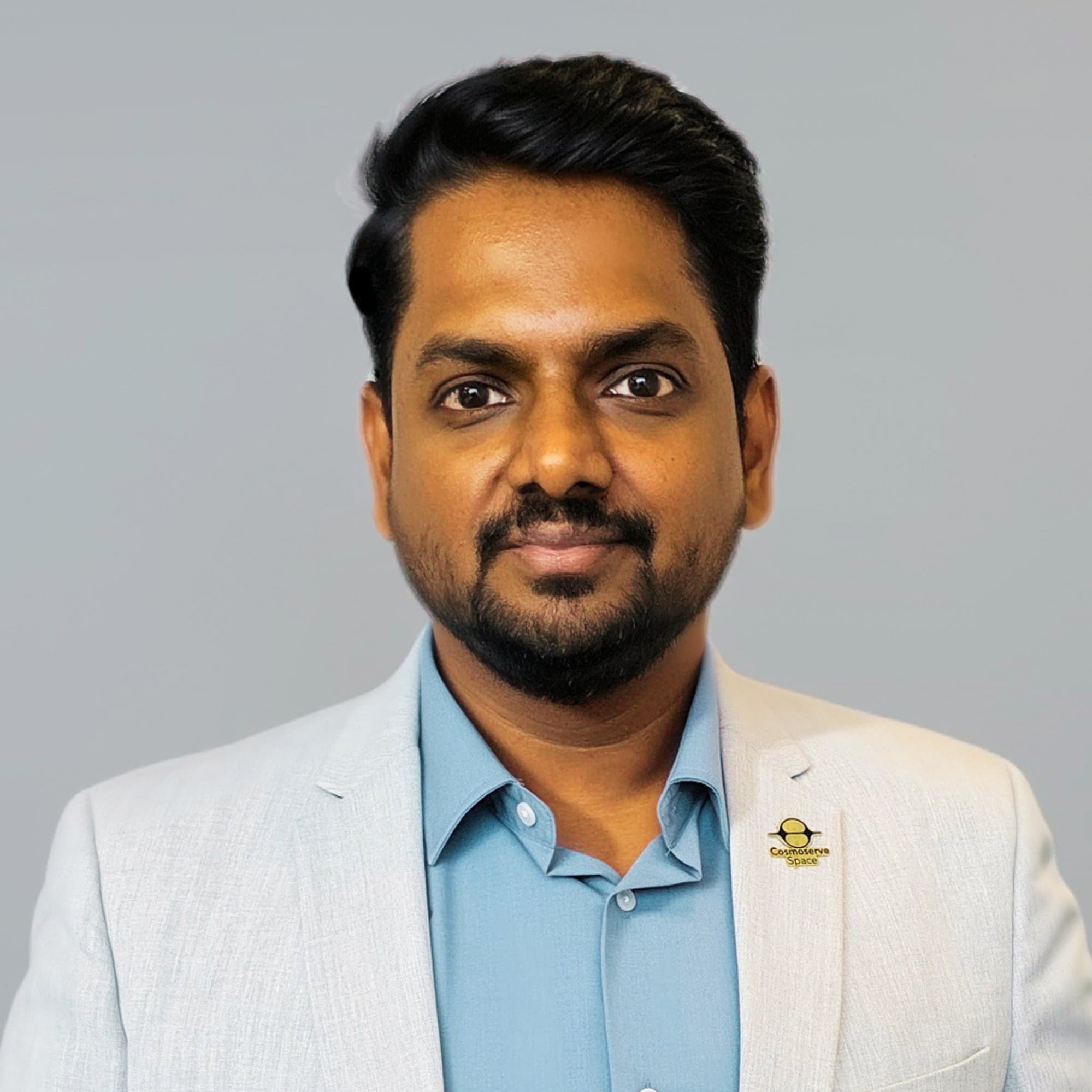
Building the Next Space Economy: Chiranjeevi Phanindra and Cosmoserve's Case for Orbital Maintenance
Chiranjeevi Phanindra, Founder & CEO of Cosmoserve Space, spent 14 years at ISRO working on re-entry and human spaceflight. Today, he is focused on a vital challenge: keeping Earth’s orbit usable.
Read Full Story

Corporate Visionaries
Shashank Sahni on What Success Leaves Out
Shashank Sahni, Google’s Managing Director of Global Ads Solutions, reflects on what customers reveal, what ambitious teams need from their leaders & what the mountains and marathons have taught him about going further.
Read Full Story
Corporate Visionaries
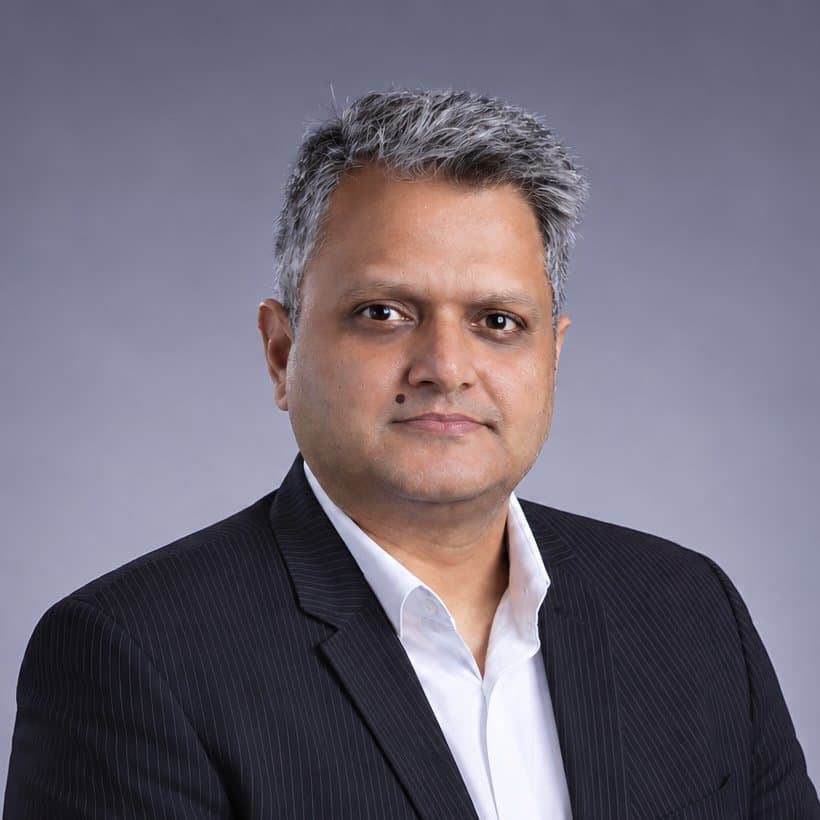
Clinical Multiplication: Divesh Singla on the Healthcare AI Case That Headlines Keep Missing
Divesh Singla, Managing Director, India at Veradigm, brings two decades in healthcare technology to the AI question leaders cannot avoid: how to expand clinical capacity without weakening human judgment.
Read Full Story