Category: Corporate Visionaries
Shashank Sahni, Google’s Managing Director of Global Ads Solutions, reflects on what customers reveal, what ambitious teams need from their leaders & what the mountains and marathons have taught him about going further.
Shashank Sahni on What Success Leaves Out
IndiSight Editorial
Sep 28, 2026

Shashank Sahni
Managing Director - Global Ads Solutions (gtech ads) · Google
Hyderabad, India
A few hundred metres below the summit of Aconcagua in Argentina, the highest mountain in the Americas, dangerous winds forced Shashank Sahni and his fellow climbers to turn back. The peak rises nearly 7,000 metres, but their immediate concern was finding a safe way down. He remembers the encounter as the closest he had come to death.
When he recalls the expedition, he gives the disappointment its place. They had set out to reach the summit and fallen short. He also remembers the altitude reached, the effort sustained and views few people would experience. Describing the climb solely through its unfinished objective would erase much of what made it valuable.
Business produces similarly compressed verdicts. A quarter succeeds, a project disappoints, a team exceeds expectations. Money and careers move on the strength of those assessments. Yet a result can leave important questions unanswered about the decisions behind it and the condition in which people finish the work.
Shashank Sahni, Managing Director, Global Ads Solutions at Google, leads a global team serving Google’s largest advertisers. His responsibilities bring him close to the challenge of helping major businesses put technology to work across different markets and customer needs. Earlier at Google, he oversaw YouTube’s global advertiser servicing and held sales leadership responsibilities in Europe, where he served on Google’s Northern Europe GBO Board. Alongside his experience running enterprise technology businesses at Dell and Oracle, those roles have shaped his understanding of how commercial performance depends on the decisions, skills and cooperation of people across an organisation.
When Results Reassure
Earlier in his career, Shashank approached leadership with the confidence of an outcome-driven sales professional. Deliver the numbers, ensure people earn well, and the team should be fine. His team was achieving its targets, giving him reason to believe the approach worked. Colleagues then shared that they expected more, particularly opportunities to grow and to be heard.
He sought help from an external coach. Their feedback made him reconsider how much attention he gave to the purpose behind the work and the way people experienced it. Achieving the numbers gave him one view of how things were going; hearing their expectations gave him another.
People resonate with a clear why and appreciate the clarity on the how. Many leaders double down only on the what. That’s where some of the disconnect lies.
A team can be dependable while its members are ready for a different conversation about their future. Leaders who rely on strong performers also need to understand what those people hope to learn, where they want greater responsibility and how they see their contribution developing. Consistent delivery can make those conversations easier to postpone because the immediate work appears to be in good hands.
Shashank now includes employee retention and organisational health alongside customer and competitive indicators when assessing a business. Frequent departures draw attention towards recruitment, rebuilding relationships and restoring continuity. The commercial cost begins with that diversion of energy, well before it becomes obvious in the results.
His experience with coaching also changed how he thought about developing people.
People don’t know how good they are and how good they can be. I think the job of the leader is to unlock that.
Helping colleagues discover that ability requires opportunities to make decisions, encounter difficulty and build confidence through work that stretches their understanding. A larger target, on its own, offers limited preparation for a larger responsibility.
Reading Beneath Green
Shashank uses “watermelon dashboards” to describe reports that look green outside while the underlying condition is red. The image is memorable because the meeting is familiar: reassuring indicators on the screen, accompanied by concerns that keep returning.
He regards operational discipline as essential. Strong systems improve efficiency, help manage costs and reveal patterns. The risk emerges when reporting becomes an exercise in “grading your own homework”. A measure can gradually become something the organisation learns to satisfy, even as the problem it was intended to illuminate remains unresolved.
During his Dell years, close rates were rising in certain customer cohorts while average order value remained flat. Sales were being completed and the team could point to its numbers. Shashank wanted to understand why those relationships were failing to develop further. Were salespeople exploring the customer’s requirements thoroughly enough?
We realised that what was happening was the sales team were not going deeper… So that unlocked the coaching opportunity for us.
Higher spending alone would have offered an incomplete answer. The useful discovery was that the team needed help asking better questions and understanding needs beyond the immediate purchase. The commercial measures had opened a conversation about how people sold: what could customers benefit from that the existing conversation was failing to uncover?
Shashank watches for recurring friction elsewhere in the business. A process keeps breaking down, customers repeat an objection, or a stakeholder raises a concern that survives successive reviews. Those patterns deserve investigation even when aggregate performance looks strong. The inquiry works best when colleagues experience questions as genuine curiosity.
People who feel they are defending their competence will approach the conversation differently from people invited to help understand a problem.
A Relationship That Lasts
Customer contact has a fixed place in Shashank’s working life. Wherever he travels, his team knows to arrange customer meetings. Earlier in his career, customers who continued calling for advice after he had left a company gave him a personal measure of the relationship he had built.
The only truth for the business and its leadership is the voice of the customer.
The relationship had retained value after the immediate commercial connection ended. His emphasis on retention follows the same logic. Acquisition demonstrates reach and selling ability; continuing business gives a company repeated opportunities to prove its usefulness. He sees retention as valuable to both cost and brand equity, with customer confidence accumulating through experience.
Listening closely also makes the choices harder. A global business encounters differences in language, market conditions and commercial readiness. Shashank stresses the need for clear priorities and an explicit understanding of the trade-offs, supported by market intelligence and testing. Leaders have to understand a customer’s need and decide whether the business has the people, resources and expertise to serve it well.
The ability to walk away belongs within that judgment. Plausible opportunities compete for the same attention and money. Taking on too many can stretch a company’s ability to fulfil the promises it has already made. Customer understanding should improve both the opportunities a business pursues and the reasons it gives for declining others.
Letting People Lead
Shashank’s approach to developing colleagues combines clear direction with genuine ownership. He describes himself as operating through frameworks and leading through coaching. Strategy establishes the priorities and the approach; colleagues need room within it to make choices and drive the work.
As a leader, I’m supposed to put my strategy out there. I’m supposed to articulate the why and help shape the how. My approach to that is that I will coach you from behind the scenes, but you will drive it.
The difficult judgment arrives when someone struggles with a problem the leader could resolve quickly. Intervention may protect an immediate outcome. Allowing the person to work through it may develop the ability to handle the next one. Coaching requires enough involvement to understand the stakes and enough restraint to let responsibility remain meaningful.
His aspiration is for a team to achieve something with such ownership that its members scarcely notice the leader’s contribution. He acknowledges that as an ambition he is still pursuing. For someone accustomed to being relied upon, it is a demanding goal: colleagues should gradually become able to handle work that once required frequent intervention.
When assessing future leaders, he looks for experience with complex, multidisciplinary work, business knowledge, learnability and range of leadership experience. He also asks whether people want to work with the person. Analytical ability becomes more useful when colleagues trust someone enough to share information, challenge assumptions and remain engaged through disagreement. A prospective leader’s readiness becomes easier to judge when the work requires them to bring several people’s knowledge together and reach a decision they can stand behind.
Where AI’s Hours Go
AI adds complexity to those judgments. Better tools can improve the quality and presentation of individual output, making it more important to understand how someone arrived at an answer. Shashank approaches the subject as work in progress. He is candid that he is still figuring out how leaders should prevent execution speed from outrunning judgment.
His framework moves through fluency, application and augmentation. People need familiarity with the tools, experience using them and a view of what the technology should help them improve. He is open about his own learning too: at the time of the conversation, he was using AI more in his personal life and wanted to apply it more at work.
If AI is helping me optimise my day, the question is how effectively I can redeploy some of that capacity towards meaningful outcomes.
For a global team supporting Google’s largest advertisers, the question reaches beyond individual productivity. Time recovered through AI could allow colleagues to understand an advertiser’s business more deeply, work through a difficult problem or share an approach that another team could use. Shashank wants the benefit to become tangible in the customer’s experience of working with Google.
The behaviour around adoption deserves equal attention. He has seen people defend familiar tasks because those tasks give them a sense of importance. He has also seen people discover useful AI applications and keep their learning to themselves, preserving an individual advantage. Both responses can arise from anxiety about relevance.
A company could consequently become a collection of more productive individuals while learning relatively little as an organisation. Useful methods remain private; colleagues repeat experiments others have already completed. Shashank’s attention turns to what leaders recognise and reward. People need to see that helping colleagues improve counts as a contribution, particularly when individual output is so easy to notice.
As the tools change, leaders have to explain what good work looks like. Completing a task quickly is one consideration. Understanding its purpose, questioning a weak answer and helping others use a better method deserve attention too. Decisions about recognition and greater responsibility give those expectations their credibility.
The Value of Effort and Trying
Shashank uses a straightforward sequence with teams: “pause, prioritise, proceed”. The pause creates room to consider what deserves attention. Prioritisation concentrates effort. Proceeding turns discussion into an attempt from which people can learn. Protecting that time becomes difficult when existing commitments already occupy the calendar.
He argues for recognising effort alongside outcomes. An organisation that rewards successful results exclusively gives people reason to choose predictable work. A request for experimentation becomes more convincing when employees can see how a thoughtful attempt will be treated if the result falls short.
We need to find ways to recognise effort and make space for experiments because, if you’re able to do that, you’ll find people willing to try harder. People don’t try hard enough because they don’t believe that they are recognised enough for it.
Commercial discipline still requires leaders to distinguish useful effort from activity that changes little. An experiment might expose a faulty assumption, develop a skill or establish that an opportunity should be abandoned. A constructive review asks what the team learned, how it responded to evidence and what changes in the next decision. Those answers give a leader something specific to recognise.
The mountain offers a useful perspective. The summit remained unfinished, while the ascent retained value. In a business, a fuller assessment requires similar care. A team should be able to explain what the attempt revealed and how that understanding will influence the work ahead.
Shashank believes resilience develops through demanding experiences, whether building a company, learning an instrument or preparing for a marathon. His own physical starting point was modest. When he joined Google, he recalls struggling to walk from the ground floor to his third-floor office without becoming breathless. Before the mountains, there were the office stairs.
The change in his capacity altered what he was willing to attempt. He applies a related principle to younger colleagues: give them substantial problems that demand context, critical thinking and collaboration. He is particularly concerned with second- and third-order thinking. Designing a road for present demand raises one set of questions; considering a much larger future population changes the assumptions and requirements. AI can assist the analysis, while the person responsible still has to decide how far ahead to look and what the decision could set in motion.
Ambition Has a Pace
His enthusiasm for difficult work comes with an equally strong view on pacing. In an aspirational country such as India, professionals can feel pressure to move rapidly through income, titles and responsibility. Running has made him attentive to what an early burst can cost later.
You have to be comfortable going slow if you want to go far.
His relationship with training follows the same thinking. “I don’t train for a marathon. I am always in learning and training mode,” he says. Races happen along the way. Preparation remains a continuing practice, and enjoyment helps him sustain it beyond any particular event.
Competitive urgency remains real. Shashank includes a company’s pace relative to its competitors among the indicators worth watching. Leaders still have deadlines to meet and opportunities that demand a quick response. They also need to understand what repeated demands are doing to the team. An exceptional push may achieve the target while leaving people exhausted. A demanding assignment, with the right support, can leave them more confident and better prepared for greater responsibility.
Leadership Lessons
Ask more questions when the results look good. Strong delivery can coexist with unaddressed development needs, recurring customer concerns and dependence on a few people carrying an excessive share of the work.
Look at the numbers together. Rising close rates and flat order values prompted Shashank to examine the sales conversation and identify where his team needed coaching.
Keep talking to customers as your responsibilities grow. Those conversations reveal what customers are struggling with and whether the company’s priorities reflect their needs.
Give people decisions to make, with support when they need it. Set the direction, let colleagues work through the choices and stay available to coach them.
Decide what to do with the hours AI saves. Be specific about which customer problem, piece of work or development need will receive the additional attention.
Recognise people who help colleagues improve. Useful discoveries are more likely to spread when sharing them receives attention alongside individual results.
Ask what an unsuccessful attempt taught the team. Recognise the work when people can explain what they discovered, how they adapted and what they will do differently.
Pay attention to how people finish. Review whether they are leaving an assignment better prepared for the next challenge or in need of time and support to recover.
On Aconcagua, Shashank returned with an unfinished objective and an experience of lasting value. His teams have taught him to examine the reverse situation too: an achieved objective with important expectations still to be understood. A successful quarter deserves recognition. It also gives a leader reason to ask whether customers are better served and whether colleagues can now handle work that once required constant intervention. Those are achievements worth looking for, and worth making time to build.
Our Suggestions to Read
Discover The Leaders Shaping India's Business Landscape.
Founders & Innovators
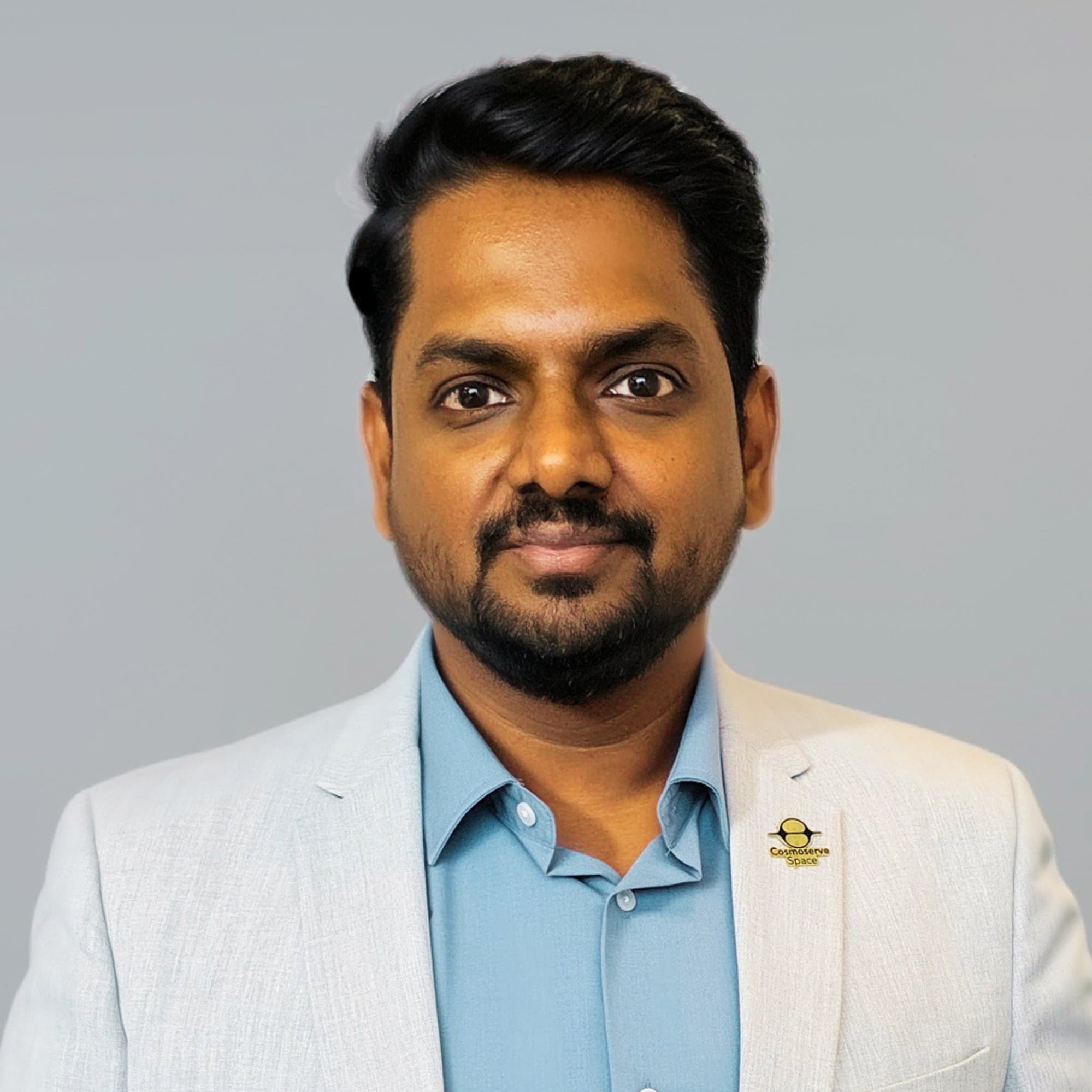
Building the Next Space Economy: Chiranjeevi Phanindra and Cosmoserve's Case for Orbital Maintenance
Chiranjeevi Phanindra, Founder & CEO of Cosmoserve Space, spent 14 years at ISRO working on re-entry and human spaceflight. Today, he is focused on a vital challenge: keeping Earth’s orbit usable.
Read Full Story
Corporate Visionaries
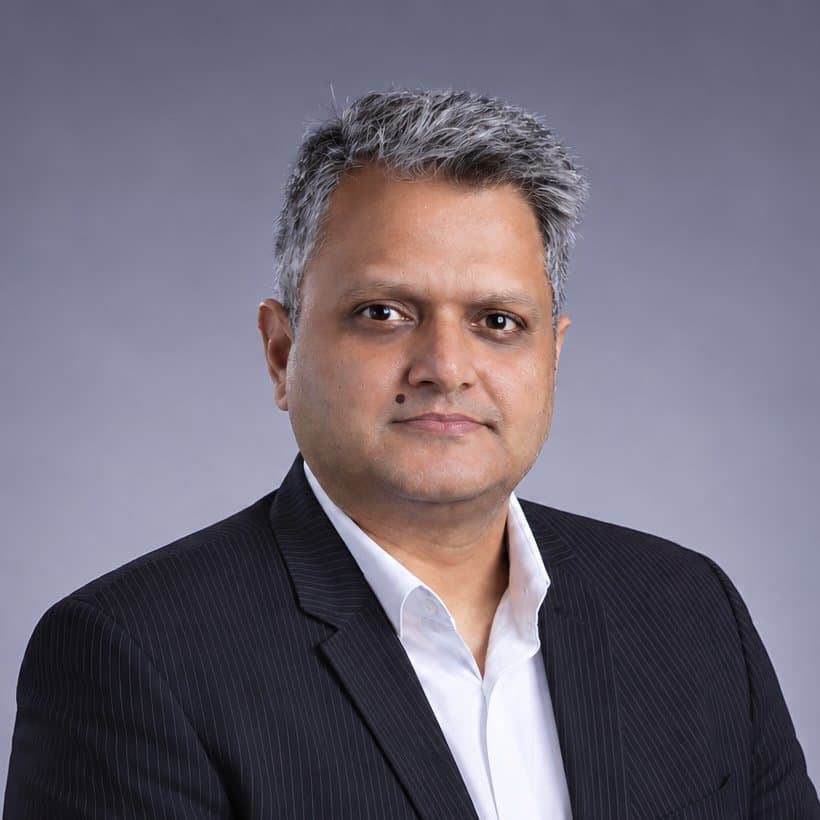
Clinical Multiplication: Divesh Singla on the Healthcare AI Case That Headlines Keep Missing
Divesh Singla, Managing Director, India at Veradigm, brings two decades in healthcare technology to the AI question leaders cannot avoid: how to expand clinical capacity without weakening human judgment.
Read Full Story

Investors & Catalysts
The Physical Economy Was Never Slow: A Conversation with Nikhil Choudhary
Nikhil Choudhary, Managing Partner at Nirman Ventures, on the harder ground of technology, where physical AI, venture discipline and industrial adoption have to meet the realities of machines, workers, capital and trust.
Read Full Story