Category: Corporate Visionaries
Divesh Singla, Managing Director, India at Veradigm, brings two decades in healthcare technology to the AI question leaders cannot avoid: how to expand clinical capacity without weakening human judgment.
Clinical Multiplication: Divesh Singla on the Healthcare AI Case That Headlines Keep Missing
IndiSight Editorial
Sep 26, 2026
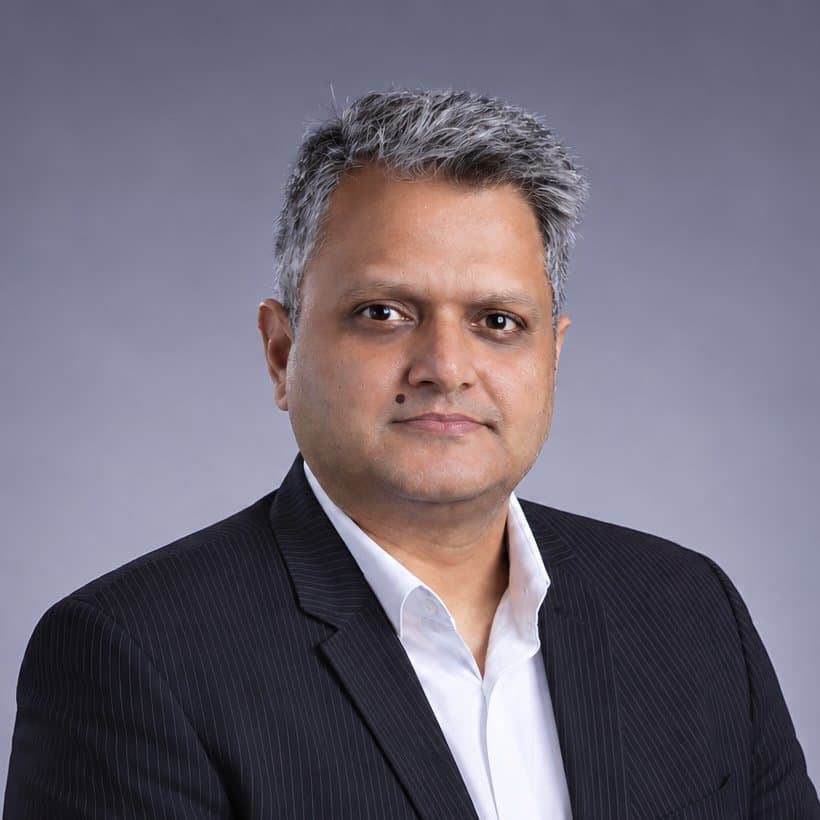
Divesh Singla
Managing Director (India) · Veradigm
Pune, India
A healthcare model that is 95 percent accurate still leaves one person in twenty exposed to error. In consumer technology, that may become a bug report. In healthcare, it can become someone’s parent, daughter, or son.
For Divesh Singla, this is the first discipline healthcare AI must respect. Technology in this sector cannot be judged by the elegance of a model, the novelty of a platform, or the efficiency of a dashboard alone. It has to be judged after the demo, when information must move, decisions must be owned, accountability must be clear, and work must finally reach the patient.
Divesh has spent more than two decades across healthcare technology, analytics, AI translation, clinical research operations, global capability building, and enterprise transformation. As Managing Director, India at Veradigm, his perspective comes from working where technology has to become regulated, measurable, patient-relevant execution.
A patient may see three specialists and still remain trapped inside three separate versions of the truth. One doctor reads one record. Another works from a different context. A payer evaluates a claim through another lens. The patient carries the consequence of a system where knowledge exists, yet does not always travel in time.
“You cannot fix a coordination problem with better instruments.”
The implication is clear. Healthcare AI will not create value merely by becoming more powerful. It will create value when leaders redesign the conditions in which intelligence is used: workflows, incentives, handoffs, compliance, ownership, and patient accountability.
The Real Problem Is Coordination
Divesh’s central argument is simple in wording and difficult in execution. Healthcare’s deeper bottleneck is coordination.
A patient’s care can involve physicians, hospitals, diagnostic providers, payers, regulators, pharmaceutical companies, technology platforms, and family members. Each actor may hold a valid piece of the picture. Failure begins when those pieces arrive late, remain trapped in silos, or move without shared accountability.
Healthcare transformation often disappoints when stronger tools are added to unchanged operating models. Better information may exist, but the people who need it may not receive it at the right moment, in the right form, with the authority to act.
A coordination diagnosis also has limits. Some barriers sit beyond the technology team: reimbursement structures, payer incentives, clinician autonomy, regulatory boundaries, and ownership split across institutions. The value of Divesh’s framing lies in its refusal to treat technology as a cure for everything. It asks leaders to see what tool language often hides: the system has to move before the tool can matter at scale.
Mature healthcare markets show this clearly. The US and Europe have capital, research strength, regulation, infrastructure, and institutional experience. They also carry legacy systems, old contracts, reimbursement logic, compliance habits, and operating dependencies that slow change. Resources do not automatically create speed.
India’s opportunity lies in learning without copying. Clinical safety, privacy, evidence, and institutional credibility must remain firm. Delivery design gives India more room to originate because access and affordability can be built into the model early, rather than repaired later.
The sharper question for India is no longer whether it can support global healthcare enterprises. The question is whether it can design operating models strong enough for others to adopt.
From Execution Strength to Original Design
“Built in India for the world” becomes meaningful when India-originated ideas travel beyond Indian execution.
Divesh is candid about India’s starting advantage. Execution at scale, cost discipline, and delivery quality are real strengths. Global companies understand those strengths. The mistake is to treat cost advantage either as something to deny or as the ceiling of ambition.
I don't think our industry needs to be ashamed of the cost conversation. Cost is real, it's part of why work came to India in the first place, and pretending otherwise weakens the larger case for what India can do. The question isn't whether cost matters. It's what a center does with the credibility that cost efficiency and delivery quality have already earned.
His point is practical. If a CTO can hire an AI engineer of comparable quality in India at a very different cost from Silicon Valley compensation, the decision is not mysterious. Cost advantage is part of the operating logic. Denying it weakens the larger innovation claim.
The strategic question begins after that honesty. What does the India centre do with the credibility that execution has earned? Does it remain a delivery engine, or does it begin shaping decisions?
For Divesh, a capability centre becomes strategically relevant when global leadership would miss its judgment, not merely its output. Headcount proves scale. Productivity proves discipline. Strategic influence grows when India-based teams help set priorities, test assumptions, and shape decisions the enterprise is willing to back.
Such influence requires commercial context, decision rights, and the courage to challenge. A centre cannot become strategic only by doing assigned work faster. It becomes strategic when it understands the business deeply enough to question assumptions, propose alternatives, and carry accountability for the outcome.
Divesh’s phrase for this operating model is “salaried entrepreneur.”
Across the industry, I see capability centers at different points on the same journey, from executing what headquarters designs, toward contributing to what gets designed in the first place. That shift needs a different kind of leader: someone with commercial context, decision-making authority, and the confidence to challenge, not just deliver. I call that operating model a salaried entrepreneur. You don't own equity, but you own outcomes the way a founder would.
Ownership inside a corporation has to be more than intensity. It requires clarity of mandate, decision rights, commercial understanding, and the willingness to remain accountable after the decision is made. A capability centre becomes strategic when it does not simply complete assigned work, but begins to shape the choices the enterprise is willing to trust.
Constraint as Design Intelligence
India’s healthcare complexity can become a design advantage when leaders treat it as an operating condition rather than a market inconvenience.
Income, language, infrastructure, access, education, digital comfort, and care availability vary dramatically. A model built for such variation has to become simpler, more flexible, and more resilient. A solution that can work across rural Bihar and urban Bengaluru has survived a harder test than many single-market designs.
Constraint exposes whether a solution can hold up when the user is less predictable, the infrastructure less uniform, and the cost ceiling more unforgiving. India’s relevance can extend beyond domestic scale when this complexity is converted into design intelligence.
Emerging markets need healthcare models that can operate under uneven access and high affordability pressure. Mature markets, despite greater institutional depth, also face the limits of systems not designed around continuity, prevention, or patient-level coordination.
India’s opportunity is to turn complexity into portable healthcare design, not merely to execute global instructions at scale.
The AI Case Headlines Often Miss
AI has brought tremendous promise to healthcare, but separating meaningful impact from hype remains a constant challenge.
In 2019, during a discussion around the book chapter he had contributed to, titled “Dose of Disruption,” he said doctors would be replaced. He now describes that answer as naïve.
“I made that comment out of naivety in 2019. I don’t think doctors will be replaced.”
The reversal matters because healthcare absorbs technology differently from consumer software. Clinical workflows carry regulation, consent, liability, professional judgment, and patient consequence. Experience has moved Divesh away from replacement language and toward augmentation.
He sees practical AI value emerging first in areas that receive less attention: clinical documentation, prior authorization, revenue cycle management, administrative burden, and workflow friction. Such work may appear less dramatic than AI-led diagnosis, but it can create measurable value quickly.
A doctor who spends less time on notes has more time with patients. A system that reduces authorization delays releases capacity. A workflow that removes repetitive administrative effort improves speed without shifting final clinical responsibility to a model.
Divesh calls this clinical multiplication. The phrase changes the investment logic. AI is valuable when it expands the usable capacity of clinicians and operating teams, improves throughput, reduces friction, and keeps final accountability where it belongs.
The overlooked case for healthcare AI begins with capacity, not replacement. The first serious value may not come from replacing the doctor. It may come from giving the doctor more room to be a doctor.
Accuracy, Accountability, and the Pilot Test
Healthcare AI has to be judged through consequence, not performance language alone.
Divesh makes the point with one number.
A model that is 95 percent accurate still means that one in 20 people get it wrong. In consumer tech, that’s a bug that you can patch in the next sprint. In healthcare tech, that one in 20 is someone’s parent, someone’s daughter, someone’s son.
A controlled pilot can succeed while the real workflow remains unready. Confidence can build before accountability is clear. Scale can begin to feel like the next natural move before the organization has answered the harder question: who owns the decision when the model is wrong?
Divesh draws a firm line around final clinical decisions, consent, and situations where a false negative can cost a life. AI can surface information faster and more completely. It can assist. It can reduce cognitive and administrative load. Accountability for life-affecting decisions still needs a human owner.
“AI’s job in those moments is to surface information faster and more completely than a human could do alone. Its job is not to make that final clinical decision.”
His practical test for AI programs is blunt: remove the tool tomorrow and see what happens.
If you removed the tool tomorrow and it caused an operational problem, it’s real. If nobody would even notice, it was a pilot the whole time.
The test cuts through presentation quality. Real capability becomes embedded. People depend on it. Workflows adapt around it. Someone owns its performance after the launch team has moved on.
AI proves itself after the technical test, when the tool has to live inside daily operations, support ordinary users, carry risk, and become part of how work actually gets done.
Sequencing, Judgment, and the Confidence to Originate
Healthcare leaders often speak about balancing clinical outcomes, affordability, credibility, compliance, access, and patient experience. Divesh is sceptical of that language because it can hide the trade-off rather than manage it.
We cannot optimize five things at once. Anyone who tells you they are balancing all these five things equally is lying to you, or to themselves. The real skill is sequencing.
Sequencing is a leadership discipline. Safety, access, cost, evidence, and experience rarely move at the same pace. A payer may read value through affordability, a regulator through acceptable risk, a clinician through evidence and workflow, and a business through viable speed. The leader’s work is to decide the order without pretending every priority can lead at once.
Wrong sequencing becomes costly when speed is treated as the first virtue in a regulated healthcare environment. A launch may look efficient and a pilot may look successful, while the institution quietly accumulates risk because compliance, workflow ownership, and patient consequence were handled too late.
This is where judgment becomes the critical leadership capability. More precisely, judgment under ambiguity: the ability to synthesize across domains when multiple signals compete and time is limited.
Domain knowledge can be taught. Data fluency can be built. Technical tools can be learned. The harder capability is knowing which signal matters when clinical, commercial, technical, regulatory, and operational priorities collide in the same room.
Divesh is especially critical of collecting certifications as a proxy for readiness. His advice is practical: take the messy, undefined project that others avoid, build a record of decisions, and track the wrong ones as well as the right ones.
The same logic shapes his view of talent beyond metro networks. His diagnosis is clear: the issue is visibility, not talent.
Many young professionals have ambition, discipline, and intelligence, but fewer early signals about how healthcare technology roles are structured, how global teams make decisions, and which relationships open serious opportunities. Without that exposure, ambition can harden into confidence before it has been tested by industry reality.
Young professionals also carry responsibility. Divesh’s phrase is “deserve before you desire.” Desire has to be matched by preparation, outreach, persistence, and proof of effort.
India-based leaders face a related mandate question. They need confidence that comes from capability, business understanding, and repeated delivery.
There's a mindset I still see too often, an outsourcing mindset. Tell us what to do, and we'll do it, and we'll do it better than anyone else in the world. I've seen this even in companies with a long India operating history, where people who've been in the industry for years still miss the broader context of the business they're in. We need to move past that mentality and actually understand the industry we participate in, not just execute inside it.
Global mandate rarely moves because a centre has grown large or efficient. Authority moves when leaders understand the business, question assumptions with evidence, and remain accountable after the challenge is accepted.
For India to shape global healthcare, its leaders will need to challenge with commercial context, ask better questions, and resist mistaking delivery excellence for strategic mandate.
Leadership Lessons
Healthcare transformation begins by naming the problem accurately. Better tools can improve parts of the system, but the larger task is to make information, incentives, workflows, and accountability move together rather than compete with one another.
Capability centres earn strategic relevance through judgment, not headcount. Scale can prove institutional presence, and productivity can prove operating discipline, but influence begins when India-originated thinking shapes enterprise choices.
Cost advantage should be treated honestly. Leaders weaken their case when they deny the economic logic that brought work to India, and strengthen their mandate when they use that foundation to build higher-order capability.
AI proves itself after the technical test, when the tool has to live inside daily operations, support ordinary users, carry risk, and become part of how work actually gets done.
Healthcare value requires sequencing. Leaders have to decide what comes first, protect minimum standards elsewhere, and defend the trade-off with enough honesty to retain trust.
Future talent will be judged by synthesis under pressure. Certifications may signal learning, but leadership potential shows up when a professional can connect clinical, commercial, technical, and regulatory signals in an ambiguous decision.
The visibility gap needs action from both sides. Employers have to widen access, while young professionals have to build readiness through outreach, persistence, and real exposure.
India’s next healthcare contribution depends on originality. Execution built credibility; idea ownership will determine whether India shapes global models or only supports them.
Compassion in healthcare functions as operating discipline. It keeps leaders honest when commercial pressure, deadlines, and dashboards make it easy to forget who is at the end of the decision.
The Question Behind the Future
Divesh’s view of healthcare transformation returns to one proposition: stronger tools will keep exposing the same weakness unless enterprises redesign the coordination around them. AI can make information faster, richer, and more usable, but the real work sits in handoffs, documentation, authorization, evidence, clinical judgment, business context, mentorship, and decision rights.
For India, the opportunity is equally demanding. Capability built on execution has created confidence, but confidence has to mature into original contribution. India-based teams will have to understand the business deeply enough to challenge, design, and carry decisions that global leadership trusts.
The question for healthcare enterprises is whether they are prepared to change the operating model, or whether they will keep buying better instruments for a system that still cannot coordinate itself.
Divesh often returns to the thought that somewhere a patient is waiting. In his Navras writing, he connects that instinct to karuna, or compassion, which he sees as discipline rather than softness. In healthcare technology, that discipline becomes a way of remembering that the machinery of transformation eventually reaches a person who may never know how many decisions shaped the care they receive.
Our Suggestions to Read
Discover The Leaders Shaping India's Business Landscape.
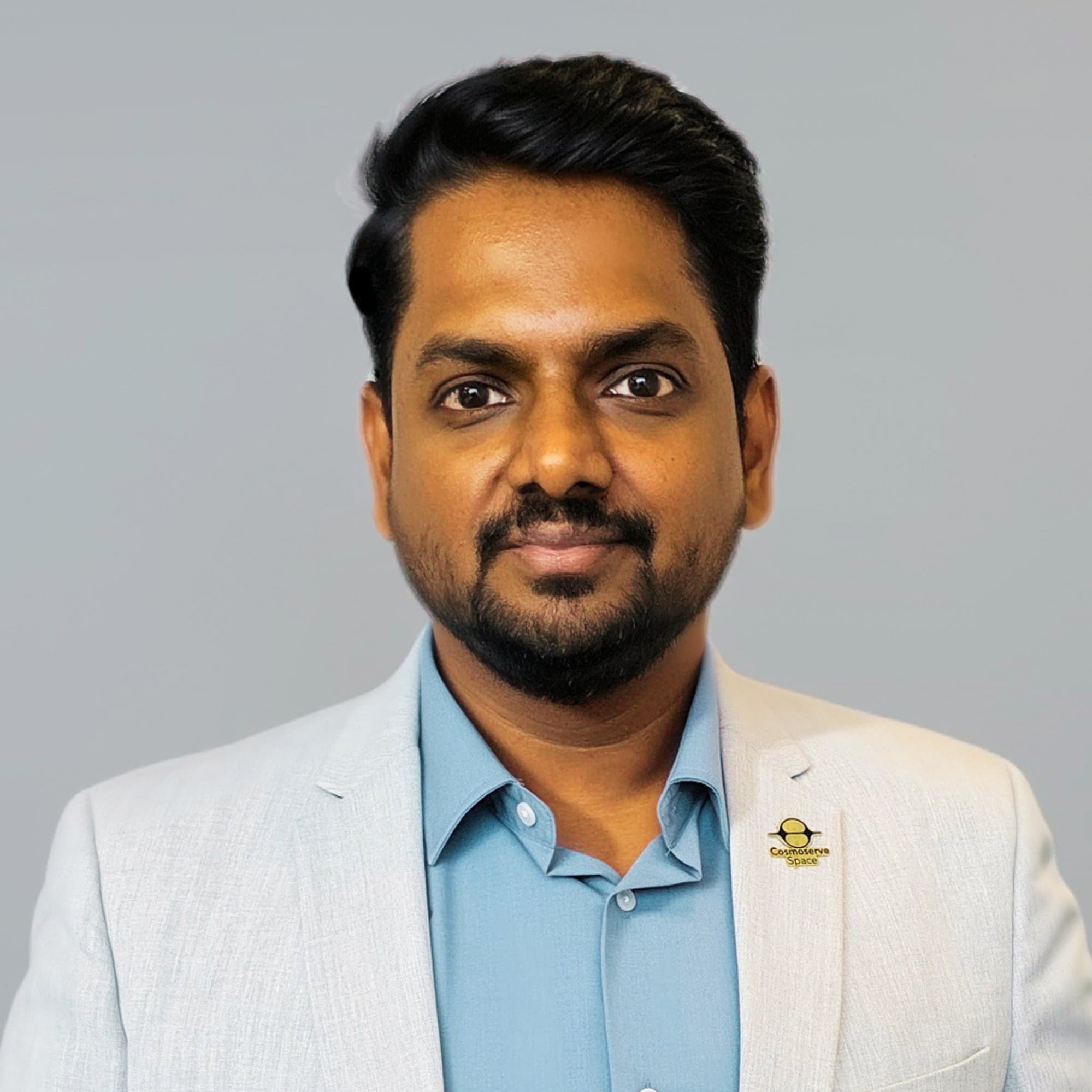
Founders & Innovators
Building the Next Space Economy: Chiranjeevi Phanindra and Cosmoserve's Case for Orbital Maintenance
Chiranjeevi Phanindra, Founder & CEO of Cosmoserve Space, spent 14 years at ISRO working on re-entry and human spaceflight. Today, he is focused on a vital challenge: keeping Earth’s orbit usable.
Read Full Story
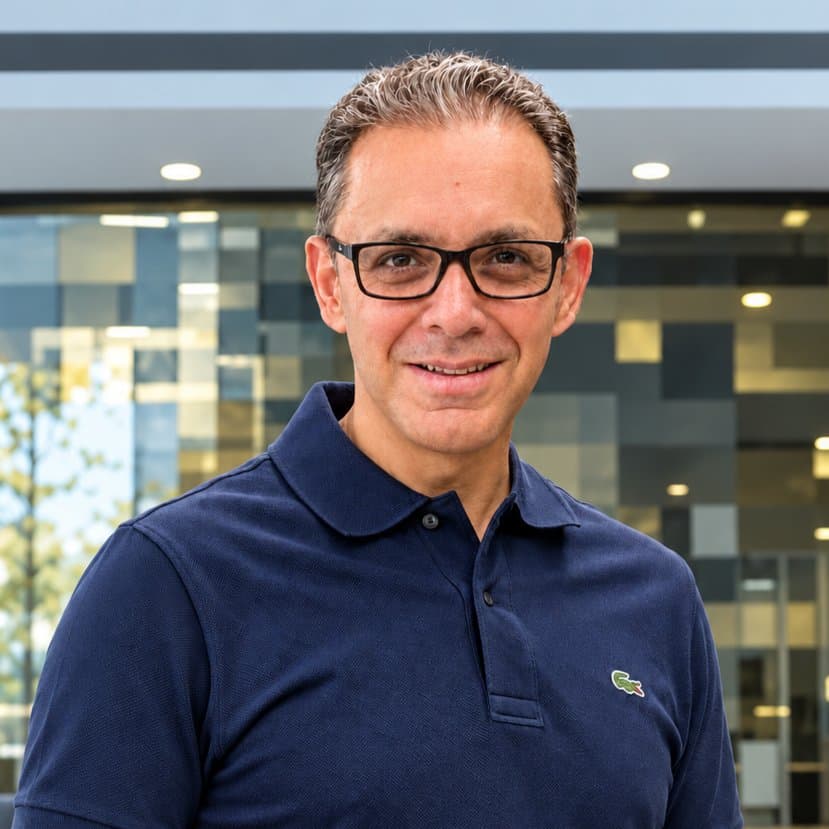
Corporate Visionaries
Shashank Sahni on What Success Leaves Out
Shashank Sahni, Google’s Managing Director of Global Ads Solutions, reflects on what customers reveal, what ambitious teams need from their leaders & what the mountains and marathons have taught him about going further.
Read Full Story
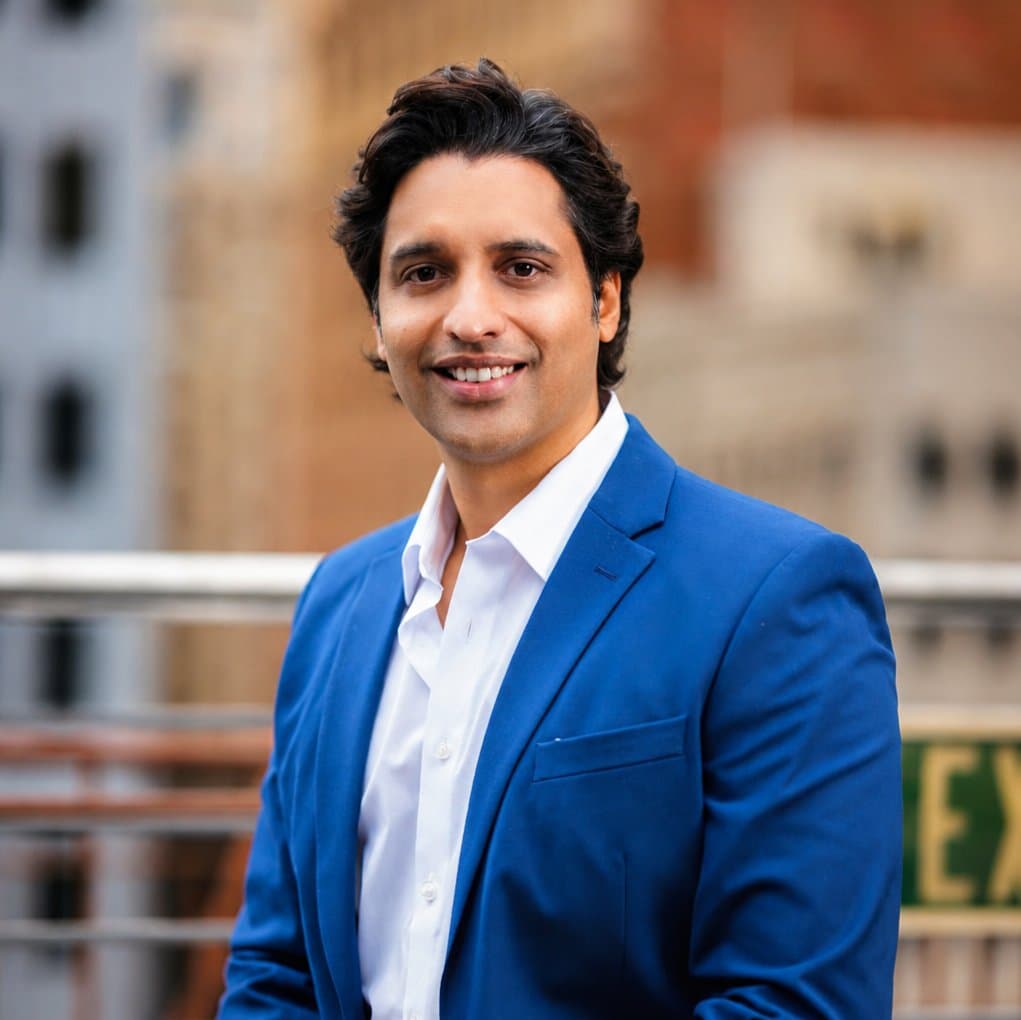
Investors & Catalysts
The Physical Economy Was Never Slow: A Conversation with Nikhil Choudhary
Nikhil Choudhary, Managing Partner at Nirman Ventures, on the harder ground of technology, where physical AI, venture discipline and industrial adoption have to meet the realities of machines, workers, capital and trust.
Read Full Story