Category: Education Leadership
Dr Noa Gafni, Professor & Academic Director (Entrepreneurship) at New York University, explains why AI-era founders need more than speed: judgment, trust, community, and the discipline to solve real human problems.
The Founder the World Has Been Waiting For: Dr Noa Gafni on AI, Access and the New Entrepreneurial Moment
IndiSight Editorial
Aug 24, 2026
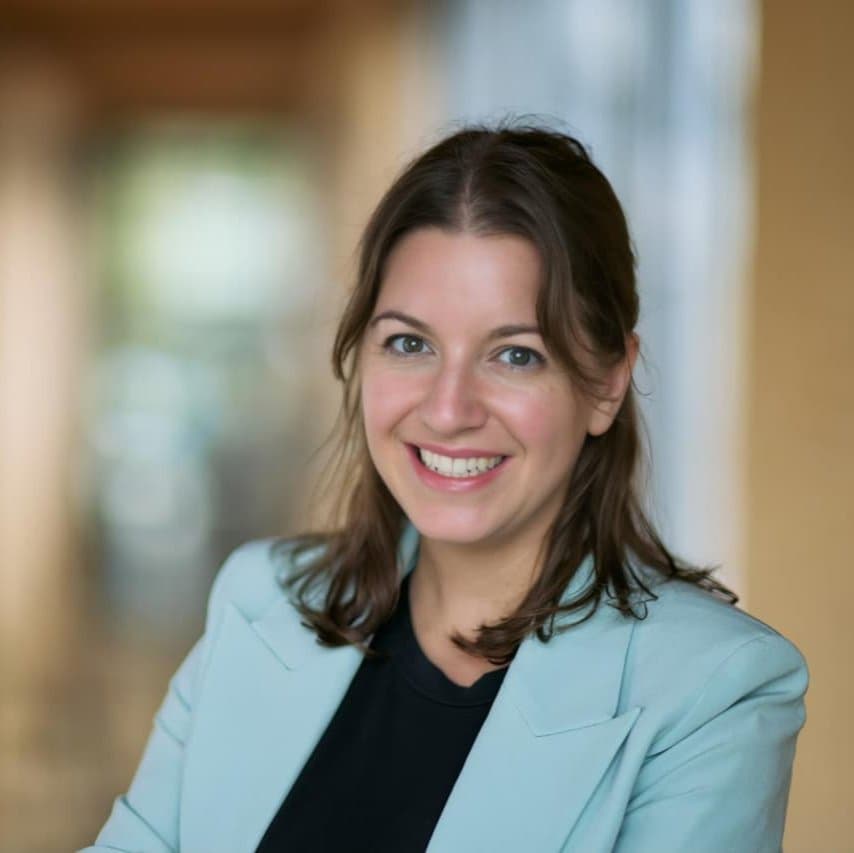
Dr Noa Gafni
Professor & Academic Director (Entrepreneurship) · New York University
New York, USA
Every era of entrepreneurship has its false comfort.
For one generation, it was the business plan. For another, it was access to capital. For the last decade, it was speed: build fast, launch fast, raise fast, scale fast. The current moment has created a more seductive comfort. With AI in the founder’s hands, almost anything can begin to look buildable.
Dr Noa Gafni is interested in the question beneath that excitement.
When building becomes easier, what becomes harder?
For Dr Noa, the answer sits in the less glamorous work of entrepreneurship: choosing the right problem, understanding the people who live with it, earning trust before expecting adoption, reading the forces that could reshape the market, and staying disciplined when momentum arrives too quickly or not at all.
She describes a venture-capital fund that uses an internal vibe-coding team during diligence. The team tries to replicate what a startup has built. If the product can be recreated to a high degree, the investment becomes less attractive.
“Technology is no longer going to be your moat. Getting there faster is no longer a moat.”
The shift is easy to miss because it looks like progress. Execution is becoming easier to access. Understanding is becoming harder to earn. Tools can shorten the distance between idea and prototype, but they cannot recreate a founder’s lived knowledge of a problem, the trust of a community, or the ability to see how the market is changing around the product.
The Builder After The Build
As Professor of Entrepreneurship at New York University, where she is helping launch a new master’s program in entrepreneurship, Dr Noa works with students and founders entering a very different kind of market. The tools are moving quickly. The institutions that teach people how to use them well are still catching up.
Her own path has moved through moments when behaviour was changing before institutions fully understood it: an early social network for women in 2005, the first head of social media role at Hearst Magazines, the World Economic Forum’s Global Shapers Community across more than 300 cities, social-impact consulting with organizations including the United Nations, corporate social innovation at Rutgers, and now entrepreneurship education at NYU.
The pattern matters more than the résumé. Digital communities challenged legacy media. Young global networks challenged older leadership models. Stakeholder engagement challenged corporate impact. AI is now challenging the structure of entrepreneurship itself.
Her central point brings the conversation back to the human side of company-building.
“Most entrepreneurs are problem solvers. They’re connected with humans. They’re connected with real problems.”
A venture can now look more advanced than its thinking. A product can look more complete than its understanding. A founder can move from prompt to prototype before doing the slower work of listening, observing and learning where the real resistance sits.
Audience Before Product
Dr Noa sees a different sequence emerging among many young founders.
They build audience before product. They listen before sending an MVP into the market. They use AI as an operating partner rather than a branding accessory. They test ideas with communities before certainty hardens around the wrong answer.
“They want to have a community that is engaged and following them as an individual and as an entrepreneur before they even hit send on an MVP. So they’re listening.”
Audience, in this model, is not just attention. It is a form of early intelligence. It reveals language, hesitation, urgency, aspiration and trust. It helps a founder understand whether a market is only visible or actually reachable. It also builds something that is becoming harder to copy: belief.
The older founder playbook often treated community as something to build after launch. Dr Noa is watching a generation invert that order. They begin with relationship, conversation and signal before the product becomes fixed.
Many ventures fail long before execution becomes the issue. The founder misunderstands the customer’s real problem, overestimates urgency, mistakes attention for demand, or builds for a use case that sounded convincing but never became behaviour.
Audience-first building changes the early risk of a company. Feedback arrives before capital, narrative and identity harden around the wrong answer.
AI, Access And The New Moat
“Claude is the co-founder.”
Dr Noa says it with the practicality of someone watching students and young founders use AI every day. They prototype, code, build systems, test assumptions, create workflows and move from friction to experiment with far less delay.
AI expands who gets to participate in entrepreneurship. People who have deep exposure to a problem can now test a response without waiting for a technical team to validate the opportunity for them.
Her bus example captures the shift well. A colleague waited for a bus that never arrived, even though the system showed that several buses had already come. During the wait, she built a tool that gathered evidence and sent the data to the bus company and public officials. The data exposed a reliability gap that had previously been experienced only as individual frustration.
A daily failure became a testable civic problem.
AI can reduce the distance between complaint and evidence, between observation and prototype, between frustration and first experiment. The more important capability is still observation. A tool can accelerate the response, but it cannot replace the founder’s responsibility to understand adoption, trust, timing and consequence.
That is why speed is becoming less defensible as an advantage. A feature can be replicated. A workflow can be rebuilt. A prototype can be matched. Durable advantage begins moving toward things that are harder to clone: trust, community, distribution, customer intimacy, institutional relationships, problem depth and the ability to keep adapting as needs evolve.
Dr Noa is alert to the danger of founders using big language to cover thin thinking. She recalls a founder describing a venture that would “democratize access to gambling.” The phrasing had the rhythm of venture ambition, but the underlying claim revealed how easily entrepreneurship can detach from real value.
A founder with AI can produce a version quickly. A serious founder earns the right to matter.
The Human Problem Beneath The Market
Dr Noa’s entrepreneurship lens is fundamentally behavioural.
Founders close to real problems notice what people tolerate, where systems fail, which workarounds become routine, what customers say, what they avoid saying, and where stated preference diverges from actual behaviour.
People rarely behave like clean data points. They may say one thing, mean another and do a third. A founder who hears only the first answer often builds too early. A founder who studies behaviour, context, hesitation and emotional cost begins to understand the deeper problem.
Products that last are built around lived friction. They carry an understanding of why the problem exists, why earlier attempts failed, who must trust the solution, and what has to change for adoption to become natural.
The stakes rise in sectors such as health, education, climate resilience, care, livelihood and economic opportunity. These problems carry scale, urgency, history, local knowledge, mistrust and institutional complexity.
Dr Noa is direct about shallow narratives in these spaces.
“I think people see through the shallow market narrative.”
A founder entering such a space with only market ambition will miss why the problem has remained unsolved. Serious founders respect complexity because complexity is often where the real opportunity sits.
The Forces Outside The Product
Dr Noa’s work at NYU comes at a moment when entrepreneurship education is being forced to update its assumptions.
Founders still need fundamentals: finance, customer discovery, product thinking, market sizing, unit economics, narrative discipline and operating rhythm. They also need to understand the forces that can reshape the market before the company has fully matured.
“What does it mean to win against your competitors when your industry might be obsolete in six months?”
Dr Noa’s New Five Forces framework gives structure to that wider view: Technology, Geopolitics, Society, Environment and Economy.
The framework’s strength is also where it can be misunderstood. Naming the five forces is easy. Treating them as five separate checklist items weakens the point. Dr Noa is explicit about the limitation: looking at each force individually is only the first step. The real work begins when leaders examine how the forces move together.
“If you look at each of the five forces individually, that’s not enough. That’s only the first step.”
Shein shows why this matters. Fast fashion is often discussed through an environmental lens because of materials, waste, consumption cycles and air freight. Dr Noa’s reading is broader. The business model also sits inside tariff structures, air-freight economics, petroleum-linked inputs, geopolitical exposure and changing trade conditions.
The sequence matters. Environmental analysis flags waste, carbon intensity and petroleum-linked materials. Geopolitical analysis flags tariff structures and trade relationships that helped make high-volume air movement economical. Economic analysis flags the cost assumptions that made the model viable at scale. When those forces move together, a company that first appears to be an environmental case also becomes a geopolitical and economic case.
A single-force reading may identify a serious issue. A multi-force reading begins to show whether the business model itself can hold.
Nubank offers another proof point. Dr Noa points to the Brazilian digital bank as a company that read societal change more fluently than traditional institutions. Financial inclusion could have been treated as a peripheral initiative. Nubank made it feel contemporary, accessible and desirable, using digital channels such as WhatsApp and a distinctive brand language that spoke to people who had often been outside the formal banking system.
For Dr Noa, Nubank matters because it shows how deeply social understanding can shape business advantage. The opportunity was not simply a customer segment. It was a different relationship with people who had not experienced the incumbent system as designed for them.
Markets no longer move only through product logic. Technology, geopolitics, society, environment and economy increasingly shape whether a product can be built, trusted, adopted, priced, distributed and defended. A founder who studies only the market may miss the forces already rewriting it.
The Zero Redundancy Trap
Dr Noa’s strategic framework carries weight because it grew partly from her own misread.
For years, she moved through global institutions and international networks where openness, collaboration and connectivity appeared to be the natural direction of progress. The professional environment reinforced that belief. Geopolitics forced a more difficult reading.
“I was very much like, I’m part of the global system and everything’s great and everything’s wonderful and here we are one big global world. And I missed that boat completely, because I was in a bubble and I didn’t realize I was in a bubble until it was too late.”
Blind spots often form inside sophisticated environments. Capable people can miss large shifts because the institutions around them reward a shared worldview, and the higher the quality of those institutions, the harder that worldview can become to question.
“We’ve trained CEOs for a really smooth geopolitical system. We’ve created zero redundancy in the system. It’s just efficiency, efficiency, efficiency.”
The zero redundancy trap is the belief that every buffer is waste until the world proves otherwise. Every extra supplier, every redundant node, every slower but safer route can look inefficient during stability. Over time, the companies that optimize most aggressively for efficiency appear more disciplined than those carrying buffers.
The weakness appears when stability stops behaving like a fixed input. A system with no redundancy is not resilient. It is a bet that the conditions around it will continue to hold. When trade routes, tariffs, supply chains, conflict or market access shift, the capacity once removed as waste may become the capacity the business needed.
For founders, the lesson is direct. The world is part of the business model. Strategy cannot afford to treat it as background.
Trust Is Operating Infrastructure
“Trust is a currency in an age of uncertainty.”
Dr Noa’s work in social innovation and corporate impact gives her a practical understanding of trust: earned in experience, lost in experience, and difficult to rebuild through declarations alone.
A company may send volunteers to paint a fence at a community centre. The effort may be sincere. Employees may care. Yet the intervention can still miss the real need if nobody asked the community what would help.
“What do you guys need? Let’s build a relationship. Let’s continue the conversation.”
There is a productive tension in Dr Noa’s own path. She spent part of her career inside the World Economic Forum, one of the world’s most visible institutions of global problem-solving, before spending years arguing that top-down interventions often miss what communities actually know. The Global Shapers Community, which she helped build, was itself an institutional attempt to create a global youth network.
The tension does not weaken her argument. It sharpens it. Large institutions can convene, fund and scale. Communities can reveal whether the design understands reality. The question is where institutional design ends and community participation begins.
“We are going to miss the mark if we do it in a top-down way.”
A technically strong solution can still meet a social system that has not been prepared to trust it. Dr Noa uses the COVID vaccine as an example of extraordinary technology that faced resistance across communities for reasons that were not only scientific. Trust, local context and community partnership mattered to adoption.
For founders entering complex human problems, trust becomes part of product-market fit.
Preparing For Still Air
Near the end of the conversation, Dr Noa offers one of her most useful ideas.
“I used to think that everything was progressing for the good all the time.”
Experience has made her more attentive to the uneven rhythm of progress. Businesses stall. Founders wait. A first client does not arrive. A strategy may be directionally sound and still receive little external validation for a long stretch.
Her emerging phrase for the condition is “prepare for still air.”
In sailing, storms are difficult because there is too much force. Still air is difficult because there is no movement. Entrepreneurship contains both. Business education spends far more time preparing founders for motion than for stillness.
“A framework doesn’t prepare you for that moment where you don’t get an income for six months. It doesn’t prepare you for the moment where you’re waiting for that first client.”
Still air tests patience, judgment and self-trust. It asks the founder to decide whether market silence is temporary, whether the approach needs adjustment, or whether the underlying assumption has failed. That decision cannot be delegated to a tool.
The Skills That Outlast The Tool Cycle
Dr Noa’s view of future skills is practical and human.
Young people will enter a world where tools change quickly, job categories evolve and technical capabilities become easier to access. Dr Noa places greater weight on capabilities that remain valuable across transitions: empathy, judgment, creativity, critical thinking, curiosity, trust-building, collaboration and the ability to notice blind spots.
“Smart people are smart people. They’re not going to give away their right to think. It’s such a privilege to be able to think.”
The educational challenge is less about preventing students from using tools and more about creating problems worth thinking through. AI can assist with writing, coding, research and analysis. It cannot replace the founder’s responsibility to decide what matters, who is affected, what trade-offs are acceptable and whether the solution deserves trust.
Leadership Lessons From Dr Noa’s Thinking
When building becomes easier, problem selection becomes more consequential. AI can reduce the cost of testing an idea, but it can also help weak thinking move faster.
Audience can become early intelligence. A community built before launch can help a founder hear language, test assumptions, understand urgency and earn credibility before the product hardens.
Technology access does not remove the need for proximity. People close to real problems can test solutions faster, but the quality of the opportunity still depends on how deeply the founder understands the problem.
Faster execution raises the cost of shallow judgment. Strong founders slow down the work of understanding before they accelerate the work of building.
The moat moves toward what is harder to copy. Products and features may become easier to replicate. Trust, distribution, community, problem depth and adaptive learning become more valuable.
Complex human problems require shared design. The solutions that fail despite genuine effort usually have one thing in common: the people closest to the problem were consulted after the design was complete rather than before it began.
Geopolitical stability can no longer be treated as a fixed input. Companies that removed buffers in the name of efficiency may discover that the capacity they called waste is the capacity they need.
Still air requires its own discipline. Most founders are trained to read silence as signal. The harder skill is knowing when silence is the market’s response and when it is the market’s lag.
The Work Tools Cannot Do
Entrepreneurship is becoming more open. The tools are improving. The cost of experimentation is falling. More people can build, test and enter markets with a working prototype.
A faster entrepreneurial world, however, will not automatically produce better companies.
When building becomes easier, what becomes harder is the founder’s judgment. Which problem is real enough to pursue. Which community has been listened to deeply enough. Which forces outside the product may reshape the business. Which trust gaps must be solved before adoption can happen. Which period of stillness is temporary, and which one is telling the truth.
The builders who matter most in the next decade may not be the ones who simply move first. They may be the ones who see more carefully, listen more deeply and understand that the most durable businesses are built around problems whose human reality has been understood before the solution arrives.
Our Suggestions to Read
Discover The Leaders Shaping India's Business Landscape.
Founders & Innovators
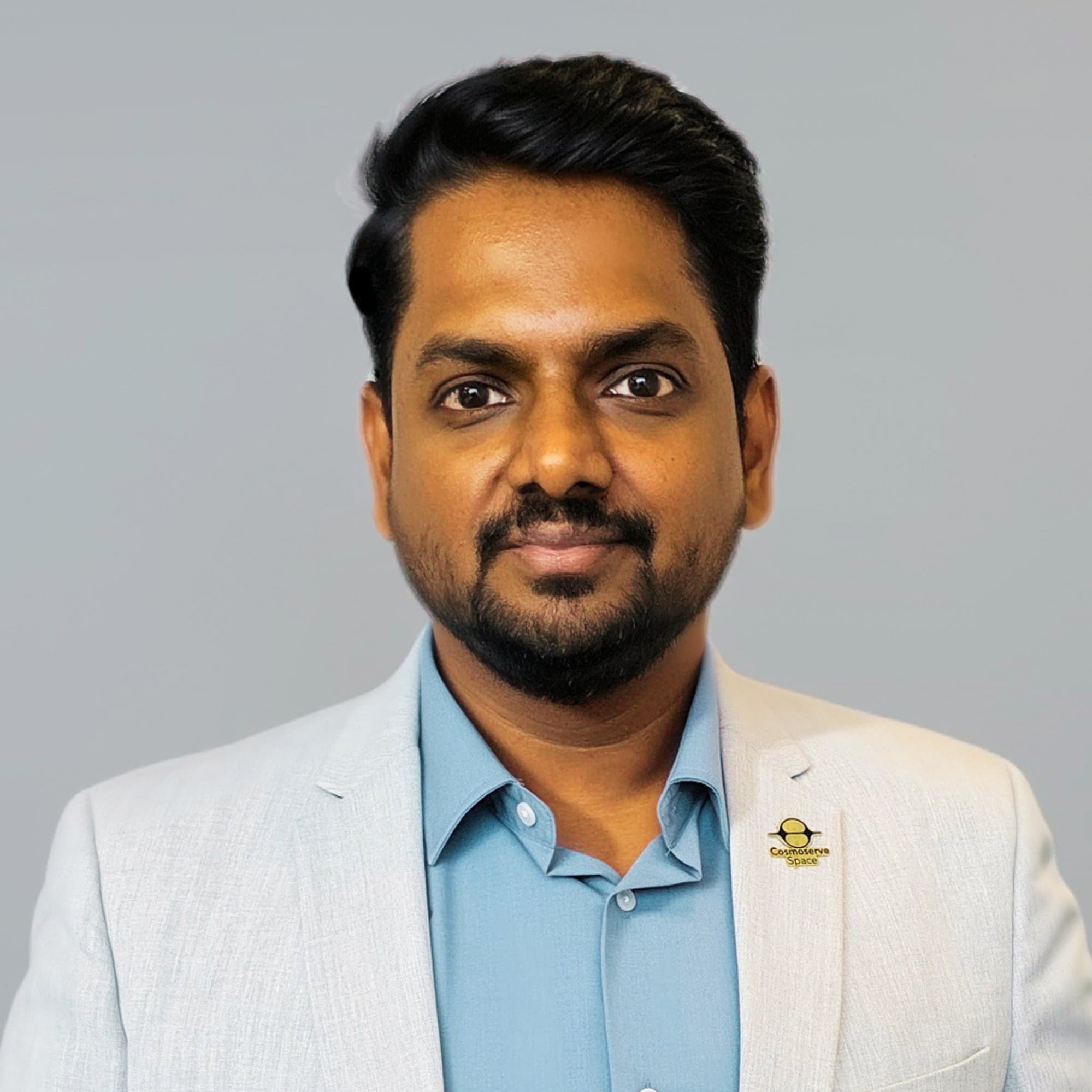
Building the Next Space Economy: Chiranjeevi Phanindra and Cosmoserve's Case for Orbital Maintenance
Chiranjeevi Phanindra, Founder & CEO of Cosmoserve Space, spent 14 years at ISRO working on re-entry and human spaceflight. Today, he is focused on a vital challenge: keeping Earth’s orbit usable.
Read Full Story
Corporate Visionaries
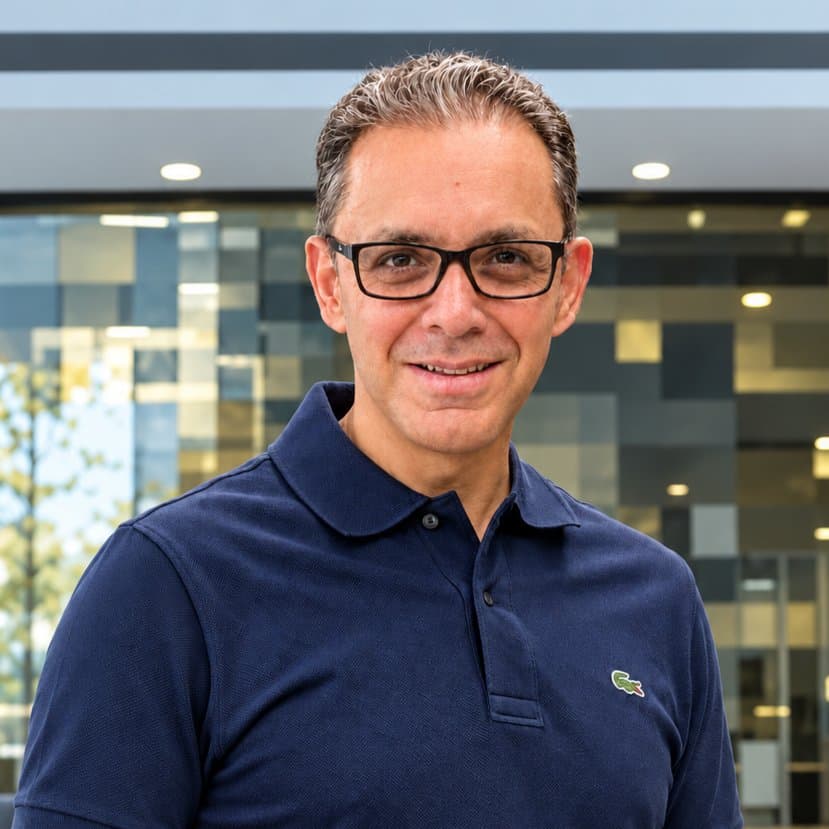
Shashank Sahni on What Success Leaves Out
Shashank Sahni, Google’s Managing Director of Global Ads Solutions, reflects on what customers reveal, what ambitious teams need from their leaders & what the mountains and marathons have taught him about going further.
Read Full Story
Corporate Visionaries
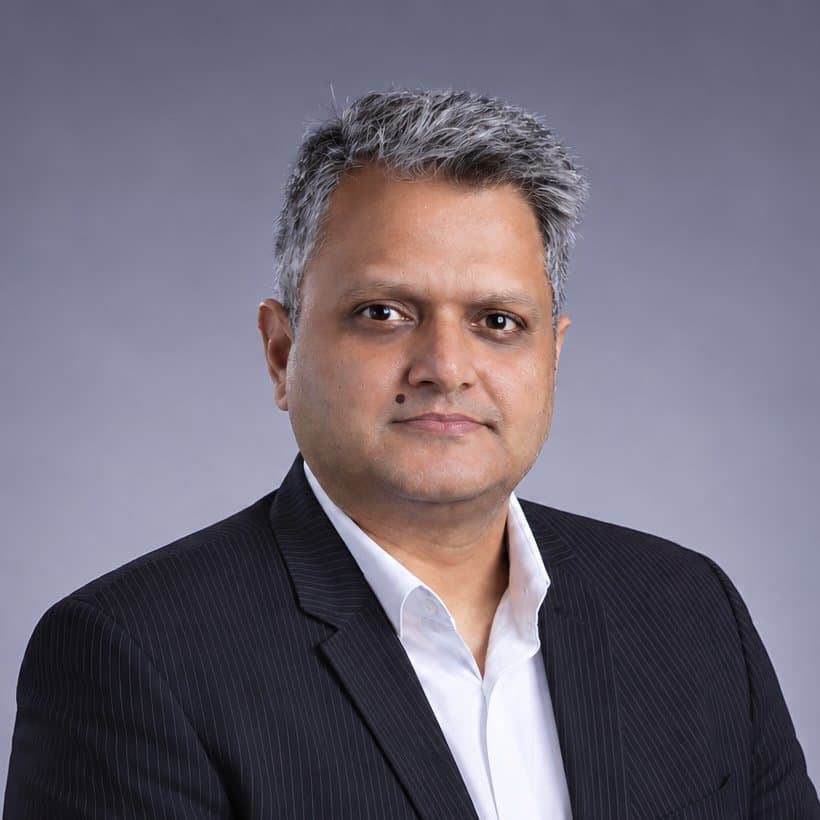
Clinical Multiplication: Divesh Singla on the Healthcare AI Case That Headlines Keep Missing
Divesh Singla, Managing Director, India at Veradigm, brings two decades in healthcare technology to the AI question leaders cannot avoid: how to expand clinical capacity without weakening human judgment.
Read Full Story