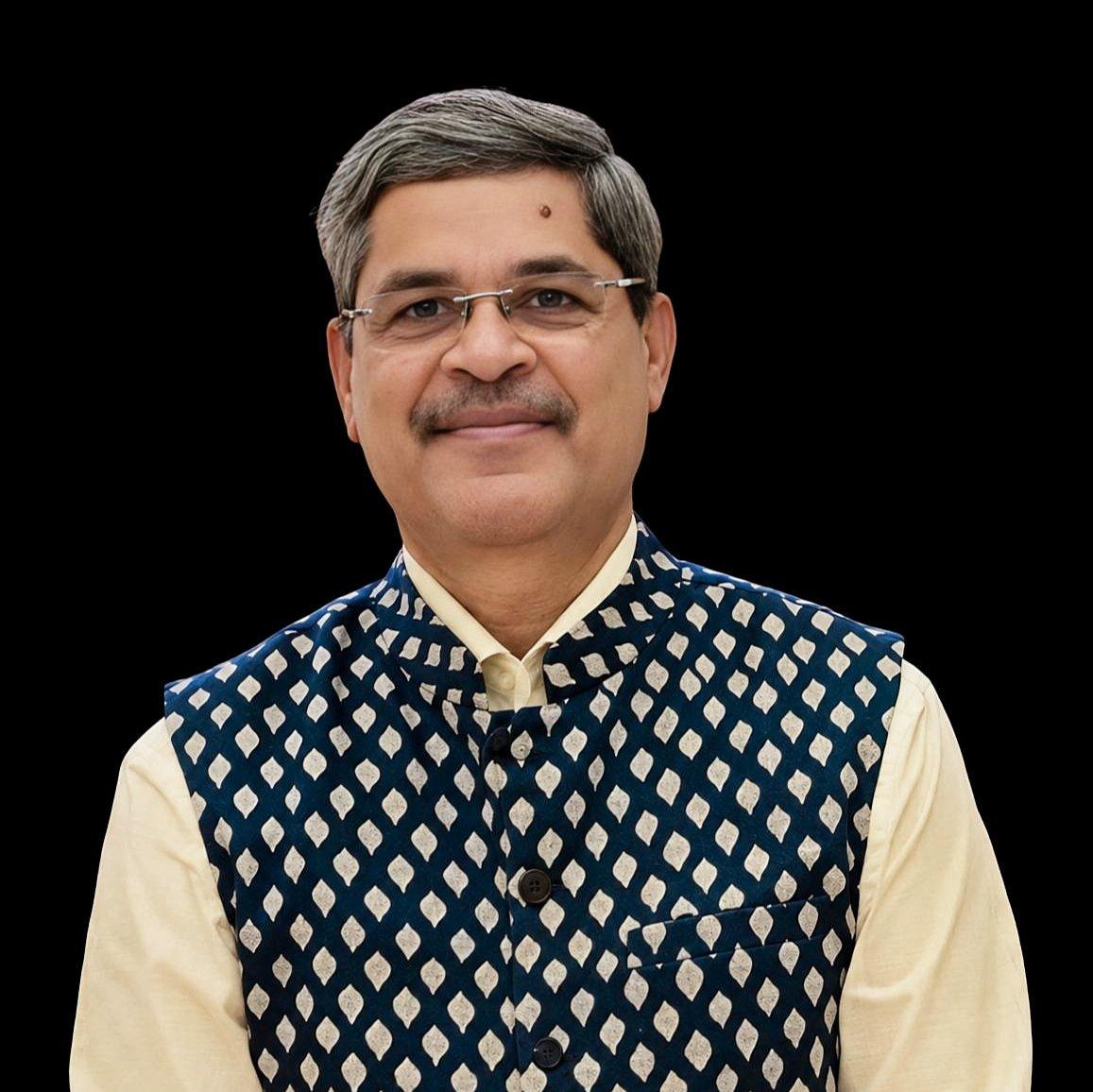
Ankit Todi, Group Chief Sustainability Officer at Mahindra Group, explores how leaders weigh immediate costs against long-term value, help suppliers invest and prepare their businesses for a changing climate.
The Decisions That Shape a Company's Future: Ankit Todi on Sustainability as Capital Discipline
Nov 10, 2026
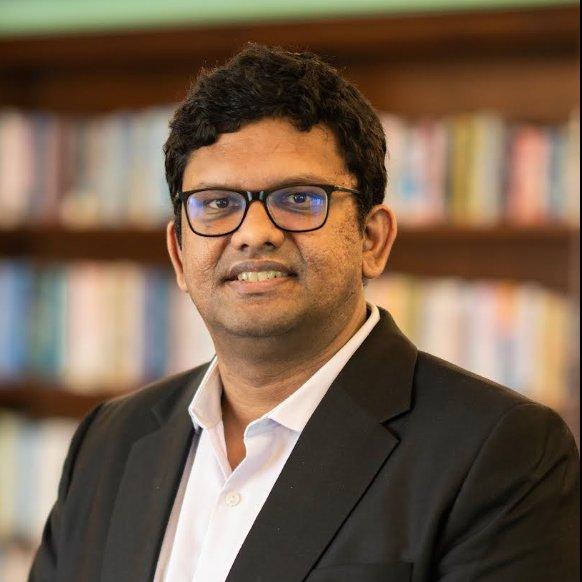
Ankit Todi
Group Chief Sustainability Officer · Mahindra Group
Mumbai, India
A supplier can see the savings in using less electricity and still hesitate to invest. A factory can recognise that heat affects its workers and struggle to decide what to do about it. A procurement team can understand the case for cleaner steel and face a premium its business finds difficult to absorb.
Agreement on the destination leaves much of the difficult work ahead. Someone has to commit money, accept the risks and explain the decision to colleagues whose priorities differ. The environmental case may be understood well before the organisation knows how to act on it.
For Ankit Todi, Group Chief Sustainability Officer at Mahindra Group, sustainability brings familiar questions of business judgement into a wider field of responsibility. The benefits can reach beyond the department approving the expenditure, the company making the investment or the period over which performance is measured.
Ankit grew up in Dibrugarh, Assam, and studied engineering at IIT Delhi before working on strategy assignments across industries at Bain. He sees considerable continuity between consulting and sustainability: understand the problem, establish its relevance and align the people needed to act.
“So you just need to sometimes work a little harder to draw that correlation in business relevance.”
Across his examples, costs, benefits and authority often sit in different places. The supplier receives the energy savings. Procurement carries the purchasing premium. Operations inherits the running cost. The company benefits over a longer period.
Long-term value becomes actionable when someone gives it a place in today’s budgets and responsibilities. Ankit’s account of the work shows how much depends on making that connection carefully, investment by investment.
Every Investment Needs the Right Argument
Ankit groups sustainability projects into three categories. The first contains investments where environmental and financial benefits already align. A lower electricity bill gives an efficiency project an argument most businesses understand. Management can concentrate on choosing suitable technology and getting the work done.
Compliance drives the second category, including waste management and reporting obligations. Here, he wants teams to understand the problem behind the requirement. Completing a process tells a company relatively little unless it also knows whether that process is doing its job.
The third category is harder: interventions whose immediate financial return is difficult to establish. Heat stress illustrates the challenge. Its effects on people and productivity deserve attention, particularly in manufacturing and construction, while the evidence needed to determine the right response may still be developing.
“Some of it can happen from a moral argument because it’s the right thing to do.”
Ankit’s concern is how to take that commitment further. Extending a response across an organisation requires a closer understanding of what happens to people and production under those conditions. Better evidence helps management decide where to intervene, how much to spend and whether the response is working.
The difficulty is partly one of measurement. Electricity savings arrive as a number on a bill. Protecting workers from heat may help them sustain their work through the day, with benefits that take more effort to establish. Each investment needs an assessment suited to what it is intended to achieve.
Waiting carries assumptions, too. Deferring an investment implies a view about future working conditions and the company’s ability to respond later. A fair comparison also asks what waiting could cost as working conditions, energy needs and the demands on the business change.
A Supplier Needs a Reason of Its Own
Supplier decarbonisation makes the distribution of costs and benefits especially visible. A large company may contribute expertise and early funding, while the supplier receives the immediate savings.
Ankit looks at the relationship through the economics of the value chain. Suppliers work within margin constraints. Reducing their energy expenditure can strengthen their competitiveness, with potential benefits for the businesses they serve. The buyer has a commercial interest in the supplier’s ability to improve.
Mahindra began by auditing a few hundred suppliers, he says. The exercise produced ESG data and identified opportunities to reduce energy expenditure. The next task was to help suppliers act on those findings.
A supplier still has to decide whether it trusts the technology and the people installing it. Its owner may have more pressing demands on the money. An attractive savings estimate can lose the argument when the business is unsure how much disruption the project will cause.
Mahindra followed with workshops, case studies, introductions to experienced vendors and selected projects that could demonstrate value. Ankit describes early funding within limits.
“So we try and make sure that we bring it to a stage where the supplier finds enough value in taking it forward.”
If the programme depends indefinitely on the buyer’s funding and attention, expansion remains tied to what the buyer can provide. Helping suppliers develop their own reason to invest gives the work a stronger basis for continuing.
The leadership task is to identify what is holding the decision back. Another presentation achieves little when the concern is an unfamiliar installation or an unreliable vendor. Resolving that concern can leave the supplier better equipped to assess its next investment as well.
The Cheapest Moment to Improve a Decision
A factory’s energy requirements begin taking shape in its design. A building’s response to heat is influenced before construction. Equipment specifications establish costs that operating teams may carry for years.
Ankit repeatedly returns to when sustainability enters a decision. Early involvement gives a business room to choose differently within a budget it already intends to spend. Once layouts and equipment are fixed, the same improvement may require replacement, retrofitting or disruption.
The cost of sustainability can partly reflect how late the organisation began considering it.
“Sometimes the upfront cost may be higher but the lifetime cost it ends up being cheaper.”
Ankit describes the electrification of commercial kitchens at Mahindra resorts as an example of weighing a higher purchase cost against expenditure over the equipment’s life, alongside other benefits.
Inside a company, those costs can belong to different people. Procurement has a purchasing budget. Operations pays to run what was purchased. A sustainability team tracks environmental performance. Each can meet its own target while the company accepts a weaker overall result.
Someone needs the authority to evaluate the whole decision. Expected savings must be credible, and responsibility for delivering them must be clear. The purchasing price alone gives an incomplete account of what the business is committing to.
Timing also governs delivery. Renewable-energy projects at scale can take two to three years, Ankit says. A business that waits for pressure to become immediate may find that its preferred response needed preparation much earlier. Bringing the question forward preserves choices as well as time.
When the Better Option Remains Expensive
Lower-emission steel presents a tougher problem. Steel is a significant input for Mahindra’s manufacturing businesses, and its associated emissions form part of the purchased-goods category of Scope 3. Ankit describes the technical complexity and expense of lower-emission production, alongside the difficulty of absorbing a substantial purchasing premium.
His approach is to examine what could change that calculation. He points to technology, policy, industry collaboration and financing. The work involves finding where a cost can come down, where funding can help and where government action could remove an obstacle.
Ankit draws on the changing economics of solar, electric vehicles and storage to explain why companies should stay engaged. Development and scale can improve the prospects of technologies that initially look difficult. The timing of any particular industrial transition remains uncertain.
The immediate purchasing decision and preparation for a future purchase require different work. Procurement must judge what the business can afford today. Longer-term preparation involves understanding emerging options and working with the partners who might make them viable.
A difficult investment also needs a clear basis for reconsideration. What improvement would justify another look? What would make a trial worthwhile? Without answers, a technology can remain under discussion for years while the business learns very little about when it could use it.
Commercial discipline includes knowing what would change the decision. A current price establishes the difficulty; work on technology, financing and adoption determines whether that difficulty can be reduced.
Climate Risk Has Its Own Timetable
Ankit acknowledges a pressure that complicates the patient work of industrial transition: climate change is moving faster than the response. A business may begin feeling the effects while the technology it needs is still being developed, infrastructure is being built or a cleaner alternative remains too expensive.
A sensible investment sequence may still leave a company exposed while it waits. Leaders have to consider what protection is needed during those intervening years, alongside the work to make cleaner operations feasible.
Heat makes the question immediate. A company can pursue long-term changes in energy and infrastructure while also addressing the conditions under which people work today. Future plans still have to accommodate present responsibilities.
The practical challenge is deciding how much to commit while knowledge remains incomplete. Waiting for greater certainty may improve confidence in a technology or cost estimate, while leaving less time to address the exposure. Both consequences belong in the decision.
Ankit’s approach offers a way to work through difficult economics. Its demanding test is whether the organisation can learn and respond quickly enough as conditions change.
An Experiment Should Earn the Next Commitment
Ankit recognises that companies are developing experience as they respond. An approach that has worked elsewhere offers a useful starting point, but the business still needs to see how it performs under its own working conditions. At some stage, further understanding requires a decision to try.
“You really have to experiment, try new things, take that call.”
A worthwhile experiment resolves a question that affects the next commitment. Can the equipment perform reliably? Do the savings hold in actual use? Can the supplier deliver consistently? Management should know what it expects to learn before the project begins.
The effort behind a result matters as well. A pilot may succeed because a few experienced people give it exceptional attention. Expanding it means asking whether another team can run it, maintain it and deal with problems during an ordinary working week.
For a diversified group, useful experience includes the difficulties encountered along the way. Another business needs to know the conditions behind a result before deciding whether to follow it. Sharing what took longer, cost more or needed adjustment can be as valuable as reporting success.
India Needs an Order of Work
India’s transition brings affordability, infrastructure and development priorities into the same discussion. Ankit gives particular weight to the next three to five years, when organisations have greater visibility over what they can execute.
Recalling a visit to Singapore, he puts the country’s carbon footprint at roughly 60 million tonnes and Mahindra Group’s footprint, including Scope 3 emissions across its value chain, at approximately 120 million tonnes.
The figures cover different accounting boundaries. Ankit uses the comparison to discuss the scale of the task relative to the resources available, including the government support a country can bring to bear. His concern is how Indian businesses translate international ambition into work they can finance and deliver.
His priorities include renewable energy, efficiency and electrification across transport and industry. Water follows as a critical resource. Physical climate risk, particularly heat, reaches across agriculture, labour productivity and the wider economy.
Progress depends on identifying the obstacle accurately. A commercially attractive project waiting for a grid connection needs a different response from a technology whose production costs remain too high. One may need infrastructure or approvals; the other may need further research and development.
Calling both a shortage of ambition leaves the practical work unresolved. Leaders need to know who can remove the obstacle and what that participant needs to proceed.
Mahindra’s Planet Positive strategy provides a shared framework covering environmental footprint, green products and services, adaptation and associated social outcomes, and engagement through reporting, policy and investor relations. Individual businesses then identify what matters most to their operations.
Manufacturing brings substantial questions around energy, water, waste and materials. Financial services has a smaller direct physical footprint and different exposures and opportunities. Each business needs choices and responsibilities that fit its circumstances.
A nearer planning horizon makes a distant ambition easier to assess. Within three to five years, a company should be able to show which investments have moved, what it has learned and where progress still depends on someone else.
Knowing Enough to Be Useful
Asked about the difficulty of convincing stakeholders, Ankit describes individuals as generally supportive. The more persistent challenge lies in changes that require several participants to move together.
A willing buyer needs a capable supplier. A supplier may need financing. A project with sound economics may still be waiting for infrastructure. Agreement in one part of the chain can coexist with a delay elsewhere.
“Credibility in this role has to be driven by depth of understanding.”
Ankit puts weight on listening closely enough to understand why people see a decision differently. Procurement has to protect quality and supply. Finance has to question the assumptions. Operations has to make the equipment work. A proposal becomes stronger when it can answer their concerns.
The opportunity extends across established careers. Procurement professionals can bring sustainability into purchasing decisions. R&D teams can consider climate implications when setting research priorities. People in hospitality, manufacturing, marketing and packaging can influence outcomes through work they already own.
Climate knowledge becomes more useful when it meets an understanding of the job. A company gains something substantial when more of its people can recognise the relevant questions and carry them into decisions themselves.
Giving the Future a Place in Today’s Business
Across Ankit’s examples, the longer view encounters a departmental budget, a supplier relationship, an asset’s purchase price or a planning period. Leaders have to consider what each decision means for the business over time, even when the immediate expense sits with one team and the eventual benefit reaches another.
“Sustainability needs to be seen as something that is strategic to long-term business value.”
The supplier programme helps another business find its own reason to invest. Earlier involvement in design brings future running costs into present choices. Work on lower-emission steel asks what could make a difficult transition affordable. Each calls for a different exercise of judgement.
A company gives substance to its long-term commitments when those considerations change what it approves today. The budget, the specification and the supplier relationship become evidence of how seriously the organisation takes the future.
For its leaders, the responsibility is concrete: give decisions with lasting consequences an owner who can see beyond the immediate account. The value the company protects tomorrow depends on the authority it is willing to exercise today.
Leadership Lessons
1. Match the evidence to the value : Energy savings, compliance and resilience require different assessments. Choose measures that help leaders judge the actual outcome being sought.
2. Give the longer view an owner : When costs and benefits cross departments or years, someone needs authority to evaluate the combined result and carry the decision forward.
3. Help partners find their own reason to invest : Supplier support becomes durable when it builds the confidence, capability and commercial case to continue independently.
4. Enter the decision while alternatives remain open : Design-stage choices influence years of operating cost. Early involvement preserves options that become expensive to recover later.
5. Define what would change the economics : For difficult technologies, identify the improvements, partnerships or financing conditions that would justify a greater commitment.
6. Make experimentation consequential : A pilot should resolve a question that affects the next decision. Establish what would support expansion, adjustment or closure.
7. Understand the responsibilities others carry : Recommendations earn trust when they account for what finance, procurement, operations and suppliers must deliver.
8. Give ambition an executable sequence : Connect long-term goals with work that can be funded, owned and assessed in the next three to five years.