As AI reshapes cybersecurity and autonomous systems gain greater control, Anand Oswal, Executive Vice President at Palo Alto Networks, shares his perspective on emerging cyber threats, the future of defence & leadership.
Who Defends the Digital World When Machines Start Attacking? Anand Oswal on Cybersecurity's Next Frontier
Nov 10, 2026
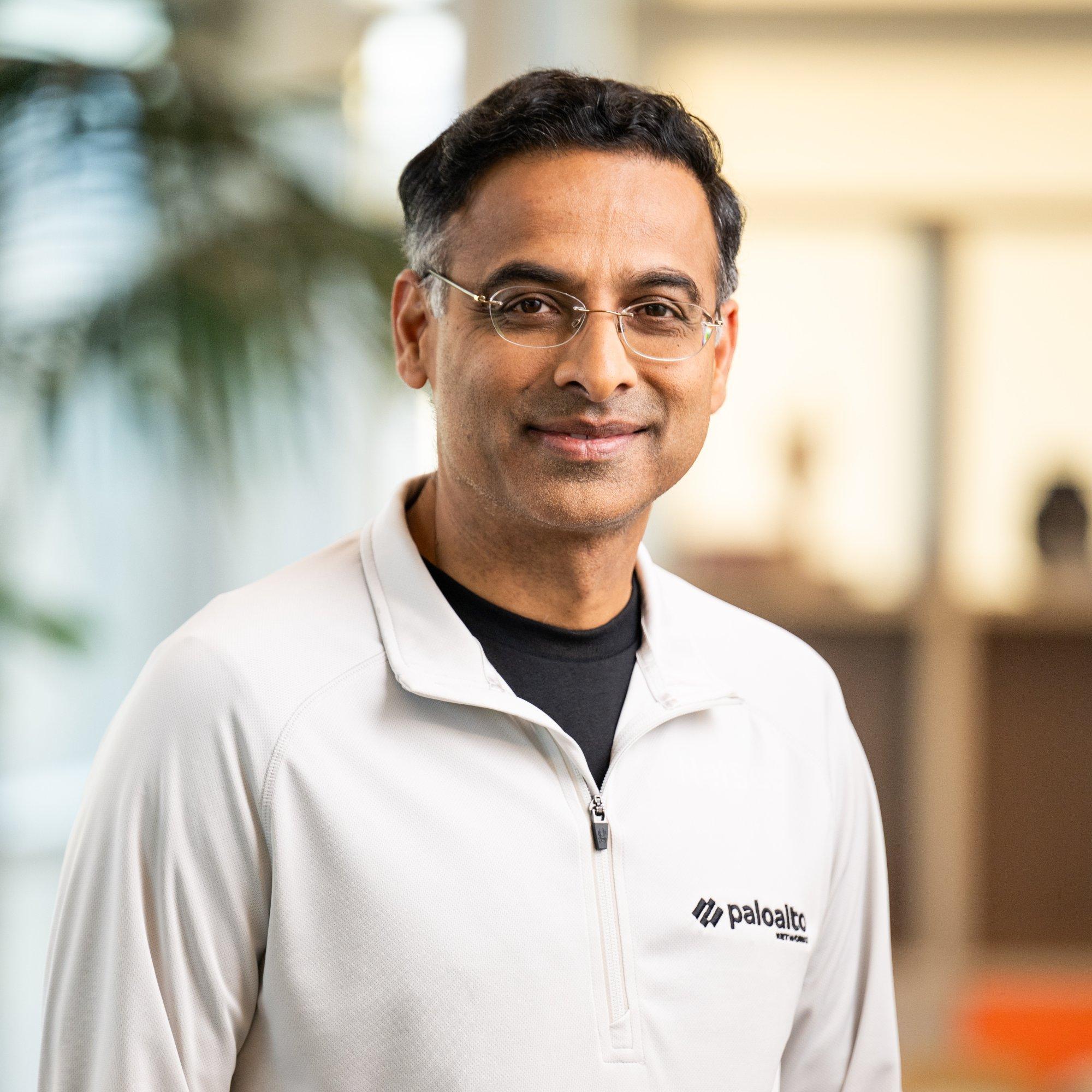
Anand Oswal
Executive Vice President · Palo Alto Networks
Santa Clara, San Francisco Bay Area, USA
Over 30 Billion Cyberattacks Every 24 Hours
When a security platform is stopping more than 30 billion cyberattacks every 24 hours, the sheer volume changes how defence has to work. Security teams cannot examine every threat manually, and waiting hours to contain an attack can leave an organization exposed to consequences that spread far beyond the original breach.
Anand Oswal operates at the centre of this challenge. As Executive Vice President and General Manager of AI and Network Security at Palo Alto Networks, he oversees a portfolio spanning Prisma AIRS, Strata, SASE, cloud-delivered security services, next-generation firewalls and Zero Trust capabilities. His earlier responsibilities at Cisco covered enterprise routing, switching, wireless, IoT and network services, giving him extensive experience across the infrastructure and security systems on which large organizations depend.
Cybersecurity has always involved an uncomfortable imbalance. A company has to protect its systems continuously, across thousands of users, applications and connected devices, while an attacker needs to find a single opening. AI is making that contest more demanding as attackers acquire increasingly sophisticated tools and the ability to automate larger parts of their operations.
Anand describes the pressure facing defenders in particularly direct terms.
“We have to be right every single time. The attacker has to be right one time.”
The scale has serious implications for how security operations are designed. Anand argues that response times increasingly need to be measured in minutes, with AI playing a growing role in identifying threats and responding before an incident can develop further.
An even larger challenge is emerging as companies adopt AI systems capable of performing tasks independently. Software that can access applications, use an employee's identity and make decisions introduces risks that extend beyond conventional cyberattacks. Companies must now consider how much authority these systems should receive, how their actions can be monitored and who remains accountable when something goes wrong.
Comfort Has a Shelf Life
Anand has worked through several generations of technological change, beginning with engineering in Pune and graduate study at the University of Southern California, followed by roles across startups, Starent Networks, Cisco and Palo Alto Networks. His experience spans telecommunications infrastructure, networking, mobility, cloud computing and cybersecurity, industries that have repeatedly had to adapt as new technologies changed the market.
One example he recalls comes from India. There was a time when owning a phone booth could provide a family with dependable income, while a petrol pump appeared capable of offering financial security for decades. Mobile phones fundamentally changed the economics of the former, while electric mobility is beginning to reshape expectations around the latter.
The example reflects a concern Anand has developed through years of watching technology reshape established markets. Successful companies can become attached to familiar ways of operating, particularly when customers remain satisfied and financial performance continues to support the existing model.
Anand cautions leaders against allowing that confidence to become complacency.
“Every time you are in this situation where you feel you’re comfortable with what you have or what you’ve done or what you’ve built is when you actually need to get the most paranoid in terms of what you need to do to disrupt yourself.”
His emphasis on paranoia comes from the pace at which established assumptions can lose relevance. Leaders need to remain curious about emerging technologies, changing customer expectations and the possibility that an approach responsible for years of success may require substantial reconsideration.
For organizations operating at scale, the challenge is especially demanding because the existing model carries years of investment, operational experience and evidence of success. Recognizing when to question it requires judgment before the financial consequences become obvious.
AI Changes the Work Before It Changes the Tool
Technology has become central to how companies compete, influencing customer experience, operating efficiency, security, innovation and the cost of delivering services. Anand sees companies across industries becoming increasingly dependent on their ability to understand technological change and apply it effectively.
He believes senior leaders need to develop a much deeper understanding of emerging technologies because decisions around them increasingly influence the direction of the business itself. Familiarity with the latest developments may help an executive participate in discussions, but building products and redesigning operations requires considerably more depth.
AI provides a particularly interesting example. Many companies are beginning with familiar productivity applications, using the technology to write code faster, analyse information or improve existing processes. Anand encourages leaders to examine how the underlying workflow might change when AI becomes part of the experience.
Travel booking illustrates his point. Traditional digital applications ask customers to enter destinations, dates and preferences through predefined fields. AI makes it possible for someone to describe what they want conversationally, allowing the system to interpret the request and organize the steps required to fulfil it.
Anand sees considerable opportunity in rethinking these experiences from the beginning.
“AI has the opportunity for us to reimagine the entire workflow versus just putting it on top.”
The implications extend across industries. Customer journeys, internal approvals, operational processes and decision-making structures have developed around the capabilities and limitations of earlier technologies. AI gives companies an opportunity to examine those designs again, including the work people should continue performing and the responsibilities software can handle more effectively.
The quality of those decisions will depend heavily on leaders understanding the technology well enough to challenge established processes and make informed judgments about what should change.
When Software Begins to Carry Authority
Agentic AI introduces a more complicated set of questions because these systems can act on behalf of people, access tools, interact with applications and carry out tasks within existing business processes.
Anand distinguishes agents from conventional AI applications through their ability to take action. An AI application may provide an answer or recommendation, while an agent can proceed to execute a task using its available permissions.
Memory becomes particularly important in this environment. Agents may retain information about users, previous interactions and the work they have performed, allowing them to develop greater familiarity with a task over time.
Anand raises a critical security question about that accumulated information.
“How do you ensure that memory is not poisoned? So the behavior of the agent is not altered.”
A compromised memory could influence decisions made much later, potentially causing an agent to behave in ways its owner never intended. Organizations therefore need to consider the integrity of the information shaping an agent's behaviour alongside the security of the applications and data it can access.
Identity presents another challenge. An agent operating through an employee's credentials may inherit significant permissions, while an agent with its own identity still requires clearly defined boundaries. As companies begin using agents for more complex work, understanding which systems they can reach and which actions they can perform will become increasingly important.
Anand's approach covers the complete operating life of an agent, including visibility into active agents, protection while they are running, identity controls, monitoring, audit trails and governance. He also emphasizes the ability to reverse actions when an autonomous system makes a mistake.
Reversibility deserves particular attention because the consequences of an incorrect action can vary enormously. A routine administrative change may be easy to undo, while a financial transaction, access modification or customer-facing decision may create complications that cannot be resolved as easily.
Companies will have to make thoughtful decisions about which activities can safely be delegated and which should continue requiring human approval. The more capable autonomous systems become, the more important those decisions will be.
How Much Autonomy Can an Organization Absorb?
Anand believes confidence in technology develops through experience, and he uses an everyday example to explain how expectations change.
Years ago, he would have been reluctant to purchase clothes online because he preferred seeing and touching a product before buying it. Today, online purchases feel routine because the experience has improved, return processes are familiar and customers have become more comfortable with the system.
He expects organizations to develop confidence in AI through a similar process, with different industries and business functions adopting different levels of automation depending on their requirements.
A company might allow an agent to complete routine administrative tasks independently while retaining human approval for financial decisions or changes involving critical systems. Regulatory requirements, operational risk and the consequences of an incorrect action will influence where those boundaries are drawn.
The difficult part is deciding how much control remains useful as technology improves. Requiring approval for every action can reduce the productivity advantages of autonomous systems, while allowing software to operate beyond established controls can expose companies to risks they are poorly prepared to manage.
The most practical approach will evolve with experience. Companies can expand the responsibilities assigned to AI as they develop better monitoring, stronger safeguards and greater confidence in how the systems behave.
Human judgment will remain important, particularly when the consequences of a decision extend beyond what the technology can reliably assess or reverse.
Security Moves Upstream
Anand compares security design to building a house. Important structural decisions are easier to make while the house is being planned, and changing them after construction can be difficult and expensive.
He believes technology companies face a similar challenge when security is considered late in product development.
“If you think of security as an added bolt-on, it never works.”
The principle becomes especially relevant as AI systems gain access to more applications and responsibilities. Permissions, security controls and operational safeguards need to be considered while these systems are being designed, allowing companies to anticipate how they may be used as requirements evolve.
Anand also sees fragmentation as a major challenge for customers. Large organizations often accumulate multiple security products, each addressing a particular requirement, until managing the entire environment becomes a demanding exercise involving different interfaces, policies and specialist expertise.
His preference is for integrated platforms built around strong individual capabilities, consistent policies and the flexibility to support emerging technologies and third-party products.
Consider an employee accessing applications from an office network, a home connection, a laptop and a mobile device. The environment may change throughout the day, but the organization still needs consistent protection across those interactions.
For Anand, reducing the operational burden on customers is central to good security design. As technology environments become more complicated, the value of a platform increasingly depends on how effectively its different capabilities work together.
Innovation Gets Harder After Success
Large technology companies often have considerable resources available for innovation, although growing scale brings greater expectations around reliability, delivery schedules and commercial performance.
Anand views innovation broadly. It can emerge through a breakthrough technology, an improved process, a new security technique or an unexpected combination of existing ideas. Encouraging these different forms of innovation becomes important as organizations grow and responsibility spreads across larger teams.
He offers a demanding test for whether an organization is taking sufficient risks.
“If you picked three ideas and they were all successful, you failed because you didn’t take enough risk.”
The observation challenges the assumption that a perfect success record is always desirable. Teams choosing only familiar opportunities may deliver predictable results while missing the chance to explore ideas whose technical or commercial potential remains uncertain.
Maintaining a willingness to experiment becomes harder when customers expect dependable products and teams face demanding delivery commitments. Anand believes leaders have to create the right conditions through their everyday decisions, particularly in how they encourage experimentation and respond when outcomes differ from expectations.
He offers a concise definition of culture that captures the responsibility involved.
“A culture is really a behavior when no one’s watching you.”
A leader who asks teams to move quickly but repeatedly delays decisions sends a message about priorities through behaviour. Employees learn from what leaders consistently do, including which risks they support, how they respond to setbacks and whether they allow teams to challenge familiar approaches.
Anand also recognizes the importance of knowing when to stop. An idea may be technically promising but arrive before customers are ready, or its economics may fail to justify continued investment. Healthy innovation requires an appetite for uncertainty alongside the judgment to redirect resources when the evidence calls for it.
AI Is Raising the Value of Depth
AI is making sophisticated information and capable output easier to access, which is changing the skills that differentiate professionals.
Anand believes people who develop strong domain knowledge alongside AI-native working habits will be particularly well positioned. Familiarity with AI tools helps people work more effectively, while expertise allows them to evaluate the information those tools produce and apply it within a specific business context.
Two professionals may ask the same AI system a similar question and receive comparable answers. Their judgment becomes apparent in how they interpret the response, recognize missing context, test assumptions and decide what should happen next.
Anand gives similar advice to younger professionals and engineers in India who want to build careers in global technology: develop proficiency with AI tools, understand a domain deeply and remain curious enough to keep learning as technology changes.
As information becomes easier to obtain, the ability to use it intelligently will carry increasing value.
A Higher Bar for Technology Leadership
Anand's approach to leadership brings together technical depth, ambition, execution and the willingness to challenge existing assumptions.
He encourages leaders to think beyond incremental improvements, raise expectations and understand problems from first principles. Larger ambitions can force teams to reconsider established methods, especially when familiar approaches are unlikely to produce the scale of improvement being sought.
Execution remains equally important. Anand places considerable weight on delivering outcomes, recognizing that a compelling strategy has to translate into products, customer experience and measurable results.
He also expects emotional intelligence to become more important as AI changes professional work. Technical expertise and analytical ability will continue to matter, while communication, empathy and the ability to guide people through uncertainty will remain essential responsibilities of leadership.
When discussing the qualities he values in leaders, Anand places particular emphasis on attitude and willingness to act.
“I always like people who say I start with a yes, not the no.”
His preference reflects a broader philosophy of curiosity, adaptability and personal initiative. Leaders need to remain open to unfamiliar possibilities, develop the confidence to make difficult decisions and bring their teams through changes that may challenge established ways of working.
As technology develops, the demands on leadership will continue to rise. Senior executives will have to understand complex systems, make decisions with incomplete information and retain the human judgment required to manage the consequences.
The Leadership Question After AI
Cybersecurity offers an unusually useful perspective on the conditions other industries are beginning to encounter. Security teams have long operated in an environment where threats emerge continuously, circumstances can change quickly and the cost of delayed response can be substantial.
AI is introducing similar pressures into a wider range of business functions. As companies give software more responsibility, decisions about autonomy, security, oversight and accountability will become increasingly important to how organizations operate.
Anand Oswal's experience suggests that preparation, technical depth and a willingness to revisit established assumptions will matter greatly as these changes gather pace.
More than 30 billion cyberattacks every 24 hours illustrates how far the reliance on automated defence has already developed. The wider significance is becoming apparent as machines take on responsibilities once handled entirely by people.
For leaders, the challenge will be deciding where technology can act independently, where human judgment remains necessary and how organizations can retain control as the pace of decision-making continues to accelerate.
Leadership Lessons from Anand Oswal
Question success while it is still working. Strong performance can coexist with ageing assumptions. Leaders need to examine their operating models before changing market conditions make adaptation more difficult.
Understand how technology changes the work itself. AI offers opportunities to rethink workflows, customer experiences and decisions, making technical depth increasingly valuable for business leaders.
Build security into the original design. Identity, permissions, memory, monitoring and recovery need careful consideration as organizations give autonomous systems greater responsibility.
Allow autonomy to develop with experience. Different industries and business functions will require different levels of human involvement, and those boundaries should evolve as confidence and safeguards improve.
Reduce complexity for customers. Strong technology platforms bring capabilities together coherently, making sophisticated systems easier to operate and manage.
Encourage experimentation with sound judgment. Innovation requires genuine risk-taking, alongside the ability to recognize when timing, economics or customer readiness call for a change of direction.
Combine domain expertise with AI fluency. Technology can make information easier to access, while experience and judgment determine how effectively that information is applied.
Lead through behaviour and execution. Ambition, curiosity and technical understanding matter most when leaders translate them into decisions, delivery and a culture that encourages people to keep improving.