Category: Corporate Visionaries
The Zurich Kotak General Insurance Chief Investment Officer brings a practitioner’s view of investing, where good judgement under uncertainty has to become decisive action through portfolio construction.
The Craft of Institutional Capital: Archit Shah on Judgement, Risk and Investing Across Cycles
IndiSight Editorial
Sep 4, 2026
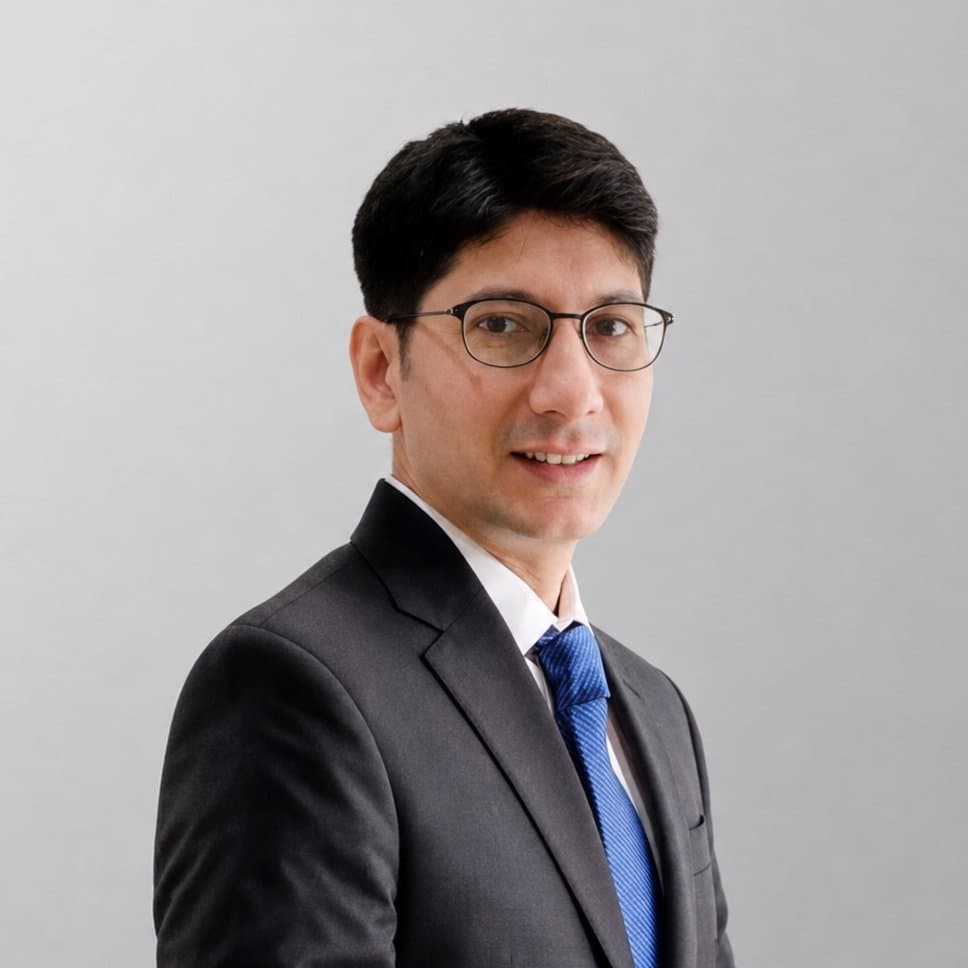
Archit Shah, CFA
Chief Investment Officer · Zurich Kotak General Insurance
Mumbai, India
During the Covid period, an unusual pattern was emerging in the Indian debt market. High-rated corporate credit was becoming increasingly crowded. Banks were sitting on surplus cash. Corporate borrowers had raised liquidity buffers of their own. New credit supply had thinned, and institutions searching for yield were bidding aggressively for whatever was available. Credit spreads were moving toward levels where the reward for taking risk had started to look inadequate.
The easier industry response was to keep building credit exposure. Yield was scarce, and credit still offered one of the few paths to incremental return. Archit Shah, who had taken charge as Chief Investment Officer at Zurich Kotak General Insurance around that period, read the moment differently. His institution reduced credit allocation into the compression.
“It doesn’t compensate for taking that risk,” he says of the period. “That helps us when the tide changes and the liquidity tightness comes in. You should have that flexibility to jump the corporate allocation up.”
The call reveals a larger philosophy. Archit was willing to take risk, but the decision had to be expressed through the portfolio. When the compensation for credit risk became inadequate, the response was to reduce exposure and preserve flexibility for the moment when the opportunity returned.
Across research, dealing, fund management and insurance investing, Archit has built his investment lens around a harder question before capital moves: does the opportunity still deserve the risk it asks the institution to carry?
A Career Built Across the Investment Chain
Archit’s professional path has moved through several important rooms of the investment process. Research trained him to examine issuers, assumptions, data and the logic behind a view. Dealing brought him closer to price, timing, liquidity and the speed at which market behaviour can disturb a well-built thesis. Fund management added the responsibility of taking calls, sizing positions and living with outcomes. The CIO role widened the frame further.
Each role changed how he approached judgement: from questioning assumptions, to understanding that being right was insufficient unless the market allowed the view to be expressed, to translating conviction into position sizing, and ultimately to ensuring that individual decisions strengthened the portfolio and the institution.
At Zurich Kotak General Insurance, the investment book sits behind policyholder promises. Capital pursues return while supporting the institution’s ability to honour future commitments. Every decision has to be read through return, liquidity, resilience and the balance sheet.
The closer Archit moved to institutional capital, the more investment judgement became connected to balance-sheet strength, policyholder confidence and the cost of being wrong.
“In insurance, I have to deliver returns, but I also have to manage portfolio resilience and balance-sheet resilience.”
Conviction Needs Room for Revision
Archit often returns to a simple distinction : “There is a difference between having conviction and certainty.”
The distinction explains much of how he thinks about capital. Conviction allows an investor to act before every variable is settled. Markets rarely give perfect information. Rates move, spreads change, liquidity shifts and market behaviour often turns before the explanation becomes widely accepted.
Certainty creates a different problem. It can make an institution stop questioning the assumptions behind its own decisions. A thesis is built, a position is taken, an internal narrative forms, and new information starts getting interpreted through the need to defend the earlier conclusion. Analysis gradually becomes attachment.
I still believe in conviction, but now I pair conviction with a clear question: what would make me wrong.
A question like that keeps a view open to evidence. Conviction allows an investor to act despite uncertainty. It should also leave enough room to change course when the facts change.
Many institutions know how to make decisions. Fewer know how to revise them without damaging pride, hierarchy or internal confidence. They commit capital, align teams and build belief around a view. The harder act is recognizing when a live thesis has become a habit.
A strong view earns its place only while the assumptions beneath it remain true. Once those assumptions move, the portfolio has to move from belief to review.
Liquidity Is Where Theory Meets the Portfolio
The 2013 taper tantrum was an important learning moment for Archit because it changed how he thought about liquidity. The market conversation revolved around macro, yields and policy response, but the deeper lesson came from how quickly liquidity could alter the character of a portfolio. As he recalls the period, rates moved sharply, liquidity was withdrawn, and the normal functioning of the market changed almost overnight.
“What will happen if the rates go up but you don’t have the cash position to react to it?”
A portfolio can be right on the macro view and still be wrong in construction. Liquidity is what gives an investor the ability to respond when prices move away from fundamentals, especially when an opportunity appears because others have lost that flexibility.
The same reading shaped Archit’s view of the Covid-period credit market. Liquidity was abundant, spreads compressed and yield became scarce. Many institutions moved into credit because the available alternatives looked unattractive. Archit focused on whether the market was still paying enough for the risk being carried.
Risk, in his framework, deserves careful pricing. An institution may have the appetite to take duration or credit exposure, and the market still has to offer adequate compensation for the uncertainty being absorbed. Liquidity becomes the test of that standard. It looks plentiful in good times and supports confidence in positions. Under stress, flexibility becomes valuable exactly when many institutions want it together.
The False Comfort of Conservative Language
Fixed income often uses “conservative” as shorthand for short duration, high-rated assets and low volatility. Archit treats the word carefully because those features can create a false sense of safety.
The biggest mistake is confusing low volatility as low risk.
A short-duration book filled with high-rated paper may look prudent, but for an insurance balance sheet, prudence cannot be judged only by today’s volatility. The question is whether the portfolio can generate an appropriate return while remaining resilient against the obligations it ultimately has to support.
Another distortion appears when institutions avoid credit even when spreads are attractive. The portfolio may appear cautious while walking away from compensated risk at the moment the market is paying for it. Building credit exposure when spreads are compressed may feel normal because peers are doing the same, while the balance sheet remains underpaid for the uncertainty it has accepted.
Archit’s argument is more precise than a preference for caution. Risk has to be understood, priced and sized. A portfolio becomes stronger when its risk choices match the compensation available, the liquidity required and the obligations sitting behind the capital.
Familiarity Can Quietly Replace Underwriting
One of Archit’s most telling observations about credit investing comes from a sentence that sounds responsible within institutions.
“We have never had a problem with this issuer.”
It sounds responsible because the past has been clean. The issuer has paid, the exposure has worked, and the relationship feels familiar. A clean past can become dangerous when it starts replacing fresh underwriting.
“Familiarity with those experiences isn’t the same thing as safety.”
A familiar issuer may still deserve capital, though familiarity cannot become the thesis. The borrower’s balance sheet, liquidity conditions, sector dynamics and refinancing access can all shift materially between the original underwriting and the current review. Markets often price those shifts before financial statements or ratings acknowledge them.
Archit’s habit is to ask what has changed since the original investment was made. A mature credit culture keeps asking a simple question: what has changed since we last underwrote this risk, and are we still being adequately compensated for it today?
Where the Framework Reaches Its Boundary
Archit’s framework works most clearly when markets provide visible signals. Liquidity tightens. Spreads move. Secondary market depth weakens. Refinancing becomes harder. In those situations, the question “what would make me wrong” can be tested against evidence arriving in real time.
Insurance capital introduces a slower difficulty. Long-dated obligations do not always reveal stress quickly. Reinvestment choices, duration positioning and spread decisions can look reasonable for years before their full effect appears on the balance sheet. A portfolio can avoid a visible mistake and still accumulate a quieter mismatch between today’s positioning and tomorrow’s obligations.
Archit’s emphasis on resilience matters because of that boundary. His framework cannot remove slow-cycle uncertainty, and no investment process can force long-horizon feedback to arrive early. What it can do is reduce the damage of false comfort: keep liquidity central, make risk compensation explicit, size conviction carefully and ensure that assumptions remain open to review.
No framework provides immunity against this failure mode. That is why insurance investment practice has to emphasize portfolio construction, liquidity design and balance-sheet resilience over the brilliance of any single decision.
The Team Has to Challenge Before Capital Moves
Archit’s view of investment leadership gives weight to the quality of debate inside the team. The CIO role, in his reading, cannot rest only on the authority of one person’s call. A stronger decision environment allows assumptions to be tested before capital is committed.
The real objective is to build a team that improves the quality of decisions before capital moves. Team members must be able to challenge a view if they bring evidence. The argument should matter more than the designation of the person making it. Debate has to occur early enough to shape the decision, before the outcome forces the institution into defence.
Markets change too quickly, and cycles behave too differently, for one person’s experience to carry every future decision. A team that has practiced debate in normal cycles can apply it in a crisis. A team that has not will default to whichever view carries the most authority in the room.
Models Can Sharpen the Work, While Judgment Carries the Consequence
Archit’s position on models and AI is balanced. He sees their value in normal environments where historical data still offers useful guidance. Models can strengthen analysis, widen pattern recognition and support better decision-making. The limitation appears in tail events.
Markets under stress do not always resemble the data that trained the model. A statistically strong output may weaken when the current event is structurally different from the past. The danger lies in the appearance of precision at the exact moment when judgment is most needed.
Being right on the analysis is not automatically being right on the investment.
A macro view can be correct and still lose money because of timing, sizing, liquidity, positioning or the way the view is expressed. The investment decision begins where the analysis ends: how much capital should be committed, what would change the thesis, and what would make you act?
Institutions that reward analytical sophistication without rewarding accountable positioning will continue to produce models that inform decisions without carrying them.
The Real Barrier in Insurance Is Belief
Archit’s insurance lens extends beyond investment portfolios. He believes the industry’s long-term growth depends on awareness and affordability, as well as the confidence that the promise will be honoured when it matters.
Insurance is a promise about something that may happen many years later.
A customer pays today because they believe an institution will honour a claim later. If the claim experience is slow, opaque, complicated or uncertain, the willingness to buy protection remains fragile, regardless of how much awareness improves or how widely products are distributed.
Product simplicity, transparency and reliability therefore remain central to building confidence in insurance. Distribution can bring a policy to the customer. The real test is whether the customer believes the policy will respond when needed.
The Craft Behind the Craft
The larger question in Archit Shah’s work is how institutions should make decisions when confidence itself can become a risk.
His answer is disciplined judgement: enough conviction to act, enough humility to question the decision, and enough flexibility to change course when the facts change.
A mindset of that kind can easily be misread as conservatism. In practice, it is a more mature form of institutional confidence. The institution still takes calls. It still holds differentiated views. It still acts before every fact is known. The difference is that the portfolio is built with an understanding that some calls will fail.
For an insurance CIO, the distinction carries particular weight. Capital sits behind promises. Every decision touches performance and the institution’s ability to remain credible through future obligations. The portfolio has to earn, and it also has to remain strong when the market exposes an error.
Archit’s proposition matters in a financial world moving faster, becoming more automated and often confusing data-rich environments with better judgment. The next decade will reward institutions that can act with conviction, question their own assumptions, protect liquidity, price risk honestly and keep learning when the market proves them wrong.
Leadership Lessons From Archit Shah’s Investment Lens
Conviction should enable action while remaining open to evidence.
Liquidity is a strategic asset, particularly when markets are stressed.
Risk appetite matters only when risk is adequately compensated.
A calm portfolio is not always a low-risk portfolio.
Familiarity never replaces fresh underwriting.
Investment leadership is the ability to make decisions under uncertainty while building an institution capable of challenging and adapting those decisions.
The Investment Leader’s Real Burden
The burden of investment leadership is to build a process that can operate inside uncertainty. In Archit Shah’s view, good investing is judgement under uncertainty made visible through portfolio construction: the conviction to act, the restraint to size risk properly, the liquidity to respond when circumstances change, and the humility to change course when the facts change.
Our Suggestions to Read
Discover The Leaders Shaping India's Business Landscape.

Education Leadership
The Human Advantage: Anu Monga on What Schools Must Still Create
Drawing on decades of leadership in international schools and education, Anu Monga reflects on what institutions must continue to create in a world where knowledge is increasingly accessible and shaped by technology.
Read Full Story

Investors & Catalysts
From Millet to Method: Rasika Prashant on Building What Consumers Return To
Rasika Prashant, CEO of NSRCEL at IIM Bangalore and Co-founder of Soulfull (later aquired by Tata Consumer Products) on consumer trust, category creation, Indian brands, and the founder discipline required after belief.
Read Full Story
Founders & Innovators
Building the Next Space Economy: Chiranjeevi Phanindra and Cosmoserve's Case for Orbital Maintenance
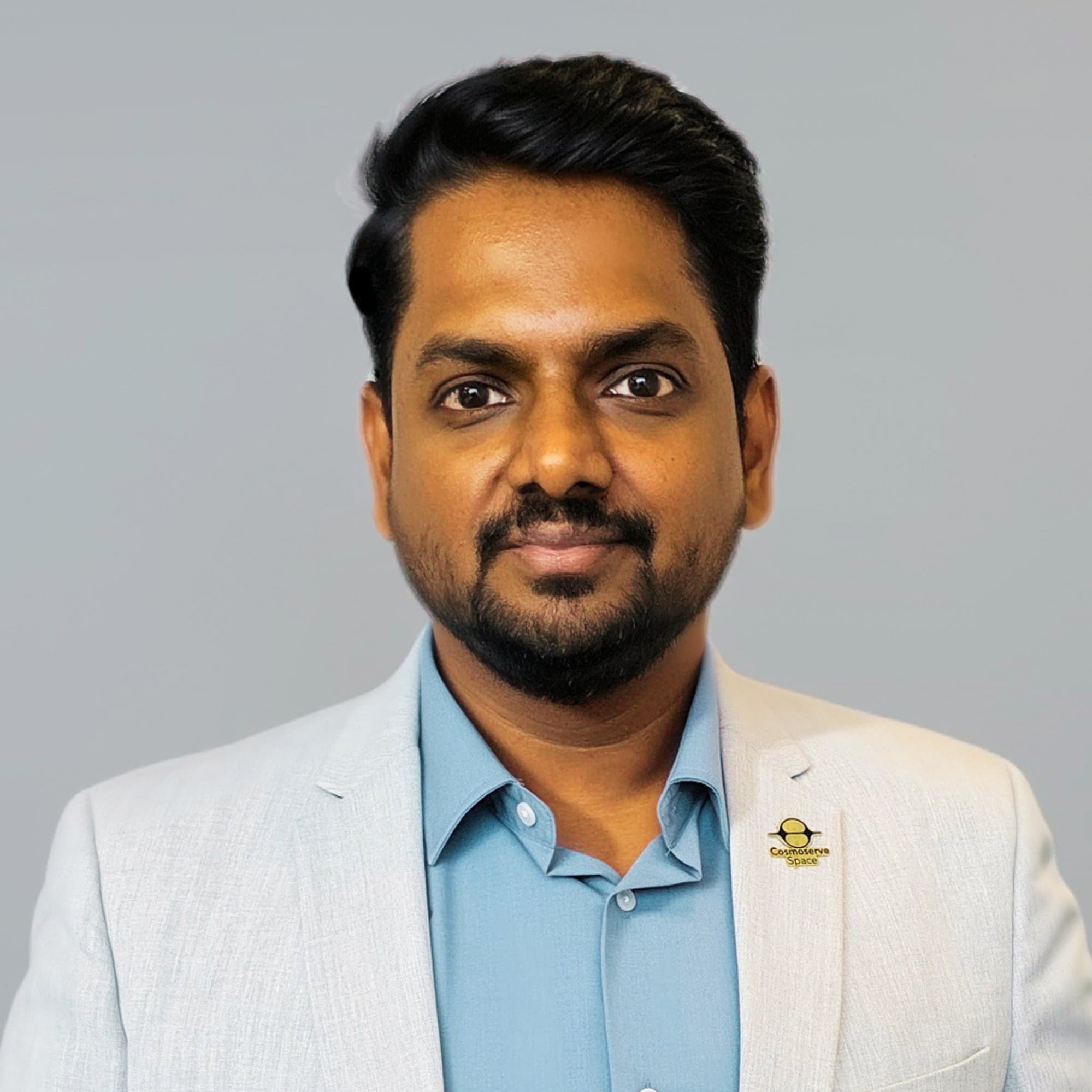
Chiranjeevi Phanindra, Founder & CEO of Cosmoserve Space, spent 14 years at ISRO working on re-entry and human spaceflight. Today, he is focused on a vital challenge: keeping Earth’s orbit usable.
Read Full Story