Category: Corporate Visionaries
Rahul Malhotra brings 30+ years at P&G and Shell across global CEO and marketing roles, offering deep insight into business, consumer behaviour, organisational change, commercial judgement and reputation.
The Work Before the Story: Rahul Malhotra on Trust, Behaviour and the Business of Marketing
IndiSight Editorial
Sep 8, 2026

Rahul Malhotra
Global Head of Group Brand Strategy & Stewardship · Shell
Singapore/Singapore
The First Conversation May No Longer Belong to the Brand
A customer can now ask a search engine for recommendations. An AI assistant can compare products before a brand gets the chance to explain itself, while platforms and recommendation systems can narrow the consideration set long before someone reaches a company website. Much of the first impression may already have been formed somewhere the brand does not control.
For marketers, the commercial question extends well beyond discovery. If attention can increasingly be ranked and redirected through someone else’s system, what still makes a customer choose, return, recommend a brand and stay with it when alternatives are constantly available?
Rahul Malhotra approaches that question from a career spent building brands while also carrying responsibility for businesses expected to deliver what those brands promise. His answer begins with a commercial discipline that can easily get lost amid conversations about platforms, reach and acquisition.
Repeat purchase is what drives sustainable growth in all companies.
Search and recommendation can influence discovery and is important to “crack” using best practices in GEO optimisation. However, repeat behaviour reveals what really happened once the promise met the actual customer experience.
Rahul captures the relationship in a phrase that runs through much of his thinking: “Always do story doing before your storytelling.”
Product performance, service, pricing, distribution and operating choices continuously shape what customers eventually understand as the brand. Marketing gives those signals meaning and visibility, while much of the evidence has already been created by the time communication begins.
The P&L Education Behind the Marketer
Rahul’s career has moved between marketing and general management often enough to make the conventional boundary between them increasingly unhelpful. He spent about 13 years with Procter & Gamble across India, Japan and Singapore, including serving as Head of Marketing for P&G India. At Shell, he later ran global businesses including a roughly $1.5 billion LPG portfolio and a roughly $4 billion Styrene Monomer business before returning to marketing and eventually taking responsibility for global brand strategy and stewardship.
Carrying a P&L changed the questions he asks of marketing because every customer proposition eventually encounters the economics and operating capability behind it. Growth requires funding, channels carry different economics, manufacturing and supply chains impose constraints, and a customer promise has to survive contact with the full system responsible for fulfilling it.
Commercial literacy consequently becomes part of marketing competence. Greater influence comes from connecting what customers want with what the enterprise can deliver repeatedly, profitably and at scale.
Rahul applies a similar discipline to business renewal. Mature operations still have safety and regulatory obligations, assets requiring investment and margins that may be funding future growth. His hierarchy begins with licence to operate, regulation and safety; the existing business then needs enough investment to protect the economics generating cash, after which discretionary capital can move towards growth opportunities.
The more difficult judgement arrives when the assumptions behind those opportunities change. Competition can intensify, projected margins can fall and a business case that looked compelling eighteen months earlier may no longer deserve the same commitment.
A strategy earns continued capital through the strength of its current case.
Strategy Has to Travel Through Organisational Memory
A corporate strategy may be designed for current market conditions, but the people expected to execute it receive that strategy through everything they have already experienced.
Teams remember the transformation that disappeared after a leadership change, the route-to-market decision that damaged relationships or the period when urgency kept increasing without enough time to absorb what had already changed. Rahul describes the accumulated context as the recent “emotional memory” of a business.
Credibility accumulated through previous transformations influences how quickly the next one can move. A “burning platform” can create urgency when circumstances genuinely require it, yet repeated use eventually weakens its force. Rahul talks instead about changing pace over time, moving from the intensity of a gallop towards a canter when people need to convert strategic direction into everyday execution.
Organisational memory also changes the real cost of transformation. A history of abandoned initiatives or constantly changing priorities forces leadership to spend more time rebuilding confidence before another programme earns commitment.
People closest to customers can also see information that has not travelled far enough through the organisation. Rahul’s instinct is to listen to the ground, walk the markets but also turn any grassroots concerns into something that can be tested.
“What is the evidence? What is the value at risk?”
A disagreement can then become a pilot, a staged rollout or a clearer estimate of commercial exposure. Rahul applies similar scrutiny higher in the hierarchy, where executives may support a transformation intellectually until commitment begins affecting capital, careers or near-term performance. He compares it to reaching the edge of a bungee jump and deciding that next quarter might be a better time.
Marketing has always paid attention to the gap between stated preference and actual behaviour. Inside an organisation, the allocation of money, people and personal risk often says more about commitment than formal agreement.
Brand Governance as an Allocation of Judgement
Rahul’s work on an internal project called Brand Operations 2.0 (2020-2023) provides the clearest operating example of how this thinking plays out at scale.
The environment he describes includes about 1,800 sub-brands across dozens of businesses. On a typical working day, his central brand team dealt with around 200 new creative assets for approval alongside naming, trademark and other such requests. A system created to protect a global brand can gradually accumulate enough rules and approval steps to slow the marketers it is meant to support.
Rahul and his team reframed the central function around a simpler philosophy: “coach, not catch.” , giving full credit to his boss, Dean for this phrase.
Capability building, simpler processes and better tools allowed more work to be completed correctly with less intervention from the centre. “First time right”, the share of submitted assets requiring no correction before release, moved from the mid-50s to nearly 90 percent over a few years, while the cost of the function was halved.
A principle behind the redesign captures the commercial logic:
“If you want to meet your Cost and Compliance goals, you have to first prioritise the Customer.”
The customer here was the marketer using the system.
Rahul’s team created an internal persona called Jeremy, representing a country marketer working far from headquarters. Jeremy had a professional history, language profile and career aspirations, giving the central team a practical way to examine whether guidelines, tools and workflows were genuinely usable. Marketers and agencies were observed using existing systems, guidance was simplified and avoidable friction became easier to identify.
Technology entered where it could remove that friction. Routine artwork errors could be caught quickly, existing creative material became easier to find and reuse, and pre-approved templates reduced repeated approval cycles. Simpler questions and lower-risk work could increasingly be handled without involving experienced specialists every time.
Every unnecessary approval consumes expert capacity, agency time, marketer attention and speed to market. Embedding predictable standards into the workflow allows specialists to spend more time on questions where context and interpretation materially affect the outcome.
The same economics apply to AI. Technical capability creates little return while the underlying workflow remains unchanged, which is why Rahul treats adoption as part of the investment case rather than an afterthought. The commercial test eventually comes down to whether the work becomes meaningfully faster, cheaper or better, and whether enough people use the capability for that improvement to matter at scale.
Trust Gives the Business Room to Move
Rahul looks at brand value through the decisions accumulated trust can influence: customer preference, B2B tender outcomes, talent attraction, pricing and the latitude a company may receive when something goes wrong.
Its commercial value becomes especially visible under uncertainty. A customer considering an unfamiliar offer, an employee being asked to support difficult change or a partner entering a long-term relationship has incomplete information about what comes next, so previous experience with the organisation becomes part of the decision.
Trust allows a business to enter a new conversation with some credibility already accumulated. Product quality, service, commercial conduct, leadership behaviour and the way a company responds when things go wrong all contribute to that reserve.
Rahul’s “story doing” principle rests on the same commercial reality. Communication can increase the visibility of credible behaviour, while credibility itself develops through repeated business decisions.
The Purpose Model Rahul Would Build Differently Now
“I think I should have done the full loop. I was very linear in my thinking.”
The admission concerns work Rahul had already taken to considerable scale. His profile describes helping articulate Shell’s purpose and embed it across more than 85 businesses through a structured process intended to build understanding and activation.
Time exposed a weakness. People changed roles, leadership teams moved and parts of the original work gradually lost force, leading Rahul to place greater weight on cultural norms, incentives and recurring processes that continue shaping decisions after the original communication programme has faded.
Corporate initiatives are often designed carefully around launch and activation, while institutional endurance requires another layer of design. An idea survives leadership turnover when it repeatedly appears in how performance is assessed, people are rewarded, resources are allocated and difficult choices are resolved.
Profitability also sits inside Rahul’s view of durability. A company needs enough economic strength to maintain commitments through leadership transitions, business cycles and periods of pressure. Purpose gains staying power when commercial value and wider societal value reinforce one another strongly enough to survive those changes.
The lesson extends well beyond purpose. Strategic ideas remain fragile when they depend primarily on the people who introduced them; institutions become stronger when important ideas are carried by systems as well as individuals.
Performance Has to Be Repeatable
Rahul’s thinking about organisational exhaustion comes partly from management approaches he experienced earlier in his career and later chose to avoid.
Sustained performance, in his view, requires six practical disciplines: anchor people in why the change matters, protect the core while funding the future, align incentives, build capability, communicate consistently and create deliberate “pit stops” during prolonged periods of pressure.
Move from pushing people which makes them feel exhausted to pulling energy.
Capability matters because communication has limits. A webcast can explain why a business is changing, but confidence deepens when people discover they can operate successfully in the new environment. Rahul compares it with learning to ride a bicycle: competence changes the emotional relationship with the activity.
Recognition could also be deliberately personal. After a strong contribution, particularly from a junior colleague, Rahul would sometimes invite the employee to take the family out for dinner at the company’s expense, or have flowers sent home to the employee’s partner acknowledging the support behind the work. The financial value was modest, while the recognition travelled beyond the workplace.
Absenteeism, mistakes and quality incidents matter as leading indicators because financial results can remain healthy while organisational capacity is already deteriorating. High performance consumes human capacity, and sustainable performance requires mechanisms that replenish some of what the organisation asks people to give.
The Apprenticeship Business Has to Rebuild
AI introduces a capability problem that conventional productivity measures can easily miss.
Previous generations developed judgement partly through repetition. They handled foundational work, watched experienced colleagues make decisions and accumulated smaller responsibilities before receiving larger ones. As technology absorbs more of those tasks, companies can improve immediate productivity while reducing the experiences through which future expertise used to develop.
Rahul compares the shift with the arrival of Excel. Spreadsheets absorbed large amounts of manual accounting work, and the profession responded by raising the baseline of capability expected from people entering it. AI is likely to push that baseline upward again.
A form of capability debt can emerge when entry-level work disappears faster than organisations redesign learning. Productivity improves in the present while the pipeline of people capable of exercising independent judgement becomes thinner.
Younger professionals still need customer exposure, decisions with consequences and enough repetition to recognise patterns. Rahul also places considerable weight on social skills and the ability to connect disciplines because important business decisions increasingly require an understanding of how customer behaviour, economics, operations and organisational incentives interact.
His challenge to younger professionals is strikingly simple:
“What are you a master at?”
For marketers, durable expertise will increasingly come from capabilities that, by nature, are absorbed differently than technology: understanding customers, reading people, exercising commercial judgement and knowing how a marketing decision travels through the economics of the wider enterprise.
Leadership Lessons From Rahul Malhotra
Discovery can be intermediated; repeat behaviour has to be earned. Platforms and AI may influence whether customers encounter a brand, while sustainable economics still depend on the experience that follows.
Marketing judgement improves with P&L understanding. Customer insight becomes more valuable when it is connected to margins, channel economics, capacity, capital requirements and the organisation’s ability to fulfil the promise repeatedly.
Organisational memory affects the real cost of change. Previous transformations shape confidence, scepticism and willingness to commit, which means leadership credibility influences both the pace and difficulty of execution.
Turn resistance into evidence. Frontline concerns can contain customer or execution risks that have not reached headquarters. Pilots, quantified exposure and careful questioning allow management to test those concerns before committing at scale.
Allocate judgement as carefully as capital. Routine standards increasingly belong inside systems and workflows, leaving experienced people to focus on decisions where interpretation and context materially improve the outcome.
Technology adoption belongs inside the investment case. Deployment creates little economic value until people change the way work is done and the capability improves cost, speed or quality at meaningful scale.
Build trust before the business needs to spend it. Its strategic value becomes clearest when a company enters unfamiliar territory, asks stakeholders to accept uncertainty or has to recover from a mistake.
Build organisations that can reproduce capability. Purpose needs mechanisms that survive leadership turnover, performance needs enough human energy to be repeated, and automation requires a redesigned apprenticeship so today’s efficiency does not weaken tomorrow’s judgement.
The Work Before the Story
Rahul Malhotra’s perspective makes marketing increasingly difficult to separate from the business behind it.
A customer may encounter communication near the end of the process, but much of what determines its effectiveness has already happened. The product has performed, the organisation has accumulated a record of behaviour, its operating systems have shaped execution, and customers, employees and partners have gathered enough evidence to form expectations about what the company is likely to do next.
Technology will continue making parts of marketing faster. Content production is becoming easier, discovery can be shaped by systems sitting between companies and customers, and routine brand work can increasingly move into automated workflows. As those capabilities become widely available, advantage shifts towards assets that require longer periods of accumulation: customer understanding, commercial judgement, organisational credibility and the ability to create experiences people willingly repeat.
Rahul also places corporate influence within a wider context and feels that private corporations need to be forces of good. Large companies today command concentrations of talent, capital and reach that allow their decisions to shape behaviour at enormous scale. Marketing sits particularly close to that influence because propositions, incentives and experiences can affect millions of individual decisions.
Greater reach raises the standard of judgement expected from the function. Marketers need to understand what behaviour the company is encouraging, whether the organisation can sustain the promise it is making and what kind of trust will remain after the transaction is complete.
The story will still matter. Its strength will depend on the work that happened before anyone tried to tell it.
Our Suggestions to Read
Discover The Leaders Shaping India's Business Landscape.

Investors & Catalysts
From Millet to Method: Rasika Prashant on Building What Consumers Return To
Rasika Prashant, CEO of NSRCEL at IIM Bangalore and Co-founder of Soulfull (later aquired by Tata Consumer Products) on consumer trust, category creation, Indian brands, and the founder discipline required after belief.
Read Full Story
Founders & Innovators
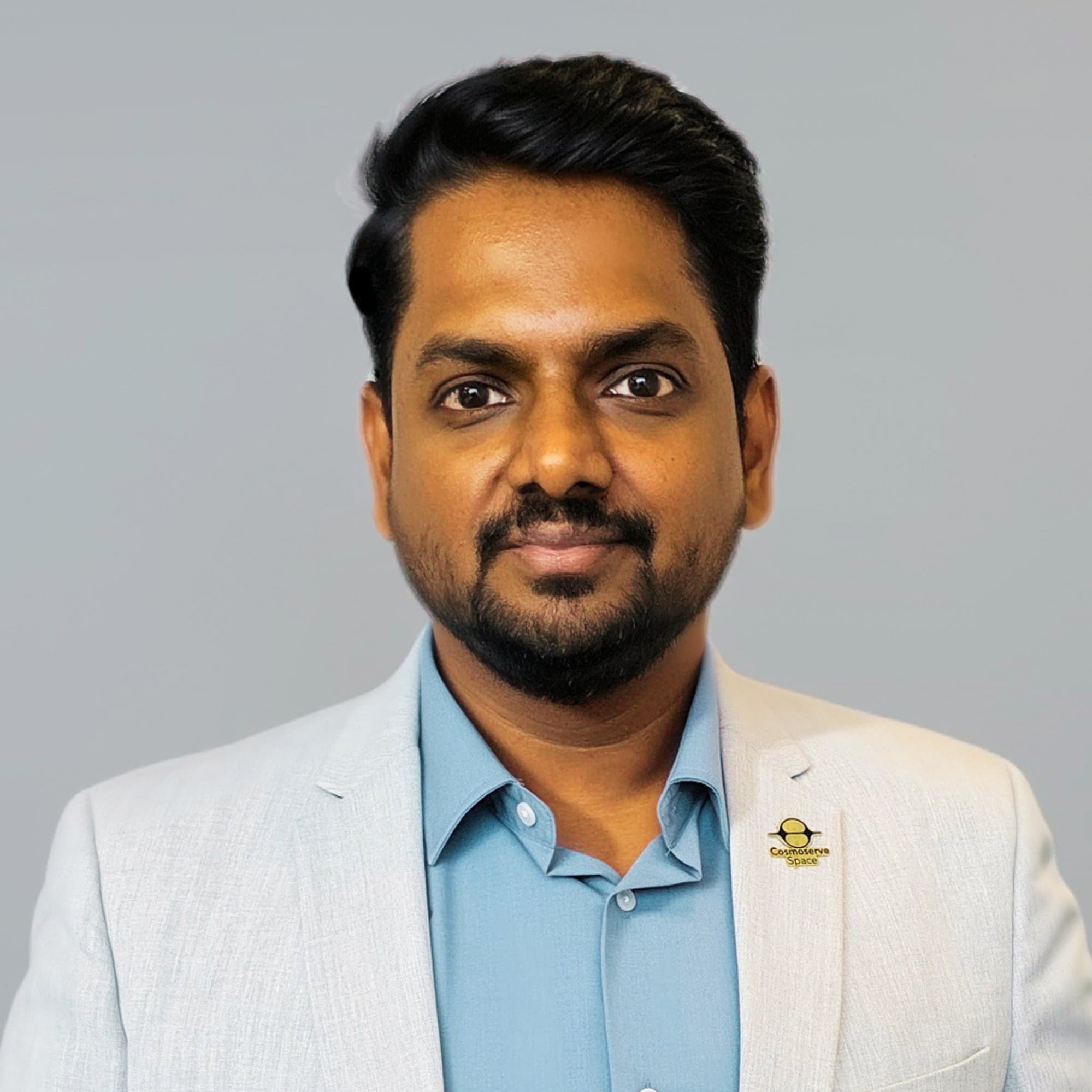
Building the Next Space Economy: Chiranjeevi Phanindra and Cosmoserve's Case for Orbital Maintenance
Chiranjeevi Phanindra, Founder & CEO of Cosmoserve Space, spent 14 years at ISRO working on re-entry and human spaceflight. Today, he is focused on a vital challenge: keeping Earth’s orbit usable.
Read Full Story

Corporate Visionaries
Shashank Sahni on What Success Leaves Out
Shashank Sahni, Google’s Managing Director of Global Ads Solutions, reflects on what customers reveal, what ambitious teams need from their leaders & what the mountains and marathons have taught him about going further.
Read Full Story