Category: Education Leadership
A global HR leader across SAIL, NIIT, Reliance, Capgemini, IBM and Dr. Reddy’s, and now an academic at ISB, Dr. Chandrasekhar Sripada brings a rare view of how institutions build trust, participation, and capability.
Dr. Chandrasekhar Sripada on Building Human Capital for a Future-Ready India
IndiSight Editorial
Aug 31, 2026
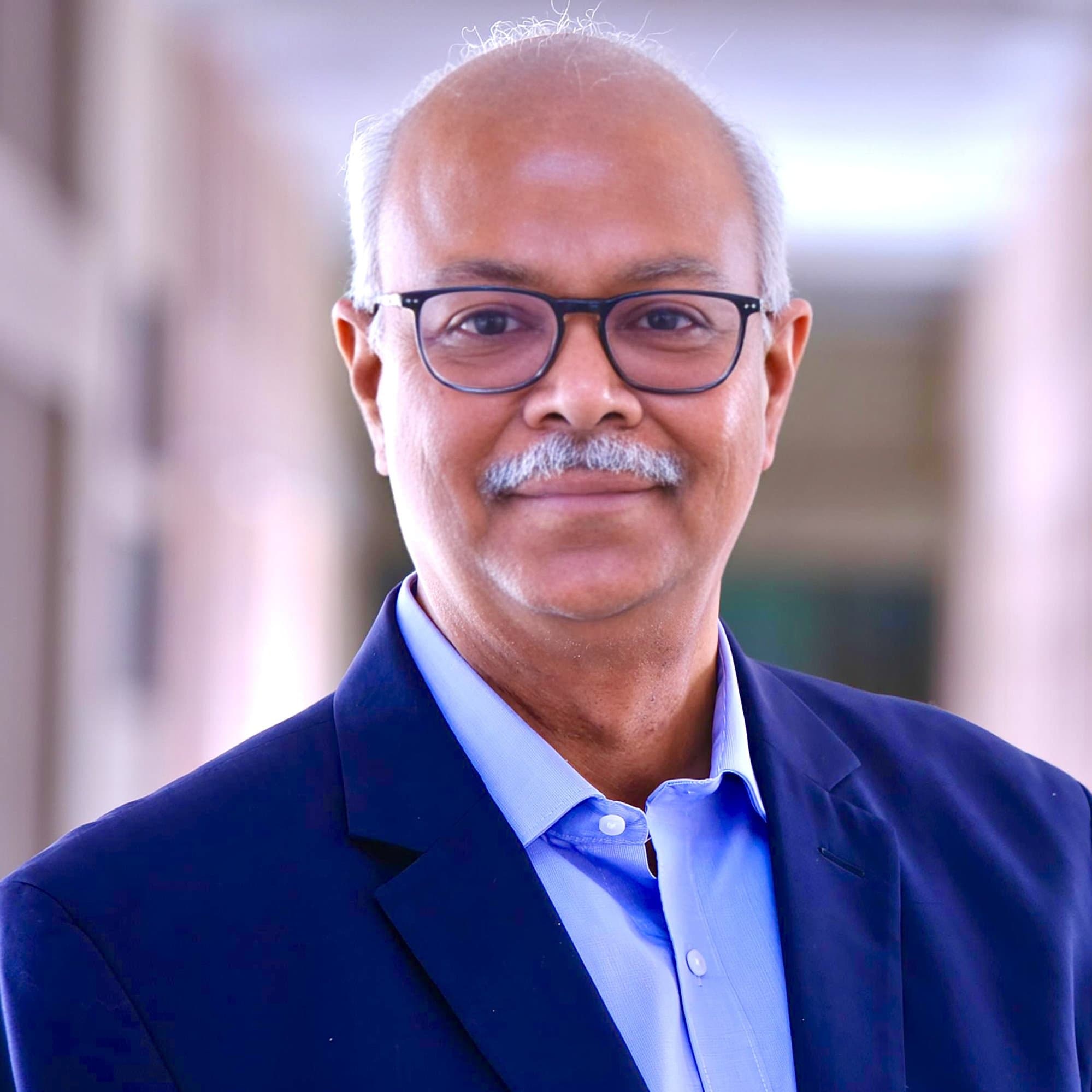
Dr. Chandrasekhar Sripada
Global HR Leader
Hyderabad, India
India is carrying one of the largest human capital opportunities of this century. A young population, rising aspirations, wider digital access, and growing demand for skilled work have created a moment that can reshape the country’s economy and influence how global organizations think about talent.
Potential becomes capability when systems are designed with intention. People need education that develops critical thinking, skills that build confidence, employers that recognize ability, and work models that allow talent to participate from wherever it exists. Dr. Chandrasekhar Sripada has spent decades studying this connection from inside companies, classrooms, boardrooms, and leadership conversations. His view is direct: India’s opportunity will be realized when the full plumbing from education to employment begins to work with greater seriousness.
Education should lead to skills. Skills should lead to employability. Employability should lead to employment. When this plumbing works, human potential flows into productive work. When it weakens, companies speak of scarcity while capable people remain outside the opportunity system.
Dr. Chandra, Clinical Professor of Organizational Behaviour at the Indian School of Business and Executive Director of its Human Capital and Leadership Initiative, brings unusual depth to this question. Before academia, he spent four decades inside corporate institutions across public sector industry, Indian private enterprise, global technology, consulting-led businesses, and pharmaceuticals, including Steel Authority of India, NIIT, Reliance Infocomm, Capgemini, IBM, and Dr. Reddy’s Laboratories. His argument carries weight because he has seen similar human capital failures recur across the public sector, Indian private enterprise, multinational systems, pharmaceuticals, business education, and boardroom conversations.
The scholar practitioner
Dr. Chandra entered management through an unusual route: literature, poetry, and philosophy gave him an early habit of asking deeper questions, while corporate life gave him the scale on which those questions could be tested. A postcard from his father, written when the family could no longer support further education, moved him toward work earlier than planned. At twenty, he joined Steel Authority of India as a management trainee.
He rose through large organizations, handled complex human capital mandates, completed doctoral work while in corporate roles, and eventually moved into ISB with the conviction that thought and action belong together.
We have made a false and unnecessary distinction between theory and practice. We think that those who think cannot act. Those who act cannot think. And that is not true.
Practice gave him operating realism. Scholarship gave him the language to examine it. The strongest institutions, in his view, need leaders who can read human behavior, understand business constraints, engage with research, and still ask larger questions about work, dignity, contribution, and society.
The belief beneath performance
Dr. Chandra’s sharpest critique begins with a contradiction many companies live with every day. They call people assets, then account for them as costs. On most balance sheets, people appear in the column of liabilities even while leaders describe them as the organization’s greatest strength. Companies speak of empowerment, then build systems around attendance, approvals, supervision, escalation, and visible proof of control.
The corporate world has an essential confusion, if not hypocrisy, around attitudes towards people.
The issue, in his view, is distrust. Many institutions still operate with the assumption that people need watching all the time and cannot be trusted to perform. The same logic travels from supervision to management to leadership, changing its language as it moves upward, while keeping the same underlying disbelief in people.
The greatest irony of the corporate world is that it starts with distrust. Most people in most places think that employees come to work to cheat. And my job is to stop them.
A system built around trust gives people the confidence to exercise judgment, take ownership, and contribute beyond instruction. Human capital becomes real when leaders invest in people, develop them, and design work in ways that allow capability to grow.
The broken line from education to employment
Dr. Chandra’s reading of India’s employability challenge starts much earlier than the job interview. It begins in the way society has separated education from skill, skill from dignity, and dignity from the kind of work that actually builds economies. Degrees have carried social prestige, while hands-on capability has often been treated as secondary, even when the economy depends on precisely those capabilities to grow.
When society gives greater respect to the credentialed engineer than to the skilled welder, fitter, technician, or plumber, aspiration moves toward status, while the economy later pays the price through shortages in precisely the areas it undervalued. Dr. Chandra points to the social status of skills as a deeper issue than training supply. In a country where a young doctor in a government hospital may earn ₹20,000 to ₹30,000 while an urban driver can earn far more, the economy is also revealing how distorted its signals around skill, status, and value have become.
Skill training was expected to correct the imbalance. Dr. Chandra’s assessment is sharper because it comes from close exposure to national and sectoral skill efforts.
Our skills training is a big hoax.
The provocation is deliberate. His critique is aimed at programs that imitate the classroom while claiming to build competence. Too many interventions teach the vocabulary of work with limited practice, tools, labs, repetition, and real operating conditions. His example is blunt: a carpenter who can deliver a good presentation on how a table should look, yet cannot build one.
The next break sits with employers. Companies often say candidates lack skills. When asked to specify the missing skills, the discussion quickly moves to communication, confidence, and behavioral polish. These capabilities matter, yet a serious talent system requires sharper definition of skills, tools, standards, quality expectations, and outcomes.
His semiconductor example captures the mismatch. India speaks of large demand for semiconductor talent, yet Dr. Chandra says he can point to people with advanced degrees in semiconductor and VLSI who still struggle to find the right opportunities. The issue sits in the connection between education, skill recognition, employer clarity, and actual hiring.
The final break appears in employment design. Capable people remain excluded when jobs are shaped around urban location, long commutes, English comfort, physical presence, and rigid hours. A skilled woman in a small town, an older professional, a person with disability, or a worker outside a metro cluster may possess the capability to contribute and still remain outside the opportunity system because the job was designed around another life pattern.
How we work determines how many of us can work.
That sentence carries much of Dr. Chandra’s business philosophy. Work design determines the size and diversity of the talent market.
Work must travel further
Dr. Chandra believes India must learn to move work to workers with far more ambition. Remote and flexible work, in his view, can become a national employment strategy for a country whose talent opportunity is spread across geography, gender, class, language, and family structures.
He grounds the argument in operating examples. In a Bengaluru Lenskart store, he walked into an eye-test room where the equipment was present but the optometrist was on screen. The remote specialist greeted him, guided the test, adjusted the equipment, completed the examination, and generated the report. The store manager later explained the business logic: one skilled professional could serve multiple locations with higher productivity instead of sitting underutilized in one outlet. There is also an employee logic here: flexibility can allow a skilled worker to contribute from Delhi without being forced into the personal and financial strain of moving to Bengaluru. Dr. Chandra sees the same principle in remote ICU support, where specialist expertise reaches hospitals in the Northeast without requiring every hospital to physically house every specialist.
These models are already operating in healthcare, retail, agriculture, and services. Ordinary office culture resists because the deeper barrier is cultural.
It is largely cultural. And that culture is born and rooted in power, authority, control, distrust.
Distributed work will need its own ecosystem: local hubs, remote infrastructure, manager training, policy incentives, outcome-based measurement, and deliberate inclusion. Companies that build this early will reach talent their competitors cannot access.
Dr. Chandra’s point is economic participation. A country that changes how work is delivered changes who gets to work.
Flexibility as serious institutional design
Dr. Chandra treats flexibility as a way to align human realities with organizational outcomes. He defines it as an institutional capability, one that allows people to contribute without forcing every worker into one rigid work pattern.
Flexibility is not a perk. It is a human need.
A parent who needs to drop a child at school, a professional who can deliver from a smaller town, a person who cannot commute daily but can produce high-quality work, and a skilled worker who needs a different schedule are asking for standards to be attached to contribution rather than ritual. The institutional question is whether leaders can distinguish seriousness from visibility.
The older managerial model measured activity because activity was visible. A more mature model measures outcomes because outcomes carry business value. Flexibility asks maturity from both sides. The employee has to treat freedom as responsibility, and the institution has to define outcomes with enough seriousness to stop confusing physical presence with commitment. At its best, flexibility becomes a performance design choice, not an arrangement at the margins.
Leadership must leave people stronger
Dr. Chandra is direct when he discusses the link between leadership and talent scarcity. The shortage has already become a leadership indictment because leadership has too often been defined through authority, direction, control, decision rights, and results, while the building of people remained secondary.
A different leadership contract is needed. Leaders should be evaluated by the capability they create, the talent they scout, the trust they build, the freedom they give, and the institution they leave behind. Results matter, and the quality of human capability left behind matters just as much.
Companies everywhere face skill obsolescence, AI disruption, changing expectations from younger workers, and greater competition for capability. The next advantage will belong to firms that learn to build talent with the same seriousness with which they allocate capital, manage risk, and pursue growth.
Talent built upstream is more durable than talent purchased under pressure.
Dr. Chandra’s idea of a human treatment balance sheet comes from this concern. If capital markets and boards examine financial performance with rigor, institutions also need serious scrutiny of how people are developed, trusted, and treated. People design strategy, execute work, serve customers, absorb change, and carry culture. Their development belongs inside the core performance conversation.
The hardest skills were called soft
Few phrases irritate Dr. Chandra more than “soft skills”. His objection is conceptual. Trust, listening, conflict handling, judgment, relationship-building, credibility, and emotional intelligence are among the most difficult capabilities leaders must develop.
Whoever coined this word soft skill, I want to kick him.
The line is provocative, but the argument is sober. Business education and corporate life have often privileged analysis, strategy, finance, and technical mastery while treating human capability as secondary. Dr. Chandra has seen this pattern with young managers and business school graduates. Five years into corporate life, many discover that nearly 80 percent of their managerial difficulty sits with people: motivation, anxiety, teams, bosses, peers, trust, communication, power, and belonging.
The work of leading people, reading anxieties, building credibility, handling conflict, and earning trust becomes the real managerial examination. A leader needs judgment and empathy, discipline and listening, efficiency and humanity. The language of soft skills has made some of the hardest managerial capabilities sound optional.
The pressure point in the argument
There is a serious question inside Dr. Chandra’s framework. Much of his experience comes from large, structured, comparatively resourced institutions: public sector enterprises, multinational corporations, major Indian companies, business schools, boards, and executive programs. A large part of India’s employment reality sits outside that world.
Informal work, small enterprises, low-margin businesses, family-run firms, gig arrangements, and fragmented labor markets have far less institutional capacity to build the systems Dr. Chandra argues for. That makes his argument more important, and also more difficult. If trust, flexibility, inclusion, and human capital investment remain available only to formal and elite institutions, India’s opportunity will narrow.
The real test is whether these ideas can travel from leadership classrooms and corporate headquarters into the wider employment system. Policy can help. Industry bodies can help. Large companies can influence supply chains. The harder work will be cultural: changing how a twelve-person enterprise, a family firm, a contractor, or a frontline manager understands people, work, skill, and dignity.
Health, authority, and the ability to change
Asked how he would assess whether an organization is truly future-ready, Dr. Chandra turns to a more demanding indicator: the demonstrated ability to change.
His analogy is simple. A person’s health at twenty-five cannot be judged through the same expectations as health at sixty-five. Organizations face a similar test. Performance in stable conditions says something, but it does not always reveal whether a company can adapt when markets, technologies, people, and expectations shift.
For Dr. Chandra, a healthy institution keeps renewing its capacity to trust, include, and perform as the context changes. The deeper evidence lies in how quickly an organization can repair credibility, learn from difference, and adjust its way of working when old assumptions begin to fail.
The arrival of younger professionals sharpens this test. Many senior leaders describe them as difficult, restless, or entitled. Dr. Chandra reads the shift differently. Younger workers are making visible the limits of authority built too heavily on hierarchy and too lightly on trust, meaning, dialogue, and legitimacy.
A manager who consults a seven-year-old at home before ordering food but refuses to consult a twenty-one-year-old at work reveals the contradiction inside authority.
AI brings the human question back
Dr. Chandra treats AI as a prompt to reconsider what remains distinctively human when machines absorb more tasks.
The arrival of AI is a great opportunity and a signal for the need to be more human.
As AI automates routine analysis, prediction, process, and content, human value will increasingly sit in judgment, trust, emotion, intuition, relationships, ethics, and social imagination. These are precisely the capacities business has often undervalued because they are harder to measure.
AI brings the human question back to the center of management. The sharper irony is that workplaces spent decades training people to behave like machines, and now machines can perform mechanical behavior faster and cheaper. For Dr. Chandra, the opportunity is to recover the human capacities business pushed to the margins.
What leaders should take from Dr. Chandra’s argument
Talent scarcity is often a system failure before it is a people failure. The line from education to employment has to be designed as one connected system.
Work design decides access. The talent pool expands when organizations change how work is delivered.
Trust is managerial infrastructure. Institutions that rely on watching people will struggle to build ownership.
Flexibility becomes powerful when leaders attach seriousness to outcomes rather than visibility.
Talent built upstream is more durable than talent purchased under pressure.
The hardest managerial capabilities are often the ones business called soft: judgment, trust, empathy, listening, and the ability to read another person’s situation.
AI returns the human question to the center of management. The capabilities business spent decades undervaluing will shape the next decade of competitive advantage.
The frameworks that work inside structured institutions have to travel into the wider economy. The harder work is cultural transmission, not policy design alone.
The question leadership now has to face
Dr. Chandra’s argument places responsibility where change actually begins: in the everyday choices of educators, employers, managers, policymakers, and boards.
Employers have to describe work more precisely instead of treating talent shortage as a generic complaint. Managers have to stop using presence as proof of performance. Boards have to examine human capital with the same seriousness they bring to financial capital. Policymakers have to support work models that widen participation rather than concentrate opportunity in the same urban clusters.
Every economy facing AI, demographic change, skill disruption, and shifting expectations from workers will have to answer a version of the same question: can institutions redesign work in ways that widen participation, build trust, and deepen human capability before scarcity forces the issue?
The plumbing from education to employment will not repair itself. The institutions with the power to redesign work now have to do the work.
Our Suggestions to Read
Discover The Leaders Shaping India's Business Landscape.

Corporate Visionaries
Sarath Gollapalli on the Work That Makes Technology Dependable
Sarath Gollapalli, Vice President at Broadridge, reflects on why AI-era enterprise technology still depends on fundamentals: client understanding, reliability, governance and ownership.
Read Full Story
Corporate Visionaries
The Work Before the Story: Rahul Malhotra on Trust, Behaviour and the Business of Marketing
Rahul Malhotra brings 30+ years at P&G and Shell across global CEO and marketing roles, offering deep insight into business, consumer behaviour, organisational change, commercial judgement and reputation.
Read Full Story
Corporate Visionaries
The Craft of Institutional Capital: Archit Shah on Judgement, Risk and Investing Across Cycles
The Zurich Kotak General Insurance Chief Investment Officer brings a practitioner’s view of investing, where good judgement under uncertainty has to become decisive action through portfolio construction.
Read Full Story