Category: Corporate Visionaries
As Libas CFO, Saurav Shah draws on KPMG, Reliance Retail, Reliance Brands, Home Center, Jaypore and KAZO to show how finance is learning to read business signals before the numbers.
Saurav Shah on the CFO’s New Mandate: Reading the Business Before the Numbers Close
IndiSight Editorial
Aug 17, 2026

Saurav Shah
CFO · Libas
Delhi/India
A business usually begins to weaken before its financial statements admit the problem. The first signs often appear in ordinary places: a missed week against plan, inventory building faster than demand, or cash tightening while revenue still appears healthy.
For Saurav Shah, Chief Financial Officer at Libas, finance sits closest to value when it can read those early movements with enough discipline to guide action before the reporting cycle closes. His view has been shaped across assurance, commercial finance, retail scale-up, e-commerce systems, ERP-led transformation, private-capital preparation and IPO readiness.
The larger insight is that modern finance can no longer remain confined to reporting accuracy alone. Its real influence comes when it helps the enterprise understand what is changing inside the business while there is still time to shape the outcome.
For Saurav, the CFO’s relevance sits in the space between the financial model and the business’s ability to execute it.
Review, Responsibility and Timing
Saurav began at KPMG in internal audit, SOX and process discipline, where finance is trained to examine decisions after they have moved through the system. The work taught him how authority, process and accountability must interlock before a transaction in one region can be trusted by the boardroom.
Audit gave him the habit of root-cause analysis. Commercial finance later changed the timing of that discipline, because leadership often has to decide while evidence remains incomplete and the cost of waiting can become larger than the risk of acting.
“Both are absolutely important. Both work line to line. You have to use your brain, which one you should put up first and which one you should put up later.”
The sentence captures the balance he tries to hold. Finance needs control discipline, yet it also needs the courage to enter decisions before certainty arrives, especially when capital, people and time are already moving.
The shift became sharper at Home Center. Saurav describes entering a business that was around ₹140 to ₹150 crore in turnover with roughly 10 to 12 stores. By the time he moved on, he had helped work through a scale-up to around ₹900 crore and 48 stores.
The learning came from seeing how finance and business had to sit inside the same conversation: budgets, reporting, category choices, store economics and operating reality. Finance becomes more consequential when it arrives while choices are still being shaped.
The Price Beneath the Price
Commercial judgement sharpened the lesson further. In procurement and negotiation, finance professionals often defend the number easiest to justify, because the lowest quote gives the room a measurable saving and gives finance a position that appears disciplined.
Saurav learned to question the reflex.
“The biggest problem I always see as a finance professional is that we think best means L1.”
At first glance, a transaction can look favourable on price and still create a poor commercial outcome. The vendor may lack technical capability, the timeline may break, quality may suffer, and operations may carry the burden after the saving has already been celebrated.
The same pattern appears in many business decisions. A cheaper system can create future integration cost. A leaner team can reduce current expense while increasing execution risk. A lower rent can come with a weaker location.
Good finance asks a deeper commercial question: what future obligation did the decision create, and who will carry it when the first saving has disappeared from memory?
Controls at the Weight the Business Can Carry
Saurav’s view of controls is shaped by stage, maturity and operating distance. An early-stage business runs on proximity, with leadership close to transactions and decisions moving through a small number of people. A scaling company faces a different condition, because decisions multiply, transactions move through more hands, and informal oversight begins to thin.
At that point, delegation of authority, segregation of duties and approval discipline become essential. A mature enterprise requires still greater density because warehouses, stores, regions, systems and teams create distance between the transaction and the leadership table.
The belief that more controls automatically means lower risk does not work.
The point is less about adding control for its own sake and more about matching discipline to the risk the organisation has become capable of creating. Too little structure leaves the business exposed, while excessive structure can slow the very judgement the business needs to protect.
Saurav uses a simple example: an inventory write-off. The amount may be small, yet the discipline around it matters because a system that allows write-offs without ownership is already teaching the organisation how to bypass accountability.
In a founder-led or early-stage business, leadership may be close enough to catch such issues informally. In a scaling company, informal vigilance starts failing. In a mature enterprise, process discipline becomes the minimum condition for trust.
The CFO’s work lies in reading maturity correctly. The better system is the one the business is ready to carry and disciplined enough to respect.
When Assumptions Collapse During the Day
The pandemic sharpened Saurav’s view of forecasting when he joined Jaypore inside ABFRL during the first Covid wave, at a moment when the business had to be aligned into a larger enterprise ecosystem while SAP implementation was also underway. Demand, supply, movement and operating assumptions were changing at the same time.
Plans that looked valid one day could face a different operating challenge the next.
“Every morning we make AOP, and the next day we face another challenge.”
Forecasting became a discipline for keeping the company prepared across multiple futures. Plan A, Plan B and Plan C matter when they protect decision-making under pressure and show leadership what happens to cash, supply, inventory and operating capacity once the original assumption fails.
Cash is king.
Saurav uses the phrase with operating consequence. Cash has to remain knowable under stress, shareholders need to understand where the business stands in each scenario, and leadership has to know how much room remains before flexibility begins to disappear.
Retail adds another layer because the business rarely moves by the clean rhythm of a month. Festivals shift, demand cycles move, and a month-on-month comparison can hide the real pattern because Diwali, Holi, Onam, Karwa Chauth and other demand periods fall differently across years.
Saurav reads the business through a weekly operating rhythm. When the first two weeks of a month begin moving away from plan, the warning has already arrived.
“If I notice that I’m not on track to meet my April budget within the first two weeks, I immediately pay close attention and take action.”
The signals are simple but demanding: cash, inventory, margin and customer behaviour have to be read together. Revenue can grow while margin weakens, inventory can build while customer preference shifts, and cash can tighten while the topline still looks healthy.
A finance team that reads those movements early still has room to act. In that sense, the weekly rhythm is a way of buying time for judgement before the month-end number hardens into explanation.
Growth, Inventory and the Quality of Conviction
Once finance starts reading the business weekly, growth becomes easier to test. The question shifts from topline expansion to the quality of the economics underneath that expansion, especially in consumer businesses where speed can hide strain for several cycles.
Saurav identifies the warning signs clearly: cash negativity, high discounting and shallower margins. Growth can be rational when current losses are supported by future cash flows strong enough to repay the present cost, and tools such as DCF, NPV, IRR, payback and scenario analysis help test that judgement with discipline.
Those tools lose meaning when discounting, cash burn or margin sacrifice become a permanent operating habit. At that point, growth begins borrowing from the future.
Inventory makes the same question measurable. Saurav treats inventory as more than working capital because it represents management’s belief about future demand. When the belief is right, inventory converts into revenue and cash; when the belief is wrong, inventory becomes trapped cash, ageing stock and future markdown pressure.
Boardroom conversations have changed around inventory. Earlier, CFOs often had to fight for inventory discipline; today, boards and CEOs in consumer businesses read inventory more sharply because they understand how quickly it can damage cash, margin and managerial credibility.
For Saurav, inventory has become a report card. It records what management expected the customer to do and how quickly reality accepted or rejected the expectation.
At Libas, he refers to inventory cover of less than 100 days, which he sees as a strong position for the volume and market context in which the company operates.
That number matters because fast fashion punishes slow reading. Inventory is where conviction meets cash, and where the future of demand quietly tests the confidence of the present.
Dashboards, Systems and False Confidence
Saurav’s career includes e-commerce analytics and systems work, so his caution around dashboards comes from operating experience with data. His concern is precise: data can increase confidence faster than it improves understanding.
The bigger the data, the richer the data, the conversations become less focused on the underlying drivers.
Reports can multiply while judgement stays underdeveloped. A CFO office may publish twenty reports, a CEO office another twenty, operations another set, and the organisation can still miss the driver beneath the movement.
A sales decline could come from demand softness, supply delay, stock availability, channel disruption, pricing fatigue, assortment mismatch or a calendar effect. Root-cause discipline determines whether the dashboard becomes a diagnostic tool or merely a polished description of symptoms.
Saurav’s systems learning sharpened during the pre-launch build of Reliance Retail’s e-commerce business, where finance sat close to platform design, order flows, COD and payment-gateway structures, warehouse logic and courier allocation.
The experience taught him that finance transformation is carried by the operating process beneath the data. A business can trust a system only when the process feeding it has been designed cleanly enough.
That discipline carried through the SAP implementation at Jaypore and now the Business Central rollout at Libas. Each iteration reinforced the same basic truth: large transformation succeeds or fails through structure and master data.
Item master, vendor master, customer master, tax master, pricing master and ownership of the data feeding the system determine whether ambiguity spreads downstream or the system supports faster decisions. Speed becomes valuable when the business can trust the process carrying it.
What External Capital Sees
External capital changes the quality of questions inside a business. Saurav has seen that shift across Series E private equity at USPL, equity funding at Jaypore, the formalisation of the Christian Louboutin and ABFRL joint venture, private-equity preparation at KAZO and now IPO readiness at Libas.
Investors usually begin with working capital pressure: inventory, receivables and payables. They examine revenue recognition, test margin composition, and look closely at cash, EBITDA, ageing and adjustments.
A deeper institutional pattern sits underneath. Internal reporting can slowly teach management to accept issues that deserve challenge, especially when familiar explanations become comfortable enough to pass through reviews without fresh scrutiny.
A receivable can remain on the books because acknowledging bad debt would hurt the P&L. Revenue can be recognised according to habits that need closer examination. Margin weakness can be explained as market reality when part of the gap may come from operational inefficiency. Inventory pressure can become normal because the team has lived with it for years.
External investors arrive free of those internal habits. They ask why the numbers are what they are, and in doing so, they often question what management has stopped questioning.
In Saurav’s practice, preparation for external capital begins by reintroducing scrutiny inside the business before outsiders impose it. The opportunity lies in making the company more investable by making its internal judgement more honest, more comparable and more disciplined.
Public-market readiness extends the same logic. A company can satisfy technical requirements through systems, reports, audits and compliance, while public ownership demands a deeper institutional discipline.
Private investors can perform diligence, sit on boards and review information closely. Public shareholders depend on governance, transparency, regulatory oversight, quarterly accountability and leadership’s willingness to answer difficult questions.
Saurav’s formulation is simple: public becomes owner.
IPO readiness asks whether the company can live under scrutiny, explain decisions consistently, preserve hygiene in reporting and build trust with people who do not sit inside the business.
Founder Judgement and the Discipline of Scale
Public-market readiness connects to a larger challenge for founder-led businesses. Many grow because judgement is concentrated, fast and close to the market. Speed creates advantage, while dependence grows when the reasoning remains trapped in the founder’s head.
Saurav’s view is measured.
Make the underlying reasoning visible, repeatable, teachable.
If every important decision returns to the founder, the organisation remains fast only as long as the founder can personally carry the load. If process replaces context too aggressively, the company can lose the instinct that built the business. The stronger path is to translate judgement into decision principles.
His CFO tenure at Reliance Brands Limited, where he worked across joint ventures including Bally, Diesel, Paul & Shark, Zegna, Iconix, Gas and Brooks Brothers, gave him sustained exposure to board governance, partner expectations and decision accountability across more complex ownership settings.
Governance, in that context, is also a question of how decisions are explained, owned and defended across stakeholders.
Effective governance creates clarity: who decides, who informs and who is responsible.
Weak governance often creates more people around a process while leaving ownership unclear. Strong governance reduces ambiguity. It helps the organisation know the accountable person, the approval path and the reason behind the decision.
The pressure point for a CFO is equally real. A finance leader trained in controls can become the person who monitors too much and understands too little about when the business needs room to move. The harder learning is knowing when to insist on discipline and when to allow momentum.
AI and the Middle of Finance
Saurav is bullish on AI’s capacity to sharpen assumptions and speed up decision-making. He also sees pressure building in the middle layer of the finance function.
“The data operator and the top level will still be there. But the entire mid level will be a problem with AI.”
The middle layer is where finance professionals have traditionally developed judgement. Analysts become managers, managers become controllers, and controllers become CFOs by staying close enough to the business to understand why numbers move before they learn how to report that movement with precision.
If AI compresses or automates much of that layer, the profession has to rethink how future finance leaders will be trained. The opportunity is large, because AI can take away repetitive work and expose patterns faster; the risk is equally real, because judgement may weaken if younger professionals lose the operating exposure through which judgement is usually formed.
Saurav links the answer to a leadership choice. He describes deliberately avoiding a conventional financial-controller layer in his current structure and choosing instead to train younger finance talent more directly. The point is capability formation. If the old middle layer changes, CFOs will have to take greater responsibility for how judgement is built.
His message to young professionals is direct.
“Just learn common sense. Everything will fall in place.”
Common sense, in his usage, means the ability to identify the root problem, adapt to changing conditions, understand how an ordinary task affects sales, margin and cash, and connect technical work to enterprise value.
AI may accelerate output. The formation of judgement will still depend on context, patience and direct exposure to the business.
Lessons From Saurav Shah’s Operating Philosophy
Finance earns influence before the final number arrives. Its highest value lies in reading weak signals early enough to shape the decision.
A favourable price can still produce an expensive outcome. Capability, reliability, quality and long-term efficiency determine whether the commercial decision truly worked.
Controls should grow with the business. Startup speed, scaling discipline and mature-enterprise governance require different operating systems.
Cash, inventory, margin and customer behaviour should be read together. Their divergence often reveals the business before the P&L confirms it.
Growth needs repayment discipline. Discounting, cash burn and margin sacrifice can support expansion only when future value has a credible path to repay present strain.
Inventory is managerial conviction made measurable. It records what the business believed about future demand and how much cash is trapped when that belief is wrong.
Transformation begins with process truth. Better systems help only when master data, ownership and decision accountability are strong.
Data should sharpen root-cause understanding. When reports multiply without improving diagnosis, dashboards become a source of false confidence.
Public ownership demands institutional behaviour. IPO readiness asks whether the company can live with scrutiny, transparency and trust after the transaction is complete.
The CFO as Early Interpreter
Saurav Shah’s finance philosophy has accumulated across stages of business maturity: controlled enterprises, scaling brands, acquired businesses, e-commerce platforms, founder-led organisations and companies preparing for external capital.
Finance has to understand the business earlier than the statement. It has to see how a missed week affects cash, how inventory records conviction, how growth borrows from tomorrow, how transformation exposes master data, and how public ownership changes the obligation of trust.
Reports will keep multiplying. AI will make analysis faster. Dashboards will become more refined. The harder capability will remain human: the judgement to read the operating signal, understand the business consequence and act before the formal statement makes the decision obvious.
The CFO who waits for the statement arrives after the business has already changed. The CFO who reads the signal still has time to shape what happens next.
Our Suggestions to Read
Discover The Leaders Shaping India's Business Landscape.
Founders & Innovators
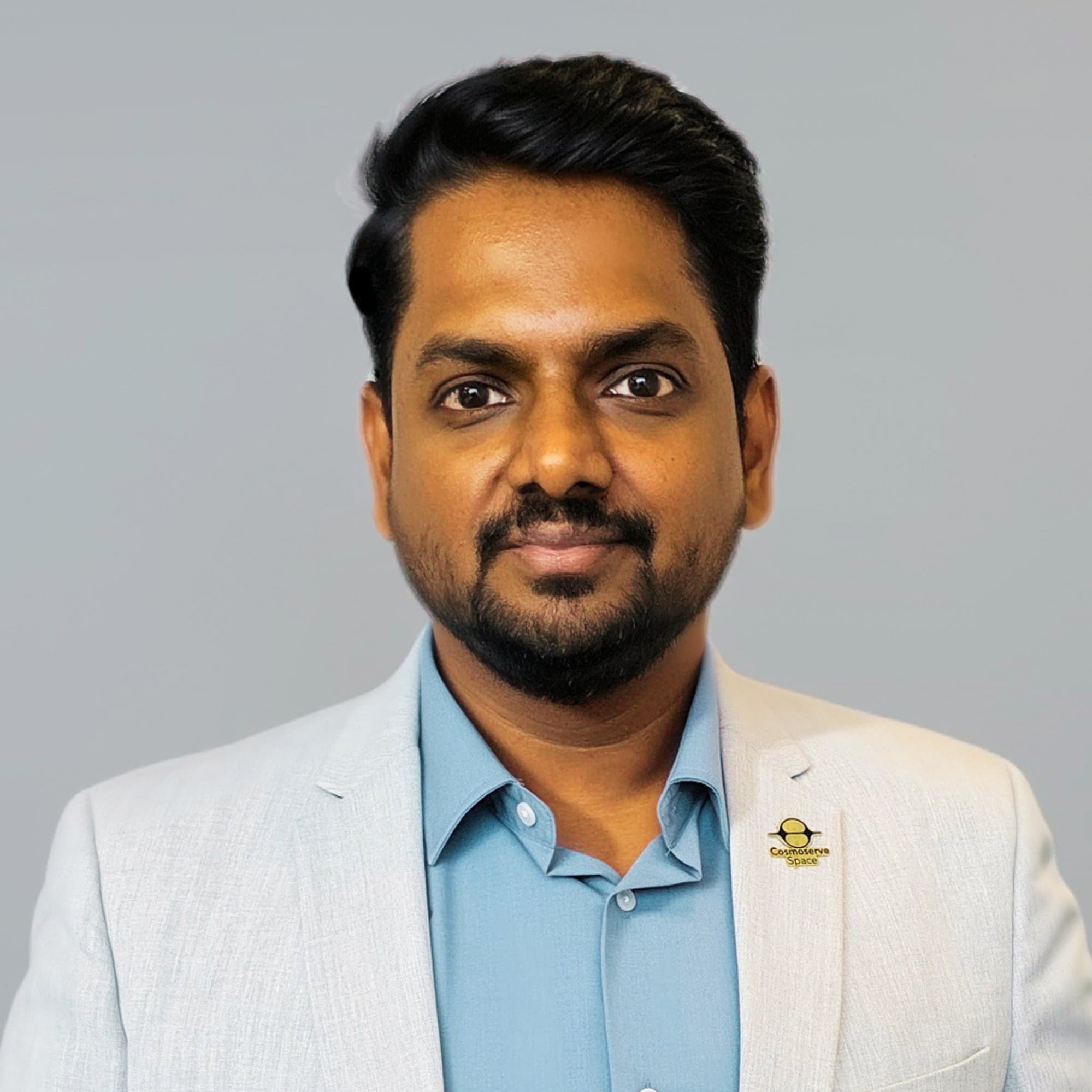
Building the Next Space Economy: Chiranjeevi Phanindra and Cosmoserve's Case for Orbital Maintenance
Chiranjeevi Phanindra, Founder & CEO of Cosmoserve Space, spent 14 years at ISRO working on re-entry and human spaceflight. Today, he is focused on a vital challenge: keeping Earth’s orbit usable.
Read Full Story

Corporate Visionaries
Shashank Sahni on What Success Leaves Out
Shashank Sahni, Google’s Managing Director of Global Ads Solutions, reflects on what customers reveal, what ambitious teams need from their leaders & what the mountains and marathons have taught him about going further.
Read Full Story

Corporate Visionaries
Clinical Multiplication: Divesh Singla on the Healthcare AI Case That Headlines Keep Missing
Divesh Singla, Managing Director, India at Veradigm, brings two decades in healthcare technology to the AI question leaders cannot avoid: how to expand clinical capacity without weakening human judgment.
Read Full Story