Category: Corporate Visionaries
Dr Madhavankutty, Chief Economist at Canara Bank, has spent two decades inside India’s financial system, across banking, treasury, risk, corporate strategy and policy-facing work, watching economic intelligence succeed or fail where models meet institutions. Drawing from both modern institutional experience and India’s ancient wisdom of statecraft, his argument is that the country’s next advantage will depend on whether its institutions can carry the judgment that growth now demands.
Kautilya, Credit, and the Return of Economic Judgment: Dr Madhavankutty on What Modern Economics Must Relearn
IndiSight Editorial
Jul 18, 2026
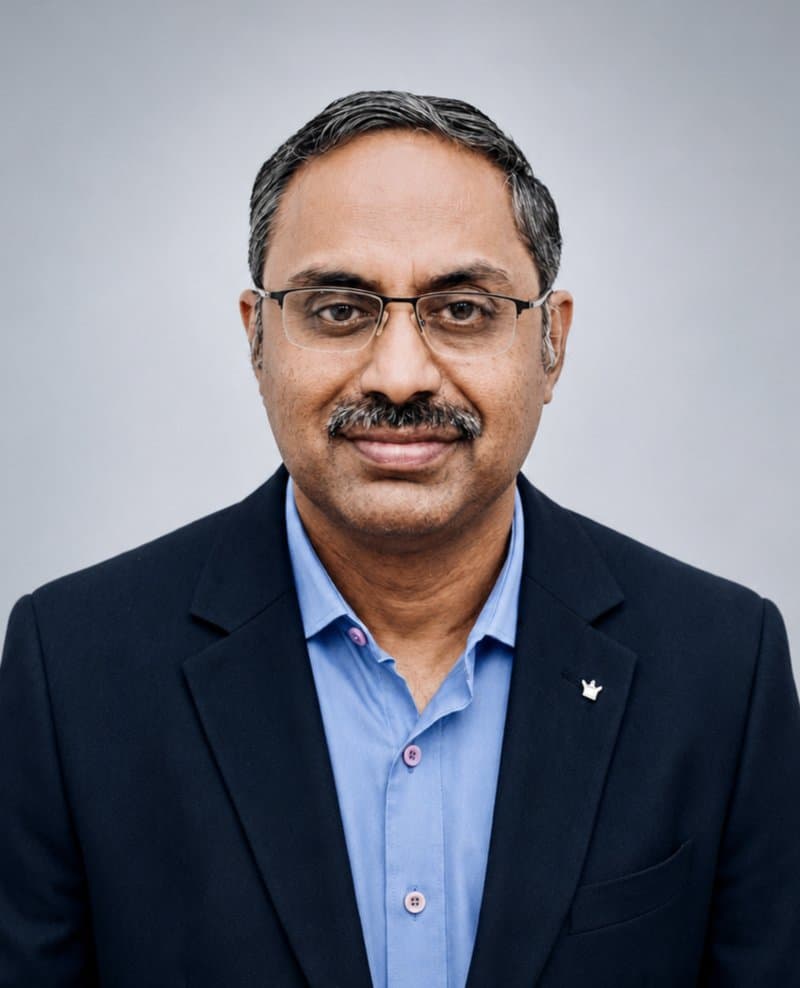
Dr Madhavankutty G
Chief Economist · Canara Bank
Bengaluru/India
More than two thousand years before economics became a modern discipline, Kautilya’s Arthashastra treated prosperity as an act of statecraft. Wealth had to be produced, protected, taxed, defended, and used with restraint. Welfare carried an obligation to the citizen. Fiscal conduct carried an obligation to the future. Security, taxation, enterprise, governance, and public welfare belonged to the same administrative imagination.
India’s current economic moment gives that inheritance an unusual force. The country is building at scale while carrying the complexity of informality, uneven state capacity, delayed projects, volatile capital, fragile borrowers, and welfare obligations that stretch beyond one budget cycle. Growth creates opportunity, but institutions still have to decide where to lend, which risks to absorb, when to bend a rule, and how much of today’s comfort can be financed by tomorrow’s citizens.
Dr Madhavankutty has spent much of his career inside those decisions. As Chief Economist at Canara Bank and a member of the Indian Banks’ Association’s economics committee, he has worked across public sector banks, treasury desks, risk functions, strategy rooms, corporate macro teams, media research, non-bank finance, and academic spaces. His view of economics has been shaped by places where a number rarely remains a number for long. It becomes a credit decision, a hedge, a risk call, a policy position, a boardroom argument, or an error that travels through the system.
Arthashastra interests him because it saw wealth, power, taxation, welfare, security, state capacity, and posterity as connected. Modern institutions have more data, models, dashboards, and policy language than ever before, yet the real test lies in turning economic information into decisions that survive contact with the ground.
One episode from India’s banking history captures the danger. Global frameworks for asset recognition brought discipline into the system, but rules built for one institutional environment can behave harshly inside another. India’s credit markets often move through informal enterprises, delayed approvals, uneven project timelines, and slow public processes. A borrower may be delayed because a clearance is stuck. A small business may miss a repayment cycle while its underlying viability remains intact. A project may be stressed because the ecosystem around it has slowed, even when the enterprise still has a future.
For Dr Madhavankutty, economics becomes serious when rules meet such realities. A framework may look clean on paper; inside India, its effect depends on timing, informality, cash-flow cycles, and the institution’s ability to distinguish between a weak borrower and a delayed one. The pandemic sharpened the lesson. Moratoriums, emergency credit support, and fiscal flexibility gave many businesses breathing space at a moment when ordinary rules would have treated stress as failure.
“Only if we survive today can we succeed tomorrow,” he says.
Rigour matters. Discipline matters. Standards matter. Survival also matters. Economic judgment lies in knowing when rigidity protects the system and when it begins damaging the capacity the system will need later.
The Last Mile of Economic Knowledge
Dr Madhavankutty’s central question reaches deep into the purpose of economics inside an institution.
We are knowledge disseminators. But how do we actually help the organisation take better business decisions?
A GDP number has value, yet a bank still has to decide where to allocate capital. A Union Budget announcement matters to an NBFC when someone can explain which states may benefit, where infrastructure activity may rise, and how those opportunities fit the lender’s portfolio. A weather pattern such as La Niña becomes useful only when the chain is followed carefully: rainfall, agricultural income, rural demand, repayment behaviour, microfinance exposure, NBFC balance sheets, and eventually the credit quality of the banks funding those institutions.
Dr Madhavankutty encountered the translation gap directly at a non-bank finance company. After a macro presentation on the Budget, a commercial leader told him that the analysis had limited usefulness for the business because the organisation needed state-level and sector-level implications. The analysis had information. The business needed usable consequence.
For institutions, opportunity becomes meaningful when it is converted into exposure, timing, geography, customer segment, capability, and risk appetite. Until then, optimism remains a presentation theme. Once translated well, it begins to guide capital.
Economic signals change shape across rooms. In treasury, they become liquidity and yield positioning. In risk, they become stress anticipation. In corporate strategy, they become hedging, capex, and sectoral direction. In public sector banking, they become institutional strategy at scale.
The last mile of economic knowledge is the distance between knowing what is happening in the economy and knowing what the organisation must do next.
When a Forecast Becomes Exposure
At a corporate group, Dr Madhavankutty saw how quickly economic advice can become business risk.
The economics team had given a rupee-dollar forecast. CFOs used the view while making hedging decisions. The currency moved differently, and losses followed. The chairman later observed that the economics function needed stronger sectoral depth.
Dr Madhavankutty does not treat the episode as a simple story about a missed forecast. Forecasts will miss. Markets exist because uncertainty has no owner. A research view sitting inside an economics cell may look self-contained; the moment a CFO uses it, the view becomes exposure.
The economist then has to understand more than the macro signal. How will the view be used? Which assumption will become a financial position? What downside can the business absorb? Which sectoral realities may change the meaning of the forecast? Who carries the cost if the call is wrong?
A quieter lesson came from another organisation, when a senior economist asked him what his “brand” was inside the company. For months, the question did not fully land. He was working, producing, analysing, responding, doing what an economist is expected to do. The question eventually revealed something uncomfortable: technical productivity can coexist with institutional invisibility.
The real test was whether business verticals came to the economics cell with problems before decisions were made. Were CFOs asking for analysis while choices were still live? Did leaders see the function as a thinking partner or as a reporting desk? Reports show activity. Internal demand shows trust.
An economics function becomes valuable when decision-makers reach for it before the risk becomes obvious.
Carrying Capacity: The Idea Behind the Numbers
One early banking experience taught Dr Madhavankutty how easily analysis can look correct before it has been tested against institutional reality.
His team worked on a proposal around possible bank mergers. The balance sheets had been studied, the combined numbers looked logical, and the case seemed defensible. A senior general banker saw what the analysis had missed. A merger involved leadership chemistry, technology platforms, customer migration, internal systems, branch processes, and cultural integration. At that time, different banks used different technology systems, so a combination that looked viable on paper could become difficult in execution.
The proposal did not move ahead, but the lesson stayed.
Numbers can combine institutions faster than institutions can combine themselves. A spreadsheet has no employee anxiety, no system mismatch, no customer migration problem, no branch-level friction, and no leadership chemistry. Institutions carry all of them.
Carrying capacity means the ability of an institution to absorb, execute, and sustain the decision it approves.
Mergers were only the first proof point. A bank may approve new digital lending models, but its people must understand the risks being automated. A regulator may apply a global framework, but the local system must absorb it without damaging businesses that remain fundamentally viable. A government may commit to welfare, but public finance must honour today’s obligations without weakening tomorrow’s capacity.
India’s technology and export ambitions face the same test. Large domestic demand can create comfort, while global competitiveness demands research depth, product quality, manufacturing strength, logistics discipline, vocational skill, and companies willing to invest before returns become visible. Dependence in areas such as AI infrastructure, semiconductors, and deep technology reflects years of thin research culture and short-horizon thinking.
Ambition travels faster than capability unless institutions build depth before pressure arrives.
Dr Madhavankutty’s economics keeps returning to this institutional test. The number may be correct, while the decision may still fail if the institution cannot carry it.
What Models Miss and Markets Know
Dr Madhavankutty respects models, although he is deeply alert to the confidence they can create. The problem begins when modelling becomes the highest-status form of economic intelligence and observation is treated as a secondary skill.
Economics, in his view, has moved too far toward technical sophistication without giving enough weight to field reading. A model can show how variables relate, yet a borrower’s delayed repayment, a branch’s weak deposit mobilisation, a state’s slower policy absorption, or an institution’s inability to execute a clean proposal may require a different kind of reading. An economist may understand the equation and still misread the economy.
Ground intelligence becomes essential. In corporates, economists should spend time around factories. In banks, they should understand rural, semi-urban, urban, and metropolitan branches, observing customer behaviour, repayment patterns, local stress, operational pressure, and the way frontline teams read economic conditions before the data formally changes.
Economists should not simply be armchair economists.
Field contact improves economic work because it changes the meaning of the same data. A person who has seen branch realities reads deposit trends differently. A person who has watched factories reads capex hesitation differently. A person who understands informal business conditions reads delayed repayment differently.
Dr Madhavankutty draws a sharp line between risk and uncertainty. Risk can be named: credit risk, market risk, operational risk, liquidity risk. Institutions may lack perfect timing, yet they understand the broad channels and can build controls. Uncertainty arrives without familiar shape, when a war, geopolitical rupture, liquidity event, confidence shock, or sudden policy move enters the system in ways that prepared models may struggle to capture.
In such moments, he says economists have to rely on intuition, a word he uses with care. Intuition means judgment formed through exposure to politics, geopolitics, markets, law, borrowers, institutional incentives, and field signals. It is accumulated contact with reality.
“Any model is a simplification. More than that, nothing.”
His concern about economics education comes from the same place. Students may learn advanced modelling while remaining distant from current economic life. He has met students unfamiliar with RBI bulletins, Financial Stability Reports, annual reports, monetary policy press conferences, and live market indicators; they can discuss regression and modelling while struggling to speak about the economy they are preparing to analyse.
His phrase is severe: “Economics has become a junkyard of mathematics.”
India needs economists who can handle technique and still read institutions. Economic judgment draws from politics, law, markets, finance, technology, society, and history. A discipline that narrows too much eventually loses contact with the system it was created to understand.
The Comfort of Agreement
Economic judgment is also shaped by professional incentives.
Before a monetary policy decision, when most economists expect one outcome, the minority faces pressure to move toward consensus. An outlier view can invite questions from bosses, editors, peers, and decision-makers, while agreement offers safety.
“There is a tendency to adjust your judgment to fall in line. That would lack conviction.”
Consensus can become an institutional shield. Treasury desks may prefer an external research house’s view because it validates an existing position. Internal analysis may be more grounded, although external authority offers cover and a decision supported by a prestigious view feels easier to defend.
Validation can become more valuable than conviction. Early warnings often lose force in such an environment. In episodes of financial stress, signals may exist before they become undeniable, but institutions can miss them because no one wants to carry an uncomfortable view too early.
India’s next decade will involve large capital allocation decisions in infrastructure, technology, energy, manufacturing, financial inclusion, and urbanisation. Independent judgment will matter most before agreement becomes comfortable.
A system that waits for everyone to agree often moves after the warning has become expensive.
AI Will Test the Banker
Finance is becoming more data-rich and technologically sophisticated. Dr Madhavankutty sees the potential, along with a serious institutional risk: automation may allow responsibility to move out of view.
He recalls hearing of a senior person advising a subordinate to feed borrower credentials into an AI system, generate a credit report, and disburse based on the report. His response was immediate.
“What can be more dangerous than this?” he asks.
Credit involves cash flows, character, sector context, stress behaviour, local conditions, and repayment discipline. AI can strengthen analysis when used well, although it can weaken accountability when used as a substitute for human evaluation.
The larger risk goes beyond a machine making a mistake. A generation of bankers may stop knowing what they have outsourced. Once people lose touch with the judgment behind a credit decision, they will also struggle to know when the machine has failed them.
Financial institutions will use AI in underwriting, fraud detection, collections, risk modelling, segmentation, and advisory. The central issue is whether bankers will understand what the machine cannot see, because faster approvals and faster reports mean little if the institution understands less.
The machine may process the file, but the institution still owns the decision.
Kautilya’s Unfinished Question
Dr Madhavankutty’s interest in Kautilya returns to the opening problem. Arthashastra matters to him because it treated taxation, welfare, security, fiscal conduct, and posterity as connected duties of the state.
The ultimate duty of the ruler is to look after the welfare of the people and guard the country from external aggression.
Through that lens, contemporary populism becomes a fiscal and institutional question. Political systems often face pressure to offer immediate relief while transferring costs to future taxpayers, future governments, or weakened institutions. Dr Madhavankutty points to the pressure on states such as Kerala, where high debt burdens and weaker-than-expected GST buoyancy show how difficult it can become to fund public expectations without weakening future fiscal space.
Kautilya preserved the connections modern policy debates often split apart. Welfare, taxation, fiscal responsibility, legitimacy, security, and future obligation belonged to one governing logic. Once those links weaken, public finance becomes a contest between today’s comfort and tomorrow’s capacity.
State capacity is the ability to honour obligations across time.
Leadership Lessons from Dr Madhavankutty
A forecast becomes serious only when someone acts on it. Economic intelligence has to account for the decision, the downside, and the person who will carry the exposure.
Ground reality belongs inside the model, not around it. Branches, factories, borrowers, and local markets often reveal stress before formal indicators catch up.
The cleanest analysis can hide the hardest execution problem. Numbers can combine institutions faster than leadership teams, systems, customers, and cultures can integrate.
Internal demand is the real test of an economics function. Reports show activity, but business leaders seeking advice during live decisions show trust.
Consensus can protect careers while weakening judgment. Early warnings lose power when institutions reward agreement more than conviction.
AI can improve credit only when bankers still understand the judgment behind the file. Once judgment is outsourced, accountability begins to weaken.
Growth ambition must be matched by institutional carrying capacity. Opportunity becomes stress when systems, people, and governance cannot absorb the decisions being approved.
A state’s duty extends across generations. Welfare gains legitimacy when it protects today’s citizen without quietly weakening tomorrow’s public capacity.
The Economist India Will Need Next
Near the end of the conversation, Dr Madhavankutty offered a larger definition of economics. The discipline, he said, should be understood as an intersection of law, technology, politics, geopolitics, health, business, finance, and society.
India’s economic opportunity has become too complex for narrow expertise. Banks, policymakers, corporates, and regulators now have to read economic signals through institutions as much as through indicators. Credit depends on households, borrowers, sectors, and local economies. Inflation depends on oil, currency, fiscal choices, and social tolerance. Export ambition depends on research capacity, logistics, technology, and global demand.
After two decades inside banking, business, policy, and research, Dr Madhavankutty returns to a simple proposition: theory has to be tested against the ground.
No textbook teaches you how to balance what is happening on the ground with what you learn in theory.
Economic thinking gains force when reality is allowed to correct it.
The next major shock will test India’s institutions in ways forecasts cannot fully anticipate. India’s next shock will not ask whether its economists were technically impressive. It will test whether institutions have built people who can make difficult decisions when the data is incomplete, the politics is uncomfortable, and the cost of error is real.
India’s economic future will depend on growth, capital, policy, and technology, along with the quality of judgment its institutions build before pressure exposes the gap.
Our Suggestions to Read
Discover The Leaders Shaping India's Business Landscape.

Education Leadership
The Human Advantage: Anu Monga on What Schools Must Still Create
Drawing on decades of leadership in international schools and education, Anu Monga reflects on what institutions must continue to create in a world where knowledge is increasingly accessible and shaped by technology.
Read Full Story

Investors & Catalysts
From Millet to Method: Rasika Prashant on Building What Consumers Return To
Rasika Prashant, CEO of NSRCEL at IIM Bangalore and Co-founder of Soulfull (later aquired by Tata Consumer Products) on consumer trust, category creation, Indian brands, and the founder discipline required after belief.
Read Full Story
Founders & Innovators
Building the Next Space Economy: Chiranjeevi Phanindra and Cosmoserve's Case for Orbital Maintenance
Chiranjeevi Phanindra, Founder & CEO of Cosmoserve Space, spent 14 years at ISRO working on re-entry and human spaceflight. Today, he is focused on a vital challenge: keeping Earth’s orbit usable.
Read Full Story