Category: Corporate Visionaries
Gary R Bennett’s four-decade global insurance career spans New York Life, Max New York Life and Seguros Monterrey. Today, through CreditAccess Life and Kaleido Life, he is helping shape insurance’s next model.
Gary R Bennett and the Unanswered Question Behind Insurance’s Next Era
IndiSight Editorial
Aug 20, 2026
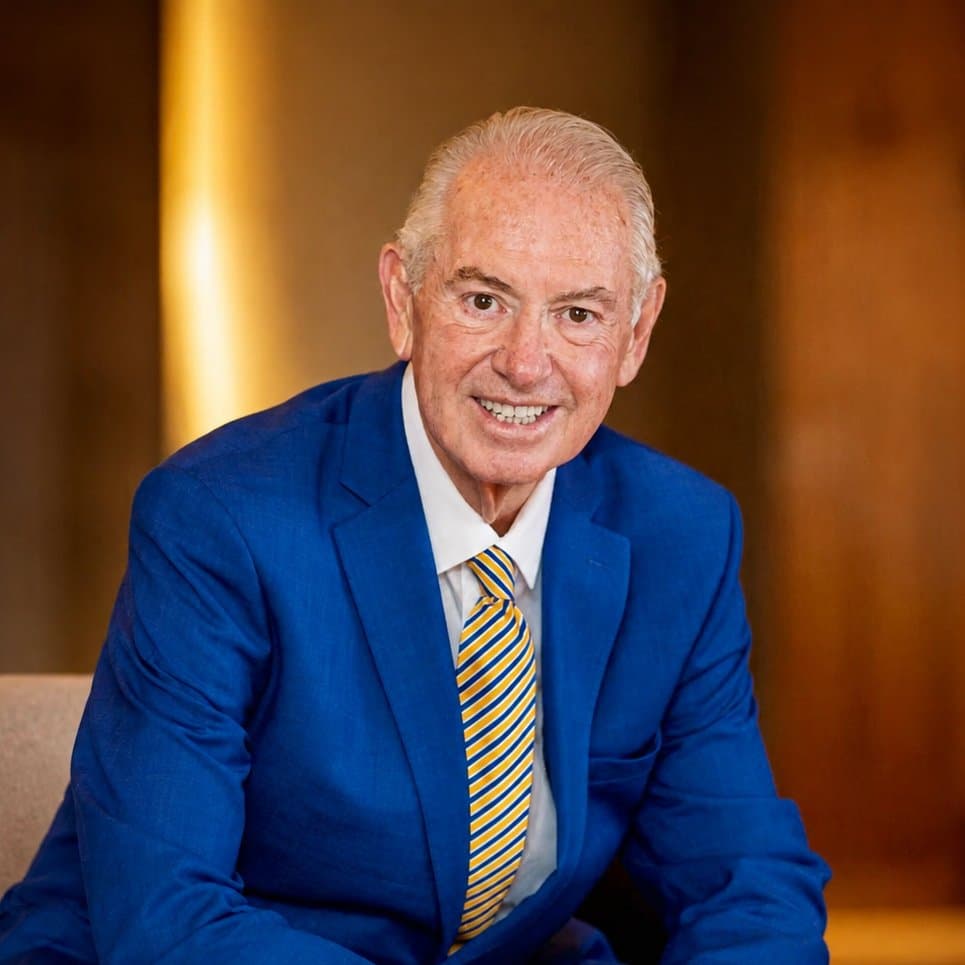
Gary R Bennett
Chairman and Non Executive Director · CreditAccess Life Insurance Limited
Guanajuato, Mexico
Insurance has spent many decades becoming exceptionally good at pricing populations. Risk pools made protection affordable, transferred uncertainty across large groups and allowed institutions to honour commitments over long periods. Health data, behavioural signals and new underwriting tools now create a more ambitious possibility: understanding the person within the pool closely enough to make insurance relevant earlier and across more of life.
The opportunity is substantial. It also gives insurers greater influence over how individuals are assessed, priced and served.
Gary R Bennett’s career spans more than twelve markets and a wide range of operating structures, including listed companies, private equity-backed businesses, joint ventures, direct subsidiaries, regional organisations and advisory boards. Through New York Life, Max New York Life and Seguros Monterrey, he has led expansion, turnaround, business improvement, multinational exits and leadership succession.
Many of the executives he developed later assumed major leadership responsibilities themselves. His current work with Kaleido Life and CreditAccess Life now places him close to a question that could influence the industry’s next model: can insurance recognise an individual’s future economic value with greater accuracy and use that insight to expand the role financial protection plays during a person’s lifetime?
A Question Carried for Twenty-Five Years
The idea began during a drive from Incheon airport into Seoul more than two decades ago. Gary was travelling with a credit-card executive who raised a deceptively simple question. Lending institutions already assessed an individual’s credibility and capacity to repay. Why could insurance underwriting not draw on a similarly detailed understanding?
If we can make an assessment on the credibility of an individual and their ability to repay a loan, then why can’t we use that factor in insurance underwriting as well?
The question stayed with him because it exposed a gap between the information available to financial institutions and the way insurance traditionally evaluates value.
Actuarial pools remain essential to the industry. They convert uncertainty into a price that can be managed across large populations. Their limitation appears when people within the same category carry very different health behaviours, financial prospects and lifetime trajectories.
Gary uses his own wearable data as an example. Years of exercise and disciplined health routines have produced indicators that place his biological profile below his chronological age. A conventional age-based category may overlook that difference. An individual assessment could recognise how behaviour has changed his risk.
The commercial implication reaches far beyond a lower premium for a healthier customer.
The Person Inside the Pool
Kaleido Life’s Human Lifetime Economic Value (HLEV) framework explores whether an individual’s health, behaviour, education and future earning capacity can support a broader assessment of financial value.
A younger customer may hold limited assets today while possessing strong earning potential, disciplined habits and a long economic future. Conventional assessments often struggle to capture that potential. A more complete view could make insurance and financial liquidity relevant during education, home ownership, mobility or enterprise formation.
Gary sees an opportunity to expand the market by serving people at stages where existing products carry limited immediate value. Life insurance has traditionally become most visible through protection for dependants and the eventual payment of a claim. HLEV asks whether part of that value can become useful earlier, while the policyholder is building a life, career or business.
The idea invites the industry to consider a person’s developing economic capacity alongside present income and accumulated wealth.
It also changes the strategic question. Competition has long focused on winning customers who already understand the category. Individual lifetime value could create new demand among people whose future potential remains poorly represented by current models.
Gary’s interest is grounded in operating experience. He has spent decades watching markets grow through distribution, product design and rising incomes. He now sees personalisation as another source of expansion, provided institutions develop the operating depth and governance required to carry it.
A New Model Still Needs an Institution Behind It
Max New York Life offers a useful example of what happens when a promising market opportunity moves into large-scale execution.
Gary had travelled to India thirty or forty times during the 1990s, developed relationships across the market and engaged with regulators before accepting the role of Managing Director and CEO. During his tenure, the company expanded from 39 branches to 400 across 250 cities. Gross written premium grew from approximately $80 million to more than $500 million, supported by around 50,000 agents and distribution partners.
The achievement involved far more than opening branches. Managers across the network needed the judgment to translate strategy into field decisions. Training had to improve productivity. Incentives had to support customer retention and sound product economics. Regulatory confidence and customer trust had to grow with the business.
Gary describes the challenge through cricket. The organisation had to bat, bowl and field at the same time.
Personalised insurance will place equally demanding expectations on execution. Distributors will need to explain how individual information affects the product. Underwriters will require clear standards for interpreting new signals. Customer-service teams will need to answer questions about pricing and eligibility. Boards and regulators will require confidence in how decisions are made and reviewed.
Technology can make individual assessment possible. Institutional capability determines whether customers experience it as useful, understandable and credible.
Scale also creates distance. Senior leaders move further away from customer conversations and local operating signals. Reports compress variation into averages. Weakness may first appear through retention, service quality or agent productivity in individual markets while headline growth remains strong.
Gary’s India experience offers a practical warning for the industry’s next model: innovation acquires value when the institution carrying it can make sound decisions consistently across the network.
Experience Has to Remain Open
Global experience gives leaders valuable pattern recognition. Repeated success can also strengthen confidence in methods created under very different conditions.
Gary’s work with Colonial Mutual Group and CMG Life Asia took him through licensing, partnerships and market development across India, China, Vietnam and Thailand. In Hong Kong, disciplined agency development, stronger training and product expansion helped move a business from eighth to third in the market within approximately 36 months.
Japan forced a major recalibration. Low interest rates, product guarantees and local operating conditions challenged assumptions that had served him elsewhere.
A lot of the assumptions I had made about how you structure, build and support a business were challenged dramatically in Japan. I had to course-correct. I had to change.
The experience matters to the personalisation debate because attitudes towards health data, consent, financial protection and institutional trust vary sharply across markets.
A model developed in one country may encounter very different customer expectations elsewhere. Local regulation may place tighter limits on data use. Distribution channels may struggle to explain complex underwriting decisions. Cultural attitudes may influence whether customers view personalisation as recognition, surveillance or exclusion.
Gary’s career taught him to preserve the core standards of the business while allowing operating methods to change. Customer responsibility and capital discipline remain central. Distribution, communication and leadership practices have to reflect the market in front of the organisation.
Japan also showed him how seniority can weaken the flow of corrective information. Teams learn which arguments receive support. Regional summaries remove local detail. People become more cautious when challenging a method associated with the leader’s previous success.
Insurance’s next model will require leaders who can carry experience into new markets while allowing those markets to reshape the model.
The Economics Have to Hold
Gary’s commercial discipline is captured in one sentence: “I will never sell a dollar for ninety cents.”
A business can generate rapid growth through aggressive incentives, weak pricing or acquisition that produces limited long-term value. Reported momentum arrives first. The economic consequences become visible after commissions, servicing costs and customer behaviour work through the system.
Personalised underwriting will face the same test. Richer data, new technology and more complex assessment may improve pricing precision. They may also increase acquisition, compliance and servicing costs. Commercial success will depend on whether the model creates sufficient value for customers, distributors, insurers and capital providers.
Gary’s early experience leading a private equity-backed insurer in Australia showed how focused ownership could strengthen a company. The investors achieved an exit at roughly five times their investment. The experience also revealed how strongly an investor’s time horizon shapes management behaviour.
Life-insurance businesses entering large new markets may require ten, eleven or twelve years to develop distribution, product experience and operating depth. Capital seeking a shorter cycle can create pressure around reinvestment, dividend expectations and growth quality.
Joint ventures bring those expectations into the operating structure itself.
A joint venture is no different to a marriage. At the beginning, you need to understand that you have similar principles, similar philosophies and similar long-term beliefs.
Partners may share enthusiasm at launch while carrying different expectations about time, control and return. The differences become visible when growth slows, fresh capital is required or the original plan needs several more years.
Innovation therefore requires capital capable of understanding the duration of the institution. Management carries a corresponding duty to show what the additional time is producing through stronger distribution, clearer economics and better customer outcomes.
Gary’s view of the insurer’s responsibility reaches further:
It is not our money. We have the responsibility to look after the people’s money and provide their insurance policy coverage for the next hundred years.
The statement places personalisation inside a longer obligation. A more precise model has to strengthen the promise the institution makes to the customer. Commercial ambition gains credibility when the economics support that promise over time.
Consent Is Where the Question Becomes Difficult
Individual underwriting becomes powerful because it can see more. That capability changes the relationship between the customer and the institution.
When asked whether insurers should deliberately avoid certain information even when collection becomes technically possible, Gary’s response placed permission at the centre: “Not if you have my permission.”
Permission is an essential starting point. The harder questions begin after it has been given.
A customer may understand that wearable information will influence a premium. Understanding becomes more difficult when the model draws on many variables, produces a complex score or changes eligibility in ways the customer cannot easily interpret.
Power also remains uneven. A healthy customer with extensive data may receive a better price. A customer with unstable income, incomplete digital records or higher health risk may face greater cost or reduced access. Formal consent can exist where practical choice remains limited, especially when protection depends on sharing information.
Here lies the unanswered question behind insurance’s next era.
Can individual data help insurers recognise potential that pooled models overlook, especially among younger customers with limited current assets? Can greater precision widen participation while preserving affordability for people whose profiles appear less attractive? Can customers understand, correct and challenge the information shaping a decision?
Gary’s thesis creates a significant commercial opportunity. It also raises the standard expected from institutions using the data. Customers will need clear explanations, reliable correction processes and meaningful routes of appeal. Boards will need to understand how the model treats different groups. Regulators will need confidence that personalisation expands relevance and protects access.
Insurance has always depended on trust in a future promise. Individual underwriting adds trust in the present decision.
Leadership and Governance Around the Model
A model that changes pricing and access reaches far beyond the underwriting or technology function. Its consequences extend into product strategy, distribution, customer treatment and institutional reputation, placing it directly within executive and board accountability.
Gary’s answer begins with leadership depth. Many of the executives he developed later went on to run businesses and institutions themselves. Their development came through real responsibility, exposure to difficult decisions and the space to establish judgment of their own.
His view of CEO tenure follows the same logic. Gary places the rough upper boundary near seven years, depending on the organisation and mandate. Early years usually involve diagnosis, strategic change and team formation. Later years embed the model. A leader’s contribution can begin declining when earlier solutions continue shaping a business that has already changed.
I’m averaging twelve rather than sixty-three, and I need to have the courage to understand when to walk.
The courage to leave creates room for the next generation to lead. It also reduces the risk that an institution remains dependent on one person’s interpretation of the business.
Boards provide another layer of protection. Gary has little patience for ceremonial directors, a category he describes as “gin and tonic directors”. Serious governance requires knowledge of operating signals and the confidence to challenge before financial results reveal the full problem.
You need to be courageous enough to say what you believe, to back it up with facts and evidence, and not be frightened that you might be the lone voice in the room.
That standard becomes especially important when insurers begin using new forms of individual data. Directors will need enough understanding to question how models classify customers, how exceptions are handled and where commercial incentives could begin shaping access.
Governance will determine whether personalisation remains aligned with the institution’s wider responsibility.
Leadership Lessons for Insurance’s Next Model
Gary’s experience points to several principles for leaders building a more individual form of insurance.
Precision has to create practical value. Better information should improve pricing, access or product relevance. Additional complexity needs a clear benefit for the customer.
Distribution remains part of the product. A personalised model will succeed only when agents, advisers and customer teams can explain how decisions are reached in language people understand.
Capital must understand the development cycle. New underwriting models need time to build data, customer confidence and operating experience. Management must show that each additional year is producing measurable capability.
Permission requires clarity. Customer consent gains meaning when people understand what they are sharing, how the information will affect them and where they can challenge an error.
Markets will interpret personalisation differently. Leaders should carry strong principles across borders and rebuild communication, distribution and governance around local expectations.
Boards need direct visibility into customer consequences. Model performance should be assessed through affordability, appeals, exclusions and customer outcomes alongside growth and profitability.
Leadership depth is a commercial capability. Institutions handling complex individual decisions need judgment across the organisation. Dependence on one executive or technical team creates operational and governance risk.
The economics must protect the promise. Pricing precision, growth and innovation gain credibility when the institution can honour its commitments throughout the life of the product.
The Question Remains Active
Gary describes the stage after formal executive authority as his “Third Innings”. Through North Star Consulting, CreditAccess Life, Kaleido Life and other advisory commitments, he continues working with businesses across market entry, financial inclusion and new insurance models.
His role has shifted from directing execution to strengthening the judgment of leaders carrying the mandate. The change reflects a leadership philosophy built around developing people capable of carrying significant responsibility themselves.
Gary also protects a daily period for his own health, learning and reflection: “I make an appointment with myself every day. Between five and eight-thirty every single day is my time. No one else is allowed into that time.”
The discipline gives structure to a phase of leadership built around influence, advice and continued contribution.
It also keeps him engaged with the question that began during a car journey into Seoul. The technology has advanced. The available data has expanded. The commercial case has become stronger. Institutional judgment now has to catch up with the ability to understand the individual.
Insurance has always priced the future. Gary is asking whether its next era can create value earlier in a person’s life while preserving access, trust and the collective promise on which the industry was built.
Asked what comes next, he gives the clearest possible answer:
“It’s not done yet.”
Our Suggestions to Read
Discover The Leaders Shaping India's Business Landscape.
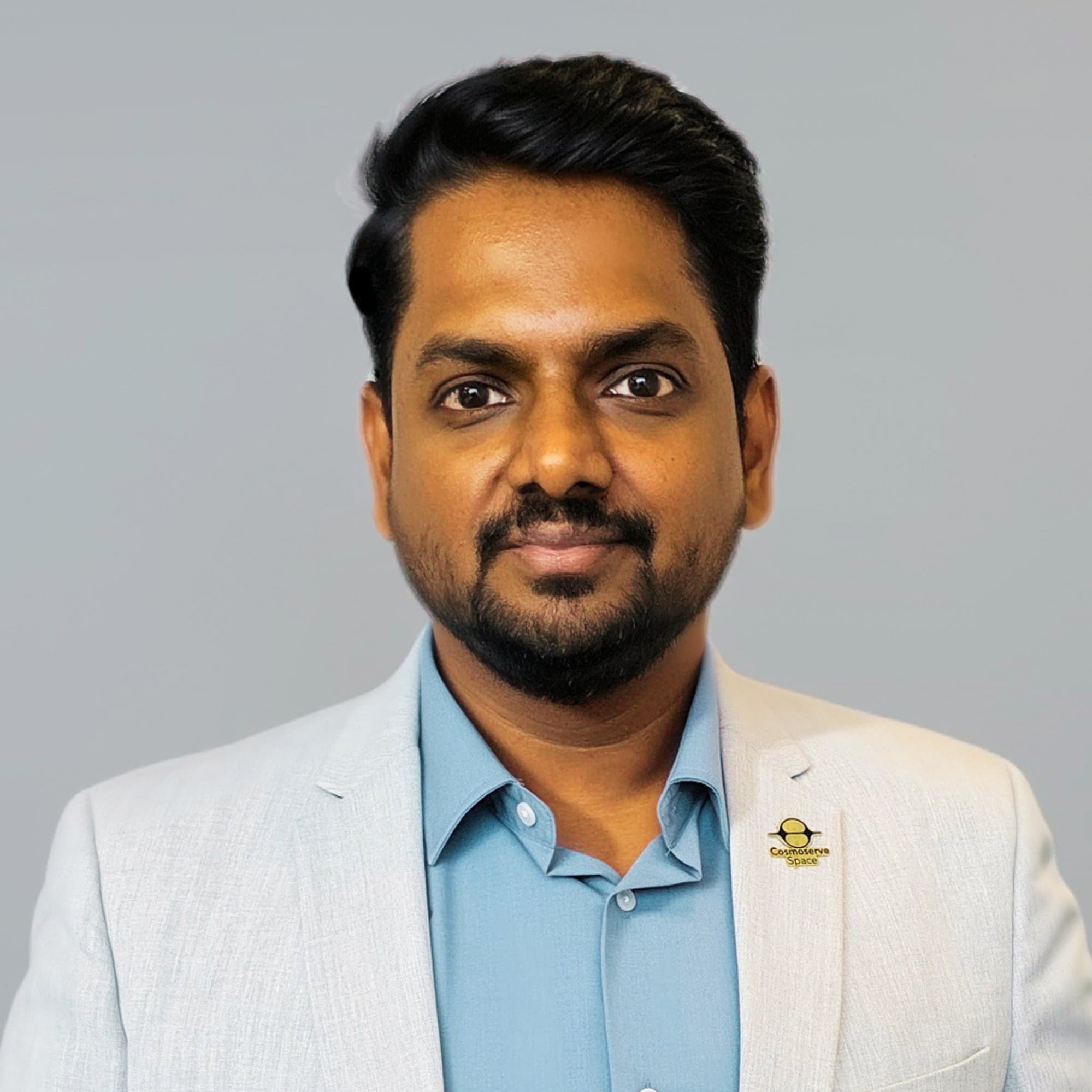
Founders & Innovators
Building the Next Space Economy: Chiranjeevi Phanindra and Cosmoserve's Case for Orbital Maintenance
Chiranjeevi Phanindra, Founder & CEO of Cosmoserve Space, spent 14 years at ISRO working on re-entry and human spaceflight. Today, he is focused on a vital challenge: keeping Earth’s orbit usable.
Read Full Story

Corporate Visionaries
Shashank Sahni on What Success Leaves Out
Shashank Sahni, Google’s Managing Director of Global Ads Solutions, reflects on what customers reveal, what ambitious teams need from their leaders & what the mountains and marathons have taught him about going further.
Read Full Story
Corporate Visionaries
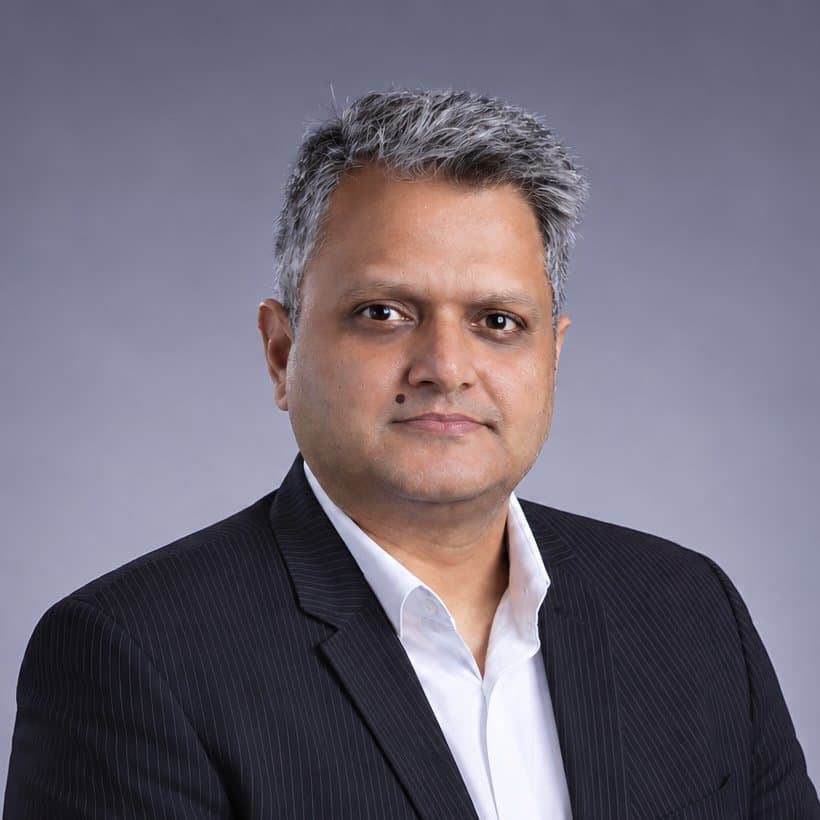
Clinical Multiplication: Divesh Singla on the Healthcare AI Case That Headlines Keep Missing
Divesh Singla, Managing Director, India at Veradigm, brings two decades in healthcare technology to the AI question leaders cannot avoid: how to expand clinical capacity without weakening human judgment.
Read Full Story