Category: Investors & Catalysts
Nikhil Choudhary, Managing Partner at Nirman Ventures, on the harder ground of technology, where physical AI, venture discipline and industrial adoption have to meet the realities of machines, workers, capital and trust.
The Physical Economy Was Never Slow: A Conversation with Nikhil Choudhary
IndiSight Editorial
Sep 22, 2026
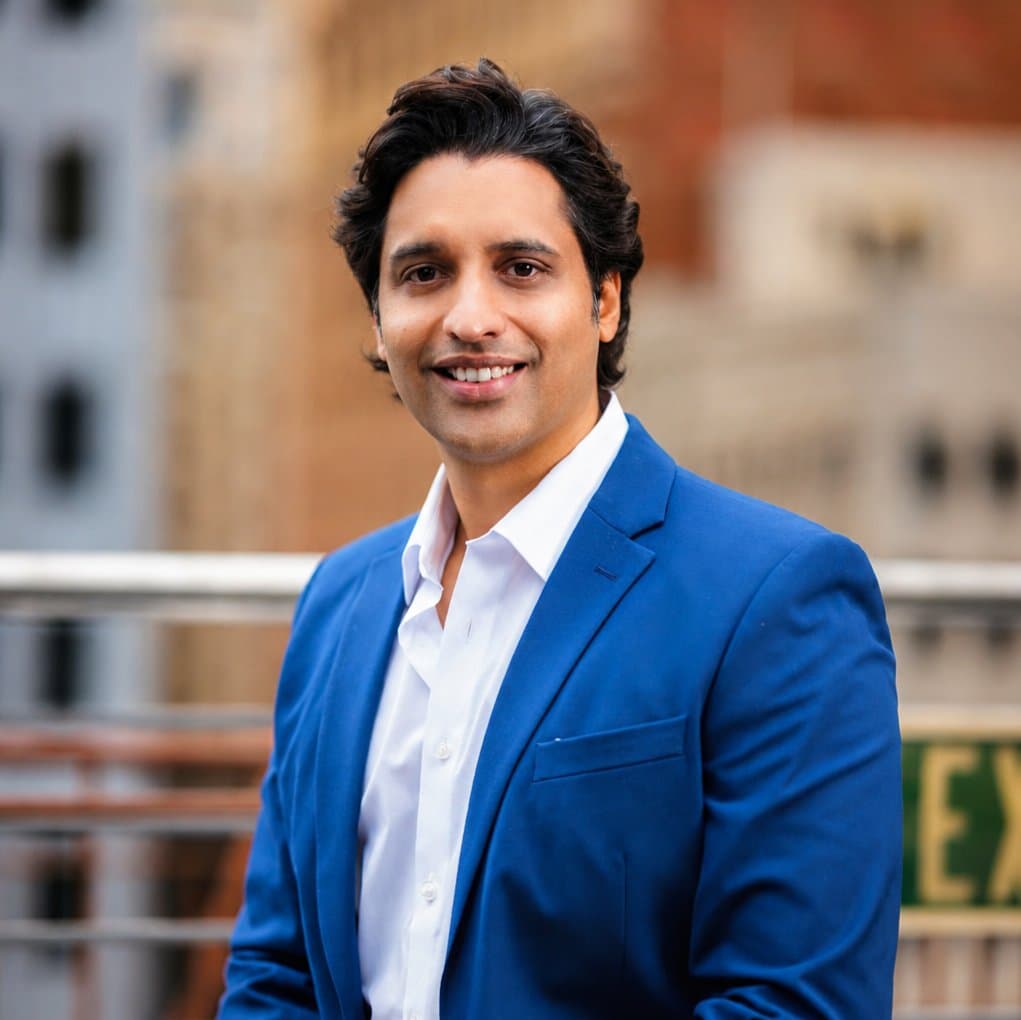
Nikhil Choudhary
Managing Partner · Nirman Ventures
San Francisco Bay Area, USA
For more than a decade, technology investing was shaped by the logic of software. Code could travel quickly, products improved through iteration, and failure often stayed inside a dashboard, workflow or user experience. The physical economy has always worked under a different contract, because construction, manufacturing, logistics, mining and industrial infrastructure operate where machines, workers, safety, margins and deadlines sit inside the same decision.
Nikhil Choudhary understands that contract first as an operator. Before becoming Managing Partner at Nirman Ventures, he built his career across civil engineering, construction and real-asset businesses, moving from India to the United States, working across markets and eventually building Zenith Engineers into a multi-office engineering business.
Industrial caution, in Nikhil’s reading, came from consequence rather than lack of imagination.
“I don’t think the physical economy resisted,” he says.
A failed office tool may frustrate a team, while a failed system on a construction site can delay a project, damage equipment or put someone at risk. Real-world adoption has always needed a higher standard of proof because the cost of being wrong is carried by people, assets and operating commitments.
Labour scarcity is changing the equation. Nikhil points to Turner Construction’s data center pipeline as a signal of the pressure building inside the physical economy. The company is not entirely booked out, but its data center pipeline is exceptionally large, with data centers accounting for roughly 37% of its $44.3 billion project backlog. Demand is available. Delivery capacity is becoming the constraint. The deeper question is how companies find enough people, or make existing teams productive enough, to handle the work already in front of them.
The current moment matters because infrastructure demand, labour shortages, cheaper intelligence, better robotics and industrial modernization are arriving together. Nikhil’s larger insight is about leadership in that environment. Technology becomes serious when it enters places where people, capital, machines and consequences have to move together.
The discipline of building before investing
Nikhil’s first business education came through engineering projects, client delivery, payroll, hiring, deadlines and selling into industries where trust is earned through execution rather than language.
A defining turn came when he left a large corporate environment after realizing that he worked better inside nimble teams, quicker decisions and entrepreneurial responsibility. A contract from Siemens gave him the starting point to build his own company. Zenith Engineers grew from that base into a multi-office engineering business, with US operations and a back-office capability supporting the company.
Operating experience gave him a memory of building before a company becomes clean enough to describe in a pitch deck. He had to win clients, manage people, deliver projects, handle execution risk and understand how traditional industries make buying decisions. When he moved into venture capital, he carried that memory with him.
Nirman Ventures grew from that shift. The fund backs companies across robotics, autonomy, industrial AI, edge computing and semiconductors. The shared thread is a belief that the next technology cycle will reward founders who can take intelligence into difficult operating environments and still make it reliable, usable and economically meaningful.
Intelligence has to become useful in the field
Physical AI has become a popular phrase, and popular phrases often become loose. Nikhil gives it a more exact meaning.
Physical AI means a system that can perceive, reason, adapt and act in an unpredictable physical environment.
Traditional automation performs well when the environment is structured and the sequence is known. Real-world intelligence has to work when the environment is changing, imperfect, crowded or partly unknown. A construction site does not behave like a clean laboratory. A mine changes as work progresses. A warehouse may have structure, but it still has exceptions, congestion, people and movement.
“Automation follows instructions. Physical AI understands a situation.”
Many organizations overestimate technology because they evaluate capability in controlled settings. Nikhil’s lens pushes the question into the field: can the system work when the user is under pressure, when safety matters, when integration is difficult and when the economics have to hold?
Intelligence has to move through a complete stack before it becomes useful in the real world. Mobility decides whether a machine can move through the environment. Edge compute decides whether intelligence can sit close enough to the action. Dexterity decides whether the system can perform work that still depends on touch, precision and adaptation. Data and deployment decide whether learning continues after the first installation.
A company may appear to be building a robot, a chip, a sensor layer or workflow software, but industrial customers judge the combined outcome. The machine has to work in their environment, with their people, under their constraints and within their economics. Good innovation begins by understanding the world it wants to enter.
Adoption is earned through trust
Nikhil’s strongest theme is adoption, because adoption reveals whether technology has crossed from promise into trust.
When intelligence becomes abundant, access to the real world becomes the moat.
As intelligence becomes cheaper and more available, durable value moves toward proprietary data, workflow ownership, deployment capability, hardware integration and real customer access. A system operating inside a warehouse, factory or job site produces learning that outsiders struggle to recreate. Field use creates data, data improves the product, and a better product deepens customer dependence.
Reliability sits at the centre of that loop. In software, a weak answer can be corrected. In a physical system, a weak action can stop a factory, damage equipment or hurt a worker.
“Ninety-nine percent accuracy can still be a terrible product.”
The last percentage point carries a different weight when a machine is operating around people, infrastructure and live industrial processes. For Nikhil, reliability is part of the product itself. A founder who treats reliability as an engineering afterthought has already misunderstood the customer’s world.
Commercial proof has to be read with the same discipline. A pilot may show curiosity, especially when companies have innovation teams, AI budgets and pressure to experiment. Repeat deployment is the stronger signal because it means the customer has found a place for the product inside real work.
“Demo only proves the technology. Repeat deployment proves the business.”
Nikhil watches whether the customer asks for more units, whether the operating team adjusts workflow around the product and whether the product moves from a test into work people depend on. Industrial customers buy outcomes: better margins, faster delivery, less downtime, greater safety and lower dependence on scarce labour.
A few years ago, he expected better robotics technology to accelerate adoption more quickly. Experience has made the adoption problem more visible. Better technology still has to pass through procurement, integration, safety, economics and timing.
“Not every sales problem can be solved by selling harder.”
Persistence matters, but persistent selling can hide a weak understanding of the customer. The product may need to become simpler, the economics may need to become clearer, the integration path may need to change, or the market may need more time. Strong founders keep listening until they understand which problem they are really facing.
The 1-to-100 problem
The sharpest shift in Nikhil’s thinking is the pace of change.
He once expected robotics and physical AI to move through a gradual iteration curve: 1 to 5, 10, 50. His current reading is different. The cycle, in his words, is moving “literally 1 to 100.”
The price curve makes that acceleration easier to understand. Nikhil compares humanoid robotics costs across a short period: a Boston Dynamics humanoid robot was around $250,000 five years ago, while he points to Chinese players such as Unitree bringing humanoid robot pricing down toward $5,000, even if performance questions remain. His conclusion is that innovation is moving from the top and bottom of the market at once, with cost parity against human labour arriving faster than many countries expect.
Industrial buyers are used to absorbing change carefully, while technology curves are moving with software-like intensity. Founders who assume fast improvement will automatically create adoption may misread the market. Industrial leaders who wait for perfect maturity may react too late. Investors have to hold both realities together: the curve is accelerating, and the customer’s world still absorbs change through trust, economics and preparedness.
Technology may become cheaper, smarter and more capable very quickly, but organizations still need workflows, safety systems, procurement logic, financial justification and people readiness before adoption becomes durable.
Venture capital has to unlearn part of software
Software trained investors to admire clean scale. Speed, recurring revenue, gross margins, low distribution friction and capital-light growth became familiar signals of quality.
Physical-economy companies often create value through work that looks messy early on. Hardware integration, field deployment, maintenance, customer-specific learning and operational responsibility may slow the early story, but they can also become the source of defensibility. Robot-as-a-service may eventually create recurring revenue, but machines still have to be manufactured, deployed, maintained and trusted.
Nikhil separates prototype quality from company quality with one practical observation: building 10 impressive machines and operating 10,000 reliable ones require completely different capabilities.
Scale in the physical economy means service depth, process discipline, supplier strength, customer trust, installation quality and the ability to keep performance consistent across many environments. Investors who read these companies only through a software lens may miss where the real moat is forming.
Frameworks that worked in one technology cycle can become blind spots in the next. A serious investor has to understand the operating model beneath the metric, especially when the company is building for industries where the path from prototype to trust is long and unforgiving.
India needs conviction, test beds and patient customers
Nikhil’s reading of India carries optimism and impatience in equal measure.
India has engineering talent. After visiting Bengaluru’s HSR area, he points to more than 6,000 registered startups concentrated there as evidence of founder energy. The gap, in his view, sits around commercialization, venture conviction and serious early customer access. Risk capital for deeptech remains thin, and genuinely aligned deeptech investors are still too few.
Early funding behaviour can push founders toward the wrong proof. When investors ask technical founders for mature revenue evidence too soon, founders often begin optimizing for fundraising signals rather than company-building truth. LOIs, soft commitments and early commercial claims can look useful in a deck, but many of them reveal little about whether the product can survive real customer adoption.
India’s ecosystem needs simpler, more consistent mechanisms for early-stage funding and stronger discipline around weak or misleading market behaviour. Nikhil points to the iSAFE mechanism as useful, while also noting that early-stage instruments in India still need more standardisation when compared with the simplicity of the SAFE note in the US ecosystem.
Customer access may be the harder gap. Deeptech companies need factories, job sites, warehouses and industrial systems where they can test, fail, improve and deploy. Without those environments, founders remain trapped between laboratory promise and commercial credibility.
For India, the challenge is institutional. Talent alone will not create deeptech leadership. Patient capital, real test beds, disciplined early-stage behaviour and customers willing to participate in the building process will decide whether promising technology becomes globally serious industry.
Strong founders hold direction
Nikhil’s view of founders is anchored in direction.
“Strong founders change the map without changing the destination.”
Good founders adapt through evidence. They learn from customers, deployments, friction and timing. Weaker founders keep changing direction after every external opinion and eventually lose the problem they originally set out to solve.
Customer obsession becomes the filter. Nikhil is wary of founders who are fascinated by technology but distant from the buyer’s problem. Technical ambition matters, especially in deeptech, but a product still has to reach the customer’s hand and improve the customer’s economics.
His question to AI founders is especially useful: what happens to the company if the underlying model becomes ten times better? If the business becomes easier to replicate, the moat is weak. If better models make the company stronger because it owns proprietary data, workflow integration and customer access, the company becomes more interesting.
Conviction is not stubbornness, and adaptability is not drift. Strong founders keep the destination clear while allowing evidence to change the route. They listen without becoming scattered, adjust without losing the original problem, and remain close enough to customers to know which signals deserve attention.
Capital should accelerate evidence
Capital follows the same discipline. Money should help a company remove the next meaningful risk, rather than create the appearance of progress before the evidence is real.
“Capital is to accelerate something that actually works.”
Raising too much too early can distort judgment. Founders may hire too quickly, spend too freely and build the appearance of scale before the company has earned it. Nikhil prefers founders who understand the relationship between capital and milestones: the next technical proof, the next customer signal, the next adoption risk.
A disciplined early raise can later become leverage. Stronger evidence, lower dilution and clearer milestones give founders more choice when serious capital arrives.
Capital is most powerful when it serves learning, proof and execution. Used carelessly, it can create a company that looks larger while becoming less honest about what it has actually proven.
Modernization has a human obligation
Technologies that solve labour shortages can also change the lives of workers whose roles are touched by automation.
When technologists lose their jobs, they already have a chunky 401(k), savings, assets they can sell. When blue-collar workers lose their jobs, that is paycheck-to-paycheck survival.
Nikhil’s concern is preparation. Countries that block technology will weaken themselves, while countries that adopt it without preparing workers will create a different kind of failure.
The entry-level pipeline worries him as well. Companies increasingly want people with experience because AI can handle more junior work. Yet mid-level workers are created through entry-level experience. Nikhil asks the question many organizations avoid: where do mid-level workers come from if there is no entry level?
His historical reference point is Vikram Sarabhai. In Nikhil’s telling, Sarabhai pushed industrial modernization while also thinking about gains for workers and unions. Real industrial progress cannot be measured only through productivity. It has to include preparation, transition and dignity for people whose work will change.
The deeper question is how a society builds the next industrial base without treating workers as collateral damage. Productivity matters, but modernization becomes stronger when people, institutions and entry pathways move with it.
The society around the machine
Nikhil’s thinking returns to one central idea: the next technology cycle will be shaped by companies that can make intelligence work inside the physical economy, where machines, workers, customers, liability, timing and trust all sit together.
For founders, the lesson is to build with customer reality rather than technological excitement alone. For investors, the lesson is to value deployment, reliability and operational depth with the seriousness once reserved for software metrics. For countries, the lesson is to recognize that AI talent is only one part of industrial advantage.
A serious industrial revolution has to answer through productivity, preparation, education, transition and fairness. Physical AI may help the world build more with fewer constraints, but the societies that benefit most will be the ones that plan for the workers, institutions and operating systems that have to move with it.
Leadership Principles
Respect the operating ground. The best technology begins by understanding the risk, rhythm and economics of the world it wants to enter.
Earn adoption through reliability. Customers change behaviour when systems work under pressure; impressive demos only open the door.
Let speed meet absorption. Breakthroughs matter when organizations can absorb them through people, process, safety and trust.
Change the map, keep the destination. Strong founders respond to evidence without losing the problem they were built to solve.
Use capital to prove, not perform. Money should remove the next real risk, sharpen evidence and extend founder control.
Build moats in the field. Real deployment creates data, workflow understanding and customer trust that no model alone can replicate.
Treat customers as co-builders. Deeptech matures faster when serious customers open real environments for testing, failure and learning.
Design for trust before scale. In the physical economy, scale follows reliability, service depth and repeatable execution.
Carry workers through modernization. Progress becomes stronger when retraining, entry pathways and dignity move with technology.
Build durable industrial capability. The real opportunity is to turn engineering talent, patient capital and customer access into institutions that last.
Our Suggestions to Read
Discover The Leaders Shaping India's Business Landscape.

Founders & Innovators
Building the Next Space Economy: Chiranjeevi Phanindra and Cosmoserve's Case for Orbital Maintenance
Chiranjeevi Phanindra, Founder & CEO of Cosmoserve Space, spent 14 years at ISRO working on re-entry and human spaceflight. Today, he is focused on a vital challenge: keeping Earth’s orbit usable.
Read Full Story
Corporate Visionaries
Shashank Sahni on What Success Leaves Out
Shashank Sahni, Google’s Managing Director of Global Ads Solutions, reflects on what customers reveal, what ambitious teams need from their leaders & what the mountains and marathons have taught him about going further.
Read Full Story
Corporate Visionaries
Clinical Multiplication: Divesh Singla on the Healthcare AI Case That Headlines Keep Missing
Divesh Singla, Managing Director, India at Veradigm, brings two decades in healthcare technology to the AI question leaders cannot avoid: how to expand clinical capacity without weakening human judgment.
Read Full Story