Category: Investors & Catalysts
Rasika Prashant, CEO of NSRCEL at IIM Bangalore and Co-founder of Soulfull (later aquired by Tata Consumer Products) on consumer trust, category creation, Indian brands, and the founder discipline required after belief.
From Millet to Method: Rasika Prashant on Building What Consumers Return To
IndiSight Editorial
Oct 12, 2026

Rasika Prashant
Chief Executive Officer · NSRCEL - IIM Bangalore
Bengaluru, India
India’s entrepreneurial ecosystem has spent the past decade expanding ambition. More founders are building from sharper consumer insights, capital is more open to differentiated ideas, and younger brands are entering categories once shaped largely by incumbents. The harder test now is what happens after the first story has been told: whether a company can earn trust, repeat behaviour, operating discipline, and patience once early attention begins to settle.
Consumer brands face that test in very ordinary places. A product has to work on the shelf, in the kitchen, in the child’s tiffin, in the parent’s mind, and in the family’s routine. Purpose may create curiosity, but taste, price, access, format, and trust decide whether it becomes part of daily life.
Rasika Prashant brings to this shift the perspective of someone who has built through it.
As Co-founder of Soulfull, she helped build one of India’s early branded consumer food plays around millets by converting a familiar Indian ingredient into modern breakfast, snack, rusk, oats, muesli, and packaged-food formats. Soulfull later became part of Tata Consumer Products, where Rasika continued to work across marketing, category, product development, digital interventions, and D2C as the brand entered a larger institutional system.
Her role as CEO of NSRCEL at IIM Bangalore opens a different chapter. The mandate is still new, but the opportunity is significant: to bring founder-side realism into an ecosystem that supports startups across sectors and stages.
Rasika puts the challenge plainly: purpose without a sustainable plan remains a slogan, not a business. A founder may be convinced before the market is. Serious businesses are built in the distance between belief and proof.
The Reliability Test
Rasika’s reading of a founder begins with one simple question: is there a method behind the energy?
She has seen businesses from several vantage points: advertising, rural marketing, retail, distribution, agriculture, consumer brands, and now incubation. Early momentum can look impressive from a distance. Founders are busy, teams are stretched, the market is moving, and every week brings another problem to solve. Rasika looks beneath that activity for something more durable: whether the founder can explain why something is being done, what it is expected to change, and how it connects to the larger direction of the business.
Whenever I see structure, whenever I see a method to the madness, whenever I see logic or a playbook as to why something is done and what it’s going to result in, my instinct usually says that there is something definitely viable which will come out of that.
For her, reliability shows up before the company looks fully formed. The consumer problem is real. The proposition is easy to understand. The difference is strong enough to own. The business can repeat what it is doing without losing its shape.
Rasika’s career trained her to notice those signals. Advertising sharpened her sense of communication. Rural marketing brought her closer to behaviour outside standard urban assumptions. Distribution and retail showed where the consumer finally decides. Agriculture kept the ingredient story connected to the ground. Soulfull required all of those lenses at once.
Millets already had nutritional and cultural strength. Adoption was the harder question. Could an ingredient associated with older food habits enter a household shaped by convenience, aspiration, price sensitivity, and choice?
The answer lay in format. Breakfast cereals, snacks, rusk, oats, muesli, and packaged products made the ingredient easier to understand and easier to try. Soulfull placed the strength of an older food culture inside categories the modern household already recognised.
Making Tradition Useful
India gives consumer brands a deep base of memory. Food, rituals, family systems, and ingredients carry meaning across regions and generations. Rasika sees strength in that, especially at a time when consumers are more exposed to global choices and more willing to look again at their own roots.
She speaks about India’s appetite for rituals and traditions, and gives real weight to family systems. In her words, they can work “better than any influencer.”
For consumer brands, the observation is practical. Trust in India often moves through households before it moves through formal marketing. A campaign may create discovery, but adoption is shaped by parents, children, relatives, routines, recommendations, and repeated use.
Heritage helps when people can use it. A product may be rooted in culture and still feel distant if the consumer cannot place it inside a current routine. Tradition has to meet the occasion, the format, and the expectation of convenience.
Soulfull’s work around millets followed that logic. Rasika connects millets to India’s shift from hunger satisfaction to nutrition satisfaction and sees public campaigns, digital adoption, and youth engagement as important forces in strengthening the nutrition conversation. Public momentum can make an idea visible. Household adoption still depends on format, experience, access, and trust.
A global reader can recognise the pattern. Every market has legacy assets: ingredients, practices, crafts, knowledge systems, habits, and inherited trust. Few become modern businesses. The difference lies in translation. Rasika treats tradition as raw material that still has to pass the consumer’s daily test.
Health Is Not Enough
Rasika is direct about the better-for-you category.
Better-for-you brands don’t think health is the selling point. Better-for-you brands always think that consumer insight and pain point is the selling point, along with taste.
A narrow group of consumers may buy a product because health is the primary proposition. The larger Indian household behaves differently. It may appreciate health, but it will not give up taste, access, format, and price for it.
Soulfull had to make millets more than a nutritional argument. The products had to solve real consumption moments. A better ingredient had to become a better eating experience. The brand had to meet consumers where the category already existed, rather than expect them to change too much too quickly.
Founders often overestimate agreement. A consumer can admire a mission and still choose the familiar alternative. A parent can value health and still protect pleasure, habit, and convenience. Scale begins when the product reduces that distance.
Rasika’s view is closer to the consumer than to the founder’s own conviction. Better-for-you brands work best when they make the better choice feel natural.
The First Truth
Category creators usually know more than the consumer needs to hear at the beginning.
A founder may want to speak about science, sourcing, farmers, climate, nutrition, national relevance, and personal motivation in the same conversation. Rasika’s approach is more disciplined: lead with what the consumer can understand and what gives the brand its difference.
A brand has to choose the truth that opens the door.
Deeper layers can come later. Once the first message makes the product relevant, the brand can add more meaning. Founders with strong conviction often want to explain everything at once. The danger is that the explanation satisfies the founder before it helps the consumer decide.
The discipline is editorial as much as strategic. Founders have to decide what to withhold, not only what to say. A market rarely rewards the most complete story first. It rewards the story that makes the next action easier.
Visibility, Memory, and Brand Patience
Rasika treats visibility as part of brand-building. She separates it from short-term consumer promotions. Promotions can move volume for a period. Visibility helps a brand become known, remembered, and trusted.
Brands are launched on shelves but they are created outside in the hearts of your consumers.
The shelf still matters. The pack has to explain enough. The first trial has to work. The second purchase has to feel natural. Beyond those immediate touchpoints, the brand needs a place in the consumer’s mind.
Young brands often struggle with patience here. Founders live with the brand every day, so the message can start feeling old inside the company much before it has settled with consumers outside. Consumers meet a brand occasionally, imperfectly, and often in crowded moments. Brand memory is built slowly. The same promise has to be seen, understood, and experienced enough times before it begins to feel familiar.
Brand-building, in Rasika’s view, is the repeated earning of recognition until the consumer can place the brand without effort.
Indian Brands and Global Ambition
Rasika’s experience with Soulfull, which entered mainstream retail in the US and UK, gives her a practical view of Indian brands going global.
The opportunity is real, but the questions are specific. India already gives founders a large domestic market. The diaspora may offer a bridge in some categories. Overseas markets bring higher marketing costs, supply-chain demands, shelf-life issues, and sharper category choices.
A founder looking at global shelves has to know whether the category is relevant in that market, whether the market size justifies the cost, whether the product can travel well, whether the supply chain can hold, and whether the brand has enough resources to build demand outside India.
Indian origin can help when the category gives it meaning. It cannot carry the expansion alone. A brand has to know whether it is exporting a product, a cultural signal, a functional advantage, or a cost structure. Each path asks for different capabilities.
Global ambition, in Rasika’s reading, is strongest when it is unsentimental. A founder has to respect the market enough to understand where the brand has a right to win.
Letting the Brand Grow
Soulfull’s acquisition by Tata Consumer Products took Rasika into another stage of brand-building.
From the outside, acquisition can look like a clean success marker. For a founder, it asks for a different kind of maturity. The brand remains emotionally linked to the founder, but the operating context changes. More people enter the system. More expertise becomes available. Scale starts to depend on capacities the founding team may not carry alone.
Rasika speaks about the founder’s need to “let the baby grow.”
The idea is simple and difficult. A founder may agree with the logic of scale and still feel the difficulty of loosening direct control. Speed, authorship, decision rights, and culture can become sensitive when a brand moves into a larger system.
Rasika’s framing is valuable because it refuses to romanticise control. Procurement, distribution, subject-matter expertise, systems, credibility, and talent can all help a brand enter its next phase. The founder’s role becomes less about guarding every decision and more about helping the brand benefit from a wider platform.
In that transition sits one of the least discussed tests of founder maturity. Many entrepreneurs want scale but remain attached to the operating intimacy of the early company. The institution asks for trust in other people’s expertise. The founder has to decide whether the brand is being protected by control or constrained by it.
Founder Risk and Readiness
Rasika’s role at NSRCEL places her close to founders at different stages of readiness. The credibility she brings to that role comes largely from having lived founder risk herself.
She speaks about entrepreneurs with respect because she understands the weight of the decision. Giving up salary, carrying responsibility for others, facing uncertainty, and living with pressure at night are part of the founder’s reality. Outside commentary often misses the personal cost of that choice.
Rasika describes a founder’s life as different every day. Uncertainty becomes manageable when it is accepted as part of the role. The founder has to remember that she is in control of the enterprise and can buy time by choosing the right battles.
The moment you tell yourself that you can buy yourself some time, you don’t have to fight every battle on the same day.
Founder pressure requires sequencing. Every problem cannot become a crisis. Good judgement lies in knowing which battle deserves today’s energy and which one can wait.
Her mandate at NSRCEL gives her an opportunity to bring that founder-side realism into institutional support. A serious incubator has to understand what the founder already carries, whether belief, product, moat, MVP, prototype, founder presence, or early traction. The next step is to identify the gaps and curate a path that can prepare the founder for market.
Encouragement has value, but serious founder support has to go deeper. A founder who is properly prepared has a better chance of surviving what comes next. The opportunity for institutions like NSRCEL is to give belief enough structure to meet the market.
India’s Founder-Building Challenge
Rasika sees entrepreneurship as a choice of ownership and risk.
For her, the founder chooses equity, uncertainty, responsibility, and the possibility of larger impact. The professional route offers salary, structure, and defined contribution. The founder’s route carries more pressure and more upside, with fewer guarantees.
India’s founder ecosystem has become larger, more formal, and more widely discussed. More founders now have access to digital tools, capital conversations, incubation platforms, and a public language around entrepreneurship. Ambition has widened, and the hard work of building has become more visible.
Rasika resists simple answers on ecosystem development because founder needs change by stage, category, market, product, and experience. Founder education, patient capital, market access, governance discipline, and mentorship all matter. She calls it an “and function.”
The next frontier for India’s startup ecosystem may be better diagnosis. Founders need people and institutions that can see the difference between energy and readiness, between traction and repeatability, between a strong story and a business that can hold pressure.
Rasika’s value in that ecosystem will depend on how well she can translate lived judgement into institutional capacity. The mandate is new. The need is clear.
Leadership Lessons From Rasika Prashant’s Work
Purpose becomes credible only when the business can carry it. A founder may begin with a strong mission, but the product, price, channel, repeat behaviour, and consumer trust decide whether the mission can travel.
Scale rewards founders who have already built a method. Rasika’s “method to the madness” is about knowing whether the founder is building with logic or only moving with energy.
Heritage has value when it becomes usable. Older ingredients, rituals, and cultural memories create interest, but they become commercially meaningful only when people can place them inside current routines.
Health cannot carry a mainstream consumer brand alone. Better-for-you products need taste, access, format, and a real consumer pain point if they want to move beyond a narrow health-first audience.
Category creators need restraint. Founders may know many reasons why a product matters, but consumers usually need one clear reason to begin.
Brand memory takes time. A young company may get tired of its own message long before the consumer has truly absorbed it, so leaders have to hold the promise steady across product experience, communication, and availability.
Global ambition needs category logic. Indian origin can help when the product has relevance in another market, but supply chain, shelf life, marketing cost, and consumer need decide whether the move can hold.
Acquisition changes the founder’s job. The brand may remain emotionally connected to its creator, but its next phase often needs systems, expertise, and capacity beyond the founding team.
Founder support has to move beyond encouragement. Incubators and mentors add the most value when they diagnose what the founder already carries, identify the gaps, and prepare the business for market pressure.
Uncertainty is part of the founder’s work. The stronger founder learns to choose which battle deserves today’s energy and which one can wait.
The Work Ahead
Rasika is careful with the word impact. She does not claim to have fully defined it. She describes it through everyday acts: helping an entrepreneur with a query, passing on a contact, connecting someone to a relevant agency, solving a problem where she can.
Institution-building in entrepreneurship rarely begins with grand declarations. It begins with repeated, useful interventions that improve the odds for founders before the market tests them.
Across Soulfull and now NSRCEL, Rasika’s lens comes back to one question: whether belief has enough structure to survive contact with the market. The next stage of Indian entrepreneurship will depend less on the force of founder stories and more on the systems built around them: products that earn repeat behaviour, brands that enter memory, institutions that absorb scale, and ecosystems that turn belief into readiness.
The stronger companies will come from founders who can hold both sides at once: the courage to begin with purpose and the discipline to build a plan serious enough for the market.
Our Suggestions to Read
Discover The Leaders Shaping India's Business Landscape.
Founders & Innovators
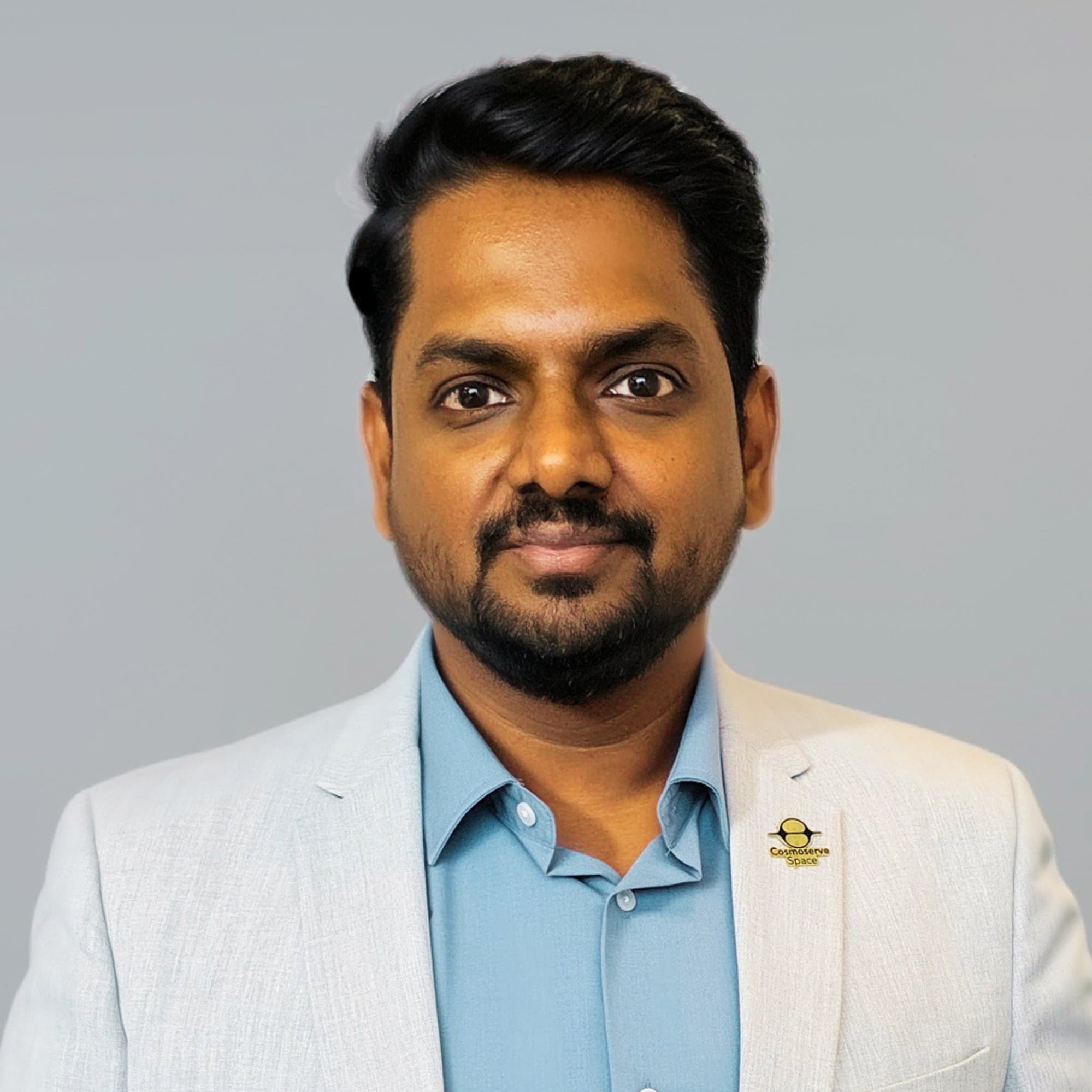
Building the Next Space Economy: Chiranjeevi Phanindra and Cosmoserve's Case for Orbital Maintenance
Chiranjeevi Phanindra, Founder & CEO of Cosmoserve Space, spent 14 years at ISRO working on re-entry and human spaceflight. Today, he is focused on a vital challenge: keeping Earth’s orbit usable.
Read Full Story

Corporate Visionaries
Shashank Sahni on What Success Leaves Out
Shashank Sahni, Google’s Managing Director of Global Ads Solutions, reflects on what customers reveal, what ambitious teams need from their leaders & what the mountains and marathons have taught him about going further.
Read Full Story

Corporate Visionaries
Clinical Multiplication: Divesh Singla on the Healthcare AI Case That Headlines Keep Missing
Divesh Singla, Managing Director, India at Veradigm, brings two decades in healthcare technology to the AI question leaders cannot avoid: how to expand clinical capacity without weakening human judgment.
Read Full Story