Category: Education Leadership
Drawing on decades of leadership in international schools and education, Anu Monga reflects on what institutions must continue to create in a world where knowledge is increasingly accessible and shaped by technology.
The Human Advantage: Anu Monga on What Schools Must Still Create
IndiSight Editorial
Oct 15, 2026
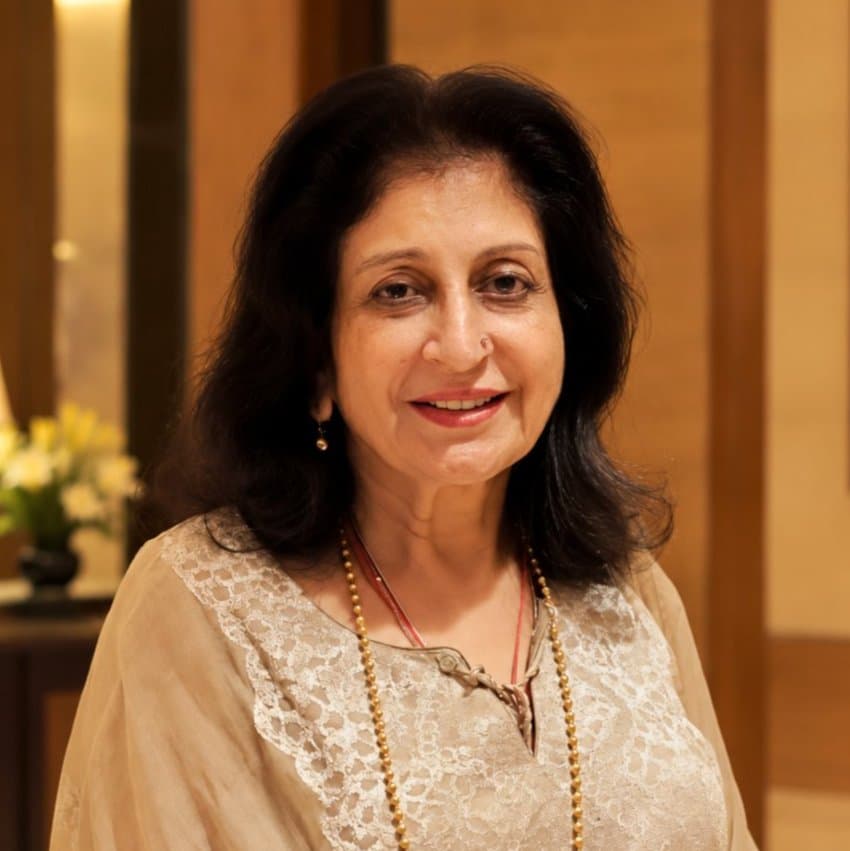
Anu Monga
International Education Leader
Bengaluru, India
Education has changed significantly over the years.
There was a time when access itself was a privilege. Good teachers were harder to find, information was not always readily available, and international exposure, university guidance and wider learning opportunities often depended on the school a child attended.
That scarcity is changing. High-quality content can now travel across borders instantly. University information is widely available. Artificial intelligence can explain concepts, generate practice, translate material and provide feedback within seconds.
Access will still matter. But access alone cannot be the measure of a school.
The more important question is becoming: what did the institution add to the child?
Did it deepen curiosity? Build confidence? Strengthen judgment? Help a young person understand people who think differently from them? Give them the ability to deal with uncertainty and keep learning when there is no easy answer?
For Anu Monga, these questions have been part of a much longer journey through education. Her experience as a school leader, institution builder and voice in international education has repeatedly brought her back to the things that cannot simply be delivered through technology: the quality of adult judgment, the depth of teachers, the culture of a school and the ability to see a child beyond conventional measures of achievement.
Seeing the Child Before the Category
Some of Anu's strongest beliefs about education can be traced back to her own childhood.
When she was eight, a teacher struck her left hand because she was writing with it and asked her to use her right hand instead. The experience stayed with her because, in that moment, difference was met with correction rather than understanding.
Years later, her work in psychology, philosophy, child development and learning needs gave her a professional language for something she had encountered much earlier: children cannot always be understood through the systems created to measure them.
She remembers one child with an unusual artistic imagination who painted dinosaurs as princesses. Anu entered the work into a competition, where it won.
The talent had always been there. Someone simply had to notice it.
Always remember that every child listens to a different drama.
It is an idea that says a great deal about how she approaches education. Every child may sit in the same classroom, listen to the same lesson and follow the same timetable, but each experiences that moment differently. Confidence, family circumstances, emotional history, language, temperament and imagination all shape how a child learns.
One child may need more challenge. Another may need reassurance. Someone else may need a different explanation or specialist support.
The responsibility of a good school is not to make every child fit the same system. It is to build adults who are capable of understanding those differences and responding to them intelligently.
Building the System Around the Child
Anu's seventeen years at Bangalore International School gave her a much wider operating arena in which to test these ideas. It meant bringing educational philosophy into contact with parent expectations, teacher readiness, existing habits and the everyday pressures of running an institution.
That is where leadership becomes complicated.
It is easy to talk about what a school should believe. It is much harder to make those beliefs part of everyday practice.
Teachers need professional confidence. Parents need to trust the institution. Leaders need enough authority to make decisions, but also enough humility to listen when teachers, students or families see something they may have missed.
Each has a different role.
Teachers carry the closest knowledge of the child. Parents bring context and trust. Leaders create the conditions in which good judgment can survive pressure.
When those roles work together, educational philosophy has a much better chance of becoming part of the culture rather than remaining something written in a handbook.
Being Heart-Led Does Not Mean Being Soft
Anu describes herself as a heart-led school leader.
For her, however, being heart-led is not about avoiding difficult conversations or lowering expectations. It is about how leadership behaves when things become difficult.
Care shows up through consistency, fairness and attention. It means being willing to have honest conversations, hold standards and treat people with dignity regardless of their position or influence.
Her preference for the phrase “walk the talk” captures this well.
Students watch how adults exercise authority. Teachers notice what leadership protects when pressure rises. Staff notice whether fairness remains consistent when circumstances become complicated.
Those observations become part of the education itself.
A child learns something about authority by watching adults use it. A teacher learns something about culture by seeing how leadership responds to failure. Support staff learn whether dignity is genuinely valued or simply talked about.
For Anu, care and standards have to exist together. Too much control can weaken ownership. Too much accommodation can allow expectations to slip. The harder task is to build enough trust for honest conversations while still making expectations matter.
The Work Schools Do Not Always See
Anu is particularly thoughtful about the way schools value teachers.
Senior-school teaching often receives greater recognition because it is closely associated with board results, advanced subjects and university outcomes. Early-years educators, by contrast, work much further upstream, where the effects of their work may only become visible years later.
A young child is learning much more than literacy and numeracy. They are developing confidence, attention, curiosity, emotional regulation and a relationship with learning.
The teacher has to read behaviour that the child may not yet have the language to explain.
Is the child quiet because they are confused, anxious or simply temperamentally reserved? Do they need greater challenge or more reassurance? Is a difficult behaviour actually telling the teacher that something else is going on?
These decisions require observation, maturity and experience.
You can’t teach with theory. It has to come with age, maturity, experience.
For Anu, this is part of why the work of a teacher cannot be reduced to subject knowledge alone. Some of the most important contributions a school makes are also the ones that take the longest to show up.
Confidence does not always appear on a report card. Neither does independence, curiosity or the ability to recover after failure.
But these are capabilities that stay with a child.
Looking Beyond the Final Result
This raises another question about how schools measure success.
Academic achievement matters. University admissions matter. Strong examination results matter.
But final attainment does not always tell us how much a school has contributed.
A child who arrives at 90 and leaves at 94 has made progress. So has a child who arrives at 50 and leaves at 70. The second journey may tell us something very different about the work the institution has done.
For Anu, schools need to look more closely at that journey between entry and exit.
What did the child gain?
Perhaps it was confidence. Perhaps independence. Perhaps intellectual discipline or social intelligence. Perhaps the ability to work with people who think differently, or the willingness to keep learning when circumstances become uncertain.
These things are harder to market than a final score.
They may also be more important to the life that follows.
An International Education With a Sense of Place
Anu's work in international education has always carried another important principle: being globally minded should not mean becoming disconnected from one's own culture.
Every international school should be rooted in their country. It should still respect the culture.
For Indian schools, that context matters. Educators work within multilingual classrooms, high family aspirations, competitive examinations, social diversity and students who may eventually move between very different parts of the world.
Indian schools have spent decades adopting international curricula, interpreting accreditation standards and adapting global programmes to local realities.
There is knowledge in that experience.
The opportunity now is not simply to continue importing ideas, but to recognise that Indian educators have developed insights that can travel in the other direction as well.
That requires documentation, research, cases and a willingness to turn experience into ideas that can be shared and improved.
It is part of the larger space in which TAISI operates. Some challenges are simply too large for an individual school to solve alone. Teacher development, inclusion, specialised expertise and professional exchange all benefit from stronger connections across the international-school community.
What AI Changes About Teaching
Artificial intelligence is making this conversation even more relevant.
Information delivery is becoming faster and easier. A student can ask for an explanation, generate practice, receive feedback or produce a polished piece of writing almost instantly.
But teaching has never been only about delivering information.
A good teacher notices when a student understands a concept but lacks the confidence to participate. They notice when another student needs structure rather than another explanation. They recognise when a behaviour in the classroom is connected to something happening outside it.
That requires judgment.
It requires knowing the learner, understanding context and being able to decide what that particular child needs next.
AI also brings another question into the classroom: what kind of effort should technology remove, and what kind of effort should remain?
There is little value in making students struggle through repetitive or administrative tasks simply because that is how things have always been done.
But intellectual struggle is different.
Learning to revise an idea, negotiate with someone else, recover from failure, sit with uncertainty and work towards an answer rather than immediately receiving one are all part of becoming independent.
Technology can make learning more efficient.
Schools still have to decide what should remain human.
The School as the First Home Away From Home
Anu describes a school as the “first home away from home.”
It is a phrase that captures the responsibility schools carry beyond academics.
Children spend years watching how adults behave. They see how disagreements are handled, how authority is exercised, how failure is treated and whether dignity changes with status.
They learn how communities respond when someone struggles.
All of this becomes part of their education.
As information becomes easier to access, the role of the institution may therefore become less about being the place where knowledge is stored and more about being the place where young people learn how to use that knowledge well.
Curriculum will continue to matter. Technology will continue to matter. Academic ambition, infrastructure and global exposure will continue to matter.
But what gives all of these things meaning is the judgment surrounding them.
For Anu Monga, it comes back to a deceptively simple question: What became possible in the child because the institution was there?
That may ultimately be one of the most important questions a school can ask, not only at the end of a child's journey, but throughout it.
Our Suggestions to Read
Discover The Leaders Shaping India's Business Landscape.
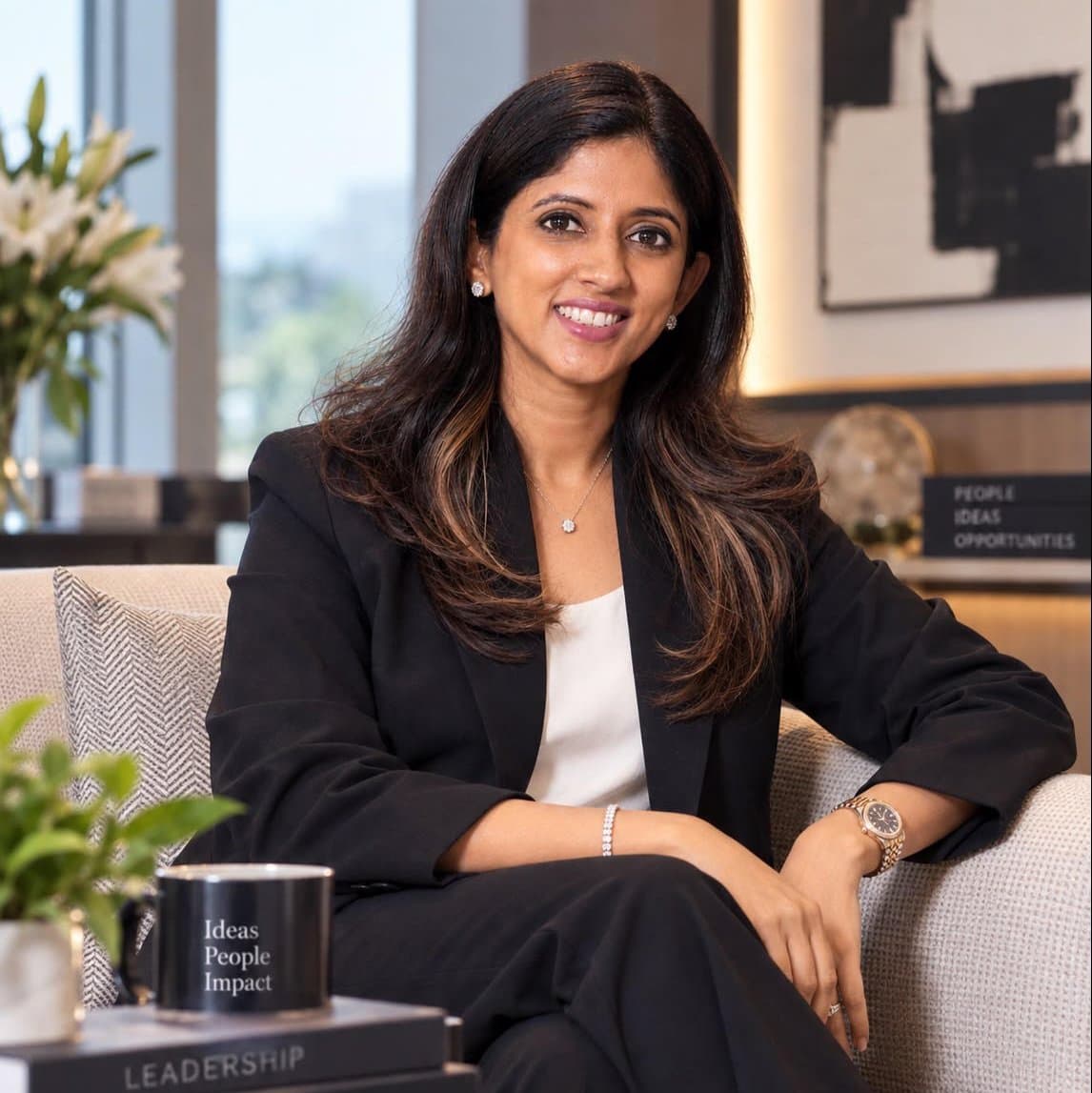
Investors & Catalysts
From Millet to Method: Rasika Prashant on Building What Consumers Return To
Rasika Prashant, CEO of NSRCEL at IIM Bangalore and Co-founder of Soulfull (later aquired by Tata Consumer Products) on consumer trust, category creation, Indian brands, and the founder discipline required after belief.
Read Full Story
Founders & Innovators
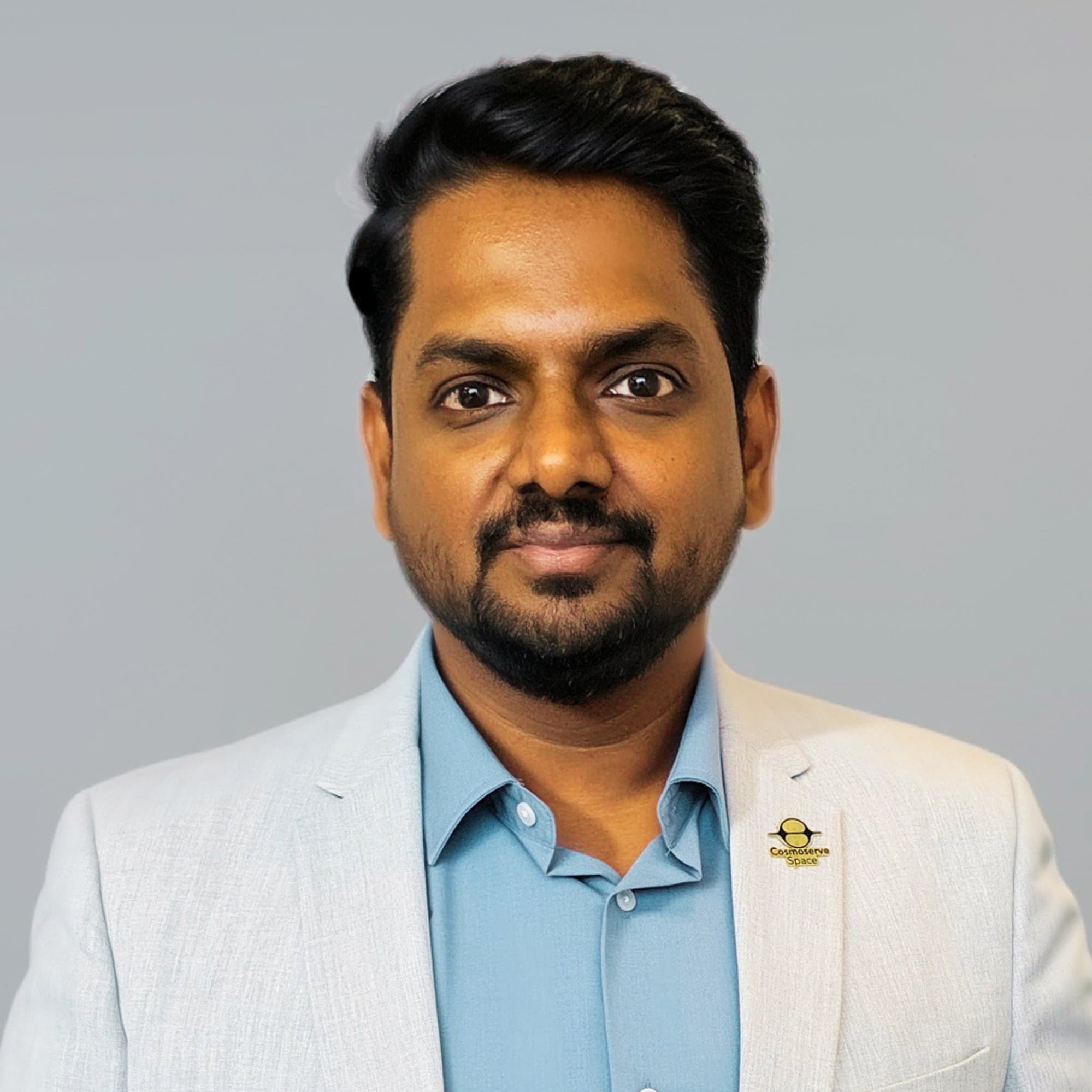
Building the Next Space Economy: Chiranjeevi Phanindra and Cosmoserve's Case for Orbital Maintenance
Chiranjeevi Phanindra, Founder & CEO of Cosmoserve Space, spent 14 years at ISRO working on re-entry and human spaceflight. Today, he is focused on a vital challenge: keeping Earth’s orbit usable.
Read Full Story
Corporate Visionaries
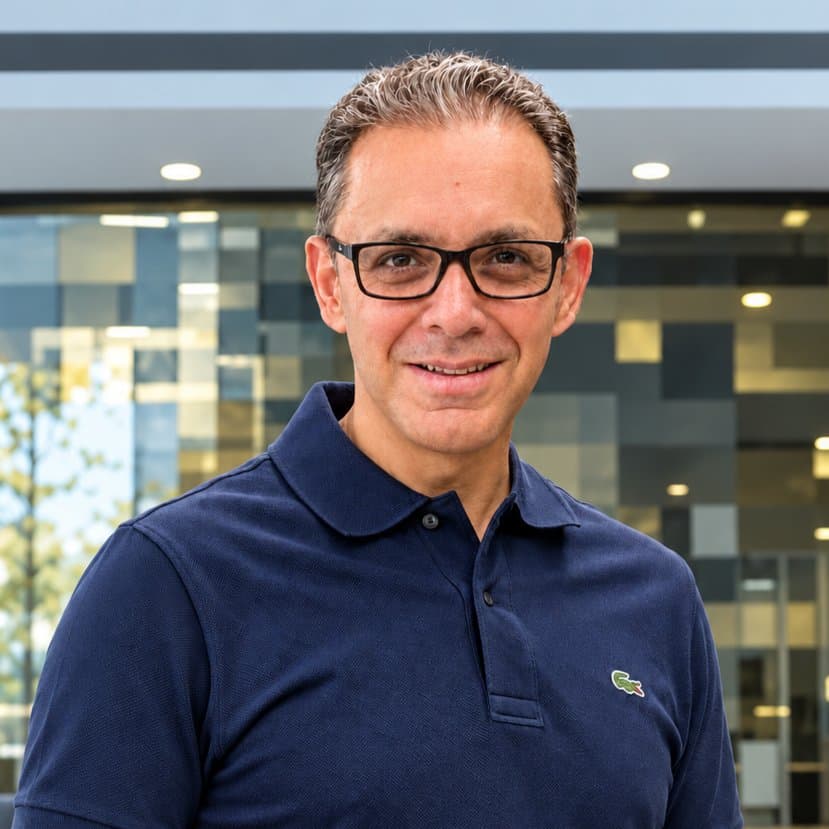
Shashank Sahni on What Success Leaves Out
Shashank Sahni, Google’s Managing Director of Global Ads Solutions, reflects on what customers reveal, what ambitious teams need from their leaders & what the mountains and marathons have taught him about going further.
Read Full Story