Category: Corporate Visionaries
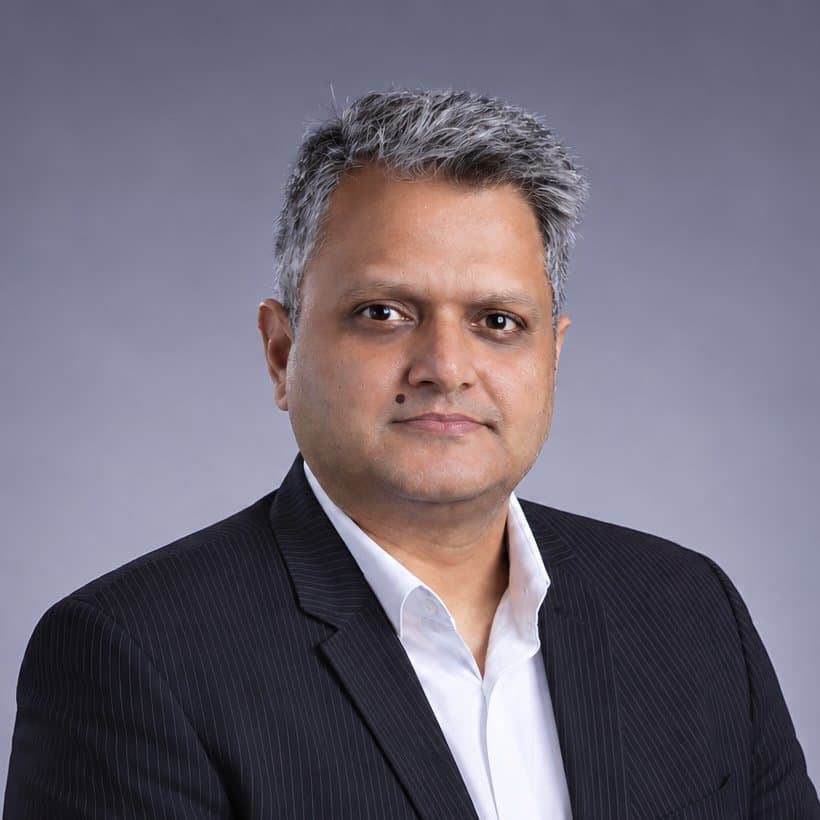
Shailesh Saksena, LTM (formerly LTIMindtree)’s Head of Enterprise Business (India), Certified Corporate Director, explains what makes technology decisions inside large organizations trusted, accountable & defensible.
The Defensibility Test: Shailesh Saksena on Enterprise Technology Decisions
IndiSight Editorial
Aug 9, 2026

Shailesh Saksena
Head-Enterprise Business (India) · LTM (formerly LTIMindtree)
Gurugram, India
Every major technology cycle arrives with a promise of speed, intelligence or efficiency. Large enterprises respond with a more durable question: who will be accountable if the decision fails?
Inside a large organization, a technology decision becomes serious only when someone can defend the accountability behind it. A strong product, a convincing business case and an attractive return can open the conversation, but the decision still has to travel through finance, procurement, legal, security, architecture review, business ownership and delivery scrutiny. Along the way, every sponsor weighs the same private calculation: if the decision is challenged later, can it still be justified?
That is the defensibility test behind enterprise technology.
Over three decades, Shailesh Saksena has seen large enterprises adopt analytics, cloud, automation and now AI across India, the Middle East, South Asia and across industry sectors. His experience across global software and technology services organizations like SAS, Oracle, Wipro, Lenovo, Paradigm Geophysical and LTM (formerly known as LTIMindtree) has shaped a practical view of enterprise change: organizations rarely move on technology until the decision feels defensible.
While his vantage point is commercial, but the insight is institutional. As a Certified Corporate Director and mentor to sales and business professionals, Shailesh also reads enterprise technology through the lenses of governance, accountability and capability building. Enterprise business, in his reading, is not only about selling capability. It is about understanding how customers think, how power moves, how risk is owned, and how technology becomes acceptable inside a large organization.
“Decision-making is a lot more about reducing uncertainty,” Shailesh says.
For him, that is where enterprise buying begins. Customers may compare capability, price, integration and returns, but a decision usually moves only when enough uncertainty has been removed for the institution to defend the choice.
The constant inside every technology cycle
Enterprise technology has changed sharply across Shailesh’s career. Business stakeholders now enter technology conversations earlier. Decision-making has become more federated. APIs, cloud platforms and AI tools have made experimentation easier. Data has moved to the centre of serious business discussions. Return horizons have compressed because leaders are less willing to defend five-year technology bets in markets that may shift again within two.
Trust remains the constant. Customers still ask whether a partner will be present when issues arise, whether the decision can be justified later, whether the vendor understands the business, and whether the organization can absorb the change.
Shailesh’s view of enterprise buying also challenges the idea of a single decision-maker. Even when one leader appears to own the call, the final decision is usually shaped by budget holders, implementation teams, risk owners and informal influencers.
Enterprise customers often look for the option that gives them the fewest restless nights. Capability may open the discussion, but the decision travels only when enough people inside the organization feel the choice can be defended.
Transformation needs operating proof
Organizations have become fluent in transformation language: AI roadmaps, cloud migration, automation, customer experience, data platforms and digital operating models. Shailesh looks for harder evidence.
Serious transformation work begins with measurable outcomes: cycle-time reduction, cost per transaction, lead conversion, defect reduction, time to market, deployment speed, quality improvement or customer satisfaction movement. When these markers are missing, transformation stays too close to presentation language.
A platform can be purchased quickly but institutional change takes longer because it asks people to alter routines, incentives and comfort zones that may have protected them for years.
Real change also requires acceptance of pain. Processes, incentives, reporting patterns and departmental routines may need adjustment. Middle managers become critical because they decide whether a program enters daily practice. They translate ambition into work, spot friction and understand where the old system hides.
Customer response provides the final test. Reduced complaints, better satisfaction, stronger usage, faster response time and clearer business indicators matter more than internal celebration. Transformation becomes credible when the business can point to what changed, who changed it, and whether the new discipline can hold.
AI is testing the foundations
AI has amplified enterprise ambition. Nearly every leadership team wants visible movement, but Shailesh’s focus stays on readiness.
He recalls a CFO who had committed to a fifteen percent productivity improvement by the next quarter after a series of AI projects. The pressure had come from the board, but the operating basis for the number was far less clear. The moment captures a familiar problem in the current cycle: As AI ambitions grow, leaders face mounting pressure to show visible progress, often before their organizations have built the discipline to clearly define how those initiatives will create measurable business value.
Data quality and process maturity are the largest gaps he sees. Many organizations believe their processes are streamlined because major systems are in place, while reality often includes exceptions, local practices, undocumented workarounds, inconsistent definitions and unclear data ownership.
You have got some two certifications each for your 20,000 employees. That does not really equip you from a talent perspective.
Applied competence requires domain experts, data professionals, change-management capability, technology leadership and business judgment working together. AI governance brings another test because accountability now has to cover data stewardship, model behaviour, monitoring, compliance, cybersecurity and cross-functional ownership.
In one large conglomerate conversation, a senior leader could not easily say how many AI projects were running inside the organization. Fragmented experimentation at that scale becomes a governance concern.
The future distinction may not be between enterprises that use AI and those that avoid it. Most large organizations will use it. The more important divide will be between institutions that can govern intelligence at scale and those that mistake scattered experimentation for readiness.
India’s enterprise opportunity and the skills it will need
Shailesh sees a significant opening for Indian technology companies in the AI era, but his optimism comes with a condition.
India has delivered large-scale technology work for global enterprises and produced leaders for many global technology companies. Enterprise product creation from India has been harder. AI may reduce part of that gap by compressing prototyping, documentation, code review, testing, feedback analysis and use-case development.
The deeper opportunity lies in context. Indian IT services companies have spent decades inside the workflows of global customers. They understand systems, processes, delivery realities, integration issues and industry constraints. Established Indian firms often carry enterprise context that younger AI product companies may still be building.
The pressure point is internal. Delivery completion has been rewarded for years; the next cycle will reward business outcomes, product management, design capability, industry specialization and solution thinking. India’s opportunity now lies in converting enterprise proximity into judgment that global customers can trust.
That shift also changes the skills question. Young technology professionals may learn tools quickly, but the ones who grow in enterprise roles will be those who can read the customer, understand business consequences and work with the realities of adoption. Technical learning will matter; enterprise relevance will come from combining it with business judgment, customer empathy and the maturity to represent both the organization and the customer’s objectives.
The buyer consortium
Founders often enter enterprise markets trying to prove efficiency, innovation, price advantage or product superiority. Buyers examine those factors, but their deeper questions are different. Can the company survive? Can the solution integrate? Who will support it? What happens if it fails? Can the internal sponsor defend the decision?
For Shailesh, enterprises are not only buying outcomes. They are buying accountability and risk reduction.
Power inside large accounts rarely follows the org chart. A CXO meeting can open the door, but enterprise decisions are shaped by a broader buyer consortium. Budget owners control economic authority. Business teams create urgency because they live with the problem. Implementation teams decide whether the solution can actually land.
Veto power is often where founders misread the account. Procurement may challenge commercial structure. Legal may slow risk acceptance. Compliance may question the operating model. Security may resist new exposure. Architecture boards may reject a solution that creates long-term complexity. Any one of these groups can stop a deal even when senior sponsorship exists.
Influence may also rest with long-serving insiders, domain experts, executive assistants, trusted operators or internal voices whom leadership consults before taking a final call. A mature founder studies the full power map because enterprise momentum comes from alignment across the buyers behind the buyer.
There is a harder side to this system. The same trust architecture that protects an enterprise from reckless decisions can also protect incumbents. A younger company may have a better solution and still lose because the institution trusts the familiar risk more than the unfamiliar improvement. Defensibility can protect good judgment, but it can also slow necessary disruption.
Trust, innovation and the risk of overpromising
Shailesh draws a firm distinction between being liked and being trusted. A customer may take calls, meet for lunch and maintain friendly access while still hesitating to take risks with a vendor.
Trust becomes visible when the customer shares what the formal process hides: fears, constraints, political realities, unresolved concerns and the internal logic shaping the decision. A trusted partner may influence requirements, advise before a formal decision, or be defended when absent from the room.
Being trusted is a higher degree of affinity wherein the customer is willing to take risks with you.
Enterprise trust requires institutional proof, delivery confidence, personal credibility and honesty about delivery limits. Shailesh places value on the willingness to say no because customers often reward candour that reduces perceived risk. Overpromising may create early excitement, but execution tests the relationship with little patience for exaggeration.
The same discipline applies to innovation. Large enterprise customers often ask for innovation and then gravitate towards safety. Shailesh reads that behaviour as evidence of how institutions manage risk. Innovation and safety can coexist when leaders separate innovation risk from business risk.
You should sell a good outcome or a destination, but be conservative when it comes to the overall path of the implementation.
The destination can remain ambitious: lower cost, faster processing, stronger productivity, better customer experience or new operating capability. The path needs to be controlled through phased rollout, governance, reversible decisions, adoption metrics and a clear view of the pain that will come with change.
The same tension appears in innovation. If every enterprise decision is framed only through risk reduction, ambition can quietly narrow. A serious partner helps the customer see both risks: the risk of moving and the risk of staying where they are.
BFSI and the discipline of confidence
Financial services gives Shailesh a precise lens on technology decisions because the sector concentrates trust, regulation, operational risk, resilience, customer experience and institutional reputation.
“The whole industry stands on confidence.”
Customers expect accurate transactions, safe deposits, available systems, managed risk and continuity during stress. Regulation becomes one expression of confidence preservation. Operational risk teams often become decisive because they ask what happens if a platform is unavailable, if data quality suffers, if a cyber incident occurs, or if customer behaviour is affected.
Shailesh’s hierarchy begins with institutional confidence. Operational risk follows, then regulatory expectation, then customer trust in real time. Any sector where technology touches continuity, reputation and customer dependency will need similar discipline.
Qualification before pressure
Judgment becomes sharper through opportunities that look promising at first and reveal their weakness later. Shailesh recalls a large multi-million-dollar opportunity where the scale of the deal created excitement, while the underlying indicators were weaker than they first appeared. Budget certainty was thin, stakeholders were not aligned, procurement was unresolved, and urgency around the problem was not strong enough.
“In our zeal to go after that large engagement, we should have assessed much earlier.”
Resources and leadership attention moved towards an opportunity that should have been qualified earlier. Smaller opportunities with clearer outcomes and stronger sponsorship received less focus, which made the lesson sharper.
Big deals can pull an organization in quickly. Shailesh’s lesson was that size alone is not a reason to pursue one; urgency, budget clarity, stakeholder alignment and execution readiness matter more.
Growth pressure also needs diagnosis before reaction. A market problem shows up when demand weakens and several providers face the same headwinds. A strategy problem appears when demand exists, but the company is pursuing the wrong segment, opportunity or buyer. A capability problem is visible when effort is high but the team does not yet have the depth to convert effort into results. An execution problem is different again: people understand the plan, but ownership, rhythm and follow-through are not strong enough to carry it.
When technology becomes a boardroom question
Shailesh’s boardroom lens has become more important as technology has moved closer to strategy. A board that misses the upside of AI may lose opportunity. A board that misses cyber risk may face a crisis. The deeper danger lies in underestimating how technology changes the business itself.
Technology can reshape business models, customer expectations, competitive advantage, governance requirements and leadership accountability. Board-level technology literacy therefore means asking better business questions: what capability must exist before scale, what risk is being introduced, what accountability should be created, and how the operating model will change.
Over time, Shailesh says he had to unlearn the instinct for close oversight.
Closer oversight does not always produce better outcomes.
At earlier stages of a commercial career, watching carefully and correcting quickly can create results. At scale, the same instinct can slow decisions, reduce initiative and limit leadership depth. The shift is from governing activity to governing outcomes.
The adoption threshold
After watching organizations buy, delay, adopt, resist and transform across technology cycles, Shailesh sees a recurring pattern. Large enterprises are built to reduce risk, standardize decisions, scale operations and protect existing revenue streams. The same strengths can slow technology change.
ERP, cloud, mobile and AI have each produced versions of the same behaviour. Enterprises test, limit exposure, move cautiously, run pilots and describe their environment as unique. Large-scale adoption often waits for a compelling event: market loss, customer pressure, competitive movement, strategy failure, regulatory pressure or operational pain.
Enterprise adoption accelerates when the cost of waiting exceeds the comfort of caution. The harder question is whether the institution is in enough pain to move.
Leadership lessons from Shailesh Saksena’s operating lens
Enterprise customers buy confidence before capability. Product strength matters, but high-stakes decisions move when the customer believes the risk can be owned, defended and executed.
Enterprise business is a study of customer context. Sellers and founders need to understand power, fear, incentives, veto points and adoption risk, not only product value.
Trust is built when a partner is clear about what will work, what may fail, and what should not be promised. In enterprise decisions, candour often travels further than confidence.
Transformation becomes serious when leaders are willing to change the routines behind performance. New systems matter only when incentives, ownership and daily behaviour evolve alongside them.
AI readiness is usually tested in less visible places: messy data, uneven processes, unclear ownership, thin domain capability and weak governance.
Young technology professionals will need to understand more than tools. The ones who grow in enterprise roles will be those who can read the customer, understand business consequences and work with the realities of adoption.
Big deals can pull an organization in quickly. Size alone is not a reason to pursue one; urgency, budget clarity, stakeholder alignment and execution readiness matter more.
Enterprise adoption moves when waiting becomes riskier than changing. Leaders who understand that threshold read technology cycles with greater accuracy.
The decision behind the decision
Shailesh Saksena’s work points to a demanding truth about enterprise technology. The visible decision may concern a platform, product, program or transformation agenda. The deeper decision concerns ownership: who will defend the choice, who will carry the change, who will govern execution, and who will stand behind the outcome when early enthusiasm fades?
Technology cycles can change quickly while enterprise judgment changes slowly. Each new wave arrives with a promise of speed, intelligence or efficiency. Large organizations respond with older questions about trust, proof, ownership, governance and consequence.
The stronger organizations will be those that build confidence before capability is asked to scale. Technology adoption is ultimately a question of institutional belief: what must the organization trust, own and defend before it is prepared to move?
That is the defensibility test. Enterprise technology is not only a race to adopt the next tool. It is a test of judgment: whether organizations can move fast enough to stay relevant, carefully enough to stay trusted, and maturely enough to know the difference between capability and confidence.
Our Suggestions to Read
Discover The Leaders Shaping India's Business Landscape.

Founders & Innovators
Building the Next Space Economy: Chiranjeevi Phanindra and Cosmoserve's Case for Orbital Maintenance
Chiranjeevi Phanindra, Founder & CEO of Cosmoserve Space, spent 14 years at ISRO working on re-entry and human spaceflight. Today, he is focused on a vital challenge: keeping Earth’s orbit usable.
Read Full Story

Corporate Visionaries
Shashank Sahni on What Success Leaves Out
Shashank Sahni, Google’s Managing Director of Global Ads Solutions, reflects on what customers reveal, what ambitious teams need from their leaders & what the mountains and marathons have taught him about going further.
Read Full Story
Corporate Visionaries
Clinical Multiplication: Divesh Singla on the Healthcare AI Case That Headlines Keep Missing
Divesh Singla, Managing Director, India at Veradigm, brings two decades in healthcare technology to the AI question leaders cannot avoid: how to expand clinical capacity without weakening human judgment.
Read Full Story