Category: Founders & Innovators
Sanjay Laul, Founder of MSM Unify, a global education and talent-mobility platform, has spent 25+ years helping institutions expand internationally and learners access cross-border opportunities.
Sanjay Laul on Building Global Education's Next Chapter
IndiSight Editorial
Aug 25, 2026
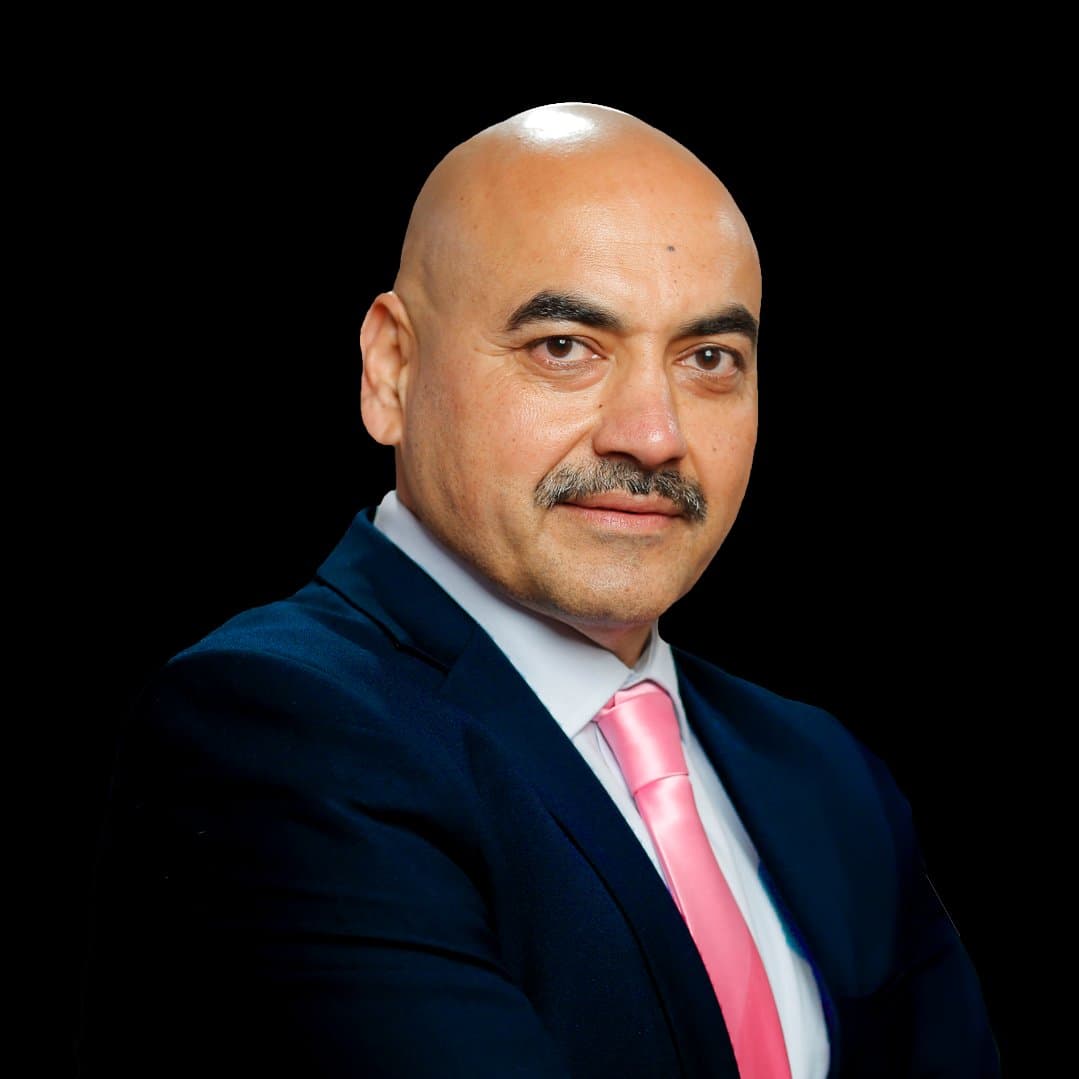
Sanjay Laul
Founder · MSM Unify
Vancouver, Canada
In the early 2000s, skilled migration to Canada was a fast-growing business. Immigration consultancies expanded rapidly, even though the entire market rested on one fragile foundation: government policy.
In 2003, Sanjay Laul was running an immigration-consulting business with roughly 21 offices. Then Canada changed its skilled-immigration rules. Fewer applicants qualified, processing times stretched, and the business lost most of its commercial base.
“The business went down completely,” he recalls.
The experience left him with a question that has followed him into every market, investment and business line since:
“Whose decision am I dependent on that I don’t control, and what does my business look like the day they change their mind?”
Sanjay calls it the boring question. It connects his work across immigration, international student recruitment, institutional representation, education technology, college ownership and talent mobility. The businesses differ; the concern beneath them stays the same: how much of the enterprise depends on decisions made elsewhere?
That question has grown more relevant across global education. Immigration policies can alter a destination’s appeal within months. Artificial intelligence is making program information easier to find and compare. Families want to know where a qualification leads, and employers are paying closer attention to what graduates can actually do at work.
Sanjay believes the sector is entering a more demanding phase. Access will still matter, but institutions and intermediaries will increasingly be judged by the quality of their advice, the incentives behind their recommendations, and the outcomes learners see after enrollment.
A decade the résumé rarely captures
Sanjay’s instincts as a founder were shaped during years when very little worked.
His father died when he was in Grade 8. His mother was a homemaker, and professional guidance was scarce. Having decided in school that he wanted to build businesses, he spent close to a decade moving through small ventures, losing money, leaning at different points on his mother and friends, and starting again.
The setbacks carried a social cost alongside the financial one. Relatives questioned his choices, each new attempt dragged the last failure back into view, and he had to rebuild credibility without an established enterprise to point to.
Those years changed how he assessed opportunity. In his early ventures, he could usually spot a customer need. What he understood less clearly was the system around that need: a useful product could still be constrained by regulation, licensing, delayed payments or a funding structure the founder didn’t control.
Over time, his questions grew more rigorous. Who controls the conditions around the market? How stable are those conditions? Who carries the first risk? How much growth remains once operating complexity rises?
He also learned to place limits on conviction.
“Founder bias almost always shows up as a belief you can’t falsify, dressed up as vision. Conviction is a belief you’re willing to attach a tripwire to.”
The tripwire is the evidence that would force leadership to reconsider a decision: a policy threshold, a margin level, an acquisition cost, an adoption rate, a shift in customer behavior. Defining it early makes it harder to keep investing simply because the founder is attached to the original idea.
Sanjay sees the weight of environment when he compares his own start in Lucknow with his son’s experience in New York. His son enrolled at NYU to study acting, left within three weeks and began building a technology venture. Sanjay backed the decision: he recognized the same entrepreneurial instinct, operating inside a far stronger ecosystem.
His son had access to information, networks and experienced guidance that took Sanjay years to find. Lessons that once arrived through prolonged trial and error could now be reached far faster. The comparison sharpened Sanjay’s view of education itself. At its best, education shortens the distance between ambition and informed action.
Around 2000, he entered immigration consulting. The business expanded until Canada’s policy shift exposed its dependence on a rulebook outside the company. The setback pushed him toward education consulting, initially through the same families exploring international opportunities.
As he spent more time in the market, he saw a wider gap. Students needed credible information and access to institutions. Universities wanted international growth but often lacked local teams, market intelligence and the financial room to enter unfamiliar regions.
The gap that ran for ten years and eventually became MSM Unify.
Many of the institutions Sanjay approached were credible public or mid-ranking colleges in North America. They served their domestic regions well but had little visibility in markets such as India. International expansion required retainers, marketing commitments and local staffing before demand had been established, which made the first move hard for institutions working with tight budgets and slow approval processes.
Sanjay saw that the early financial exposure fell on the institution, even though it had the least capacity to absorb uncertainty.
MSM Unify changed the sequence. It offered local representation through performance-based or revenue-sharing arrangements and took responsibility for market development, institutional outreach, agent engagement and local liaison. Institutions began paying as enrollments and results came in.
The model addressed the real barrier. These colleges had academic capacity and international ambition, but speculative expansion was hard to justify internally. MSM Unify carried the initial execution burden and tied its earnings to what happened in the market.
“We ran ten years of our first golden period because of just one gap.”
His insight went beyond recruitment. Many promising markets stay blocked because the first commitment is expected from the party least able to carry uncertainty. Changing the order in which risk moves can unlock the opportunity without changing the underlying service.
The model also built a strong culture inside MSM Unify. Teams earned authority through their understanding of institutions, agents and local markets. Relationships and accumulated knowledge became genuine competitive advantages.
They also delayed the company’s response to the next major shift.
When relationships delayed the platform
Sanjay believed the seriousness of the student decision would protect relationship-led distribution. Families were committing significant savings and making choices with long-term consequences, so trust and human judgment would keep mattering.
They did. But technology changed the market faster than he expected.
Platforms made it easier to compare institutions, search programs and track applications. Information reached smaller cities, processes sped up, and the edge held by counselors who knew a limited set of institutions began to narrow. Sanjay says MSM Unify had the resources to start building earlier, yet he delayed the platform investment by roughly two years because the existing relationship model was still working.
“It took me a couple of years to understand that even though it’s a relationship industry, a technology layer, a marketplace layer will disrupt the industry.”
The company was growing, which made waiting look reasonable. The warning signs were visible; the existing economics were still comfortable.
Bootstrapping sharpened the trade-off. Funding expansion through operating cash flow imposed discipline and protected the company from speculative growth. It also slowed the pace of technology investment compared with competitors backed by outside capital. Financial control bought durability; slower investment cost time.
Once MSM Unify committed to the platform, the organizational transition proved harder than building the technology. The company had spent years building a service culture where people generated value through relationships, personal knowledge and customized execution. The new model demanded data discipline, repeatable workflows and consistent use of systems.
Sanjay remembers the resistance in practical terms: “The comfort was Excel sheets. The comfort was PowerPoint presentations. Nobody wanted to log on to the CRM.”
Employees who had earned authority through personal networks now had to work through data and standardized processes. Clients used to spreadsheets and presentations had to engage with systems and dashboards instead. Some senior people left. Some relationships were lost.
The software arrived faster than the habits and incentives needed to make it useful.
For Sanjay, this remains one of the clearest lessons from the transition. Technology changes how work gets done and whose expertise an organization values. A transformation plan can account for product development, integration and training, and still underestimate what happens when employees feel the capabilities behind their past success are losing value.
The same experience now shapes MSM Unify’s approach to artificial intelligence. The company has built AI-capability assessments into hiring, and Sanjay expects leaders to show practical ability with the technology. He cares less about adoption as a signal than about whether AI sharpens judgment, catches risk earlier and helps people move from information to action.
What ownership changed
Sanjay’s view of education changed again when his group moved from recruiting students for institutions to operating education businesses of its own.
The family-owned portfolio includes Eton College Canada, Taylor Pro College and Extreme Pro Training, Multihexa College, Q Academy and Florida Coastal University. These institutions span vocational training, technology education and online higher education, giving the group direct exposure to program design, delivery, completion and employment outcomes.
Ownership brought the outcome question closer. Recruitment businesses can measure applications, offers and enrollments. Institutions have to deal with what happens during and after the program: whether learners complete, whether the curriculum stays relevant, whether the qualification carries value in the labor market.
Taylor Pro College is a useful example of Sanjay’s approach to investment. The business serves a real need in Canada through truck-driver education. At the same time, he sees limits to its long-term scale as autonomous technology develops and the physical complexity of adding vehicles and locations grows.
Taylor Pro still has a reason to operate, but Sanjay doesn’t see it as the group’s next major growth engine. The bigger question is where fresh capital and management attention can create the most value over time.
The same thinking shapes his view of degrees. Qualifications tied to licensed professions will keep carrying clear value. Strong institutions will retain influence through academic depth, networks and reputation. Broad programs whose connection to work is hard to demonstrate will face greater pressure.
“Strong market demand tells you a family wants to believe something will work. It tells you nothing about whether it actually will.”
Demand shows people are willing to enroll. It says far less about a program’s durability or the opportunities available after completion. Sanjay says this has made him cautious about launching courses that look commercially attractive but lack credible evidence from employers.
Universities also run on a slower cycle than the labor market. Degree programs take years to design, approve and deliver, while technology and job requirements can shift much faster. Employers therefore carry a bigger share of the work in continuing capability development.
Ownership has also made MSM Unify’s wider portfolio challenge harder to ignore. Recruitment, software, education delivery and talent mobility may serve the same institutions and learners, but they run on different incentives. Recruitment teams focus on enrollment, software businesses on recurring revenue, education delivery on completion and quality, talent mobility on employer conversion.
Sanjay says aligning these businesses has taken longer than connecting their technology. Shared customers create an opportunity, but the group functions as one portfolio only when its teams work toward a common understanding of value.
That raises practical questions. Who owns the customer relationship? How should information move across businesses? Which unit carries the cost of supporting a learner after another unit has already booked the initial revenue? The answers decide whether the group behaves as one enterprise or as several businesses sharing a name.
The transparency global education has postponed
The most demanding part of Sanjay’s argument is about what the sector chooses to count.
Applications, offers, visas and enrollments are useful operating measures. They provide limited evidence that a learner’s economic or professional position improved. A student can complete every formal stage and still face poor employment prospects, weak credential recognition or a difficult return to the home market.
“Reach without conversion to a real outcome isn’t impact. It’s activity.”
Sanjay argues for program-level reporting after completion, covering employment, progression, credential recognition and the relationship between work and the field studied. Outcomes are shaped by the economy, immigration policy, learner performance and employer demand, so any reporting would need consistent definitions. The difficulty of measurement doesn’t remove the need for better disclosure.
Families often commit years of savings, take on debt and accept major geographic disruption in pursuit of international education. Before enrollment, they get extensive information about curriculum and campus experience. They get far less evidence about the outcomes carrying the greatest financial consequence.
The same scrutiny applies to intermediaries. Compliance checks confirm an agent is authorized to operate. They can’t reveal whether a program was recommended because it suited the learner or because it paid a higher commission.
Sanjay believes agent economics will eventually have to reflect more of the learner’s progression. A portion of compensation could tie to areas the adviser can actually influence: program fit, accurate representation, early progression. Such a model would need careful design, since advisers don’t control every factor behind graduation or employment.
The economic issue is straightforward. Revenue recognized at enrollment pushes the system to focus on enrollment. Extending the commercial relationship further into the learner’s pathway would build a stronger reason to care about recommendation quality and progression, while demanding better data and a willingness to carry more performance risk.
Sanjay applies the same standard to MSM Unify:
“Until recommendation quality is something a family can verify independently of what MSM Unify says about itself, I don’t think anyone in this industry, including us, gets to claim the economics are driven by quality rather than conversion.”
That admission gives the argument its force. He’s describing a standard his own organization is still working toward.
Artificial intelligence will sharpen the pressure. Students can already reach program information, policy updates and labor-market data with far less dependence on an adviser. As information gets easier to find, families will expect intermediaries to bring judgment they can test.
The defining question is direct: when information is widely available, what is the family paying the intermediary to assess, explain and take responsibility for?
The final dependency
The dependency Sanjay now has to address sits inside MSM Unify.
The company was built through his relationships, judgment and operating intensity. Those qualities helped it enter uncertain markets and move without precedent. At greater scale, the same concentration can slow decisions and stop the organization from building its own institutional confidence.
Sanjay says he has tried three times to move the organization under a CEO. None produced the transition he expected, and each time he ended up back in a more active operating role. His conclusion: succession has to begin through the distribution of decisions, long before the founder formally steps away.
“The evidence would be watching a call get made by someone else, made differently than I would have made it, and turning out to be right.”
That standard asks the founder to accept that sound institutional judgment may look different from his own. It also requires the organization to explain its reasoning, carry accountability and learn from decisions without treating the founder as the permanent court of appeal.
Sanjay’s career keeps circling back to concentration risk. His immigration business depended heavily on policy. MSM Unify’s service model leaned on relationships while platform-led distribution was emerging. Education intermediaries still lean on information advantages that AI is eroding. The company itself remains closely tied to the founder’s judgment.
The boring question now points inward.
MSM Unify’s next test is whether a business built through Sanjay Laul’s judgment can develop judgment of its own. Global education faces a parallel test: whether an industry built around access can prove the value of everything that follows it.
Our Suggestions to Read
Discover The Leaders Shaping India's Business Landscape.
Investors & Catalysts
From Millet to Method: Rasika Prashant on Building What Consumers Return To
Rasika Prashant, CEO of NSRCEL at IIM Bangalore and Co-founder of Soulfull (later aquired by Tata Consumer Products) on consumer trust, category creation, Indian brands, and the founder discipline required after belief.
Read Full Story
Founders & Innovators
Building the Next Space Economy: Chiranjeevi Phanindra and Cosmoserve's Case for Orbital Maintenance
Chiranjeevi Phanindra, Founder & CEO of Cosmoserve Space, spent 14 years at ISRO working on re-entry and human spaceflight. Today, he is focused on a vital challenge: keeping Earth’s orbit usable.
Read Full Story
Corporate Visionaries
Shashank Sahni on What Success Leaves Out
Shashank Sahni, Google’s Managing Director of Global Ads Solutions, reflects on what customers reveal, what ambitious teams need from their leaders & what the mountains and marathons have taught him about going further.
Read Full Story