Category: Education Leadership
Dr. Bhimaraya Metri, Director of IIM Nagpur, brings an institution-builder’s lens to NEP, interdisciplinary learning, Indian Knowledge Systems and the leadership capacity India must now build.
Dr. Bhimaraya Metri on Reimagining Management Education for India’s Next Leadership Era
IndiSight Editorial
Aug 19, 2026
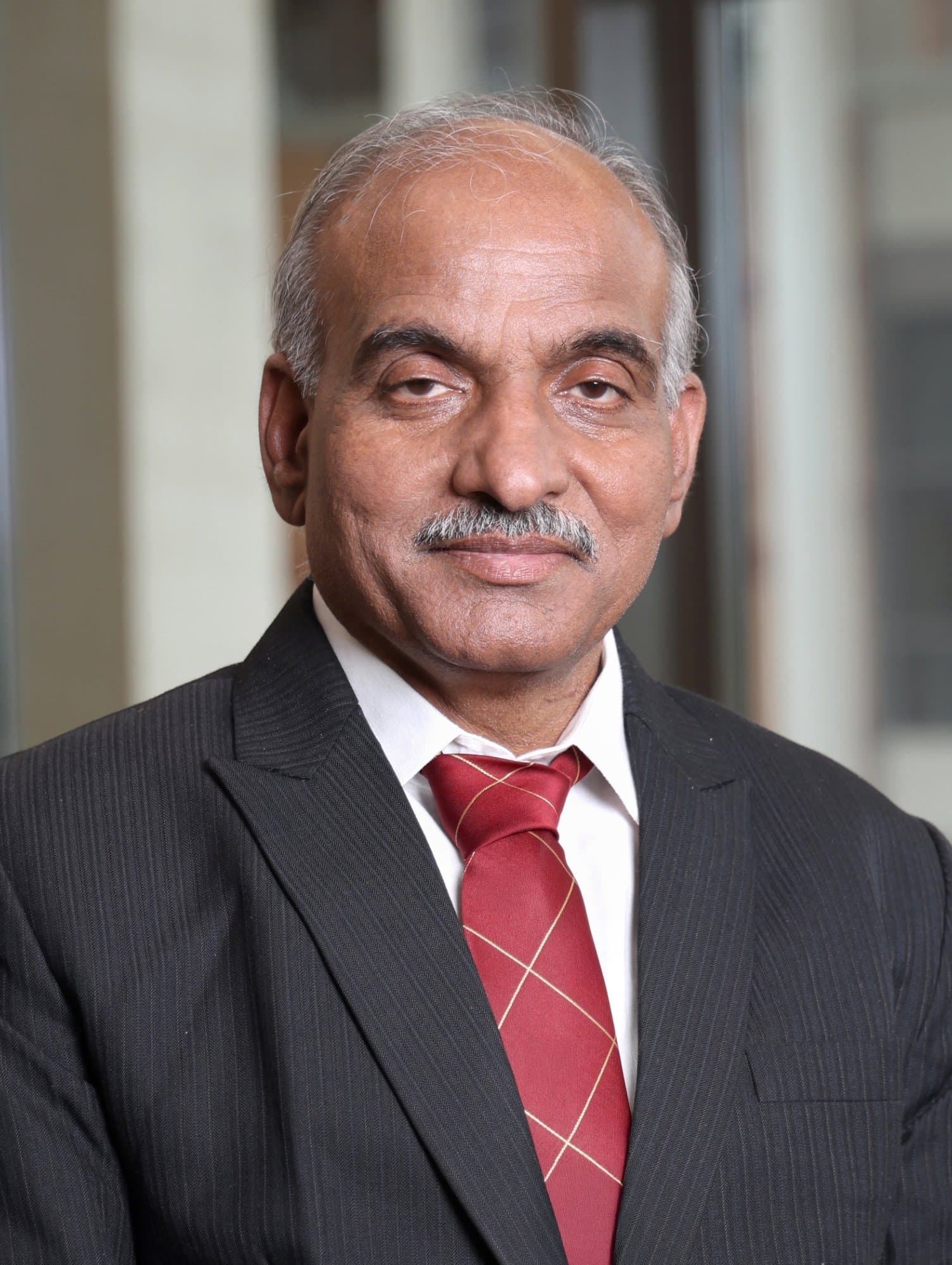
Dr. Bhimaraya Metri
Director · IIM Nagpur
Nagpur
Management education has always carried a practical promise: it helps people move.
For a young student, it can move ambition closer to opportunity. For a family, it can change the meaning of mobility. For an employer, it offers a structured way to identify prepared talent. For an institution, it becomes visible through placements, alumni outcomes, industry trust and the quality of people it sends into the world.
The promise still matters deeply in India. A strong first opportunity can change the confidence of a student and the financial imagination of a family. Yet Dr. Bhimaraya Metri’s view of management education asks for a longer test. Once the first door opens, what has the degree actually formed in the person who walks through it?
Does it help a young professional renew relevance as skills age? Does it build judgment when information is incomplete? Does it develop influence beyond designation? Does it prepare people to strengthen institutions rather than only succeed inside them?
Across his work in management education, executive learning, quality systems, project management and institution-building, Dr. Bhimaraya has seen leadership formation at multiple levels: students seeking access, professionals seeking relevance, executives carrying responsibility and institutions trying to build leadership capacity at scale.
His argument is business-practical. India is producing aspiration and professional talent at scale. The next stage depends on whether that talent can mature into responsibility, institutional capacity and leadership ideas that travel beyond individual success.
The Journey Behind The Lens
Dr. Bhimaraya Metri, Director of IIM Nagpur, brings a wide institutional lens to the future of management education. His own journey began far from the established centres of opportunity, in a modest rural setting where education carried real social and economic consequence.
Over decades, his professional path has moved through academics, management education, executive learning, quality systems, project management and institution-building, with associations across BITS Pilani, MDI Gurgaon, IMI Delhi, the L&T Institute of Project Management, IIM Tiruchirappalli and now IIM Nagpur.
The breadth of that path matters because it allows him to read management education from several vantage points at once. He has worked with young students trying to build access, professionals trying to remain relevant, executives carrying organisational responsibility and institutions trying to create leadership capacity before external validation fully arrives.
A career across these environments gives his central question practical weight: how should management education prepare people for a world where skills age quickly, authority has limited power, and institutions have to build credibility while the ground is still moving?
Building Before Credibility Arrives
Dr. Bhimaraya’s institutional record points to a core operating idea: capability has to be built before the market fully rewards it.
At IIM Nagpur, he points to a wider institution-building arc: revenue moving from nearly ₹21 crore to ₹152 crore, a 40.82 percent CAGR, executive education gaining national momentum, campus infrastructure being completed in 27 months during the Covid period, and scholarship pathways being designed for both high-performing and economically constrained students.
The importance of these details lies in the pattern behind them. Revenue depth, executive education, faculty capability, infrastructure and access are different levers, yet together they reflect a larger institutional logic. Credibility is built through early commitments to depth, discipline and capability.
His earlier references to IMI Delhi and the L&T Institute of Project Management carry the same pattern. Institutional trust had to be built through performance, visible outcomes and choices that could compound over time. Reputation, in this view, follows repeated proof.
Management education can draw a direct lesson from such institution-building. India needs professionals who can operate within established structures, and it also needs leaders who can create structure when credibility, resources, trust and direction are still being formed. Many of the country’s next institutions will be built in precisely such conditions.
The Inverted Pyramid
One of the more distinctive operating ideas in Dr. Bhimaraya’s approach is the inverted faculty pyramid.
Young institutions often grow gradually, waiting for senior credibility to arrive after the brand matures. Dr. Bhimaraya describes a different logic: bring senior academic depth early, so that the institution begins with intellectual authority, mentoring capacity and academic confidence.
The decision carries cost before visible return. Senior faculty strengthen research culture, executive education, academic governance, consulting depth and student confidence, although these outcomes compound over time. In a young institution, such investment requires conviction before the brand fully matures.
The inverted pyramid becomes more than a hiring model. It reflects a larger institution-building principle: build capability early, allow credibility to follow, and treat institutional depth as a strategic investment. Management education often asks students to prepare for uncertainty; institutions themselves have to demonstrate the same discipline.
The First Opportunity Has To Lead Somewhere Larger
A first opportunity remains one of the most powerful measures in Indian professional education because it gives everyone something visible to hold. Students see return. Families see progress. Institutions see market validation. Recruiters see a prepared pool of talent.
Dr. Bhimaraya gives the first opportunity its full weight. For many young Indians, an early career break can change how a family sees the future. The larger question, in his view, is what management education builds after that moment of entry: relevance, judgment, influence and the capacity to carry responsibility over time.
A graduate may speak confidently, understand frameworks and perform effectively in a structured role. The deeper test arrives when structure becomes less reliable: markets shift, teams disagree, technology changes the nature of work, incentives become complicated and decisions begin affecting people beyond the immediate task.
Management education has to prepare students for the movement from professional entry to responsible contribution. The classroom can create discipline and vocabulary, while deeper formation comes through ambiguity, disagreement, live responsibility, reflection and the experience of making decisions with imperfect information.
For a student beginning management education today, the stronger question is what kind of professional life the degree is preparing them to build. The first role matters; the long arc of contribution carries the more durable evidence.
Relevance Has To Be Rebuilt Before The Market Demands It
“Skills have a shelf life,” Dr. Bhimaraya says.
The modern workplace is proving that point across sectors. Technologies reshape functions, business models evolve, industries reorganise and roles increasingly demand combinations of capability that older professional pathways did not anticipate. A manager may begin with strength in finance, marketing, operations or technology and quickly encounter the need for data literacy, ethical reasoning, cross-functional communication, comfort with intelligent systems and decision-making under incomplete information.
A professional degree creates enduring value when it builds the capacity for renewal. Courses will change. Tools will change. Industry expectations will change. The deeper question is whether the student develops the discipline to keep learning without losing direction.
Dr. Bhimaraya’s idea of evolving skill gives this argument sharper form. The future professional will need current capability, along with the judgment to recognise when a familiar skill has become insufficient, when an established framework has stopped explaining reality and when a new combination of capabilities has to be built.
Executive education makes this point visible. Working professionals return to learning because careers no longer move in a straight line. Relevance has to be renewed deliberately. Strong institutions will treat learning as a continuing relationship with professionals across their lives, rather than a brief academic transaction at the beginning of a career.
Influence As Institutional Capital
Among Dr. Bhimaraya’s strongest ideas is his belief that leadership develops through influence.
“The currency of leadership is influence,” he says.
Influence, in his telling, has institutional consequences. People do their best work when credibility, fairness and purpose are consistently visible in leadership behaviour. A title can define reporting lines and allocate work, while sustained commitment comes from trust in direction, respect for the person leading and belief in the larger purpose behind the work.
The idea becomes especially powerful when connected to his reflections on mentorship. Dr. Bhimaraya has spoken about Prof. Pritam Singh’s influence and the leadership chain that emerged from his work, including the figure of 14 IIM directors shaped through that mentorship tradition. The example turns influence into institutional capital: a leader’s effect continues through people who later carry responsibility elsewhere.
Dr. Bhimaraya’s own career also reflects the force of such influence. He moved from MDI Gurgaon, then among the country’s highly ranked management institutions, to IMI Delhi, which he describes as being outside the top 40 at the time. Colleagues told him it was a career mistake. He went because the relationship with his mentor and the opportunity to build mattered more than institutional comfort.
Faculty movement from IIM Tiruchirappalli to IIM Nagpur under his leadership points to a similar principle: serious academic talent follows trust, purpose and the belief that meaningful work is being built.
Management education has to expose students to influence early. Group work, live projects, field exposure, institutional responsibilities, simulations and executive interaction acquire value when they test behaviour: how a student handles disagreement, limited resources, shared credit, pressure and trust.
The Pressure Point Of Institution-Building
Influence-led leadership creates powerful momentum, and it also creates a serious institutional question.
When an institution grows through the credibility, relationships and energy of a strong leader, the next test is whether that influence becomes distributed capacity. Personal credibility has to become institutional culture. Individual judgment has to become process. Momentum has to move from the leader’s presence into the habits of the organisation.
Growth can be accelerated by one leader’s intensity, networks and decision-making speed. Durability requires second-line leadership, faculty depth, governance discipline, shared ownership and systems that can hold performance after the original source of momentum moves on.
Dr. Bhimaraya’s belief that leaders must create other leaders becomes central here. Institution-building reaches maturity when leadership multiplies across people, processes and culture. The real test of leadership is visible in what continues after direct supervision reduces.
Management education should prepare students for precisely this kind of work. Organisations need people who can deliver results, and they also need people who can create conditions where others perform with confidence, responsibility and discipline.
Talent Before Polish
Dr. Bhimaraya’s own journey gives him a natural sensitivity to the question of who gets recognised as leadership talent.
Many institutions and employers notice polish early. Fluency, confidence, exposure and social ease create a strong first impression. These signals matter in professional life, while their distribution remains uneven across geography, schooling, language environment, family background and networks.
India’s talent systems become stronger when they learn to read deeper signals. Young people from smaller towns, rural communities or modest backgrounds may enter professional institutions without the same vocabulary or inherited confidence as those shaped by more privileged environments. Many still carry practical responsibility, scarcity intelligence, persistence, social awareness and an early understanding of consequence.
Dr. Bhimaraya’s scholarship design at IIM Nagpur connects with this belief. The ₹21 lakh scholarship for top CAT scorers and full scholarships for students from families earning below ₹8 lakh reflect two forms of institutional intent: attracting high-performing talent and widening access for students whose potential may need financial support to fully express itself.
Good management education can refine raw potential. It can help students gain exposure without imitation, confidence without losing authenticity and professional capability without disconnecting from lived understanding. A serious idea of merit should consider how far a person has travelled relative to the opportunities available, how quickly they grow when given structure and how responsibly they use access once it arrives.
India Can Turn Complexity Into Leadership Thought
Dr. Bhimaraya’s larger India argument moves from talent supply towards thought leadership.
India has already shown that it can produce professionals who succeed across demanding global systems. The next frontier is the ability of Indian institutions to convert Indian experience into leadership ideas, frameworks and models that the world can learn from.
India contains management realities that are increasingly relevant beyond India: advanced digital infrastructure alongside last-mile gaps, formal systems alongside informal realities, family enterprises alongside global capital, scale alongside scarcity, aspiration alongside social complexity. These conditions can become management laboratories when studied with discipline.
Dr. Bhimaraya’s NEP and interdisciplinary vision strengthens this argument. Modern management problems rarely arrive inside one discipline. Climate, technology, finance, healthcare, entrepreneurship and public systems increasingly overlap, and the National Education Policy gives institutions a stronger mandate to prepare students for that complexity. Management education, in his view, has to move beyond functional competence and build the ability to connect domains, read context and make responsible decisions across systems.
Indian Knowledge Systems add a deeper layer to that ambition. Their value is not in treating the past as a substitute for modern management, but in bringing Indian ideas on ethics, sustainability, community, human purpose and decision-making into serious conversation with contemporary business education. For India to contribute leadership thought to the world, its institutions must be globally fluent without becoming intellectually dependent on imported frameworks.
The opportunity is to build a management education model that is modern, interdisciplinary and rooted: one that teaches tools and technology, strengthens judgment, and gives students the confidence to see Indian realities as a source of management knowledge.
The world is entering a period where uncertainty, technological disruption, institutional distrust and resource constraints are becoming mainstream leadership conditions. India has lived with many such tensions for decades. Its experience can offer lessons in building trust where trust is fragile, scaling organisations when infrastructure is uneven, combining digital platforms with human intermediation and creating credibility in contexts where no single model explains the whole system.
India’s opportunity lies in adding to global knowledge from Indian experience. The country can become a source of leadership thought when it documents how leadership actually works in Indian conditions, teaches from those realities and gives students the confidence to see their own environment as a site of serious management knowledge.
Leadership Lessons From The Longer Test
A degree should be treated as a foundation for responsibility. Students who treat the degree only as a credential may win the first opportunity without building the maturity required for the second and third phase of a career.
Capability has to be renewed before the market forces renewal. Professionals who wait for disruption to become obvious usually enter the next cycle late, with less bargaining power and less room to shape the transition.
Influence is built through credibility, fairness and purpose. Authority may begin a process, while influence determines whether people commit themselves when incentives, rankings or immediate rewards are uncertain.
Institutions require early investments that may appear premature from the outside. Faculty depth, access, infrastructure and culture begin compounding before the market fully recognises their value; delaying them until validation arrives often delays the institution itself.
Leadership becomes durable when it creates more leadership. An institution-builder’s real contribution lies in the capacity that grows around them, because personal intensity alone cannot carry an institution indefinitely.
Talent has to be recognised before it becomes polished. India’s leadership pipeline will remain limited if it sees only the signals of privilege and misses the deeper evidence of responsibility, resilience and judgment.
Indian complexity deserves intellectual seriousness. Management education in India can produce frameworks for the world when it studies its own realities with rigour instead of treating them only as implementation challenges.
The long test of education lies in what people build after the first opportunity arrives. A placement opens the door, but teams, institutions, trust, judgment and public value reveal what education has actually formed.
The 2047 Test
By 2047, India will have more degree holders, more professionals and more examples of individual success. The more demanding evidence will appear in what those professionals build and what their institutions continue to carry after individual achievement has moved on.
Management education will be judged by the quality of leaders it forms ten years after the degree: people who renew capability before relevance fades, build trust before authority is sufficient, create systems before conditions are comfortable, and develop other leaders before succession becomes urgent.
The 2047 standard places equal pressure on institutions claiming to prepare future leaders. It asks whether they are demonstrating what they teach: building capability before reputation makes it easy, widening access before outcomes make it comfortable, and measuring success by what continues to function after the people who built it have moved on.
Our Suggestions to Read
Discover The Leaders Shaping India's Business Landscape.
Founders & Innovators
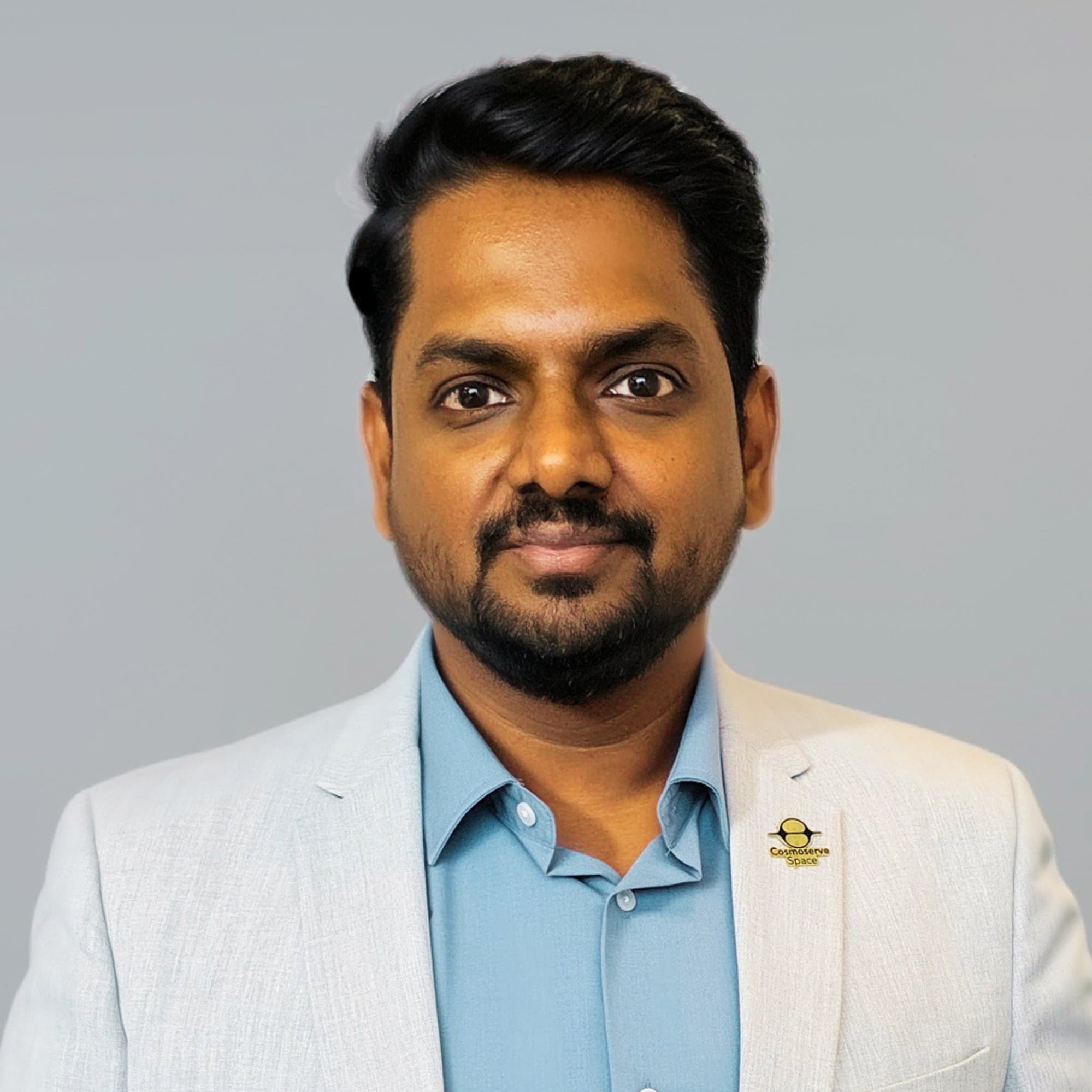
Building the Next Space Economy: Chiranjeevi Phanindra and Cosmoserve's Case for Orbital Maintenance
Chiranjeevi Phanindra, Founder & CEO of Cosmoserve Space, spent 14 years at ISRO working on re-entry and human spaceflight. Today, he is focused on a vital challenge: keeping Earth’s orbit usable.
Read Full Story

Corporate Visionaries
Shashank Sahni on What Success Leaves Out
Shashank Sahni, Google’s Managing Director of Global Ads Solutions, reflects on what customers reveal, what ambitious teams need from their leaders & what the mountains and marathons have taught him about going further.
Read Full Story
Corporate Visionaries
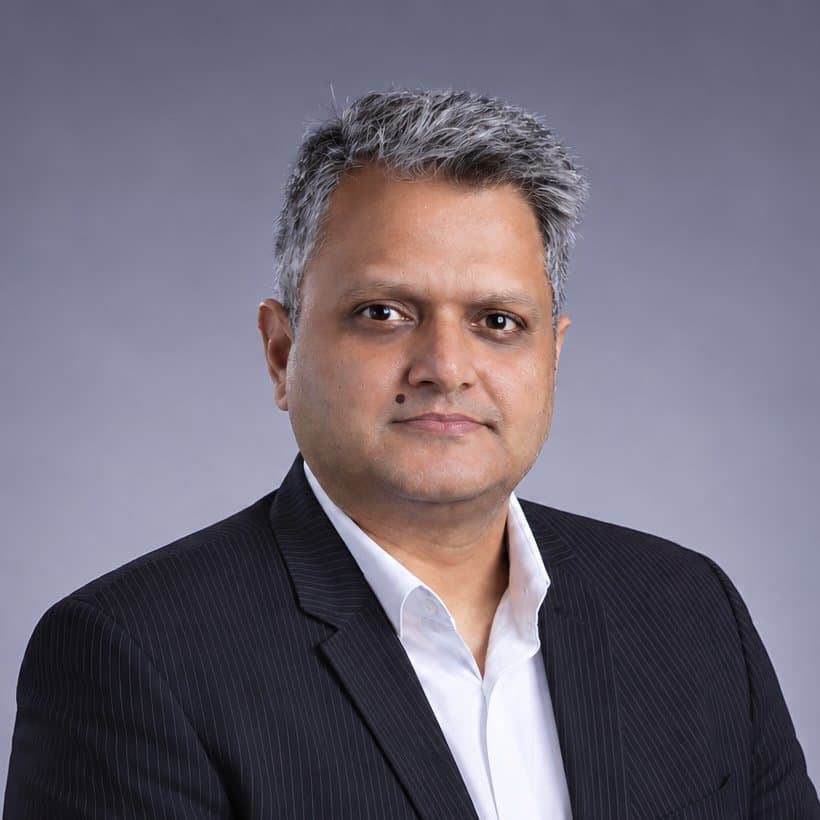
Clinical Multiplication: Divesh Singla on the Healthcare AI Case That Headlines Keep Missing
Divesh Singla, Managing Director, India at Veradigm, brings two decades in healthcare technology to the AI question leaders cannot avoid: how to expand clinical capacity without weakening human judgment.
Read Full Story