Category: Education Leadership
At Woodstock School, Mussoorie, one of Asia’s oldest residential schools, Dr. Blair Lee brings a global educator’s lens to preparing young people to access the world with judgment, character, and responsibility.
Dr. Blair Lee on Schools That Prepare Students for Complexity and Possibility
IndiSight Editorial
Jul 25, 2026
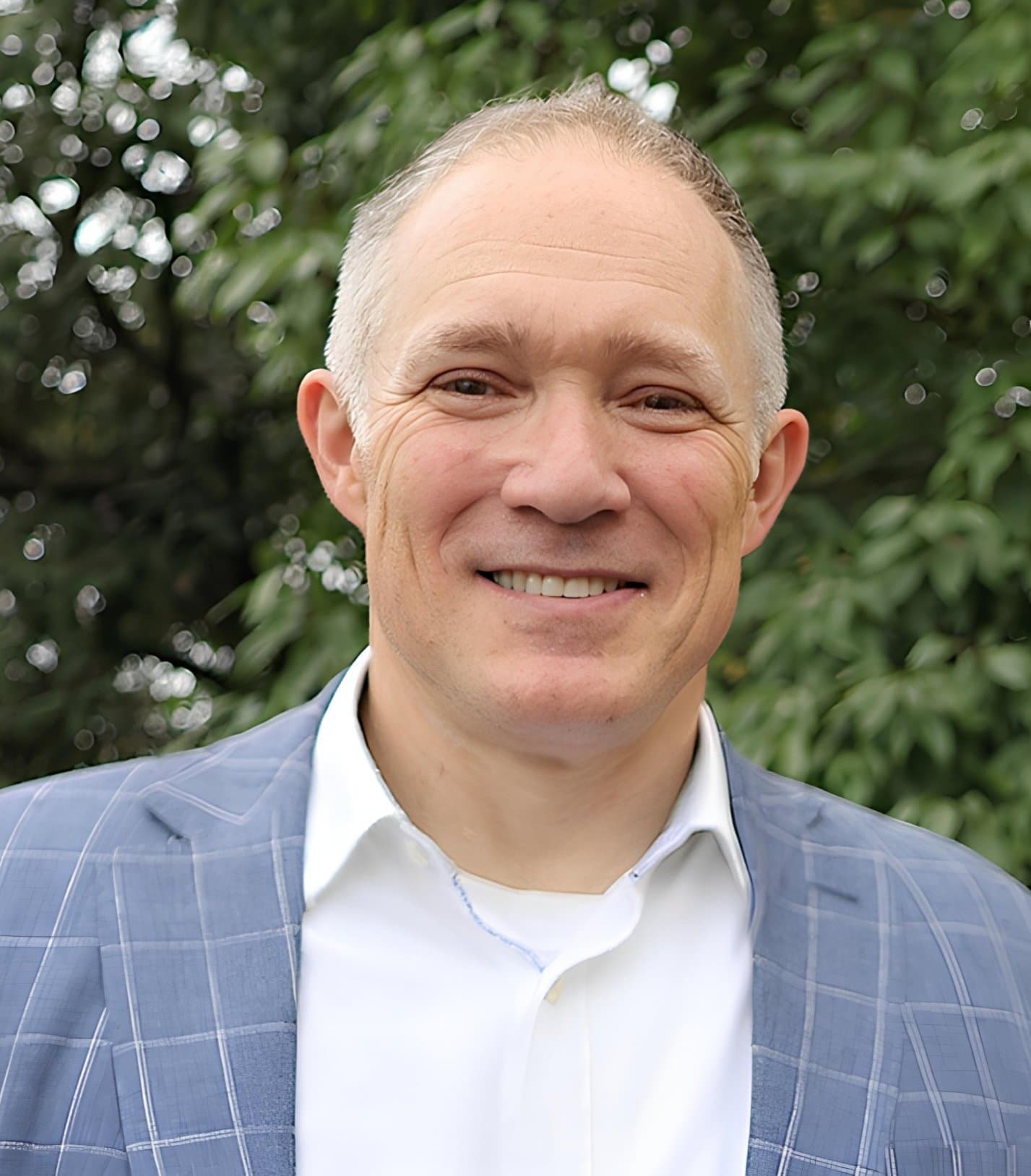
Dr. Blair Lee
Principal · Woodstock School, Mussorie
Mussorie, India
International schools were once easier to explain.
They offered families a wider horizon: serious academics, exposure to other cultures, a pathway to universities abroad, and the chance for a child to grow up more comfortable with the world than the generation before them. For many families, that promise still matters deeply. Education remains one of the few investments able to carry ambition, security, identity, and hope in the same decision.
Global education now faces a harder question. What happens after access is created? What happens after a student learns the curriculum, earns the grade, enters the university, and begins moving through the world with confidence?
Strong schools are being asked to form judgment, steadiness, humility, resilience, and the ability to live with people who do not share the same history or assumptions. Dr. Blair Lee’s work belongs inside that conversation.
A Canadian educator with more than two decades in international school leadership, Dr. Blair has worked inside curriculum design, accreditation systems, teacher growth, parent expectation, university pressure, cultural difference, and the daily formation of school communities.
It wasn’t just about creating good chemists. It’s about creating good people that can do chemistry.
Dr. Blair values excellence, outcomes, rigor, and opportunity. His experience has shown him how the deeper work of education often appears much later than a report card or university offer. It appears in how a student handles responsibility, treats others, responds to uncertainty, collaborates across differences, and carries knowledge into life beyond school.
As Dr. Blair prepares for his next chapter at Woodstock School in India, he enters one of the world’s most dynamic education contexts with the humility of a learner. India’s education landscape carries ambition, tradition, family expectation, competition, spirituality, and global aspiration in the same frame. For Dr. Blair, the move creates an opportunity to listen carefully and continue asking the question running through his career: what does a school help a young person become?
The Formation Question
Dr. Blair’s professional life began far from the language of international education. He grew up in rural Saskatchewan, Canada, in a community so small that belonging was daily life before it became an institutional value. His father bought grain. His childhood was shaped by family, work, community, and responsibility.
He began as a teacher in Canada and later became a principal. Then came Kuwait, where a temporary decision became a permanent reorientation. Dr. Blair arrived with two young children, stepped into a cultural world far removed from the one he had known, and encountered the International Baccalaureate in a serious way.
The IB gave him a framework for thinking beyond subject mastery. It asked schools to consider inquiry, perspective, international mindedness, and the formation of students as people capable of carrying knowledge responsibly.
After Kuwait came Indonesia, South Korea, China, and Jeju. Each place altered his understanding. Seoul Foreign School sharpened his work around academics and institutional change. China placed him inside the pressure of COVID-era leadership. Branksome Hall Asia brought him deeper into the IB world again. Woodstock School in India now opens another chapter, and Dr. Blair speaks about it with caution.
“I would be really arrogant to think I know what I’m walking into.” he says.
That humility matters. Strong international educators avoid moving from country to country collecting assumptions. They learn how each place changes the questions.
For Dr. Blair, international mindedness begins when students understand how people see the world from where they stand. He uses the metaphor of a beach ball. From one angle, a person sees one color. From another, someone else sees another. Both are looking at the same object. Their perspectives differ because their positions differ.
“Just because you’re looking at it through one lens doesn’t mean it should be the lens that everybody looks at.” he explains
Education at its most serious asks young people to understand their own history, culture, and identity, then recognize how others carry histories with equal force. Roots should deepen perspective, rather than trap it.
Dr. Blair saw the effect inside his own family. His sons grew up across countries and later returned to Canada with a wider view of history and social responsibility. Exposure to disparity in different parts of the world shaped their response to Canada’s reckoning with Indigenous communities.
Dr. Blair also recognizes the limits of global education. International schools often handle cultural diversity more easily than socioeconomic diversity. Private schools, by design, exclude many families.
“The biggest problem we have with diversity is probably the diversity of wealth, socio-economic status.” he mentions.
For a sector built around global awareness, this is a serious strategic tension. International schools carry moral force when they help students understand worlds beyond their immediate circle. That force weakens when global education becomes a premium pathway available mainly to families already positioned for global access.
What Schools Measure
Schools know how to count what fits neatly into a report.
Marks can be compared. Test scores can be tracked. University offers can be announced. Writing and mathematics can be assessed with confidence. These measures matter because they give families, teachers, and institutions a common language for progress.
Dr. Blair has led schools where such outcomes carry real consequence. Yet his attention keeps returning to the things schools say they value most and still struggle to see with the same confidence.
“How do you measure somebody’s kindness? How do you measure somebody’s willingness to care for others?” he questions.
The question is uncomfortable because it moves education away from proof and toward judgment. Schools speak often about character, resilience, collaboration, courage, and care. Yet the systems around them still reward what can be counted quickly.
To measure kindness or honesty requires judgment. It asks teachers to speak about qualities that feel personal. It risks parent resistance. It sits uneasily beside numerical scales and report cards.
Dr. Blair admits he has no finished answer. The problem is too complex for easy remedies. Yet he believes schools must become more serious about it.
His own thinking has changed. Earlier in his career, he described himself as more legalistic about assessment. A test produced a mark. The mark became a label. A student’s performance on a given day seemed to define something permanent.
Over time, assessment began to look less like a verdict and more like a snapshot. A student may have mastered something. A student may be “not yet” there. The result should never become an identity.
The business problem is incentives. Universities sort through scores. Parents read outcomes through the language available to them. Schools respond to what the market recognizes. Once a metric becomes a sorting tool, it shapes behavior across the system.
Dr. Blair lives inside that tension. His role is to lead within the global admissions system while protecting room for what it undervalues.
The Human Work After Technology
Technology debates in education often move quickly to devices, platforms, productivity, access, cheating, and efficiency. Dr. Blair approaches the subject through the human purpose of school.
He sees the potential of artificial intelligence. Students can use AI to research, draft, test ideas, and solve problems. Teachers can use it to plan, design, and extend their work. The tool is already inside the educational environment. Avoiding the conversation creates dishonesty.
Dr. Blair sees dishonesty emerging. Students use AI and hide it. Teachers use AI and hide it. A learning culture built around concealment cannot build trust.
His solution is transparency. Ask students to show their process. What did they ask? What did AI generate? What did they accept? What did they reject? Where did they add judgment? Can they defend what they submitted?
“It’s ok if they say ‘This is how I used AI. This is what I was able to produce’.”
Honesty about process creates a higher standard. The central issue becomes whether the student understood, evaluated, shaped, and owned the work. AI increases responsibility because it makes polished output easier.
Dr. Blair also notices how students can sit together without meaningful interaction. They may occupy one room, work on a shared document, and never speak. Technically, collaboration is happening. Humanly, something important has gone missing.
Why would we try to get 24 people in the same room to have nobody talk?
Shared files, digital platforms, and collaborative tools can create the appearance of teamwork while leaving the deeper human work untouched. If students gather only to work separately on screens, the classroom loses its strongest reason to exist.
Physical schooling has to teach young people to read people, handle disagreement, support others, manage emotion, and build trust. The stronger the machine, the more essential the formation of the person using it.
Innovation and Its Performance Problem
International schools operate under pressure to appear modern. Families tour campuses. They see makerspaces, robotics labs, digital studios, design centers, and technology-rich classrooms. These facilities can support meaningful learning. They can also become symbols in a competitive market.
Dr. Blair is candid about the pattern. One school buys a laser cutter. Another school feels pressure to buy one too. One school displays 3D printers. Another wants more. Innovation becomes a visible language of institutional seriousness.
The presence of tools never guarantees depth of learning.
For Dr. Blair, the essential question is purpose. Does the tool deepen thinking? Does it connect to the curriculum? Does it help students solve authentic problems? Does it build transferable capacity? Or does it simply help a school appear current?
Education resembles every other industry chasing transformation. Capital expenditure can look like progress. Procurement can look like strategy. A new lab, platform, or program can create confidence before it changes practice.
Dr. Blair’s experience points to a harder operating question: how are people using what has been built?
Leadership as Slow Work
Dr. Blair’s leadership philosophy rests on a simple belief: he does better when others do better.
The strength of a school depends on adult relationships, collaboration habits, and the trust teachers have in one another. Dr. Blair believes what adults do in a school shapes what students become.
If the teachers are learning, if the teachers are working together, if the teachers are working collaboratively and have good relationships and respect and honor each other, that is the best environment for a student to thrive.
Leadership then becomes the work of conditions. The leader helps adults do better work together through listening, resourcing, aligning, challenging, and building trust.
Dr. Blair learned the cost of moving too quickly while helping lead IB implementation at Seoul Foreign School. He believed the educational case was strong. The program made sense. The practices were sound. He assumed the institution would naturally move toward it.
Authorization succeeded, but the process became harder than necessary because teachers and parents had not been brought along carefully enough.
“I needed to move slower rather than moving faster.” he adds.
Strong ideas require absorption. People need time to understand, question, trust, and see themselves inside change.
Dr. Blair’s decision-making reflects the lesson. When facing complex choices, he gathers trusted people, listens carefully, and speaks late. He understands the weight of a head of school’s words. If he states his view too early, the room may collapse around it.
“It is not my job to be the smartest person in the room, but it is definitely my job to make sure that the smartest and best decision is made,” he says.
Authority can create alignment, but it can also narrow thinking. Mature leadership knows when to withhold certainty long enough for the room to think.
India and the Work Ahead
Dr. Blair’s move to Woodstock School places him within one of the world’s most consequential education contexts.
India is a country where education carries multiple meanings at once. It is family aspiration, mobility route, social signal, moral investment, and national priority. It holds together fierce ambition and deep tradition, intense competition and spiritual inheritance, technological acceleration and local belonging.
Dr. Blair approaches the context carefully. He has visited Woodstock, spoken with people who know India, and sensed certain patterns: respect for hard work, pride in learning, strong family expectation, and a belief in education as a contributor to national progress.
“I’m excited to share who I am as a learner, but also to come and learn from those that I’m working with,” he shares.
Woodstock offers a distinctive educational question. In an age when curricula travel easily and schools risk becoming interchangeable, what does place teach? Dr. Blair wants Woodstock’s environment, community, and landscape to matter.
If knowledge is portable, place becomes more important. The future international school cannot function as a generic global product delivered in different locations. It must learn from where it stands.
India may sharpen this question further. The country’s education culture does not separate aspiration from family, or learning from social mobility, or achievement from identity. Families seek outcomes, but those outcomes carry the weight of security, honor, responsibility, and intergenerational progress. A school leader entering that context needs more than international experience. He needs listening capacity.
India may also ask a question many international schools are only beginning to confront: can global education expand opportunity while strengthening a student’s relationship with culture, family, and place? For Dr. Blair, Woodstock may become a setting where global education is tested by local seriousness.
Leadership Lessons
Achievement without formation leaves education unfinished. Universities may reward performance first, but life tests judgment, care, humility, and responsibility.
Students learn what matters by watching what adults notice, reward, discuss, and report.
International mindedness starts with self-understanding. A student who does not know where they stand will struggle to respect where others stand.
AI use should become more honest. The real question is whether students understood, shaped, and could defend the work.
A new lab, tool, or program matters when it changes how students think, collaborate, and solve problems.
Adult culture becomes student culture. The way teachers learn, disagree, listen, and support one another becomes part of what students absorb.
Authority can narrow thinking. In complex decisions, listening first often produces better judgment.
Change travels through people before it travels through plans. Strong ideas need time to be understood, trusted, and owned.
International schools are often fluent in cultural diversity and quieter about class. Global education loses depth when economic distance remains outside the conversation.
Place should shape learning. A school’s environment, history, and community should influence what students notice and what responsibility means to them.
The Work of Becoming
Dr. Blair’s story is about a school leader who has spent years becoming more cautious about easy answers.
He has learned that marks matter, though they reveal only part of the person. International education can expand students while also insulating them. Technology can strengthen learning while weakening human presence. Strong ideas need trust before they can travel through an institution. Adult culture may be a school’s most powerful curriculum.
Institutions are often judged by visible outcomes: revenue, rankings, placements, facilities, growth, market reputation. The deeper test of any institution lies in what it repeatedly forms in people.
In schools, the test carries unusual weight because the people being formed are still becoming themselves.
Dr. Blair’s phrase stays with you.
Good people who can do chemistry.
The challenge is immense. The phrase asks an entire education economy to remember the order of the task. First the person. Then the capability. First the character of the learner. Then the power of learning.
Global education will keep expanding. More families will seek it. More schools will offer it. More students will cross borders physically, culturally, and digitally.
The harder work is ensuring that expansion produces people worthy of the access they receive. Dr. Blair’s chapter in India begins inside that test. The question is no longer only where students can go. It is what they are prepared to carry when they get there.
Our Suggestions to Read
Discover The Leaders Shaping India's Business Landscape.

Corporate Visionaries
Sarath Gollapalli on the Work That Makes Technology Dependable
Sarath Gollapalli, Vice President at Broadridge, reflects on why AI-era enterprise technology still depends on fundamentals: client understanding, reliability, governance and ownership.
Read Full Story
Corporate Visionaries
The Work Before the Story: Rahul Malhotra on Trust, Behaviour and the Business of Marketing
Rahul Malhotra brings 30+ years at P&G and Shell across global CEO and marketing roles, offering deep insight into business, consumer behaviour, organisational change, commercial judgement and reputation.
Read Full Story
Corporate Visionaries
The Craft of Institutional Capital: Archit Shah on Judgement, Risk and Investing Across Cycles
The Zurich Kotak General Insurance Chief Investment Officer brings a practitioner’s view of investing, where good judgement under uncertainty has to become decisive action through portfolio construction.
Read Full Story