Category: Investors & Catalysts
Tushar Kansal decodes the behavioral DNA of modern capital. His thesis is precise: nations do not grow powerful by chasing foreign funding but by engineering financial systems that mirror their own temperament. India’s ascent, he argues, hinges on a new capital doctrine built on transparency, time, and trust. The question he leaves for the Global South is both strategic and moral: can we build markets that reflect our character, not our dependencies?
Beyond Valuation: Tushar Kansal on Redefining Capital for the Global South
IndiSight Editorial
Jan 10, 2026
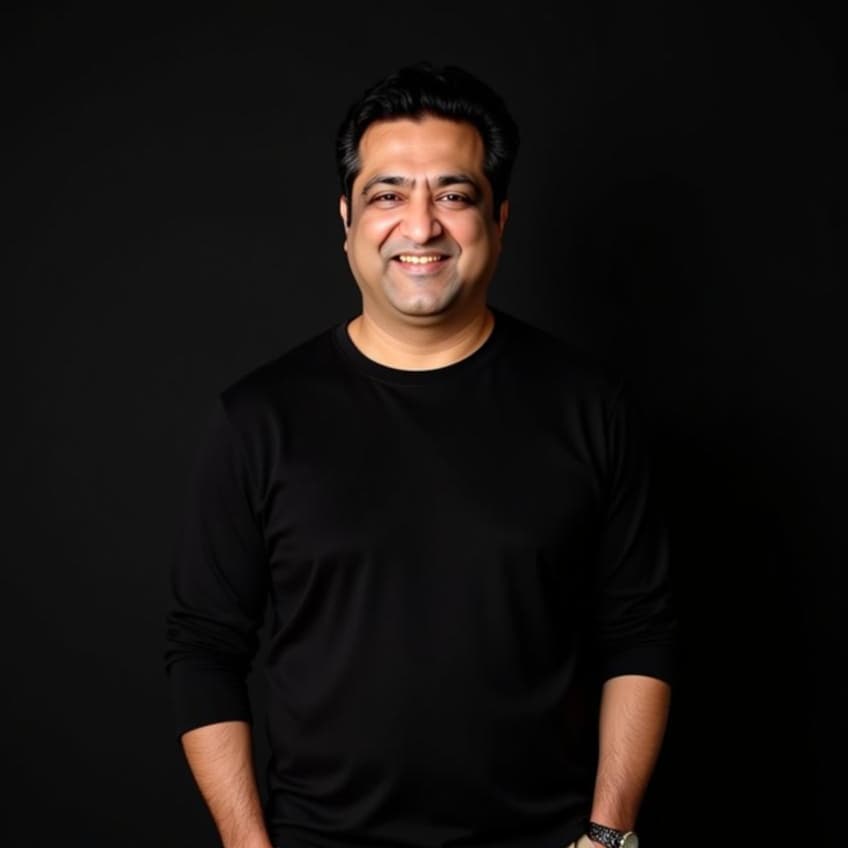
Tushar Kansal
Founder & CEO · Kansaltancy Ventures
Delhi
When Tushar Kansal speaks about the future of capital, he does not talk about valuation or velocity. He talks about architecture, about the subtle and often unnoticed scaffolding that determines how ambition becomes enterprise and how enterprise becomes economy.
In India, funding decisions were once made on relationships and optimism, now they must rest on data, discipline, and durability.
It is a conviction forged through two decades across every corner of finance. An engineer by training and a finance graduate from Delhi University, Tushar began at Deloitte, learned structured finance at Times Group’s venture arm, managed an 11,000-crore treasury at Aircel, and later raised 2.5 billion dollars in debt for a global telecom major. In his words, “Corporate finance taught me predictability. Startups taught me survival.”
His first venture failed. “I lost money but found purpose,” he recalls. “Finance was my language; I just needed to write it differently.” That failure became the foundation. It led him to create his own venture strategy firm in 2016, building a network that now spans more than 1,700 VC funds and family offices across India, Singapore, Dubai, the US, and the UK.
What distinguishes Tushar’s worldview is that he no longer sees money as a resource. He sees it as behavior, a living system that mirrors the psychology of trust, time, and power.
The Trust Deficit
Every emerging market wrestles with the same paradox: growth outpaces governance. India is no exception.
For Tushar, the true bottleneck in India’s economic evolution is not capital scarcity but the fragility of institutional trust. “You can raise money on relationships,” he says, “but you can’t scale on them. Credibility has to move from reputation to record.”
He learned this in the trenches. “In India, contract enforcement can take twenty years,” he says. “People often write off legitimate dues just to avoid litigation.” That experience shaped his belief that trust must be engineered, not assumed.
The quiet revolution enabling that shift is digital. Aadhaar, GST, and UPI have turned credibility into code. UPI now processes more than 12.8 billion transactions a month, creating verifiable behavioral data that reduces friction across lending, payments, and compliance. “Your data now proves who you are,” Tushar says. “That is a societal reset.”
Yet visibility alone, he cautions, is insufficient. “Transparency shows intent,” he says. “But patience builds confidence.” For India and for every economy seeking to mature financial trust, the challenge is to design systems that reward long-term conduct over short-term theatrics.
The Invisible Logic of Capital
Having sat on every side of the table as consultant, treasurer, investor, and founder, Tushar has learned that capital’s logic is rarely visible in the spreadsheets it funds.
“Capital doesn’t chase the best idea,” he says. “It chases the right moment.”
He calls this the invisible architecture of finance, a combination of timing, market readiness, and access. Innovation alone rarely determines success; alignment does. “Most founders forget that investors are running their own business too,” he says. “They have their own LPs, their own theses, their own timelines.”
For founders, that means credibility must be designed before it is demanded.
The ones who build networks early, who show evidence before they ask for belief, those are the founders who survive corrections.
In his firm’s global network, Tushar no longer searches for novelty but for coherence, teams that turn complexity into clarity and clarity into cash flow. “In venture,” he says, “discipline becomes the differentiator when optimism fades.”
Risk as Behavior
Traditional finance treats risk as a number. Tushar treats it as narrative.
“Volatility doesn’t destroy companies,” he says. “Leadership reaction does.”
In his experience, the real inflection point is never when revenue falls but when founders begin to make decisions from fear instead of data. “Financial models can predict exposure,” he says, “but not endurance.”
That is why he insists that risk management is now a behavioral science. Across global capital markets, the smartest investors no longer assess just returns; they assess reflexes. Leading funds now run structured behavioral diligence, including stress interviews and bias mapping before deploying large checks.
“The calmest leader,” Tushar notes, “creates the most stable culture. Stability compounds faster than hype.”
This is not philosophy; it is math. Behavioral predictability shortens due diligence, improves governance, and builds investor confidence. Markets reward psychological stability as much as financial innovation.
Depth as the Differentiator
India’s entrepreneurial ecosystem has already proven that ambition is not the constraint. The constraint is structural depth.
“Capital here is brilliant at finding opportunity,” Tushar says. “It’s still learning how to sustain it.”
While India’s public equity markets attract record inflows, its late-stage capital base remains shallow. The problem is not capability, it is cadence. “We accelerate faster than we compound,” he says. “And compounding is the true test of maturity.”
He often cites an example that borders on absurd. “To set up a solar plant in India today, you still need over a hundred regulatory clearances,” he says. “Capital depth depends as much on simplification as on appetite.”
He calls this the missing layer in India’s growth story: patient capital. “Our economy rewards creation, not endurance,” he says. “That must change.” He argues that India needs domestic long-horizon funds that can hold positions for 10 to 15 years, similar to sovereign or university endowment models in the West. “When time becomes a competitive advantage, volatility becomes manageable.”
In his view, India’s next stage is not about building more startups, it is about building longer ones. “The next economic decade will not be defined by the number of companies created,” he says. “It will be defined by how many survive governance, regulation, and time.”
The Human Variable
Every financial cycle eventually reveals the same truth: what breaks institutions is not systems but psychology.
Tushar’s framework for evaluating founders combines behavioral insight with financial logic. The first signal, he says, is language. “Founders who talk about burn rate and retention are usually building for endurance. Those obsessed with valuation are building for applause.”
He identifies four recurring biases that destroy value: confirmation bias, optimism bias, founder isolation, and ego attachment. “Two founders can face the same challenge,” he says. “One learns, the other deflects. That’s where risk truly lives.”
He often quotes a lesson from behavioral investing: that temperament beats intelligence in every market cycle. “We remember crises as numbers,” he says. “But crises are psychological before they are financial.”
This is why, in Tushar’s model, emotional discipline is not a soft skill but a form of strategic infrastructure. “A calm mind saves cost,” he says. “Panic is the most expensive emotion in business.”
The Global South and Financial Authorship
“The next frontier of capital,” Tushar argues, “is not where money flows but who writes its grammar.”
He believes India has mastered entrepreneurship but not yet financial authorship, the ability to define its own valuation logic, risk metrics, and governance playbook. “When your benchmarks are imported, your outcomes stay constrained,” he says.
He points to China’s path as precedent. “China stopped accepting Western risk weights and built its own rating agency,” he explains. “India must find similar courage to define trust through its own context.”
This independence, he believes, could anchor a Global South capital network connecting liquidity, transparency, and accountability among emerging economies.
Such a network would need indigenous credit rating systems, regional startup exchanges, and transparent secondary markets for unlisted equity. It would also require shared reporting frameworks that reflect emerging-market realities rather than Western assumptions about growth and risk. “We cannot keep measuring Indian volatility with Silicon Valley lenses,” Tushar says.
He imagines India as the convening ground for this new financial grammar, a country exporting frameworks rather than talent alone. “The Global South doesn’t need donors,” he says. “It needs coordinators, investors who understand the rhythm of volatility.”
Technology, Translation, and Conviction
In early-stage investing, conviction must precede consensus.
“Data confirms judgment,” Tushar says. “But conviction creates it.”
He admires ecosystems like Singapore, Boston, and Tel Aviv for funding translation, the process of converting research into deployment. Singapore’s National Research Foundation has allocated billions for research commercialization, creating a bridge between labs and markets.
He recalls meeting investors who fund university research years before commercialization, securing rights to deploy once the technology matures. “That’s what conviction looks like, backing what’s inevitable before it’s visible.”
India, he argues, must build a similar bridge between invention and capital. “Our hesitation is not capability,” he says. “It’s confidence. We still prefer proof over foresight.”
To him, true innovation is less about invention and more about translation. “Research creates knowledge,” he says. “But translation creates wealth.”
Investor Judgment in the Age of Data Excess
Everyone is data rich and judgment poor, the hardest thing today is knowing when not to act.
He believes the future of investing will belong to those who interpret before they react. “Information is democratized,” he says. “Interpretation isn’t.”
In his view, genuine innovation can be recognized early: repeat user behavior, validated prototypes, and credible unit economics. Everything else, he says, is valuation theatre.
“Capital forgets slogans but remembers pain,” Tushar notes. “As liquidity tightens, the balance of power shifts from abundance to endurance. Smart money isn’t fast; it’s patient enough to wait for signal.”
He points to the cycle of overfunded IPOs and corrections as proof that markets learn only through repetition. “Every mistake in exuberance becomes a lesson in restraint,” he says. “And restraint is what builds credibility.”
From Capital to Doctrine
Tushar frames India’s next economic leap through three interlocking imperatives: credibility, depth, and doctrine. Credibility is built when governance becomes traceable and behavior measurable.
Depth emerges when domestic savings evolve into long-horizon institutional pools. Doctrine takes shape when nations define their own financial philosophy instead of borrowing one.
He argues for regulatory design that institutionalizes mentorship and standardized reporting for unlisted firms, so founders learn governance before markets enforce it.
He also envisions patient-capital vehicles anchored by public and private participation, modeled on sovereign wealth principles. “You cannot demand long-term thinking from short-term money,” he says.
The essence of his argument is universal. “Markets that endure write their own rules,” Tushar says. “Every nation must decide whether it wants to chase momentum or compound maturity.”
Structural Lessons from Tushar’s Framework
Systems Outlast Founders - Leadership is architecture, not charisma.
Trust Must Be Engineered - Data is a governance tool, not a story.
Speed Without Structure Fails - Momentum without rhythm collapses.
Emotional Discipline Is Strategy - Calmness converts chaos into clarity.
Culture Is Infrastructure - Ethics scale better than capital.
Patience Is Capital - Short horizons inflate; long horizons institutionalize.
Regulation Requires Design Thinking - Simplicity compounds compliance.
Scarcity Breeds Intelligence - Constraint clarifies execution.
Detachment Enables Precision - Focus trumps fixation.
Behavioral Intelligence Is India’s Export - The world has technology; it needs temperament.
Closing Reflection
Tushar describes excellence as an atmosphere built through repetition, reflection, and restraint.
He reads for hours each day, meditates, journals, and walks to decelerate his thinking. “When you slow down, your analysis gets sharper,” he says. It is his way of practicing what the Bhagavad Gita calls nishkam karma, focused action without fixation on reward.
He sees India not as an emerging market but as an emerging mindset, a country learning to value time as much as talent and patience as much as progress.
The future of leadership belongs to those who build quietly, think long, and act precisely.
And in that philosophy lies a message larger than India itself: that finance, like leadership, must grow a conscience. “Every country must learn to design systems that serve its people first,” Tushar says, “and teach the world by example, not imitation.”
Our Suggestions to Read
Discover The Leaders Shaping India's Business Landscape.
Investors & Catalysts
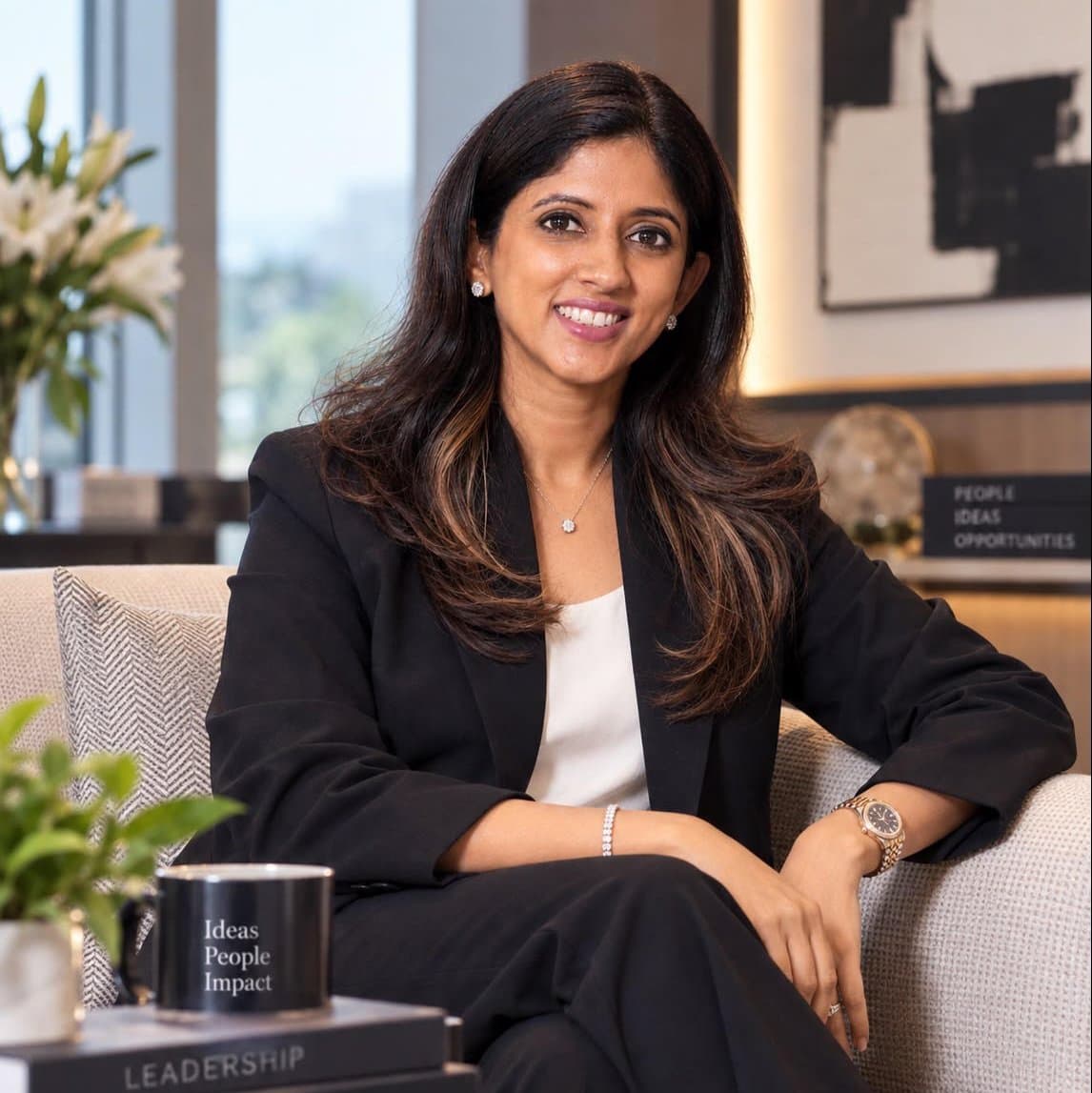
From Millet to Method: Rasika Prashant on Building What Consumers Return To
Rasika Prashant, CEO of NSRCEL at IIM Bangalore and Co-founder of Soulfull (later aquired by Tata Consumer Products) on consumer trust, category creation, Indian brands, and the founder discipline required after belief.
Read Full Story
Founders & Innovators
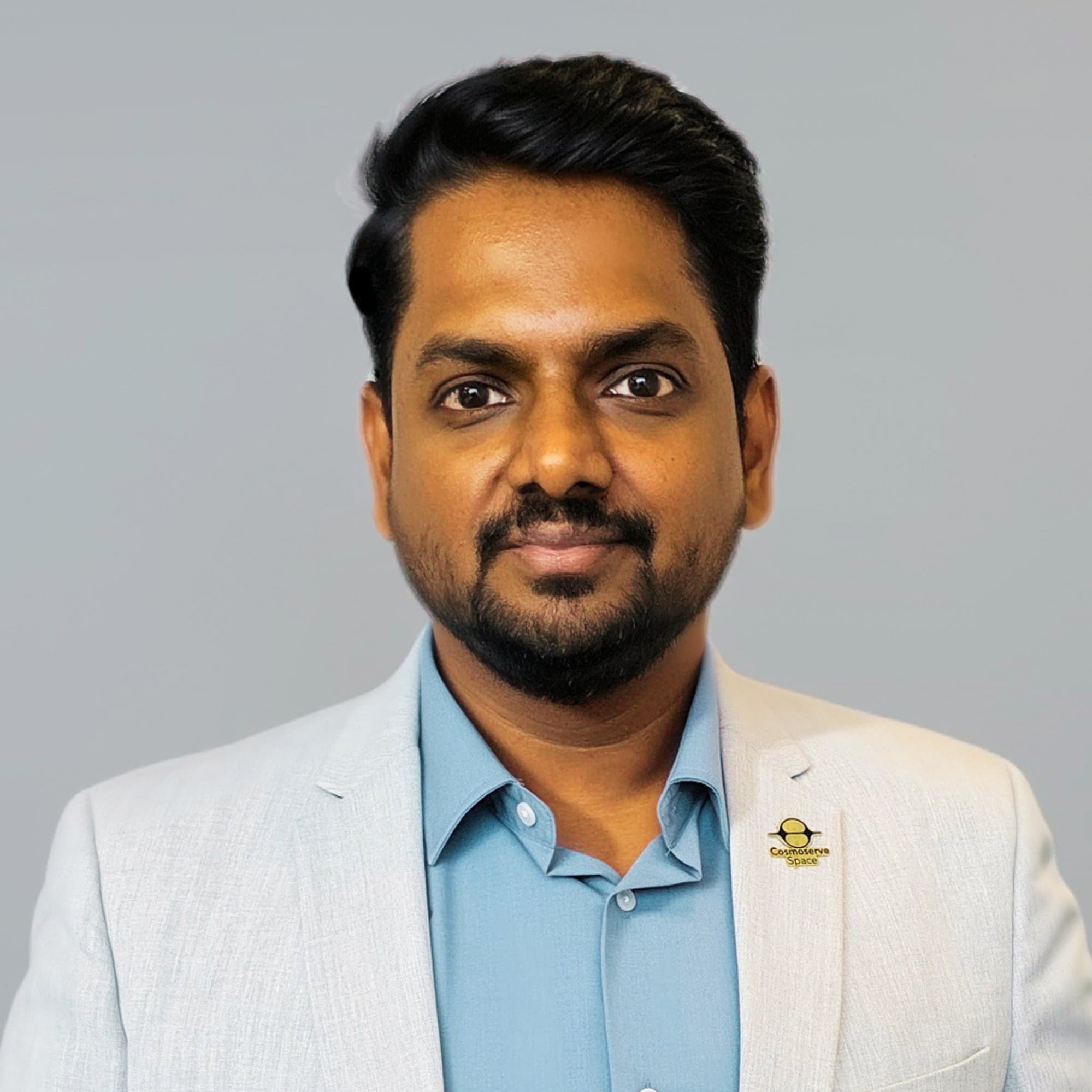
Building the Next Space Economy: Chiranjeevi Phanindra and Cosmoserve's Case for Orbital Maintenance
Chiranjeevi Phanindra, Founder & CEO of Cosmoserve Space, spent 14 years at ISRO working on re-entry and human spaceflight. Today, he is focused on a vital challenge: keeping Earth’s orbit usable.
Read Full Story

Corporate Visionaries
Shashank Sahni on What Success Leaves Out
Shashank Sahni, Google’s Managing Director of Global Ads Solutions, reflects on what customers reveal, what ambitious teams need from their leaders & what the mountains and marathons have taught him about going further.
Read Full Story