Category: Founders & Innovators
After building Dineout into one of India’s most successful startup stories and leading its acquisition by Swiggy, Ankit Mehrotra shifted from scaling a consumer venture to global healthcare. As co-founder of The Medical Travel Company, he is building systems that make trust, continuity, and access the foundation of cross-border care. His second act reflects a deeper thesis: the future of growth depends on institutions built for reliability, empathy, and global credibility.
From Dining Tables to Operating Tables: Ankit Mehrotra’s Second Act
IndiSight Editorial
Feb 18, 2026
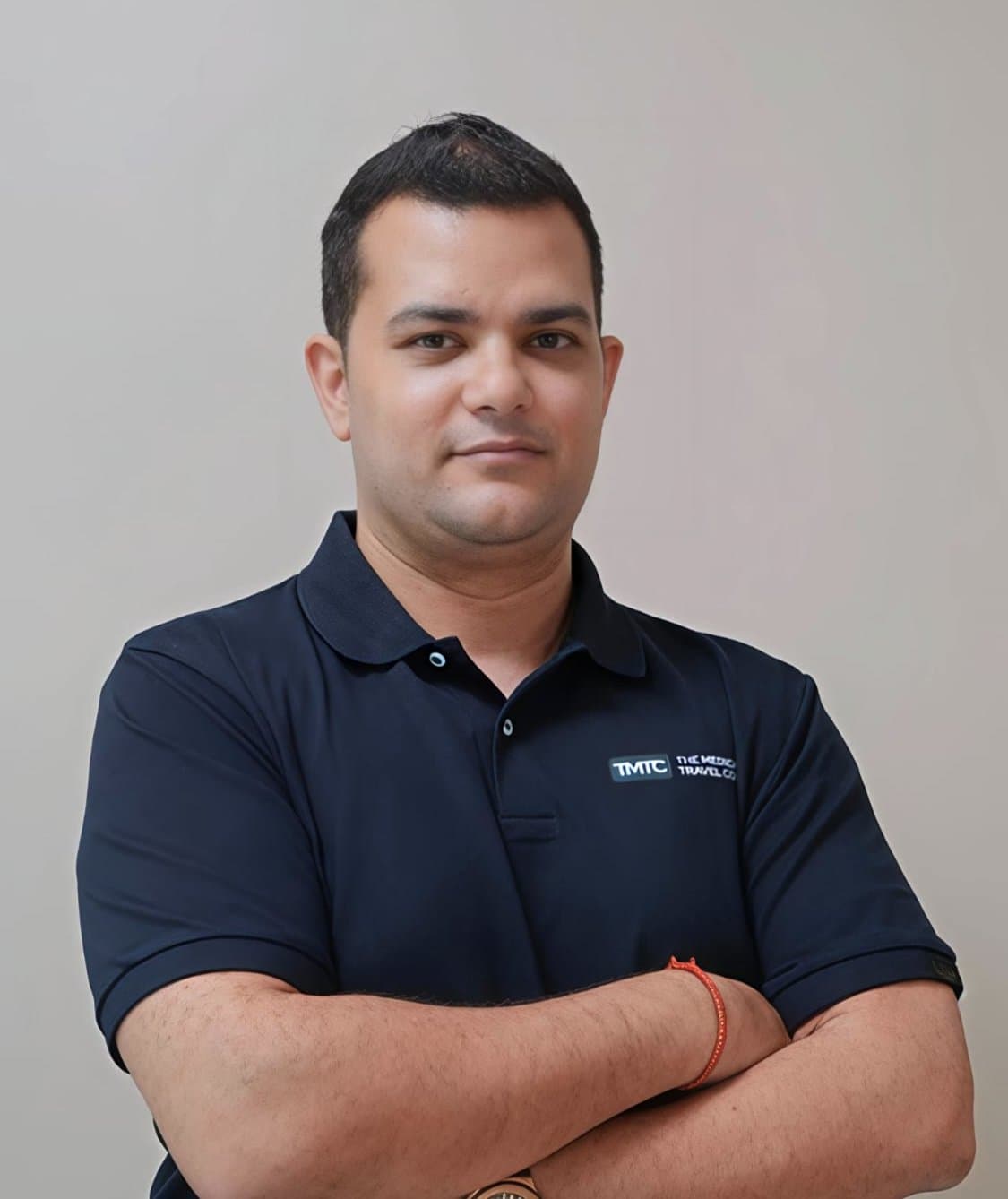
Ankit Mehrotra
Co-Founder · The Medical Travel Company
Delhi
India’s startup ecosystem is one of the world’s most dynamic but also one of the most unpredictable. Thousands of ventures are launched each year, yet few reach meaningful scale or successful exit. What the ecosystem needs most is not just innovation but discipline, the focus, consistency, and commitment to finish what it starts. The entrepreneurs who last are those who treat momentum as a responsibility, not a race.
When Ankit Mehrotra exited Dineout in 2024, it closed one of India’s most formative chapters in consumer internet history. What began as an experiment in digital hospitality had turned into a nationwide habit that redefined how people discovered and paid for experiences. By then, Dineout was seating more than five million diners every month, processing close to a billion dollars in annual payments, and had been acquired by Swiggy in a 200 million dollar transaction in July 2022.
As the headlines faded, Ankit faced a silence most founders never anticipate. The adrenaline that fueled more than a decade of creation gave way to reflection. For the first time in thirteen years, he was not building for scale. He was searching for meaning.
He had spent years navigating capital winters, market corrections, and a pandemic that nearly erased an industry. Once the transition to Swiggy was complete, he felt a separation between identity and institution. The company’s name would remain, but his own role was complete. Out of that stillness came a sharper question: what does one build after building once?
The pause became a prism. It revealed patterns that cut across industries, how trust drives adoption, how convenience matures into dependency, and how empathy scales systems that data alone cannot. That curiosity pulled him toward an entirely different frontier, healthcare.
Today, as co-founder of The Medical Travel Company (TMTC), Ankit is building a cross-border healthcare network that connects patients in developed countries with India’s fast-advancing medical infrastructure. It is not merely a startup; it is an argument about the next phase of globalization. Just as India once became the world’s digital back office, he believes the coming decade will see the country emerge as the world’s assurance layer in healthcare, where competence becomes the currency of confidence.
For Ankit, this is not a sequel to Dineout. It is a redefinition of purpose, from serving experiences to serving lives, from scaling a business to shaping credibility on the global stage.
The Second Creation
Ankit’s first education in leadership began far from entrepreneurship, in the disciplined corridors of global finance.
In London’s financial district, he spent seven years at BNP Paribas, absorbing a world obsessed with precision and tempo. The early 2000s were an era of limitless optimism when markets rewarded speed over introspection. There he learned two lasting disciplines: how to decide under pressure, and how to execute without noise. Both would later become the operating rhythm of his companies.
Then came 2008. The crisis dismantled the illusion that systems built purely on logic were immune to emotion. “Watching markets collapse in real time,” he recalls, “taught me that performance without perspective creates fragility.” That realization quietly rewired his sense of progress.
In 2010, a deal on his desk, BNP Paribas’ transaction for OpenTable, became the hinge of his story. A simple app that connected diners to restaurants was reshaping how cities consumed. It revealed how trust, convenience, and design could rewire behavior. The idea lingered.
Conversations with his childhood friend Sahil transformed curiosity into intent. Within months they left their global careers and returned to India, determined to build something that matched the energy of a transforming economy. In early 2012, Dineout was born.
India was still learning the grammar of startups. Investors were cautious, infrastructure was raw, and consumers were skeptical. Every partnership had to be earned by hand. The four founders, friends since nursery school, built slowly, restaurant by restaurant, customer by customer. Over time, patience turned into traction.
Looking back, Ankit says Dineout’s first real product was not technology but belief, the belief that India could sustain organized experience at scale and that credibility could be built from the ground up.
Building in Cycles, Thinking in Systems
Every founder eventually learns that growth and discipline are uneasy partners.
Dineout’s early years were built on scarcity. With limited capital, every expense required justification. That rigor created strength. Scarcity became the tutor of efficiency, forcing the team to build sustainable habits that would later anchor them during volatility.
After 2014, the pendulum swung. Funding surged. Markets rewarded acceleration over coherence.
Abundance distorts judgment. When money is easy, you stop listening to the signals that kept you alive.
For him, the experience revealed a truth that defines many companies. Scarcity sharpens focus, while excess weakens it. Longevity depends on designing systems that can survive both.
When the pandemic struck, those systems were tested beyond theory. Revenue fell to zero overnight. The team had to rebuild from first principles. They cut burn in half, redesigned products, and organized around one non-negotiable: cash must equal continuity.
By December 2021, Dineout’s volumes were six times higher than pre-COVID levels, and the average ticket size rose from ₹2,300 to ₹3,500. “Vanity metrics grow in good times,” he says. “Unit economics grow in hard times. Only the latter lasts.”
It also reframed his understanding of leadership. Momentum, he realized, is not strength; it is debt. Speed creates obligations that compound until the organization learns its own rhythm. What sustains a company is not pace but pattern, systems that remain steady when circumstances swing.
Where Health Meets Design
The global healthcare system has intelligence, capital, and innovation. What it lacks is coherence.
In developed markets, infrastructure is sophisticated but slow. Britain’s National Health Service now has over eight million people on waiting lists, about fifteen percent of the population, with average surgery delays of nearly four years. In 2024, more than twenty-five thousand Canadians died while waiting for treatment. North America spends the most yet remains divided by cost and bureaucracy. Meanwhile, emerging economies like India have the opposite equation, capacity and competence but limited integration. The result is a world that treats the transaction better than the patient.
Global Healthcare Mobility Snapshot
Global medical-travel market: 100–120 billion dollars, growing 15–20 percent annually (OECD 2024)
Average cost savings for major surgeries: 50–70 percent in India versus Western markets
India’s share of global medical travel: 10 percent, projected to reach 20 percent by 2030
Top destinations by patient volume: Thailand, Singapore, India, Mexico, Turkey
“The gap,” Ankit says, “is not medical; it’s logistical. Too many systems protect themselves, and too few serve each other.”
That diagnosis became TMTC’s mission: to treat access as an engineering problem.
The company’s model is simple in ambition but complex in design, an ecosystem that makes healthcare borderless. It integrates hospitals, insurers, logistics partners, and governments to create trusted corridors of care. The first corridor connects the United Kingdom and India, with others in Europe and Southeast Asia under design.
Ankit calls this coordination, not disruption. “The next wave of healthcare innovation will not come from new drugs,” he says. “It will come from connecting what already exists.”
India is uniquely positioned to lead this convergence. Nearly one-third of doctors in USA, UK & Canada are of Indian origin. Since 2020, a lot of them have moved back to India to set up their own hospitals, clinics or joined large hospital chains as their HOD’s. Combine that with world-class hospitals, digital infrastructure, and an English-speaking ecosystem, and India’s role as a health-technology hub looks inevitable.
We have been the world’s back office and its digital engine. Now we can be its recovery room.
While global medical travel has traditionally revolved around Southeast Asia, most models remain destination-centric rather than system-centric. Thailand and Singapore built early leadership on hospital branding and concierge service, attracting patients through premium experiences. India’s emerging model, led by TMTC, redefines the equation. Instead of positioning around geography, it builds around governance, linking diagnostics, procedure, after-care, and insurance across borders. This shift moves the narrative from tourism to infrastructure, from cost advantage to institutional reliability.
Designing Trust
At TMTC, trust is not a slogan; it is a system. The company has already onboarded over fifty doctors in the UK who see patients before travel and after return, ensuring continuity of care. It partners only with Indian specialists who have trained or practiced in the US or UK.
TMTC built its first after-care center in Gurgaon, offering residential accommodation with 24-hour nursing, daily physiotherapy, and six hot meals a day. Patients are received at the airport through a partnership with Encalm and supported by TMTC teams throughout recovery.
It also launched the world’s first medical-tourism insurance product, covering the operated body part in the patient’s home country for twelve months after surgery.
TMTC operates as your personal medical concierge, charging a transparent service fee to patients while maintaining long-term volume agreements with hospitals. Its insurance layer adds recurring revenue and creates post-treatment accountability, turning trust itself into an asset class.
“In dining, losing trust meant a bad evening. In healthcare, it could mean a life,” Ankit says. “We want to prove that India’s care can be as dependable as its code.”
Each TMTC corridor functions as a micro-economy linking patients, hospitals, and regulators across jurisdictions. The value lies not in cost advantage but in trust standardization. Global medical travel already exceeds one hundred billion dollars a year, yet remains fragmented. TMTC’s bet is that credibility, once codified, becomes a product.
Leadership as an Operating System
Ankit’s view of leadership is built less on inspiration and more on design. His career across finance, consumer technology, and now healthcare has taught him that leadership is not about control but about creating conditions where good decisions outlast the decision-maker.
“In banking, accuracy was empathy,” he says. “You respected capital by treating details as sacred. Startups flipped that logic. You had to make emotional bets before the data arrived.”
At Dineout, he learned that stability is a choice, not a motivational slogan.
If a system only works when the founder is watching, it is not a company; it is a dependency.
The pandemic tested that principle. Letting go of plans, products, and people became an act of leadership. “Leadership is not optimism,” he says. “It is coherence under stress. People do not need slogans. They need orientation.”
His framework rests on five operational beliefs.
Leadership is a system, not a personality. Institutions fail when authority grows faster than accountability.
Trust is built through precision. Reliability comes from process accuracy, not speeches.
Speed without comprehension weakens foundations. Advantage lies in rhythm, not haste.
Clarity is collective. The leader’s role is to remove distortion so everyone sees the same map.
Culture is the slowest form of capital. It compounds through loyalty and decays through neglect.
The Institution as Innovation
Ankit believes the next revolution in progress will not be technological but institutional. The century ahead will reward coordination over invention. Across finance, energy, and healthcare, the bottleneck is no longer capability but coherence.
The future belongs to those who can align competence with conscience.
TMTC treats this vacuum as a design challenge. Medical tourism, in his framing, is an unstandardized system of care. “Finance solved global trust with SWIFT. Healthcare still runs on phone calls,” he says. “We are trying to close that gap.”
Each corridor TMTC builds is a governance experiment, regulating the flow of patients, data, and accountability across borders. “Technology can transmit data in milliseconds,” he says, “but it cannot yet transmit reassurance. Trust is still human. Our task is to make it scalable without making it mechanical.”
He frames India’s opportunity along three vectors.
Credibility: India’s medical advantage stems not from cost but from competence. The task now is to codify individual excellence into institutional reliability.
Capacity: With a demographic surplus, India can deliver care to a world facing shortages, but only if that surplus is governed by data and design, not volume.
Convergence: Policy, healthcare, and technology must operate as one system of trust. “The real innovation,” he says, “is governance that travels.”
The Logic of Empathy
Ankit has lived through every season of entrepreneurship: invention, acceleration, crisis, exit, and reinvention. Through them all, one conviction has persisted, that leadership is not about stamina but about sense-making.
The hardest work a leader does, is distinguishing motion from progress.
He learned that distinction when Dineout’s revenue collapsed to zero. In that silence, he discovered resilience as structure, the ability to absorb stress without losing purpose. “People imagine resilience as flexibility,” he says. “In truth, it is discipline.”
For him, organizations fail not from lack of resources but from loss of coherence. Leadership is therefore an act of alignment, synchronizing moral, emotional, and operational rhythms.
He defines empathy not as emotion but as governance, the capacity to design fairness into systems. “Empathy is not how you greet a customer,” he says. “It is what happens after the promise is made.”
Designing for Global Credibility
Ankit’s worldview begins where most entrepreneurial ambition ends, with the design of continuity.
He believes the future of enterprise will be decided by those who can engineer predictability in an unpredictable world. “The real scarcity today is not capital or talent,” he says. “It is dependable systems.”
TMTC embodies that conviction. Its mission is to redesign the flow of trust in a fragmented global industry. “The twentieth century globalized production,” Ankit says. “The twenty-first must globalize compassion.”
He often frames healthcare as geopolitics in disguise. Every successful surgery in India, he says, is a data point in global trust.
Our next economic advantage will not come from talent, but from reliability. Credibility will be the new currency of capitalism.
India’s demographic strength, medical skill, and digital literacy provide the base. What will determine its ascent is the ability to institutionalize dependability, governance, quality, and ethics that scale across borders. “Innovation creates headlines,” he says. “Consistency creates history.” “When you build systems people can trust blindly,” he says, “you earn loyalty without marketing.”
Principles of Lasting Leadership
Build systems that outlive brilliance. Talent wins attention; structure builds stability.
Speed means nothing without rhythm. Leadership is knowing when to accelerate and when to stabilize.
Credibility is the new competitive advantage. Integrity compounds faster than innovation.
Trust is a business model. Transparency and accountability are structural advantages.
Leadership is continuity under pressure. Coherence matters more than charisma.
Legacy is a design challenge. Institutions last when they become self-correcting.
Capital follows conviction. Belief compounds longer than capital.
Profit and purpose reinforce each other. Precision in execution expresses purpose in action.
Globalization now rewards reliability. Nations and firms that export trust will define the new order.
Stewardship is ambition matured. Success is succession that sustains meaning.
Legacy as Continuity
History often remembers those who built speed. The future will remember those who built systems that could sustain it.
Ankit Mehrotra belongs to a generation of entrepreneurs redefining progress as responsibility. His work traces a movement from growth as performance to growth as permanence.
He often says that true progress begins when excellence becomes infrastructure, when trust no longer relies on individuals but on the institutions they design.
The real test of leadership, is whether people can still rely on what you have built long after you are gone.
In an age of volatility, his vision feels quietly radical, that patience, discipline, and dependability might again become the engines of prosperity. History suggests he may be right. Revolutions built on speed fade quickly. Revolutions built on trust define civilizations.
Our Suggestions to Read
Discover The Leaders Shaping India's Business Landscape.
Founders & Innovators
Building the Next Space Economy: Chiranjeevi Phanindra and Cosmoserve's Case for Orbital Maintenance
Chiranjeevi Phanindra, Founder & CEO of Cosmoserve Space, spent 14 years at ISRO working on re-entry and human spaceflight. Today, he is focused on a vital challenge: keeping Earth’s orbit usable.
Read Full Story
Corporate Visionaries
Shashank Sahni on What Success Leaves Out
Shashank Sahni, Google’s Managing Director of Global Ads Solutions, reflects on what customers reveal, what ambitious teams need from their leaders & what the mountains and marathons have taught him about going further.
Read Full Story
Corporate Visionaries
Clinical Multiplication: Divesh Singla on the Healthcare AI Case That Headlines Keep Missing
Divesh Singla, Managing Director, India at Veradigm, brings two decades in healthcare technology to the AI question leaders cannot avoid: how to expand clinical capacity without weakening human judgment.
Read Full Story