Category: Corporate Visionaries
Pankaj Kumar, Global Vice President of Strategic Alliances and Head of AWS Business Group at Kyndryl, explains why the next frontier of enterprise transformation will be defined by leaders who can convert platforms, partnerships and AI into trusted operating advantage across complex global organizations.
Beyond Adoption: Pankaj Kumar on Making Enterprise Technology Deliver
IndiSight Editorial
Jul 19, 2026
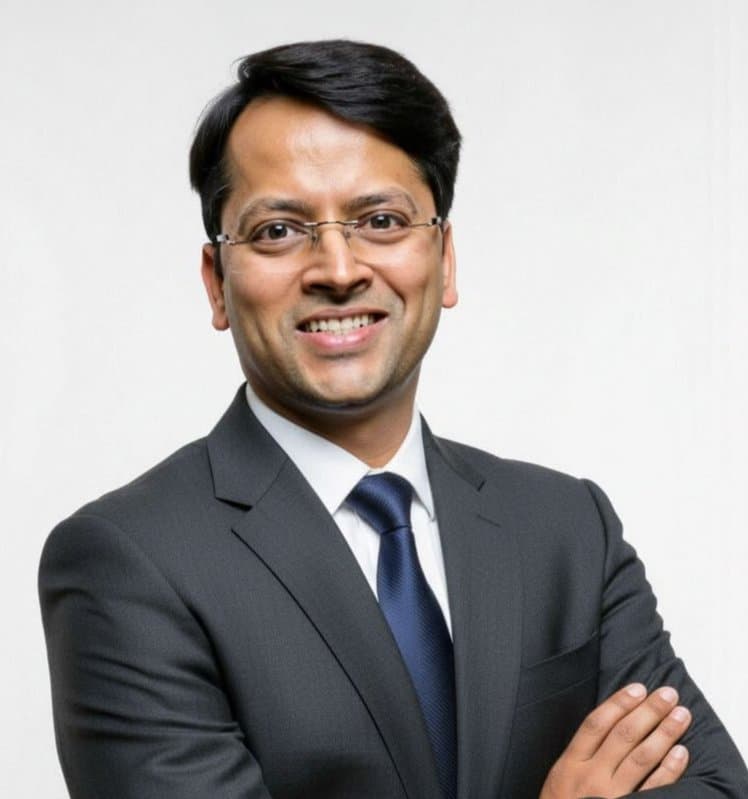
Pankaj Kumar
Executive VP and Head · Kyndryl
New York/USA
The technology can work exactly as designed and still fail to change the business.
AI pilots demonstrate capability and then stall before production. Strategic alliances begin with executive conviction and lose momentum in the field. Modernization programmes complete migrations without making the enterprise more responsive. The investment is real, the platform performs, and the expected value remains difficult to find.
Pankaj Kumar has spent much of his career inside this gap. Over the past two decades, he has worked across global system integrators, enterprise software companies, AI-led businesses and hyperscalers, including Amazon and Google, before taking on a senior leadership role at Kyndryl, one of the world’s largest IT infrastructure services companies. That range gives him a rare perspective on how innovation moves from product development to ecosystem execution, and finally into customer outcomes.
“Technology leaders still confuse value creation with technology adoption,” Pankaj says.
For him, value begins when technology removes a business constraint, improves a decision, reduces risk, strengthens resilience or changes a customer outcome. Access to a leading platform expands what an enterprise can attempt. The harder work begins once that platform has to survive real workflows, governance, competing incentives and the expectations of the people who must use it.
Pankaj describes this space as the “messy middle”. It is where strategy encounters organizational history, legacy systems, commercial pressure and the practical limits of execution. As AI becomes more capable and enterprise transformation grows more dependent on ecosystems, this middle is increasingly where advantage is built or lost.
Different Companies, Different Definitions of Success
Pankaj began his career in enterprise sales at Tata Consultancy Services, working across government and manufacturing accounts. That early exposure taught him to assess technology from the customer’s side. A technically strong product could still struggle to matter if the customer could not connect it to revenue, risk, resilience or a better operating outcome.
The lesson became sharper as he moved across services businesses, product companies, automation firms and hyperscalers. Every part of the ecosystem spoke about customer value, but each measured it differently.
“Everyone uses the term partnership, but they often mean different things when they mean it,” he notes.
A product company usually focuses on adoption, roadmap expansion, repeatability and renewal. A hyperscaler looks closely at consumption, recurring revenue, platform usage and ecosystem growth. A services firm remains closer to the customer’s operating environment, where implementation, integration, compliance, change management and user adoption determine whether the promise survives.
Each perspective reflects a legitimate business model. Problems emerge when one side assumes that the others are working towards the same milestone.
A product team may celebrate a successful launch. A hyperscaler may interpret higher consumption as evidence of progress. The services team may still be working through security concerns, legacy dependencies, adoption gaps and operational risk.
“People behave according to what their organizations reward,” Pankaj says.
Leaders often interpret friction as weak ownership or poor collaboration. The deeper cause may lie in the incentive system around the person. A sales executive, delivery leader and platform owner may all want the customer to succeed while being measured against different outcomes and time horizons.
Pankaj believes partnership leaders need to understand what each organization is expected to grow, what it must protect and what its leaders will eventually have to explain internally.
The real work of a partnership leader is to create a shared scorecard.
The importance of that scorecard lies in the negotiation required to create it. Both sides have to decide which outcomes matter, where accountability will sit, how conflicts will be handled and what customer evidence will prove that the relationship is working.
Agreement Is Easier Than Alignment
Pankaj draws a clear distinction between agreement and alignment.
Agreement is easier. Alignment is harder.
Agreement is visible. Senior executives meet, identify an opportunity and approve a plan. Alignment appears later in budgets, compensation plans, talent commitments, governance routines, escalation paths and the decisions field teams make when a customer situation becomes complicated.
Pankaj has seen partnerships built around aspiration without enough operating commitment. Leaders agree that they should do more together, yet avoid defining what must change in the way both organizations work.
He points to a question that is frequently ignored: what should stop?
Most partnership launches contain a list of new activities. Existing behaviour continues in the background. Sales teams remain focused on individual priorities. Delivery teams receive new responsibilities without additional capacity. Conflicts depend on personal relationships because the formal process remains weak.
Pankaj compares alliance leadership with diplomacy. A sales leader may view a lost opportunity as evidence that a partner cannot be trusted. The alliance leader has to examine the incident while holding the wider relationship in view.
The tension becomes sharper when partnership commitment meets customer choice. A services company may have deep relationships across several technology ecosystems, while the customer selects the platform best suited to a particular environment. A mature partnership cannot treat every competitive outcome as disloyalty. It has to distinguish between the strategic value of the wider relationship and the customer’s right to choose what fits its operating reality.
“Goodwill is important in a partnership, but goodwill is not a strategy,” Pankaj says.
Understanding incentives also has limits. Organizations may be reluctant to expose internal targets, alter compensation plans or shift resources towards returns that take time to appear. Incentive literacy explains the conflict. Alignment becomes real when leaders are willing to change the systems producing it.
The Field Decides Whether Strategy Travels
In the global alliance business Pankaj leads at Kyndryl, strategy has to move across regions, industries, sales teams, solution architects, delivery leaders and technical specialists. He believes field execution is the most underestimated part of that system.
“At the top, partnerships look beautiful,” he says. “The executives agree on strategy. The slides look very polished.”
The customer experiences the partnership through a seller who must explain the combined proposition, an architect who needs confidence in the technical depth on both sides, and a delivery leader responsible for turning the promise into a working system.
Field enablement therefore requires more than presentations and certifications. Teams need access to expertise, credible proof points, an understanding of incentives and confidence that the partnership will support them when an engagement becomes difficult.
Strategy fails quietly when the field is not enabled.
It weakens through missed referrals, vague propositions, delayed technical support and account teams returning to familiar ways of working. The partnership may continue formally while producing far less than its potential.
The lesson extends beyond alliances. Strategy travels through people who were rarely present when it was designed. Their ability to understand and trust it deserves the same attention as the original idea.
Pankaj also sees a wider ecosystem trade-off. Companies gain speed and reach through partnerships, while still needing to protect the capabilities that define their identity and customer trust.
“The best companies are the ones that orchestrate without becoming hollow,” he says.
The same principle applies across markets. The ambition, trust model and technical standards of a global alliance may remain consistent, while execution in Japan, India, Europe, Latin America or the United States has to reflect local regulation, buying behaviour, risk appetite and relationship norms.
Pankaj describes the requirement as “a strong spine with flexible limbs”. Excessive standardization ignores local reality. Excessive localization leaves the partnership fragmented.
What AI Reveals About the Enterprise
Pankaj applies the same operating lens to artificial intelligence.
Many AI pilots prove that a model can perform a task under controlled conditions. Production introduces a harder test. The system must integrate with real workflows, operate within security and compliance requirements, handle imperfect data, gain user acceptance and produce outcomes the business can defend.
Organizations often fund experimentation because it is visible and easy to celebrate. The operating changes required after a successful pilot receive less attention.
AI does not fail alone. It exposes whether the enterprise knows how to absorb change.
An AI programme eventually becomes a management question. Who owns the process? Which team has the authority to redesign it? Were operations, risk, legal and finance involved early enough? Has the workflow itself been reconsidered?
Leadership teams may report the number of pilots, users or tokens consumed. These figures show activity. They reveal little about whether the business improved revenue, reduced risk, strengthened customer experience or removed work that no longer needed to exist.
“The companies that win will be the ones that redesign themselves around intelligent work,” he says.
That redesign affects roles, approvals, controls, accountability and the points where human judgment remains essential.
Pankaj’s experience has also taught him that a strong business case alone rarely moves an organization.
“The best solution does not always win,” he says. “The solution that is trusted, explainable and adaptable to the realities of that organization wins.”
Large enterprises carry history, politics, risk appetite and institutional memory. A technically superior answer can fail when people do not understand what will change, what will remain safe or how they will succeed inside the new model.
When Intelligent Systems Receive Permission to Act
Agentic AI raises the stakes because it can move from generating recommendations to taking action.
Once a system begins executing tasks, enterprises need clear answers. Who gave it permission? What are its boundaries? When does a person intervene? Can an action be reversed? Who remains accountable if the outcome is wrong?
Pankaj describes the answer as a “permission architecture”. It includes identity, access controls, policies, monitoring, escalation paths and the limits within which an agent can operate.
“Trust cannot be added at the end,” he says.
Responsible AI becomes meaningful when responsibility can be observed in the workflow. It should be possible to understand what the system did, why it was allowed to do it, which information it used and when a person reviewed or overruled the decision.
“Responsible AI should not be seen just like a slogan. It is an operating discipline,” Pankaj says.
A policy written in calm conditions is easy to endorse. Its strength becomes apparent during peak demand, a security incident or a high-volume process where error carries consequences. Governance becomes credible when it continues to function while the business is under pressure.
The Knowledge Hidden Inside Old Systems
Kyndryl’s proximity to mission-critical environments gives Pankaj a distinctive view of legacy technology.
Mainframes, core banking platforms, ERP systems, manufacturing applications and hybrid infrastructure are often discussed as technical debt. That description can obscure the knowledge they contain.
These systems hold transaction histories, rules, dependencies, exceptions and decisions refined over many years. Much of that knowledge is distributed across runbooks, incident records, escalation paths, workflows and the experience of people who have kept the systems operating.
In the enterprise world, context is often more valuable than volume.
Generic data can reveal patterns. Operational context explains consequences. It helps an enterprise understand which exceptions matter, which processes are fragile and where human judgment has historically protected the business.
Pankaj is careful about romanticizing old systems. Some need to be modernized aggressively. The more useful question is what institutional intelligence sits inside them and how that knowledge can be carried into the next technology environment.
“In the AI era, modernization is about making the past usable for our future business outcomes,” he says.
A successful modernization programme should give the enterprise more room to respond. If it reduces cost while leaving the business equally rigid, it has addressed only part of the problem.
India’s Shift From Execution to Design Authority
Pankaj sees India’s advantages clearly. The country has engineering depth, large pools of technical talent, experience delivering complex work under constraints and digital infrastructure operating at population scale.
India’s technology services industry has earned global credibility by executing complex programmes for clients around the world. The next transition is more demanding: moving from fulfilling requirements to defining them.
“The next leap is to become a trusted architect of enterprise transformation,” Pankaj says.
Design authority requires Indian companies to shape products, operating models, governance systems and domain-specific intellectual property. It also demands stronger cybersecurity maturity, consistent delivery quality and the confidence to accept responsibility for how technology changes the customer’s business.
Pankaj sees room for a new generation of AI-native consulting firms. These companies may be smaller than the traditional services firms that built India’s global technology position. Their advantage could come from being designed around AI from the beginning, with a focus on context engineering, workflow redesign and industry-specific transformation.
India has the talent to create such firms. The deeper skill requirement extends beyond coding and certification. Young professionals will need domain understanding, product thinking, customer economics and the ability to improve ambiguous business processes.
“The next leap is to move from execution strength to becoming an authority in design,” Pankaj says.
The stakes are significant. If India remains strongest at executing requirements designed elsewhere, it will continue to participate in global technology growth without capturing enough of the intellectual property, product value and strategic authority created by that growth.
India’s innovation gap will narrow when more talent begins defining problems, building intellectual property and taking responsibility for business outcomes.
Leadership, Trust and the Ability to Scale
Pankaj’s view of leadership changed when he realized that seniority could no longer mean personally solving every difficult problem.
Early in a career, expertise creates credibility. At a larger scale, the same instinct can become a constraint. A leader who needs to approve every decision eventually slows the system.
Pankaj recalls working under a manager who wanted control over routine details. The experience showed him how quickly excessive control can suppress initiative.
“When you do that, you curb ideas from coming freely in the organization,” he says.
The leadership challenge is to give teams enough direction to make sound decisions without waiting for the leader to enter the room.
“Leadership at scale is about creating clarity for your team,” Pankaj says.
He describes the transition as moving from a high-performing individual to “building an environment where performance can scale beyond you”.
The same idea appears in his view of influence.
“Influence compounds more through trust than visibility.”
People remember who remained useful when the situation became difficult, who understood the wider context, took responsibility and stayed composed under pressure.
“Skills will get you noticed, but trust will get you invited back,” he says.
Pankaj makes another observation about senior leadership. The person appointed to the top role may be selected largely for competence and record. The person chosen to work closest to that leader is often selected through accumulated trust.
Competence may earn authority. Trust determines how much responsibility others are prepared to place in someone’s hands.
Five Business Lessons From Pankaj Kumar’s Experience
Understand incentives before interpreting behaviour. Much of what appears to be resistance comes from how people are measured.
Agreement becomes alignment when budgets, incentives and operating behaviour change.
The field decides whether strategy travels. Sellers, architects and delivery teams need context, expertise and confidence in the model they carry.
AI pilots test the enterprise around them. Ownership, workflow design and change readiness often determine whether they reach production.
Trust grows through usefulness under pressure. Visibility can open a door, while reliability determines who is invited back.
The Scarce Capability Ahead
Access to platforms, models and technical tools will continue to widen. The harder advantage will come from an institution’s ability to use them with judgment.
That requires partnerships capable of surviving conflicting incentives, field teams able to carry strategy into customer reality, AI systems whose authority is clearly bounded and leaders willing to redesign work as technology changes.
Pankaj Kumar’s experience points to a scarce capability beneath all of this: institutional trust.
It is the confidence that a partner will act responsibly when interests diverge, that a team can make sound decisions without constant supervision, and that an intelligent system will remain accountable when it is allowed to act.
Technology creates possibility. Trust determines how much of that possibility an enterprise is prepared to use.
Our Suggestions to Read
Discover The Leaders Shaping India's Business Landscape.

Education Leadership
The Human Advantage: Anu Monga on What Schools Must Still Create
Drawing on decades of leadership in international schools and education, Anu Monga reflects on what institutions must continue to create in a world where knowledge is increasingly accessible and shaped by technology.
Read Full Story

Investors & Catalysts
From Millet to Method: Rasika Prashant on Building What Consumers Return To
Rasika Prashant, CEO of NSRCEL at IIM Bangalore and Co-founder of Soulfull (later aquired by Tata Consumer Products) on consumer trust, category creation, Indian brands, and the founder discipline required after belief.
Read Full Story
Founders & Innovators
Building the Next Space Economy: Chiranjeevi Phanindra and Cosmoserve's Case for Orbital Maintenance
Chiranjeevi Phanindra, Founder & CEO of Cosmoserve Space, spent 14 years at ISRO working on re-entry and human spaceflight. Today, he is focused on a vital challenge: keeping Earth’s orbit usable.
Read Full Story