Category: Investors & Catalysts
Suraj Malik is redefining how the world thinks about wealth. Through Legacy Growth, he helps founders and families move beyond accumulation toward alignment, turning capital into culture and success into systems. His work reminds us that true legacy is not what we leave behind, but what continues to grow in our absence.
Wealth, Wisdom, and the Human Equation: Suraj Malik’s Blueprint for Value
IndiSight Editorial
Dec 26, 2025
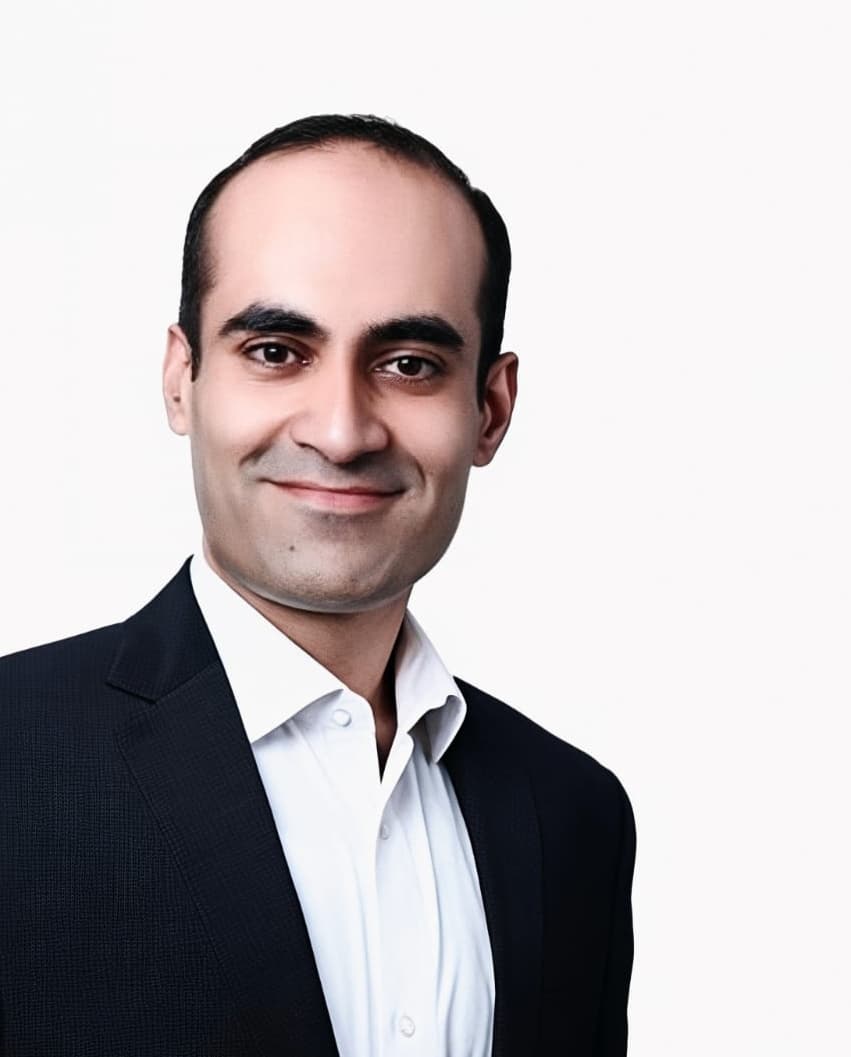
Suraj Malik
Founder & CEO · Legacy Growth
Gurugram
Across India’s fast-maturing business landscape, one blind spot remains stubbornly unresolved: the transition of wealth from creation to continuity. The country has no shortage of entrepreneurs or capital. What it often lacks is a disciplined architecture to preserve what founders build once the growth phase ends.
As India moves from a generation of first-time founders to legacy builders, the question of succession has become both strategic and emotional. Governance structures are still catching up. Families often have fragmented plans, overlapping advisors, and conflicting expectations. In that gap between wealth creation and wealth preservation, Suraj Malik saw an opportunity, not to sell financial products, but to design continuity.
“The real gap wasn’t money,” he says. “It was an alignment. Families were investing in everything except their own governance.”
That observation became the foundation of Legacy Growth, the firm he founded to help family offices, promoters, and entrepreneurs institutionalize succession, governance, and capital design. Over the last two decades, Suraj has moved through every layer of finance, from Big Four advisory roles at EY and PwC to leading M&A, restructuring, and family office strategy. But his differentiator lies in how he reframed wealth itself: not as an asset class, but as a human system that must be engineered with as much rigor as any business model.
“India has evolved from family-run businesses to business-run families,” he says. “What founders need now is not more deals, but more design, a governance culture that makes wealth sustainable across generations.”
For Suraj, that intersection, where technical finance meets emotional alignment, is the next frontier of Indian capitalism.
The Accidental Consultant
Suraj’s entry into finance was pragmatic rather than preordained. “I didn’t grow up dreaming about balance sheets,” he says. “I just wanted to understand how things worked, how ideas became industries.”
He became a Chartered Accountant not out of fascination with numbers, but as an affordable way to gain independence. Early roles at Star TV and media companies exposed him to corporate finance, but it was his move to consulting that unlocked a deeper curiosity.
“At EY, I found something that felt alive,” he recalls. “It wasn’t accounting; it was architecture. Every deal was a design problem.”
In those years, M&A became his laboratory. Yet while many peers chased multinational clients, Suraj chose to focus on Indian promoter-led firms. “Everyone wanted the global logos,” he says. “I wanted to understand the Indian mind, how wealth behaves when it’s emotional, not institutional.”
That choice, counterintuitive at the time, shaped his philosophy. He saw firsthand how wealth decisions in Indian families weren’t driven by spreadsheets but by stories, by relationships, memory, pride, and fear. “You could model a transaction perfectly and still fail if you ignored the emotion behind it,” he says. “That realization stayed with me.”
From Transaction to Continuity
Over two decades of advising families, entrepreneurs, and investors, Suraj began noticing the same recurring tension. Deals were well-structured but poorly sustained. Valuations rose, but relationships fractured. “Every merger has an emotional merger inside it,” he says. “And most people underestimate that part.”
In his view, the Indian wealth ecosystem has matured financially but not emotionally.
We have capital sophistication without governance maturity. Families diversify portfolios but rarely diversify leadership. That’s why succession becomes chaotic.
Legacy Growth was born to close that gap. Its purpose: to blend corporate financial precision with human design, a form of advisory that treats family continuity as seriously as market expansion. “Our work is not to add complexity,” Suraj explains. “It’s to simplify decision-making by aligning structure with values.”
The firm operates on a clear belief: the architecture of wealth must evolve as fast as the wealth itself. Families are encouraged to treat estate plans and governance frameworks as living documents, reviewed, refreshed, and realigned with each phase of life. “You service your car and air conditioner,” he says, before posing the question: “Why not your succession plan?”
The analogy captures his point: continuity is not an event; it is maintenance.
The Architecture of Wealth
Suraj sees wealth as a system, not a sum. It requires design at three levels: purpose, governance, and communication.
“Purpose answers why you build,” he says. “Governance defines how you manage. Communication determines who will sustain it.”
He has seen many family enterprises collapse not because of financial loss, but because one of these three pillars failed. “The first generation builds; the second expands; the third dissipates, not because they are incapable, but because the operating system never upgraded,” he says.
To him, governance is not about control but clarity. “Good governance isn’t about rules; it’s about rhythm. When people understand their roles and the larger purpose, coordination happens naturally.”
He draws an analogy from daily life. “In India, most of us stop at a red light only when someone’s watching. Mature governance is when you stop even when no one is. That’s when the system is internalized.”
The challenge, he adds, is cultural. “Our economy matured faster than our institutions. Families still run on emotion, but scale requires a system. My work is to build that bridge.”
Growth, Control, and the Discipline of Letting Go
Every founder begins by building around instinct. That instinct, the ability to decide fast, correct faster, and carry an entire enterprise through personal energy, is what creates the first wave of success. But as organizations mature, that same instinct often becomes the constraint.
“Founders rarely realize when their greatest strength becomes their greatest risk,” Suraj says. “Control builds momentum, but at some point it starts to shrink perspective.”
He has seen the pattern repeat across industries. Businesses grow faster than the emotional readiness of their owners. Leaders keep centralising choices long after the system needs faster, distributed decision-making.“There’s a difference between ownership and stewardship,” he adds. “Ownership is control. Stewardship is continuity.”
For Suraj, the discipline of letting go is not about detachment; it’s about redesigning influence. “When a founder moves from commanding outcomes to enabling them, power doesn’t disappear, it distributes,” he says. “That’s how institutions are born.”
He describes three markers that signal the maturity of a founder: Trust in system over instinct, replacing ‘I know best’ with ‘the system knows how’. Transition from speed to rhythm, understanding that you go farther by pacing yourself, not by trying to accelerate your way through everything. Transfer of meaning, not just money, ensuring that successors inherit principles, not just positions.
In his advisory work, Suraj often asks one question that unsettles founders: “If your business couldn’t call you for a week, what would still function?” The silence that follows, he says, usually tells him everything he needs to know about succession readiness.
Legacy is not a result of staying in control. It’s the outcome of building something that controls itself.
The Human Design of Continuity
The more Suraj worked with families, the clearer it became that wealth rarely collapses because of external shocks. It unravels quietly through broken communication. “What destroys legacy isn’t disagreement,” he says. “It’s distance.”
He calls his process succession therapy, a disciplined framework that treats dialogue as infrastructure. “Before you design a trust deed, you have to rebuild trust itself,” he explains. “Documents don’t hold families together. Conversations do.”
He begins every engagement with listening sessions that sound more like workshops in empathy than financial planning. The goal is simple: to bring every voice into the room and convert emotion into structure. “When people are heard, governance becomes voluntary,” he says. “You don’t need rules for people who already feel respected.”
He encourages families to build formal mechanisms for dialogue, neutral spaces that belong to everyone but are dominated by no one. “It’s not symbolic,” he says. “It’s systemic. If companies have boardrooms, families need spaces for governance too.”
The principles he lays out are deceptively simple:
No interruptions while one person speaks.
No blame, only perspective.
Every meeting ends with an action, not analysis.
He shares an example without revealing names. A multigenerational enterprise had been paralyzed by mutual misreading. The patriarch believed his children were disinterested; they believed he was unwilling to let go. “When they finally spoke openly, what surfaced was love buried under caution,” he recalls. “They didn’t need a new plan. They needed a new language.”
From that session came one of his core beliefs: alignment is emotional before it is structural. “You can’t legislate trust,” Suraj says. “You can only cultivate it.”
He teaches this philosophy to next-generation leaders who often equate empowerment with visibility. “Influence doesn’t come from the corner office,” he tells them. “It comes from being reliable when no one is watching.”
In his eyes, emotional discipline, the ability to listen, pause, and respond with proportion, will define the next era of leadership. “Financial discipline can be delegated,” he says. “Emotional discipline cannot. It’s the difference between families that preserve wealth and those that only inherit it.”
He believes continuity is built through behaviour, not formal agreements. “When families practice respect as a habit, not a reaction, legacy becomes self-sustaining,” he says. “That’s when wealth stops being an object and becomes an ecosystem.”
The New Definition of Discipline
Suraj often says that in the world of money, data can measure efficiency but never intent. What separates enduring wealth from temporary success is not intelligence; it’s discipline. But the kind he talks about is different from the one most business schools teach.
“Financial discipline is about numbers,” he says. “Emotional discipline is about proportion, knowing when to hold, when to release, and when to stay silent.”
He explains that families who master emotional discipline make better financial decisions because they are not reacting from fear. “You can’t diversify emotions the way you diversify portfolios,” he says. “The mind has to learn stillness before it can handle scale.”
In his view, emotional discipline has three visible effects:
It reduces decision fatigue by creating shared principles.
It prevents emotional contagion, one person’s anxiety from destabilizing the group.
It builds continuity by replacing impulsive reactions with reflective responses.
He often compares leadership to investing. “The most successful investors don’t predict; they prepare,” he says. “Leadership works the same way. You can’t forecast outcomes, but you can strengthen your process.”
Suraj believes the best indicator of a family’s legacy-readiness is not their financial statement, but how they handle conflict. “If you can disagree without disrespect, you’re already in the top one percent,” he says. “That’s where real continuity begins.”
He also challenges the idea that succession must always be vertical, parent to child. “Continuity doesn’t depend on bloodlines; it depends on belief systems,” he says. “Some families preserve legacy through professionals who share their ethos better than their heirs do. That’s not failure. That’s evolution.”
India’s Capital Moment
Suraj is part of a growing class of Indian thinkers redefining how capital behaves in emerging economies. He believes that India’s real advantage in the global wealth cycle lies not in technology or demographics, but in temperament.
“We’re entering a stage where Indian families are no longer just participants in global capital,” he says. “They’re beginning to produce a philosophy of their own, one that blends discipline with empathy.”
He sees this as a generational shift. The first wave of Indian wealth was about creation, building businesses from scarcity. The second is about organization, professionalizing without losing character. The next will be about contribution, using private wealth to shape public good.
“In the West, capital often leads with efficiency,” he observes. “In India, it leads with relationships. That can slow us down, but it also makes our systems more humane. We can turn that into an advantage if we learn to codify it.”
He believes India’s emerging family office ecosystem could become a template for the Global South, an approach that marries entrepreneurship with continuity, scale with empathy, and ambition with restraint. “We’re not just building capital,” he says. “We’re building culture around the capital.”
When asked what differentiates Indian founders from their global counterparts, Suraj’s answer is measured.
Indian entrepreneurs are deeply intuitive. They build on instinct and endurance. The opportunity is to reinforce that instinct with a workable system, to make continuity not accidental but engineered.
For him, the next decade of India’s economic story will depend on how families manage succession. “If we get this right, we’re not just transferring wealth,” he says. “We’re transferring wisdom.”
Leadership Lessons
Before ending every client engagement, Suraj distills what he has learned from them, not in the language of advice, but in observations. They have now become quiet principles that guide both his firm and his philosophy.
1. Wealth behaves like water: It must flow to stay relevant. Stagnation, emotional or financial, eventually breeds decay.
2. Governance is freedom, not control: Structure doesn’t limit people; it protects them from uncertainty.
3. Emotional transparency is strategy: In families and businesses alike, what remains unspoken becomes the source of future conflict.
4. Letting go is a leadership skill: Succession is not an exit; it is an expansion of trust.
5. The next generation must inherit purpose, not just portfolios: Legacy transfers meaning before it transfers money.
6. Emotional discipline outlasts market cycles: A calm mind can recover from any financial loss faster than a reactive one.
7. Family meetings are the new governance boards: Regular, structured dialogue keeps continuity alive far better than any legal document.
8. True success is when the founder is no longer the system, but the system still reflects the founder.
Final Reflection
As India steps into a new era of private capital and intergenerational wealth, the work that professionals like Suraj do will increasingly shape the country’s economic maturity. But his own reflection on it is deeply personal.
“I’ve realized that most people don’t fear losing wealth,” he says. “They fear losing relevance. My role is to help them see that relevance can evolve, from control to contribution, from ownership to stewardship.”
In that single line lies the essence of his philosophy. Suraj Malik’s work reminds us that wealth is not just about what we build, but about how we build systems that remember who we were when we built it.
Because in the end, legacy is not inherited. It is engineered through intention, conversation, and the quiet discipline to let wisdom lead wealth.
Our Suggestions to Read
Discover The Leaders Shaping India's Business Landscape.
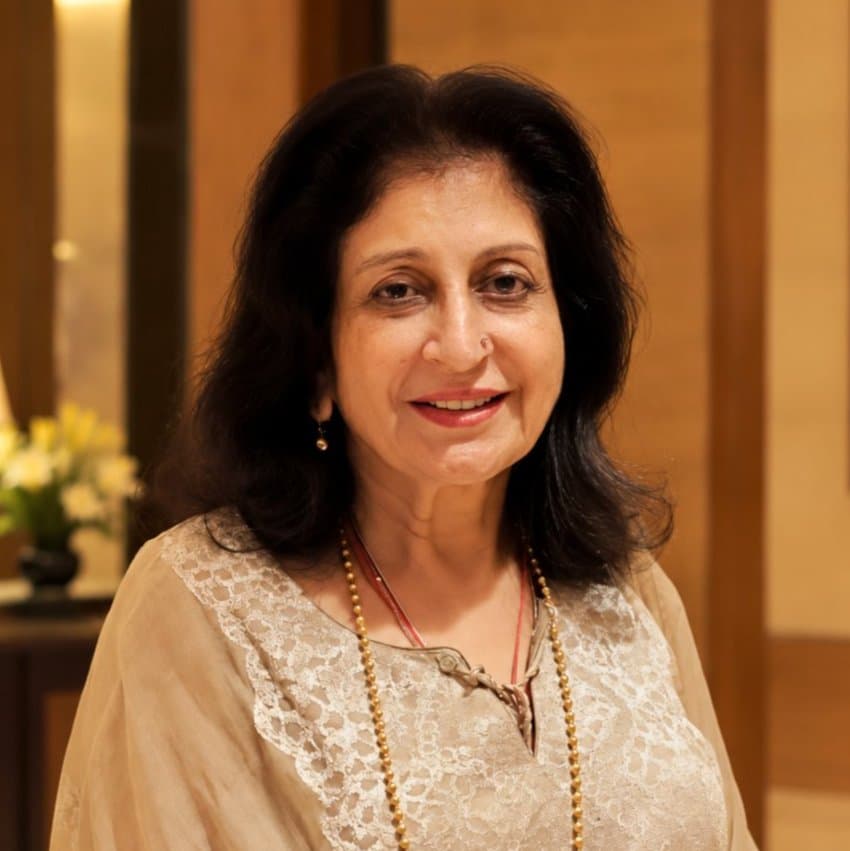
Education Leadership
The Human Advantage: Anu Monga on What Schools Must Still Create
Drawing on decades of leadership in international schools and education, Anu Monga reflects on what institutions must continue to create in a world where knowledge is increasingly accessible and shaped by technology.
Read Full Story
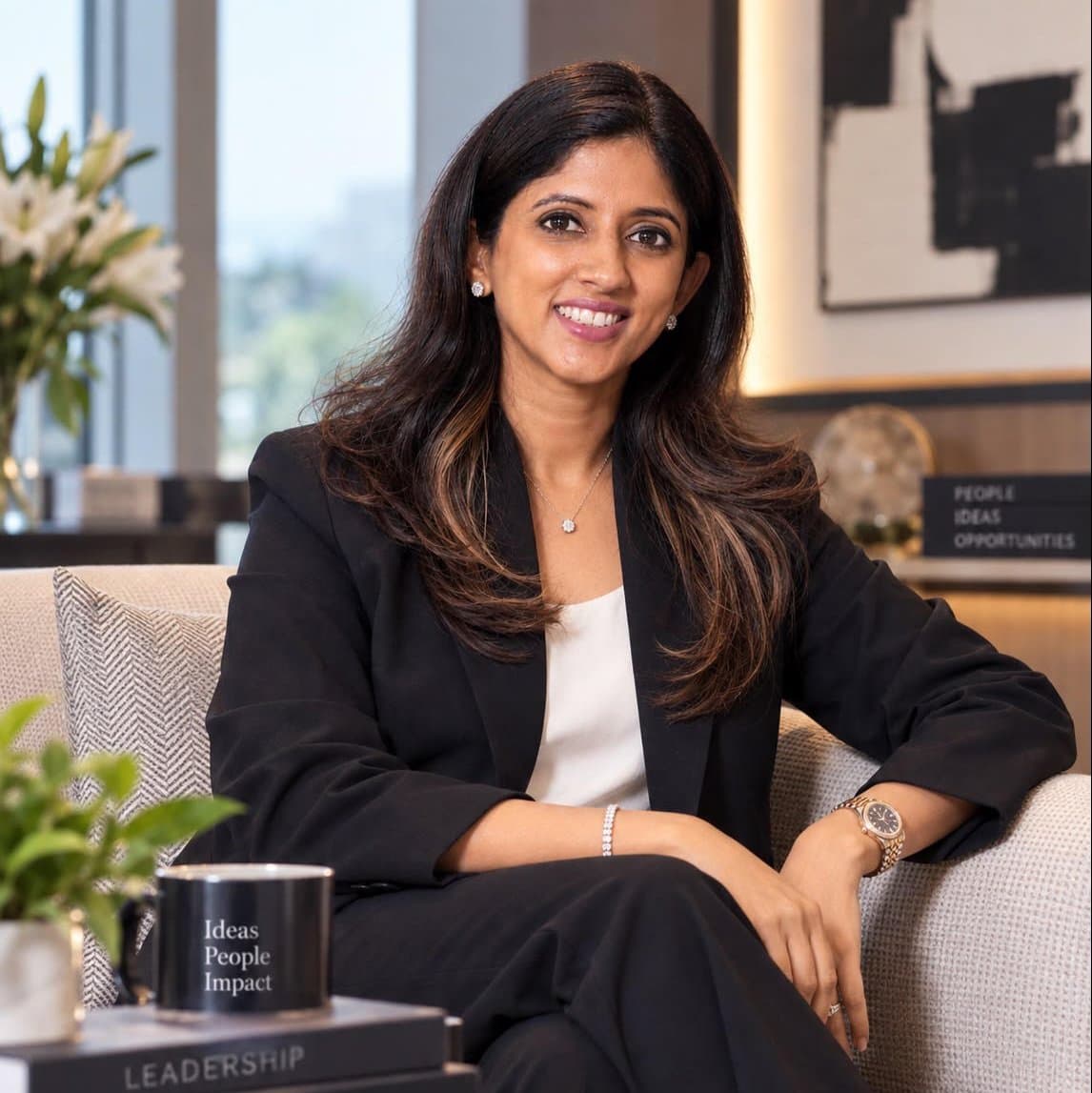
Investors & Catalysts
From Millet to Method: Rasika Prashant on Building What Consumers Return To
Rasika Prashant, CEO of NSRCEL at IIM Bangalore and Co-founder of Soulfull (later aquired by Tata Consumer Products) on consumer trust, category creation, Indian brands, and the founder discipline required after belief.
Read Full Story
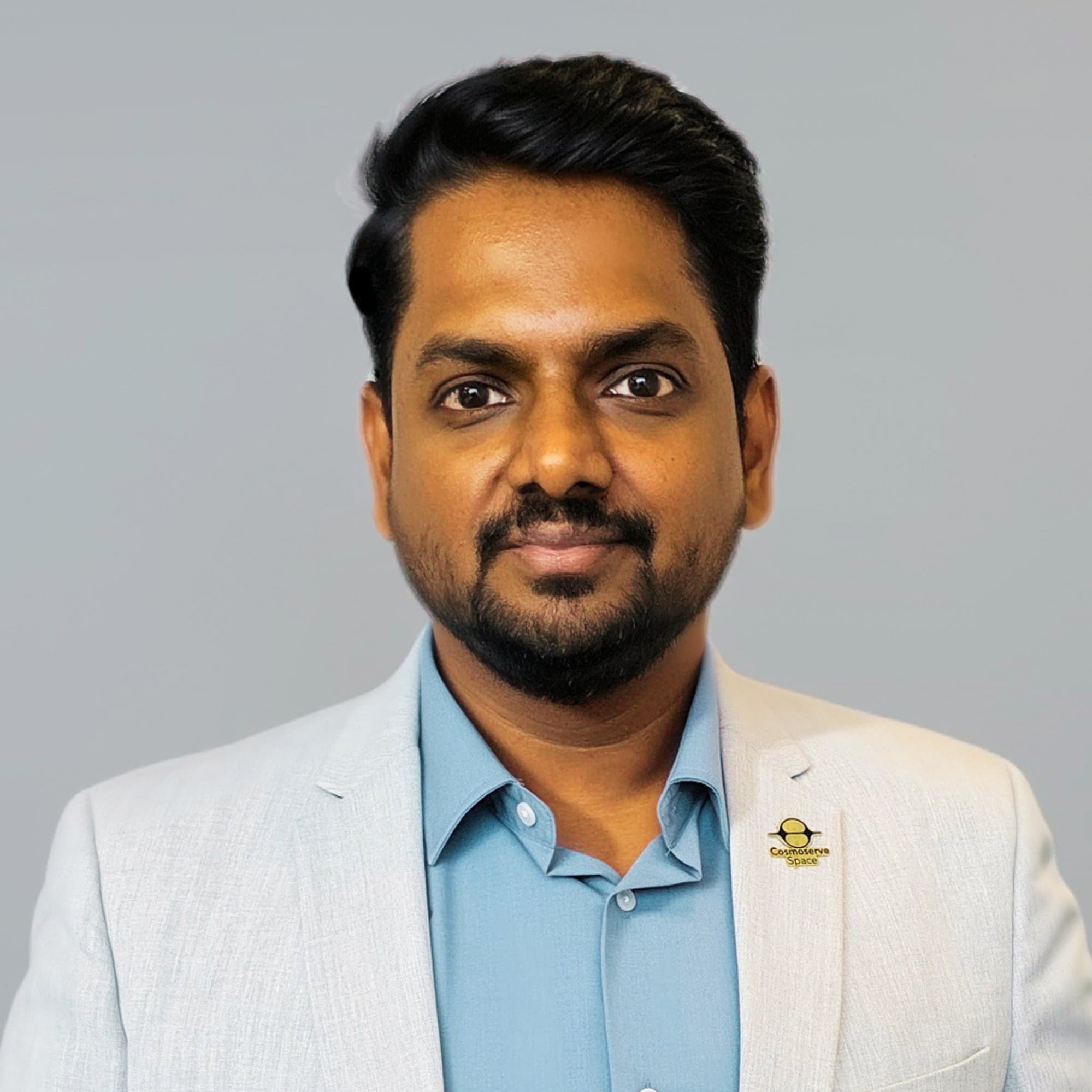
Founders & Innovators
Building the Next Space Economy: Chiranjeevi Phanindra and Cosmoserve's Case for Orbital Maintenance
Chiranjeevi Phanindra, Founder & CEO of Cosmoserve Space, spent 14 years at ISRO working on re-entry and human spaceflight. Today, he is focused on a vital challenge: keeping Earth’s orbit usable.
Read Full Story