Category: Education Leadership
Prof Vikas Srivastava, Finance Professor at IIM Lucknow, explores how capital, governance and ethics shape credible institutions, arguing that sustainable growth requires judgment, competence and moral intelligence.
The Purpose of Money: Prof Vikas Srivastava and the New Logic of Finance
IndiSight Editorial
Feb 4, 2026
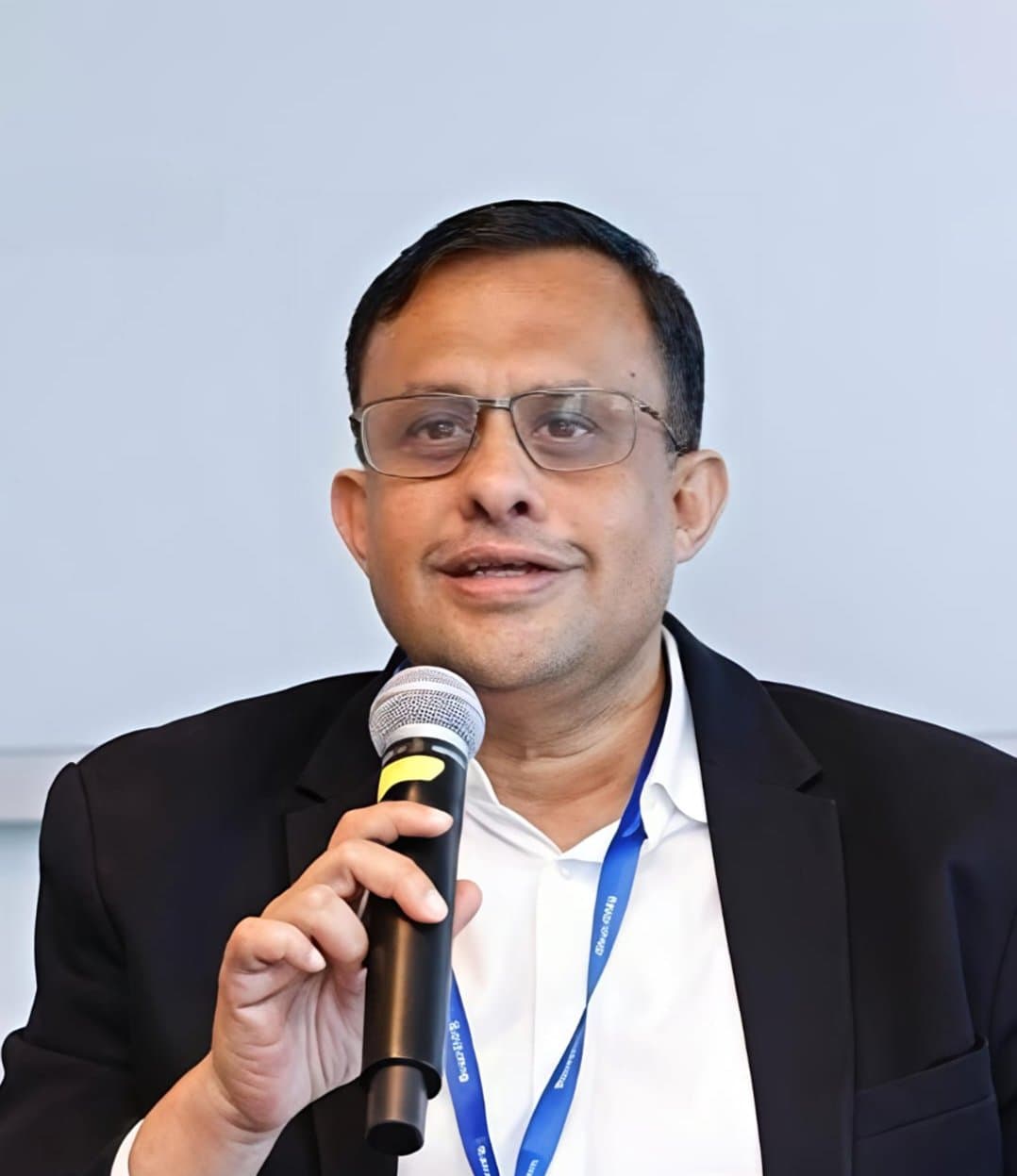
Prof Vikas Srivastava
Professor, Dean of Programmes, Member of Board of Governors · IIM Lucknow
Lucknow, India
Rethinking the Purpose of Finance
Finance today must do more than fund growth; it must design it. As sustainability, infrastructure, and technology converge, capital can no longer remain a neutral medium. The next era of progress will hinge on institutional intelligence, the ability to align money, markets, and meaning.
Few thinkers have examined that alignment more rigorously than Prof Vikas Srivastava, Professor of Finance and Former ONGC Chair Professor, Dean of Programs and Member of Board at the Indian Institute of Management Lucknow. Over three decades, he has advised the International Finance Corporation, Asian Development Bank, Reserve Bank of India, and departments of Government of India, shaping credit-risk frameworks and infrastructure-lending policy across South Asia and Africa. His work spans project finance, corporate banking, and sustainability, but his deeper concern is how societies decide what kind of progress deserves to be funded.
“Finance,” he says, “is not a numbers game. It is a language through which corporates, markets, and nations express intent.”
His Oxford University Press textbook Project and Infrastructure Finance remains in use by central banks and multilateral lenders. Yet he resists the academic label. For him, finance is a living discipline that evolves through every crisis it survives.
He looks at finance as an offshoot of economics in its earliest phase, when researchers like Markowitz used statistics and the law of large numbers to develop modern portfolio theory, later refined by Lintner and Sharpe. He understands that for a long time finance was explained through data-driven models and theories centered on a belief in efficient markets and the truth they supposedly conveyed. What fascinates him now is modern finance that uses behavioral models to explain decisions and markets.
In a world mistaking acceleration for advancement, he stands for a more subtle, but profound conviction: finance must recover its conscience before it chases scale.
The Formative Decade
Prof Vikas’s sense of order began outside the classroom. After earning a top national rank in the Combined Defence Services Examination, he entered the Indian Military Academy. The training was brief but decisive. “The Academy taught me precision, respect for hierarchy, and calm under uncertainty,” he recalls. “Later, those habits helped me read markets because both soldiers and financiers operate where information is incomplete.”
When he joined management school in the mid-1990s, India was opening its economy. Policy, markets, and behavior were being invented simultaneously. “We were designing institutions while still learning their grammar,” he says.
A doctoral fellowship at the Helsinki School of Economics, funded by the European Union, gave him a comparative lens. “Northern Europe taught me that public finance can be ethical infrastructure,” he says. “Accountability there isn’t imposed by law; it is embedded in culture.”
Returning home, he joined the National Institute of Bank Management in Pune, training commercial bankers in India and regulators from South Asia, Africa, and Eastern Europe. It was his first laboratory of institutional psychology. “The same regulation produced opposite outcomes,” he notes, “because enforcement depends more on trust than text.”
Later, assignments with IFC, ADB, and RBI deepened that insight. He helped design credit-risk models for public-sector banks after India’s 2009 to 2014 infrastructure-loan crisis and advised on corporate-debt restructuring when project defaults spiked in 2013. “Those experiences convinced me that data can describe, but only judgment can diagnose.”
At IIM Lucknow, he now teaches corporate banking, project finance, and sustainability. His mantra to students: finance is never neutral. “Every balance sheet,” he says, “is a moral document. It reveals intent.”
From Systems to Conduct
Prof Vikas’s work begins where spreadsheets end, with behavior. He sees capital as conduct, not currency. “It records the moral temperature of an economy,” he says.
During his fellowship in Finland, he studied how accountability travels through institutions. The most stable systems were not the richest but the most predictable under pressure.
That lesson guided his advisory roles. Across continents he saw the same fault line: liquidity without learning.
Countries rarely run out of money. They run out of discipline.
His Oxford book argued that infrastructure finance is governance design, not engineering. When incentives and contractual structures align, capital becomes patient; when they do not, it turns predatory. India’s infrastructure boom in the late 2000s proved both points. By 2013, nearly 45 percent of public-private-partnership projects were delayed or stalled. “We built assets faster than we built accountability,” he says. “Speed became our only benchmark.”
At the IIBF Macro Research Award project, his team reviewed defaulted power and highway projects worth ₹2 lakh crore. The finding: most failures traced to governance gaps, not market shocks. “Reform,” he says, “is the art of institutional memory.”
His recent research on ESG disclosure sharpened that lesson. Analyzing 150 listed companies between 2017 and 2022, he and his coauthors found that while stronger ESG reporting correlated with better loan quality, it also enabled selective transparency. “Some firms used sustainability reports to mask core inefficiencies,” he explains. “Virtue had become narrative management.” The study influenced SEBI’s 2023 guidelines tightening sustainability-linked disclosure.
Critics argue his focus on ethics slows investment velocity. He disagrees.
Unchecked velocity is volatility in disguise. Markets self-correct, after they destroy value.
Finance as a Global Commons
Prof Vikas sees finance as a shared infrastructure of trust, a global common rather than a private playground. “The architecture of money is now borderless,” he says, “but the ethics guiding it remain local.”
He argues that climate finance, digital currencies, and cross-border lending demand new forms of shared governance. “We cannot solve global problems through national spreadsheets,” he notes. “The next phase of globalization will be institutional, not industrial.”
For him, the defining question of this decade is coordination: how regulators, universities, and markets can learn together faster than risks compound. He points to the Financial Stability Board, the International Sustainability Standards Board, and the growing dialogue between multilateral lenders and business schools as early signs of what he calls “intellectual multilateralism.”
Collaboration is now the only real competitive advantage.
He often reminds his students that the world faces a moral bottleneck, not a financial one. “Liquidity without legitimacy cannot drive inclusion,” he says. “The world doesn’t lack money. It lacks meaning.”
He believes the next evolution of finance will emerge not from innovation labs but from classrooms that teach moral imagination, the ability to design prosperity that unites rather than divides.
If we can finance learning, learning will finance everything else.
Technology, Risk, and the Global Order
The next revolution in finance, he believes, will be defined not by innovation but by interpretation. “We have made money programmable,” he says. “We have not made morality measurable.”
AI-driven credit models, digital lending, and blockchain governance are transforming access to capital. Yet automation, he warns, cannot replace judgment. “Traditional finance measured probability. Modern finance must understand behavior.”
In a 2024 IIM Lucknow research lab, his students simulated how small-business credit algorithms penalized first-generation borrowers lacking digital footprints. The experiment confirmed his caution: data without context can replicate exclusion.
Regulators worldwide, he notes, are experimenting with three philosophies. The United States relies on market correction, Europe on disclosure, and China on algorithmic supervision. “India must find its own syntax,” he says, “balancing freedom, fairness, and foresight.”
At IIM Lucknow, he co-created an executive program preparing leaders for a data-driven, carbon-constrained economy. “Governance must evolve in real time, not trail innovation,” he says.
His concern is asymmetry. Data-rich institutions now shape opportunity distribution. “A society that automates judgment must also automate compassion, or it defaults on both.”
India, he argues, could set the global benchmark for inclusive fintech regulation. With its digital public infrastructure and regulatory agility, it can humanize speed.
We can stay a sandbox for borrowed ideas, or become a blueprint for new ones.
Talent as the New Sovereign Wealth
For Prof Vikas, resilience begins with competence. “You can refinance capital,” he says, “but you cannot refinance judgment.”
Across 200 executive programs in 30 countries, he has seen that financial systems collapse more often from intellectual fatigue than funding gaps.
The weakest institutions are those that outsource their learning.
His teaching philosophy has earned consistent recognition within and beyond IIM Lucknow. Over the years, students have voted him Best Faculty and Best Elective in Finance, while the Dewang Mehta Foundation honored him as Best Professor in Financial Management. He also received the Macro Research Award from the Indian Institute of Banking and Finance and the Springer Nature Author Award, reflecting a career that bridges pedagogy, policy, and publication with rare coherence.
At IIM Lucknow, his classroom operates like a strategy lab. Students dissect defaults, policy missteps, and regulatory blind spots.
Success repeats. Failure instructs.
He believes India must shift from product velocity to cognitive depth. “We are producing instruments faster than insight,” he says. “Markets built without models invite correction by crisis.”
He has led a training consortium with Bangladesh Bank and the Central Bank of Sri Lanka on green-lending project finance and risk management standards, a collaboration now adopted by eight central banks across Asia and Africa. He worked as an Advisor to Axis Bank Limited creating project finance and corporate banking standards. The experience confirmed his conviction that learning itself is infrastructure. “Talent pipelines deserve the same attention as transport corridors,” he says.
He envisions financial leaders fluent in both code and conscience.
Risk has become social as much as statistical. A trillion-dollar digital economy still needs a million wise decision-makers.
The Ethics of Leadership
Leadership, in Prof Vikas’s eyes, begins long before decisions are made. “We train people to estimate risk, allocate and mitigate it,” he says. “We rarely train them to be confident about calculating it till the fourth decimal point.”
He defines governance as conscience operationalized. “Systems seldom collapse from shocks,” he says. “They decay when curiosity ends.”
After the 2018 IL&FS crisis, he recalls, regulatory reforms strengthened disclosure but weakened judgment. “We built more dashboards, not more discernment.”
He calls this the governance paradox, where data keeps getting smarter while ethics lag. “We can model volatility,” he says. “We still cannot model greed.”
His prescription is integration, analytics with empathy.
Markets are psychological before they are mathematical. Every bubble is emotion written as valuation.
Students in his leadership seminars begin each module with a question: At what point did the system stop learning? It reframes case studies as mirrors, not manuals. “Technology can automate compliance,” he says. “It cannot automate ethics.”
For him, humility is the final safeguard. “Countries that last, Japan, Singapore, Finland, design on the assumption that failure is inevitable.”
“Managers optimize variables,” he adds. “Leaders interpret uncertainty.”
India’s Long Game
Finance, for Prof Vikas, is civilization’s design code. “The question is not how fast capital moves,” he says. “It is what values it carries when it moves.”
He has spent his career proving that institutions endure through credibility, not decrees. “Trust compounds slower than capital,” he says, “but it lasts longer.”
He warns that efficiency without empathy turns fragile. “Progress must mature, not just multiply.”
Through IIM Lucknow’s incubation and sustainability initiatives, he translates reflection into practice, funding 15 women-led enterprises and eight climate-finance ventures since 2020. “When capital aligns with conscience,” he says, “impact becomes continuity.”
He calls this philosophy the long game, progress measured by durability, not spectacle. “The goal,” he says, “is not to win quarters but to survive centuries.”
Skeptics argue that such patience undercuts competitiveness. He disagrees. “The fastest systems are often the first to fail,” he says. “Endurance is the real edge.”
For him, India’s strength lies in adaptive cognition, its capacity to learn publicly and evolve without cynicism. “We are a learning civilization,” he says. “Our challenge is to turn experimentation into ethos.”
Asked what gives him optimism, he smiles. “My students,” he says. “They seek context, not charisma. That is how societies mature.”
“Capital builds economies,” he concludes. “Character builds civilizations.”
Leadership Lessons
Finance is moral technology. It aligns intent with impact.
Speed without reflection becomes fragility. Sustainable systems evolve through balance.
Trust compounds. Credibility outperforms capital.
Governance is culture. Rules follow behavior, not the reverse.
Education prevents risk. Judgment outlasts data.
Leadership is stewardship. Design institutions that think after you leave.
Transparency earns patience. Institutions that explain themselves invite trust.
Innovation requires introspection. Progress without perspective inflates error.
India’s edge is cognitive. Depth of learning will define its next leap.
Maturity is the true metric. Growth that outpaces wisdom collapses under its own weight.
Closing Reflection
Prof Vikas Srivastava has spent a lifetime examining what keeps systems from collapsing when success comes too fast. For him, resilience is not born of capital or code but of consciousness. “Markets rise on confidence,” he says, “but they endure on restraint.”
He believes that in an age defined by speed and speculation, the real measure of progress will be the world’s ability to govern its own momentum. Growth that forgets purpose, he warns, becomes extraction; innovation without ethics becomes excess. “Finance will always reward intelligence,” he says, “but it will endure only through wisdom.”
That wisdom, to him, is global currency, the invisible reserve that sustains trust across borders and generations. It is what turns liquidity into legitimacy, what allows ambition to mature into stability. “Every civilization,” he reflects, “must decide not only how much it wants to gain, but what it refuses to lose.”
Our Suggestions to Read
Discover The Leaders Shaping India's Business Landscape.
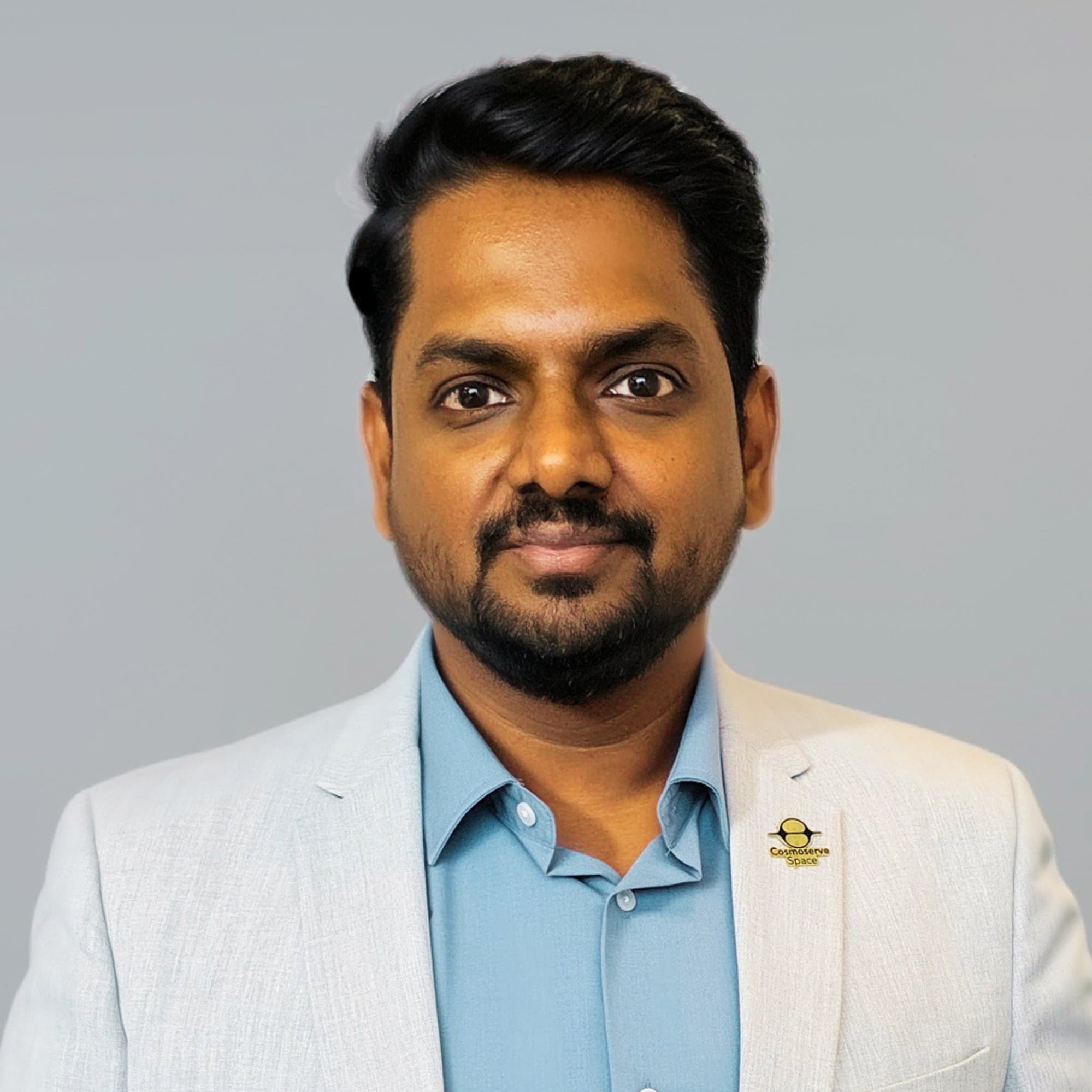
Founders & Innovators
Building the Next Space Economy: Chiranjeevi Phanindra and Cosmoserve's Case for Orbital Maintenance
Chiranjeevi Phanindra, Founder & CEO of Cosmoserve Space, spent 14 years at ISRO working on re-entry and human spaceflight. Today, he is focused on a vital challenge: keeping Earth’s orbit usable.
Read Full Story

Corporate Visionaries
Shashank Sahni on What Success Leaves Out
Shashank Sahni, Google’s Managing Director of Global Ads Solutions, reflects on what customers reveal, what ambitious teams need from their leaders & what the mountains and marathons have taught him about going further.
Read Full Story
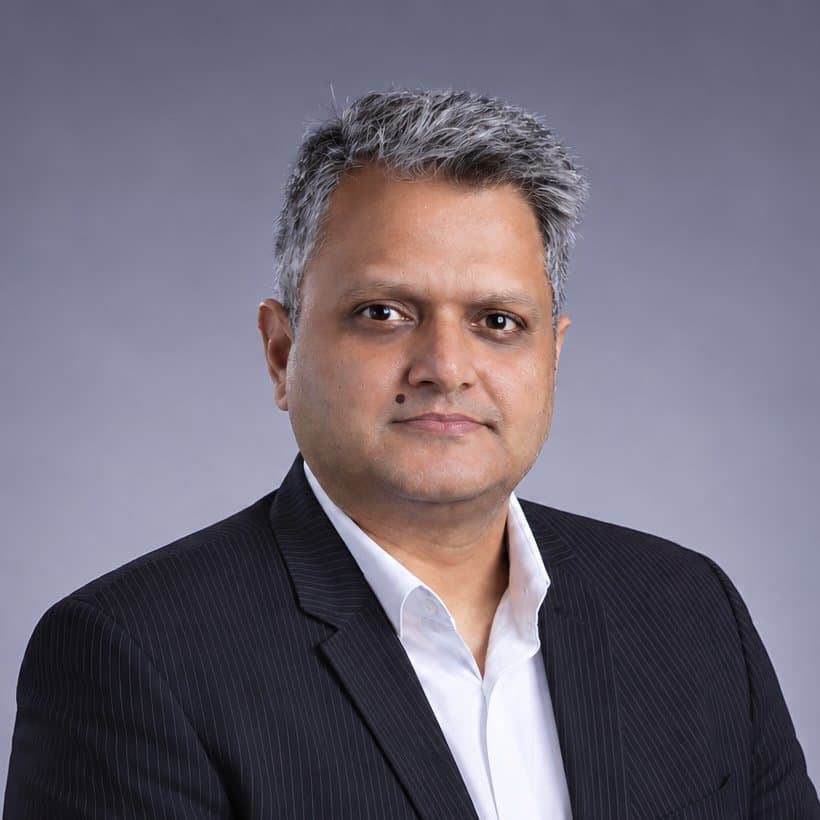
Corporate Visionaries
Clinical Multiplication: Divesh Singla on the Healthcare AI Case That Headlines Keep Missing
Divesh Singla, Managing Director, India at Veradigm, brings two decades in healthcare technology to the AI question leaders cannot avoid: how to expand clinical capacity without weakening human judgment.
Read Full Story