Category: Founders & Innovators
Garima Mishra, Global HR Leader and Founder of arthbound, champions leadership rooted in emotional intelligence, self-awareness, and composure, showing that lasting impact begins with leading oneself first.
When Calm Becomes a Competitive Edge: Garima Mishra’s Blueprint for Conscious Leadership
IndiSight Editorial
Feb 8, 2026
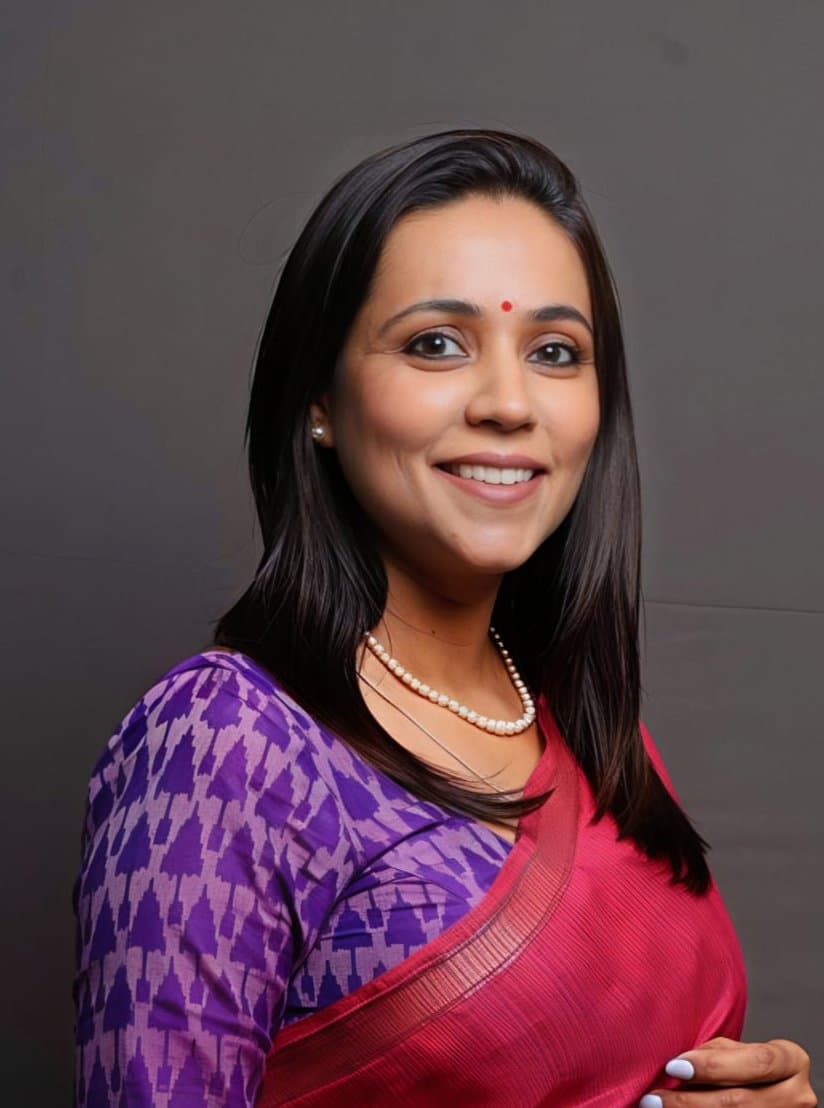
Garima Mishra
Founder · arthbound
Mumbai
The world’s most sophisticated institutions are learning that stability is not built on data or dashboards but on the inner state of those who lead them. As global capital expands and complexity multiplies, the real differentiator is not information but integration, the ability to remain composed while the world accelerates. Few leaders articulate this shift with the depth and precision of Garima Mishra. Over two decades across ICICI, HSBC, DBS, and Brookfield, she has navigated markets that rose, collapsed, and redefined themselves. Through all of it, one conviction stayed constant: leadership begins not in the corner office but in the nervous system.
You cannot design stable systems with unstable minds.
Calm, in her view, is the infrastructure of lasting leadership.
In boardrooms across continents, institutions are confronting a quiet crisis. The question is no longer who is capable, but who is coherent. Technology has outpaced trust, and acceleration has replaced attention. Every leader can analyse, but few can absorb, few can hold complexity without being consumed by it. “Awareness is not a soft skill,” Garima insists. “It is strategic infrastructure.” In her view, the real risk on any balance sheet is emotional volatility: the inability to pause, regulate, and respond with clarity when the stakes rise. She believes the future of leadership depends on a physiological shift, from performative control to embodied awareness, from driving outcomes to designing the internal systems that can sustain them.
Foundations: The Making of a Leader
Garima’s understanding of balance came from experience and unfolded in the middle of velocity. When she joined ICICI in the early 2000s, the organisation was expanding faster than its systems could keep up. She was thrown into projects with no precedent, building technology workflows without a technical background, managing teams that spanned geographies and temperaments. Those early years taught her that speed without structure breeds chaos, and authority without empathy erodes accountability. Later, at HSBC, she learned to operate within global protocols and hierarchies that valued precision and control. What connected those two worlds for her was a deeper insight: systems may create efficiency, but only self-aware leaders create endurance. She began to notice how institutions mirror human beings, both thrive when tension is acknowledged and collapse when it is ignored.
At DBS, that observation evolved into philosophy. The bank’s culture of design thinking and inclusion treated people as systems, not resources. Garima began studying how teams behave under pressure, how energy flows through meetings, and how unspoken emotions shape outcomes. “Every behaviour,” she says, “comes from a wound within.” Instead of focusing only on results, she began decoding reactions, what emotions repeated themselves, what patterns resurfaced in crises. Her teams grew stronger not because they worked harder, but because they listened better. For her, trust wasn’t a corporate slogan but a rhythm: the pauses, the silences, and the tone of dialogue that determine whether people feel safe to think aloud.
Scale, Stewardship, and the Soul of Capital
At Brookfield, Garima entered a system built for endurance. Scale was measured not just in assets under management but in the depth of conviction behind every decision. The experience reframed her understanding of finance itself. Capital, she realised, is a moral force, neutral in structure but shaped entirely by the consciousness of those who deploy it.
Money magnifies intent. It carries the energy of the people who move it.
She began to treat governance as human design: how trust is transmitted, how tone shapes judgment, how silence influences outcomes. In a world addicted to velocity, she saw patience as a competitive advantage. Meetings became laboratories of awareness. Leadership, in her view, was not about directing motion but regulating energy. The work was not to suppress chaos but to metabolise it, to turn turbulence into rhythm.
Inside Brookfield’s vast architecture, Garima came to see that the true test of leadership lies in staying human within complexity. Every decision in finance begins as an emotional decision, a signal of trust, fear, or anticipation. Numbers may quantify outcomes, but they do not explain them. Her approach was to integrate both: the analytics of the system and the physiology of the human running it. The connection between the two, she believes, is the missing layer in how modern organisations think about governance.
The Conscious Leadership Framework
For Garima, leadership is not a title. It is a nervous system. The most advanced strategies, she argues, fail not for lack of intelligence but for lack of integration, the inability of leaders to align thought, emotion, and action.
Awareness is architecture. Regulation is design.
Her model rests on four disciplines: educate, regulate, re-enter, and respond. Educate means noticing, understanding one’s emotional and physiological patterns under pressure. Regulate is the act of stabilising before deciding. Re-enter is returning to the situation from composure, not compulsion. Respond is the execution that follows clarity. For her, this is not theory but infrastructure. A leader who cannot regulate their inner state cannot build coherence in others. Great institutions, she says, are not those that avoid chaos, but those that can turn it into rhythm.
The Human Algorithm
Garima often says every organisation runs on two systems, technical and emotional. The first handles structure; the second determines culture. Leaders are taught to manage the former but rarely trained to understand the latter. Her work is to bridge that gap. “You can automate decisions,” she says, “but you can’t automate discernment.” The quality of an organisation’s judgment, she believes, depends on its emotional literacy, its ability to sense when energy shifts and address it before performance suffers. In high-performing teams, transparency replaces tension. Performance becomes a by-product of psychological safety. Culture, in her eyes, is not declared in town halls but lived in the smallest interactions: how leaders listen, how they breathe before responding, and how they manage silence when stakes are high. The number of honest conversations an organisation can hold without breaking trust, she says, is the clearest measure of its strength.
India, Institutions, and Conscious Capital
Garima views India as a paradox that works, improvisational yet methodical, chaotic yet profoundly adaptive. Having operated in both Eastern and Western systems, she sees the distinction clearly. Western models are built on control; Indian systems thrive on resilience.
Our chaos is intelligence in motion.
She believes India’s edge lies not in cost but in consciousness, in the ability to sustain optimism and adaptivity through disruption. But she also cautions against repeating the mistakes of economies that scaled faster than their moral infrastructure. The challenge for India, she says, is not growth but groundedness, to institutionalise success without losing sensitivity.
Her argument reframes economics as energy. Institutions, she says, mirror the emotional maturity of their leaders. When leaders operate from fear or scarcity, their systems replicate those states. “Capital amplifies consciousness,” she says. “Governance is therefore a spiritual act.” She envisions a generation of Indian institutions that can integrate empathy and efficiency, measuring success not just in profitability but in coherence, where growth and grace can coexist without contradiction.
Conscious Leadership in Practice
Garima’s philosophy is lived through daily practice. Her mornings begin with silence, breathwork, and reflection. “If I don’t meet myself before I meet the world,” she says, “I’ll react, not respond.” She calls it calibration, aligning the inner instrument before stepping into the orchestra. Before major decisions, she pauses to ask what is essential, not what is urgent. Reflection, for her, is performance. Inside organisations, she creates structures that invite composure: one minute of stillness before meetings, check-ins about emotion before numbers. She calls these “hygiene rituals,” small, consistent habits that prevent burnout and sustain collective coherence. Her leadership style is quiet yet firm, marked by restraint in environments addicted to reaction. “Containment,” she says, “is underrated.”
Her colleagues often describe her as a steadying presence in volatility. In crisis, she doesn’t mirror chaos; she neutralises it. Conscious leadership, as she defines it, is not about avoiding stress but metabolising it, converting pressure into awareness rather than anxiety. In her model, charisma is replaced by coherence.
The Future Lens
Garima believes the next disruption in leadership will be the battle for attention. Artificial intelligence may transform decision-making, but discernment remains human.
Information is infinite. Awareness is finite.
Efficiency without consciousness, she warns, only accelerates error. The scarcity of the future will be depth, the ability to stay focused and present in a world of constant acceleration. She defines leadership of the future as a synthesis of three intelligences: analytical, emotional, and somatic. The first interprets data, the second interprets people, the third interprets energy. “Machines can compute,” she says. “Only humans can discern.”
She imagines organisations evolving toward wisdom rather than mere intelligence, institutions that scale empathy as deliberately as they scale efficiency. Technology, in her view, must serve consciousness, not replace it. The most advanced systems will be those that protect human depth as fiercely as they pursue digital speed.
The Human Angle
Garima’s ideas were forged not in comfort but in confrontation. The early pursuit of perfection once left her drained and restless. “You start mistaking motion for progress,” she recalls. The burnout became a teacher. It led her to study yoga, food psychology, and neurophysiology, not as escapes but as extensions of leadership. Those disciplines taught her that the body holds wisdom that the mind often ignores. She rebuilt her rhythm from the inside out. What emerged was a way of leading that fused business precision with human grace.
Those who work with her describe her as unflappable. Her calm is not inherited; it is trained. “Self-mastery is repetition,” she says. She mentors senior executives across industries, teaching what she calls “energy hygiene,” awareness practices that sustain focus and empathy in high-pressure roles. Her message is grounded: success cannot exceed the nervous system that carries it. The real sustainability project begins within.
Global Vision
Garima sees the twenty-first century as a pivot from intelligence to integration. The world has enough expertise; what it needs is coherence.
The next era of leadership will belong to those who can hold contradictions without losing balance.
The fusion of logic and empathy, capitalism and consciousness, will define mature institutions.
From Mumbai to London, she observes a shift in how authority is earned. It is no longer positional; it is energetic. People follow leaders who are grounded, not grand. She believes India is uniquely positioned to lead this transformation, to evolve from a growth economy into a consciousness economy. With its traditions of introspection and its new command of global markets, India can model a capitalism that measures progress in inclusion, composure, and collective awareness. “If the last century was about intelligence,” she says, “the next will be about awareness.”
Her vision is of leaders who can scale systems without shrinking sensitivity, who can build speed without breaking rhythm, and who can expand capital without exhausting character.
Leadership Lessons
Balance is infrastructure. Institutions are only as stable as the emotional systems of their leaders.
Self-regulation is a strategy. Internal stability determines external success.
Reflection is performance. The pause is as powerful as the plan.
Empathy scales systems. Efficiency needs emotion to endure.
Money magnifies intent. Ethics is an economic variable.
Awareness is architecture. Leadership design begins within.
Chaos is intelligence in motion. India’s adaptability is an unacknowledged advantage.
Trust is rhythm, not rhetoric. Consistency outlasts charisma.
Composure is precision. Calm decisions outperform hurried ones.
Sustainability begins inside the self. Institutions mirror their leaders’ nervous systems.
Technology must serve consciousness. Machines inform; humans interpret.
Legacy is energetic. What endures is not policy, but presence.
Closing Reflection
Leadership, in Garima Mishra’s world, is not a race toward influence but a return to awareness. It is the ability to bring coherence where the system fragments, to hold tension without collapse, and to lead with stillness as strategy. Across markets and disciplines, her work stands as a reminder that the most advanced form of intelligence may, in fact, be calm.
“The world doesn’t need more leaders,” she says. “It needs more awareness in those who lead.” It’s a truth that sounds simple until one tries to live it. For Garima, that awareness is the ultimate form of capital, renewable, expansive, and quietly transformative. It’s what turns ambition into alignment, success into sustainability, and leadership into legacy.
Our Suggestions to Read
Discover The Leaders Shaping India's Business Landscape.
Founders & Innovators
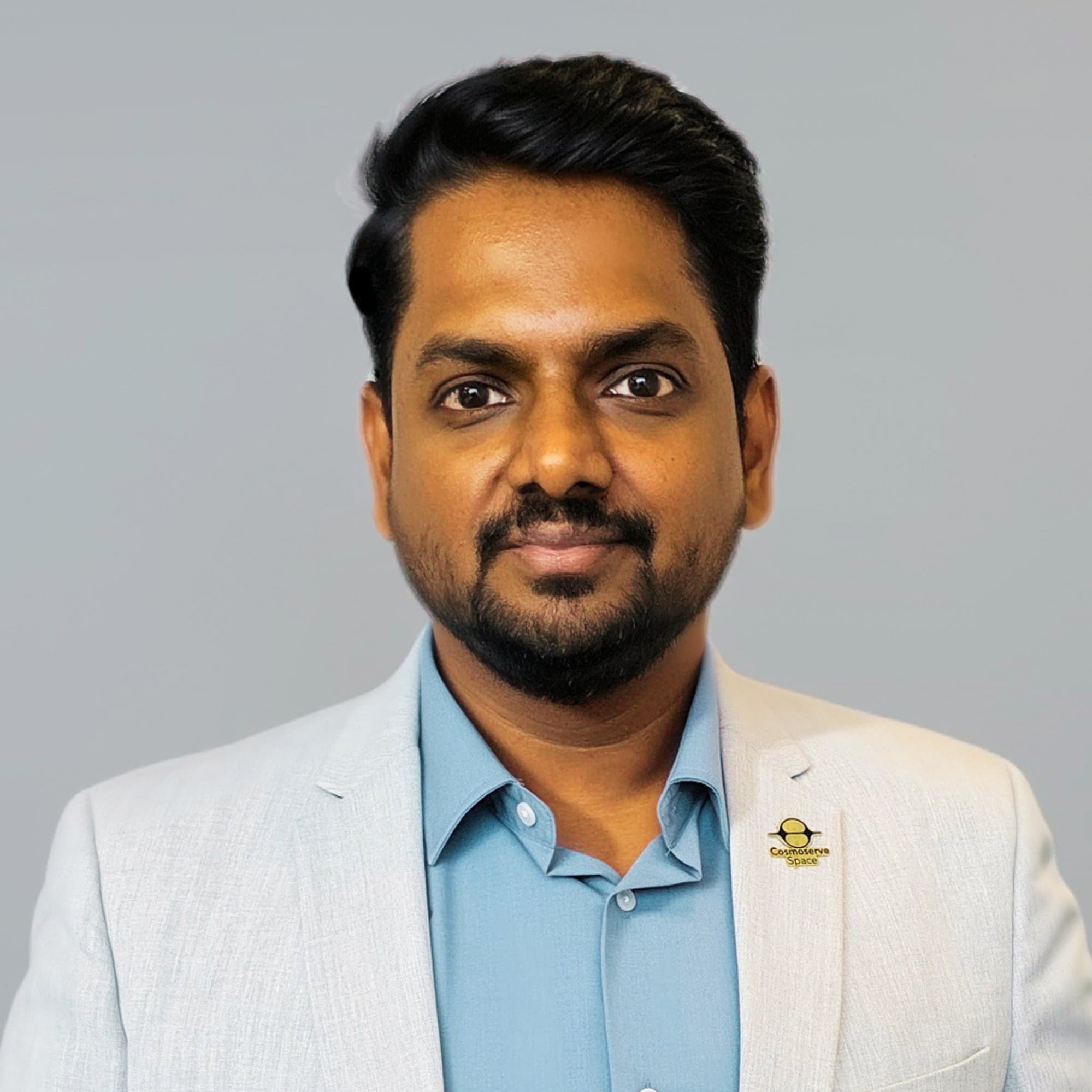
Building the Next Space Economy: Chiranjeevi Phanindra and Cosmoserve's Case for Orbital Maintenance
Chiranjeevi Phanindra, Founder & CEO of Cosmoserve Space, spent 14 years at ISRO working on re-entry and human spaceflight. Today, he is focused on a vital challenge: keeping Earth’s orbit usable.
Read Full Story

Corporate Visionaries
Shashank Sahni on What Success Leaves Out
Shashank Sahni, Google’s Managing Director of Global Ads Solutions, reflects on what customers reveal, what ambitious teams need from their leaders & what the mountains and marathons have taught him about going further.
Read Full Story
Corporate Visionaries
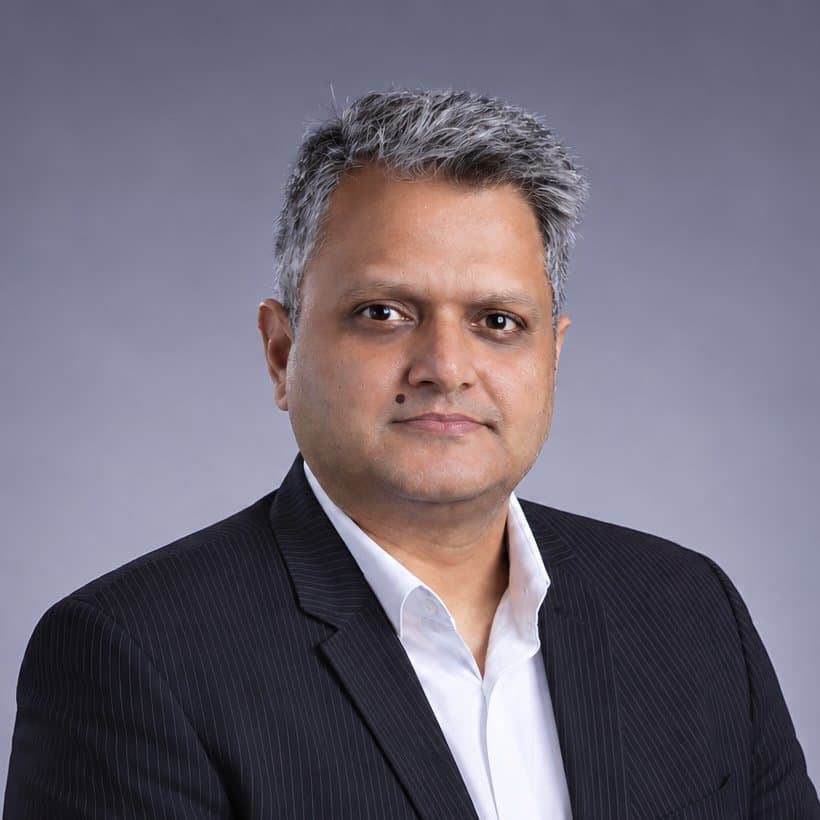
Clinical Multiplication: Divesh Singla on the Healthcare AI Case That Headlines Keep Missing
Divesh Singla, Managing Director, India at Veradigm, brings two decades in healthcare technology to the AI question leaders cannot avoid: how to expand clinical capacity without weakening human judgment.
Read Full Story