Category: Corporate Visionaries
Saumil Mehta turns leadership into an act of design. Drawing from his engineering roots and two decades across global industries, he builds organizations that stay human under pressure. His philosophy is simple yet profound: strength comes from rhythm, not rigidity. Real leadership is not about resisting turbulence but designing for it, where empathy, structure, and resilience move in harmony to create lasting impact.
When Structures Learn to Feel: Saumil Mehta on Building Systems That Stay Human Under Pressure
IndiSight Editorial
Feb 11, 2026
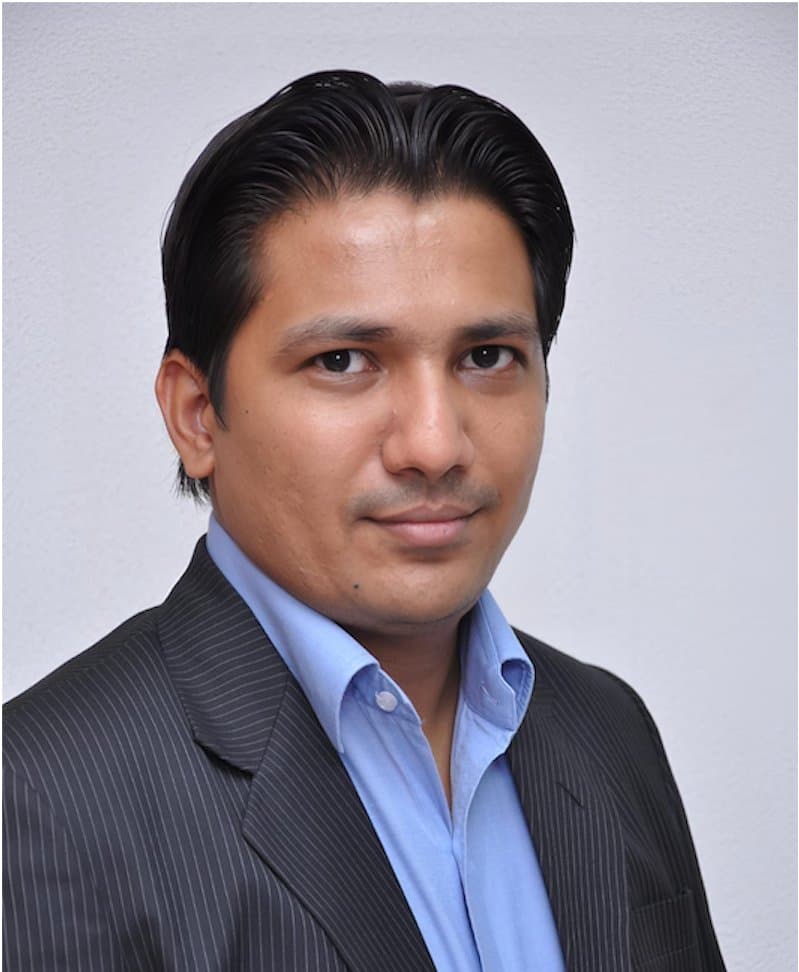
Saumil Mehta
President & Business Head · Wellspun World
Mumbai
The Design of Pressure
Leadership, at its core, is an act of design. It decides how pressure moves through a system, whether it fractures people or strengthens them.
Saumil Mehta has spent more than two decades refining this idea across some of the world’s most demanding consumer industries. From FMCG to FMCD to QSR, and now textiles, his philosophy has remained constant: build organizations that can absorb volatility, not merely react to it.
He began as a civil engineer, and the influence shows. He speaks of teams the way architects describe structures, through balance, stress points, and load paths. To him, leadership is engineering in human form. It is the science of distributing tension without collapse, the art of creating rhythm inside uncertainty, and the responsibility of protecting what lies within the frame.
“Hope for the best, but be prepared for the worst,” he says.
It is not a caution. It is design.
Around the world, companies are rethinking resilience, no longer as a reactive capability, but as a built-in operating principle. Saumil was early to that realization. He saw that markets rise and fall, channels expand and compress, technologies evolve overnight, yet organizations that survive share one common feature: they are structured to flex. Their foundations hold not because they resist force, but because they have been designed to move with it.
That philosophy runs through every role he has held, seventeen in twenty-one years. Each role added a new vantage point in how systems behave, how trust travels through hierarchies, how ethics anchor velocity, how structure becomes empathy in disguise. Today, as one of India’s most respected business leaders, Saumil’s blueprint for leadership has less to do with control and more to do with construction, a new architecture of endurance for an age defined by change.
Foundations Built on Trust
Before the titles and the turnarounds, Saumil learned leadership the old-fashioned way, by earning it one conversation, one customer, one mistake at a time. Those early years taught him that growth isn’t built on targets; it’s built on trust. At Pidilite, PepsiCo, and Samsung, he saw how every number hides a person and how consistency, not charisma, holds businesses together over time.
His civil engineering roots shaped how he thinks. He still talks about leadership the way engineers talk about bridges, not in terms of glamour but in load-bearing strength. “You design for the heaviest possible load,” he says. “If the structure can absorb the shock, the people inside won’t even feel it.” That belief explains much of how he leads, designing teams, systems, and processes that remain steady when pressure peaks.
Years across India, Bangladesh, and Southeast Asia taught him a simple truth: people don’t fear targets; they fear instability. Whether in a plant in Aurangabad or a warehouse in Hanoi, performance sustains only when people feel safe enough to take risks. His leadership philosophy was forged in those spaces where boardroom ideas met the raw, unpredictable reality of the market.
Today, as President and Business Head of the Domestic Home Textiles business at Welspun Living, Saumil’s perspective has widened but his anchor has stayed the same. Revenue matters, but rhythm matters more. For him, leadership isn’t a climb to the top; it’s a continuous act of calibration, balancing speed with steadiness, ambition with empathy, and growth with grace.
The Tensions That Teach
Every leader learns through contradictions. Saumil’s journey has been defined by three: speed and patience, confidence and humility, ambition and restraint.
He is clear that leadership is not a pursuit of balance but of rhythm. “Balance implies stillness,” he says. “But organizations are living systems; they need motion.” The art lies in knowing when to accelerate and when to absorb, when to push for change and when to protect continuity. Over time, he has learned that too much ambition without empathy breeds burnout; too much empathy without accountability breeds stagnation.
His approach to change is deeply human. “We all say change is constant,” he reflects, “but no one actually likes it.” The job of a leader, then, is to make change survivable. He treats transformation as choreography rather than communication, knowing how fast to move and how to keep everyone in rhythm while doing it.
If people feel emotionally safe through transition, they’ll surprise you with their adaptability.
At the heart of his worldview lies a quiet conviction: discipline is freedom. Routine, he believes, does not kill creativity; it protects it. He calls this progressive discipline, the practice of giving people enough structure to think clearly without fear. “Predictability,” he says, “is not bureaucracy. It’s kindness.”
This philosophy has guided him through turnarounds and expansions alike. He has led teams through crises where confidence had collapsed, and his first move was never to change the plan, it was to stabilize the people.
In struggling businesses, everyone looks at the numbers. I look at the humans. Once people feel secure, numbers follow.
The Human Geometry of Growth
The industries Saumil has led could not be more different: adhesives, beverages, electronics, quick service restaurants, and now textiles. Yet across these diverse environments, one principle has remained constant: consumers may buy with reason, but they stay with belief.
He has seen this truth play out across geographies, from Mumbai to Dhaka, from Hanoi to Yangon. In every market, consumers begin their journey with a product but stay for what the brand represents.
Consumers come for the product, but they stay with the brand. As long as the brand keeps its promises, they will never leave.
His understanding of brand trust is deeply structural. He treats marketing and sales not as rivals but as two halves of the same equation: push and pull in constant tension. Sales creates momentum; marketing creates magnetism. “A salesperson is also a marketeer,” he explains. “One pushes the product; the other pulls the consumer. Both are necessary for the moment of truth.”
This ability to collapse silos into systems thinking defines much of his career. Whether managing fast-moving goods or durable products, he focuses on the invisible rhythm connecting human behavior, product design, and organizational intent. “In a well-designed organization,” he says, “problems do not stay confined to departments. They travel through the structure. That is how you know it is alive.”
He believes that discipline scales, emotion sustains. Technology can optimize demand; only empathy builds loyalty. In boardrooms where metrics dominate meaning, he brings conversations back to fundamentals: people, purpose, and predictability.
Routine is not rigidity, It is predictability in a world where everything else is unpredictable.
In markets where attention spans shrink and competition multiplies, his approach feels refreshingly contrarian. He does not chase noise; he builds rhythm. His success lies not in disruption but in continuity, in keeping human trust intact while systems evolve.
The Architecture of Rhythm
The longer Saumil speaks about leadership, the clearer it becomes that his ideas are built less on ideology and more on observation. He does not describe leadership as posture or style but as a design discipline: the architecture of how humans and systems coexist under pressure.
He believes leadership begins with trust, not as a reward but as an assumption. “Everyone comes to work wanting to do a good job,” he says. “No one wakes up intending to sabotage their company.” Systems that begin with distrust, he warns, overcompensate with control, and control eventually kills initiative. “Trust,” he says, “is structural.”
He separates empathy from accountability with surgical precision. Empathy defines how you treat people; accountability defines how you measure them. Confusing the two weakens both.
You can hold someone accountable without being disrespectful. You can be kind without being indulgent.
His framework, The Architecture of Endurance, rests on four pillars:
Resilience, the ability to absorb shock without transmitting it downward.
Humility, the courage to accept failure early and learn fast.
Rhythm, the steady pulse that prevents fatigue from becoming chaos.
Ethics, the invisible spine that keeps integrity upright when ambition drifts.
Together, they create what he calls a leader’s internal scaffolding, the quiet structure that determines how pressure is processed. “Reflection is performance,” he says. “Pause creates perspective.”
He often reminds younger leaders that business, at its heart, is common sense practiced with consistency.
There is no greater competence required to run a business than common sense. The problem is that it becomes uncommon when stakes are high.
For him, leadership is not about distributing fear but about distributing confidence. “When people feel safe,” he says, “they stop managing fear and start managing performance.” That, he believes, is when an organization truly comes alive.
Designing for Tomorrow
The future, in Saumil’s view, will not belong to companies that scale the fastest but to those that scale wisely. The world has mistaken acceleration for progress. What we need now is endurance: the ability to grow without eroding foundations. “The coming decade,” he says, “will test not how fast organizations can expand, but how intelligently they can adapt.”
He believes India’s global ascent will depend not on capital or code but on capability. Companies must cultivate resilience, humility, agility, and the appetite to learn continuously.
You cannot sit on your past laurels, and you cannot sit on your past mistakes. Both weigh the system down.
He sees technology as an amplifier of human discernment, not a substitute for it. “Machines can optimize,” he says. “Only humans can discern.” The leaders who will thrive are those who treat technology as a design tool for empathy, not efficiency alone.
He predicts that the next generation of leadership will be design-oriented, engineers of culture and coherence. “You cannot install resilience later,” he says. “It has to be built in.” The best leaders, he believes, will integrate speed with stillness, systems that move fast without becoming frantic, that grow large without losing grace.
The Science Behind Resilience
Behind Saumil’s structural precision lies a human steadiness built over decades. He calls it mental minimalism, the habit of simplifying pressure into logic. “When stakes are high,” he says, “the first thing that disappears is common sense. I have trained myself to hold on to it.”
He no longer measures success by titles or milestones, but by how calmly his teams can perform under stress.
A leader’s job is to distribute confidence. When people feel secure, they stop managing fear and start managing performance.
Empathy, for him, is procedural, not sentimental. Treat others the way you want to be treated, simple in theory, difficult in execution. “Most of us struggle to handle empathy and accountability together,” he says. “We mix them and fail at both.”
He calls failure “the most honest audit system ever invented.” What matters is not how often you fail, but how fast you accept it. “Delay in acceptance costs more than the failure itself.”
After two decades in leadership, his view of power is equally grounded. “If I had my way,” he says, “I would never use authority at all.” Power, to him, is not about dominance but design, the ability to create systems that keep functioning even when you step away.
His ethic is simple and timeless: “Do honest, sincere hard work with empathy toward people around you, and it will bring peace, prosperity, and success for everyone. Strive for collective victory, not individual records.”
Leadership as Stewardship
Saumil belongs to a school of thought that views leadership as stewardship, not conquest.
You do not own what you lead. You nurture it until it can stand on its own.
Having worked across India and Southeast Asia, he understands that every culture tests leadership differently. Some demand speed, others patience. “Both teach you rhythm, when to accelerate and when to hold still.” That rhythm, he believes, will define the next generation of Indian leadership: fast yet thoughtful, ambitious yet self-aware.
He speaks of graceful endurance as the next frontier, the maturity to redesign rather than repeat. “Every institution reaches a point where it must choose between what made it successful and what will make it relevant. The wise ones choose to redesign.”
As a certified independent director, he views governance as moral architecture. “It is the executive leadership’s duty to show the board the truth as it is, not as it looks.” Transparency, he believes, is the purest form of accountability.
In the end, leadership is not about resisting the storm. It is about designing for it.
And that may be the most enduring lesson of all.
Lessons in Structural Wisdom
Build for stress, not success. Design systems to absorb shocks, not just celebrate growth.
Treat trust as infrastructure. It is the foundation that holds everything else together.
Separate empathy from accountability. They coexist, but must never blur.
Make consistency the calm inside chaos. Routine is not rigidity; it is rhythm.
Fail fast, but learn faster. Delay in acceptance costs more than the failure itself.
Use power as design, not dominance. True authority enables decisions without fear.
Build safety before speed. Teams perform best when they feel secure.
Balance speed with stillness. Move fast, but never lose your center.
Integrate technology with humanity. Machines can optimize; only humans can discern.
Redefine success as stewardship. Leadership is not conquest; it is continuity.
Closing Reflection: The Strength That Learns to Bend
Leadership, like architecture, is ultimately an act of faith. You draw a line, you build a structure, and then you trust it to stand. Saumil Mehta’s career has been one long exercise in that faith, in people, in systems, in the unseen forces that hold an organization upright when markets, metrics, and momentum all shift beneath it.
He speaks often of foundations, of ethics that do not erode, of rhythm that does not break, of humility that does not fade with success. To him, these are not virtues but design choices. Each role he has held, each crisis he has led through, has reinforced a single conviction: that great organizations, like great structures, are not built to resist the storm but to breathe through it.
His life’s work is not a theory but a blueprint, one where empathy has a frame, resilience has geometry, and leadership is less about dominance and more about design. The world will always have storms. The question, as Saumil likes to ask, is simple and enduring: Will your organization stand because it is strong, or because it knows how to bend?
That question is not just his philosophy. It is his legacy.
Our Suggestions to Read
Discover The Leaders Shaping India's Business Landscape.
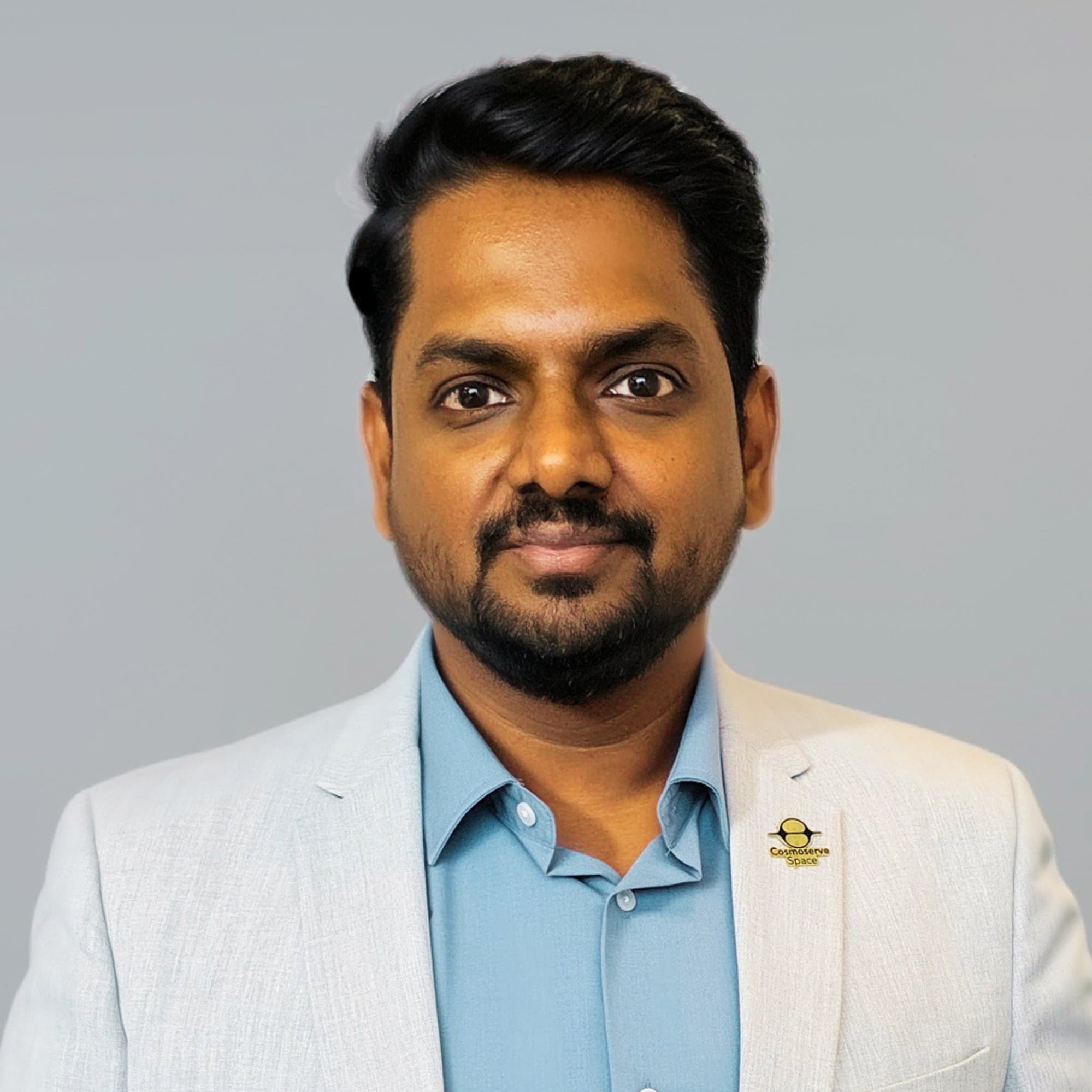
Founders & Innovators
Building the Next Space Economy: Chiranjeevi Phanindra and Cosmoserve's Case for Orbital Maintenance
Chiranjeevi Phanindra, Founder & CEO of Cosmoserve Space, spent 14 years at ISRO working on re-entry and human spaceflight. Today, he is focused on a vital challenge: keeping Earth’s orbit usable.
Read Full Story
Corporate Visionaries
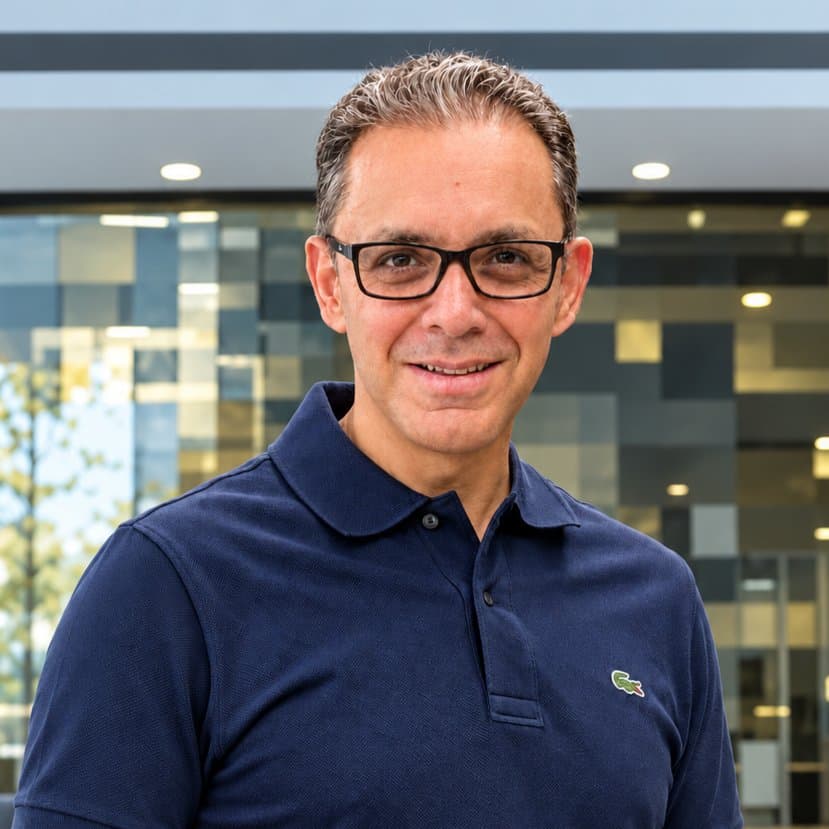
Shashank Sahni on What Success Leaves Out
Shashank Sahni, Google’s Managing Director of Global Ads Solutions, reflects on what customers reveal, what ambitious teams need from their leaders & what the mountains and marathons have taught him about going further.
Read Full Story
Corporate Visionaries
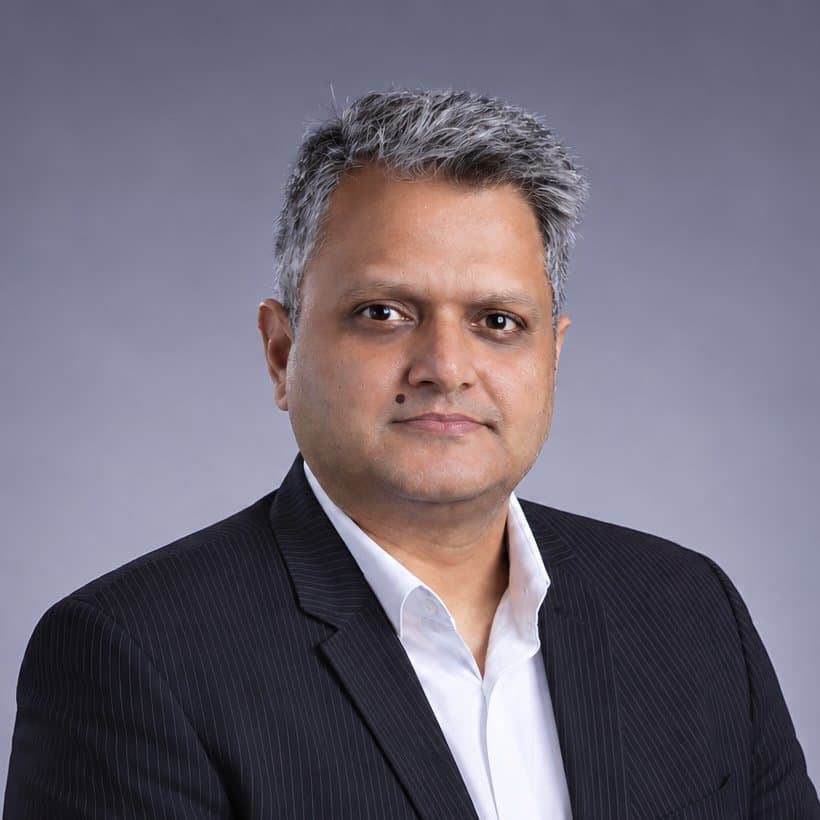
Clinical Multiplication: Divesh Singla on the Healthcare AI Case That Headlines Keep Missing
Divesh Singla, Managing Director, India at Veradigm, brings two decades in healthcare technology to the AI question leaders cannot avoid: how to expand clinical capacity without weakening human judgment.
Read Full Story