Category: Founders & Innovators
Vaibhav Jain argues that while India has democratized access to markets, it has not yet democratized understanding data is abundant, but conviction and discipline are scarce. Through Capital Quill, he reframes finance as behavioral architecture, teaching investors to interpret emotion, build cognitive discipline, and treat awareness as the real edge. His core belief is simple: the next financial revolution will be won not by technology, but by judgment.
The Mindset Dividend: How Vaibhav Jain Redefines the Architecture of Financial Understanding
IndiSight Editorial
Nov 18, 2025
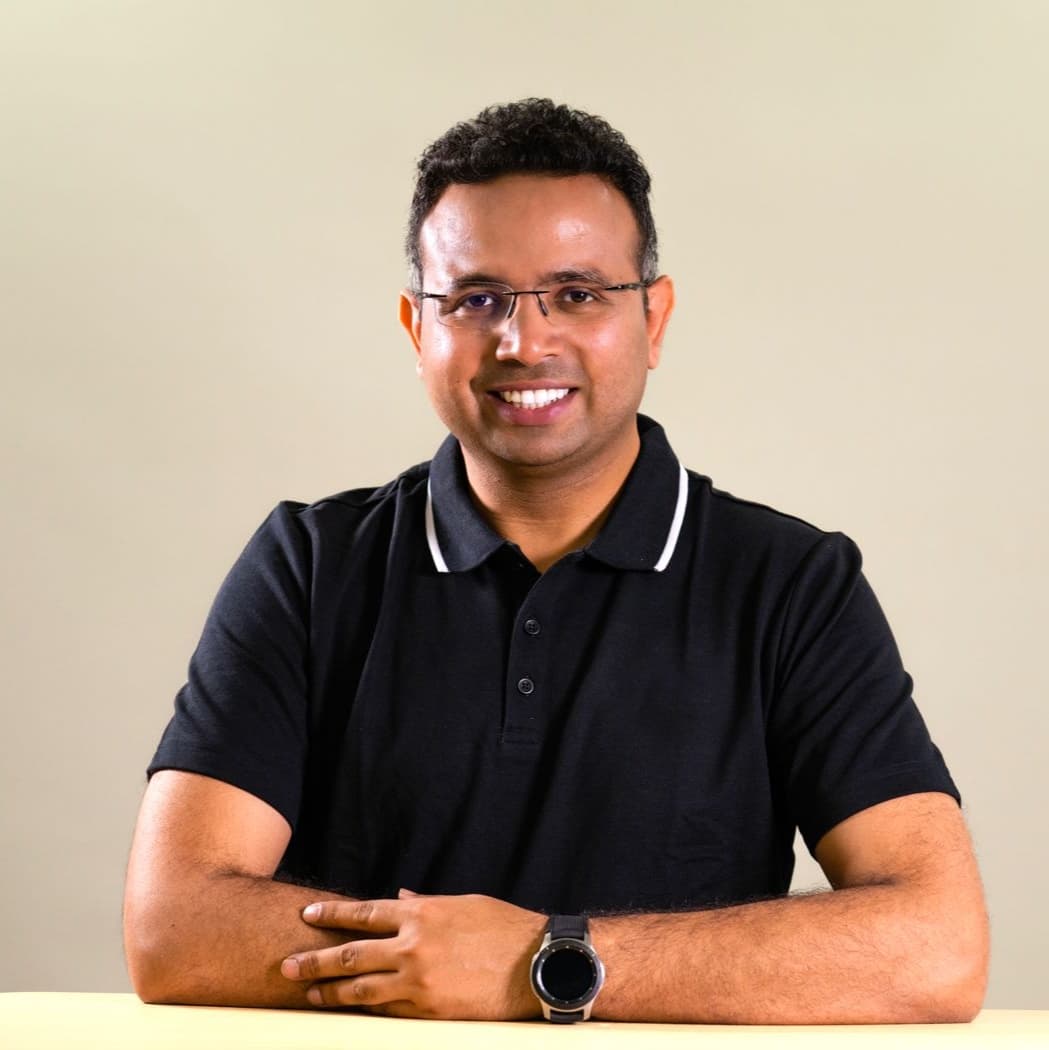
Vaibhav Jain
Founder · Capital Quill
Indore
The Paradox of Plenty
Finance has never lacked information. It has always lacked interpretation.
Across trading screens and smartphones, India now invests more actively than any nation in the world’s emerging markets. SIP flows reach new records each month, algorithmic apps have turned complex execution into a swipe, and retail participation has become a social ritual. Yet behind this progress lies a quieter imbalance. Access has scaled faster than understanding.
As an investment banker at Deutsche Bank, Vaibhav Jain worked on several IPOs and other Equity Capital Markets transactions including the early stages of India’s first REIT, where he saw precision and prudence coexist with speculation and mimicry.
“Markets mirror human belief,” he often says. “When information becomes free, conviction becomes scarce.”
That observation would guide his evolution from investment banker to educator. Today, through Capital Quill, his focus is not on predicting markets but on decoding mindsets. The next revolution in finance, he insists, will be intellectual, not technological.
Fault Lines in Modern Finance
Three structural tensions define the current era of money.
Acceleration versus Absorption.
Technology compresses decision time. Financial products refresh weekly, influencers post daily, and investors act hourly. The absorption cycle, the time needed to translate data into judgment, has collapsed. Vaibhav calls this “the attention premium,” the hidden cost of making faster choices with thinner understanding.
“Every click feels like control,” he notes. “But real control is slower.”
Access versus Understanding.
India solved access brilliantly. Zero-fee accounts, frictionless onboarding, and instant credit have made finance democratic. Yet literacy has not kept pace. In Vaibhav’s words, “Democracy without comprehension becomes dependence.” He argues that wealth creation is not an outcome of access but of awareness. This idea is central to his work at Capital Quill, where finance is taught as a behavioral language, not an arithmetic skill.
Democratization versus Discipline.
The flood of retail participation has re-energized markets but also diluted patience. He recalls a client meeting from his Edelweiss years when a new investor demanded quarterly doubling. “People wanted performance without process,” he reflects. “They wanted certainty from a system built on probability.” For Vaibhav, discipline is not conservative; it is radical. It allows compounding to outlast chaos.
These tensions are not Indian problems. They are global symptoms of a post-information economy where knowledge is abundant and wisdom scarce.
The Behavioral Architecture of Capital
Vaibhav’s rare combination of CFA and CMT credentials reflects his dual worldview. Fundamental analysis explains what something is worth, while technical analysis reveals what people believe it is worth. Between the two lies the human algorithm, the behavioral code that moves markets.
He teaches this not as theory but as architecture. In his sessions with young analysts, three design rules often surface.
Perception Outpaces Performance.
Early impressions harden faster than quarterly results. He illustrates this with the contrast between two colleagues he once observed: one visibly busy and admired, another quietly competent and ignored. Over time, output equalized, but reputations did not. “Capital markets behave the same way,” he says. “Narrative always precedes numbers.”Intelligence Is Overrated; Consistency Is Compounding.
Across portfolios, the difference between a 15 percent and a 17 percent CAGR may look small, yet over decades it multiplies dramatically. The same mathematics governs behavior. Small, consistent acts such as tracking expenses, reviewing allocations, or writing reflections compound into advantage. “Discipline,” Vaibhav reminds students, “is not rigidity. It is rhythm.”Markets Are Psychological Systems.
Price is the visible surface of invisible emotion. Every chart, he says, is a confession of collective feeling: fear, greed, doubt, pride. Understanding those oscillations is understanding humanity. “Volatility is not a flaw in capitalism,” he observes. “It is its emotional signature.”
Through this lens, finance becomes anthropology. Studying investors is studying belief systems in motion.
The Mindset Revolution
For decades, households across the world equated safety with saving. Gold, land, and deposits symbolized security, while equity felt speculative and debt exotic. That pattern is changing rapidly. The new generation measures identity not only through education and employment but also through ownership.
Vaibhav sees this as a global shift toward what he calls “the psychology of participation.” “We are entering the accumulation century,” he explains. “But we cannot import another country’s behavior patterns.” Western finance evolved on individualism, while markets in Asia are shaped by community. Decisions still ripple through family groups and social networks. Risk remains social before it becomes statistical.
He identifies three behavioral biases that shape this transformation everywhere, though they often appear more vividly in emerging markets.
Collective Validation. Investors seek reassurance before conviction. “Most portfolios are built by consensus,” he says, “not by clarity.”
Asymmetric Fear. Loss feels twice as painful as gain feels joyful. “It is why people exit too early and re-enter too late.”
The Momentum Mirage. Investors romanticize patience yet chase immediacy. “We preach compounding,” he smiles, “but worship motion.”
Correcting these, he argues, requires not just financial literacy but cognitive infrastructure that strengthens judgment and emotional discipline.
Education to Ethics
The education economy in finance has become a marketplace of noise. Influencers, algorithms, and short courses promise certainty in a probabilistic world. Vaibhav’s critique is sharp: “We are teaching trading as entertainment and calling it empowerment.”
Capital Quill was conceived as a counter-model. Its premise is simple: knowledge must produce judgment, not dependency. The curriculum blends market mechanics with behavioral conditioning. Students keep decision journals, analyze cognitive biases, and simulate trades with pre-mortems rather than post-mortems. “Understanding why you clicked ‘buy’ matters more than what you bought,” he insists.
Yet his larger point is ethical. Financial literacy, he argues, is public infrastructure. It should be governed by trust, not trend. “Money education should never exploit anxiety,” he says. “If people leave a program more dependent on your opinion than before, you have failed them.”
That principle defines Capital Quill’s approach to scale. Instead of promising mastery, it promises clarity. Instead of measuring success by enrollments, it measures by retention of discipline.
The Doctrine of Financial Democracy
Over time, Vaibhav has distilled his philosophy into what he calls four pillars of financial democracy, a framework that bridges institutional rigor with individual wisdom.
Institutional Mastery before Innovation.
He believes credibility is built inside the system before it can be used to question the system. “Disruption without apprenticeship breeds arrogance,” he says, recalling how his early years in investment banking grounded his later critiques of it.Behavioral Architecture over Product Design.
Fintech innovation often focuses on interfaces. He argues the true breakthrough lies in emotional engineering, designing habits rather than apps. “A clean interface cannot fix a cluttered mind.”Education as Infrastructure.
He treats financial education like roads or power grids, an enabling structure rather than a consumer good. “When learning becomes infrastructure,” he says, “growth becomes inevitable.”Trust as Compound Interest.
In finance, trust multiplies geometrically. Each ethical act adds to an invisible principal that pays future dividends. “You can automate returns,” he notes, “but not reputation.”
These doctrines do not form a marketing statement. They function as a manifesto for rebuilding.
Contrarian Choices
Throughout his career, Vaibhav’s most defining moves were those that ran against momentum. While peers chased investment banking’s prestige, he shifted to wealth management to study human behavior. While others secured linear promotions, he took a sabbatical to teach. While the market celebrated quick exits, he joined WealthDesk long before its acquisition by PhonePe, choosing exposure over comfort.
He explains his logic through what he calls “the optionality of conviction.” “When your goal is learning,” he says, “you can afford to be early. When your goal is validation, you are always late.”
His current choice, launching a human-centric education venture amid AI disruption, might appear counter-cyclical. But that is precisely the point. “Machines will handle arithmetic. Humans must handle awareness.”
Failure as Curriculum
Vaibhav speaks about errors as data. A mistimed derivatives trade taught him humility. An over-designed product pitch at a fintech firm taught him simplicity. A class that lost engagement mid-lecture taught him to respect attention as currency.
He frames failure as the tuition fee of mastery. “The market charges for every lesson,” he says. “You either pay upfront through preparation or later through regret.”
Rather than avoid mistakes, he recommends documenting them. “Write your financial autobiography while you’re still writing the balance sheet,” he advises students. “Numbers reveal outcomes. Stories reveal causes.”
The Anthropology of Finance
To understand investors, Vaibhav studies culture as much as capital. He points to three invisible forces shaping modern behavior.
Heritage of Scarcity. For generations, financial caution ensured survival. That memory lingers. “Our DNA remembers famine,” he says. “That is why abundance still feels temporary.”
Social Comparison Economy. Wealth today is visible in pixels. The neighbor’s return is now a notification. “Status has become digital,” he notes. “Comparison is instant and infinite.”
Rise of the Mindset Class. A new generation measures success by autonomy, not accumulation. They seek enoughness rather than excess. “This,” he believes, “is the most hopeful shift, the redefinition of wealth as freedom from urgency.”
Teaching as Transformation
When Vaibhav steps into a classroom, he describes it as entering a live market of ideas. Teaching, he says, is not about transmitting certainty but provoking curiosity. His pedagogy mirrors the trader’s loop: hypothesis, action, reflection, correction.
He often opens sessions with a paradox: “Finance is logic in theory and psychology in practice.” Students respond with real-world cases instead of textbooks. Through this process, technical analysis becomes tactile. Charts turn into conversations about emotion, timing, and restraint.
He likens teaching to stand-up not for humor but for immediacy. “You know instantly if you’ve lost the room,” he smiles. “Attention is the truest market indicator.”
The Future of Finance
Vaibhav outlines three scenarios shaping the next decade.
The Acceleration. Financialization grows faster than comprehension. AI-powered tools simplify investing but risk amplifying herd behavior. Policy must evolve from disclosure to discernment, training citizens to read patterns, not just prospectuses.
The Backlash. A major correction could trigger regulatory overreach, freezing innovation. The antidote is proactive ethics, not reactive punishment. “We need moral compasses before legal clauses,” he warns.
The Synthesis. His preferred outcome is a financial grammar that blends global best practices with indigenous values of patience, prudence, and participation. “We can design a system where capital serves the community without diluting competitiveness.”
He believes the next competitive advantage for both individuals and institutions will be cognitive discipline, the ability to stay rational in emotional markets. “Algorithms can price risk,” he says. “Only humans can price meaning.”
Legacy of Awareness
Vaibhav’s measure of success is subtle. He wants finance to feel less intimidating and more introspective. He hopes students and investors treat reflection as strategy. “The ultimate return,” he says, “is peace of mind that survives volatility.”
When asked how he defines wealth today, his response is simple. “It is the ability to make long-term decisions without short-term fear.”
He sees this decade not just as a growth story but as a wisdom laboratory, a test of whether inclusion can coexist with integrity, speed with depth, and ambition with awareness.
Leadership Takeaways
Understanding outperforms access. Technology may open doors, but comprehension keeps them open.
Behavior is infrastructure. Systems endure when mindsets mature.
Trust compounds faster than capital. Ethics scale more efficiently than code.
Learning precedes leverage. Apprenticeship is the prerequisite of disruption.
Discipline is innovation slowed down enough to last.
Markets are mirrors. Study emotion before valuation.
Failure is tuition. Pay it consciously.
Teach what you practice. Integrity multiplies credibility.
Patience is not passivity. It is precision in motion.
The next edge is awareness. Every investor, manager, and nation will compete on cognitive discipline.
Closing Reflection
Finance began as arithmetic and became anthropology. It will end, Vaibhav Jain believes, as philosophy.
The numbers will remain. The spreadsheets will grow. But meaning, the rarest currency, will decide who endures.
“Participation has been democratized,” he says. “Now understanding must follow. That difference will define whether the next financial revolution creates prosperity or merely motion.”
In an age of infinite data and finite attention, the true compound interest is not on capital. It is on consciousness.
Our Suggestions to Read
Discover The Leaders Shaping India's Business Landscape.
Founders & Innovators
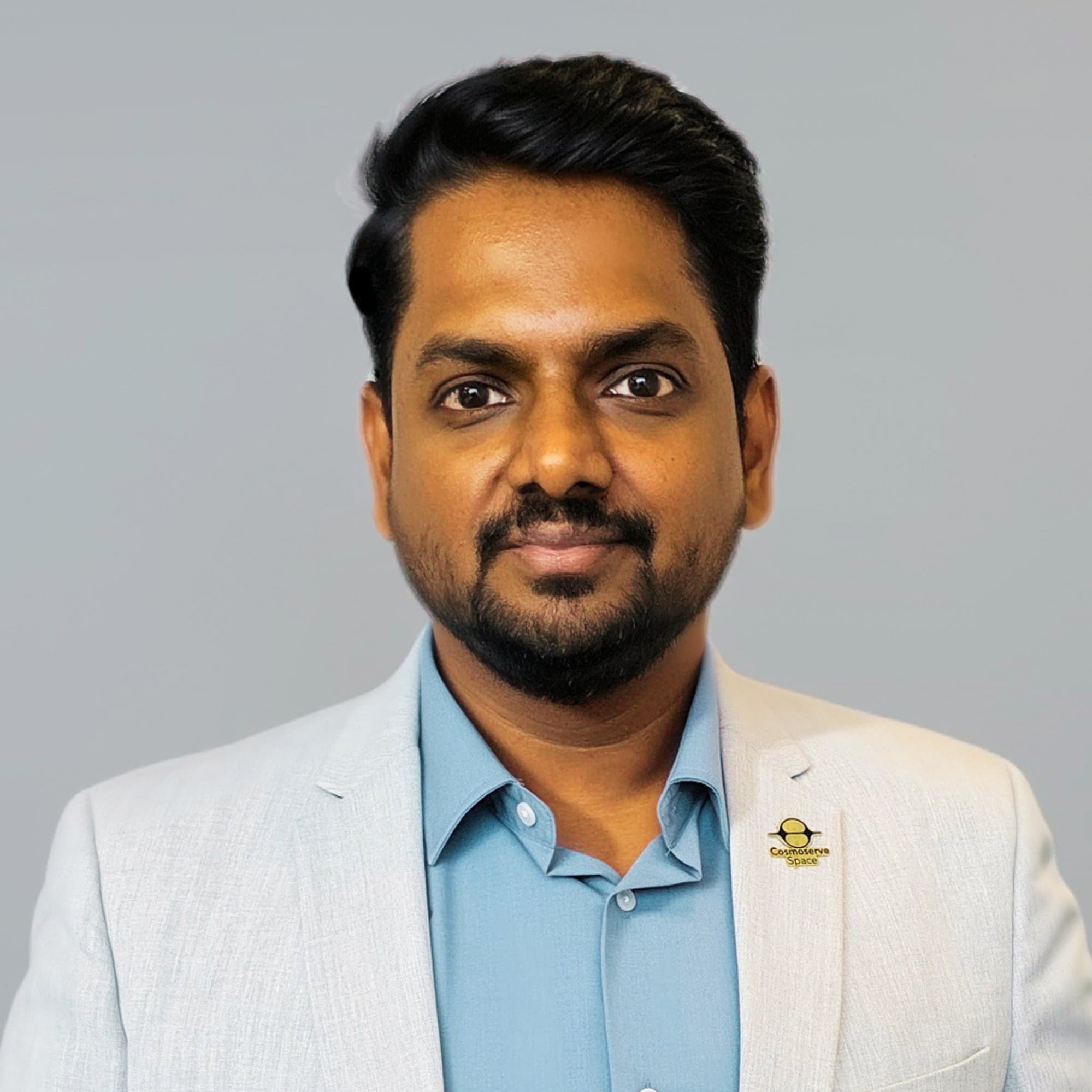
Building the Next Space Economy: Chiranjeevi Phanindra and Cosmoserve's Case for Orbital Maintenance
Chiranjeevi Phanindra, Founder & CEO of Cosmoserve Space, spent 14 years at ISRO working on re-entry and human spaceflight. Today, he is focused on a vital challenge: keeping Earth’s orbit usable.
Read Full Story

Corporate Visionaries
Shashank Sahni on What Success Leaves Out
Shashank Sahni, Google’s Managing Director of Global Ads Solutions, reflects on what customers reveal, what ambitious teams need from their leaders & what the mountains and marathons have taught him about going further.
Read Full Story
Corporate Visionaries
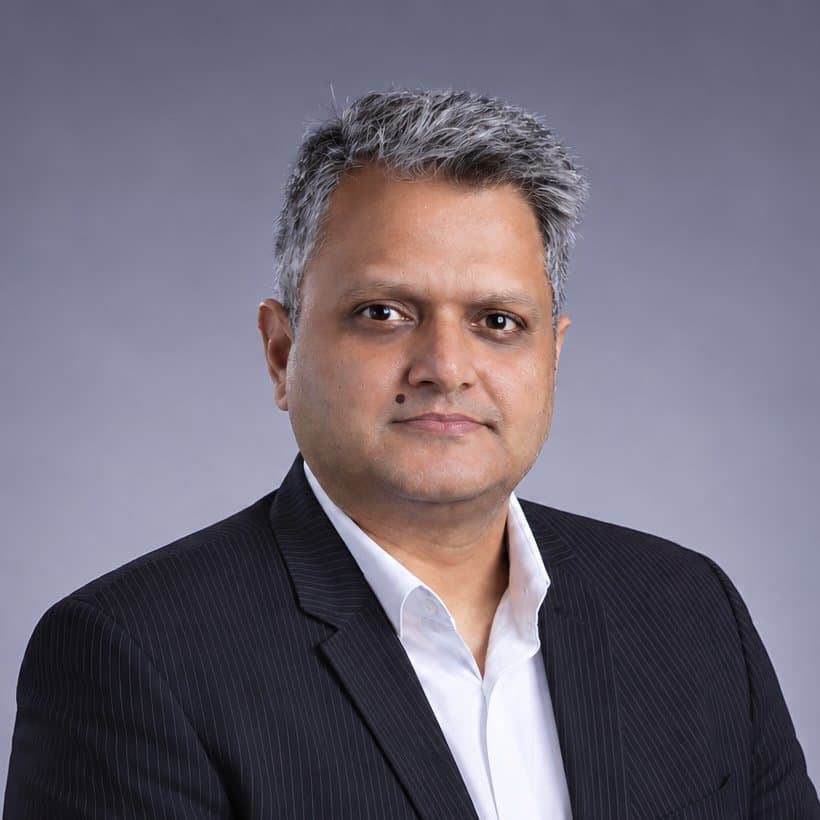
Clinical Multiplication: Divesh Singla on the Healthcare AI Case That Headlines Keep Missing
Divesh Singla, Managing Director, India at Veradigm, brings two decades in healthcare technology to the AI question leaders cannot avoid: how to expand clinical capacity without weakening human judgment.
Read Full Story