Category: Investors & Catalysts
Ujjwal Minocha sees resilience as the ultimate founder advantage, blending discipline, systems thinking and risk intelligence to back entrepreneurs building enduring institutions, not just visible success.
The Long Game: Ujjwal on Systems, Resilience, and Nation-Building Through Capital
IndiSight Editorial
Oct 12, 2025
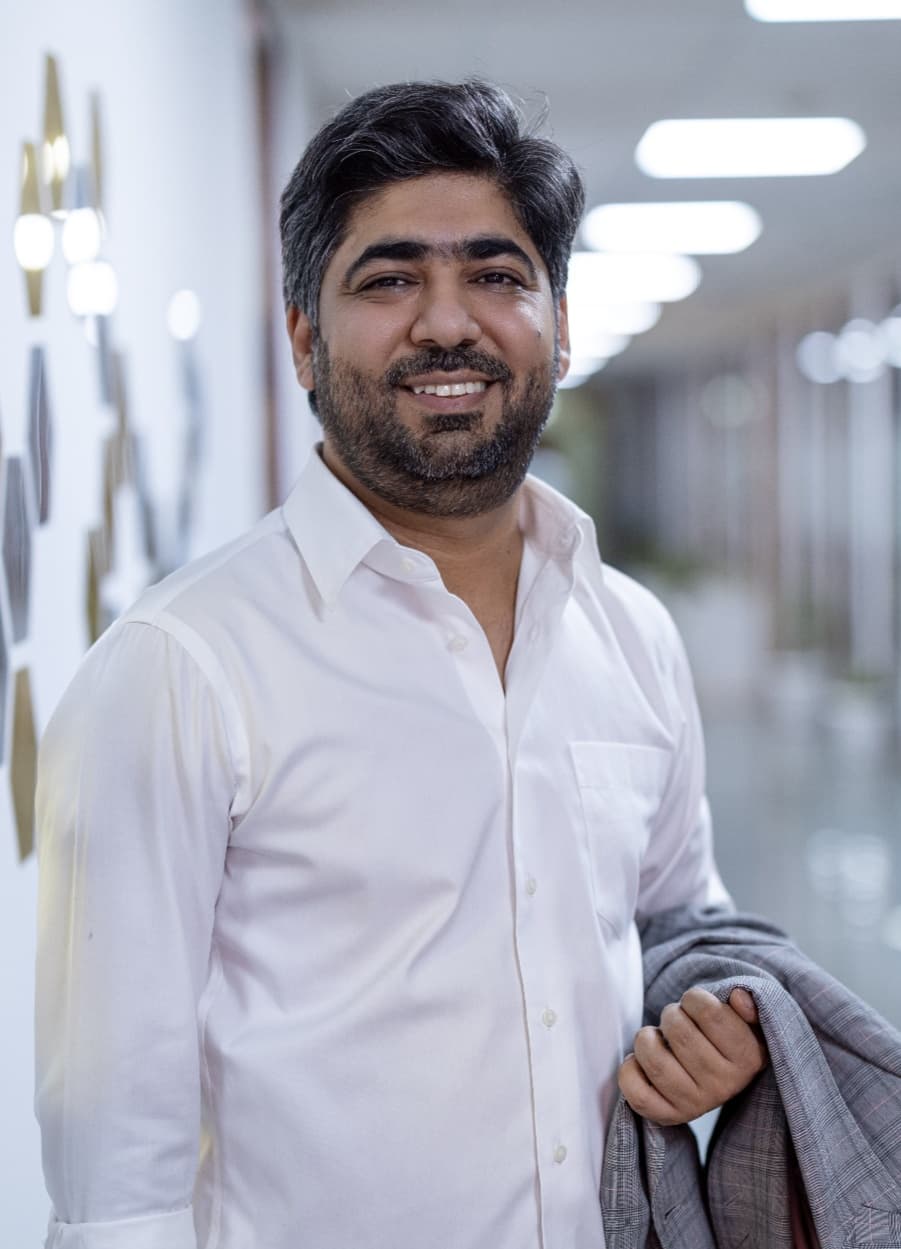
Ujjwal Minocha
When Ujjwal Minocha reflects on his career, he does not describe it as a straight line or a polished résumé. He sees it as a series of tests, often at high stakes, that forced him to learn about probability, resilience, and the hidden structure of systems. He began in the world of five-star hospitality, where service was measured by precision and grace. He then entered the alco-beverages industry, managing some of the world’s most iconic brands in India. Later, he made a pivot into professional poker and strategic casino operations, where the mathematics of variance shaped his understanding of risk more than any MBA could. Today, he is an entrepreneur building a deeptech wireless communication start-up alongside Deepak Solanki through Velmenni, and an investor managing over ₹100 crore through I9ovare Capital.
Across these very different domains, Ujjwal has cultivated one consistent worldview: resilience outperforms brilliance, and systems outlast stories. He speaks less like a venture capitalist chasing trends and more like a philosopher-engineer designing for centuries. His conviction is that entrepreneurs are not just company builders but nation-builders, and that investors have a responsibility not only to capital but to civilization itself.
Early Foundations: Service as Structure
Ujjwal began in hospitality with The Oberoi Group. In that environment, every detail mattered: the placement of a glass, the cadence of a greeting, the ability to anticipate a guest’s need before it was voiced. These were not surface-level courtesies but an operating system. What looked simple to the guest was the result of discipline and coordination behind the scenes.
From there, he moved into the alco-beverages industry with Pernod Ricard and later Bacardi, overseeing brand launches and trade marketing in some of India’s toughest regions. It was an aspirational yet highly regulated sector. Direct advertising was prohibited, so campaigns had to be created through music sponsorships, cultural associations, and surrogate events.
“Markets rarely move in straight lines. Success often lies in subtle shifts of perception, not loud campaigns.”
Across Chandigarh, Goa, and Delhi, he learned to grow brands without ever running a direct advertisement. The experience forced him to look beyond vanity metrics. A billboard might boast of millions of views, but the real question was whether the right consumer was moved to act. The alco-beverages industry sharpened his instinct for working within constraints. That lesson, to measure value by impact rather than optics, would later shape how he judges businesses and founders.
Variance and the Mathematics of Risk
Poker compelled Ujjwal to live with uncertainty in a way no textbook could. A hand won or lost meant little compared to whether the choice behind it was mathematically sound. Over time, he stopped chasing outcomes and focused on the integrity of the process. Variance was not an exception. It was the environment itself. The only discipline that mattered was learning to design within it.
“You don’t beat variance. You build around it.”
That outlook later defined his consulting work with MGM Resorts International. There, he designed incentive structures and financial hedges for high-roller clients across the Indian sub-continent, the Middle East, and the UK. If a client walked in with $100,000 or more, Ujjwal’s task was to protect both sides of the table: to ensure the casino’s statistical edge while delivering value for the customer.
What surprised him most was the kind of people who sat down at the tables. The high rollers were rarely reckless thrill-seekers. They were hedge fund managers, industrialists, and bankers who already lived with risk in their daily lives. For them, the game was not about escaping probability but about experiencing it directly. Watching them, Ujjwal absorbed a truth he would carry into investing: the goal is not to eliminate risk but to design systems that survive it.
This distinction between risk and variance became central to his worldview. Risk can be insured against or reduced through diversification. Variance is different. It is baked into the system. Trying to escape it is futile. The lesson is closer to the philosophy of Karma Yoga in Indian tradition: focus on the quality of action, not the outcome. In the modern language of business, this means building processes that remain intact even when results fluctuate wildly.
From Poker to Photonics
After years of consulting in gaming, Ujjwal was introduced to Velmenni, a start-up experimenting with LiFi, a technology that uses light to transmit data. At first, it sounded far-fetched. The deeper he studied it, the more convinced he became that it could reshape how communication systems are built.
“Velmenni isn’t just innovating. It is redesigning the physics of communication.”
Velmenni was founded by Deepak Solanki, and Ujjwal joined as co-founder and COO to help move the venture from research to commercialization. The spectrum of light is secure, abundant, and thousands of times larger than the available RF spectrum. For defense, this meant communication that was harder to intercept. For civilians, it offered last-mile connectivity where fiber could not be laid.
The company soon drew interest from Airbus, the Ministry of Defence, and the Indian Navy. Velmenni is still early, but to Ujjwal, it represents the type of company that matters most: one building infrastructure at the level of nations. He is willing to back ideas that take a decade or longer to mature, because he sees them as scaffolding for the future.
I9ovare Capital and the Architecture of Investment
In parallel, Ujjwal built his investment practice through I9ovare Capital. What began as writing small checks to early founders evolved into a structured portfolio. Today the firm manages over ₹100 crore across sectors, with investments in companies such as Fitso (later acquired by Zomato and Cultfit), FAE Beauty, D’chica, Basil, Scrap Uncle, and First-Wav.
The thread connecting these ventures is not glamour but grit. They are companies built on operational resilience rather than hype.
“We don’t back stories. We back systems.”
When evaluating a founder, Ujjwal looks for invisible moats. Can they remain steady under stress? Do they maintain rhythm when things get messy? Are their reflexes honed by lived experience rather than borrowed jargon?
He respects those who give up comfort to pursue hard problems. A person who could earn comfortably elsewhere but chooses to live with the chaos of an early-stage company shows conviction. For Ujjwal, sacrifice is not romantic. It is evidence.
Capital Beyond Short-Termism
Most venture models are built around the expectation of 10x returns within seven years. Ujjwal acknowledges this, but he believes some challenges cannot be solved within those horizons. Infrastructure, climate, and deep technology demand patient capital.
“Most venture capital optimizes for 10x in seven years. But if you are solving 100-year infrastructure problems, the stack must be designed differently.”
This is not just critique. It is a call for re-architecting global finance. Ujjwal believes India requires capital that can stay the course with technologies requiring long gestation periods.
He often points out that the obsession with TAM, or Total Addressable Market, misleads founders and investors alike. A massive market on a slide is no guarantee of defensibility. Instead, he asks different questions: is the founder building something that can endure neglect, that becomes stronger through iteration, that does not require constant external intervention? Capital, in his view, is not fuel poured into a fire. It is scaffolding built to hold weight while structures grow.
This philosophy resonates with Taleb’s idea of antifragility, but Ujjwal frames it in operational terms. He does not celebrate chaos. He designs for it. He assumes volatility is permanent and asks whether a business can remain functional inside it. That inversion, planning for uncertainty rather than against it, is what sets his thinking apart from conventional investors.
India to the World: Resilience as Edge
Ujjwal often speaks about India’s role in the global entrepreneurial landscape. He believes the country’s edge is not cheap labor or sheer market size but a culture of resilience.
“What looks like frugality in India is often elegance in disguise, if translated right.”
The danger, he says, is when Indian founders mistake local hacks for global readiness. To scale globally, resilience has to be paired with refinement. He points to the rise of Indian luxury brands competing globally, not as low-cost alternatives, but as confident equals.
This insight reflects a larger comparison of entrepreneurial ecosystems. Silicon Valley operates with capital abundance, China with state coordination. India operates in constraint. The ability to innovate within scarcity creates a different kind of ingenuity, one that, if refined, can become a global advantage.
But he is also critical. If India becomes a $10 trillion economy yet continues to import its intellectual frameworks from abroad, he calls that a sophisticated failure. True nation-building is about economic growth paired with intellectual independence.
“If India becomes a $10 trillion economy but imports its mental models, that is a sophisticated failure.”
Invisible Moats and Operational Truths
Beyond philosophies, Ujjwal is exacting about execution. He has seen many ventures collapse not because the idea was weak but because the rhythm of operations could not sustain pressure.
“Discipline outlasts brilliance.”
He watches closely in the first 18 months. Does the founder know their product better than anyone else in the room? Do they admit what they do not know? Do they give compliance as much seriousness as growth?
For him, culture is not a slogan. It is visible in whether teams keep showing up with the same pace during hard weeks as they do during moments of celebration. If culture only appears in good times, it is ornament. If it shows up in the grind, it is real.
Legacy Beyond Recognition
Despite his accomplishments, Ujjwal avoids the spotlight. He does not flood social media with updates, nor does he chase awards.
“Legacy is not recognition. It is the systems that function long after you are no longer relevant.”
He warns that founders often confuse recognition with relevance. Recognition is fleeting. It can be engineered with media or awards. Relevance is earned by systems that keep working even when their creator steps away. In history, we remember institutions that lasted centuries, not the individuals who sought applause along the way.
In an age where entrepreneurs are encouraged to become personalities, he prefers another model. Business is not about being famous first and then wealthy. It is about building institutions that quietly outlast their creators.
Leadership Lessons from Ujjwal Minocha
Discipline Outlasts Brilliance
Brilliance makes noise at the start. Discipline is what keeps the engine running year after year. The systems that endure are usually boring before they become legendary.
You Don’t Beat Variance, You Build Around It
Uncertainty is not a guest that comes and goes. It is the house you live in. Leaders who endure are those who arrange their rooms to absorb the storms rather than pretend the weather will clear.
Invisible Moats Matter More Than Visible Traction
The best defenses are rarely obvious. Emotional steadiness, operating rhythm, and judgment under pressure do not show up on a dashboard, yet they often decide whether a company survives a crisis.
Operate from Conviction, Not Consensus
Consensus feels safe, but it usually arrives too late. The breakthroughs belong to founders who take the first step before the ground looks stable.
Culture Is Execution, Not Ornament
Culture is not a poster in the office or a slide in the deck. It is whether the team keeps pace when funding dries up, deadlines stretch, and pressure is highest.
Local Resilience Can Become Global Edge
What looks like scrappiness in India can, when translated with care, become elegance abroad. Ingenuity under constraint can be the most valuable export.
Design Capital for Century-Scale Problems
Short-term funds create short-term companies. Infrastructure and climate require capital that can match the scale of the problems being solved.
Legacy Is Systems, Not Recognition
Fame fades quickly. Systems that outlive their founders are what endure. That is the truer measure of leadership.
Silence Is Data
Not every refusal is final. Some “no” answers are simply slow recognitions of value. The wisdom is in knowing which is which.
Nation-Building Is the Founder’s Frontier
Startups are not just vehicles for wealth. They are cultural exports and institutional blueprints that define how India presents itself to the world.
Takeaways for Aspiring Entrepreneurs
Start Before Consensus
If you wait for validation, you are already behind. Every transformative idea feels premature at the start.
Design for Resilience
Build systems that absorb shocks instead of just chasing momentum. Endurance often decides who wins.
Edge Is a Personal Attribute
Your conviction and lived experience matter more than a polished deck. Investors always back founders, not the slides they present.
Takeaways for Aspiring Investors
Back Systems, Not Stories
Narratives fade quickly. Operating logic endures through cycles.
Respect Invisible Moats
The best founders scale themselves before they scale products. Reflexes and resilience compound more than numbers.
Play Long, Not Loud
True venture capital is not about who exits first but about who shapes the future.
Closing Reflection
Ujjwal Minocha’s career defies linearity. From hospitality to the alco-beverages industry, from casino strategy to photonic communication, he has built a worldview that treats uncertainty as a constant companion. He invests in systems rather than stories. He values resilience more than glamour. And he sees nation-building not as a catchphrase but as the quiet work of scaffolding institutions that endure.
“You don’t beat variance. You build around it.”
In those words lies a philosophy not only for entrepreneurs or investors, but for anyone navigating the uncertainty of a changing world.
Our Suggestions to Read
Discover The Leaders Shaping India's Business Landscape.
Founders & Innovators
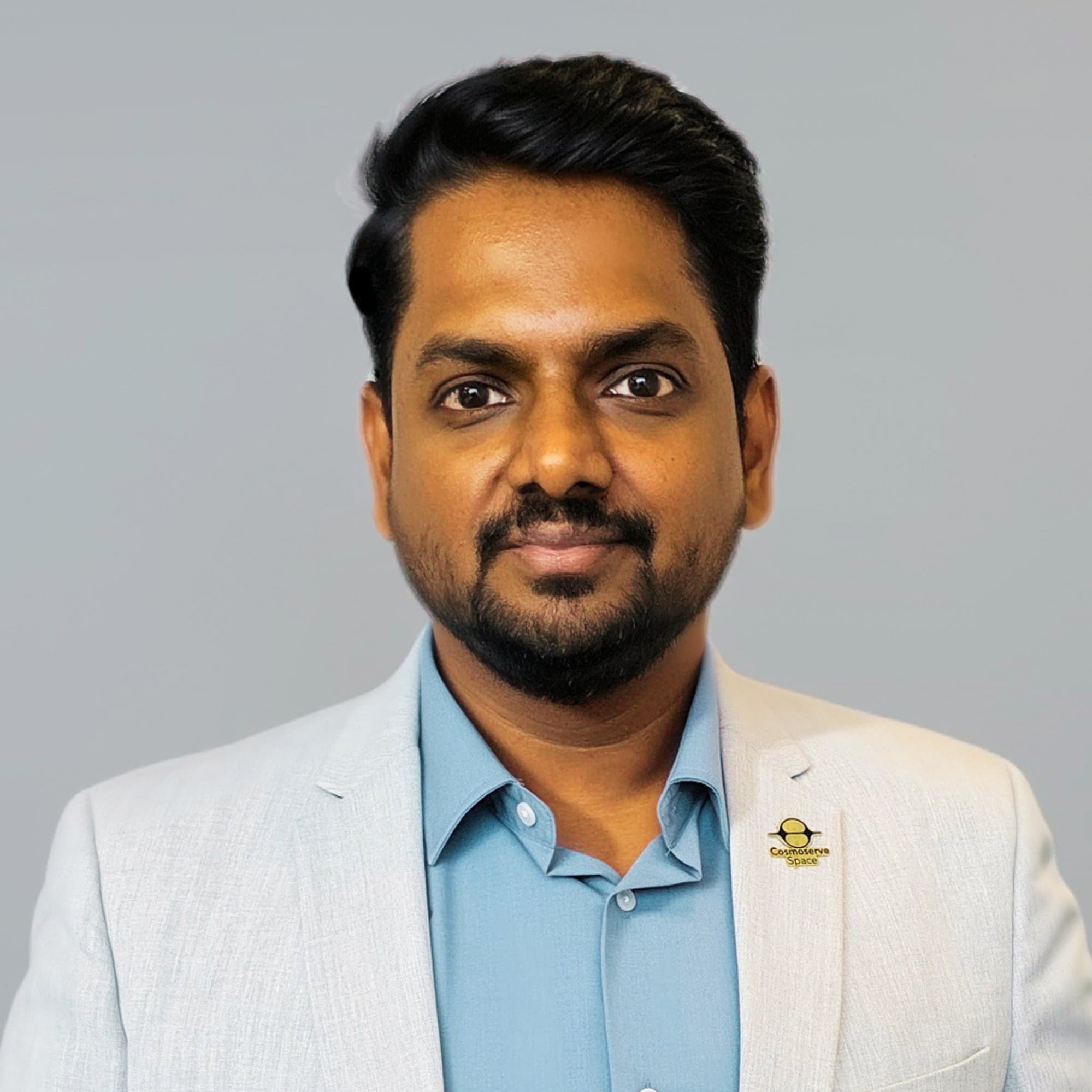
Building the Next Space Economy: Chiranjeevi Phanindra and Cosmoserve's Case for Orbital Maintenance
Chiranjeevi Phanindra, Founder & CEO of Cosmoserve Space, spent 14 years at ISRO working on re-entry and human spaceflight. Today, he is focused on a vital challenge: keeping Earth’s orbit usable.
Read Full Story

Corporate Visionaries
Shashank Sahni on What Success Leaves Out
Shashank Sahni, Google’s Managing Director of Global Ads Solutions, reflects on what customers reveal, what ambitious teams need from their leaders & what the mountains and marathons have taught him about going further.
Read Full Story
Corporate Visionaries
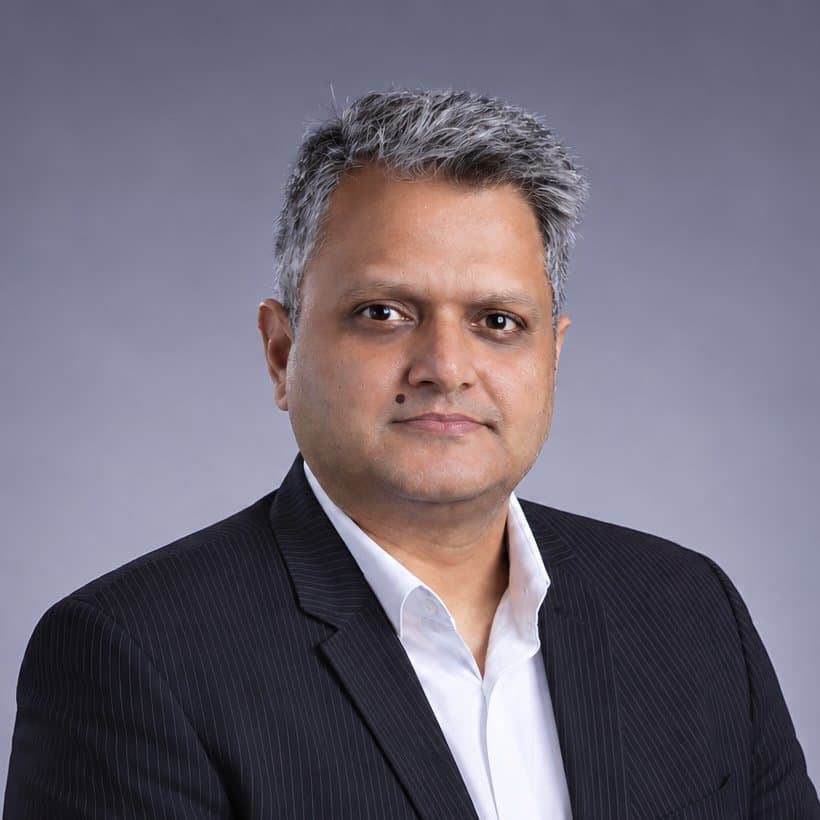
Clinical Multiplication: Divesh Singla on the Healthcare AI Case That Headlines Keep Missing
Divesh Singla, Managing Director, India at Veradigm, brings two decades in healthcare technology to the AI question leaders cannot avoid: how to expand clinical capacity without weakening human judgment.
Read Full Story