Category: Corporate Visionaries
Dr. Aneish Kumar, former Managing Director of the Bank of New York Mellon, Strategic Advisor at Axis Trustee Services Ltd, and Independent Director on several institutional boards, stands among the rare leaders redefining finance as a human system. Over four decades, he has reshaped how institutions think about trust, risk, and judgment, treating governance as design and capital as conscience. His philosophy transcends balance sheets, reminding global leaders that endurance in finance is not built through scale but through integrity that outlasts ambition.
The Leadership Equation: Redesigning Finance as a Human System - In Conversation with Dr. Aneish Kumar
IndiSight Editorial
Jan 3, 2026
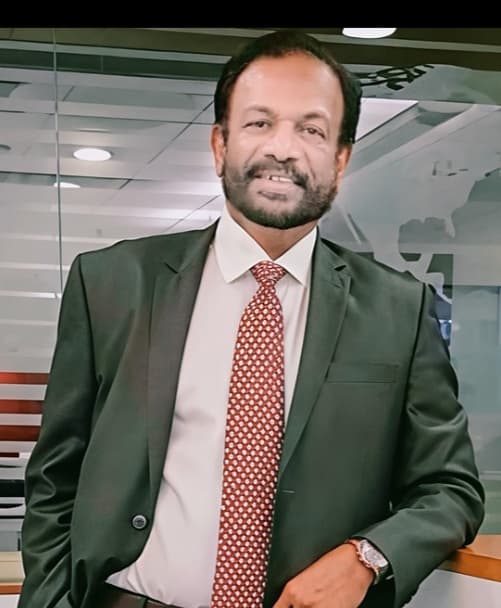
Dr. Aneish Kumar
Strategic Advisor & Non-Executive Director
Mumbai
Finance as a Human System
Modern finance is often described through volatility, valuation, and speed. Yet beneath every market movement lies something quieter and far more durable: human behavior. For Dr. Aneish Kumar, who has spent over four decades across Corporation Bank, Lloyds Finance, and the Bank of New York Mellon, finance is not a discipline of numbers. It is an applied human science that measures trust, time, and temperament.
The systems we build eventually reflect our own psychology. Markets rise on confidence and collapse on doubt. Spreads, rates, and ratios are only their symptoms.
This dialogue goes beyond achievements to explore the deeper philosophies that shaped his decisions.
Dr. Aneish entered the industry when India’s banking sector was still manual and cautious. Liberalization in the 1990s changed everything. Institutions that once prized stability were suddenly asked to prize speed. The challenge was not only technical but cultural. Banking needed to learn how to trust data without losing discernment.
“Change in banking was never about hardware,” he recalls. “It was about belief. We had to teach institutions to trust new forms of certainty.”
That experience shaped his philosophy. Finance, he argues, must be understood as a behavioral journey, not a technological one. That shift taught him to value people more than processes and long-term trust more than short-term wins.
Redefining Governance: From Oversight to Design
Governance, in Dr. Aneish’s view, is not compliance. It is architecture. He treats it as the deliberate design of how decisions are made, escalated, and tested. Most institutions, he argues, confuse governance with surveillance, mistaking documentation for awareness.
Every boardroom has dashboards but very few have mirrors.
For him, effective governance begins with what he calls the “pause principle.” The capacity to stop and reflect before acting separates good institutions from reckless ones. “Most governance failures are not acts of deception,” he explains. “They are acts of momentum.”
In India’s evolving regulatory landscape, governance is no longer a support function. It is a valuation driver.
He treats governance as a living design problem. Ethics, transparency, and dialogue form the operating system. “Checklists can detect non-compliance,” he says. “Only conversation can detect blindness.”
In a global environment defined by volatility, this distinction matters. Governance that simply reviews the past cannot prevent the next crisis. Governance that builds reflective capacity can. In his words, “governance is not restraint. It is a design for endurance.”
Risk as a Behavioral Science
Dr. Aneish earned the nickname “risk visionary” not for predicting crises but for noticing the behavioral patterns that preceded them. He remembers watching market dashboards before the 2008 crisis. “The silence in volatility always bothered me,” he says. “When the market makes no noise, it is either stable or asleep. And sleep is dangerous in finance.”
He reduced exposure before the data demanded it. The decision seemed unnecessary at the time but proved right months later. Yet he is quick to correct romantic interpretations. “Instinct can save you once and mislead you twice,” he says. “The art lies in knowing when intuition is insight and when it is ego.”
He believes risk management is not primarily a statistical science. It is a behavioral one. “Numbers reveal events,” he says. “Behavior reveals causes.” The difference between institutions that survive crises and those that do not often lies in how quickly they translate emotion into structure.
In India’s evolving ecosystem the risk is not a backroom function anymore. It is a public responsibility.
Resilience, in his framework, is adaptive rather than defensive. “Resilience is not insulation,” he says. “It is the ability to bend without breaking, to adjust without losing principle.”
The Economics of Conscience
Capital, for Dr. Aneish, has both an economic and moral dimension. He divides it into two kinds: catalytic and corrosive. Catalytic capital enables purpose. Corrosive capital dictates it.
Capital becomes corrosive when it starts defining purpose instead of funding it.
He observes that in many institutions, short-term valuation has replaced long-term stewardship. “The earliest sign of institutional weakness is not in the balance sheet,” he says. “It is in the vocabulary. When words like courage and empathy disappear from leadership conversations, decline has already begun.”
This philosophy extends to strategy. He believes the most sustainable institutions measure return on integrity alongside return on investment. “Mistrust is the most expensive liability an organization can carry,” he says. “Conscience is not the opposite of commerce. It is its foundation.”
His framework challenges the idea that ethics and performance are trade-offs. In his view, moral clarity and financial durability reinforce each other.
Regulation as Learning Architecture
Having worked inside both financial institutions and regulatory systems, Dr. Aneish views compliance through a pragmatic lens. Rules, he says, are necessary but never sufficient. “By the time a rule is written, someone has already found a way around it.”
He promotes the idea of regulation as learning architecture, a system that adapts to behavioral signals rather than waiting for failure. As guest faculty at the Reserve Bank of India’s College of Banking Supervision, he emphasizes that oversight must evolve into insight.
“You cannot design supervision as if it were policing,” he says. “You design it as if it were education.”
He uses the metaphor of urban planning to explain regulatory design. “You cannot guard every street,” he says. “But you can design a city where unethical behavior has no place to hide.”
Compliance, in his framing, is not constraint but feedback. When designed as intelligence, it becomes a living tool for institutional learning. The most effective regulation does not slow innovation; it sustains trust.
Technology, Trust, and the Limits of Automation
Few leaders of his generation combine optimism and restraint in their view of technology. Dr. Aneish does. He argues that digital transformation is often treated as an end in itself rather than a means to elevate judgment.
“Technology should enhance judgment, not replace it,” he says. “When machines start making moral decisions, we have lost the plot.”
AI may accelerate decisions, but accountability and judgment remain deeply human responsibilities.
He believes institutions measure technology by efficiency when they should measure it by the quality of thought it enables. “Automation that accelerates without awareness only scales error,” he says.
His approach views technology through anthropology rather than engineering. Digital systems reshape rituals, communication, and culture. They alter how trust is experienced. “The question is not how fast a system performs,” he says. “The question is what kind of thinking it reinforces.”
Technology, in his view, earns trust through transparency, not speed. The future of finance will depend less on who codes the best algorithms and more on who designs the most ethical feedback loops.
The Inner Architecture of Leadership
Leadership, for Dr. Aneish, is not a collection of titles or skills. It is an internal economy that balances ambition with awareness. “Relevance has a half-life,” he says. “The more experience you have, the faster it decays unless you renew it.”
He believes curiosity sustains authority. “Certainty,” he says, “is the enemy of evolution.” Long before reverse mentoring became common, he encouraged senior executives to learn from younger teams. He treats learning as an act of humility rather than strategy.
Leadership is not about being followed. It is about creating conditions where people can think clearly and act responsibly.
He also learned early that ego is the enemy of perspective. “At some point, I dropped the E and kept the go,” he recalls. Power, to him, is temporary custody of trust. The leader’s task is to guide without ownership. “You do not own institutions,” he says. “You care for them until they can care for themselves.”
In reflecting on his early administrative training days, he credits resilience and humility as the foundation of his endurance. “Those years taught me that authority without empathy is fragility,” he says.
The Paradox Principle
Dr. Aneish believes leadership maturity comes from managing contradictions. He describes his method as the discipline of navigation between competing goods.
He identifies five enduring tensions that define decision making.
Speed and Scrutiny: Move too fast and you make reckless decisions. Move too slow and you miss opportunities. The skill lies in knowing which deserves patience.
Innovation and Continuity: Build the future while protecting the present. The strongest systems innovate without erasing their memory.
Trust and Verification: Trust character. Verify capacity. Authority can be delegated. Accountability cannot.
Global and Local: Principles can be universal, but practice must stay contextual. The what can be global. The how must stay local.
Stakeholder and Shareholder: Over short horizons they appear opposed. Over long horizons they converge. Short-term capitalism creates false conflict. Long-term stewardship dissolves it.
For Dr. Aneish, these paradoxes are not flaws in leadership but features of it. “The leader’s role,” he says, “is to hold tension until clarity emerges.”
Legacy as Institutional Continuity
Dr. Aneish defines legacy not as memory but as continuity. “Leadership is a quiet architecture,” he says. “It is what remains when your name fades.”
He distinguishes between influence and imprint. Influence inspires behavior. Imprint alters systems. His focus has always been on the second. “You do not leave legacy through achievement,” he says. “You leave it through principle.”
He describes his goal as building “permission architecture,” the invisible frameworks that allow others to question, learn, and act independently. “The test of leadership,” he says, “is whether people still think critically when you are not in the room.”
“Institutions,” he adds, “are judged not by what they earn but by what they enable.”
Leadership, in his framing, is not about control. It is about creating systems that protect human possibility. What endures, he believes, are not the names or structures, but the freedoms they leave behind.
Leadership Lessons and Key Takeaways
1. Governance is architecture, not audit. Institutions endure when decisions are designed, not improvised.
2. Risk is behavioral before it is financial. The calmest data often hides the deepest instability.
3. Capital must remain catalytic. Money should enable vision, never dictate it.
4. Regulation should evolve into learning. Ethical design prevents what oversight alone cannot.
5. Technology must elevate judgment. Speed without comprehension is only acceleration of error.
6. Curiosity sustains relevance. Experience decays unless it is renewed by learning.
7. Power is stewardship. Authority is borrowed trust, not permanent control.
8. Leaders operate inside paradox. Progress lies in managing tension, not eliminating it.
9. Legacy is continuity. Systems that outlive their creators are the only real measure of success.
10. Permission is the foundation of trust. When people are free to question, institutions begin to think intelligently.
Closing Remarks
Dr. Aneish Kumar sees leadership not as control but as continuity. The real test of power, he believes, is whether a system can act with conscience even when no one is watching.
The future will belong to those who can align capital with character, and speed with reflection.
For him, institutions endure when they remember why they were built, not just how they perform. Leadership, at its highest level, is not the pursuit of visibility, but the quiet design of integrity that outlives its creator.
In a world that seems fixated on speed, Dr. Aneish reminds us that wisdom compounds slowly.
Our Suggestions to Read
Discover The Leaders Shaping India's Business Landscape.

Education Leadership
The Human Advantage: Anu Monga on What Schools Must Still Create
Drawing on decades of leadership in international schools and education, Anu Monga reflects on what institutions must continue to create in a world where knowledge is increasingly accessible and shaped by technology.
Read Full Story
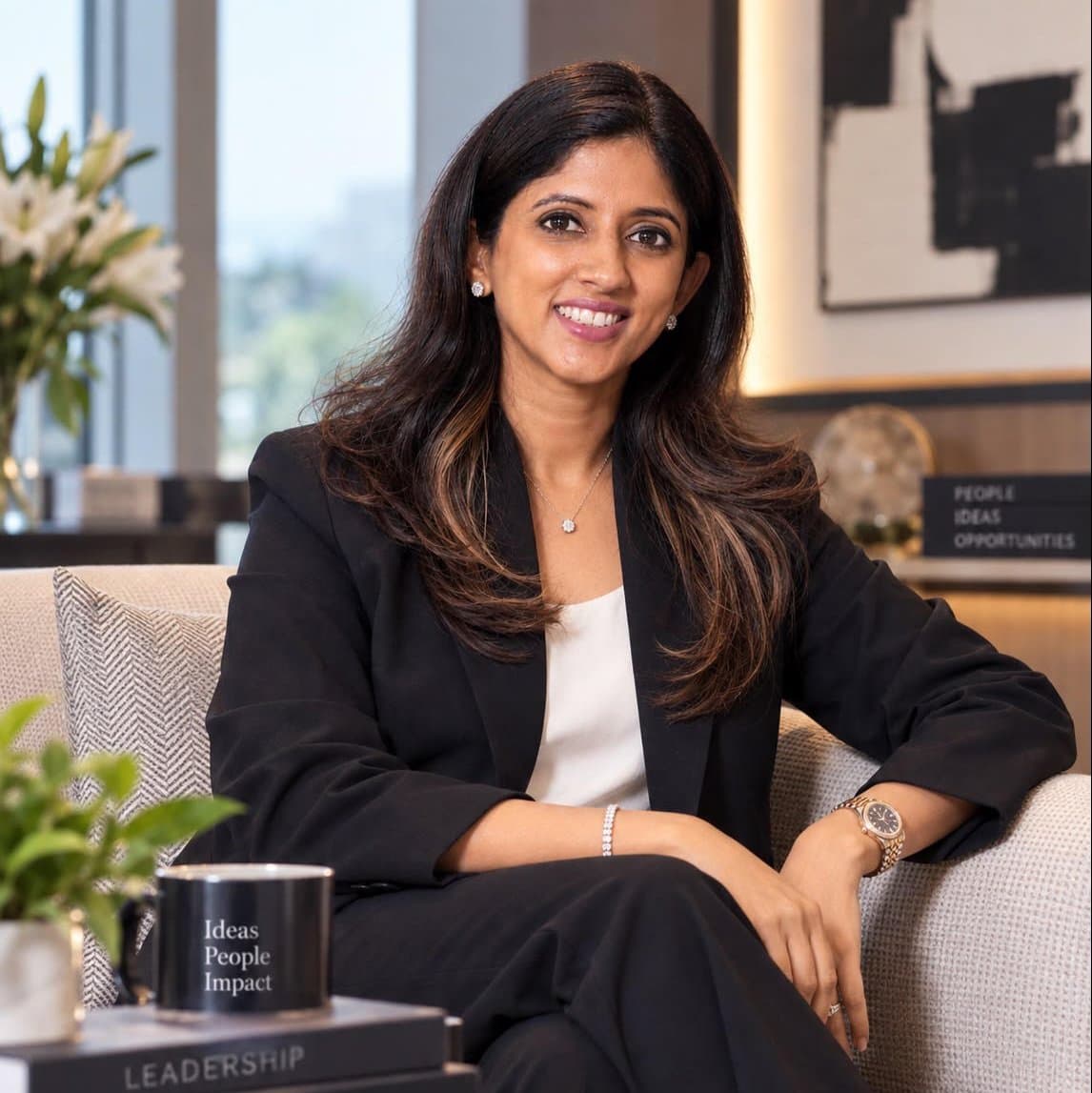
Investors & Catalysts
From Millet to Method: Rasika Prashant on Building What Consumers Return To
Rasika Prashant, CEO of NSRCEL at IIM Bangalore and Co-founder of Soulfull (later aquired by Tata Consumer Products) on consumer trust, category creation, Indian brands, and the founder discipline required after belief.
Read Full Story
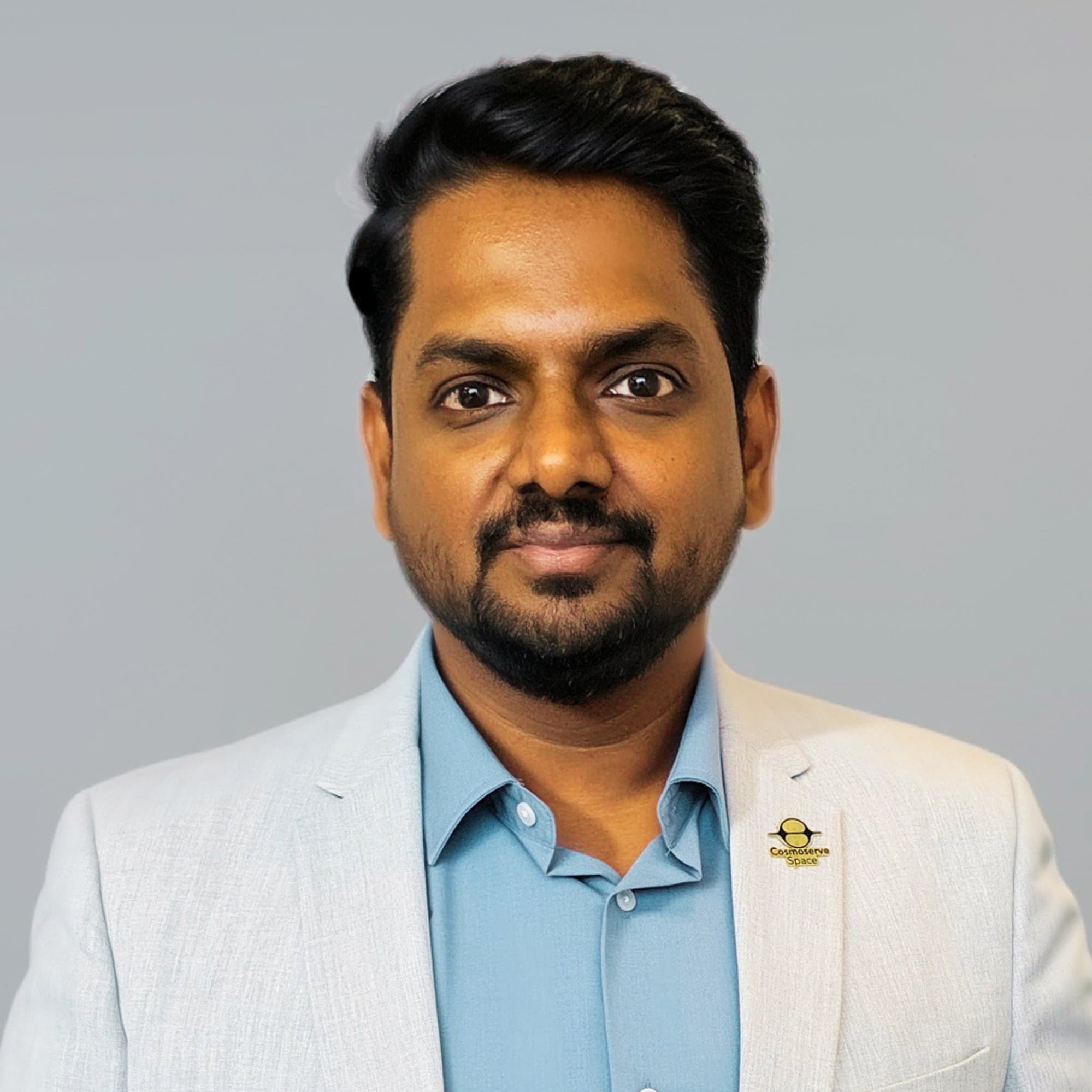
Founders & Innovators
Building the Next Space Economy: Chiranjeevi Phanindra and Cosmoserve's Case for Orbital Maintenance
Chiranjeevi Phanindra, Founder & CEO of Cosmoserve Space, spent 14 years at ISRO working on re-entry and human spaceflight. Today, he is focused on a vital challenge: keeping Earth’s orbit usable.
Read Full Story