Category: Investors & Catalysts
India’s startup ecosystem is entering a more selective phase where capital is no longer scarce, but credibility is. The real test now is founder judgment, execution discipline, and the ability to build enduring enterprise value. Drawing on nearly three decades across banking, wealth management, and startup investing, Nikhil Gupta argues that India’s challenge is not capital scarcity but founder preparedness, capital alignment, and the patience required to build serious companies.
The Discipline of Patient Capital : Nikhil Gupta on Value, Judgment, and the Future of Indian Startups
IndiSight Editorial
Mar 16, 2026
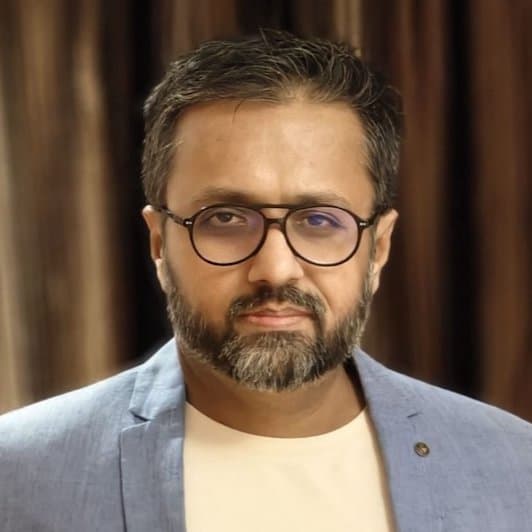
Nikhil Gupta
Mumbai
A startup ecosystem becomes more interesting when capital is no longer the headline and quality becomes the real question. India is moving into that kind of moment now. The country has more founders, more investors, more support structures, and a far wider field of entrepreneurial activity than it did a decade ago. What the market is beginning to demand, however, is a higher standard of seriousness. The companies that matter from here will be the ones that can justify belief through judgment, absorb capital without losing coherence, and build with enough substance to stay credible after the excitement of the early years fades.
Nikhil Gupta has spent nearly three decades watching those standards form from inside the system. His work has taken him through custody services, private banking, wealth management, family offices, alternative investments, startup accelerators, angel networks, and fund management. Few professionals have seen Indian capital from as many angles across as many phases of its development. He has watched the market move from the pre-demat era to a far more layered landscape shaped by technology, new capital pathways, and global investor attention. That range is what gives his reading of the present moment unusual authority.
“I don’t understand that language. We are not cash-starved or investment-starved anymore. The question is whether founders have built something worth chasing,” he says.
The comment goes straight to the core of the current startup conversation. In Nikhil’s framework, the central challenge sits in founder preparedness, in the maturity of decision-making, in the timing of capital, and in the ability to convert possibility into a business with real operating strength. He reads the ecosystem through those filters, which is why his voice carries unusual relevance at a time when the market is becoming more selective, more disciplined, and more revealing.
From structured finance to entrepreneurial judgment
Nikhil’s professional formation began in an environment where discipline was inseparable from survival. He entered finance in the late 1990s through Standard Chartered custody services, at a time when India’s markets were still moving from physical securities to electronic settlement.
“I began before the demat system had fully become the norm,” he recalls.
From custody services he moved into wealth management and private client businesses, first at Standard Chartered and then at Kotak, where he spent years in environments defined by compliance, process integrity, client accountability, and long-cycle decision making.
“Processes and compliances are very, very crucial,” he says.
For Nikhil, that conviction is foundational. Companies that want to become institutions need operating seriousness much earlier than they often realize, and founders who postpone process until after scale usually end up paying for that delay through avoidable confusion.
The next shift came when he moved into a family office and began working with co-investments and PIPE deals. That transition widened his lens. He was no longer participating only inside established financial systems. He was now helping allocate capital, evaluate opportunity, and think more closely about risk, timing, and judgment. From there, he moved deeper into alternative investments, startup accelerators, angel structures, and fund management.
At Marwari Catalysts, he handled strategy and alliances while also serving as a fund manager. That dual exposure mattered because it gave him visibility into founder behavior, portfolio quality, capital expectations, and the mechanics of startup support.
“What I had to release from my banking years was the idea that there is only one approved route,” he explains.
Banking had taught him rigor. Entrepreneurship demanded adaptability. What emerged from that combination is the balance that now defines his worldview. He still values process, but he no longer confuses process with rigidity. He expects founders to be disciplined, yet he also knows that entrepreneurship demands alternatives, contingency thinking, and a much faster relationship between problem recognition and solution design.
Value versus valuation
Among the many questions investors ask founders, Nikhil returns repeatedly to one that reveals the deeper operating instinct behind a company.
Valuations are numbers. Value is much beyond
For him, this is not a line designed for panels or investor decks. It is a practical distinction that shapes how a founder builds, how an investor decides, and how a company behaves under pressure. Valuation can produce attention and momentum. It can also create urgency before the business has earned the strength to carry it. Enterprise value develops through slower forces such as customer trust, revenue quality, execution discipline, repeatability, and a business model that can hold together after the market mood changes.
This conviction comes from portfolio experience, not philosophy alone. He says that over a span of roughly three to four years, he saw eight to ten exits out of a portfolio of about eighty to ninety companies, and that none of those exits came at less than seven to eight times returns. He also points out that the same period included four delinquencies, but importantly, none of those situations led to capital write-offs.
“We didn’t make money out of those cases, but we didn’t face capital erosion either,” he notes.
That distinction says a great deal about how he thinks about risk. Good investing, in his framework, is not only about maximizing upside. It also depends on building enough discipline into the investment process to prevent reckless downside. In his mind, that discipline starts with the founder.
“The first call has to be on the hands working on it,” he says.
In the earliest stages of a venture, when the numbers are still forming and the future remains largely thesis-driven, the founding team becomes the most important signal. Nikhil studies how founders think, how they divide capability, how they respond to ambiguity, and whether the business is being held by people who can carry both pressure and complexity. He is cautious about companies where too much rests on one person, and he prefers teams with complementary strengths because he has seen how quickly a venture becomes fragile when responsibility or identity is overly concentrated.
He also pays close attention to whether the founder understands the real edge of the business. A crowded category does not automatically discourage him. What matters is whether the founder sees a specific market gap with enough seriousness to build around it intelligently.
Capital is available. Alignment is harder.
Nikhil’s view on fundraising surprises many founders because it reverses the usual complaint.
“Fundraising is the easiest of the lot,” he says.
He is not trivializing the effort. He is identifying where the actual difficulty lies. Capital exists across India’s financial landscape in many forms, through family offices, angel investors, funds, institutional pools, strategic participants, and broader investor networks. What is harder is alignment. Founders need to understand their own stage, the kind of money their business requires, the structural impact of that money, and the temperament of the investor bringing it.
The life between a founder and an investor is like a marriage.
Once a founder brings an investor into the company, the relationship extends well beyond the funding event into governance, pressure, advice, expectation, and rhythm. Nikhil therefore pushes founders to evaluate investors much more seriously than they usually do. He wants them to understand whether the investor is built for the company’s stage, whether they can contribute in useful ways, whether they bring patience, and whether their style will strengthen or strain the business over time.
He often speaks about patient capital in this context. For him, patient capital is aligned money. It understands how long value takes to build, and it usually arrives with stronger communication, clearer expectations, and deeper relationship quality.
He is equally disciplined about capital structure. Not every requirement should be funded through equity dilution. Certain needs, especially where capital expenditure is heavy, may demand a different financing route altogether. Meaningful capital begins with a mature understanding of what the business is trying to fund and what the long-term consequence of that funding choice will be.
This is where he becomes especially sharp about founder stage-awareness. He has little patience for founders who pitch to the wrong kind of capital because they have not done enough work to understand where their company actually stands.
“If they are at an early stage, perhaps they should not reach out to a VC or a micro VC or an angel network,” he explains.
In his reading, incubators, accelerators, angel networks, and venture funds each have distinct roles in the founder’s progression. Founders who ignore those ladders often waste time, misread expectations, and weaken their own position. His point is developmental. Self-filtering has now become part of founder literacy.
The mentorship inflation problem
Mentorship has become a loosely held word today,
That sentence lands because it identifies a problem many founders feel but do not always articulate. Startup ecosystems generate a great deal of advice and access, yet much of that support remains thin when measured against the actual demands of building a company. A founder may leave a room encouraged and still remain unequipped to solve the most immediate problem in the business.
Nikhil wants mentorship to be tied to operating consequence. He prefers structures where domain expertise is real, where the mentor understands the category, and where the relationship improves something concrete for the company, whether market access, execution quality, commercial direction, or business development.
“If you cannot contribute hands-on, if you cannot solve a problem or open a door or build a revenue line, you should stay away,” he says.
He offers a specific illustration of this seriousness. While running accelerator programs, if a founder reached the eve of a demo day and still appeared unprepared to sit in front of investors, he would rather stop the founder from pitching than send a weak company into the market prematurely. That standard may sound hard, but it reveals his larger logic. Exposure without readiness can damage the founder more than it helps.
Why India is growing up as an ecosystem
“I think we are better off today than what we were perhaps five years back, ten years back,” he notes.
Nikhil’s optimism about India’s startup ecosystem is measured, and that is why it feels credible. He sees stronger investor participation, more layered capital structures, greater policy seriousness, and better domestic pathways for capital formation. He also sees regulators refining definitions and frameworks in ways that may feel restrictive in the short term but strengthen trust in the long term.
“The regulator is doing their bit,” he says.
This is not a fashionable position among all founders, but it reflects a mature market instinct. As ecosystems deepen, regulatory credibility becomes part of market credibility. Global investors want cleaner structures, clearer definitions, and better institutional behavior. India’s ability to offer that improves its standing as a destination for serious capital.
He also carries a comparative lens. In an international forum where he represented India alongside speakers from countries such as Vietnam, the Philippines, Indonesia, Singapore, and others, he saw how different ecosystems frame their own maturity. When the discussion turned to unicorn counts, India’s scale stood out dramatically against many of its regional peers.
But he does not use that as a reason for celebration alone. He uses it as a signal that scale must now be matched by maturity. The ecosystem has visibility. The harder task is to improve the quality of founder preparation, capital matching, and institutional seriousness.
Founder preparation begins earlier than the market thinks
One of Nikhil’s recurring concerns is that entrepreneurship in India is still not being taught practically enough. The language has improved. Institutes are more open to the idea. Students are more willing to think beyond placements. Families are more accepting than they once were. But he still feels the system prepares too many people to seek jobs and not enough to build organizations that can employ others.
He is also attentive to the rise of founders from tier two and tier three cities. He speaks about them with respect because he sees stronger urgency, stronger willingness to reach out, and often a greater realism about what they need from the ecosystem.
“These founders are craving for more enablers,” he says.
That hunger matters. Geography still shapes the founder experience, but access is no longer confined in the same way it once was. If the next generation of founder seriousness spreads through regional markets, India’s entrepreneurial base becomes much stronger.
Manufacturing, sector judgment, and India’s larger edge
When asked what India should protect as it grows, Nikhil goes first to manufacturing.
He says this because he sees manufacturing as foundational capacity, the kind that strengthens employment, supply chains, investor confidence, and larger economic seriousness. As more global players expand manufacturing presence in India, the country’s broader relevance rises with it. That, in turn, creates stronger conditions for adjacent entrepreneurial sectors.
Alongside that, he remains constructive on selected categories where India can combine domestic capability with international opportunity. Fintech remains close to his instincts because of his own background. He also speaks about circular economy models, food and agri systems, drones, cybersecurity, gaming, and other areas where Indian capability can find market demand beyond India.
His point is larger than category excitement. Founders need to understand where their natural market lies, what corridor their business belongs to, and how their capability fits into a larger system of demand.
What seriousness looks like in practice
“This is not a 9 to 5 job,” he reflects.
He is describing both entrepreneurship and the responsibilities around it. Founders carry the company in every direction at once. Investors shape more than funding outcomes. Institutions shape preparedness. The ecosystem as a whole depends on the seriousness of the people inside it.
That is what positions Nikhil as a thought leader and domain expert rather than simply an investor with a long résumé. He brings coherence to the way capital, founders, institutions, and maturity interact. He offers a framework for seriousness in a market that still often becomes distracted by speed, attention, and premature narratives. He reads as someone trying to protect standards while the ecosystem expands around him.
What makes that stance powerful is that it does not come from detachment. It comes from long participation. He has seen the financial system before and after digitization. He has moved from banking discipline into startup ambiguity. He has handled founder relationships, fund structures, portfolio outcomes, and institutional support platforms. That breadth allows him to speak with authority when he says that India does not suffer primarily from a shortage of capital. It suffers more often from weak alignment, poor timing, shallow support, and insufficient seriousness around what is being built.
Leadership lessons
Enterprise value matters more than valuation momentum.
Founder quality becomes visible through judgment, capability design, and seriousness under pressure.
Capital decisions deserve much deeper diligence because their consequences stretch far beyond the funding event.
Investor relevance matters as much as investor access.
Patient capital is aligned capital.
Mentorship earns its value only when it improves execution, growth, or market reality.
Process builds trust early, and trust becomes strategic later.
Founders need to understand their own stage before approaching capital.
Regional founders are reshaping India’s startup future through urgency and realism.
Regulatory maturity strengthens confidence across the ecosystem.
Manufacturing remains one of India’s strategic strengths in the larger economic system.
Serious ecosystems are built by serious participants who think beyond the next funding round.
In the end, Nikhil’s central argument is clear. India has capital, entrepreneurial energy, institutional momentum, and growing global relevance. The next phase of growth will depend on how well founders, investors, and institutions align around substance, timing, and better judgment. The stronger companies will emerge from that alignment, and the investors who matter most will be the ones who understand that value takes patience, discipline, and the willingness to hold standards steady even when the market becomes loud.
Our Suggestions to Read
Discover The Leaders Shaping India's Business Landscape.

Corporate Visionaries
Sarath Gollapalli on the Work That Makes Technology Dependable
Sarath Gollapalli, Vice President at Broadridge, reflects on why AI-era enterprise technology still depends on fundamentals: client understanding, reliability, governance and ownership.
Read Full Story
Corporate Visionaries
The Work Before the Story: Rahul Malhotra on Trust, Behaviour and the Business of Marketing
Rahul Malhotra brings 30+ years at P&G and Shell across global CEO and marketing roles, offering deep insight into business, consumer behaviour, organisational change, commercial judgement and reputation.
Read Full Story
Corporate Visionaries
The Craft of Institutional Capital: Archit Shah on Judgement, Risk and Investing Across Cycles
The Zurich Kotak General Insurance Chief Investment Officer brings a practitioner’s view of investing, where good judgement under uncertainty has to become decisive action through portfolio construction.
Read Full Story