Category: Founders & Innovators
Money may be created quickly, but managing it well is a slower, more complex discipline. Swati Saxena argues that real wealth is not defined by returns alone, but by structure: how capital is allocated, how it holds under pressure, and whether it can survive transition. In a landscape of concentrated founder wealth and fragmented decision-making, her approach shifts the focus from portfolios to architecture: building systems that keep wealth coherent, liquid, and governable long after it is created.
Money Is the Easy Part: Swati Saxena on What Comes Next
IndiSight Editorial
Apr 22, 2026
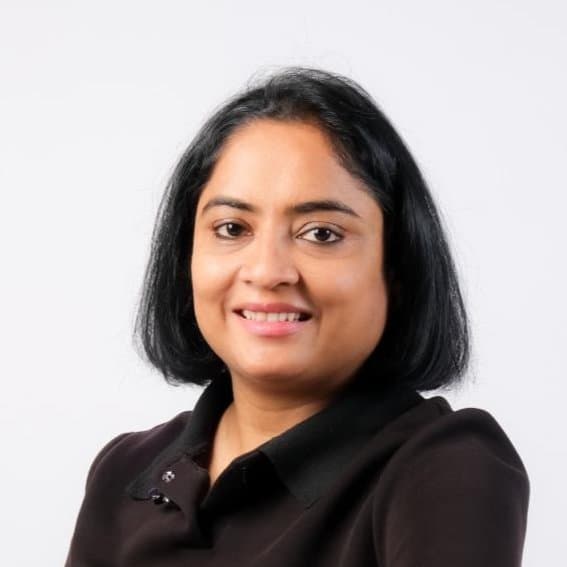
Swati Saxena
Founder & CEO · 4Thoughts
Bengaluru/India
Wealth has entered a harder era. Capital can be created quickly, but the systems required to hold it intelligently usually develop more slowly. Once money reaches scale, the conversation changes. Returns still matter. So do tax efficiency and allocation discipline. But a larger set of questions begins to dominate: who controls the wealth, how liquid it really is, whether the structure can survive family transition, and whether decision-making remains coherent when the founder is absent.
India is confronting that question with unusual intensity. A generation of first-time founders, operators, and equity holders has built meaningful wealth earlier than previous cohorts did, often without the institutional scaffolding that older business families accumulated over time. Much of this wealth is concentrated, tied to active businesses, and still structurally unfinished. Which means the underlying financial problem is different from the one most advisory models were built to solve.
Swati Saxena has spent the last decade building in exactly that terrain. As Founder and CEO of 4Thoughts Finance, a firm that manages more than ₹8,000 crore in client wealth, she works with founders, CEOs, CXOs, and business families whose financial realities cannot be reduced to a model portfolio or a quarterly return statement. Their wealth is concentrated, event-driven, tax-sensitive, and often unresolved at the structural level.
“It’s a nonlinear equation.”, she says.
In Swati’s reading, capital does not move through life in neat sequences. It moves through behavior, urgency, family pressure, liquidity needs, health, inheritance, and business risk. That recognition gives her work its seriousness. She is not only helping clients invest. She is helping them build a framework that can absorb complexity without losing coherence.
The Education of a Difficult Beginning
Swati entered finance at a moment that stripped the industry of comforting illusions. She began in private banking in 2008, during the global financial crisis, when clients were carrying losses, anger, and uncertainty into every conversation. For a young banker, this was an unforgiving introduction. The clients in front of her were not consuming financial products with distance. They were processing damage, disappointment, and the need to understand what had gone wrong.
The experience mattered because it brought her into contact with the emotional structure of money before she had the luxury of seeing only its technical side. It taught her that wealth is never experienced as numbers alone. It is carried through fear, aspiration, reputation, and memory. Finance may speak the language of optimization, but most people live its consequences more personally.
She moved into corporate banking soon after, and there the terrain changed. Credit appraisal, capital deployment, regulatory discipline, and the analysis of businesses gave her a stricter and more useful lens. In that environment, capital had to justify itself. The purpose of money mattered. The form in which it was raised mattered. The risk embedded in it mattered.
Those years gave her more than technical exposure. They showed her the contrast between capital as an operating force inside businesses and wealth as a fragmented personal reality outside them. She was progressing through large institutions at a time when India itself was widening. New founders were emerging. Operators were scaling. Entrepreneurial growth was showing up across levels of the economy. Inside the institution, success followed a known path. Outside, people were building upside with far greater freedom and risk.
She could also see that clients were not living inside the neat categories institutions preferred. Their liquidity needs were uneven. Their financial priorities changed with life stage. Their family obligations could reorder decisions overnight. A standardized framework might work operationally for a large institution, but it often failed to do justice to the way money actually behaved in people’s lives.
By the time she started 4Thoughts in 2015, family office as a serious operating category was still early in India. The phrase existed, but the market had not fully organized itself around the depth of the need. The need itself was already clear. Wealth was becoming more complex, and someone had to see the whole.
From Asset Allocation to Financial Architecture
Swati’s strongest insight begins with a reframing. Capital allocation, in her view, cannot begin and end with asset classes. A portfolio can be diversified on paper and still be badly designed in practice if each part of the capital has not been assigned the right role.
You don’t create wealth only by returns. You also create wealth by giving them the right structure.
Her framework begins with sequencing. First comes contingency capital, money that remains immediately accessible because life does not wait for efficient liquidation. A health emergency, a tax event, a business interruption, or an unexpected family obligation can turn a sophisticated balance sheet into a fragile one if cash has not been designed into the system.
Second comes near-term liquidity, which covers foreseeable uses over a shorter horizon, including education, a business transition, a home purchase, or a period of personal or professional change. Only after those layers are in place does the long-term investment bucket fully emerge. That is the capital allowed to compound because the earlier layers have already absorbed the demands that would otherwise keep interrupting it.
The significance of this structure is easy to underestimate. Much wealth underperforms not because the investor lacked access to good products, but because capital was repeatedly forced into the wrong job. Long-term money gets used to solve short-term issues. Emergency spending comes out of growth assets. Liquidity is improvised. What breaks is not only compounding. What breaks is discipline.
Swati’s logic therefore extends beyond allocation into tax design, estate visibility, contingency planning, and family continuity. In her framework, capital is not well managed simply because it earns. It is well managed when it can continue functioning under pressure.
Founder Wealth and the Problem of Concentration
Founder wealth sits at the center of Swati’s niche because it behaves differently from salary wealth or inherited capital. For founders, the largest asset in the personal balance sheet is usually the stake in the operating business itself. That stake is the source of value and the concentration of risk. It also carries a level of psychological attachment that no outside adviser can casually override.
The biggest part of the founder’s portfolio is the stake itself. So it first of all needs to be managed.
A founder often believes, with reason, that the business still has substantial upside. The company is not only a line item. It is a product of judgment, sacrifice, and long-duration conviction. That is why Swati resists simplistic diversification advice. Her effort is to reduce fragility without weakening the value-creation engine that built the wealth in the first place.
She sees the roots of the problem much earlier than most founders do. Ownership structure, dilution decisions, investor selection, and capital design in the company’s earlier phases already shape what flexibility will exist later. Founders tend to optimize for speed when they are building. Swati tries to protect for optionality when the consequences of those early decisions have not yet become visible.
Later, when the founder’s wealth has become significant, the psychological dimension becomes stronger. Confidence that was once productive can harden into over-concentration. The business continues to dominate the personal balance sheet. Diversification feels unnecessary or emotionally unattractive. Swati’s preference is to build liquidity, leverage, and optionality around the stake rather than force a clumsy exit.
The Post-Liquidity Trap
The distortion often becomes sharper after liquidity events. Founders who have lived through years of high business growth struggle to emotionally accept the pace and shape of returns available in diversified public-market or multi-asset portfolios. Relative to what they have experienced in their own company, a mid-teen return can feel underwhelming.
That mindset drives a familiar pattern. Capital starts moving toward complicated, opaque, or illiquid products in search of return intensity.
Your wealth management should be done in a way that it is majority in the instruments which can be analyzed.
The issue, in her view, is not sophistication. It is governability. Capital that cannot be understood, monitored, or exited with reasonable confidence creates problems later. Her preference for analyzable instruments is therefore less about conservatism than about control. Wealth should remain readable enough that judgment is still possible when conditions change.
This is one of the points at which Swati’s thinking becomes most useful. She does not reject complexity in principle. She rejects a portfolio design where opacity dominates and the client no longer knows how to evaluate what they own. That is a real risk in founder portfolios because the appetite for action often remains high long after the role of the capital has changed.
Review, Rebalancing, and the Discipline of Staying Sober
Swati believes the wealth industry gives too much prestige to selection and too little weight to review. Products get sold. Allocation decisions get celebrated. Review gets treated like administration. Her experience points in the opposite direction. A policy matters only if it is reviewed. A portfolio matters only if its actual behavior, manager quality, benchmark relationship, lock-in profile, and continued relevance are revisited with discipline.
She also insists that risk is too often defined too narrowly.
Risk is not just volatility. Risk is uncertainty.
Uncertainty may come from poor visibility, concentrated positions, hidden lock-ins, weak tax structures, health shocks, or the family’s inability to understand the system if something happens to the principal. A portfolio may look stable on a chart and still be structurally fragile in real life.
This is why she values profit booking and rebalancing even when clients may resist both. When a position grows too large, the issue is no longer whether it has performed well. The issue is whether it still belongs in that size relative to the original policy. Clients hesitate to trim winners because they fear missing more upside. They hesitate to cut losers because they hope pain will reverse.
In both cases, the portfolio drifts away from strategic logic and toward emotional inertia. Swati’s preference is for enough process and neutrality that action can be taken without every move becoming a personality test. That is one of the most practical forms of discipline in serious wealth management.
Where Wealth Starts to Fail
Swati sees wealth breaking down in two recurring ways. The first is silence. Families do not discuss wealth clearly enough, early enough, or honestly enough. Expectations remain assumed rather than stated. Beneficiaries do not know what form the wealth will take or what responsibilities will accompany it. The second is fragmentation. Capital spreads across managers, institutions, countries, and structures without one coherent view of the whole.
“When something happens, the next generation has no clue.”
The sentence is operational more than emotional. Wealth can remain large and still become unmanageable if no one understands its ownership path, tax history, lock-in profile, or intended transfer logic. For Swati, succession is not a legal moment. It is a design challenge. The relevant questions are practical. What exactly is being transferred. In what format. Under what conditions. With what visibility.
This is also why she is skeptical of the assumption that multiple wealth managers automatically create better outcomes. In many cases, they create opacity rather than diversification. The principal feels protected because money is spread across five or six institutions. But unless one place sees the whole, the family is operating with fragments, not with control.
That is where the family office layer becomes economically meaningful. Not because it carries prestige, but because it creates coherence. Someone needs to know how much wealth exists, in what structure, with what lock-ins, under what tax history, and for what long-term purpose.
Incentives, Conflicts, and the Missing Separation
Swati’s sharpest industry critique is directed at incentive design. She is uneasy with a system in which the same institution manufactures products and advises clients on whether to hold them.
“If you are in the business of managing client, be in that business.”
Her analogy is memorable because it makes the point immediately understandable.
“Hospitals are not the manufacturers of medicines.”
The objection is structural. Once product manufacturing and advisory remain too tightly fused, portfolio decisions begin bending toward economics that do not originate with the client. Swati argues for a cleaner separation so that client management can remain aligned with the client rather than with the institution’s margin agenda.
She is clear-eyed about how hard that is in practice because advisory economics are not easy. But her point stands. The industry cannot talk about fiduciary seriousness while leaving this conflict largely intact.
India’s Wealth Phase and the Road Ahead
India’s current wealth phase makes all of these questions more urgent. Much of the capital now being created is first-generation, founder-linked, and still tied to active business building. It is arriving alongside next-generation planning, global mobility, and philanthropic ambition rather than after those stages have settled. That creates a different rhythm from more mature wealth markets, where institutional continuity already has a longer history.
Swati’s work has grown directly within that environment. Her future lens reflects that reality. The next phase of the industry, in her reading, will require stronger cross-border structuring capabilities, more integrated visibility, more disciplined review infrastructure, and a cleaner distinction between advice and product distribution.
Her expansion toward Singapore and GIFT City sits inside that broader direction. So does her interest in building systems that make review, policy tracking, and capital visibility more structured over time. The larger opportunity, though, is not merely geographic. It is intellectual. The wealth industry has an opening to move from product-led selling toward stewardship-led design.
In a market where capital is deepening rapidly, the firms that matter most will be those that can build systems around wealth before complexity turns into disorder. That is where Swati is placing her attention.
Leadership Lessons
Capital should be assigned purpose before it is assigned products.
Contingency, liquidity, and long-term investment deserve distinct treatment.
Founder wealth requires a different framework because the operating stake is both value source and risk concentration.
Analyzability is a condition of control.
Review is as important as selection in serious wealth management.
Risk should be read as uncertainty and structural fragility, not volatility alone.
Rebalancing requires emotional discipline because markets make excess feel rational before they expose it.
Multiple managers do not create clarity unless one integrated system holds the whole.
Succession begins as a format question long before it becomes a legal event.
Families should talk about wealth while life is stable, not only when urgency forces the matter.
Product economics and client economics should not be treated as if they naturally align.
The future of wealth management belongs to firms that can build architecture, not simply distribute instruments.
The Work After Success
Swati’s significance lies in the seriousness with which she treats the phase that begins after wealth has already become visible. Markets celebrate wealth creation. Her work begins with what follows. Once capital has to carry family, ownership, liquidity, tax, governance, and succession all at once, the problem becomes institutional.
The people who will shape this domain over the next decade will be the ones who understand that wealth has to become something more durable than a temporary outcome. It has to become a system capable of holding together under pressure. Swati has built her work around that idea, and in a world still more fluent in growth than in stewardship, that makes her perspective increasingly valuable.
Our Suggestions to Read
Discover The Leaders Shaping India's Business Landscape.

Corporate Visionaries
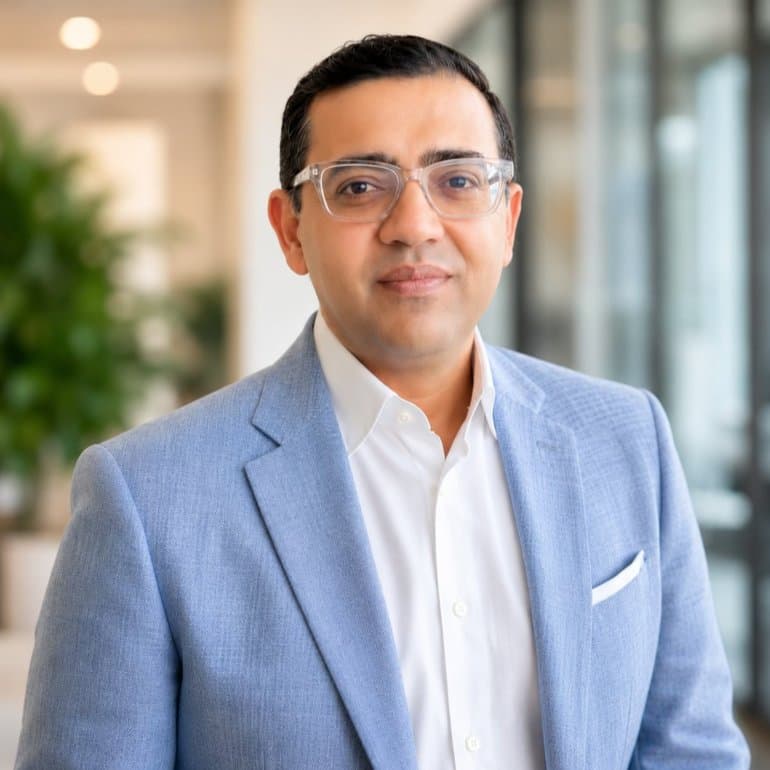
Sarath Gollapalli on the Work That Makes Technology Dependable
Sarath Gollapalli, Vice President at Broadridge, reflects on why AI-era enterprise technology still depends on fundamentals: client understanding, reliability, governance and ownership.
Read Full Story
Corporate Visionaries
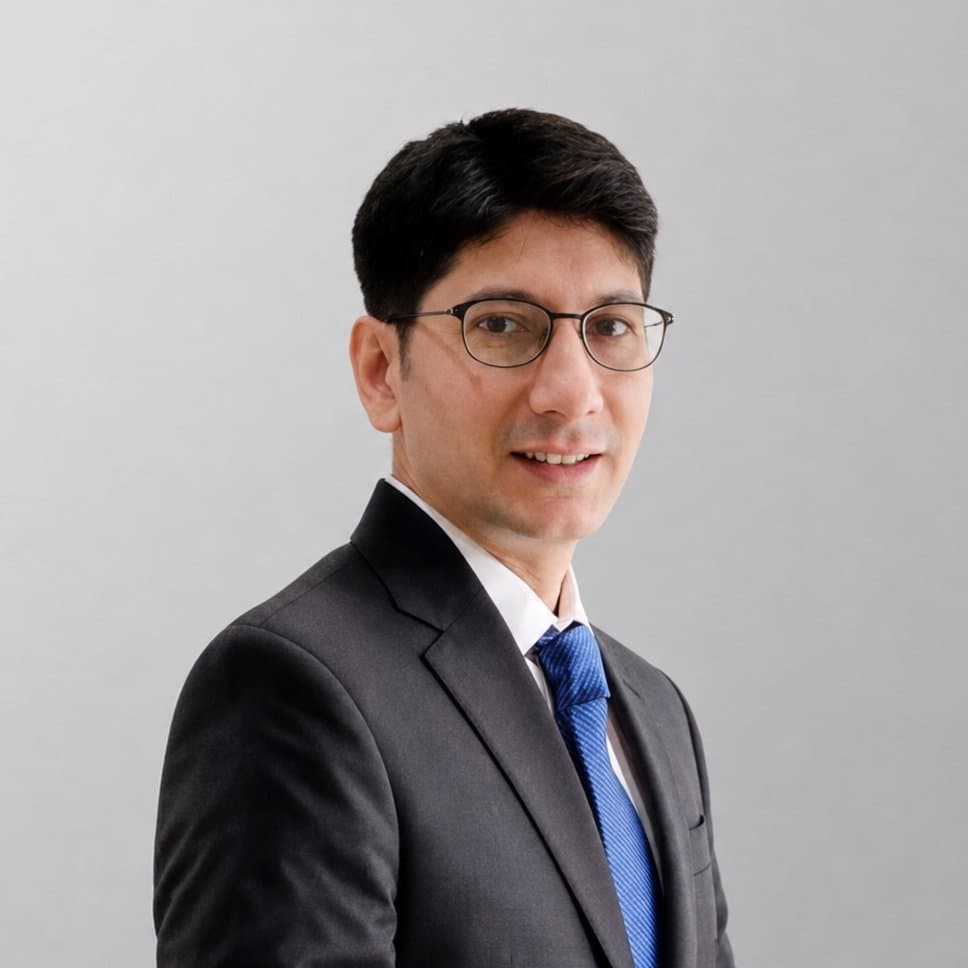
The Work Before the Story: Rahul Malhotra on Trust, Behaviour and the Business of Marketing
Rahul Malhotra brings 30+ years at P&G and Shell across global CEO and marketing roles, offering deep insight into business, consumer behaviour, organisational change, commercial judgement and reputation.
Read Full Story
Corporate Visionaries
The Craft of Institutional Capital: Archit Shah on Judgement, Risk and Investing Across Cycles
The Zurich Kotak General Insurance Chief Investment Officer brings a practitioner’s view of investing, where good judgement under uncertainty has to become decisive action through portfolio construction.
Read Full Story