Category: Education Leadership
Global education is expanding at record speed, yet confidence in graduate readiness remains fragile. Shawrya Mehrotra believes the problem is not access to knowledge but the absence of credible proof. Through Metvy, he is building a learning ecosystem where mentorship, outcomes, and verified capability replace traditional credential signals. His work reflects a deeper shift in the global economy: from education as information to education as demonstrated competence.
The Credibility Engine: Shawrya Mehrotra and the Reinvention of Learning
IndiSight Editorial
Mar 16, 2026
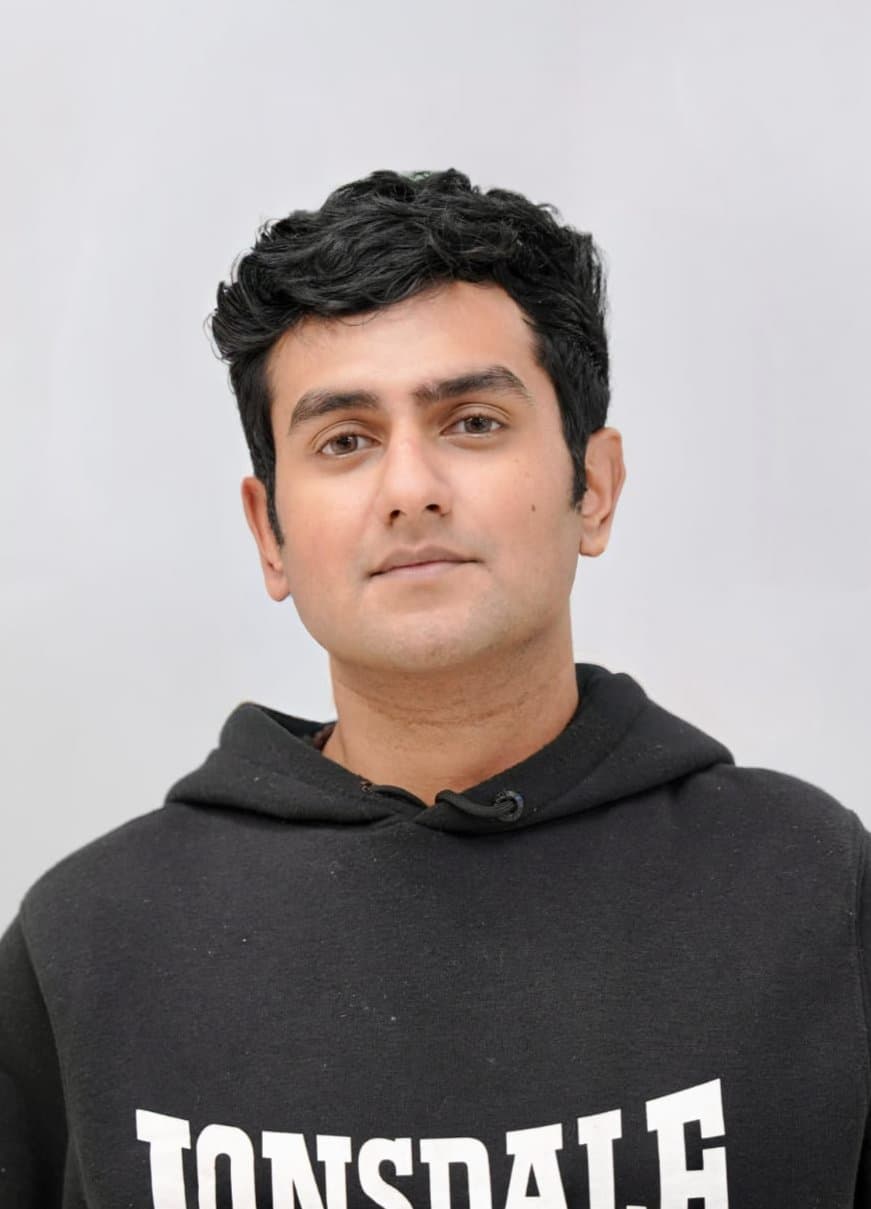
Shawrya Mehrotra
Founder & CEO · Metvy
Gurugram
The Trust Economy's Next Frontier
Global spending on education now exceeds $7 trillion annually, yet employer confidence in graduate readiness remains consistently low across major economies. Credentials have multiplied at record speed. Digital certifications, micro-courses, and online degrees continue to expand access. What has not expanded at the same pace is reliable verification of applied capability.
This gap is no longer a marginal inefficiency. It is shaping how labor markets function. Automation is compressing task cycles. Artificial intelligence is redefining what expertise looks like in practice. In that environment, accumulated knowledge holds diminishing standalone value. What increasingly matters is demonstrable performance under real conditions. Markets reward signal clarity. They discount noise.
Shawrya Mehrotra identified this structural misalignment early. As a student at Delhi University, he watched capable peers struggle to convert education into meaningful opportunity because institutional systems continued to prioritize credentials over evidence of execution. That realization shaped the direction of his work.
That observation eventually became Metvy. What began as informal student groups has grown into a rigorously curated professional network, built around highly selective fellowships including The VC Fellowship, CMO Fellowship, and Founder's Office Fellowship. Each cohort is structured to create measurable career acceleration by connecting ambitious professionals with practitioners who evaluate growth through outcomes rather than credentials. The ecosystem now includes more than 25,000 participants, partnerships with institutions such as the Indian Institute of Management Bangalore, and mentorship from professionals at Google, Meta, and PwC, reflecting a broader shift in how markets assess and reward competence.
"People grow when they connect with experience, not just information," Shawrya says. "That connection builds belief on both sides."
Constraint as a Teacher
Shawrya's first lesson as a founder was survival. He came from a middle-income family, without financial safety nets or legacy access. Every expense had to prove its worth.
While peers were chasing placements, he studied how opportunity circulated, who got noticed, why trust accumulated unevenly, and how visibility shaped judgment. Stints at Ogilvy and SproutBox exposed two ends of the spectrum: perception and execution. Between them he saw the same flaw, systems rewarded credentials more than competence.
In 2018 he began building small online groups where students could learn directly from practitioners. He charged nothing and had no investors. What he did have was clarity. "We could not afford to waste effort," he says. "If something did not create proof, we stopped doing it."
Each successful outcome brought the next participant. Over time, these circles became the foundation of what Metvy now calls its credibility graph, a live framework mapping how learning translates into professional advancement.
Scarcity shaped the discipline that capital later amplified. "Constraint forced precision," he recalls. "It made us question every decision."
The early years were difficult. The platform stalled twice. A 2021 corporate training pilot failed within months when clients opted for short-term certificates over long-term capability programs. "That was painful," he says. "But it taught us that proof must be built around the learner, not the buyer."
Those failures forced sharper focus. Metvy doubled down on mentorship-led fellowships instead of B2B experiments. Within a year, completion rates crossed 80 percent, compared with an edtech average of 30 percent.
Rewriting the Economics of Proof
Every modern learning enterprise faces the same structural question: who certifies competence once degrees lose authority?
Metvy's answer is an outcome-based design. Each program begins by mapping a learner's context, stage, sector, aspiration, and matching them with mentors who evaluate progress through measurable change. Instead of a certificate, participants leave with documented growth, a new job, a project delivered, or a business pivot achieved.
Globally, this model mirrors a larger transition. The United States is scaling employer-linked learning systems such as Guild Education and Multiverse. Europe is developing portable micro-credentials for cross-border employability. Singapore's SkillsFuture Singapore initiative ties national funding to verified outcomes.
India sits at the center of this convergence, young, ambitious, and digitally equipped. Shawrya believes India can design the global standard for credibility because its markets already demand resilience over privilege.
If we can verify talent in India's complexity, we can verify it anywhere.
Metvy's traction reflects that confidence. The company reports a 3.2-fold revenue growth year over year and a Net Promoter Score above 85. Its referral rate exceeds 60 percent, suggesting that belief, not advertising, drives expansion.
From Survival to System Design
Once the company reached stability, Shawrya shifted focus from hustle to structure.
Survival teaches you how to run. Structure teaches you how to last.
He introduced weekly reflection sessions where teams analyze judgment, not just metrics, what went right, what decisions felt reactive, where emotional fatigue showed up. He calls it decision hygiene, a process for preventing strategic drift.
"The founder's energy sets the temperature," he says. "If I lose composure, everyone amplifies that energy."
That awareness shapes Metvy's operations. Teams stay small. Meetings start with context, not numbers. New projects don't begin until someone writes down why they matter. It creates an unusual dynamic where calm produces speed, not delay, because there's less confusion about what actually needs to happen.
Inside the company, credibility behaves like culture. Each leader is expected to model honesty over optics. Marketing cannot promise what delivery cannot prove. "It is easy to tell a good story," Shawrya says. "It is harder to live one."
Networks as Strategic Capital
For Shawrya, networking isn't about maximizing connections. It's about building relationships that compound over time through genuine contribution. Metvy's early momentum came from people, not budgets. Mentors who believed in his approach. Operators who opened doors. Peers who saw the work and wanted to be part of it.
Those relationships did more than create visibility. They accelerated credibility. Early partnerships, pilot cohorts, and strategic endorsements materialized quickly because trust preceded the ask. The company scaled on relational capital before it required financial capital. That sequencing shaped both its growth model and its resilience.
He believes networks create lasting value only when designed around contribution rather than extraction. Metvy institutionalizes that principle: members advance by creating value for others first, and reputation is earned through demonstrated judgment, not credentials or seniority.
Your network determines your trajectory, but only when built on mutual investment, not transactional benefit-seeking.
Building Trust by Design
Every time an organization scales, trust fragments. Shawrya's approach has been to embed credibility into every interface, from mentor recruitment to learner feedback loops.
Mentorship is designed as a two-way accountability system. Mentors track progress on defined metrics, while learners rate mentorship on relevance and reliability. Both ratings feed into the credibility graph.
Inclusion is treated the same way, through system design rather than slogans. When early data showed low participation from women, Metvy restructured pricing and scheduling. Within twelve months, women formed 35 percent of its venture-capital fellowship.
Diversity improves the quality of judgment. You cannot have strong systems with narrow perspectives.
This principle extends to storytelling. For Shawrya, communication is a governance mechanism. The company's internal narrative must mirror its external message. "If the story outside grows faster than the truth inside," he says, "you start losing trust."
Metvy's communication style reflects that restraint. It speaks of verification, not valuation, of credibility, not disruption. The language is deliberate because the company wants to sound as reliable as the results it produces.
India's Trust Dividend
Most people see India as a source of skilled professionals. Shawrya sees it as a country that can show the world how to build trust.
He divides the modern economy into three currencies: credibility, capital, and community. Capital accelerates growth. Credibility sustains it. Community scales it ethically. Western ecosystems have optimized for the first two. India, he argues, can pioneer the third.
"Capital compounds through investment," he says. "Credibility compounds through delivery."
India's entrepreneurial landscape, shaped by scarcity and diversity, is naturally adaptive. Its informality, often misread as chaos, can evolve into agility. "Constraint makes us creative," he says. "We learn to build with less, and that discipline produces trust."
The implication is profound. As global economies automate production, human credibility becomes the differentiator. Nations that can institutionalize trust through verified learning, transparent governance, and consistent performance will lead the next growth cycle.
India's advantage will be human. Our systems work because they are built on relationships that endure.
The Psychology of Steadiness
Shawrya’s view of leadership under pressure was shaped in part by a personal turning point. During the early phase of building Metvy, his mother was diagnosed with advanced stage cancer. Until then, he had approached life and business through structured long-term plans, assuming that disciplined sequencing would steadily convert into outcomes. The diagnosis challenged that assumption and altered how he evaluated time and delay.
“It changed how I think about postponement,” he says. “Execution cannot always wait.”
The shift translated into clearer prioritization. Once conviction was established, decisions moved faster. He became less inclined to defer meaningful work in pursuit of ideal conditions and more focused on generating tangible results within shorter cycles.
Entrepreneurship places sustained pressure on judgment. Shawrya treats emotional steadiness as a managerial requirement rather than a personal trait.
Startups fail more often from emotional exhaustion than market misfit. When focus breaks, execution weakens.
He builds structured pauses into his schedule to examine assumptions before acting. Within Metvy, leaders are trained to recognize fatigue early, and performance reviews assess judgment quality alongside output. The objective is not intensity but clarity.
Over time, his definition of leadership has shifted toward consistency. Stability in decision-making, he believes, sets the tone for the organization more than assertiveness ever could.
The Long Game
Five years on, Metvy is positioning itself not as an edtech platform but as a trust-infrastructure company. Its fellowships span multiple verticals including venture capital, marketing & HR, and are now being localized for Southeast Asia and the Middle East.
Shawrya is clear about the ambition, to make credibility measurable across borders. The company is piloting a verification index that tracks the reliability of mentorship outcomes, creating a portable reputation score for professionals.
He envisions a world where opportunity flows through verified reputation rather than proximity. "A student in Jaipur should have the same access to mentors as someone in Singapore or San Francisco," he says. "The signal should come from capability, not location."
That belief anchors his long view of India's economic role. He sees the nation as a test bed for the next generation of global learning systems, agile, inclusive, and trust-centric. "The next decade will be defined by how quickly we can turn learning into legitimacy," he says.
Lessons in Credibility
Trust compounds slowly but endures longest. It must be earned repeatedly through delivery.
Constraint is a design advantage. Scarcity filters vanity and forces efficiency.
Credibility precedes scale. Growth is meaningful only when results are verifiable.
Calm increases accuracy. Composure allows better judgment under stress.
Inclusion strengthens systems. Diversity improves decision quality, not just optics.
Mentorship accelerates judgment. The best mentors expand perspective instead of dictating direction.
Stories must match structure. Authentic communication is an internal control, not a PR tool.
Collaboration multiplies outcomes. Shared ecosystems outperform isolated ambition.
Reflection prevents drift. Regular self-assessment protects strategic intent.
Leadership equals stewardship. The ultimate test is whether the institution sustains integrity beyond the founder.
Closing Perspective
The next generation of leaders will be defined by trust. Shawrya Mehrotra belongs to that group. Through Metvy, he is building a model where growth is earned through results, not appearances, and where learning leads to real, visible outcomes.
His goal is simple: connect people with the right mentors, help them prove their skills, and make opportunity depend on ability, not access. What began as a small experiment during his student days has grown into a network that helps thousands turn effort into evidence.
The future belongs to those who can build credibility faster than they build scale.
As businesses and institutions search for what sustains long-term value, his work shows that progress built on trust lasts the longest.
Our Suggestions to Read
Discover The Leaders Shaping India's Business Landscape.

Corporate Visionaries
Sarath Gollapalli on the Work That Makes Technology Dependable
Sarath Gollapalli, Vice President at Broadridge, reflects on why AI-era enterprise technology still depends on fundamentals: client understanding, reliability, governance and ownership.
Read Full Story
Corporate Visionaries
The Work Before the Story: Rahul Malhotra on Trust, Behaviour and the Business of Marketing
Rahul Malhotra brings 30+ years at P&G and Shell across global CEO and marketing roles, offering deep insight into business, consumer behaviour, organisational change, commercial judgement and reputation.
Read Full Story
Corporate Visionaries
The Craft of Institutional Capital: Archit Shah on Judgement, Risk and Investing Across Cycles
The Zurich Kotak General Insurance Chief Investment Officer brings a practitioner’s view of investing, where good judgement under uncertainty has to become decisive action through portfolio construction.
Read Full Story