Category: Investors & Catalysts
Anuj Khandelwal is Director at Trident Growth Partners, with earlier experience across Premji Invest, Affirma Capital, Creador, IDFC, and KPMG. His work across growth capital, private equity, and transactions has contributed to businesses that have scaled significantly, informing his view on conviction, governance, and what it takes to build lasting business quality.
Anuj Khandelwal on Backing Businesses Before They Become Obvious
IndiSight Editorial
Jul 5, 2026

Anuj Khandelwal
Director · Trident Growth Partners
Bengaluru/India
Growth stage investing has rarely been more interesting, or more difficult. Technology has collapsed the distance between an idea and a company, and small teams now build products with global reach far sooner than they once could. Technological advancement (AI, digital infrastructure) along with global capex cycles are leading a new wave of companies coming with steadily rewriting the economies of scale across the sectors. There's never been a time like this, when technology and the old-economy sectors are firing on both cylinders together. That combination is where the next leg of GDP growth really comes from. Capital from institutional investors is trying to catch up with this pace - money arrives earlier than it used to, narratives form faster, and whole categories are often named before the businesses beneath them have settled into any real shape.
The question underneath all of it, though, hasn’t moved: which of these ideas will actually last?
This is the football field where Anuj Khandelwal works on.
Investing is the business of conviction, and pulling the signal from the noise is a craft you have to practice every day.
Anuj believes conviction is earned slowly, through long exposure to companies, founders, sectors, and cycles, until an investor can begin to tell the difference between something that is genuinely giving a smell of a great outcome and something that is merely being narrated well. Financial models give you structure, but they rarely explain why one company quietly builds institutional strength while another starts to come apart as scale adds complexity.
That difference, he believes, tends to surface when an industry approaches a turning point.
“Wealth is created at inflection points.”
Markets don’t reward companies simply for growing. They reward them disproportionately when technology, demand, leadership, and timing start to line up in a way that changes the slope of the business. What looks sudden from the outside is usually the visible result of forces that have been building quietly for years. The investors who can read those forces early get to act before the opportunity is obvious, and before the market has priced in what it means.
An Accidental Path
Anuj’s way of seeing investing was assembled in layers & with deep thought process which reflects his deep grounds up exposure in various verticals into the finance domain. Trained as both a Chartered Accountant and a Company Secretary, he came in with a grounding in understanding finance & how businesses gets formed, operate, scale and govern. But the turning point came earlier, and far from any spreadsheet. He grew up at Mayo College in Ajmer, played football at the national level and hockey and squash at the state level, and assumed his life would be built around sports. An ACL injury in his left knee ended that, abruptly. What came next, he describes, with some humour, as the path of an “Accidental Chartered Accountant.” It mattered less for the credential than for the pattern it set, one that still sits inside his thinking: careers look linear in hindsight, but they almost never feel that way while you’re living them.
His early years in Investment Banking took him into world of capital markets. Financial statements show you outcomes; the causes sit deeper, in leadership decisions, capital allocation, controls, incentives, and the discipline of execution. Investment banking then shifted his vantage point from the past to the future, since companies raising capital have to explain why they deserve to scale, why the opportunity is real, and why the organisation can absorb growth without losing its grip.
Private equity added a final layer of realism. The question was no longer whether a company could tell a good story, but whether the company underneath the story could hold together as it grew. Over the years, Anuj has been part of investments that scaled materially, several of them into the billion-dollar range. Those outcomes matter to him less as a résumé than as evidence: proof, gathered through repetition, of what compounds, what only looks promising for a season, and what begins to weaken the moment narrative gets ahead of structure.
Investing: The complex art of training the gut & finding the inflection point
A Complex Art
“Investing is taught as a science. It is practiced as an art. The real skill is holding both at once.”
In investing, valuation tends to dominate the conversation, mostly because it's the easiest thing to compare across deals. But in younger, fast-growing companies, the numbers rarely tell the whole story. The harder questions sit beneath them. They may look simple on the surface, but a deeper conversation around them, between investor and founder, is often what builds conviction on both sides at scale. And conviction matters in a very practical way: an investor's conviction usually tracks directly with the size of the cheque he / she is willing to write and the speed at which he's prepared to close.
What is the problem you are trying to solve?
How big is that problem?
Why it’s the right time for this problem to be solved at scale
Execution playbook: How do you plan to play?
Institutional Capital Support (beyond money) : how will it accelerate your journey
Alignment : “The Marriage” : Investor <> Founder Fitment
We asked Anuj where he begins. When he sizes up a new investment, what are the first questions on his mind, and why those?
Inflection point: Why now?
Inflections rarely announce themselves. They build quietly, when a few forces cross their thresholds together: a technology (good and cheap enough), demand tipping from novelty to default, problem has become massy enough for you to build standardised products, capital availability, government policy supports etc. What looks sudden from outside has usually been years in the making.
Is the company as strong enough or does the company have enough shock absorbers?
You can have a big market, a well-timed product, and convincing early traction, but as a company scales, it gets challenged at its weakest links. So, the more interesting thing to probe is whether founders can actually identify and internalise their own bottlenecks, and how they plan to clear them on the way up. By nature, a founder is a visionary, and the mind is naturally wired to imagine the future as a smooth, straight line upward. That optimism is what gets a company off the ground, but it's also a cognitive blind spot, because real growth is rarely linear. It bends and stalls at the bottlenecks the founder's eye tends to skip over most of the times.
Reading the Founder Before the Numbers
A founder sets the standards early and shapes how the company will behave as it expands. Products and narratives get the attention, but durability depends on whether the company can eventually run on something more than one person’s intensity. This is precisely why investors take time to form a point of view. The answers to these layered questions, the ones that hint at a big outcome, surface only in deep conversations with founders, their teams, and players across the ecosystem, while a data-backed rigour runs in parallel to keep everyone honest
“The biggest job of the founder is hiring.”
Anuj doesn’t mean hiring as an HR function. He means hiring as company design. Every serious hire changes the shape of the organisation: the quality of thinking that enters it, whether accountability deepens or splinters, whether decisions stay trapped inside a small circle or start to spread across the company.
The Distribution Problem
Most conversations about India open with demand: a vast population, rising consumption, widening digital access, a long runway of growth. Anuj doesn’t argue with any of it & he believes why a question on Indian consumption needs so much deliberation at the first place. He just thinks it skips the harder part. In India, he says, the real problem is solving distribution frugally at scale
Distribution, distribution, distribution. You have to solve it in this country.
India isn’t one smooth commercial surface where a single acquisition strategy, one pricing model, and one set of operating assumptions can travel cleanly from place to place. It’s more like several consumption realities stacked inside one economy which changes probably every 100 Kms. Incomes vary sharply, spending is deeply contextual, and on top of that, a layer of cyclicality builds in, monsoon cycles or elections that periodically moderates the pace of spending given more than 2/3rd of population is staying in rural India.
When it comes to digital distribution, the same digital campaign can reach two people who look identical online and live in completely different worlds when it comes to purchasing power, how often they buy, and what they’re worth over time.
A company can crack demand in one affluent urban pocket and still be nowhere near cracking India. The harder test is whether the model stays economically viable as the market gets more varied, when the assumptions that worked in one micro-market quietly stop working in the next. It’s why he’s wary of businesses that try to buy their way to growth through sheer marketing spend without showing that the distribution underneath is actually sound.
He’s learned to hold that openness honestly. He once passed on a chocolate brand at the angel stage, convinced it would stay subscale. A few months later the product had become a repeat purchase in his own house, and not long after, the company had grown into a real brand with real revenue. The lesson stayed with him: old assumptions about a category are a poor guide to a new market which is at the inflection point.
Governance as a Binary
If distribution decides whether a company can scale intelligently, governance decides whether that scale creates value or quietly bleeds it. Here Anuj is unusually blunt.
“Governance is a binary call.”
He treats it as a one-or-zero question. Either the company is built so that trust, accountability, and institutional quality can deepen over time, or it carries fault lines that will eventually be too costly to ignore.
For him this is operating logic, not box-ticking. Weak governance never stays contained. As the systems get more complex, the gaps turn into real costs: decisions slow down because trust is thin, capital gets more expensive because investors charge a premium for opacity, and good executives walk when they stop believing that the value they create will be shared fairly.
“Governance, in the end, tells him whether the value built inside a business is likely to stay there.”
Investing requires training: How do you train yourself
Training the Gut
Intuition is a smell test. It only comes if you practice the 10,000-hour rule.
Humans are explorers by instinct. In unfamiliar terrain, our ancestors couldn't reason out every choice from first principles, so they relied on a trained sense, built over many journeys, for which path to trust. Investing rewards the same instinct. No one can reason from first principles every time; at some point, accumulated exposure becomes a feel for when something is coherent and when it isn't. But like the explorer's, that instinct is earned, through enough time in the field, enough sectors studied, enough founders watched, and enough mistakes taken honestly to heart.
It's also why his process leans on writing things down extensively. A good traveller remembers the path that led nowhere as clearly as the one that arrived. Anuj thinks investors should do the same: record early what excited you, what worried you, assumptions you're making and why now.
Reading the Cycle
Anuj doesn’t treat markets as a neutral backdrop. He sees them as moving systems that keep changing how an opportunity should be read. He draws a line between momentum and structural opportunity, between sectors that are merely fashionable and sectors genuinely approaching an inflection.
“When you enter at peak margins and peak growth clubbed with peak euphoria, just ask one simple question: will I be in the money after 18M if I buy today with a higher allocation?”
The point is directional, not literal. A founder raising at peak margins, peak growth, and peak enthusiasm for the sector may be behaving perfectly rationally. The investor buying in at that same moment may be underwriting conditions that flatter the business more than they should.
Sectors that are out of favour, by contrast, can sit closer to real asymmetry precisely because the discomfort hides their upside. This ties back to how he thinks about compounding. For most people, compounding is a result you arrive at, a number at the end of a formula. For Anuj it starts much earlier, with preparation, pattern recognition, and the ability to spot an inflection before consensus forms around it. Identify the shift early, understand how ready the company is, act before the market has fully priced it in, and the base you’re compounding from changes. That, to him, is where outsized returns usually begin.
Managing Himself
For all the structure in his worldview, some of the most revealing parts are about how deliberately he manages himself. Investing, he knows, isn’t only about reading the market; it’s also about keeping the market out of your own head. Overconfidence, euphoria, frustration, the pull of social proof: he treats all of them as operating risks.
His answer is plain, and disciplined. He keeps a written record of his failures, not just what went wrong but how it felt to be wrong, and goes back to it when he needs to recover a sense of proportion. He also follows a rule that sounds obvious right up until you notice how rarely anyone keeps it: don’t make decisions at the extremes of anger or happiness. Euphoria pushes you to overreach. Frustration produces bad exits. Momentum invites laziness.
This is where his thinking turns into something larger than a method for picking investments. It becomes a view about lasting in the profession at all: the idea that an investor’s real task is to build decision systems that lower the cost of their own blind spots.
What Remains
What gives Anuj’s worldview its weight isn’t spectacle; it’s organisation. He treats investing as a serious discipline of judgment, one that lives in the space between structure and uncertainty and gets tested hardest when the market is at its loudest. He cares less about being early than about being right for the right reasons, and less about narrative theatre than about the architecture that lets a company last once the excitement has passed.
Disclaimer: The views expressed here are personal and do not necessarily represent the views of any current or former organization or institution.
Our Suggestions to Read
Discover The Leaders Shaping India's Business Landscape.
Founders & Innovators
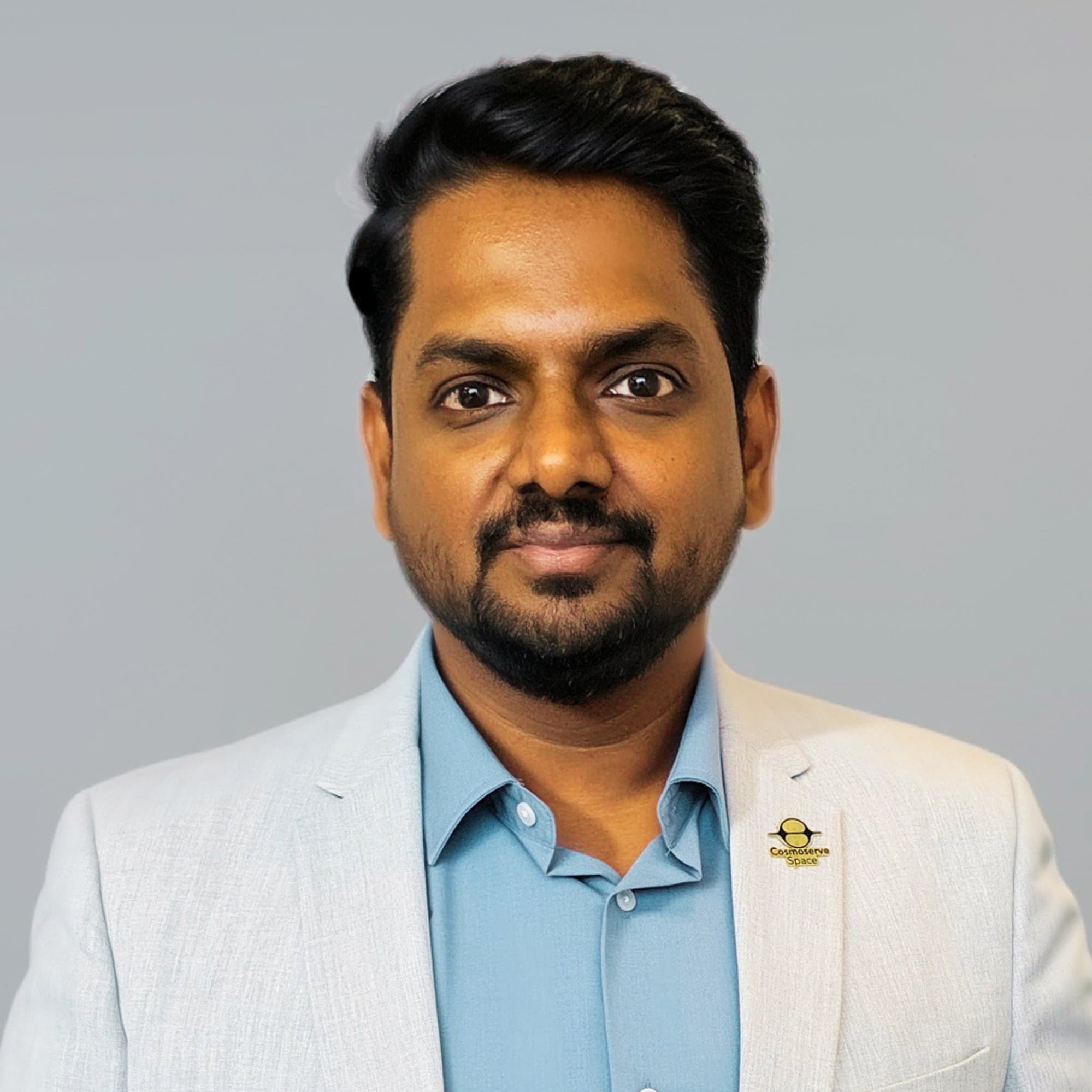
Building the Next Space Economy: Chiranjeevi Phanindra and Cosmoserve's Case for Orbital Maintenance
Chiranjeevi Phanindra, Founder & CEO of Cosmoserve Space, spent 14 years at ISRO working on re-entry and human spaceflight. Today, he is focused on a vital challenge: keeping Earth’s orbit usable.
Read Full Story

Corporate Visionaries
Shashank Sahni on What Success Leaves Out
Shashank Sahni, Google’s Managing Director of Global Ads Solutions, reflects on what customers reveal, what ambitious teams need from their leaders & what the mountains and marathons have taught him about going further.
Read Full Story

Corporate Visionaries
Clinical Multiplication: Divesh Singla on the Healthcare AI Case That Headlines Keep Missing
Divesh Singla, Managing Director, India at Veradigm, brings two decades in healthcare technology to the AI question leaders cannot avoid: how to expand clinical capacity without weakening human judgment.
Read Full Story