Category: Education Leadership
Dr. Padmakali Banerjee, Director General, KIIT, believes the future of higher education lies not in placements or rankings, but in preparing adaptable, ethical leaders for a rapidly changing world.
Dr. Padmakali Banerjee Believes that Higher Education will reshape the future of Leadership, society and Human Potential
IndiSight Editorial
Jun 26, 2026

Dr Padmakali Banerjee
Director General · Kalinga Institute of Industrial Technology
Gurgaon/India
For decades, universities were measured by familiar indicators: enrolment numbers, placement outcomes, faculty credentials, infrastructure scale, research output, accreditation scores, and institutional rankings. Those indicators still matter. But they no longer fully capture the strategic role higher education plays inside a volatile global economy.
A deeper shift is underway
Across industries, technological acceleration is compressing the lifespan of skills. Organizations operate through shorter planning cycles, distributed workforces, continuous disruption, and mounting uncertainty about long-term professional relevance. At the same time, institutions confront growing emotional fatigue, declining attention stability, weakened trust systems, and rising pressure on younger generations expected to reinvent themselves repeatedly across careers, technologies, and economic transitions.
In that environment, universities are no longer functioning only as educational institutions. They are becoming capability infrastructure.
Across boardrooms, policy ecosystems, and leadership circles, a quiet realization is reshaping conversations about talent: information is no longer scarce. Technical competence remains necessary, but increasingly it is not enough. Institutions now place growing value on people capable of interpretation, interdisciplinary thinking, emotional steadiness, ethical judgment, collaborative intelligence, and continuous learning under uncertainty.
Many institutional failures today stem less from a lack of intelligence than from rigidity. Systems weaken when adaptation slows. Organizations decline when administrative continuity gradually overtakes intellectual vitality.
Much of Dr. Padmakali Banerjee’s work sits inside those questions.
Currently serving as Director General- KIIT, Kalinga Institute of Industrial Technology - KIIT Deemed to be University, following earlier leadership roles as Vice Chancellor, Academic Administrator at IILM University, Amity University and others and early career at University of Delhi, Dr. Padmakali has spent more than three decades as an expert in management, leadership development, organizational behaviour, and pedagogy.
“We are entering a phase where human capability itself becomes the differentiator. Information alone no longer creates advantages. The ability to think independently, adapt responsibly, collaborate intelligently, and keep learning through uncertainty is becoming far more important.”
Beneath much of her work runs one recurring question: how do institutions create people capable of functioning intelligently inside complexity without psychologically fragmenting under it?
The Making of an Interdisciplinary Mind
Dr. Padmakali grew up in an industrial town surrounded by coal belts and mineral zones in CFRI Dhanbad, far from the urban ecosystems that tend to dominate India’s intellectual imagination. Yet that environment offered an early insight that stayed central to her worldview: geography may shape exposure, but it does not define intellectual possibility. Her schooling unfolded within a missionary institution, Carmel School, where literature, theatre, debate, music, public speaking, and cultural participation were treated as central to education itself; not as extracurricular additions bolted onto academics.
“That exposure changes the way you see the world. You begin to understand that education is not only about qualification. It is also about expanding emotional and intellectual range,” Dr Padmakali recalls.
For years, medicine appeared to be the natural direction. Alongside science, however, she had also developed a growing fascination with psychology, economics, literature, and classical Indian music. Eventually, those parallel interests became impossible to ignore.
At Delhi University, interdisciplinary conversations, student politics, cultural exchange, and academic inquiry deepened her understanding of how institutions function beneath their formal structures.
Institutions are ultimately human systems. Leadership requires emotional understanding, observation, empathy, and the ability to read how people behave under pressure.
That orientation toward human behaviour later shaped much of her institutional philosophy across leadership development, curriculum reform, faculty capability building, and organizational transformation.
The Leadership Question
Large educational systems often assume scale naturally produces excellence. Universities expand infrastructure, launch programs, strengthen administrative systems, pursue rankings, and grow enrolment capacity, yet many still struggle to consistently cultivate entrepreneurial thinking, interdisciplinary capability, intellectual courage, emotional resilience, or leadership maturity.
Dr. Padmakali believes the deeper problem often lies beneath operational systems.
“Institutional life constantly exposes people to ambiguity, setbacks, resistance, and uncertainty. The defining difference is whether individuals and institutions continue building through difficulty, or gradually withdraw under pressure,” she says.
Her transition from teaching into institutional leadership repeatedly surfaced the same pattern. Some institutions evolved despite limited resources. Others plateaued despite possessing significant infrastructure, authority, and talent. That contrast pushed her deeper into organizational psychology, emotional intelligence, resilience frameworks, and leadership behavior.
We often misunderstand optimism. Sustained optimism requires the psychological ability to remain constructive while fully acknowledging complexity.
The distinction matters because many institutions still confuse optimism with motivational positivity. In her view, optimism becomes strategically useful only when individuals retain the ability to think clearly, collaborate intelligently, absorb setbacks, and keep functioning constructively during prolonged uncertainty.
Over time, her work led her toward a realization many institutions still underestimate: technical expertise alone rarely determines long-term leadership quality. Leaders capable of sustaining institutions through volatility tend to possess deeper psychological capabilities: emotional steadiness, learning agility, cognitive flexibility, and the ability to absorb pressure without becoming rigid or defensive.
Increasingly, those qualities are becoming economic variables as much as psychological ones. Organizations operating in volatile environments need people capable of recalibrating continuously without losing judgment. The ability to remain intellectually functional during uncertainty is quietly becoming one of the defining competitive advantages of modern leadership.
The Failure That Changed Her Thinking
One of the most important shifts in Dr Padmakali’s thinking emerged through varied experiences rather than success alone.
Earlier in her leadership career, she strongly believed that highly capable faculty members produced their best work when institutions minimized structural interference. Greater autonomy, she reasoned, naturally encouraged creativity and innovation.
Reality complicated that assumption.
Several academic initiatives built around broad flexibility and decentralized ownership generated initial enthusiasm but struggled to produce sustained institutional outcomes over time. Research momentum weakened. Collaboration slowed. Accountability blurred.
The experience forced her to reconsider a belief she had once held firmly.
Freedom alone does not automatically produce excellence. People need intellectual structure, institutional rhythm, shared accountability, and ecosystems that continuously challenge them to grow.
That insight later reshaped her approach to governance, interdisciplinary collaboration, innovation culture, and institutional design. Excessive rigidity weakens curiosity and experimentation. Excessive looseness weakens execution and long-term coherence. The healthiest institutions create environments where intellectual freedom and structural discipline strengthen each other, rather than compete for dominance.
The realization also changed how she viewed innovation itself.
“Many institutions publicly celebrate experimentation while their operational systems quietly punish failure: through evaluation structures, reputational anxiety, or bureaucratic friction,” Dr Padmakali says. “Over time, that contradiction weakens curiosity even inside highly talented ecosystems.”
The Quiet Redefinition of Educational Value
Dr Padmakali does not view the current transformation in education as a temporary adjustment tied to one technological cycle or economic shift. She believes universities are entering a far deeper redefinition of what education is expected to produce.
For decades, educational institutions operated within an economy shaped by information scarcity. Universities controlled expertise, legitimacy, certification pathways, and access to professional opportunity. Information abundance has fundamentally altered that equation. Institutional value now increasingly emerges through interpretation, inquiry, synthesis, mentorship, experimentation, ecosystem creation, and the cultivation of judgment.
“The future university will increasingly compete through its ability to strengthen thinking capability, inquiry, collaboration, judgment, and continuous learning,” says Dr Padmakali.
She repeatedly raises concerns about educational systems becoming excessively placement-centric; models that optimize short-term employability while gradually eroding experimentation, entrepreneurial thinking, intellectual courage, and long-term leadership capacity.
Economic mobility matters deeply. But institutions also shape the quality of future leadership, innovation, and societal thinking.
Educational systems can become highly efficient at producing participation while still failing to cultivate agency, resilience, independent thinking, or intellectual courage at scale. That gap matters because economies increasingly reward people capable of continuous learning over those who function only within predefined structures. Nations are now competing through the quality of human adaptability embedded in their institutions.
Why Industry Exposure Alone Does Not Create Industry Readiness
One concern Dr Padmakali returns to repeatedly is the growing assumption that industry-linked education automatically produces future-ready graduates. Internships, corporate partnerships, industry visits, live projects, incubation centres, and certification ecosystems have expanded rapidly across universities over the last decade. She sees value in those developments, but believes many institutions misunderstand what meaningful industry integration actually requires.
“Industry exposure alone does not automatically create industry readiness. Students may gain access to companies, projects, or technology platforms yet still remain underprepared for ambiguity, collaborative problem-solving, decision-making pressure, or interdisciplinary execution,” Dr Padmakali says.
In her view, experiential learning becomes strategically useful only when institutions redesign how students think, not merely where students spend time.
That distinction increasingly matters because organizations today operate inside environments defined by continuous transition. Teams work across functions, technologies evolve rapidly, decision cycles shorten, and professionals are expected to absorb uncertainty without losing execution quality.
Dr Padmakali believes many educational systems still separate theory from application too mechanically. Classrooms reward correctness; professional environments reward judgment. Universities evaluate individual performance; organizations depend on collaborative execution across distributed systems.
“The workplace rarely presents problems in neat academic categories. Real-world decisions usually involve incomplete information, conflicting incentives, human complexity, and continuously shifting variables,” she explains.
That gap partly explains why industries across sectors continue reporting leadership-ready talent shortages despite unprecedented expansion in higher education access globally.
Experiential education therefore cannot remain limited to internships attached to otherwise unchanged academic systems. Institutions must embed industry thinking directly into learning environments through interdisciplinary problem-solving, live decision simulations, entrepreneurial exposure, and sustained interaction with practitioners operating inside volatile markets.
India’s Opportunity Cannot Be Built Through Imitation
Global education systems are no longer competing only through prestige or infrastructure. Increasingly, they compete through research ecosystems, entrepreneurial capability, interdisciplinary depth, innovation culture, institutional credibility, and long-term knowledge creation.
India’s pathway, Dr Padmakali believes, will necessarily look different.
India’s scale changes the nature of the challenge entirely. Educational transformation cannot depend on isolated elite institutions alone. The larger question is how to build distributed excellence across a far more complex ecosystem.
The answer, in her view, requires sustained investment in faculty capability, research culture, interdisciplinary learning, institutional autonomy, entrepreneurial exposure, governance maturity, and international collaboration systems capable of supporting long-term intellectual ambition.
Dr Banerjee also believes India possesses strategic advantages that remain under-leveraged globally: demographic scale, entrepreneurial energy, multilingual capability, technological adaptability, and one of the world’s most influential professional diasporas.
“India does not need to replicate another country’s model. The real opportunity lies in building institutions capable of combining global competence with contextual intelligence,” she says.
At the same time, she does not dismiss the argument that India needs a stronger concentration of globally competitive research institutions.
“Elite institutions matter enormously. But national intellectual capability cannot be built through a handful of campuses. Strong ecosystems require depth across faculty culture, research quality, innovation capability, and institutional ambition at multiple levels,” she explains.
Emotional Capability as Institutional Infrastructure
The pandemic accelerated global conversations around mental health, burnout, emotional resilience, and psychological well-being. Dr Padmakali believes many institutions still treat emotional capability as a peripheral wellness topic, despite its direct influence on leadership quality, institutional trust, communication culture, and decision-making environments.
“What we call emotional resilience cannot be solved through isolated workshops or temporary interventions. Institutional emotional culture is continuously shaped through leadership behaviour, trust systems, communication standards, and psychological safety,” Dr Padmakali explains.
That insight has increasingly shaped her work across leadership coaching, behavioural capability development, emotional resilience programs, mindfulness frameworks, and psychological assessment systems.
Human emotion is deeply contagious. A leader’s emotional state eventually shapes institutional energy, communication quality, decision-making environments, and trust culture.
Technical competence may establish authority initially, but emotional steadiness often determines whether leaders can sustain institutional trust through prolonged uncertainty. Increasingly, organizations are discovering that emotional capability is not a soft cultural layer sitting outside performance systems. It directly influences adaptability, collaboration quality, innovation capacity, decision-making maturity, and organizational endurance.
The Problem with Measurement Culture
Modern institutions increasingly operate through measurement-heavy cultures. Rankings, performance indicators, publication counts, placement numbers, productivity dashboards, engagement metrics, and evaluation frameworks dominate organizational thinking across sectors. Dr. Padmakali acknowledges the importance of accountability, yet believes many institutions over-measure what appears visible while underestimating the foundations that shape long-term credibility.
“Not everything that shapes institutional quality can be immediately quantified,” she says.
The tension is especially visible inside education. Universities can measure enrolment, examination scores, publication output, infrastructure expansion, and placement statistics with relative ease. Measuring intellectual curiosity, ethical judgment, emotional resilience, leadership maturity, and long-term societal contribution is far more complex.
“When institutions become excessively metric-driven, people eventually optimize for safety instead of originality,” Dr Padmakali explains.
The problem extends beyond education. Across industries, organizations increasingly face a paradox where measurement systems designed to improve performance can instead weaken experimentation, reflective thinking, long-range innovation, and institutional learning.
Adaptability Will Define Future Leadership
Among the themes Dr Padmakali returns to most consistently is adaptability. Her interpretation differs sharply from fashionable corporate discussions about agility or perpetual reinvention. Adaptability, in her view, requires continuous recalibration without losing intellectual coherence, emotional steadiness, or long-term direction.
“The leaders who remain relevant will increasingly be those capable of continuously learning, integrating, recalibrating, and evolving, without psychological rigidity,” says Dr Padmakali.
That philosophy also shaped her LEAP framework, built around love, expertise, adaptability, professional excellence and Spirituality as interconnected dimensions of long-term success.
Many younger professionals now operate in environments where reinvention is becoming routine. Individuals move across industries, functions, geographies, and professional identities far more frequently than earlier generations were expected to. Dr Padmakali Banerjee believes this transition is fundamentally reshaping the meaning of career stability. Increasingly, professional endurance depends less on static specialization and more on the ability to learn, integrate, recalibrate, and keep functioning intelligently across changing environments.
Building Institutions That Endure
Global higher education now faces a larger structural question: what allows institutions to remain intellectually relevant across generations, rather than merely administratively operational?
For Dr Padmakali, institutional endurance depends less on slogans and more on culture, governance quality, interdisciplinary ecosystems, intellectual openness, emotional maturity, and leadership depth.
“Institutions decline long before visible collapse begins. Decline starts when curiosity weakens, bureaucracy becomes stronger than imagination, and conformity becomes safer than inquiry,” she says.
She believes India holds a rare opportunity within global education, given its demographic scale, entrepreneurial momentum, technological acceleration, and expanding global integration.
The future belongs to institutions capable of combining global capability with contextual wisdom.
That philosophy increasingly shapes how Dr Padmakali interprets education itself. Universities, in her view, do far more than produce economically functional individuals. Institutions influence the emotional, intellectual, and ethical architecture through which societies evolve across generations.
Leadership Lessons from Dr. Padmakali
Many institutions say they want experimentation, until failure begins affecting metrics, timelines, or hierarchy.
Careers increasingly reward people who can adapt, relearn, work across disciplines, and remain emotionally steady during uncertainty.
Most university-industry relationships remain superficial because both sides still measure value very differently.
People stop taking intellectual risks once institutional culture begins rewarding caution more than curiosity.
The healthiest institutions combine intellectual freedom with operational discipline.
Easy access to information has made interpretation, judgment, and synthesis far more valuable than memorization alone.
Institutions lose relevance gradually when administrative comfort becomes stronger than intellectual ambition.
The Larger Institutional Question
Higher education is being pushed into a far more demanding role than most institutions were originally designed for. Universities are no longer evaluated only on placement statistics, infrastructure expansion, or enrolment scale. Increasingly, societies are asking whether institutions can produce people capable of navigating uncertainty, complexity, technological disruption, and emotional pressure, without losing intellectual independence or ethical grounding.
That question sits at the heart of Dr Padmakali Banerjee’s work.
Across management, organizational behaviour, emotional intelligence, leadership development, and institutional transformation, her thinking returns repeatedly to one underlying conviction: societies eventually become reflections of the emotional, intellectual, and ethical quality of the institutions they build.
In an age defined by volatility and accelerated change, institutions capable of developing emotionally resilient, intellectually agile, ethically grounded individuals may ultimately influence far more than employability statistics or university rankings.
They may shape the future quality of leadership itself.
Our Suggestions to Read
Discover The Leaders Shaping India's Business Landscape.
Founders & Innovators
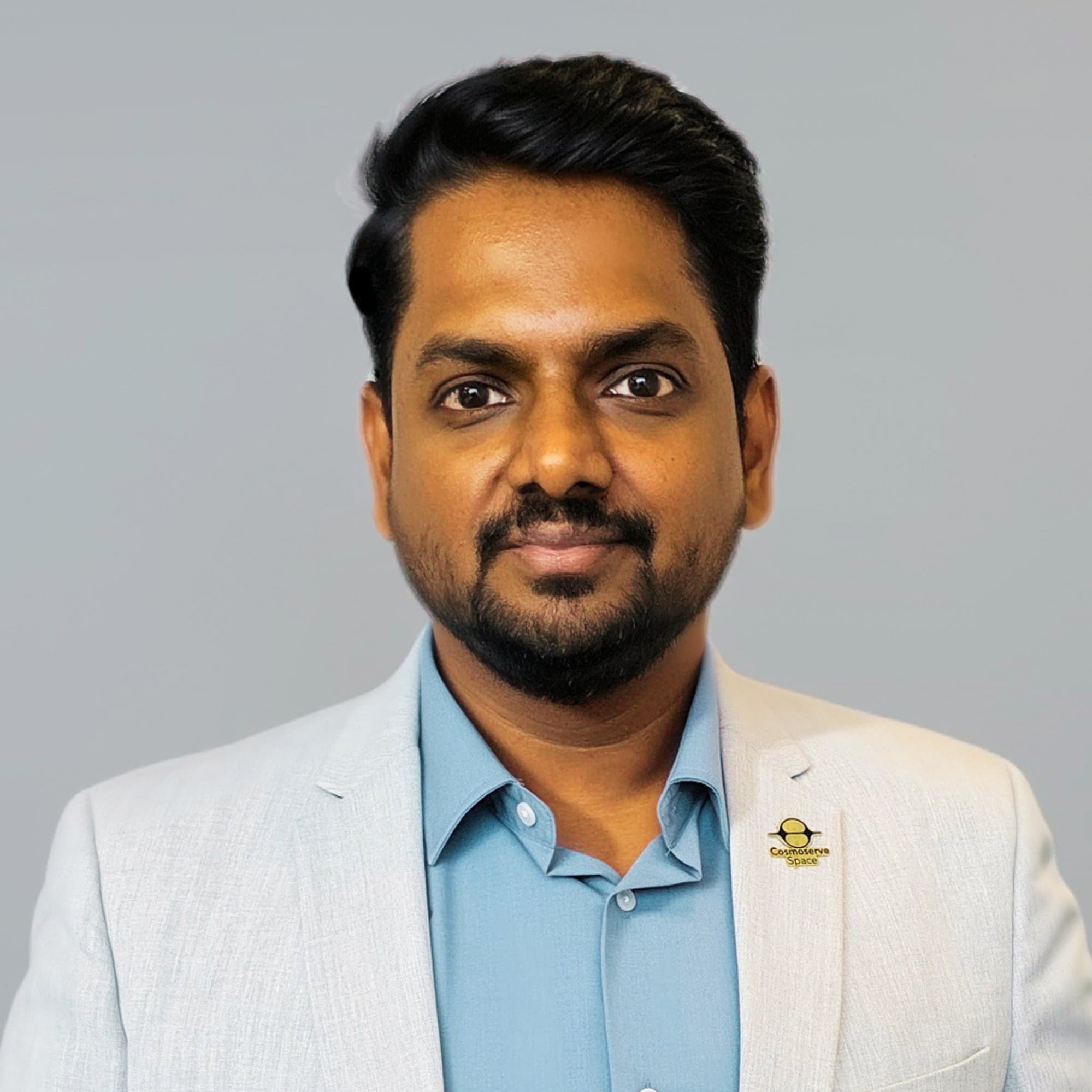
Building the Next Space Economy: Chiranjeevi Phanindra and Cosmoserve's Case for Orbital Maintenance
Chiranjeevi Phanindra, Founder & CEO of Cosmoserve Space, spent 14 years at ISRO working on re-entry and human spaceflight. Today, he is focused on a vital challenge: keeping Earth’s orbit usable.
Read Full Story

Corporate Visionaries
Shashank Sahni on What Success Leaves Out
Shashank Sahni, Google’s Managing Director of Global Ads Solutions, reflects on what customers reveal, what ambitious teams need from their leaders & what the mountains and marathons have taught him about going further.
Read Full Story
Corporate Visionaries
Clinical Multiplication: Divesh Singla on the Healthcare AI Case That Headlines Keep Missing
Divesh Singla, Managing Director, India at Veradigm, brings two decades in healthcare technology to the AI question leaders cannot avoid: how to expand clinical capacity without weakening human judgment.
Read Full Story