Category: Education Leadership
Pratima Sinha, CEO of DSR Educational Society, argues that lasting educational excellence comes from people, purpose, and a culture that continuously adapts.
The Art, Science, and Soul of Learning Inside Pratima's Four-Decade Journey
IndiSight Editorial
Sep 21, 2025
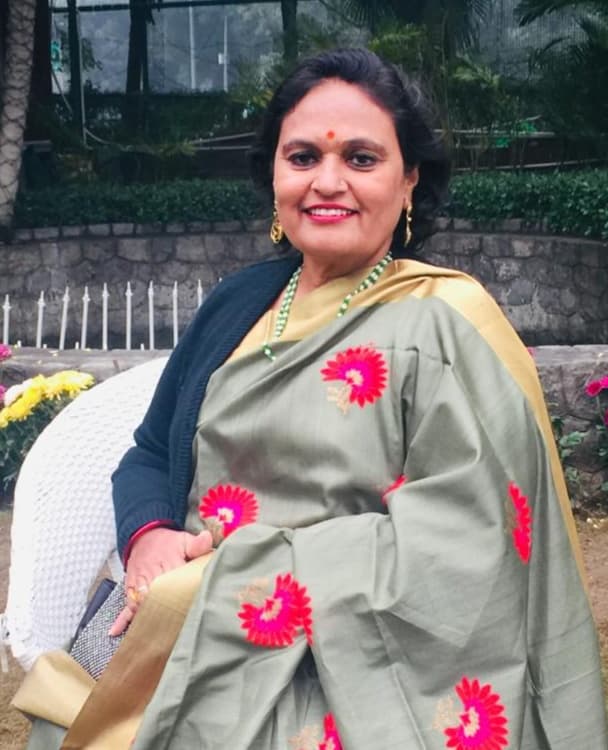
Pratima Sinha
From Accident to Apprenticeship
In 1985, Pratima entered a classroom for the first time, not as a parent but as a teacher, and in that moment her life’s trajectory altered. She did not come with an education degree or with any formal preparation for teaching. She had simply said yes when a relative, who was starting a school, invited her to try. She recalls with a quiet laugh that she did not even know how to write on the board properly, or how to set exam papers, or how to correct notebooks. What she had instead was the openness to learn, and a mentor who showed her how the smallest details of teaching mattered, from handwriting on the blackboard to the way feedback is marked.
What began as an accidental entry into education became a forty-year journey through every layer of the schooling system. She taught Grade 1, then middle school, then senior school. She became a coordinator, then a headmistress. She worked across pre-primary and high school alike, gaining a panoramic sense of how children grow through each stage. Those twenty years at Gitanjali Group of Schools gave her an apprenticeship in education far deeper than any credential could have provided. By the time she left in 2005, she had seen the profession from within its most intimate places: the classroom, the corridor, the teacher’s desk, and the daily interaction with parents.
Today she is the Chief Executive Officer of DSR Educational Society, guiding a group of schools. She has addressed international conferences, written a book, and experimented with the use of theatre as therapy for children with autism. Her career is not only a professional ascent; it is the story of a leader who has insisted that education is not a mechanical process but a human ecosystem, an art and a science that requires soul.
The Living School Philosophy
From her journey emerges a set of principles that are not confined to schools. They apply to any leader who carries responsibility for people, culture, and systems. Together they form what can be called her Living School Philosophy, a framework tested in classrooms but applicable to boardrooms, nonprofits, and governments.
Leadership as Inner Architecture
“Even with noise around me, I can meditate. That quietness inside me spreads when I smile. People sense it because it is genuine.”
For Pratima, leadership begins within. An institution is only as calm as the person who leads it. If the leader is steady, the system can withstand turbulence. If the leader is restless or anxious, the institution multiplies those fractures.
This truth was never clearer than during the pandemic. Technology could be introduced, procedures rewritten, but what teachers and students needed most was the ability of the leader to bring steadiness into the room. The insight applies to business, government, and social organizations alike. Leaders who cannot manage themselves will not be able to manage others.
Teaching as a Profession of Conviction
“People come to interviews and say, ‘My husband supports me, so I thought I would try teaching.’ Please do not. You are dealing with children’s lives.”
Pratima does not view teaching as a fallback. She rejects the idea that teaching is casual or optional. For her, every morning children wait for their teacher’s smile, and that smile is a responsibility.
The principle extends beyond education. In any high-stakes profession, conviction is not optional. Whether leading a company, practicing medicine, or shaping policy, one must enter deliberately, not accidentally.
The Dinosaur Warning: Adapt or Become Extinct
“Teachers will become dinosaurs if they do not change.”
Pratima has watched classrooms where lessons remain unchanged for decades. Teenagers, already exposed to a far wider world, disconnect quickly from teachers who fail to adapt. The danger is not that technology will replace humans. The danger is that humans refuse to evolve. “Robot teachers may arrive. The only difference between them and us will be our ability to emotionally connect.”
The lesson is universal. Disruption rarely destroys organizations. Inertia does.
Aesthetics as the Hidden Curriculum
“Every corner of a school should breathe learning. Corridors, gardens, silence zones, they all teach in their own way.”
At a conference in Singapore, Pratima put forward her point that aesthetics belongs inside Maslow’s hierarchy of needs. Beauty, in her view, is not cosmetic. It is cognitive. She recalls visiting a Japanese school designed in a circle without walls, where children could run around the campus and return to their class. Design itself, she insisted, was pedagogy.
She also transformed disruption into curriculum. When construction noise surrounded her campus, students complained. She told them to learn from it. “I told them, learn to find beauty in the noise. If you do not, you will never learn resilience.”
In India, where classrooms are often cramped and exam pressure dominates, this focus on aesthetics is countercultural. For Pratima, physical space is not neutral. It is part of the curriculum itself.
Culture Lives in People, Not in Policies
“You can have 101 policies. If the leader is not ready to change, nothing happens.”
Policies matter, but culture is carried in people. Teachers, in her case, are culture carriers. They perform invisible labor that cannot be captured in any manual. They know each child personally. They notice when something is wrong. They connect with families to understand context.
She recalls visiting the home of a struggling student. That one visit revealed more about the child’s challenges than months of classroom observation.
Her style of leadership is to treat teachers as ambassadors. “Their opinions must matter. That is how culture is built, through trust, not fear.”
The lesson for companies is clear. Culture is not written on paper. It is lived in trust.
Creativity as Survival
Pratima’s training in Kathak gave her discipline. Her work in theatre gave her improvisation. Both shaped her leadership.
Her boldest experiment has been theatre as therapy for children with autism. In one session, she recalls, a boy who had not spoken for weeks suddenly began to mimic a dialogue from a play. It was imperfect, fragmented, but it was speech. “That moment stays with me,” she says. “Theatre opened a door textbooks never could.”
Her schools also adopted the International Baccalaureate Career-related Programme early, blending academic study with vocational focus. “Both theatre and IBCP are about the same thing. Helping children prepare for futures we cannot yet see.”
Her conviction is clear. Creativity is not enrichment. It is survival.
Systems and the Courage to Move Early
“Finance is where the world rotates. HR is how culture holds. Everything else can breathe freely.”
Pratima is not a romantic idealist. She insists on systems. Finance and people, she argues, are the anchors. Everything else must adapt.
She has also been an early mover. She began career counseling long before it became fashionable. At a time when most schools focused only on board exam preparation, she introduced structured guidance for students to explore careers. “Parents thought I was wasting time,” she recalls, “but I knew our students needed to be prepared for life, not just exams.”
She digitized report cards when others hesitated, even when management feared parents would resist. She pushed through, convinced that transparency and access would eventually be accepted. In the late 1990s she worked with Wipro’s Applying Thoughts in Education program, embracing experiential learning well before it became common.
Her critique is sharp. “Too many wait for validation. By the time they act, the trend is already in decline.”
For schools or corporations alike, the lesson is simple. Delay is death. Early courage is the only insurance against irrelevance.
Global Lens, Written Mirror
Travel has been another classroom. At Asia Pacific University in Japan she realized how much Indian schools needed to change. At Melbourne’s universities she saw evidence that the gap was closing. “Our students can thrive globally. The blind spot is still the teacher’s mindset, but we are moving.”
Writing gave her another discipline. Her book, Striving for Success Today and Tomorrow, argues for critical thinking, problem solving, and communication as essential skills. Writing, she says, forces coherence. “It holds you accountable to your own philosophy.”
Exposure provides comparison. Writing demands clarity. Both keep leaders honest.
Tension and Doubt
Pratima’s philosophy was not built easily. She has faced resistance from teachers unwilling to change, parents anxious about unconventional methods, and management hesitant to experiment. “I have had senior teachers walk into my office and tell me, ‘This class is hopeless, I cannot teach them,’” she recalls. “At such moments I wondered if change was possible at all.”
There were times she doubted herself, particularly when innovations like career counseling or digital report cards met with skepticism. But for her, conviction meant persistence. “The easiest thing would have been to stop,” she says. “But if I had stopped, the children would have lost.”
These doubts, she insists, are essential. Leadership without struggle is fragile.
Foresight: Preparing for the Next Wave
Pratima’s foresight is grounded in practice. She notes that cursive writing in pre-primary is already irrelevant in a digital age. Job profiles once considered lucrative are vanishing. New subject combinations are emerging faster than institutions can keep up.
She warns that students are ahead of teachers in exposure and expectations, and unless educators adapt, the gap will widen dangerously. She also acknowledges the possibility of robot teachers, arguing that the only differentiator will be human connection.
Her predictions are not confined to schools. They apply to all organizations. Companies that train people only for today’s roles will fall behind. The future belongs to those who continuously reimagine skills and identities.
Passion as the Final Curriculum
When asked what she would tell new educators, Pratima does not hesitate. “Passion. If you do not have passion, do not enter. Teaching is not a time-pass profession.”
For her, passion is not a romantic accessory. It is structural. Without it, no teacher can carry the responsibility of shaping lives. Learning, she insists, is not time bound. It requires openness, responsibility, and energy across a lifetime.
Passion, conviction, and responsibility are not the extras. They are the final curriculum.
Lessons for Leaders Everywhere
From her Living School Philosophy emerge reminders that extend well beyond education:
Institutions reflect the inner clarity of those who lead them.
Conviction is structural. Do not enter professions of responsibility casually.
Adaptation is survival. Inertia, not disruption, kills relevance.
Spaces teach as much as people. Design is a curriculum.
Culture does not live in policies. It lives in people who feel trusted and respected.
Creativity is not optional. It is the human edge in uncertain futures.
Finance and people are anchors. Everything else must adapt.
Passion is not sentiment. It is infrastructure.
The Living School Philosophy Assessment
Score each from 1 (not true) to 5 (fully true).
Leadership steadiness shapes daily culture.
Roles of responsibility are chosen with conviction.
Practices evolve ahead of disruption.
Spaces are designed to support learning and work.
Culture lives in trust more than in policies.
Creativity is at the core, not an afterthought.
Finance and people remain protected, and treated as anchors.
Global exposure and reflection sharpen direction.
Future skills and disruptions are anticipated.
Passion and responsibility are sustained as essentials.
Scores
41 to 50: Fully aligned, resilient, future-ready.
31 to 40: Solid base, but gaps in adaptability or foresight. Red flag: complacency creeping in.
21 to 30: Risk of stagnation. Red flag: rigid hierarchies, disengaged culture.
Below 20: Urgent renewal needed. Red flag: institutional irrelevance. Begin with leadership clarity.
This tool applies beyond schools. Any institution can use it to see if it is breathing, adapting, and growing.
Final Thoughts
Pratima’s journey serves as a reminder that education is a brave act rather than a mechanical system. Schools, like businesses, thrive when their leaders maintain their composure, when people, not policies, carry the culture, when spaces are created to encourage resilience, and when passion is viewed as infrastructure rather than decoration.
Her legacy will be determined by the convictions she sowed, not by the quantity of institutions she oversaw. That learning’s soul, science, and art are inextricably linked. That the courage, empathy, and inventiveness of the people it molds are the truest indicators of leadership, whether in a business or a classroom.
Our Suggestions to Read
Discover The Leaders Shaping India's Business Landscape.
Founders & Innovators
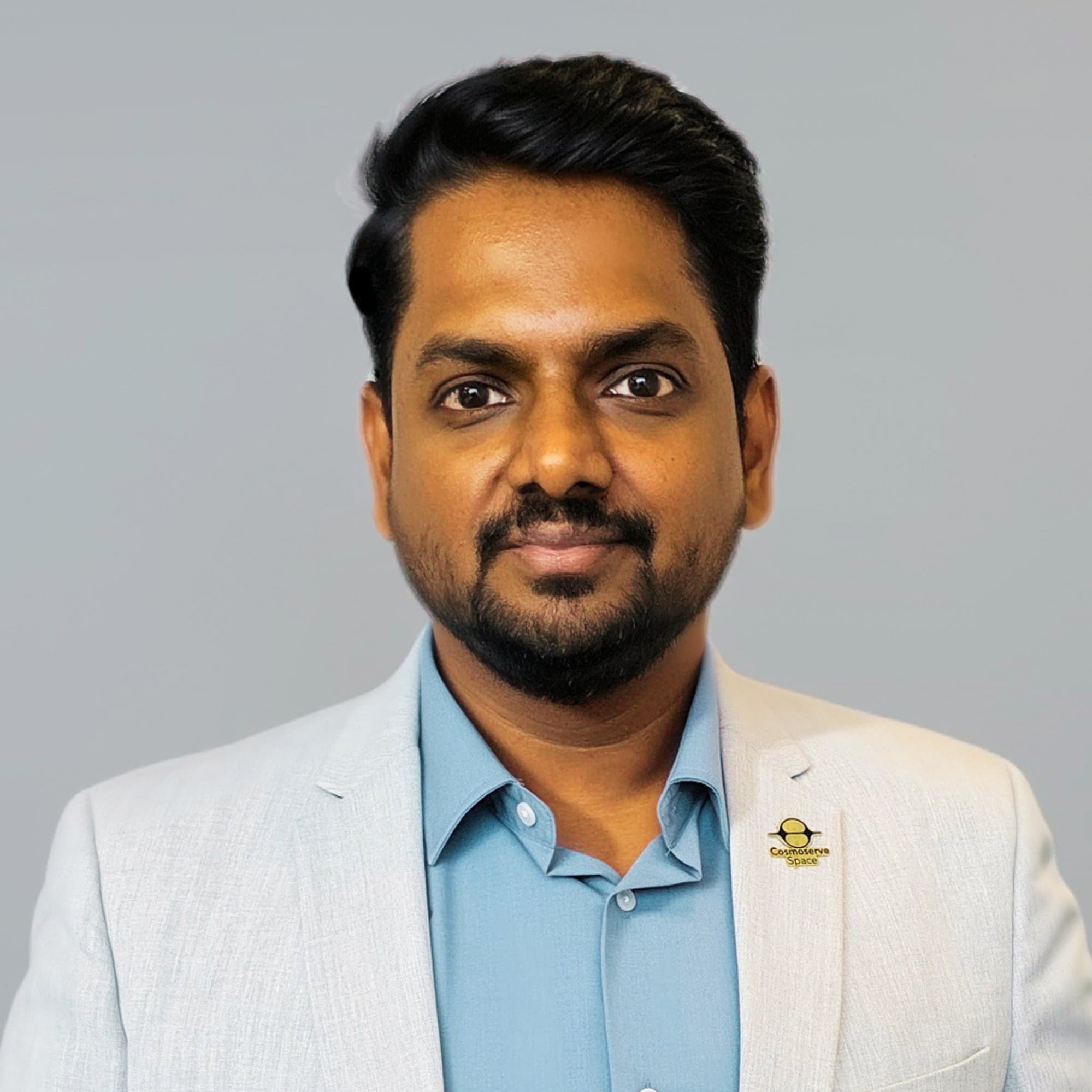
Building the Next Space Economy: Chiranjeevi Phanindra and Cosmoserve's Case for Orbital Maintenance
Chiranjeevi Phanindra, Founder & CEO of Cosmoserve Space, spent 14 years at ISRO working on re-entry and human spaceflight. Today, he is focused on a vital challenge: keeping Earth’s orbit usable.
Read Full Story
Corporate Visionaries
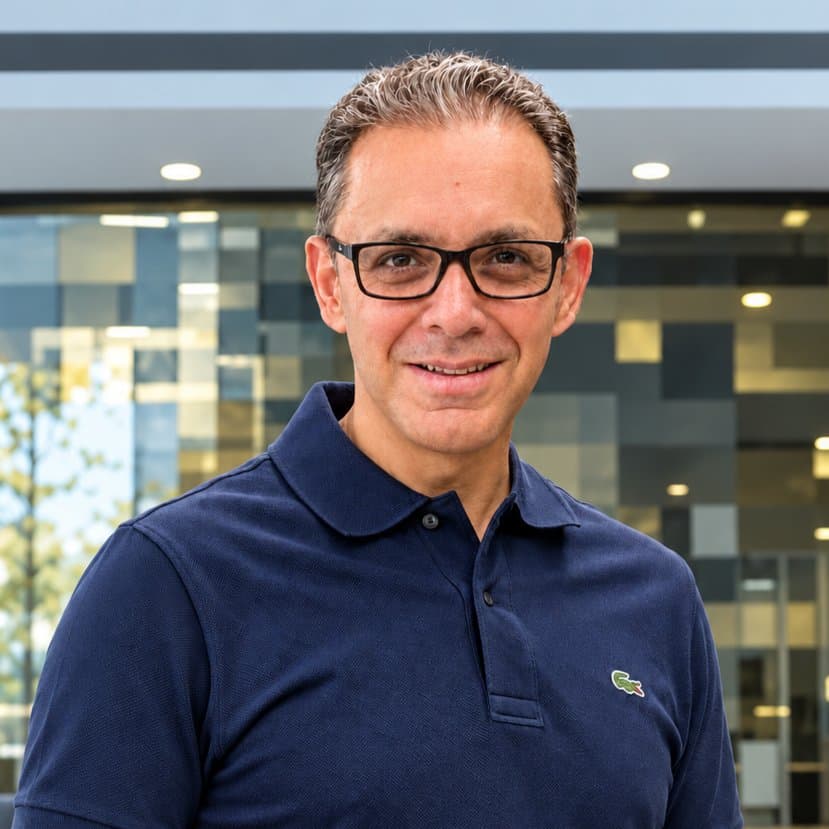
Shashank Sahni on What Success Leaves Out
Shashank Sahni, Google’s Managing Director of Global Ads Solutions, reflects on what customers reveal, what ambitious teams need from their leaders & what the mountains and marathons have taught him about going further.
Read Full Story
Corporate Visionaries
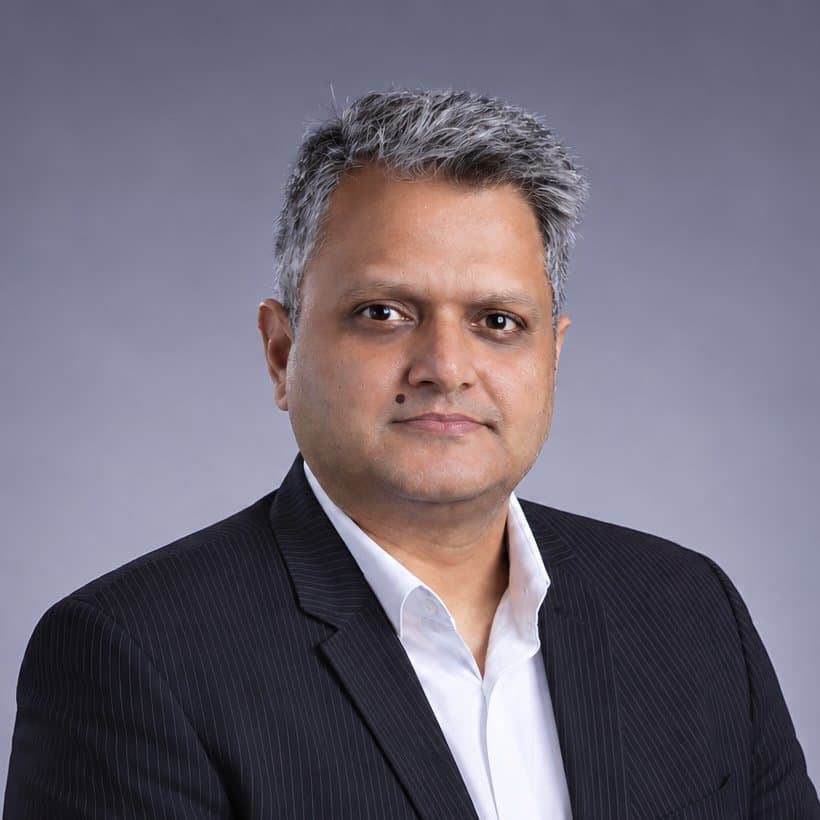
Clinical Multiplication: Divesh Singla on the Healthcare AI Case That Headlines Keep Missing
Divesh Singla, Managing Director, India at Veradigm, brings two decades in healthcare technology to the AI question leaders cannot avoid: how to expand clinical capacity without weakening human judgment.
Read Full Story