Category: Corporate Visionaries
Ritu Mathur’s story is about building systems that think with reason and feel with conscience. An engineer turned governance leader, she believes institutions last when trust compounds faster than capital and ethics outpace ambition. Her philosophy turns compliance into culture and reflection into strength, proving that true progress is not about how much we can do, but how responsibly we choose to do it.
Bouncing Forward: Ritu Mathur on Building Systems That Think Ethically and Feel Human
IndiSight Editorial
Dec 25, 2025
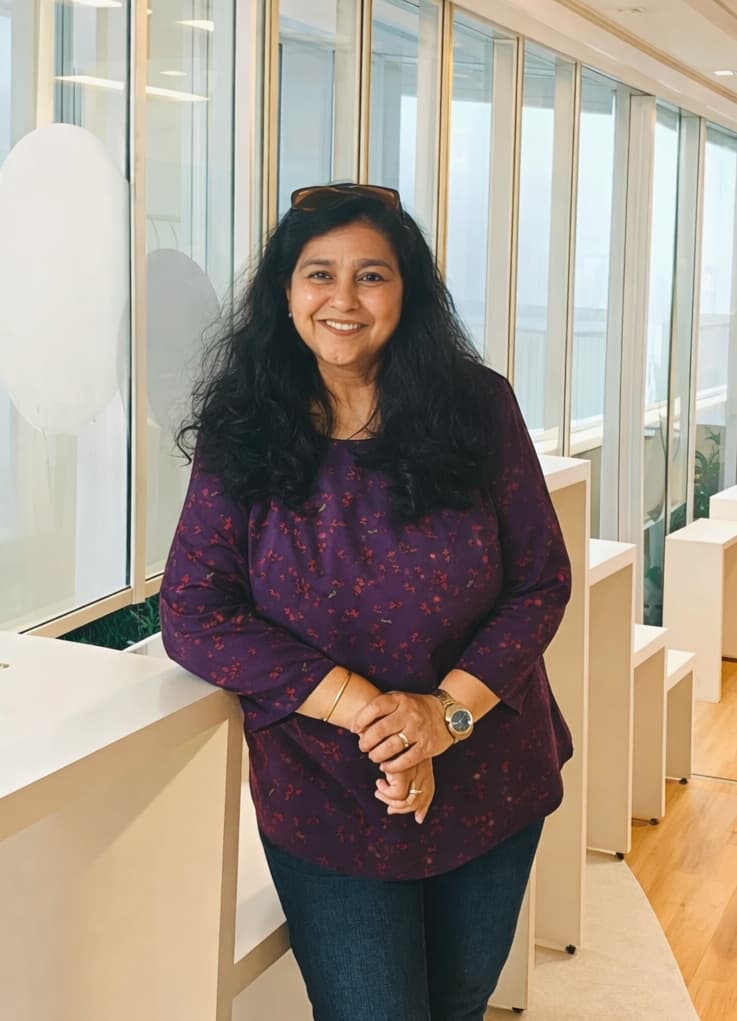
Ritu Mathur
Delhi
The Governance Gap
In most organizations, governance lives in the background, invoked during crises, reviewed in audits, and too often mistaken for a compliance ritual rather than the structure that keeps everything from collapsing. Boards discuss performance, regulation, and policy, yet the harder questions remain unexplored. How do institutions design integrity, not merely monitor it? How do systems remain fair when incentives inevitably pull in opposite directions?
These are the questions that have defined Ritu Mathur’s professional life. Over three decades across telecom, policy, and corporate governance, she has seen how trust is not a byproduct of performance but its precondition. “Good governance is not about control,” she says. “It’s about enabling trust, innovation, and long-term competitiveness.”
Trained as a computer engineer, Ritu learned that systems rarely fail because of bad intent; they fail because of weak design. During her years in Japan, she absorbed the principle of Nemawashi, “digging around the roots” a technique used to gather information, address concerns, and build support from all stakeholders in advance to ensure consensus. It later became the cornerstone of her leadership philosophy. “You can’t build consensus at the end,” she says. “You have to nurture it from the beginning.”
That mindset shaped every major reform she would later lead, from the early years of telecom liberalization to the global conversations around ESG and responsible AI. For her, the measure of governance is simple: whether the system makes ethical behavior easier to sustain than to avoid. “The systems you design decide whether good intentions survive,” she says. “You can’t rely on personalities to keep institutions ethical. You need frameworks that make the right thing easier to do.”
As artificial intelligence and automation redefine corporate conduct, her lens feels increasingly relevant. Governance, in her vocabulary, is not bureaucracy; it is the hidden rhythm that allows institutions to think clearly, act wisely, and remain trusted over time.
Foundations: From Engineering to Institutional Design
Ritu’s leadership philosophy was forged not in boardrooms but in code. As a computer science graduate from Delhi Institute of Technology, she was trained to think in terms of systems, interdependent, rule-bound, and unforgiving to weak logic. “One faulty line can compromise an entire network,” she says. “Governance works the same way. Every process, every assumption has to align for the system to stay stable.”
Her early work in infrastructure taught her that invisible design creates visible reliability. When she entered India’s telecom sector in the early 2000s, the country was rewriting its market architecture. Deregulation had introduced competition faster than policy could evolve, and every decision carried consequences for millions of new users. “The leaders who adapt best,” she reflects, “are the ones who understand both the mechanics of innovation and the psychology of change.”
During her tenure at the Tata Group, telecom regulation was a male dominated domain. She often found herself the only woman in a room filled with seasoned male leaders and policymakers. Preparation became her form of quiet authority. “Credibility comes from clarity and consistency,” she says. “When you speak from preparation, authority follows naturally.” Her voice takes on a note of pride. “Soon I got used to the fact of being the only woman at the table with a voice.”
Those years gave her a longitudinal view of how institutions adapt under pressure. By the time she joined the Confederation of Indian Industry and later led the National Foundation for Corporate Governance, her understanding of systems had widened. “Every organization has its own strategy and culture,” she says. “Governance is what connects them. It’s how purpose becomes practice.”
Redefining Governance as Enablement
In many companies, governance is treated as a brake, a necessary but unglamorous constraint. Ritu sees it as the steering system that makes agility sustainable.
At the National Foundation for Corporate Governance, set up under the Ministry of Corporate Affairs in collaboration with leading professional institutes, she helped reorient the narrative from compliance training to capability building. “Regulations can make you compliant,” she says. “Only design can make you consistent.”
Her reasoning is economic as much as ethical. Edelman’s 2024 Trust Barometer shows that organizations in the top quartile of trust command 30 percent higher valuation premiums than peers with similar financials. “When governance matures, trust compounds,” she says. “And when trust compounds, growth accelerates.”
She believes governance must evolve into a living discipline that aligns visible mechanisms like strategy, communication, and metrics with invisible scaffolds such as values, incentives, and cultural norms. It is, in her words, “the design that allows accountability and creativity to coexist.”
And in an age when data creates visibility faster than leaders can interpret it, she draws a line between awareness and wisdom. “Technology can tell you what’s happening,” she says. “It cannot tell you what’s right.”
The Framework of Trust
Trust, for Ritu, is not a sentiment; it is an operating system. “Values without systems are like promises without proof,” she says. “You need mechanisms that make integrity the default setting.”
Across roles in industry and regulation, she saw how intent, unsupported by structure, collapses under complexity. At Tata Group, accountability meant ownership, not punishment. In government and industry forums, she observed that even well-crafted policy fails when culture cannot sustain it. These experiences convinced her that ethics must be engineered into the everyday logic of organizations.
At the National Foundation for Corporate Governance, she helped advance programs that treat trust as measurable capital. Her framework is pragmatic:
Measure trust as rigorously as financial performance, tracking ethics resolution timelines, disclosure quality, and stakeholder confidence.
Design and implement training programs, workshops, and certification courses to equip corporate boards and senior executives with the skills needed for transparent and accountable governance.
Build strategic partnerships and collaborations with international and national institutions to benchmark and co-develop governance frameworks.
Build trust infrastructure proactively, not reactively, designing feedback loops before crises demand them.
PwC research reinforces her view: companies with strong trust systems report 50 percent lower attrition and 40 percent fewer compliance violations. Ritu calls this “Trust Capitalism,” the idea that credibility compounds faster than capital.
The real test of leadership is not whether you can control outcomes but whether you can create systems that sustain trust when you’re not in the room.
Inclusion as System Intelligence
Ritu approaches inclusion as a design issue, not a diversity metric. “Inclusion isn’t about inviting people into the room,” she says. “It’s about redesigning the room so every perspective shapes the outcome.”
Having often been the only woman, or the only engineer fluent in both regulation and technology, she understood that competence shifts perception faster than rhetoric. “Credibility in such rooms isn’t gifted; it’s earned through preparation,” she says. “Data was my currency.”
This philosophy evolved into a broader thesis: diversity expands a system’s ability to anticipate risk and interpret complexity. McKinsey’s 2023 Diversity Wins report found that companies in the top quartile for gender diversity outperform peers by 25 percent on profitability. “You can’t future-proof an organization built on one worldview,” she says. “Resilience is born from range.”
Her inclusion model rests on three anchors: preparation builds credibility, participation builds trust, and persistence builds culture. Representation, she argues, may open doors, but only culture keeps them open.
The real question, she insists, is not how many but how much influence. Diversity without distributed authority is like wiring without electricity; it looks complete, but nothing moves.
Technology, Foresight, and Ethical Intelligence
Every new technology reopens the same moral challenge: can systems built for stability evolve without losing their integrity?
“Technology doesn’t ask for permission,” Ritu says. “It asks for judgment.”
She learned that lesson firsthand during India’s telecom transformation, when deregulation outpaced legislation and innovation often arrived before oversight. “You had to lead with ethics first,” she says. “Law would take time to arrive.”
Her philosophy of Ethical Foresight, asking difficult questions before circumstances force you to, was tested in 2007 during what she calls the SMS capping crisis.
To control spam, the regulator abruptly capped messages at 200 per number per day. Her team implemented the mandate overnight. By morning, chaos followed: exam notifications, emergency alerts, and patient updates stopped moving through the network. Government offices and universities flooded operators with complaints.
“I owned it,” she says. “We fixed it within hours.” Her team worked through the weekend, reconfiguring code to protect the spirit of regulation without paralyzing essential communication. “Purpose is non-negotiable,” she says. “Implementation must stay flexible.”
That episode became a lifelong case study in how ethical systems must balance principle with pragmatism. It also sharpened her caution about checklist-driven compliance and changed her focus to ensuring that good governance is not the letter of the law but the spirit behind it. Governance begins where compliance ends: it is about credibility, culture, and continuity.
She points to MIT research showing that facial-recognition systems misidentify dark-skinned women 35 percent of the time versus under 1 percent for white men. “That’s not a technical glitch,” she says. “It’s a governance failure. Boards must ask: what data trained this system, and whose experience is missing?”
Her warning is precise: visibility is not wisdom. Dashboards can capture data but not discernment. “We are mistaking measurement for meaning,” she says. “Machines can process logic, but only humans can process responsibility.”
India, she believes, is uniquely positioned to model a balanced approach. “We’ve lived through both overregulation and vacuum,” she says. “Now we can design frameworks that understand balance.”
Her three non-negotiables for the next decade, transparency in process, accountability in outcome, and empathy in execution, define what she calls ethical architecture. “Technology may expand what we can do,” she says, “but empathy defines what we should do.”
Resilience, Renewal, and Leadership Philosophy
The pandemic redefined Ritu’s idea of resilience. “It’s not recovery,” she says. “It’s renewal, the discipline to move forward with a different rhythm.”
Her leadership rests on three coordinates: integrity as direction, transparency as bridge, and accountability as ownership. “Integrity guides when rules are silent. Transparency builds the connective tissue of trust. Accountability turns responsibility into culture.”
At Tata Group she saw accountability practiced as empowerment. “When people own outcomes, systems find equilibrium.”
She rejects the cult of immediacy. “We’ve mistaken speed for intelligence,” she says. “True leadership matures in pauses, not in noise.”
Asked what she would tell her younger self stepping into governance today, she smiles. “Power needs patience. Reform needs repetition. Trust needs time.”
Those ideas now underpin Chrysalis Sutra, her leadership initiative that blends governance literacy with emotional intelligence. “You can’t build ethical systems with exhausted people,” she says. “Reflection is not a luxury; it’s infrastructure.”
Her reflections frequently come back to her personal loss, an unexpected, but deeply transformative teacher in her life. “Grief doesn’t disappear,” she says. “You grow around it. It changes your composition.”
Global Vision: Governance as Moral Framework
For Ritu, the essential challenge of this century is not how fast institutions evolve but how wisely they do. “The future of governance will depend on our ability to make intelligence accountable,” she says.
Governance, in her words, is moral infrastructure, the embedding of conscience into process. “Good governance isn’t audit,” she says. “It’s anticipation.”
The World Economic Forum notes that nations with high gender parity in leadership enjoy 11 percent higher GDP per capita. “Data confirms what ethics has always known,” she says. “Shared progress is sustainable progress.”
Two ancient Indian philosophies shape her worldview. Vasudhaiva Kutumbakam, the world as one family, embodies interdependence in a connected economy. It promotes interconnectedness and fosters a sense of collective responsibility toward the planet’s well-being and resource management. This is a blueprint for sustainable global growth.
Samatva, balance and equanimity, represents emotional precision in decision-making. “True balance,” she says, “is not indecision. It’s the courage to hold conflicting truths without collapsing into bias.”
She believes India’s lived complexity, where contradiction is daily reality, is its global advantage. “We understand coexistence not as theory but as practice,” she says.
As the world grapples with AI ethics, climate risk, and inequality, she argues that the next competitive advantage will be moral clarity, the capacity to act rightly before being told to. “Data without ethics is information,” she says. “Governance without empathy is administration.”
Progress is alignment between intelligence and empathy, innovation and ethics, ambition and restraint. The systems that learn this balance will lead the world.
Leadership Lessons
Integrity is Direction, Not Decoration.
It defines where you go when no one is watching.
Ethics Must Be Designed, Not Declared.
Intent without design collapses under pressure.
Resilience Is Renewal, Not Recovery.
Leaders grow around loss; they don’t erase it.
Balance Is Courage in Action.
Maturity lies in holding multiple truths without bias.
Data Is a Tool; Judgment Is the Edge.
Information supports, but only discernment sustains.
Technology Needs Ethics as Much as Scale.
Progress that forgets humanity cannot endure.
Governance Is Culture in Motion.
Systems with conscience outperform systems built on control.
Reflection Is Competence, Not Pause.
In a world obsessed with speed, stillness becomes strategic.
Closing Reflection
Ritu believes that leadership is art in motion, a daily practice where the medium is not paint or clay but human potential. Though they sit at opposite ends of the spectrum, both require the same soul: the courage to create something where nothing existed before. They both need:
Vision : seeing beyond what is and imagining what can be.
Patience : understanding that great work takes time, reflection, and courage.
Mindfulness : being fully present in the process, not just the outcome.
Resilience : returning to the drawing board when the strokes or strategies don’t align.
Whether on canvas or in the boardroom, impact comes from clarity of purpose, precision of action, and the courage to create something meaningful.
Our Suggestions to Read
Discover The Leaders Shaping India's Business Landscape.
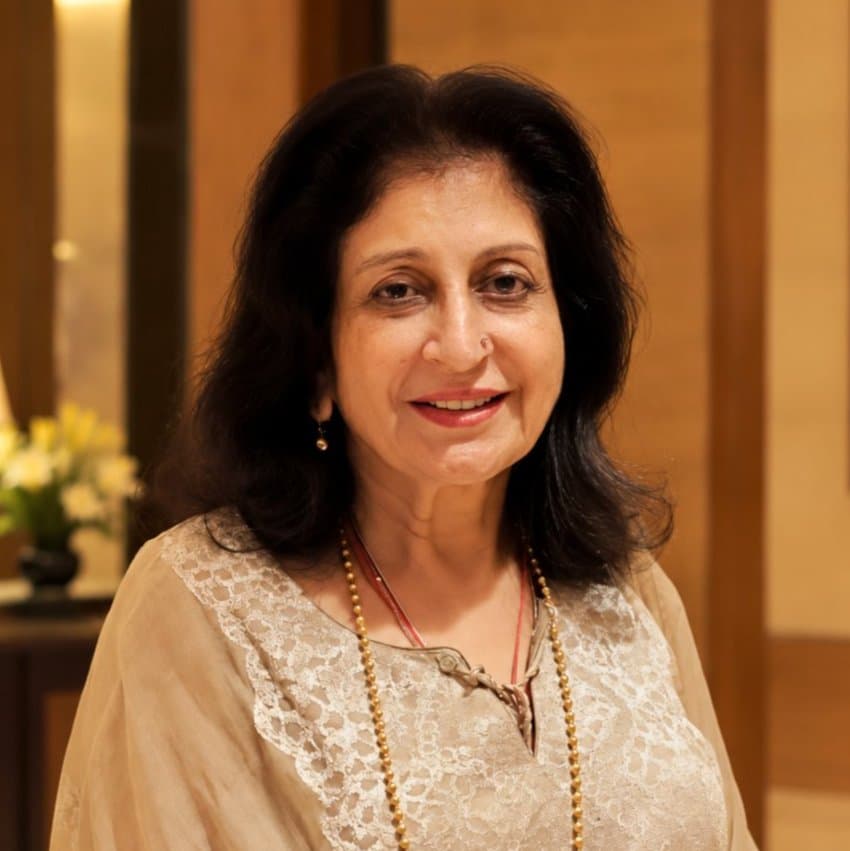
Education Leadership
The Human Advantage: Anu Monga on What Schools Must Still Create
Drawing on decades of leadership in international schools and education, Anu Monga reflects on what institutions must continue to create in a world where knowledge is increasingly accessible and shaped by technology.
Read Full Story
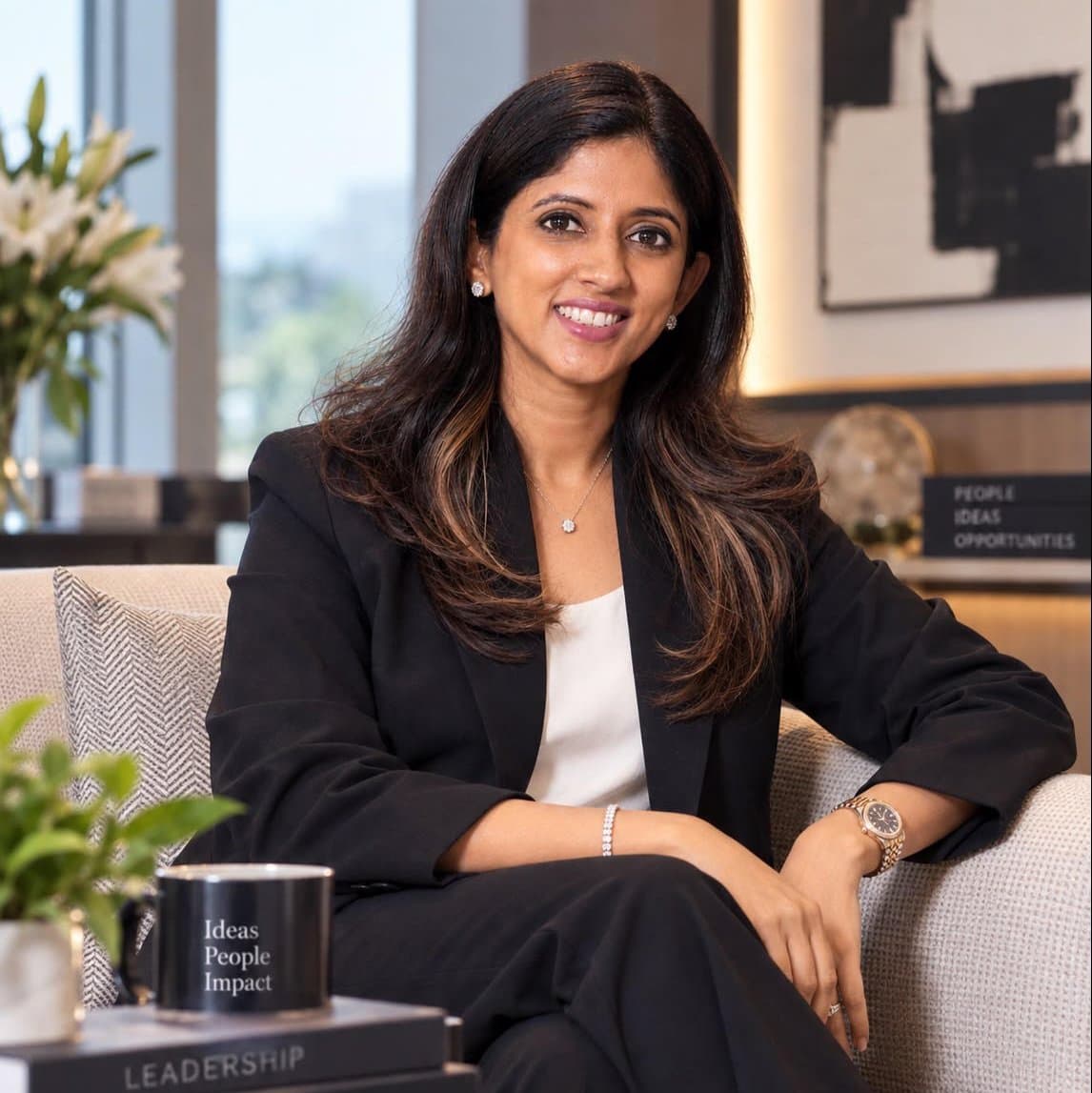
Investors & Catalysts
From Millet to Method: Rasika Prashant on Building What Consumers Return To
Rasika Prashant, CEO of NSRCEL at IIM Bangalore and Co-founder of Soulfull (later aquired by Tata Consumer Products) on consumer trust, category creation, Indian brands, and the founder discipline required after belief.
Read Full Story
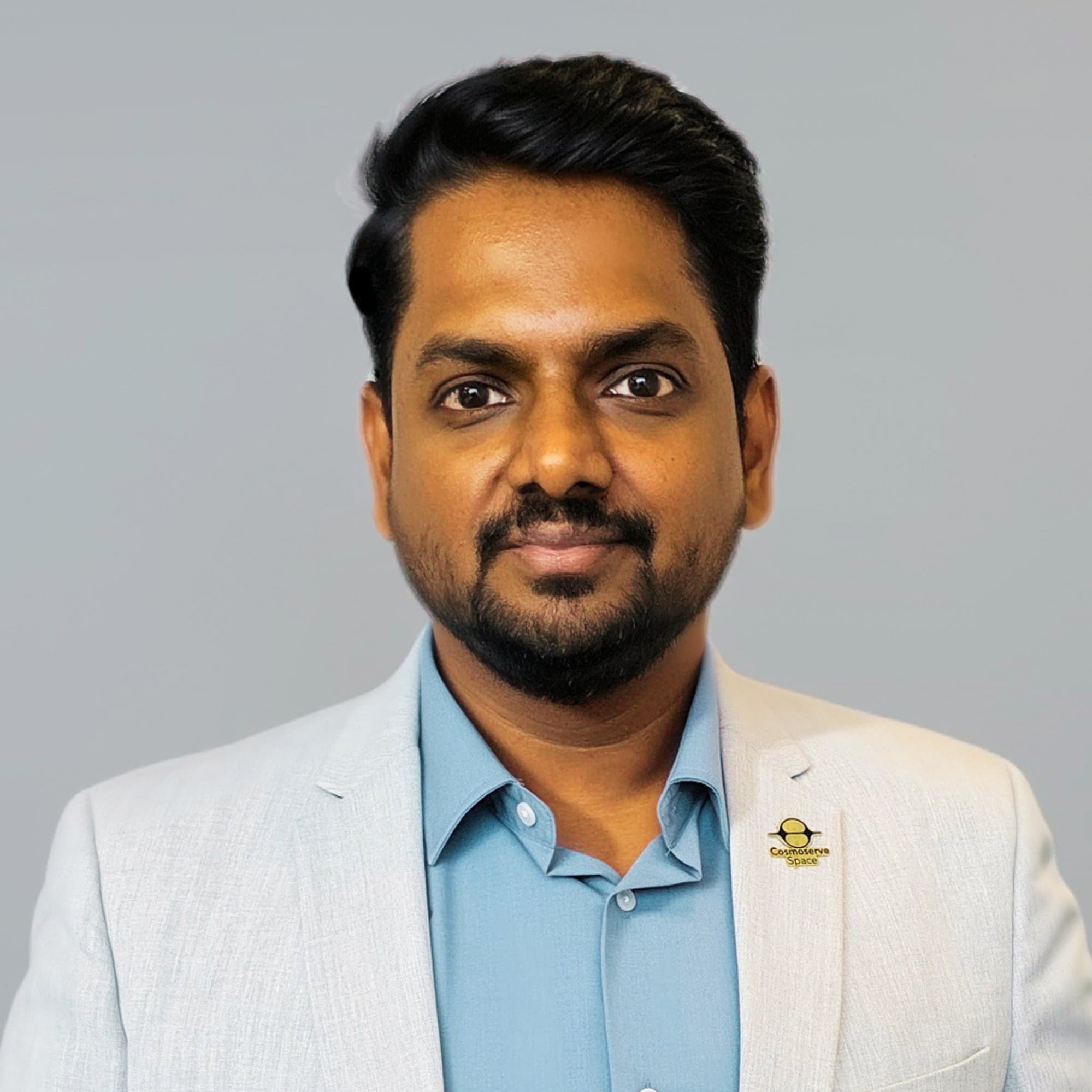
Founders & Innovators
Building the Next Space Economy: Chiranjeevi Phanindra and Cosmoserve's Case for Orbital Maintenance
Chiranjeevi Phanindra, Founder & CEO of Cosmoserve Space, spent 14 years at ISRO working on re-entry and human spaceflight. Today, he is focused on a vital challenge: keeping Earth’s orbit usable.
Read Full Story