Category: Corporate Visionaries
Jai Balan examines how leadership, organizational culture, employee engagement, and human systems shape trust, performance, and resilience inside modern institutions. Drawing from corporate leadership, executive coaching, and sports psychology, he argues that sustainable performance depends on credible systems, psychological safety, self-awareness, and leadership behaviors that align values with lived workplace experience.
Creating Conditions Where People Can Think, Perform, and Grow: Jai Balan on Leadership
IndiSight Editorial
May 10, 2026

Jai Balan
Founder · Adyantara Solutions
Mumbai/India
Leadership development is now a permanent priority in serious institutions. Yet the deeper problem remains unresolved: organizations still ask for forms of maturity, ownership, openness, and resilience that their systems do not consistently support. They speak the language of trust and empowerment with growing fluency, but the real measure lies elsewhere, in meetings, in appraisals, in moments of pressure, and in whether people experience the institution as enlarging their capacity or quietly narrowing it. The leadership question of this era is becoming harder and more precise: can organizations build conditions in which their values remain believable when power, hierarchy, and consequence enter the room?
Jai Balan’s thinking has been shaped inside that question. His corporate years exposed him to the mechanics of how performance, culture, and opportunity are actually negotiated, while his later work across coaching, leadership assessment, consulting, and mental fitness for athletes expanded that inquiry into a broader study of human systems. What emerges from that body of work is a serious view of leadership, one that places less emphasis on title or style and far greater emphasis on the conditions leaders create for others to think clearly, perform steadily, and grow with conviction.
The Corporate Ground on Which His Thinking Was Built
Jai’s perspective was formed inside operating businesses. He began at Aditya Birla Group, moved to Colgate-Palmolive, then Marico, and later Bharti AXA Life Insurance, where he eventually became HR Head. Across manufacturing, consumer goods, and insurance, he saw different sectors, leadership styles, and organizational cultures. Yet the same questions kept returning. How is talent really judged? What behaviors earn trust? When does culture become lived reality, and when does it remain a well-produced script?
A pattern began to repeat itself across those environments.
“There is intent, there is lip service, and there is actual action.”
Most companies know what they want to sound like. Pressure changes the equation. Intent remains elevated, language remains polished, and action starts following incentives, hierarchy, urgency, and managerial caution. The company continues to tell the same story, while the operating system begins teaching a different one.
The Dissonance at the Center of Modern Work
One of Jai’s clearest observations is that organizations often ask for levels of emotional and strategic maturity that their systems do not fully support. They want employees to act like owners, think long term, show initiative, and absorb accountability, while authority, economic upside, and decision rights often remain concentrated much higher up the structure.
If they’re behaving like owners, pay them like owners.
He is pointing to a mismatch that many companies still underestimate. Emotional ownership can be requested quickly. Structural ownership is far harder to distribute. One creates a narrative of trust and maturity, while the other creates credibility. Employees can tell when they are being trusted with meaningful outcomes and when they are being asked to carry responsibility without the same degree of agency.
Across sectors and geographies, companies increasingly ask for adaptability, enterprise, resilience, and business thinking, while keeping the underlying levers of power, reward, and decision-making tightly concentrated. Over time, employees stop listening to the ideal and start reading the system itself.
The Leadership Moment That Changed His Reading of Institutions
Every serious leadership philosophy eventually encounters a moment that strips away abstraction. For Jai, one of those moments came during a significant retrenchment exercise in his final corporate chapter. The trigger was a leadership change and a different managerial judgment about what the business required.
On paper, the process could be described as orderly. In human terms, it was far more demanding. People he had worked with closely had to be told that their roles were no longer required in the same way, and the decision came from a strategic shift in how the institution itself was being redesigned.
“What leadership is stated or expected to do and what leadership finally does.” he puts.
Leadership literature often presents values in a polished register, but real institutions carry consequence through asymmetry and through decisions that affect people unevenly. In those moments, leadership is judged by honesty, proportion, and the willingness to carry difficulty without retreating into softened language.
Culture Is Not a Statement. It Is a Room
Jai has a simple way of reading culture.
“If the senior-most person is the one who’s talking the most, the culture is pretending.”
Culture becomes visible as a power pattern. A values presentation reveals very little compared to what happens inside a room. Who speaks first, who frames the issue, who becomes cautious once authority enters the conversation, and who stays quiet while waiting for signals all reveal far more than formal declarations ever can.
A leader may believe the room is open because nobody objected openly. Jai has seen enough institutions to know how often silence works differently in practice. In hierarchical settings, silence usually carries caution, calibration, and an anticipatory reading of consequence. People decide very quickly whether contribution feels safe, whether dissent will be welcome, and whether truth carries professional cost.
From Control to Guardrails
Jai’s CLASH versus UPLIFT thinking becomes most useful when it is understood as a design framework rather than a moral slogan. Many organizations get trapped inside a poor choice architecture in which process is either tightened until initiative fades or loosened until confusion spreads. Jai pays attention to how boundaries are experienced.
“When you position it as something which is setting the boundaries around which you can work, then it gives comfort and confidence.”
When people experience a system as arbitrary, punitive, or opaque, judgment narrows and experimentation collapses. When they experience it as coherent, visible, and dependable, confidence rises because the field is understood.
Strong institutions make the edges visible, reduce uncertainty around what cannot be compromised, and create enough stability for creativity to carry consequence rather than chaos.
Self-Awareness as a Performance Discipline
Across coaching, assessment, and sports-focused mental conditioning, Jai keeps encountering the same early failure point: people often overestimate how well they know themselves.
The belief that most people have is that they are very well aware of their potential, their abilities, their strengths, their weaknesses.
In practice, the reverse appears frequently. Leaders assume they know how they land. Athletes assume they understand what breaks their rhythm. Experience can deepen judgment, but it can also harden interpretation, and the more accomplished a person becomes, the easier it is to treat familiarity as truth.
His coaching philosophy follows directly from that observation.
“I have never claimed to transform anyone in any way. I look for even baby steps.”
He is interested in helping people confront what they have already been avoiding, because change rarely begins with grand insight. More often, it begins with a quieter recognition that the story a person has been telling themselves no longer fully accounts for their behavior.
Fear, Focus, and the Conditions of Performance
Pressure runs through much of Jai’s work, whether he is thinking about business leaders, young athletes, or high-stakes decision environments. One distinction matters especially.
If the fear is of a person, it can rarely have a positive outcome.
Fear tied to authority narrows judgment. A boss, a rating, public embarrassment, withheld reward, or reputational anxiety may all increase visible effort, but they also make people politically alert and creatively cautious. Fear tied to reality behaves differently. A market shift, product irrelevance, competitive pressure, or structural change in the environment can create sharper thinking because attention turns outward.
His view on focus follows the same logic.
“While you’re looking at a particular task or an agenda or a project, be aware of the environment around you.”
High concentration without environmental awareness can produce work that is technically strong and strategically mistimed. In fast-moving systems, peripheral awareness matters because effort needs context and commitment needs a live reading of the environment in which that commitment is unfolding.
The Sunday Night Test
One of Jai’s most human ideas appears in his work around engagement. Many institutions rely on lagging indicators such as attrition, advocacy, and referrals. Jai is drawn to a more intimate question.
“How does the employee feel on the night of a Sunday?”
That question reaches directly into the emotional reality of work. A person can remain in the organization and still carry dread, depletion, or quiet resignation into the coming week. In those cases, retention offers very little comfort as a measure of engagement.
“Just because a person is not quitting doesn’t mean that they are engaged.”
People stay for many reasons, including economic conditions, habit, fatigue, family constraints, uncertainty, and career caution. Emotional truth and headcount stability do not always move together, and serious leadership has to be willing to see the difference.
Why Business Misreads Elite Sport
Jai’s work in mental fitness for athletes has made him careful about how business borrows from sport. He recalls an early assignment with top young cricketers where he tried to ease their pressure by telling them there was life beyond the game. A coach corrected him sharply. For those boys, this was their whole field of aspiration. The optionality available to a corporate professional did not exist in the same way.
That moment sharpened his skepticism about casual sports analogies.
“Organizations need to last beyond the people who run them.”
Elite sport often celebrates individual brilliance because brilliance carries the outcome directly. Institutions cannot organize themselves around that model so easily. If they over-reward stars and under-build continuity, they weaken the system they are trying to strengthen.
Leaving the jersey better than what you found basically implies that you take your role and you elevate the expectation.
He treats that idea as stewardship. Leadership earns depth when it raises the standard of the place for those who come next, and that requires a level of security many leaders never fully develop.
Trust in the Age of AI
Jai’s thinking on AI is measured. He focuses first on framing.
If AI enters the organization through the language of replacement, distrust arrives quickly. If it enters as a way of freeing time, expanding capability, and opening new forms of work, the emotional contract changes. The tool may be identical. The institutional meaning assigned to it is different.
“I don’t think there’s a need for a new architecture. The architecture remains the same.” he says.
Customers still care about promises being honored. Employees still care about whether the lived experience matches what they were told. Investors still care about integrity and durable results. The tools may evolve rapidly. The obligations remain steady.
Building Beyond Hierarchy
The second phase of Jai’s career widened his field of view. Moving beyond a traditional corporate hierarchy allowed him to work across leadership assessments for firms such as Korn Ferry and Deloitte, executive coaching, organizational advisory, employee engagement work, and sports-focused mental conditioning. The shift expanded his operating terrain without diluting his seriousness.
The same questions return across those environments. What makes systems trustworthy. What expands human effort rather than merely extracting it. What creates conditions in which people think better, perform with steadiness, and continue learning beyond early success.
Jai has moved into a more serious language for human systems, one that connects institutional design, emotional experience, performance behavior, and ethical coherence.
Leadership Lessons
Institutions lose credibility when their systems ask for more than they are built to support.
Ownership language without real agency weakens trust over time.
Culture becomes visible fastest in meetings.
Senior leaders shape the truth-quality of the room by how much they occupy it.
Compliance can strengthen innovation when it creates guardrails people trust.
Self-awareness is a strategic capability.
Fear of authority suppresses judgment. Fear grounded in changing reality can sharpen it.
Focus without situational awareness can produce precise but irrelevant work.
Retention is an incomplete reading of engagement.
Strong institutions outlast star performers.
AI changes delivery. It does not alter the moral basis of trust.
Honesty remains one of the least glamorous and most important forms of managerial rigor.
The next chapter of leadership will be shaped by more than sharper strategy, faster technology adoption, or more fluent culture language. It will also be shaped by whether institutions can become believable again to the people inside them, whether they can create systems that ask hard things of people without quietly reducing them, and whether they can align performance with dignity, structure with initiative, and trust with actual experience.
That is the harder work Jai is helping define. It lives in the design of human systems that can hold under pressure, tell the truth about what they ask, and create conditions in which people can do their best work without becoming smaller in the process.
Our Suggestions to Read
Discover The Leaders Shaping India's Business Landscape.
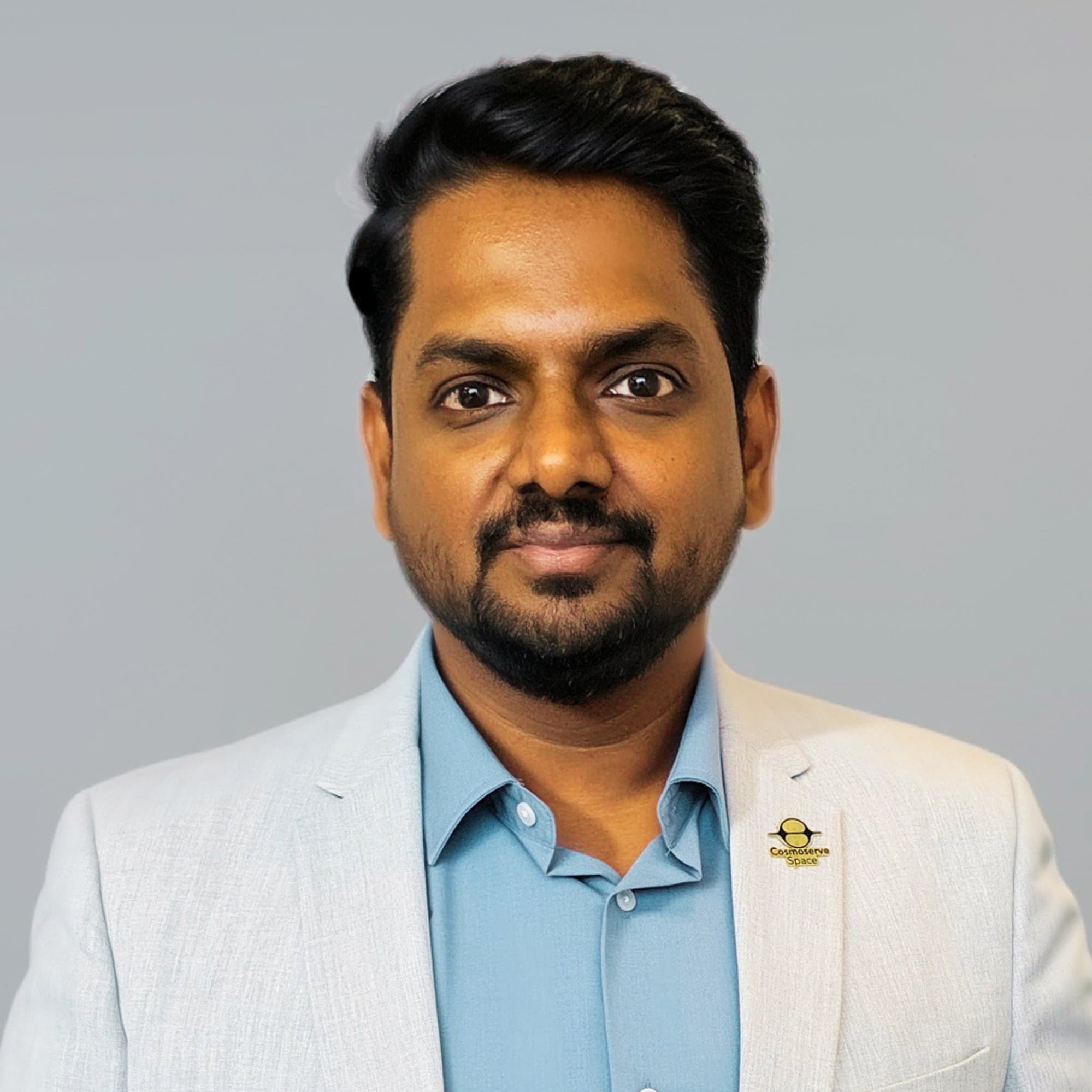
Founders & Innovators
Building the Next Space Economy: Chiranjeevi Phanindra and Cosmoserve's Case for Orbital Maintenance
Chiranjeevi Phanindra, Founder & CEO of Cosmoserve Space, spent 14 years at ISRO working on re-entry and human spaceflight. Today, he is focused on a vital challenge: keeping Earth’s orbit usable.
Read Full Story

Corporate Visionaries
Shashank Sahni on What Success Leaves Out
Shashank Sahni, Google’s Managing Director of Global Ads Solutions, reflects on what customers reveal, what ambitious teams need from their leaders & what the mountains and marathons have taught him about going further.
Read Full Story

Corporate Visionaries
Clinical Multiplication: Divesh Singla on the Healthcare AI Case That Headlines Keep Missing
Divesh Singla, Managing Director, India at Veradigm, brings two decades in healthcare technology to the AI question leaders cannot avoid: how to expand clinical capacity without weakening human judgment.
Read Full Story