Category: Investors & Catalysts
Abhilekh’s journey shows that AI is leverage, not a substitute for discipline. Real transformation rests on strong habits, trusted systems, culture and the human intent that drives them.
Beyond the Algorithm: Abhilekh on Trust, Education, and the Next Generation of AI Leaders
IndiSight Editorial
Nov 1, 2025
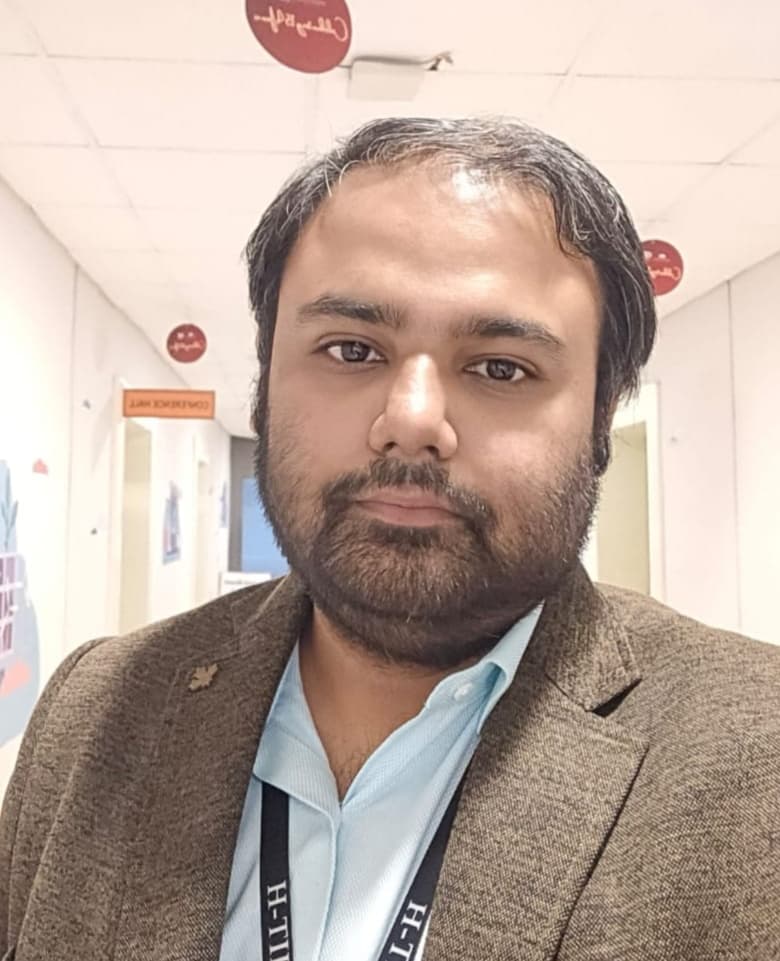
Abhilekh
When you meet Abhilekh, you realize quickly that his story is not about chasing technology but about finding meaning through it. His path does not follow the familiar arc of climbing titles or corner offices. Instead, it moves sideways and outward, drawing from one culture, one system, and one group of people, and carrying those lessons into another. Whether he is sitting with a group of students in a small-town classroom, mentoring founders at a global accelerator in Singapore, or advising startups in Europe, his compass points in one direction: how to translate innovation into human growth.
Today, Abhilekh is known as a Microsoft MVP in AI, a mentor at accelerators across continents, and a guide for institutions and founders navigating the maze of digital transformation. Yet if you strip away the badges, the heart of his journey has always been the same: bridging the gap between people, technology, and trust.
The First Pivot: From Structure to Experiment
Corporate life gave Abhilekh predictability. At one of the largest Big4 Consulting Firms, he managed a large sales team, learned how to hit targets, and worked in an environment where calendars were tight and outcomes measurable. It was a world of safety and repetition. But beneath that structure, something nagged at him. The number of young professionals searching for opportunities was far greater than the system’s ability to absorb them. Students were eager, resumes circulated endlessly, but the pathways forward were narrow.
That gap forced him to experiment. He moved from simply training employees to designing models that might connect supply and demand in new ways. Instead of building everything from scratch, he partnered with platforms on revenue-share terms, testing small pilots. He used AI-driven matchmaking to place students in internships and jobs. He built training programs for roles that many were not yet prepared for. What began as a patchwork experiment evolved into a consultancy that today spans three verticals: training universities and corporates, AI-enabled employability platforms, and mentorship for startups. He was also awarded Copilot Innovation Awards for Societal Impact for his startup by Microsoft Netherlands and Wortell.
That moment taught him a lesson that has carried into every later role.
“AI cannot fix gaps in preparation. It can only accelerate what is already in motion.”
Students without confidence, communication, or discipline will not be made job-ready by an algorithm. Founders without consistency cannot turn chaos into scale by adding AI. Technology extends effort. It does not create it.
AI as Infrastructure, Not Spectacle
Abhilekh talks about AI not as a shiny disruption but as a quiet, embedded foundation.
“Think of AI as a companion. Treat it like a friend, but set clear boundaries, just as you would in any relationship.”
To him, this is not metaphorical language. It is governance. Tools without boundaries create noise, not stability. He has seen founders pitch AI as a headline feature without thinking about the systems underneath. He has seen students assume AI would shortcut effort rather than structure it. In both cases, the hype collapses.
His advice is consistent: integrate AI like plumbing or electricity, something invisible, deeply embedded, and trusted. For enterprises, this means enterprise licenses, compliance frameworks, and workflow integration. For students, it means seeing AI not as a crutch but as scaffolding to strengthen practice.
He illustrates with a comparison. People often ask whether ChatGPT is “better” than Perplexity. Abhilekh shrugs at the question. “Each was built for a different purpose. The real question is whether you know how to use them together.”
The edge is not in isolated brilliance but in orchestration. Companies that treat AI as spectacle fall into cycles of hype and disillusion. Companies that treat it as invisible infrastructure build resilience.
Global Lessons: What Different Ecosystems Teach
If Abhilekh sounds pragmatic, it is because his wisdom comes not from slides but from immersion. Over the past two years, he has worked in accelerator programs and mentorship circles across Asia, MENA Region, UAE, Europe, and the United States. Each culture has reshaped how he thinks about AI adoption.
In Japan, he recalls delivering sessions in Shibuya where even event photographs blurred participant faces. Privacy there is not a feature; it is culture. In Europe, he learned how a single unsolicited email could violate compliance rules, he learnt this through his extremely close clients. Regulation, while slowing speed, built trust. In India, by contrast, mass outreach still dominates, often without disclaimers.
The UAE gave him another lesson. The government made the paid enterprise version of ChatGPT free for all citizens. For Abhilekh, this was not just a technical policy. It was a cultural statement.
“That is how you democratize AI. By removing barriers, you tell your citizens that technology is a right, not a luxury.”
The result: widespread literacy, not just among tech elites but across everyday life.
What does this mean for India? Abhilekh believes the contrast is sharp. India has talent and ambition but suffers from uneven infrastructure. Tier-one hubs move quickly, while many government colleges still operate without even basic exposure to AI tools. He often meets students whose teachers do not know how to open ChatGPT.
“You cannot expect a student to compete globally if their teacher does not even know the tools.”
The conclusion is blunt. India must learn not only from Silicon Valley but from places like Abu Dhabi, Pangyo (Silicon Valley of Korea), Shanghai and Tokyo, where governance, access, and culture align differently. Importing models blindly will not work. Translating lessons and adapting them locally is the only way forward.
Culture as Infrastructure
For Abhilekh, culture is not decoration, it is foundation. He remembers walking into classrooms in Japan where children bowed before the lesson began, not out of formality but out of habit, something planted long before they encountered technology. That same instinct, he points out, shapes how adults later treat privacy, discipline, and even digital responsibility.
In India, by contrast, he has often seen the opposite. Students are taught soft skills in a crash course only when placement season arrives. Respect, curiosity, adaptability, all patched at the last moment instead of built over years.
“By then, it is too late. You are patching cracks instead of laying stone.”
For him, this is not a cultural comparison for its own sake but a warning. Without cultural scaffolding, technology adoption will always remain uneven. GPUs can be purchased in bulk. Culture cannot.
The Mindset Advantage
Alongside infrastructure and culture, Abhilekh stresses the third pillar: mindset. He sees it as the most overlooked variable.
“It is okay to fail. Until you get rejected, you do not realize what the next step is.”
This is not motivational fluff. It is tactical advice. He has seen startups collapse after chasing funding before testing their durability. He has seen students rush into internships without asking whether they aligned with their own strengths. The outcome in both cases is disillusion.
His framework always begins with self-assessment. What are your strengths? What is your ‘why’? Are you building for the long term or the quick win?
Consistency is the invisible advantage.
“If you do something for 60 days straight, you become a different version of yourself.”
For him, this principle matters more than raw skill. The difference between being AI-literate and becoming an AI leader is not technical brilliance but discipline, consistency, and intent.
Mentorship as Practice
This same philosophy shapes how he handles his own work. He does not try to be everywhere at once. When an event request comes that he cannot take, he passes it to someone in his circle. A younger colleague gets a chance to speak, a peer finds a new audience, and the network widens.
“Connections are not property,” he says. “They are bridges. If you walk alone on every bridge, nothing compounds.”
For Abhilekh, mentorship is not a program with a start and end date. It is a way of moving through the ecosystem. Help first, and the rest builds itself.
Responsible AI: Beyond the Hype
Abhilekh does not romanticize AI. He has seen enough hallucinations in live demos to know they are not rare glitches. He has watched companies roll out products before they had guardrails in place, only to face privacy breaches weeks later.
“These are not edge cases. They are daily realities.”
His stance is blunt: privacy must come first. Not as an afterthought, not as a compliance exercise, but as the starting condition. Enterprise licenses, consent prompts, governance frameworks; these are not optional. They are the price of entry.
What We Miss
Ask him what the world is overhyping, and his answer is immediate.
“We are outsourcing too much of our emotional life to machines. People are talking to tools before they talk to their families.”
That, to him, is a dangerous illusion.
Ask him what is underestimated, and the answer circles back to culture. Infrastructure can be funded. Talent can be trained. But if the values are brittle, the system will always crack.
“The societies that will lead are not the ones with the largest models, but the ones with the strongest habits encoded into their people.”
This reframes the debate around AI. Leadership will not be determined only by who builds the fastest algorithms but by who builds the wisest environments around them.
Lessons in Practice
When Abhilekh mentors founders, like he did at INSEAD Singapore AI Venture Labs Program, he rarely prescribes a formula. Instead, he challenges assumptions in real time. A founder pitching an AI tool as their differentiator might hear him ask, “What happens if everyone else can access the same API tomorrow?” The point is not to embarrass but to force a shift: value cannot come only from the tool, it must come from the system around it.
With students, the pattern is similar. He listens, then asks what they are actually building toward. “If your teacher does not know these tools, what are you doing to learn them anyway?” The provocation often lands harder than encouragement, but it sparks self-reliance.
Across both contexts, the core principle is the same: AI extends effort, it does not substitute for it. Students and founders who internalize that principle begin to build differently.
Final Reflection
When the conversation ends, what lingers is not the logos of accelerators he has worked with or the scale of his mentorship network. What lingers is his compass. He talks less about algorithms and more about habits, less about the race for scale and more about the design of systems that last.
“It is okay to fail. Pivot if you must. What matters is whether you build something that outlives your own effort.”
That line is not delivered as a slogan. It feels more like an anchor, something he has repeated to himself as much as to others.
Progress, in his telling, will not be measured by which model has the most parameters. It will be measured by whether we create environments where people trust the tools, trust each other, and keep building after the first version fails.
Our Suggestions to Read
Discover The Leaders Shaping India's Business Landscape.
Founders & Innovators
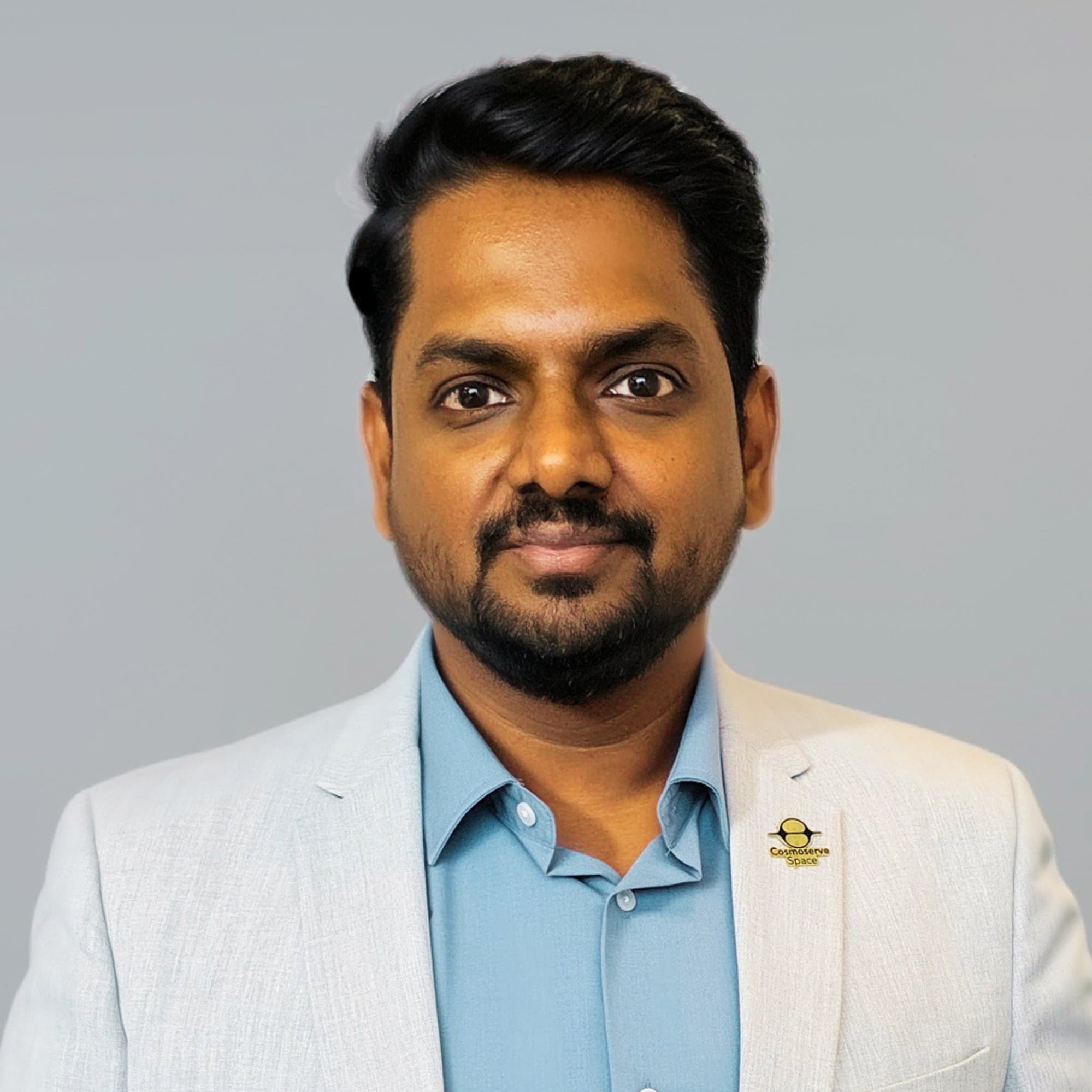
Building the Next Space Economy: Chiranjeevi Phanindra and Cosmoserve's Case for Orbital Maintenance
Chiranjeevi Phanindra, Founder & CEO of Cosmoserve Space, spent 14 years at ISRO working on re-entry and human spaceflight. Today, he is focused on a vital challenge: keeping Earth’s orbit usable.
Read Full Story

Corporate Visionaries
Shashank Sahni on What Success Leaves Out
Shashank Sahni, Google’s Managing Director of Global Ads Solutions, reflects on what customers reveal, what ambitious teams need from their leaders & what the mountains and marathons have taught him about going further.
Read Full Story
Corporate Visionaries
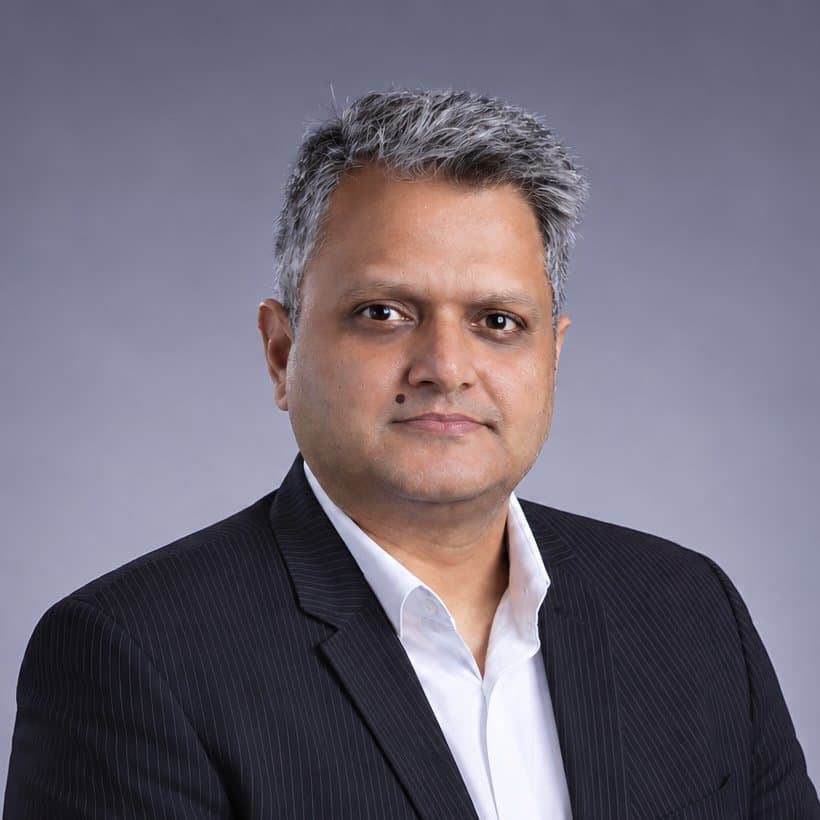
Clinical Multiplication: Divesh Singla on the Healthcare AI Case That Headlines Keep Missing
Divesh Singla, Managing Director, India at Veradigm, brings two decades in healthcare technology to the AI question leaders cannot avoid: how to expand clinical capacity without weakening human judgment.
Read Full Story